Artwork
Page from Tales of a Parrot (Tuti-nama): text page
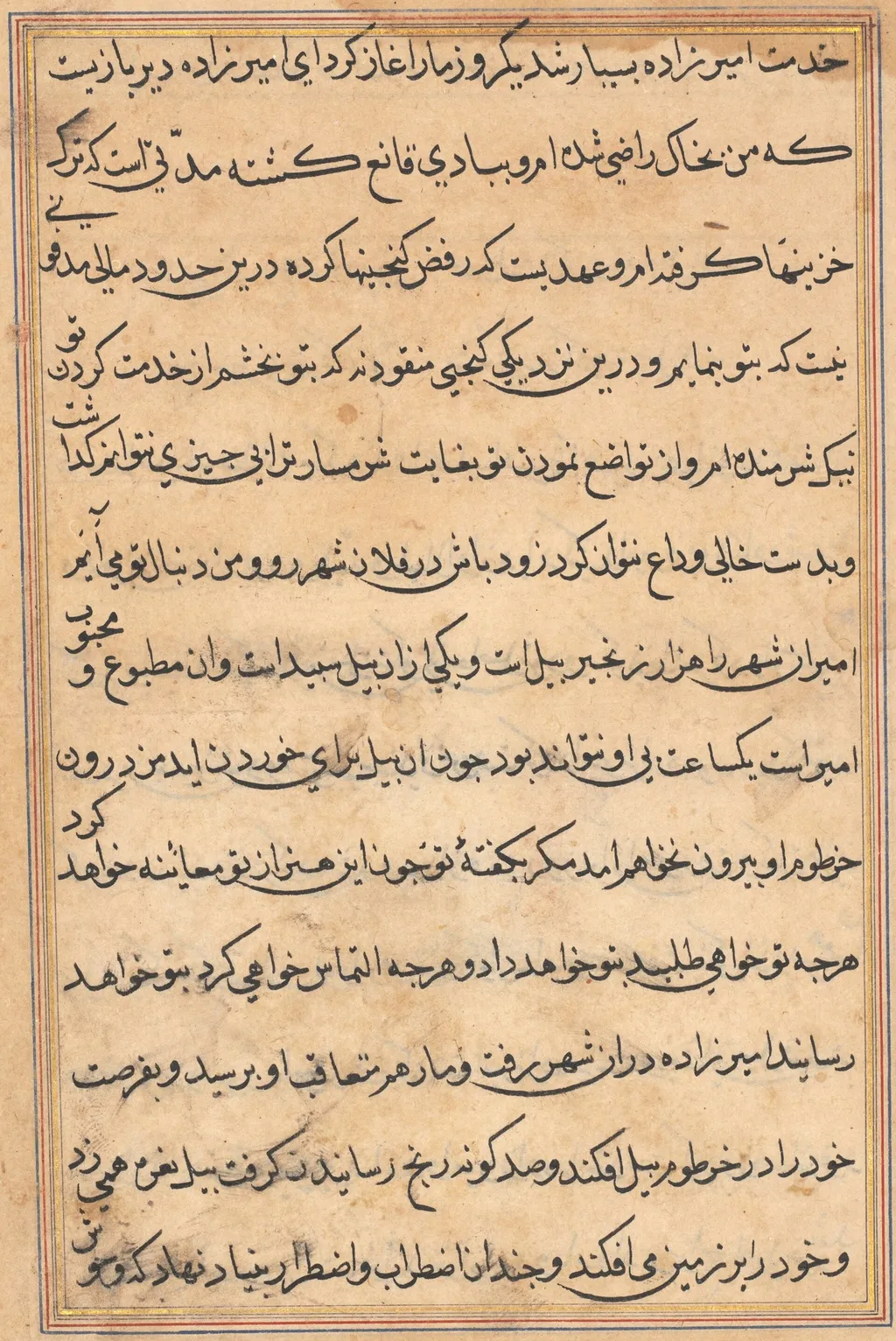
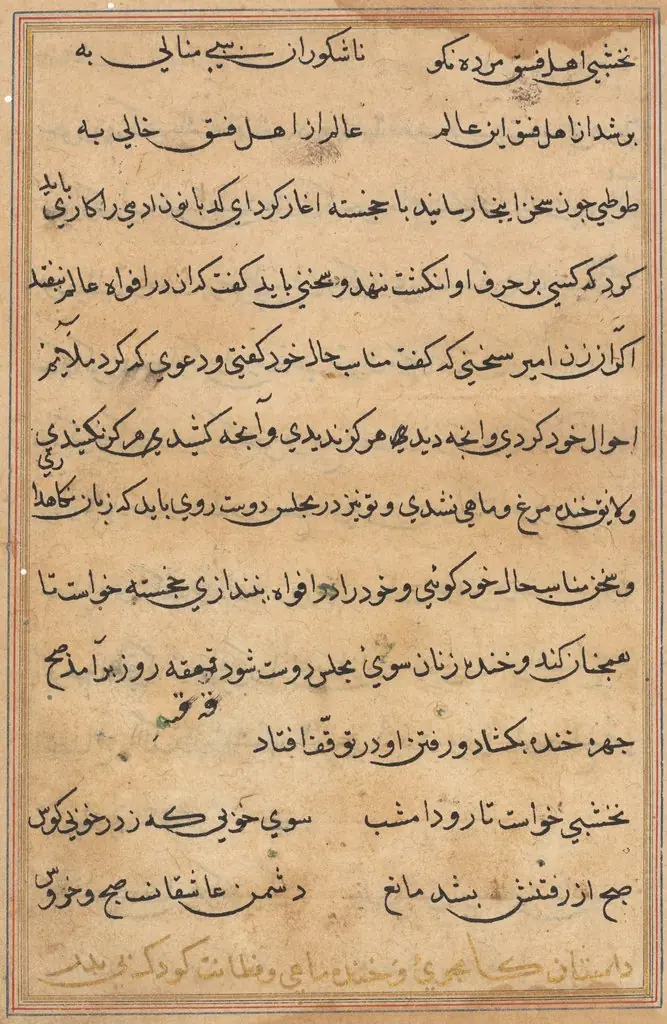
Page from Tales of a Parrot (Tuti-nama): text page is an unspecified painting. It dates from 1560 and is held in the collection of the Cleveland Museum of Art. This object is a single folio from the illustrated manuscript known as Tuti‑nama (Tales of a Parrot).
About this work
Technique & Style
This is a text page from a dispersed manuscript of the Tuti-nama (Tales of a Parrot), a Persian-language work produced in the Mughal Empire around 1560.
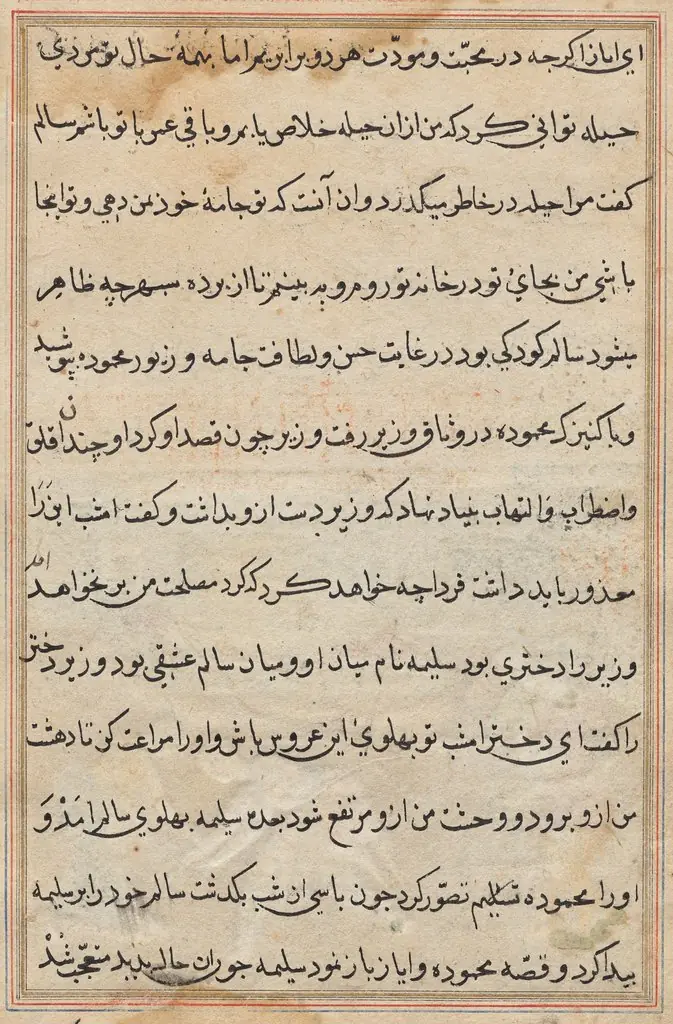
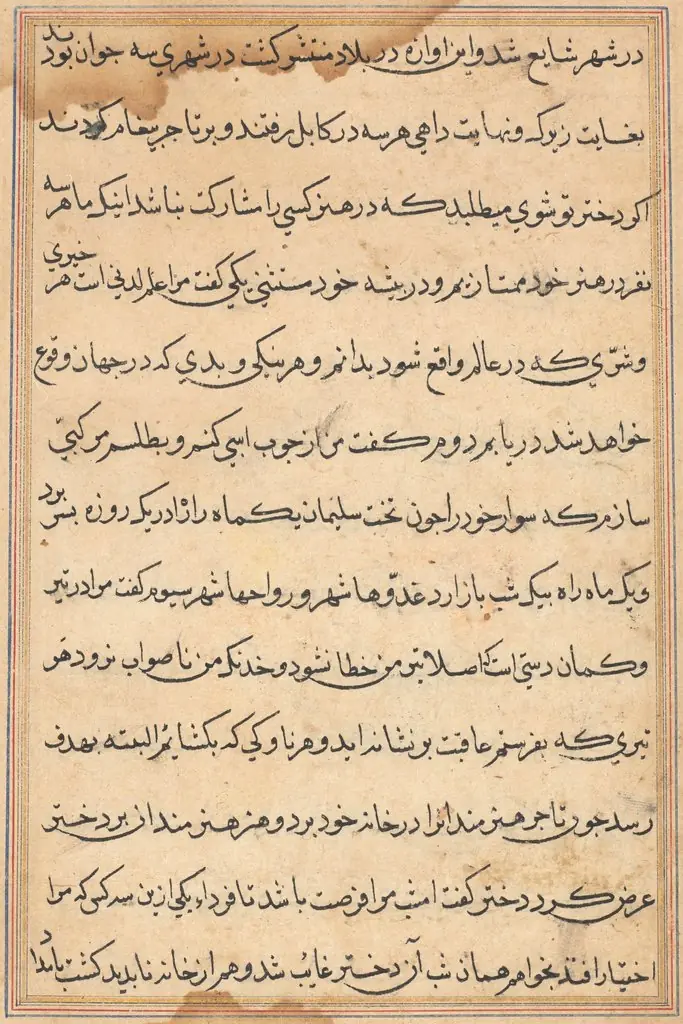
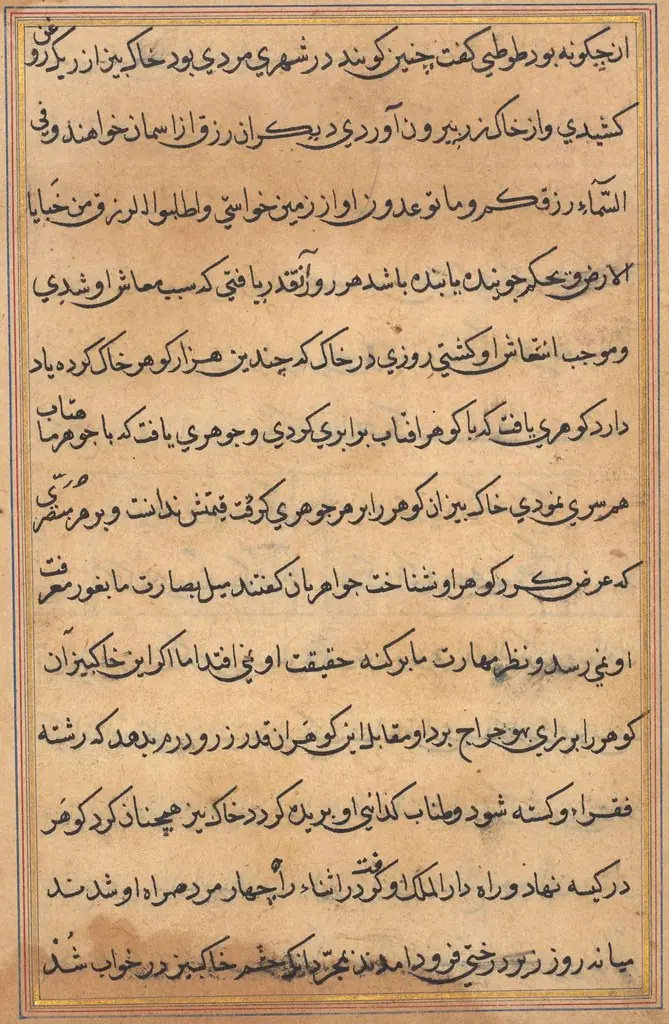
This is a text page from a dispersed manuscript of the Tuti-nama (Tales of a Parrot), a Persian-language work produced in the Mughal Empire around 1560. As a text folio, it consists of script written in ink on paper rather than a painted illustration. The Cleveland Museum of Art holds the leaf, catalogued under accession number 1962.279.246.a, as part of its holdings of early Mughal manuscript material.
History & Provenance
The page from Tales of a Parrot (Tuti-nama) was created in 1560 within the Mughal Empire. It is held in the collection of the Cleveland Museum of Art, where it is inventoried under the accession designation 1962.279.246.a. The sources do not provide further detail on the circumstances of its commission, its earlier ownership, or the chain of custody preceding its acquisition by the museum.
The inventory number 1962.279.246.a links it to the 1962 accessions and to folio ".a" within a multi-page series. No exhibition history is documented in the available sources.
Overview
This object is a single folio from the illustrated manuscript known as Tuti‑nama (Tales of a Parrot). The page consists of a light‑brown paper surface densely covered with black calligraphic text, framed by a narrow blue margin. Though catalogued as a painting, its primary function is textual, forming part of a narrative work.
Subject & Meaning
The script records a story from the Tuti‑nama, a collection of moral and romantic tales traditionally recited in courtly settings. The particular folio was prepared for Prince Salim, a Mughal royal figure, indicating its role as a personalized literary gift within the imperial household.
Context
Tuti‑nama exemplifies the Mughal tradition of integrating Persian literary culture with Indian artistic practices. Such manuscripts combined elaborate calligraphy, miniature painting, and decorative borders, serving both educational and entertainment purposes for elite audiences.
Legacy
The folio illustrates the high value placed on personalized literary objects in Mughal courts and contributes to our understanding of manuscript production, patronage, and the transmission of Persian narratives in South Asia.
Artist & collection

- Page from Tales of a Parrot (Tuti-nama): text page
 Page from Tales of a Parrot (Tuti-nama): text page
 Page from Tales of a Parrot (Tuti-nama): text page
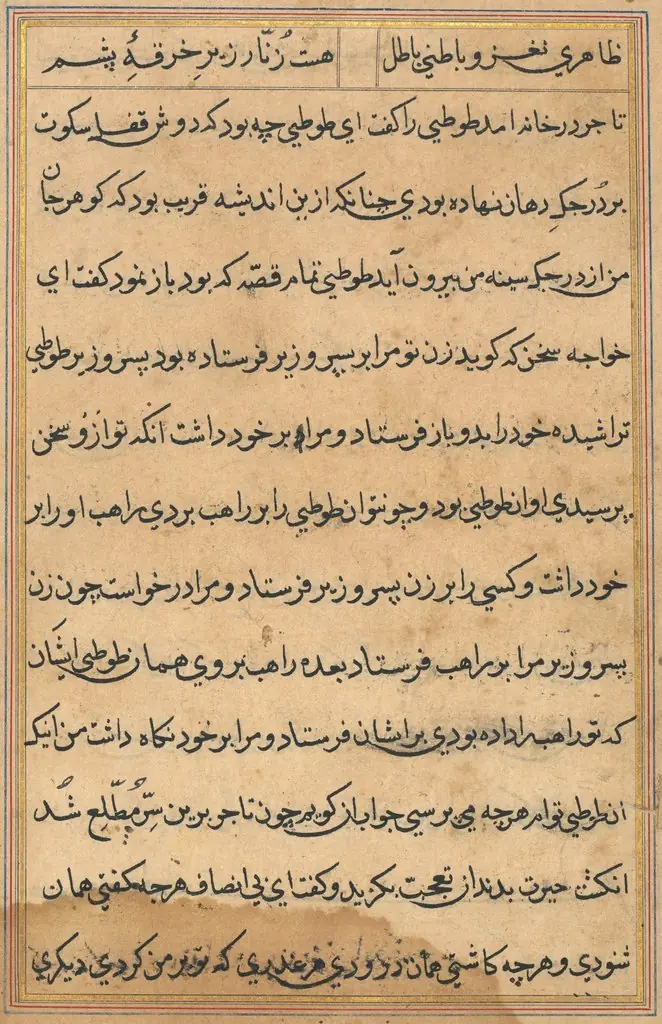 Page from Tales of a Parrot (Tuti-nama): text page
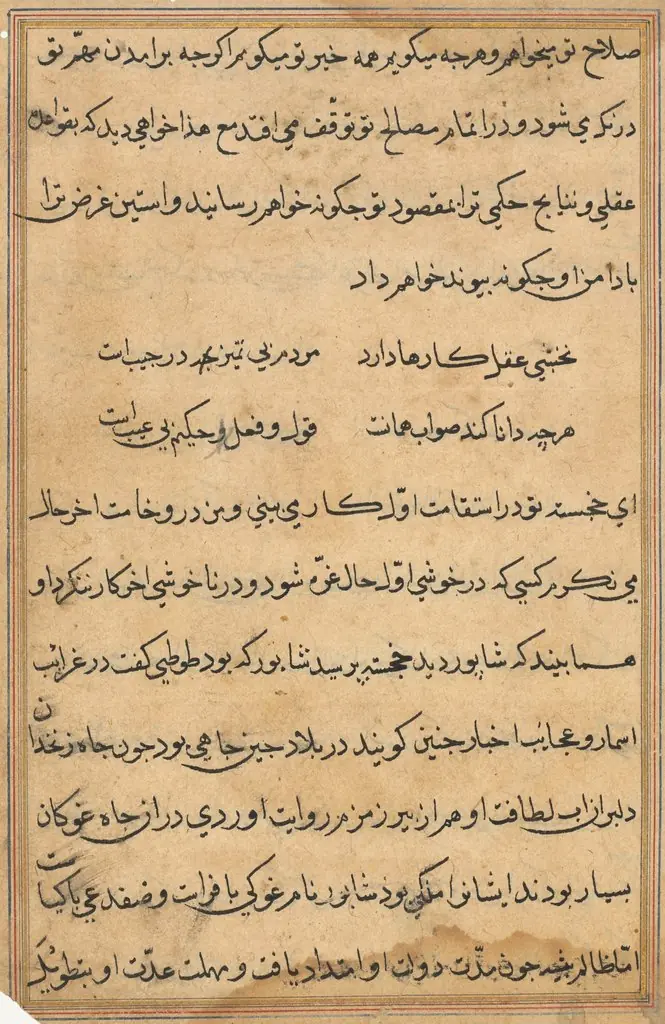 Page from Tales of a Parrot (Tuti-nama): text page
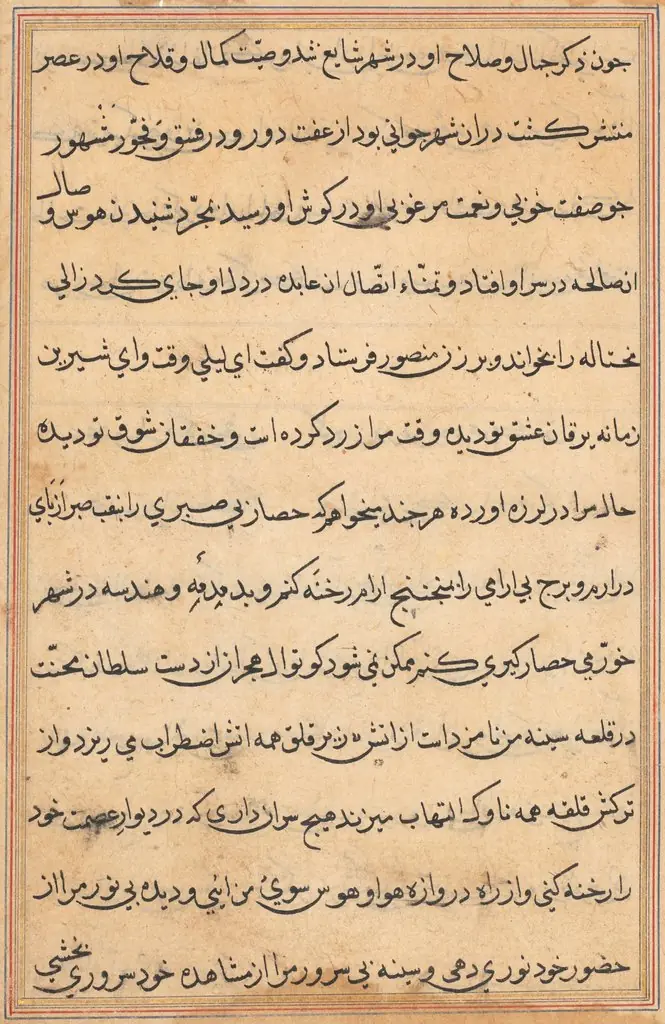 Page from Tales of a Parrot (Tuti-nama): text page
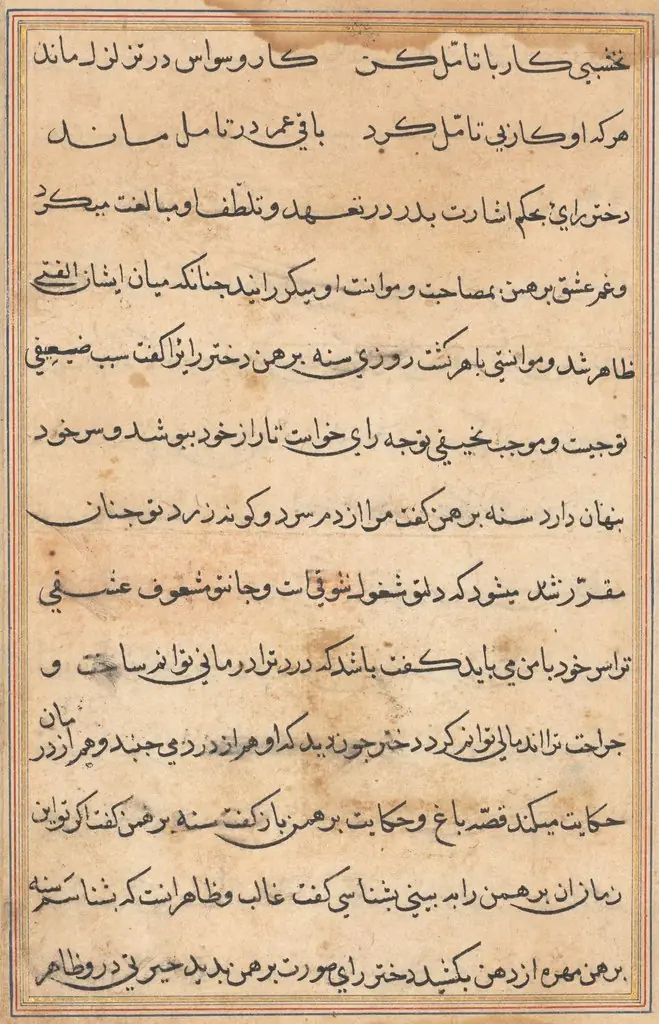 Page from Tales of a Parrot (Tuti-nama): text page
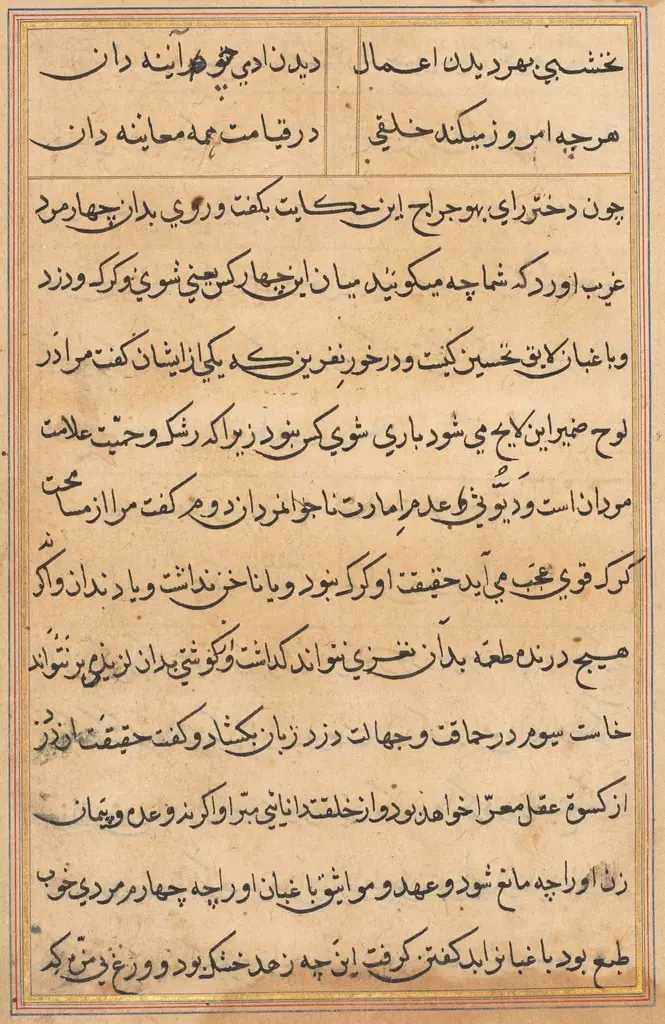 Page from Tales of a Parrot (Tuti-nama): text page
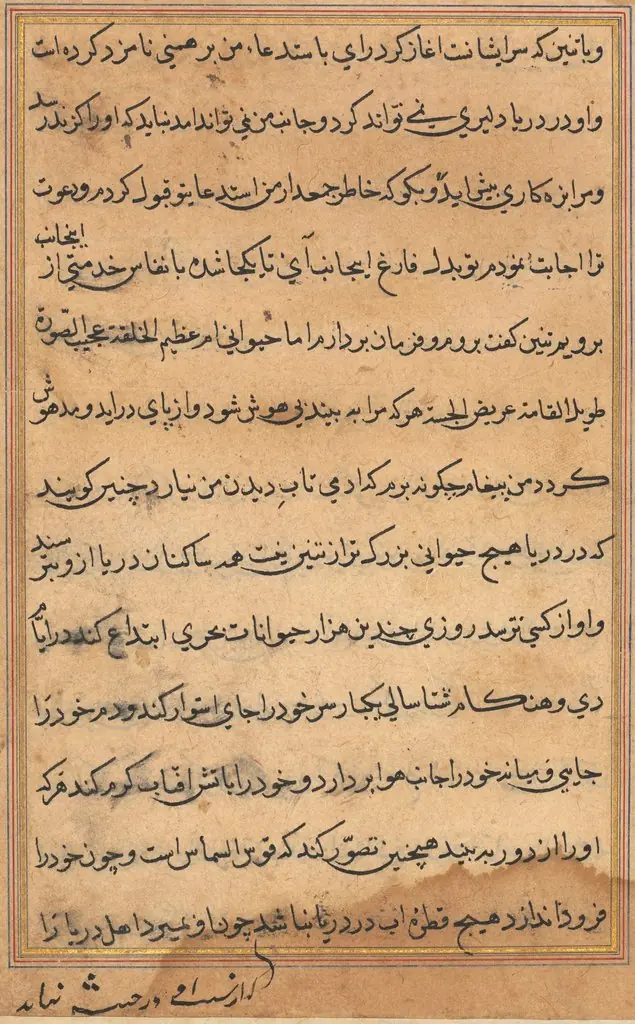 Page from Tales of a Parrot (Tuti-nama): text page
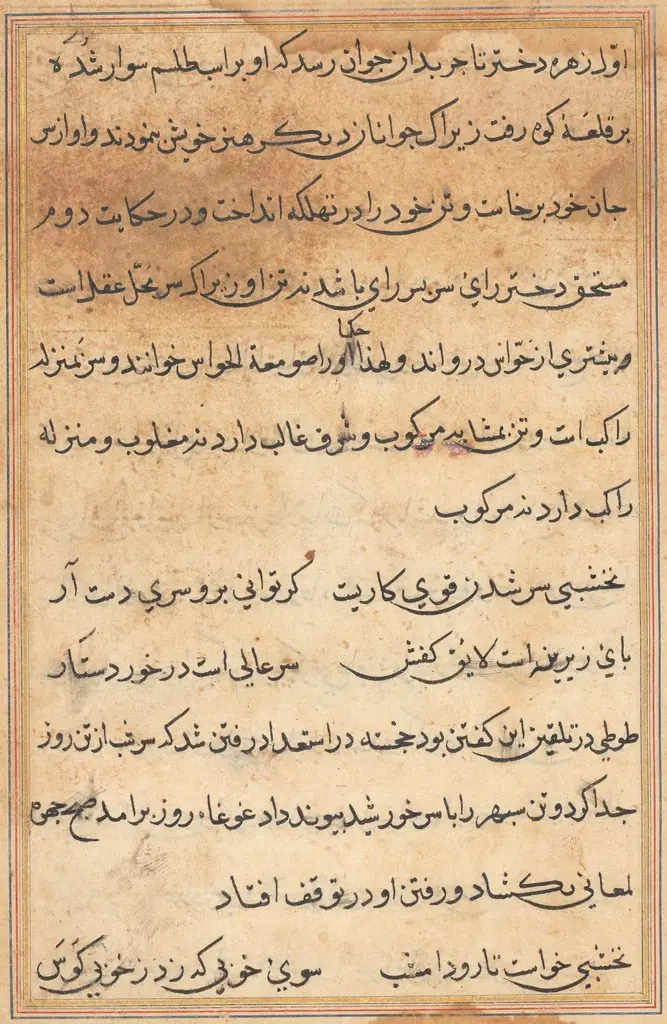 Page from Tales of a Parrot (Tuti-nama): text page
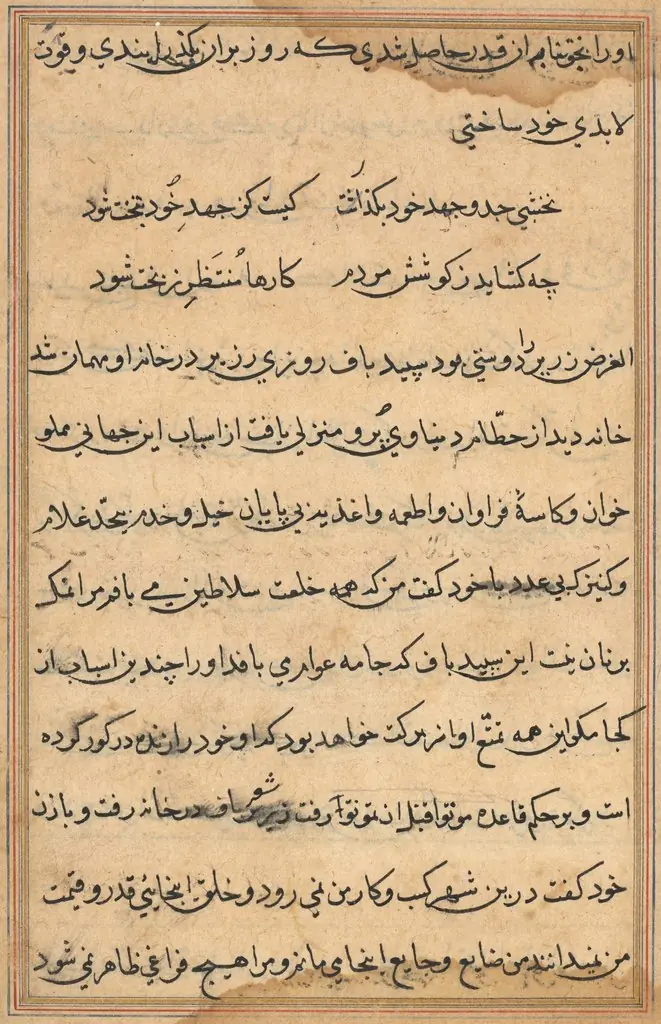 Page from Tales of a Parrot (Tuti-nama): text page
 Page from Tales of a Parrot (Tuti-nama): text page