Artwork
Page from Tales of a Parrot (Tuti-nama): text page
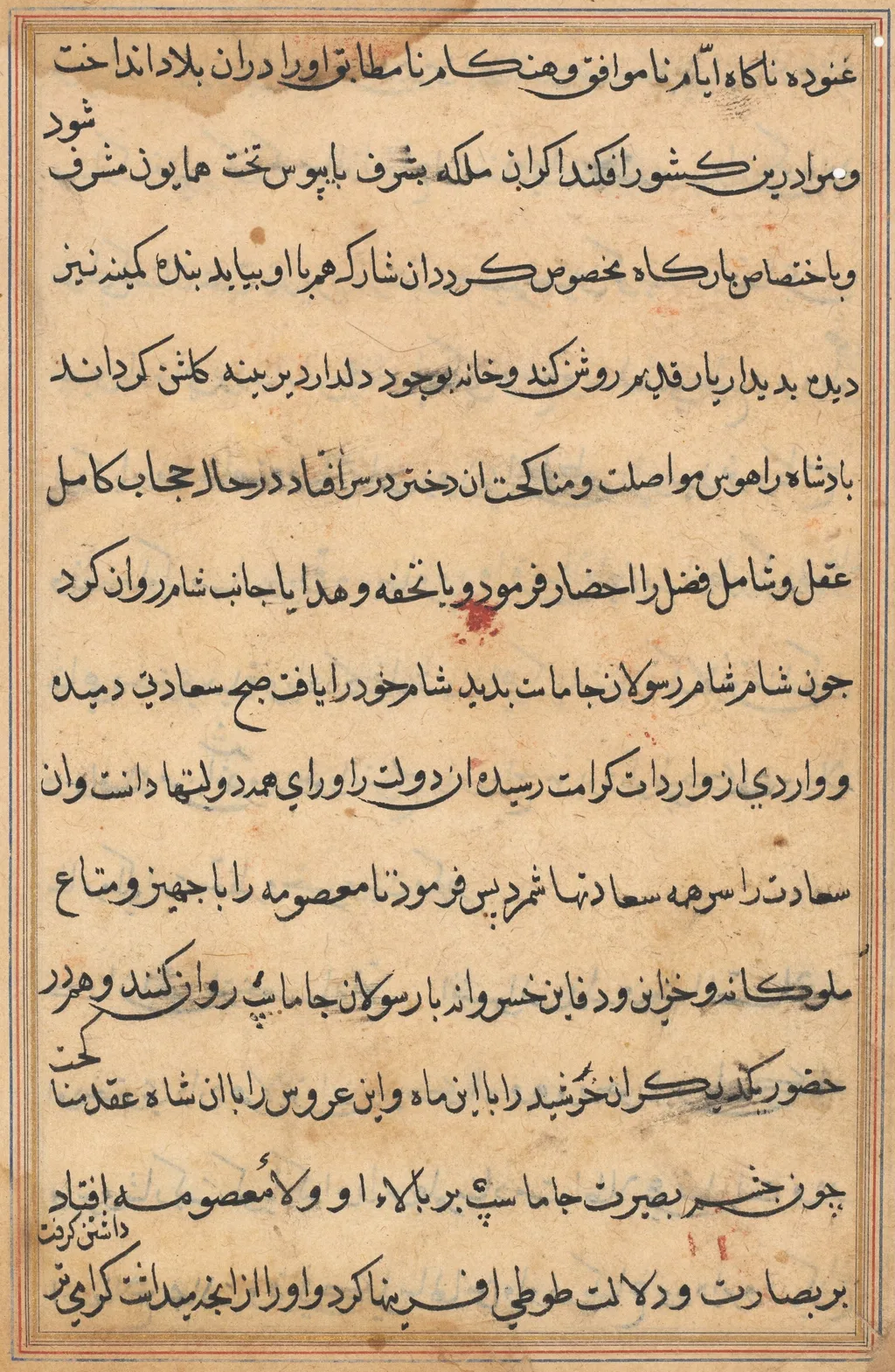
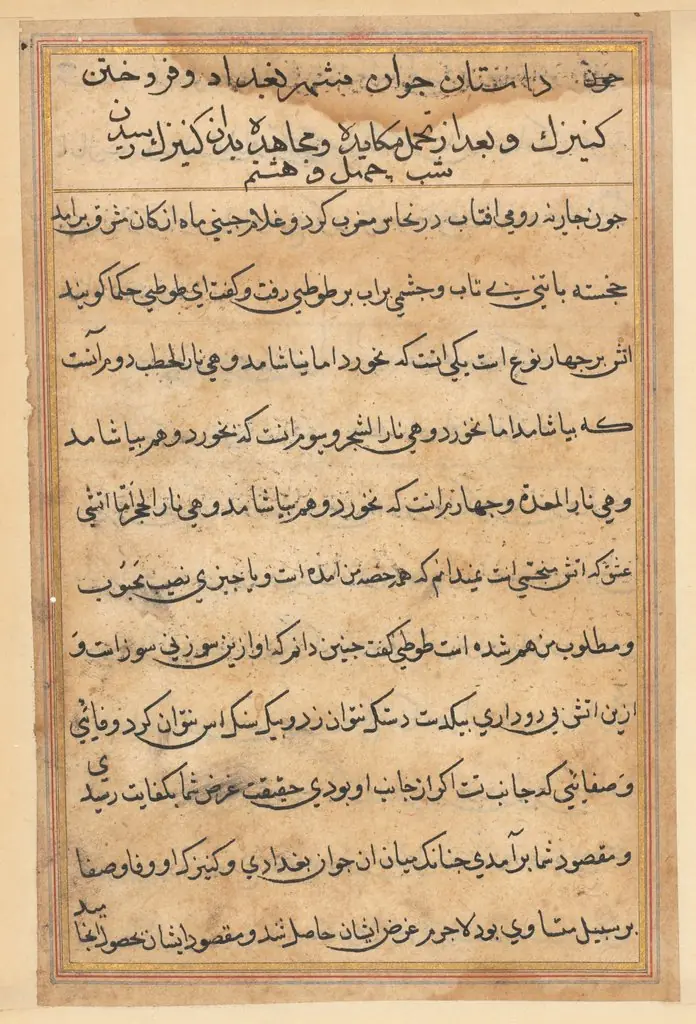
Page from Tales of a Parrot (Tuti-nama): text page is an unspecified painting. It dates from 1560 and is held in the collection of the Cleveland Museum of Art. This illuminated page originates from the manuscript Tales of a Parrot (Tuti‑nama), a narrative composed for Prince Salim.
About this work
Subject & Meaning
The illuminated page from the Tuti-nama series portrays a narrative scene featuring a parrot, reflecting allegorical themes of wisdom and moral instruction.
The illuminated page from the Tuti-nama series portrays a narrative scene featuring a parrot, reflecting allegorical themes of wisdom and moral instruction. Symbolic elements such as the bird’s speech underscore didactic storytelling within the Mughal courtly context. This manuscript page, created around 1560, exemplifies the synthesis of Persian literary tradition and Indian artistic patronage, serving as a visual conduit for moral lessons. Its presence in the Cleveland Museum of Art underscores ongoing scholarly interest in cross-cultural manuscript transmission.
Technique & Style
The painting was created around 1560 in the Mughal Empire using opaque watercolor and ink on paper. It is a text page from the Tuti-nama, executed on a rectangular support with fine brushwork and restrained coloration characteristic of Mughal manuscript painting. The handling is delicate, preserving the layered pigments and fine line work typical of the period.
The formal composition features intricate patterns and stylized figures rendered with meticulous detail, reflecting the manuscript's narrative function.
History & Provenance
The page is a text folio from a Mughal manuscript of the Tuti-nama, produced around 1560 in India under the patronage of Akbar, who commissioned an illustrated copy of the text early in his reign. It entered the collection of the Cleveland Museum of Art, where it is catalogued under accession number 1962.279.172.b. The sources record no earlier ownership or commission detail prior to its entry into the museum's holdings, and no major exhibition history beyond its place in the permanent collection.
Context
Created around 1560 within the Mughal Empire, this text page from the Tuti-nama represents a significant artifact of early Mughal manuscript illumination. The work is attributed to an unknown artist, reflecting the collaborative workshop practices characteristic of imperial production centers during this period. Currently held by the Cleveland Museum of Art, the piece illustrates the integration of Persian literary traditions with emerging Indo-Persian visual styles under the Mughal court.
As part of the Tuti-nama cycle, it serves as a critical example of the transition in artistic patronage and style that defined the mid-sixteenth century in South Asia.
Overview
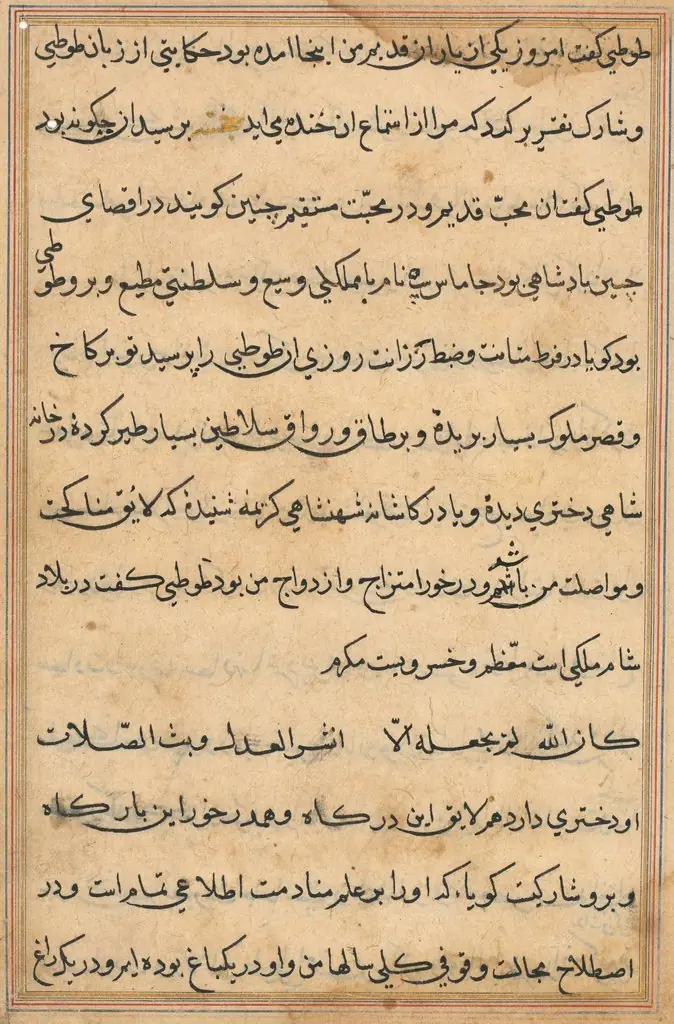
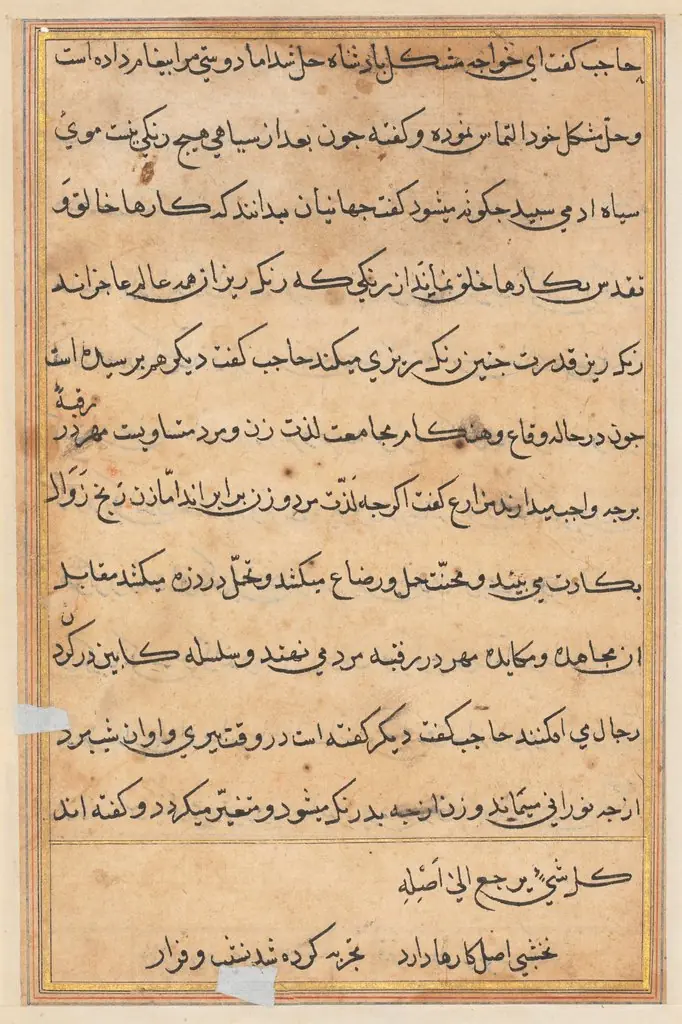
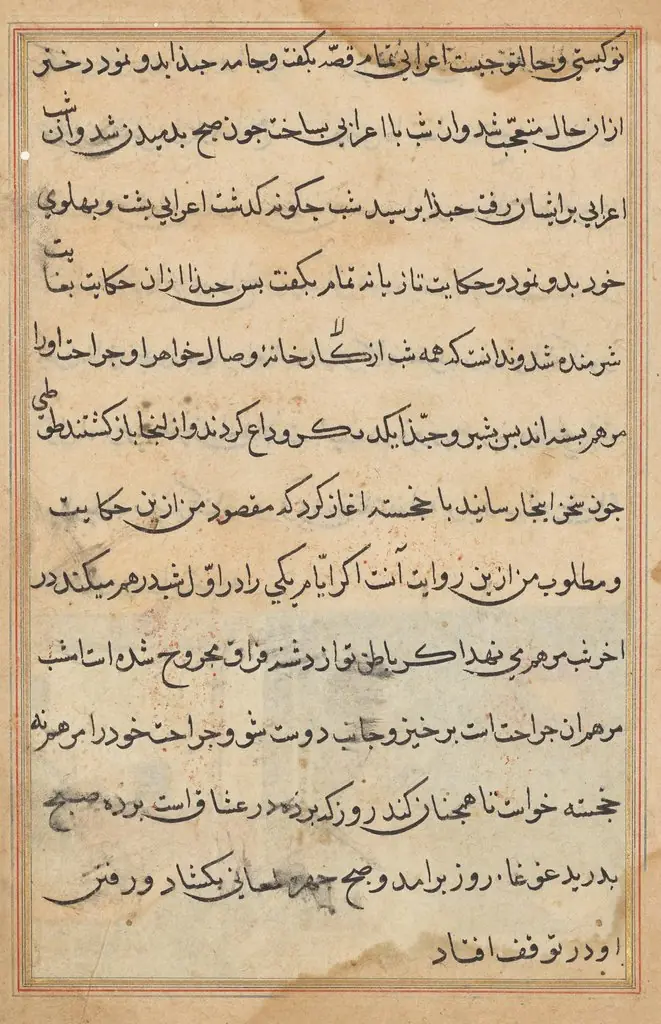
This illuminated page originates from the manuscript Tales of a Parrot (Tuti‑nama), a narrative composed for Prince Salim. Executed in black ink, the text is arranged in orderly horizontal lines, each character flowing into the next with a measured, rhythmic hand. A slender red border frames the page, while faint blue markings appear as subtle revisions.
Artist & collection

- Page from Tales of a Parrot (Tuti-nama): text page
 Page from Tales of a Parrot (Tuti-nama): text page
 Page from Tales of a Parrot (Tuti-nama): text page
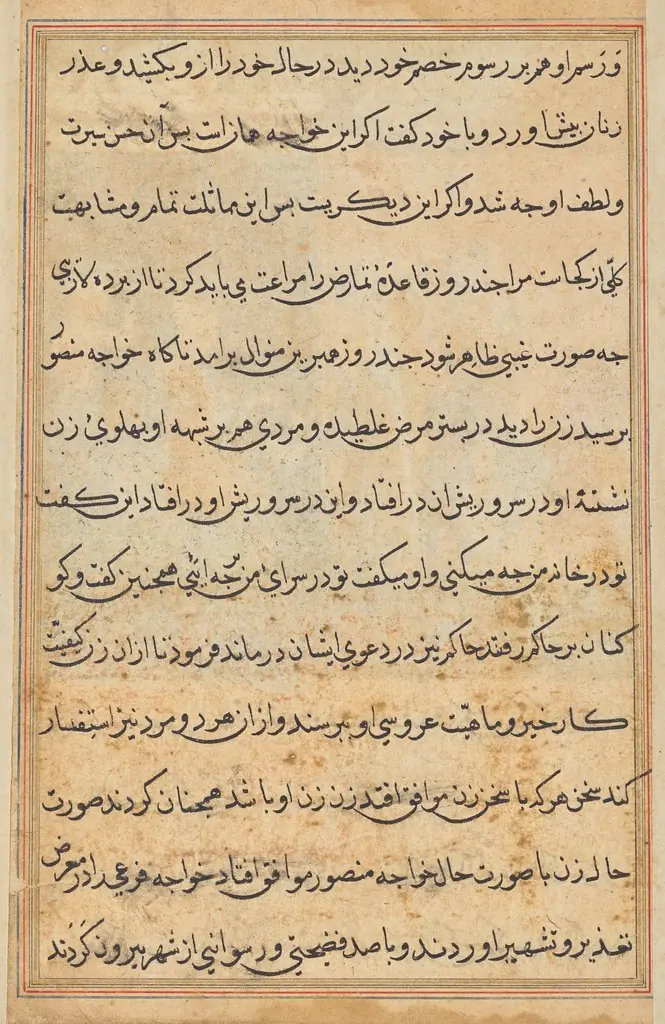 Page from Tales of a Parrot (Tuti-nama): text page
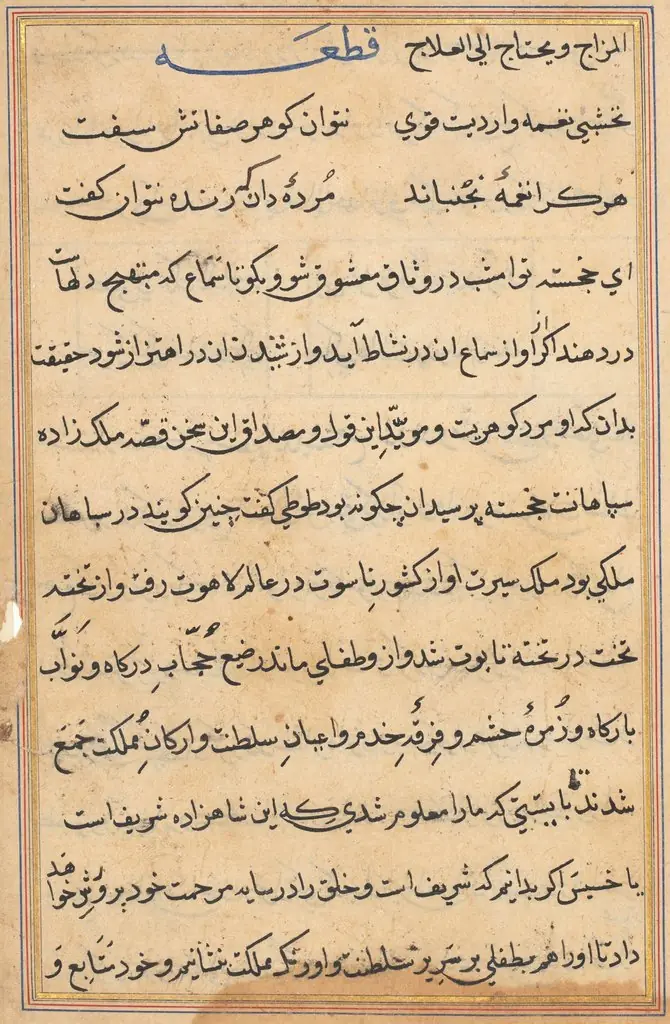 Page from Tales of a Parrot (Tuti-nama): text page
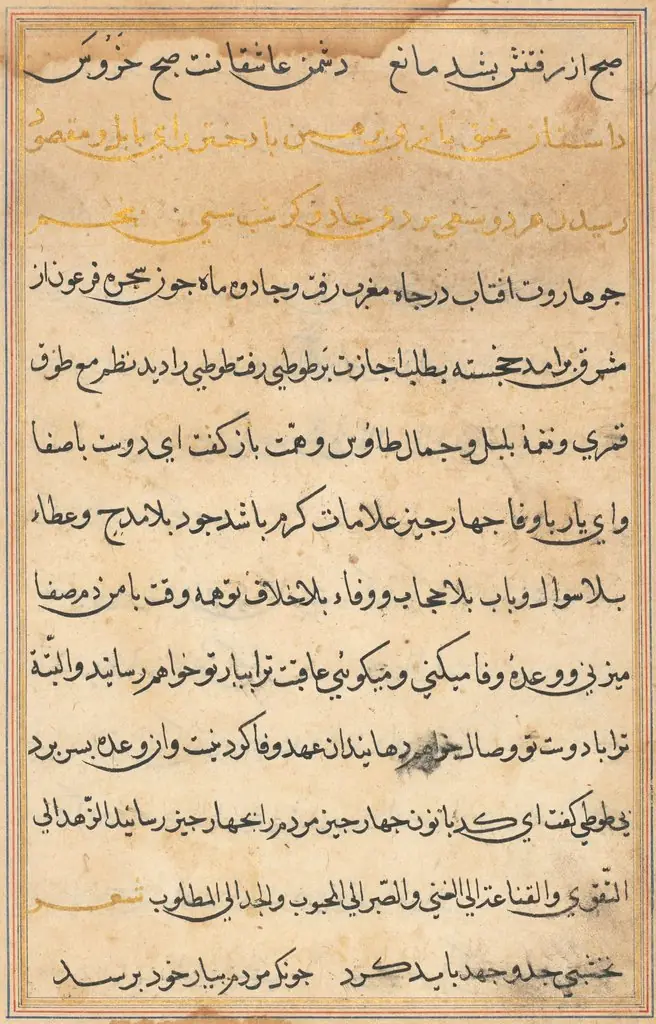 Page from Tales of a Parrot (Tuti-nama): text page
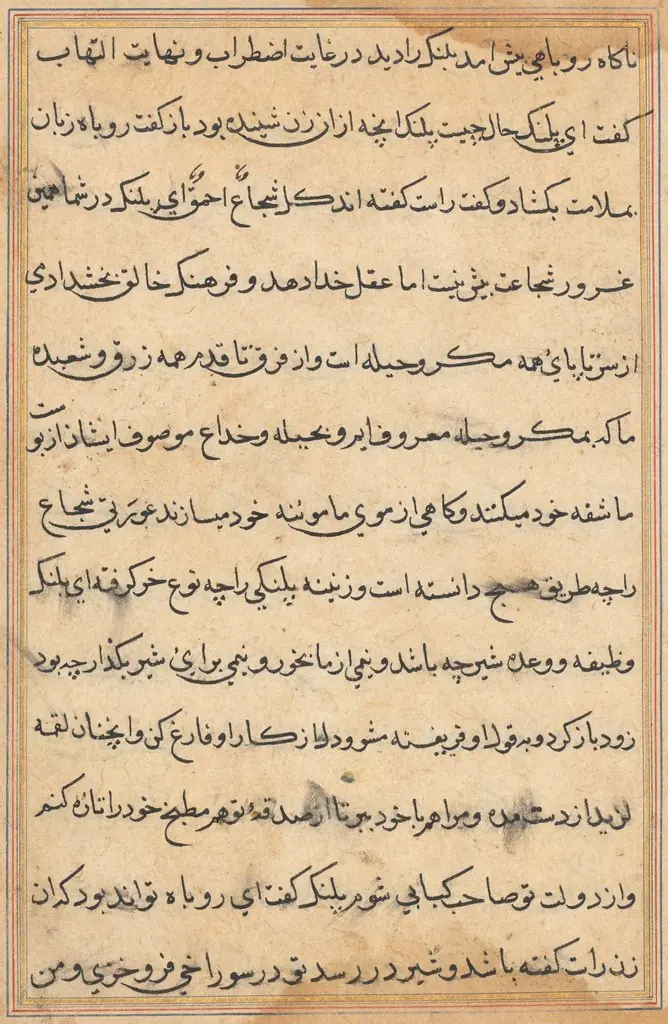 Page from Tales of a Parrot (Tuti-nama): text page
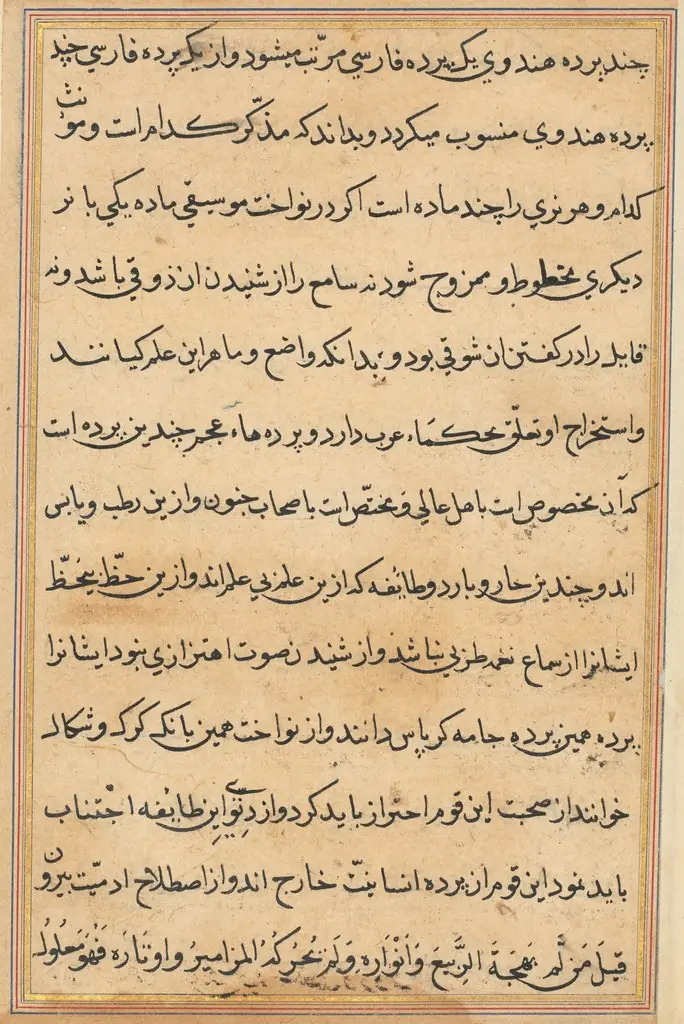 Page from Tales of a Parrot (Tuti-nama): text page
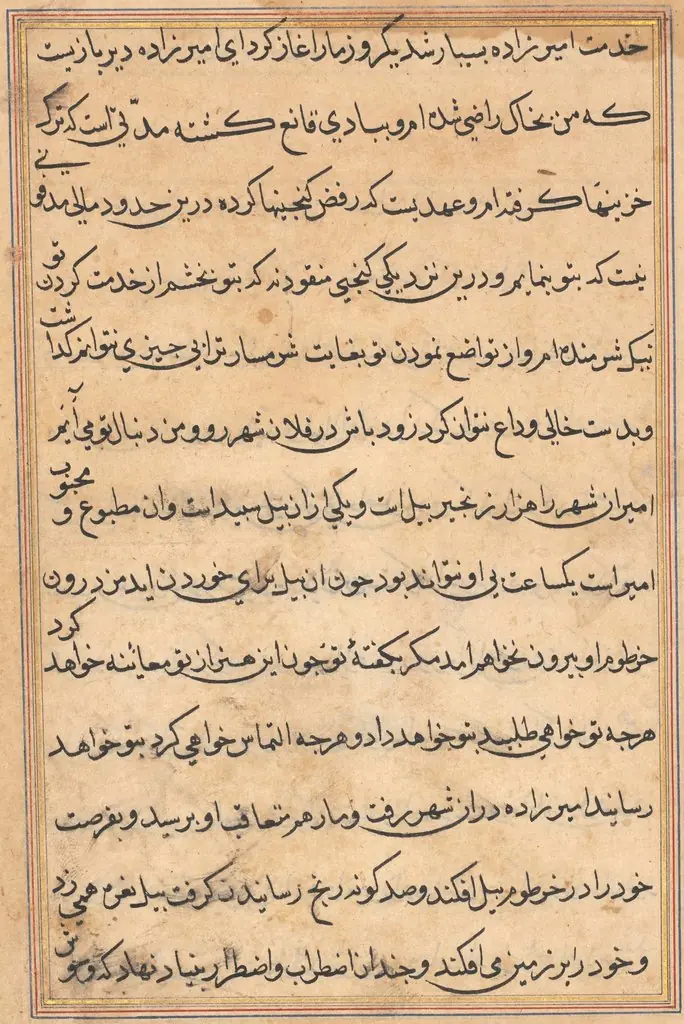 Page from Tales of a Parrot (Tuti-nama): text page
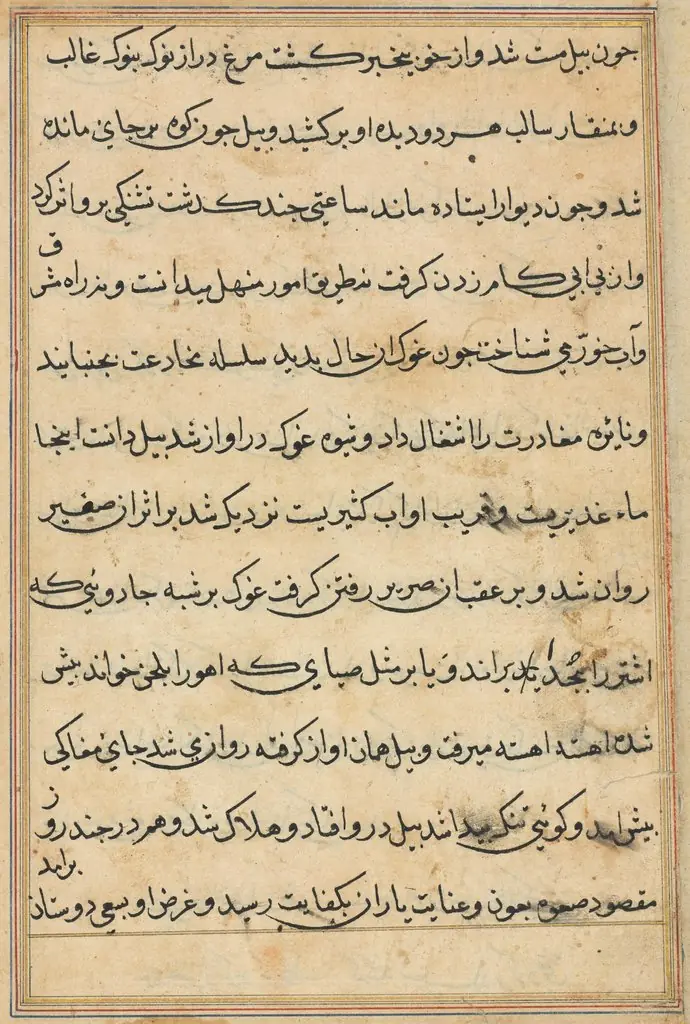 Page from Tales of a Parrot (Tuti-nama): text page
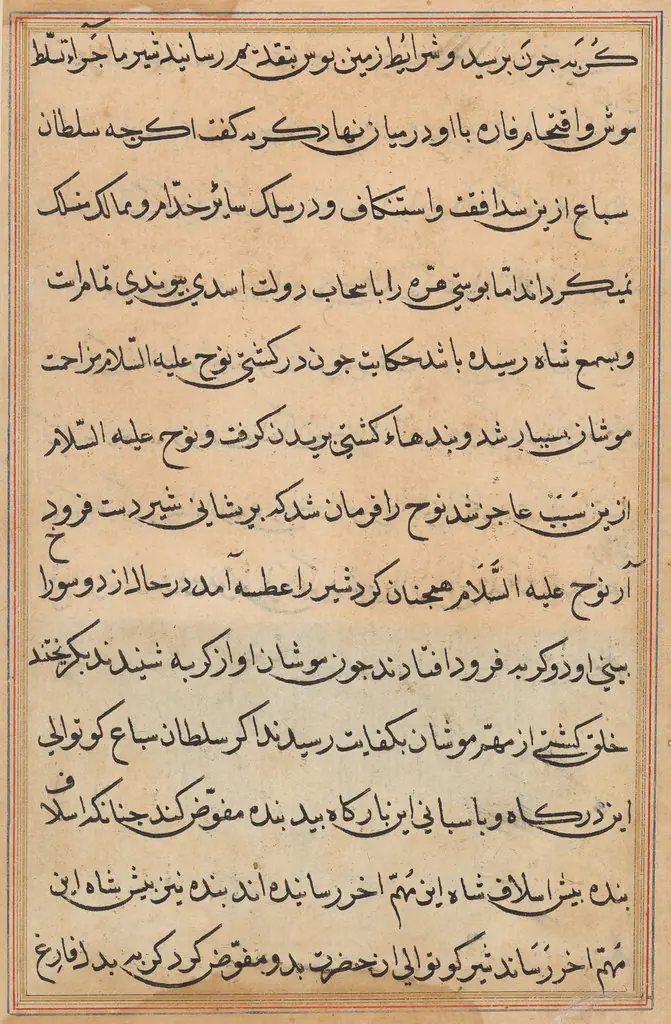 Page from Tales of a Parrot (Tuti-nama): text page
 Page from Tales of a Parrot (Tuti-nama): text page