Artwork
Page from Tales of a Parrot (Tuti-nama): text page
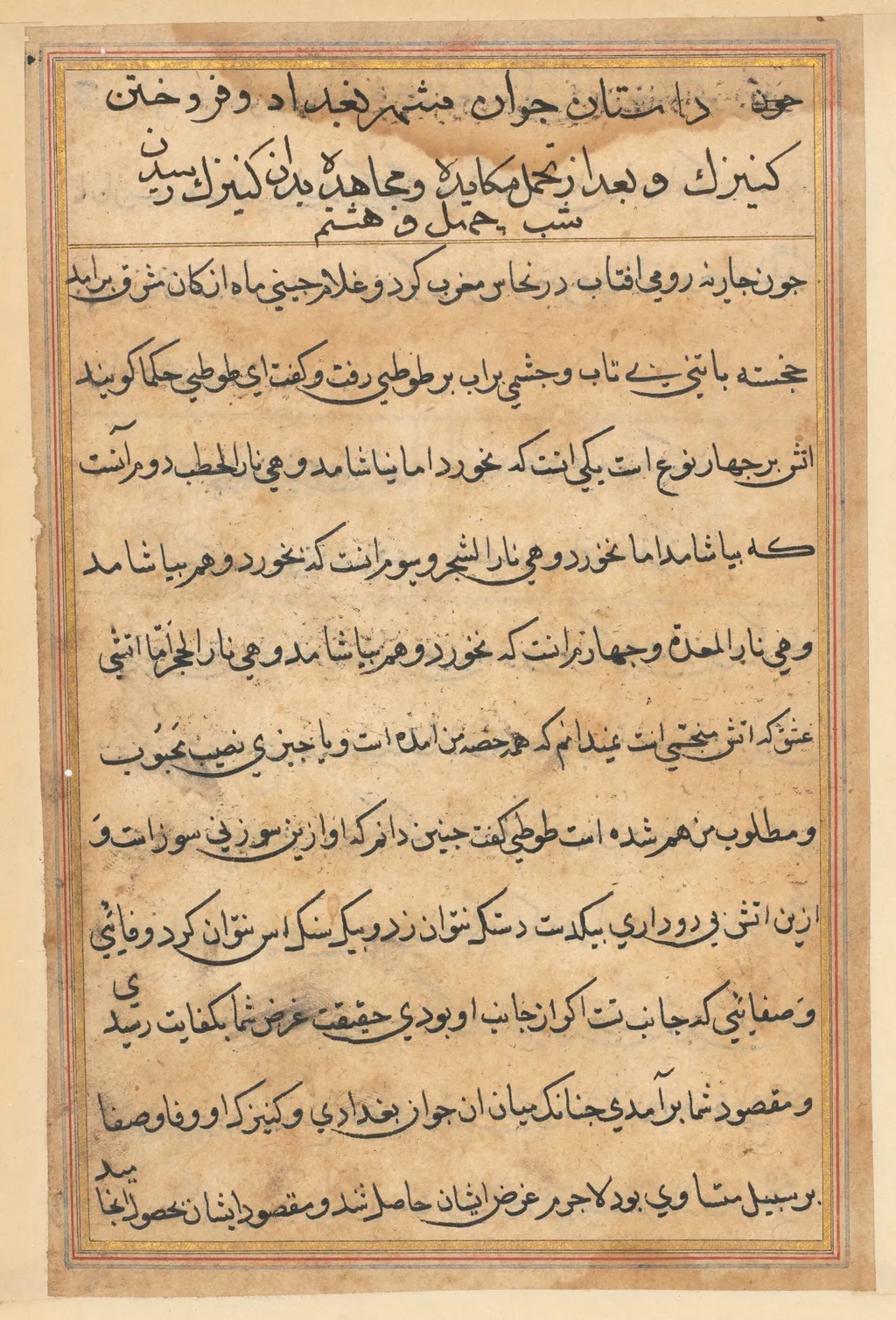
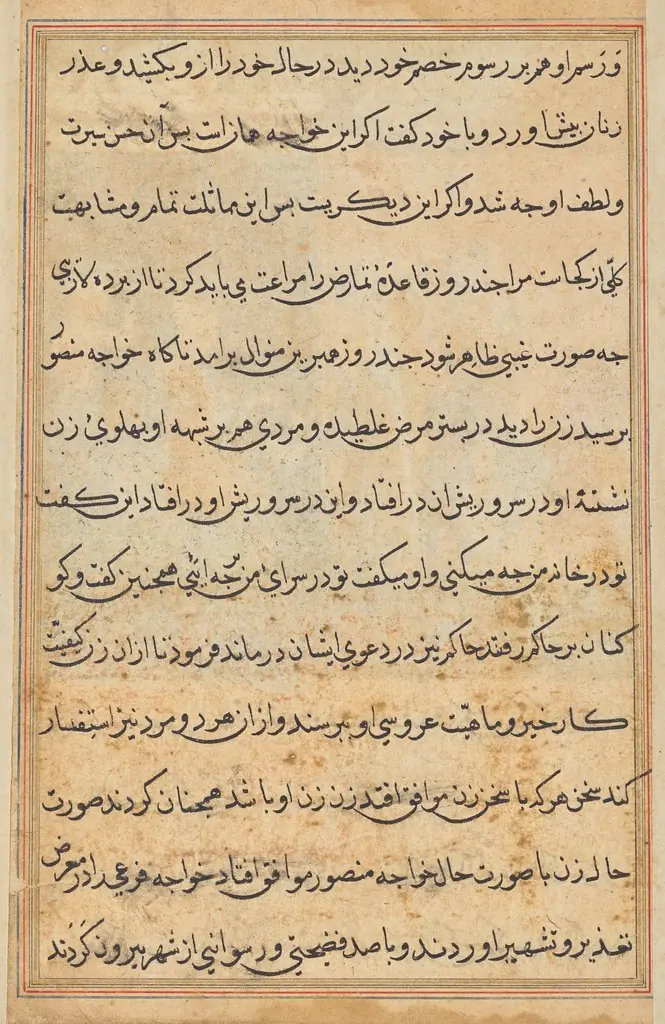
Page from Tales of a Parrot (Tuti-nama): text page is an unspecified painting. It dates from 1560 and is held in the collection of the Cleveland Museum of Art. The object is a single page from the illustrated manuscript Tales of a Parrot (Tuti‑nama).
About this work
Subject & Meaning
The work reflects the cultural milieu of the Mughal court in India, where Persian literary themes were adapted into miniature painting traditions.
The page depicts a narrative scene from the Persian tale Tuti-nama, showing a parrot recounting moral stories to a prince. The iconography includes a richly patterned textile background and a stylized bird rendered in flat planes of color, typical of 16th-century Mughal manuscript illustration. Symbolically, the parrot represents wisdom and the transmission of moral instruction, while the text itself serves as a didactic device linking visual art to ethical discourse.
The work reflects the cultural milieu of the Mughal court in India, where Persian literary themes were adapted into miniature painting traditions.
The manuscript leaf originates from a Persianate artistic milieu that flourished under Mughal patronage, blending Persian literary motifs with Indian visual sensibilities. Its creation in 1560 places it within the early period of Mughal artistic production, when court workshops synthesized Persian manuscript traditions with local stylistic elements, resulting in works that communicated layered meanings through both narrative content and visual symbolism.
History & Provenance
The text page from the Tales of a Parrot (Tuti-nama) was created circa 1560 during the Mughal Empire period, aligning with the manuscript’s known production timeline under imperial patronage. It entered the Cleveland Museum of Art’s collection in 1962 as part of an acquisition (accession number 1962.279.304.a) from an unspecified prior owner. The Cleveland Museum of Art holds the work, where it remains in Cleveland, Ohio.
Overview
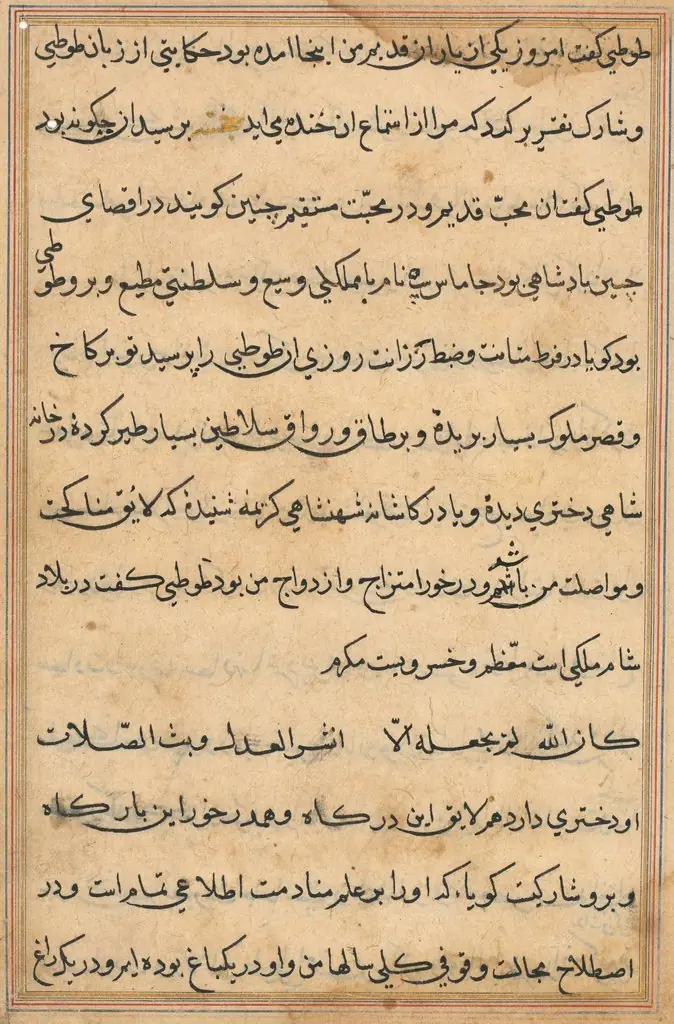
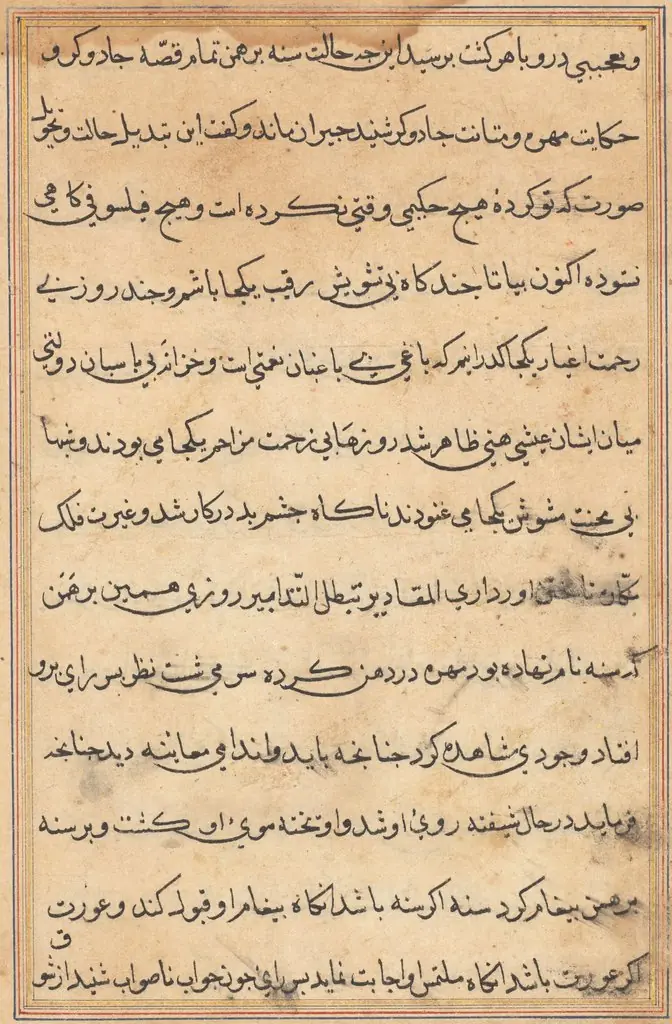
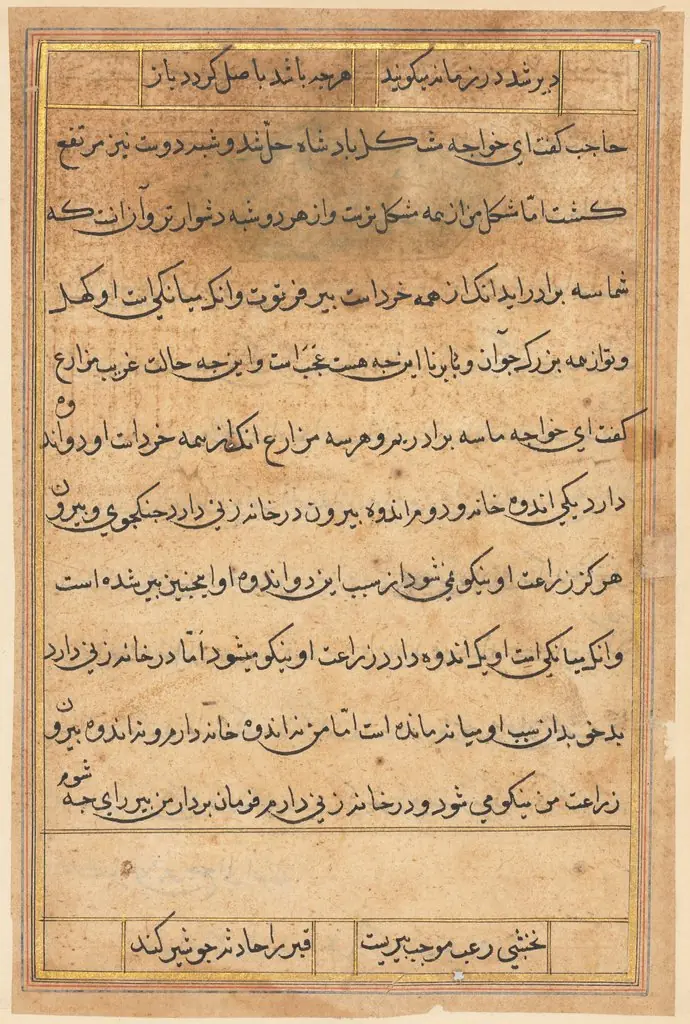
The object is a single page from the illustrated manuscript Tales of a Parrot (Tuti‑nama). Rendered on a light‑tan folio, the surface is filled with a continuous block of black calligraphic script, organized in evenly spaced lines. A narrow red border encloses the page, with a subtle blue line running just inside the margin.
Technique & Style
The calligraphy displays a refined, flowing hand, characteristic of high‑quality Persian manuscript production. The script is executed in black ink on paper, while the decorative framing employs thin red pigment and a faint blue line, providing a restrained yet elegant visual accent that highlights the textual field without overwhelming it.
Artist & collection

- Page from Tales of a Parrot (Tuti-nama): text page
 Page from Tales of a Parrot (Tuti-nama): text page
 Page from Tales of a Parrot (Tuti-nama): text page
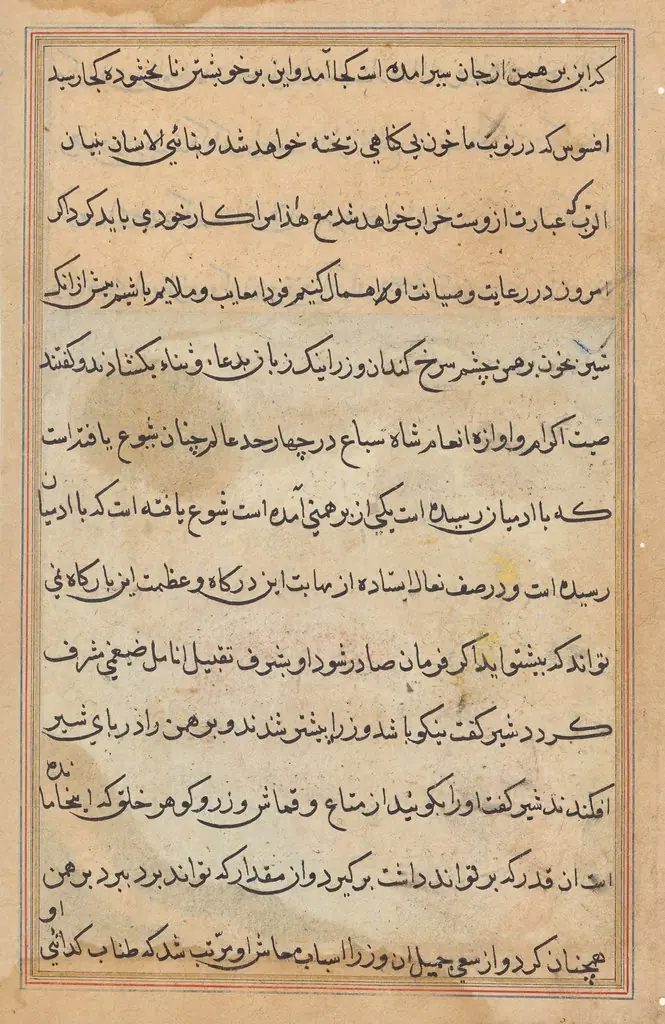 Page from Tales of a Parrot (Tuti-nama): text page
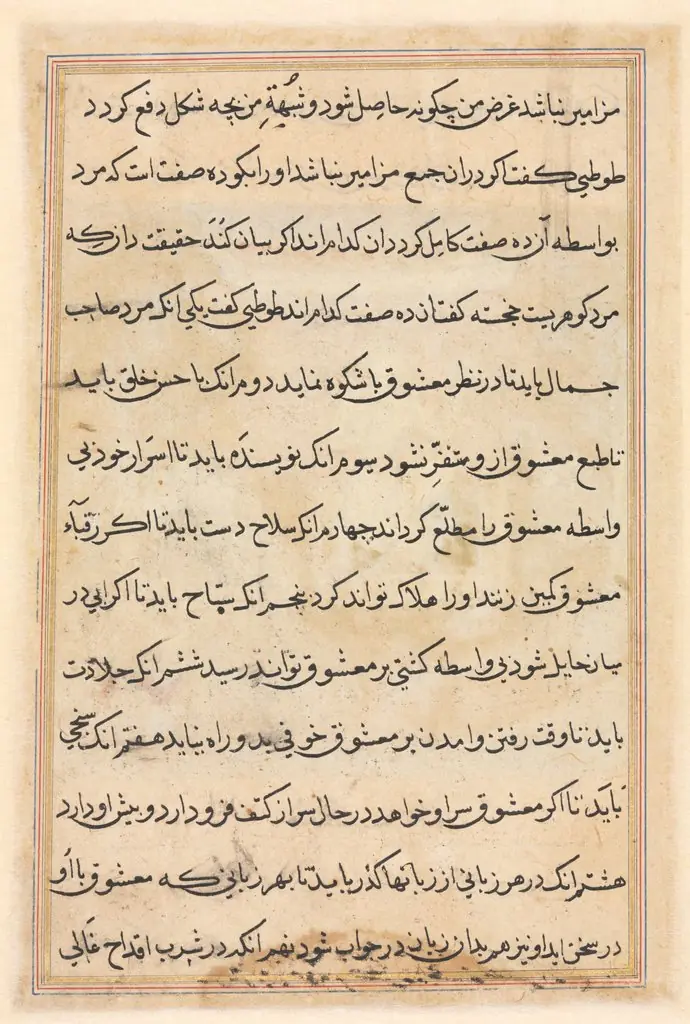 Page from Tales of a Parrot (Tuti-nama): text page
 Page from Tales of a Parrot (Tuti-nama): text page
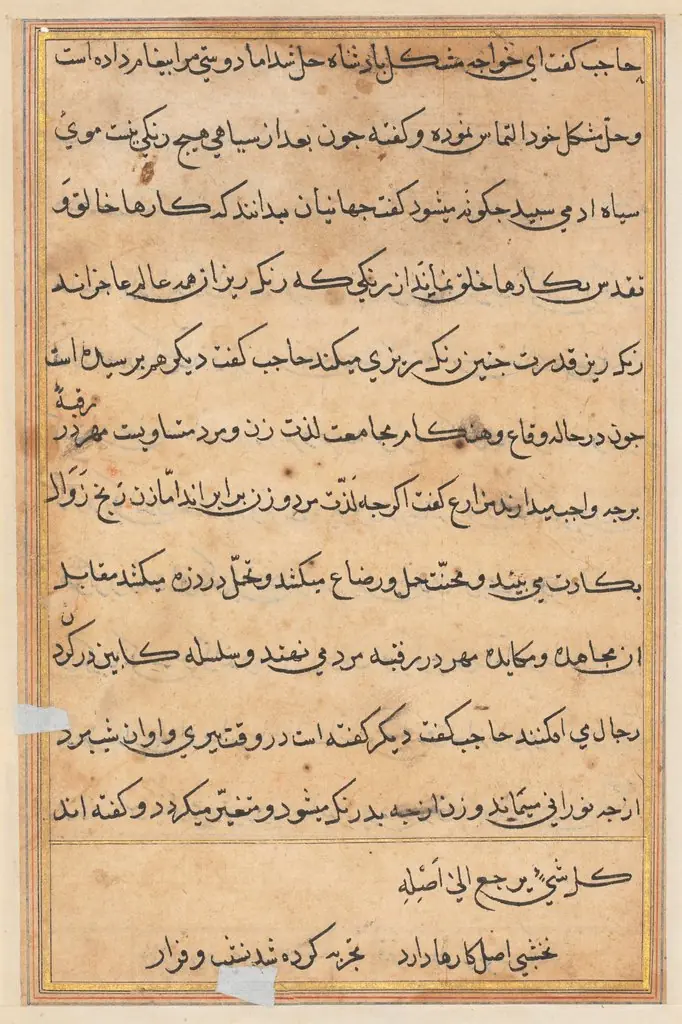 Page from Tales of a Parrot (Tuti-nama): text page
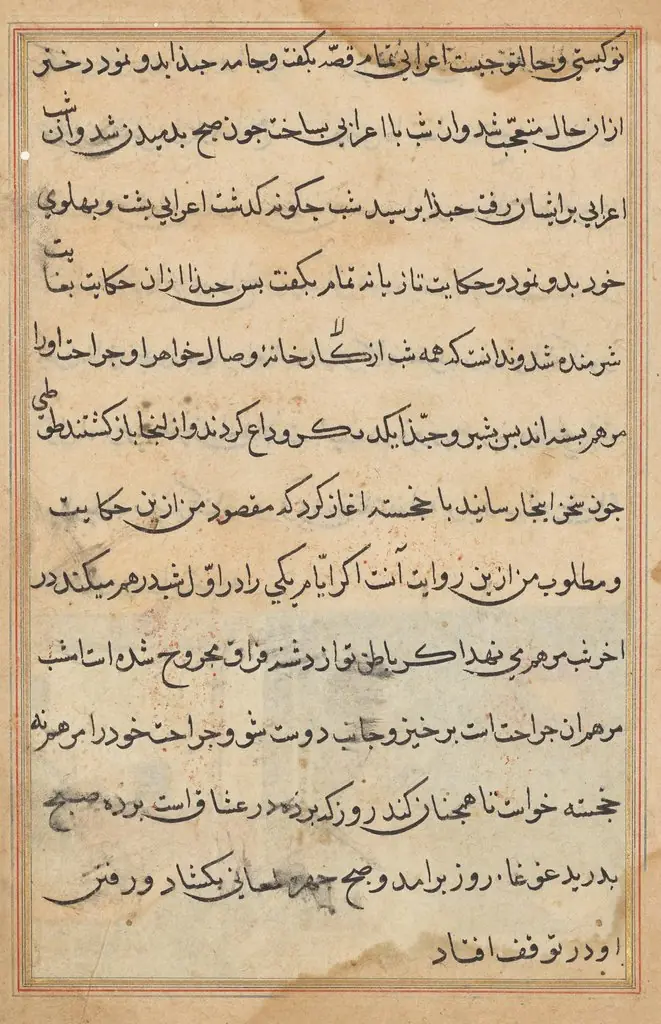 Page from Tales of a Parrot (Tuti-nama): text page
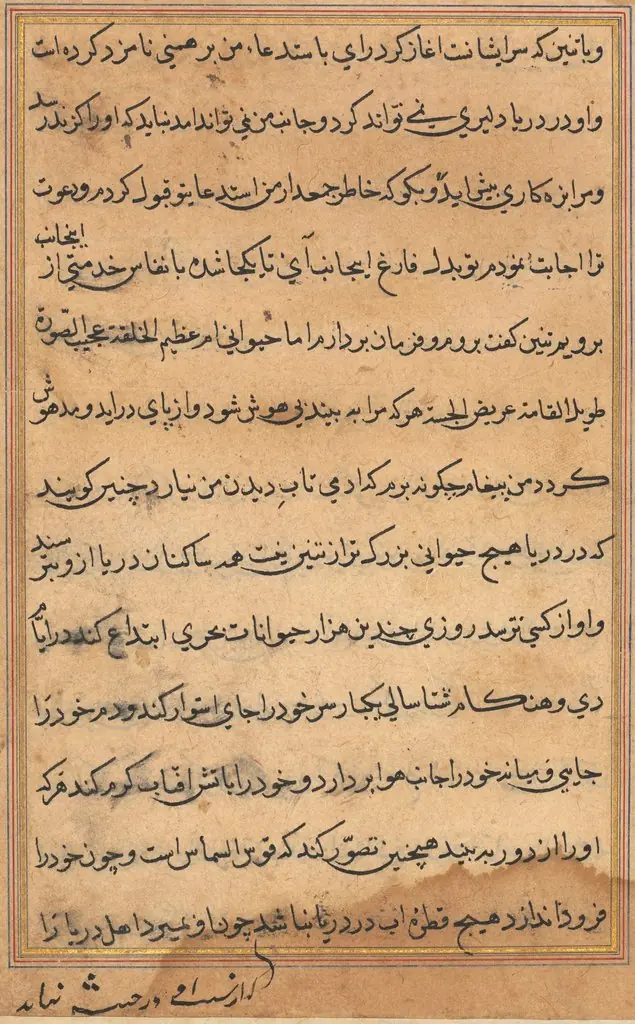 Page from Tales of a Parrot (Tuti-nama): text page
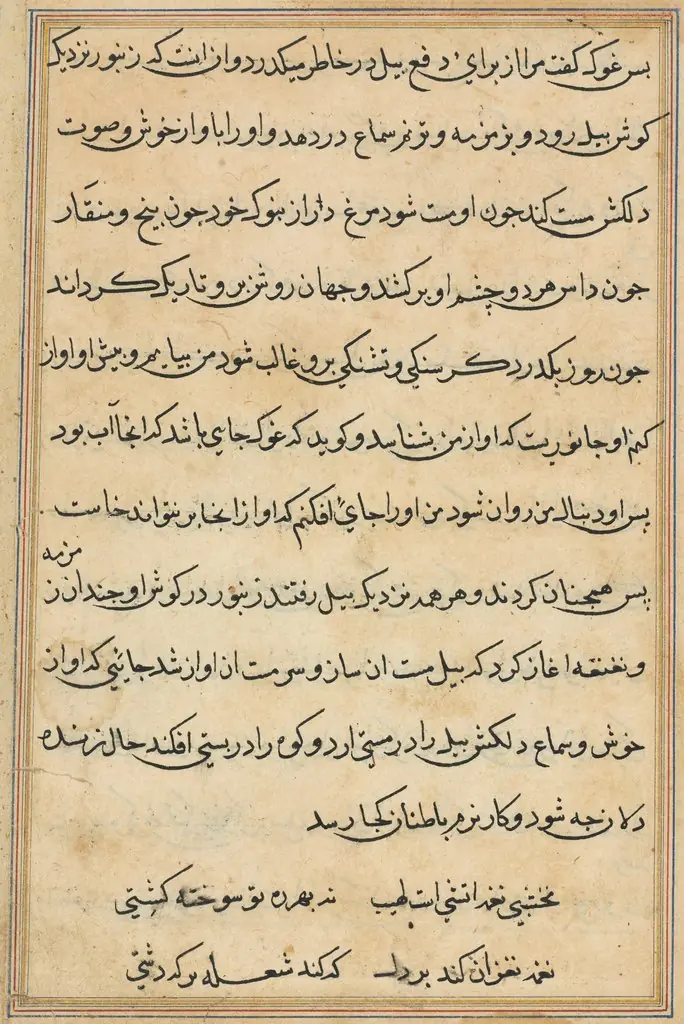 Page from Tales of a Parrot (Tuti-nama): text page
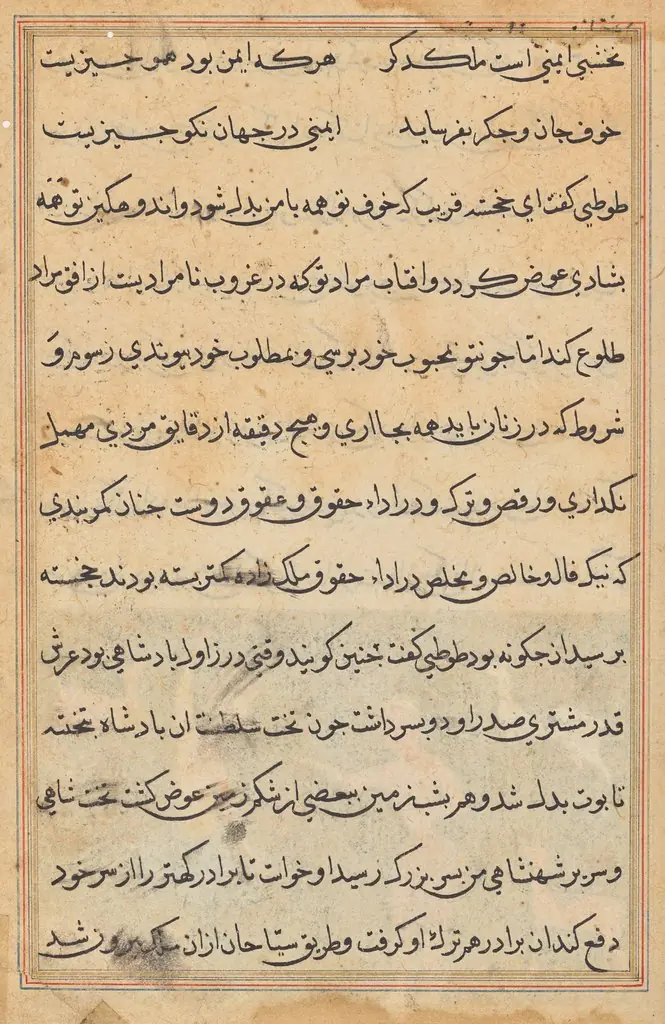 Page from Tales of a Parrot (Tuti-nama): text page
 Page from Tales of a Parrot (Tuti-nama): text page