Artwork
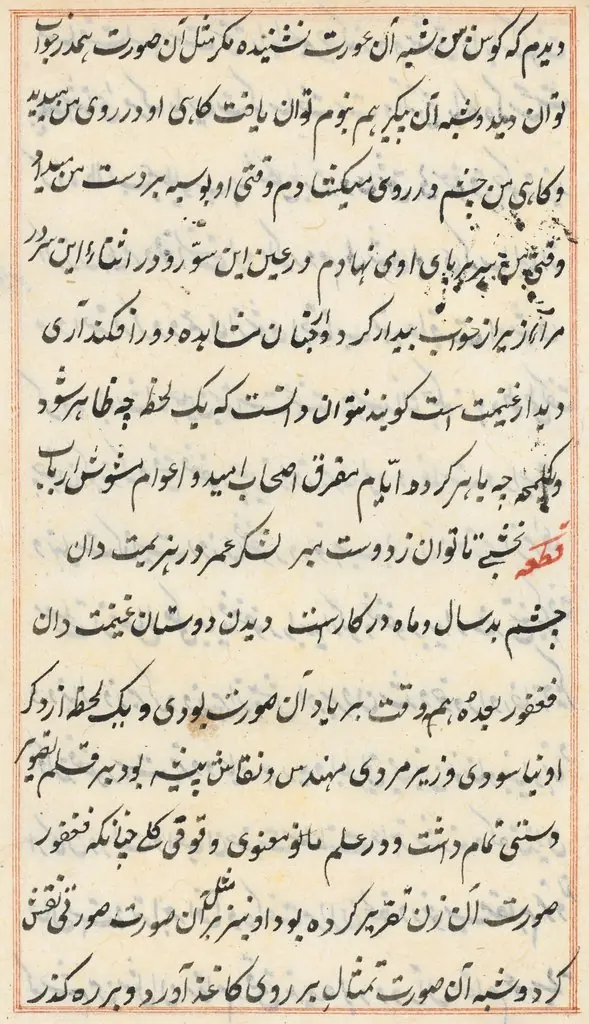
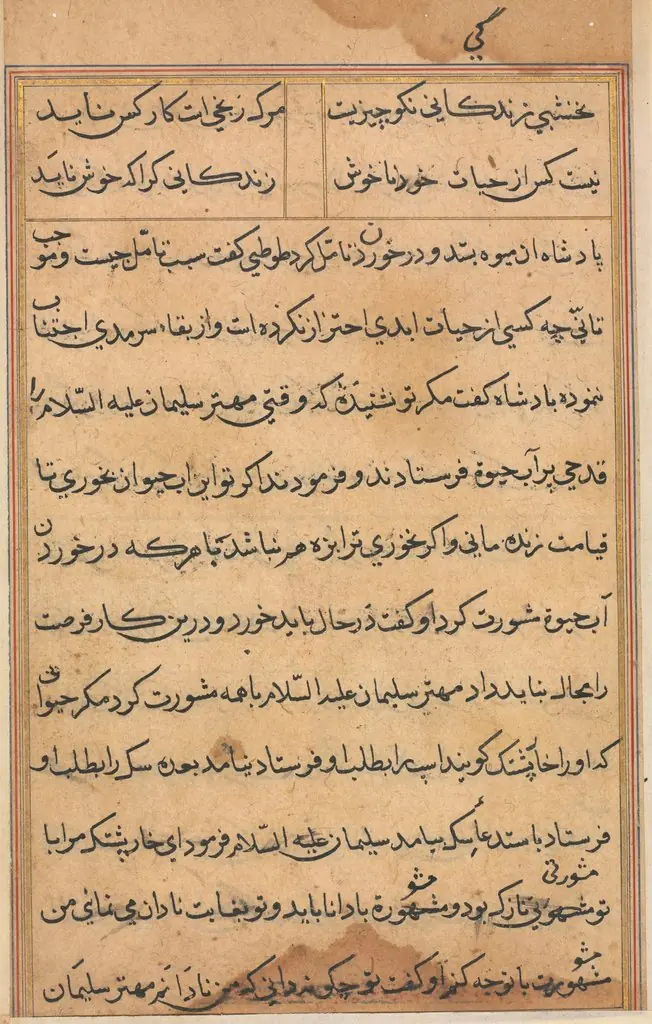
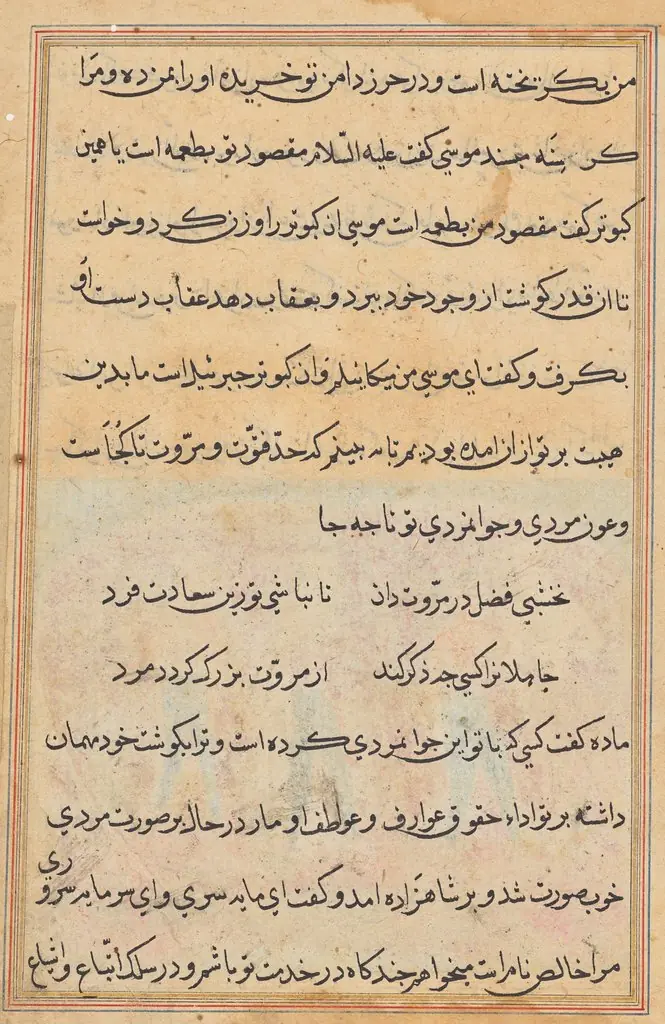
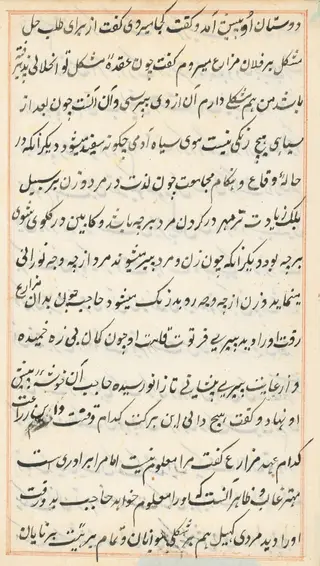
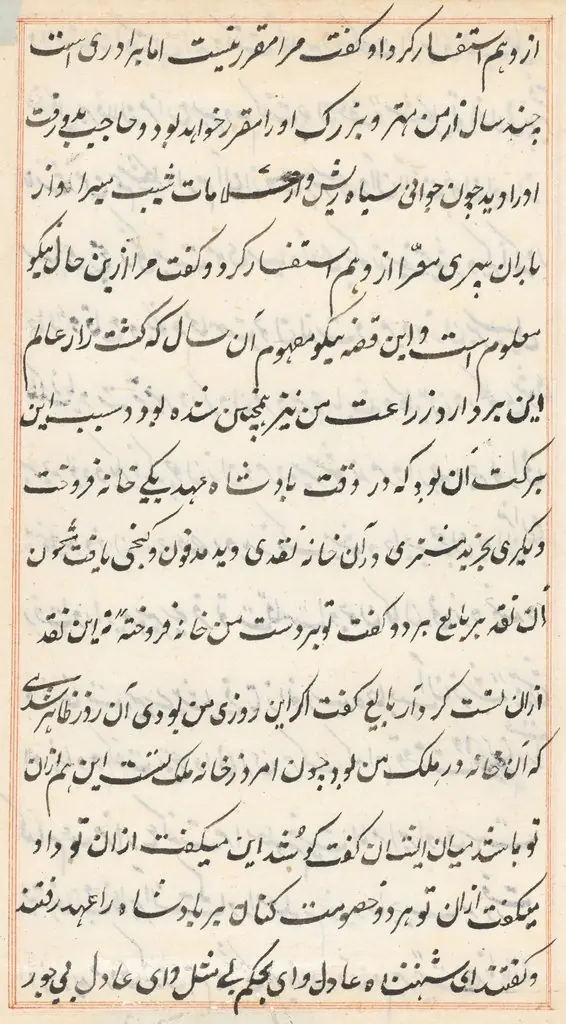
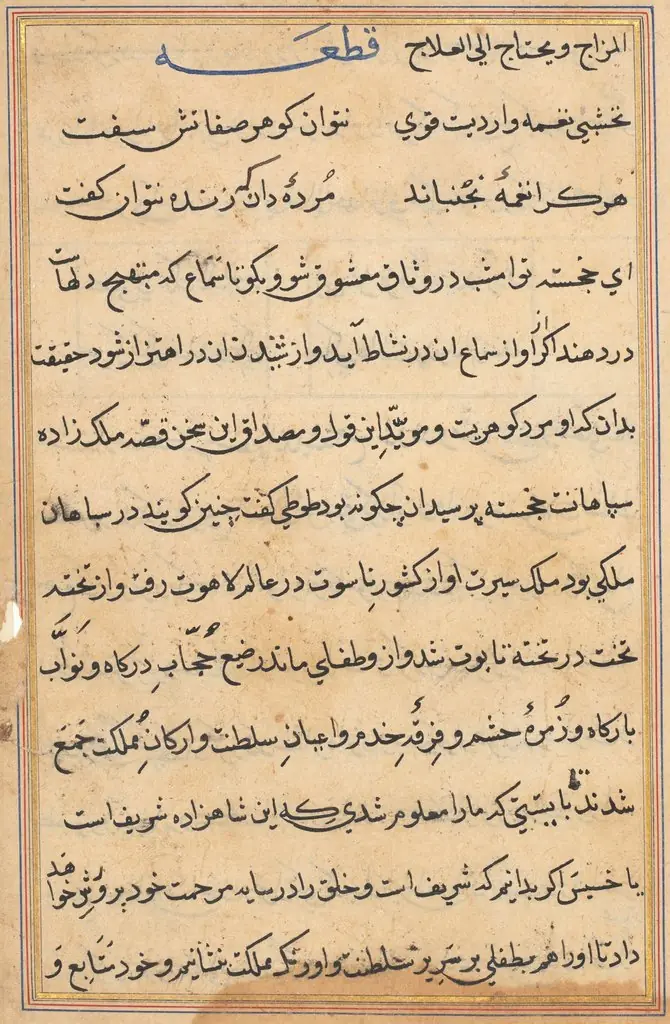
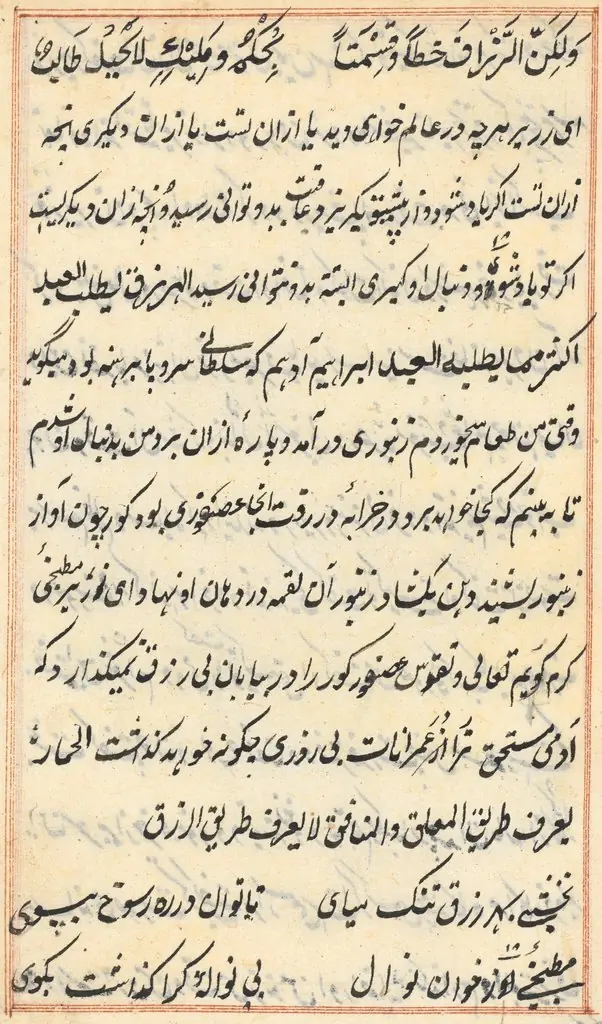
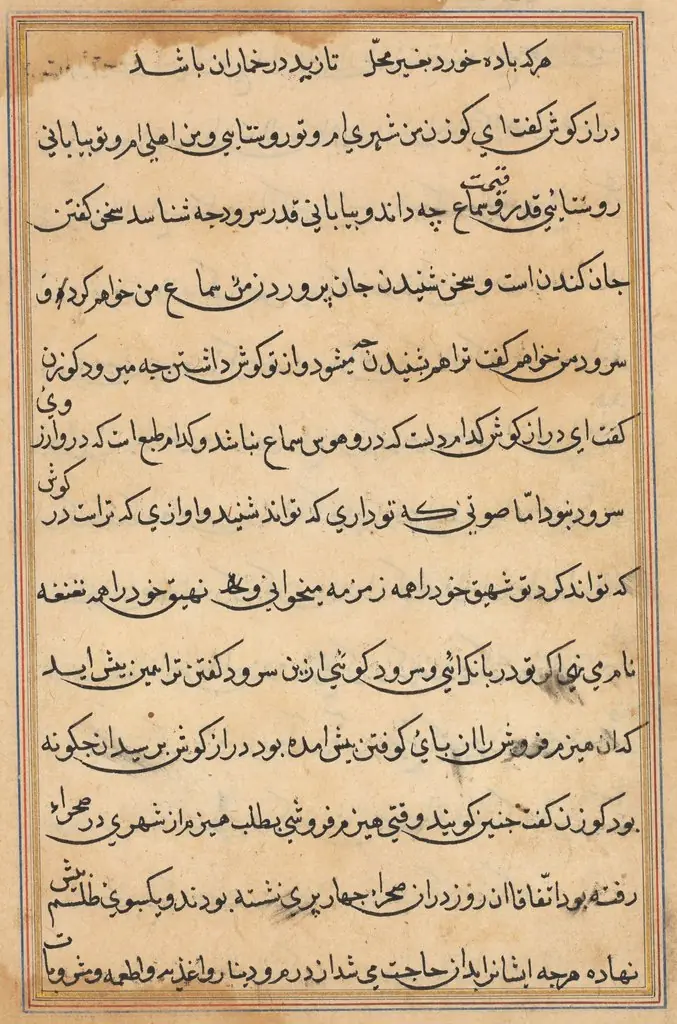
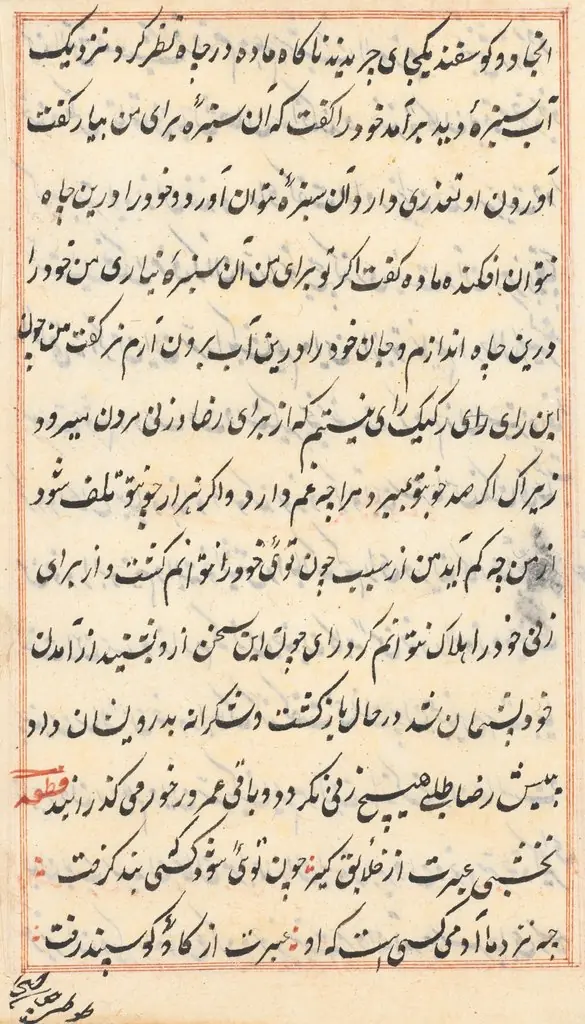
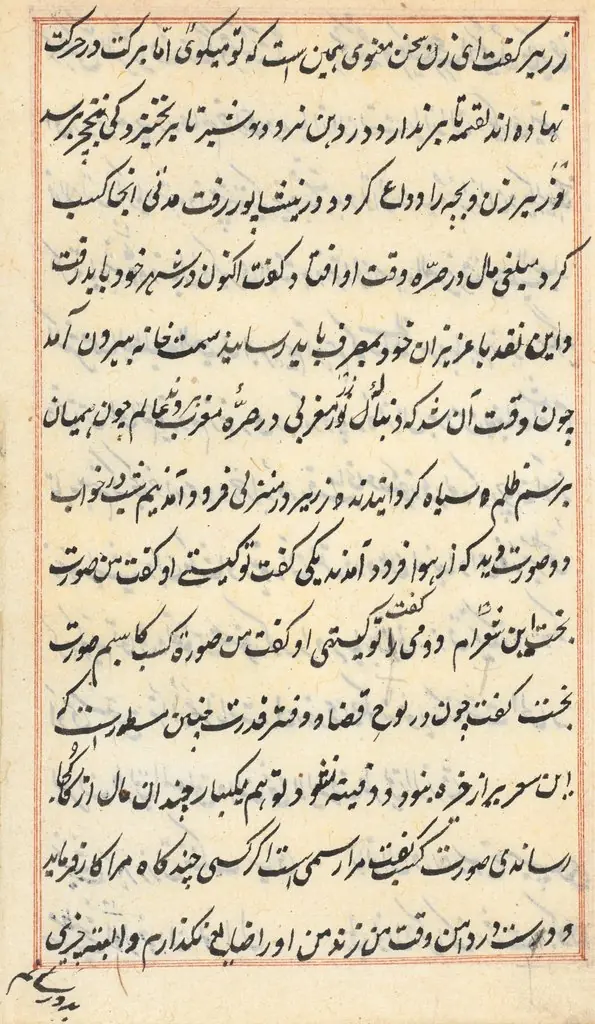
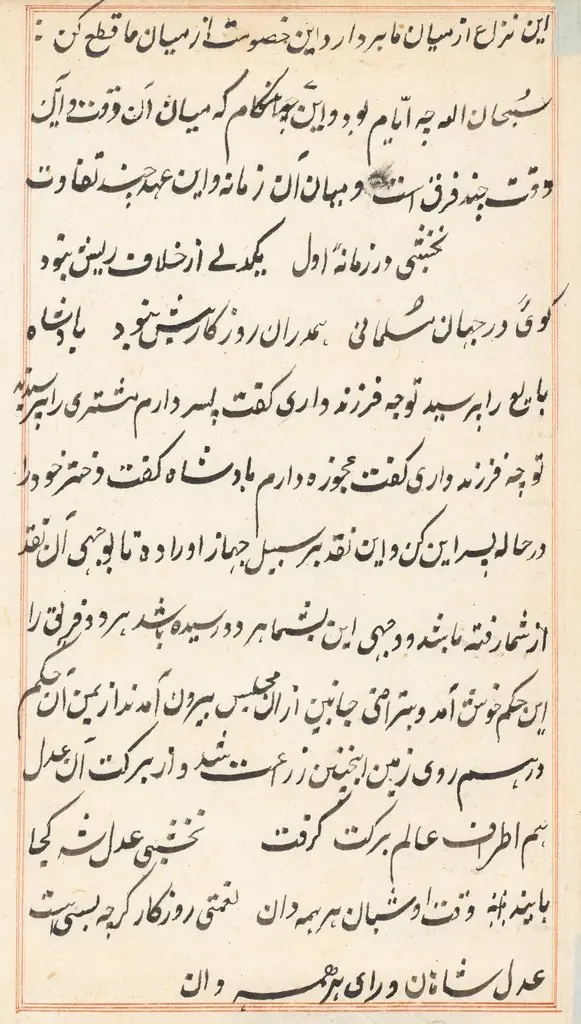
Page from Tales of a Parrot (Tuti-nama): text page
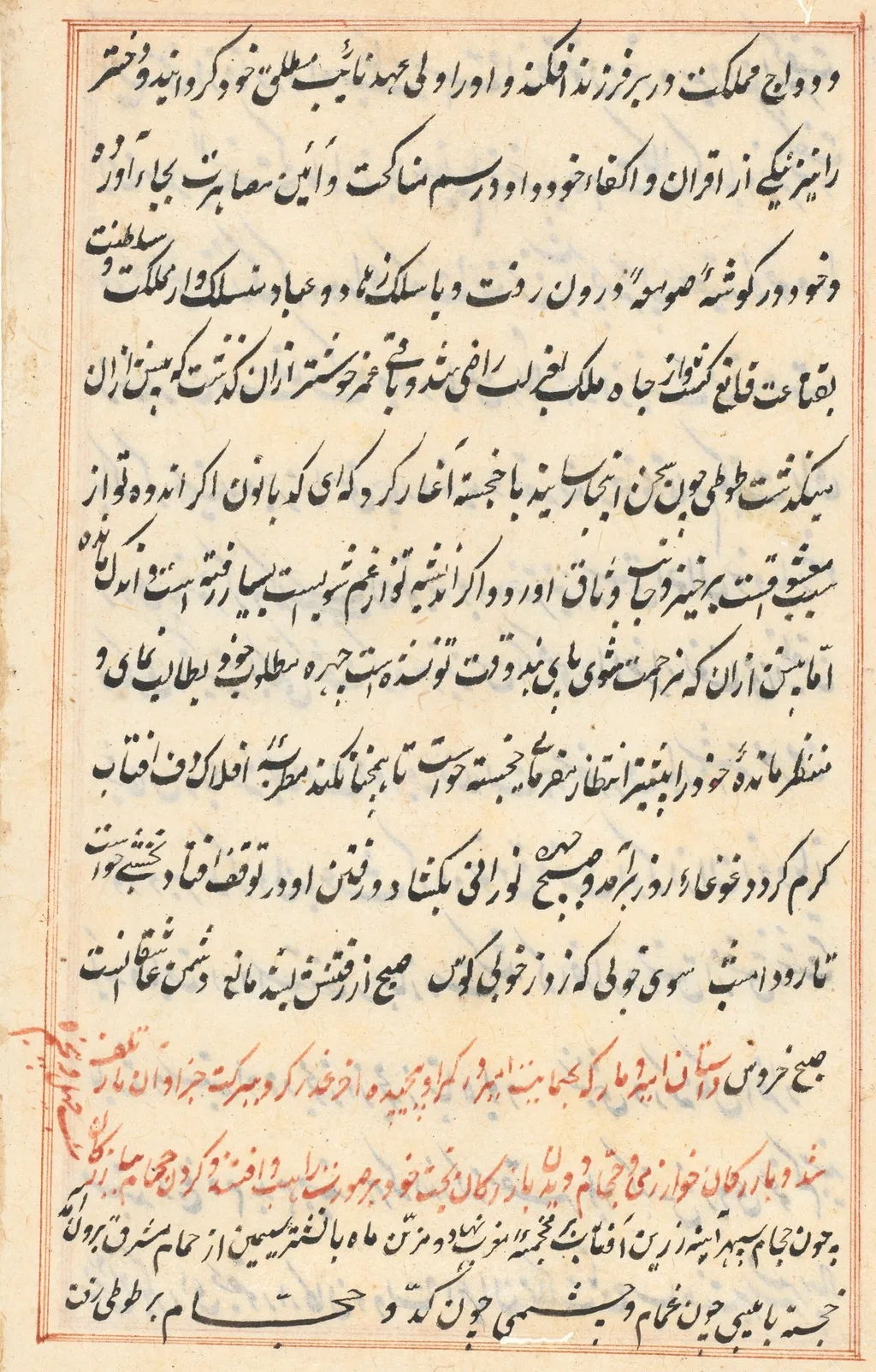
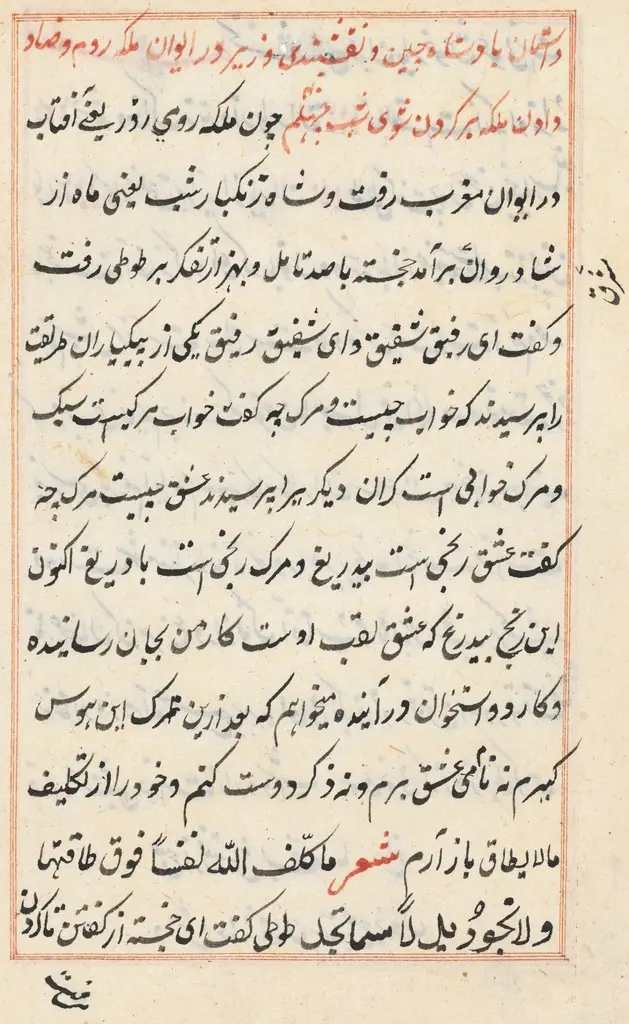
Page from Tales of a Parrot (Tuti-nama): text page is an unspecified painting. It dates from 1560 and is held in the collection of the Cleveland Museum of Art. The object is a single leaf from the Persian manuscript known as the Tuti‑nama or Tales of a Parrot.
About this work
Subject & Meaning
It depicts a narrative scene featuring a parrot and associated moral teachings, reflecting Sufi themes of wisdom and divine love.
The page originates from the Tuti-nama, a 16th-century Persian illustrated manuscript composed in Mughal India. It depicts a narrative scene featuring a parrot and associated moral teachings, reflecting Sufi themes of wisdom and divine love. The work belongs to the Mughal artistic tradition, blending Persian literary subjects with Indian court patronage, and exemplifies the intercultural exchange evident in Cleveland Museum of Art holdings.
The parrot functions symbolically within the manuscript's didactic framework, representing moral instruction and the transmission of spiritual lessons through allegorical storytelling. This iconographic element underscores the manuscript's didactic purpose, using animal figures to convey ethical and religious concepts in accessible visual form.
The painting's creation in the Mughal Empire around 1560 highlights the synthesis of Persian artistic conventions with local Indian aesthetics, marking a significant phase in the development of manuscript illumination under imperial patronage.
History & Provenance
The page was created in 1560 within the Mughal Empire, as recorded in its cataloguing data. The work is held in the collection of the Cleveland Museum of Art, where it is identified by the accession number 1962.279.285.b. No information is available regarding its original commissioner, earlier ownership, or chain of custody prior to its acquisition by the museum.
The page is held in the collection of the Cleveland Museum of Art, where it bears the accession number 1962.279.285.b. The work entered the museum’s holdings in 1962, as indicated by the accession number. According to the available sources, the folio has not been included in any exhibitions or loan shows, and no exhibition history is recorded for this object. Consequently, its provenance is limited to its acquisition by the Cleveland Museum of Art.
Overview
The object is a single leaf from the Persian manuscript known as the Tuti‑nama or Tales of a Parrot. It consists of a page of text rendered in black ink on a warm, beige paper, the ink forming a flowing, formal cursive script arranged in vertical columns.
Technique & Style
The calligraphy displays a refined, cursive hand characteristic of Persian manuscript tradition in the late medieval period. Ink is applied with a fine reed pen, producing deep, uniform strokes that contrast sharply with the paper’s light tone, while the careful spacing of lines creates a rhythmic visual flow.
Context
Manuscript production in the Islamic world combined literary, artistic, and decorative practices. The Tuti‑nama exemplifies this synthesis, pairing moral storytelling with sophisticated calligraphic art, and it was commonly used in educational settings for the instruction of young readers.
Artist & collection

- Page from Tales of a Parrot (Tuti-nama): text page
 Page from Tales of a Parrot (Tuti-nama): text page
 Page from Tales of a Parrot (Tuti-nama): text page
 Page from Tales of a Parrot (Tuti-nama): text page
 Page from Tales of a Parrot (Tuti-nama): text page
 Page from Tales of a Parrot (Tuti-nama): text page
 Page from Tales of a Parrot (Tuti-nama): text page
 Page from Tales of a Parrot (Tuti-nama): text page
 Page from Tales of a Parrot (Tuti-nama): text page