Artwork
Page from Tales of a Parrot (Tuti-nama): text page
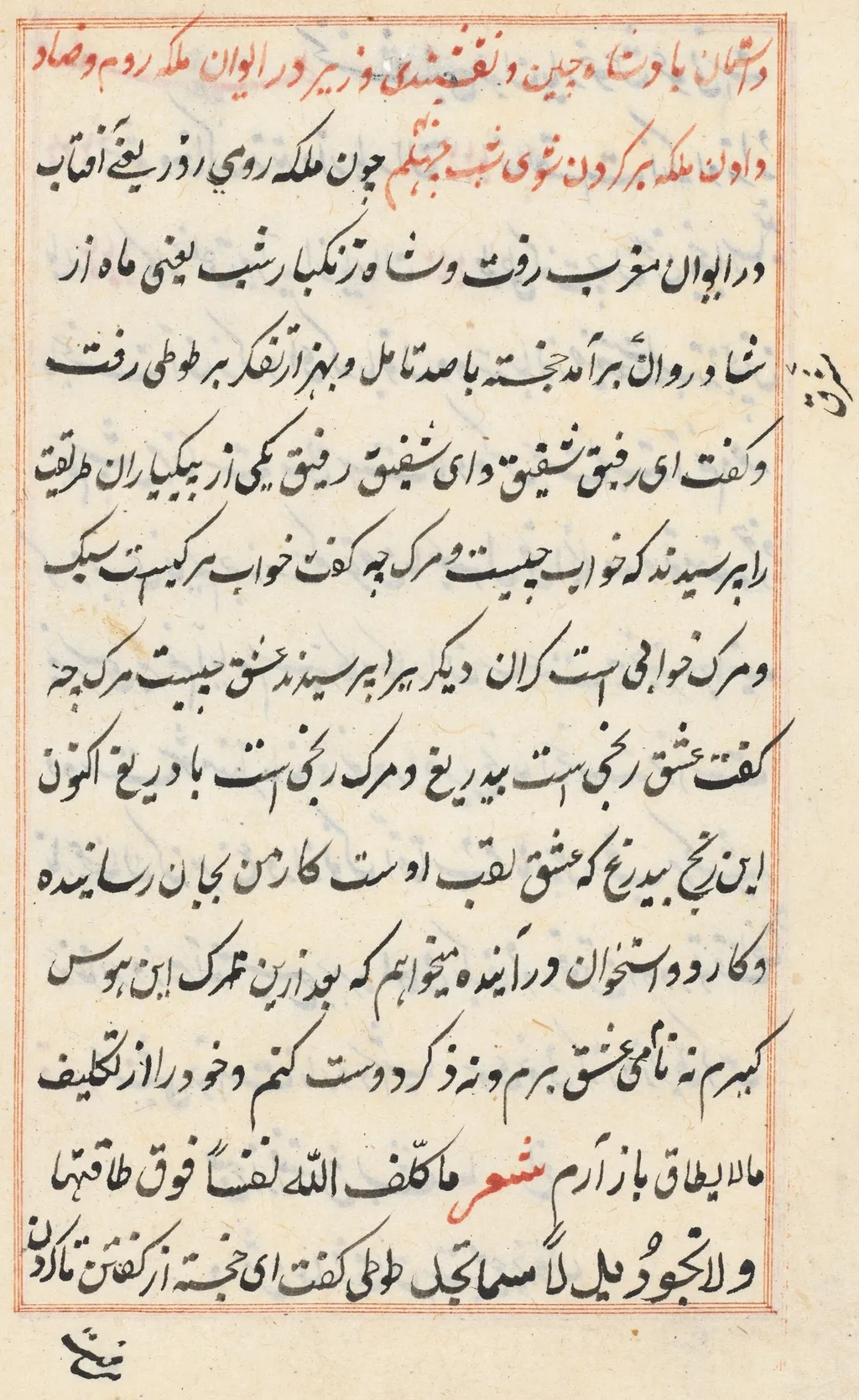
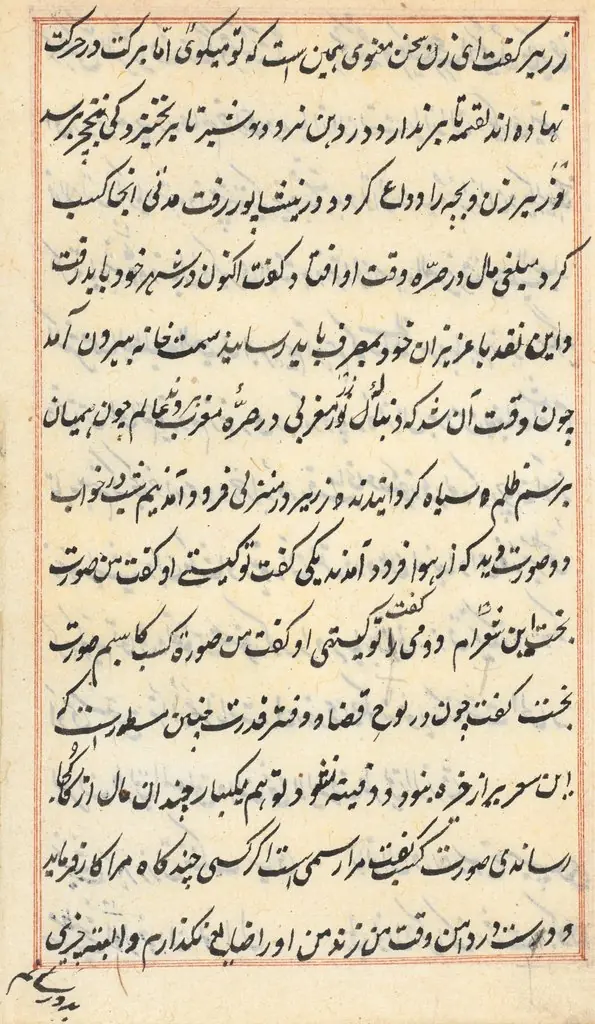
Page from Tales of a Parrot (Tuti-nama): text page is an unspecified painting. It dates from 1560 and is held in the collection of the Cleveland Museum of Art. This object is a single folio from the Persian illustrated manuscript known as the Tales of a Parrot, or Tuti‑nama.
About this work
Subject & Meaning
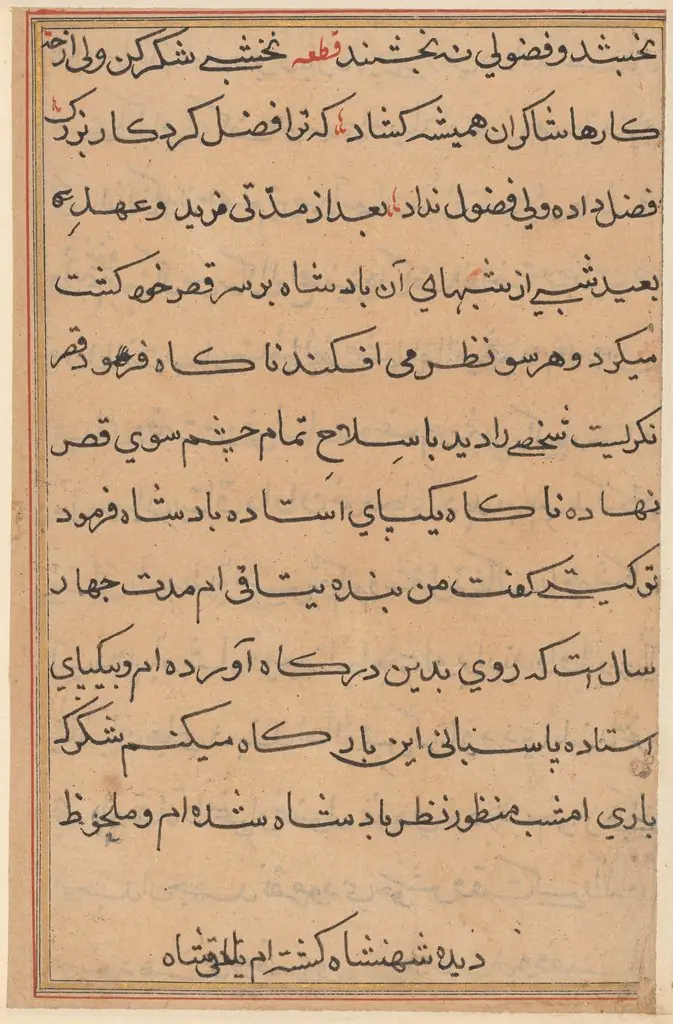
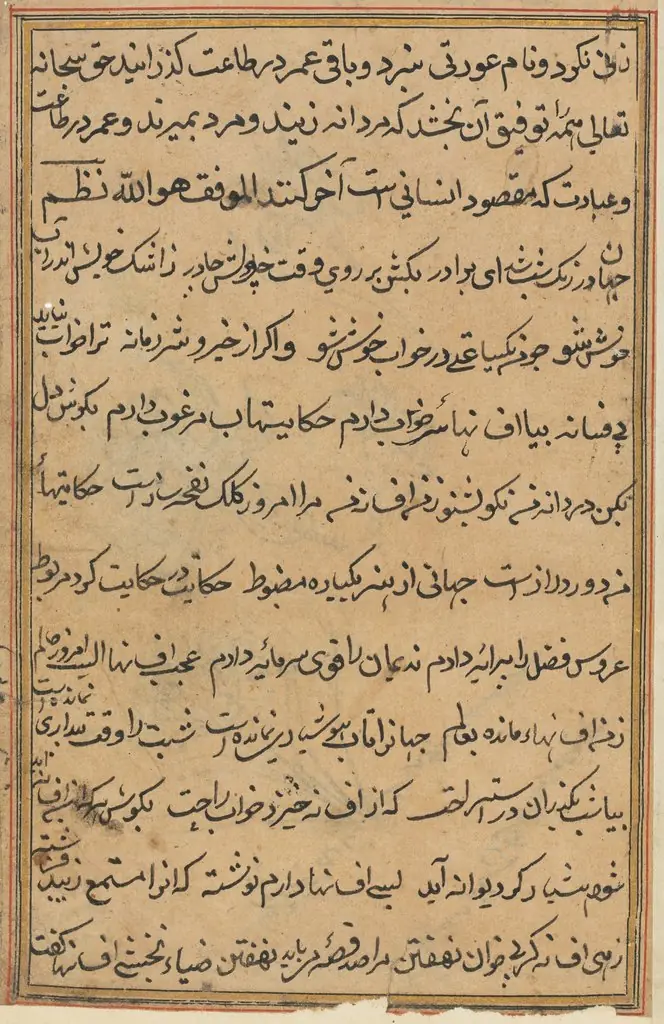
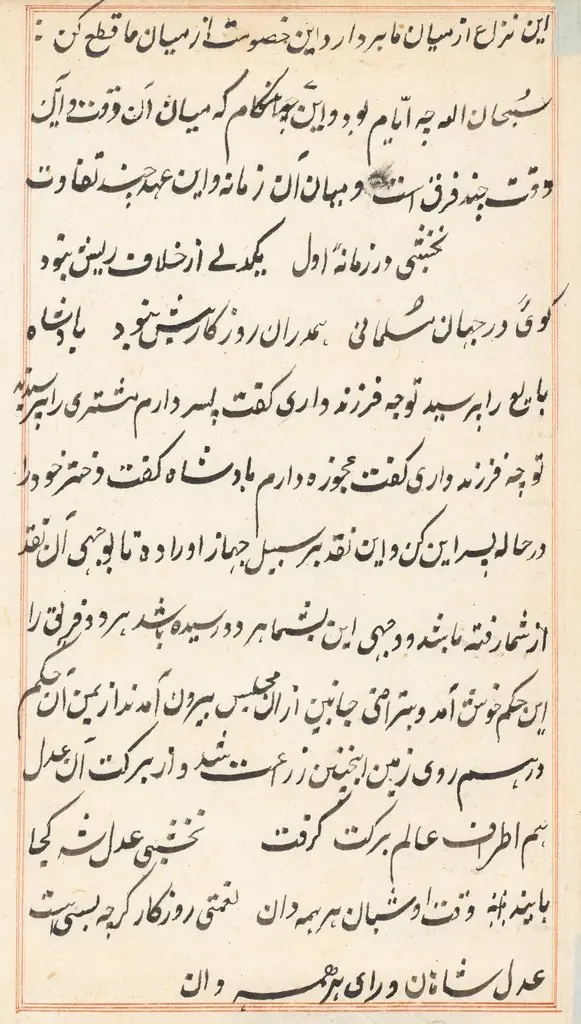
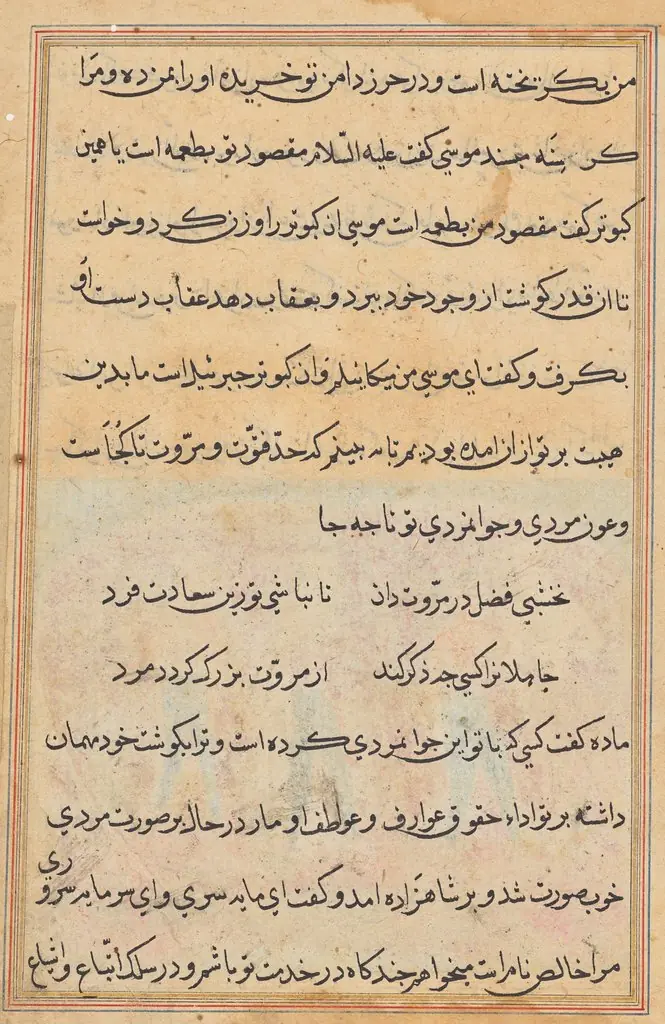
As a text page rather than an illustration, the leaf consists of calligraphy conveying part of the narrative.
This is a text page from the Tales of a Parrot (Tuti-nama), a Persian collection of moral tales framed by the device of a parrot that detains its mistress each night with a story. As a text page rather than an illustration, the leaf consists of calligraphy conveying part of the narrative. The Tuti-nama was among the early manuscript projects undertaken in the imperial Mughal workshop, and its didactic tales transmit ethical lessons characteristic of the literary culture of the sixteenth-century Mughal court.
History & Provenance
This text page from the Tales of a Parrot (Tuti-nama) was created around 1560 in the Mughal Empire and is attributed to an unknown hand, reflecting the collaborative workshop practices typical of Mughal manuscript production. While the commissioning patron is not identified in the available records, the page dates from the early decades of Mughal painting. It is held at the Cleveland Museum of Art, where it is catalogued under accession number 1962.279.251.b. Specific exhibition records are not detailed in the provided sources.
Overview
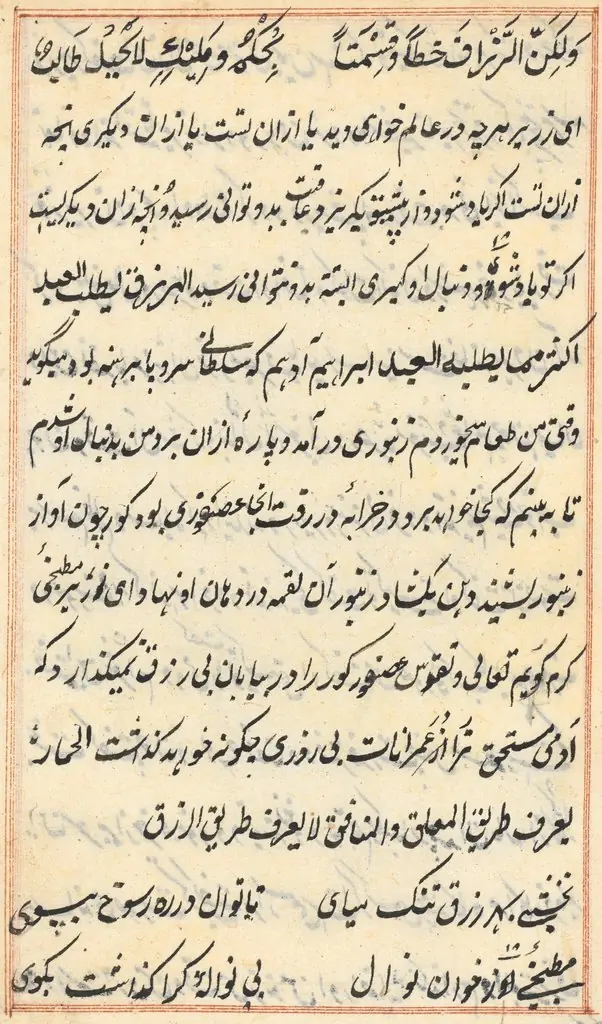
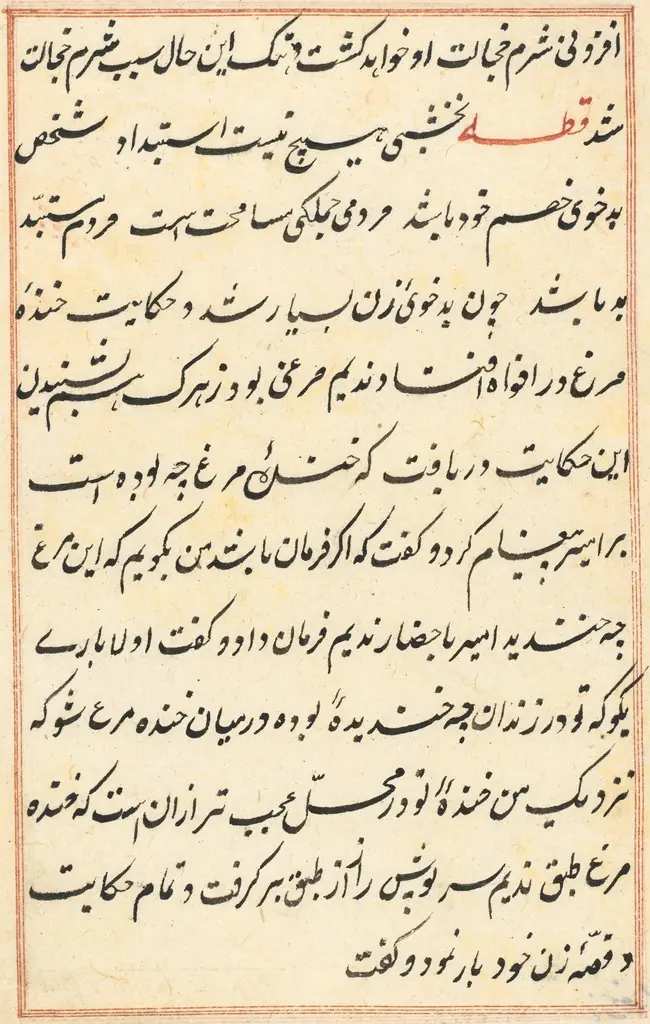
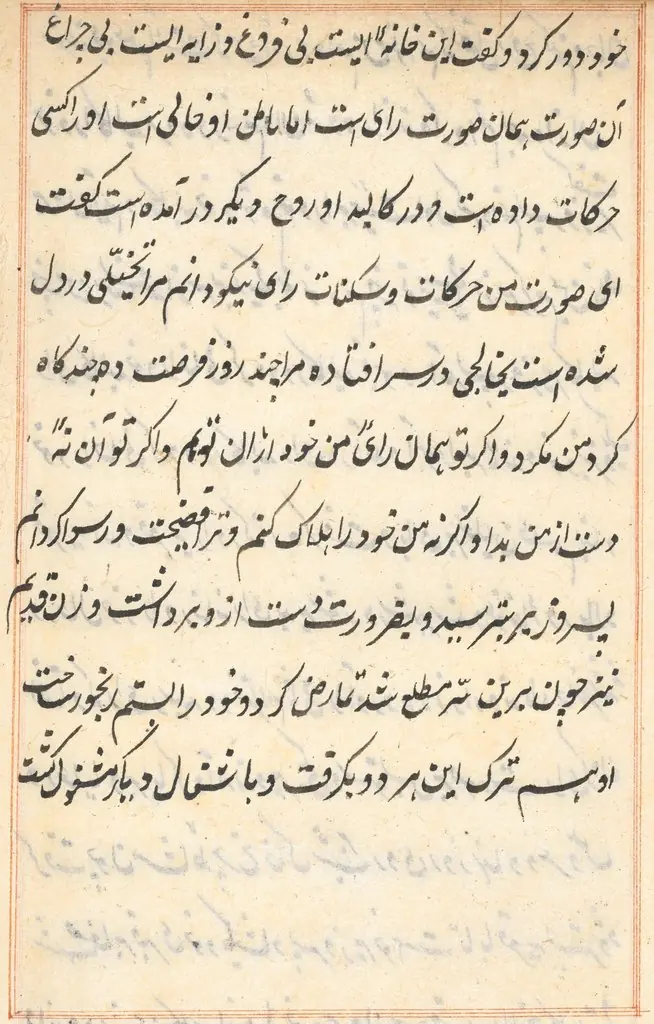
This object is a single folio from the Persian illustrated manuscript known as the Tales of a Parrot, or Tuti‑nama. The page consists of dense calligraphic text rendered in black ink, with strategic red highlights that draw attention to particular words or punctuation. A thin red line frames the page, providing a modest border.
Technique & Style
The calligraphy is executed in a flowing script, alternating between larger and smaller letterforms to create visual rhythm. Black ink forms the main body of the text, while a vivid red pigment, applied with a fine brush, highlights punctuation and important words. The background bears a subtle blue‑gray wash, providing contrast without overwhelming the script.
Context
Manuscript pages such as this were often produced in courtly workshops, where scribes and illuminators collaborated to create richly decorated books for elite patrons. The use of red ink for emphasis reflects a broader scribal convention in Islamic manuscripts, intended to aid oral recitation and private study.
Artist & collection

- Page from Tales of a Parrot (Tuti-nama): text page
 Page from Tales of a Parrot (Tuti-nama): text page
 Page from Tales of a Parrot (Tuti-nama): text page
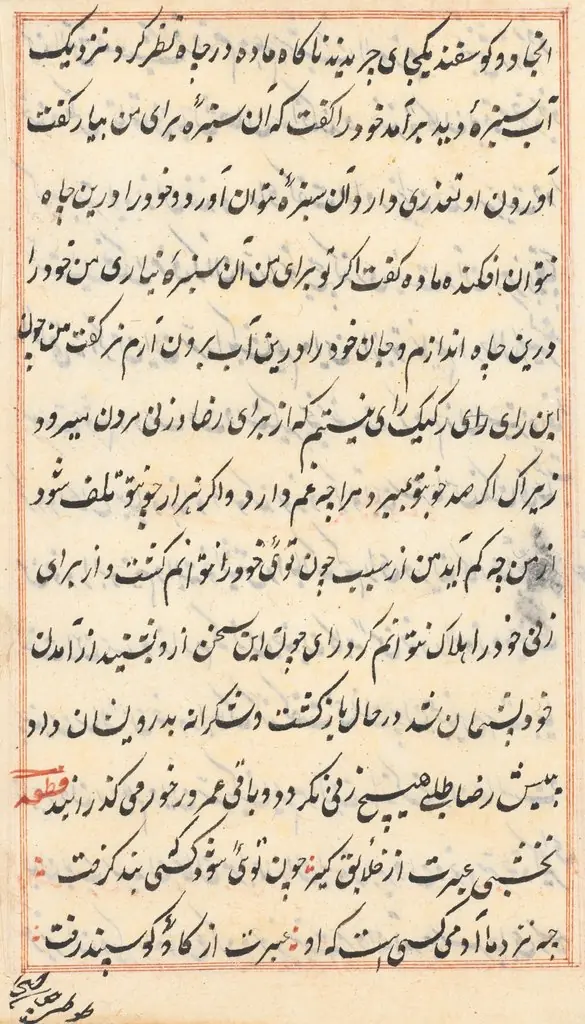 Page from Tales of a Parrot (Tuti-nama): text page
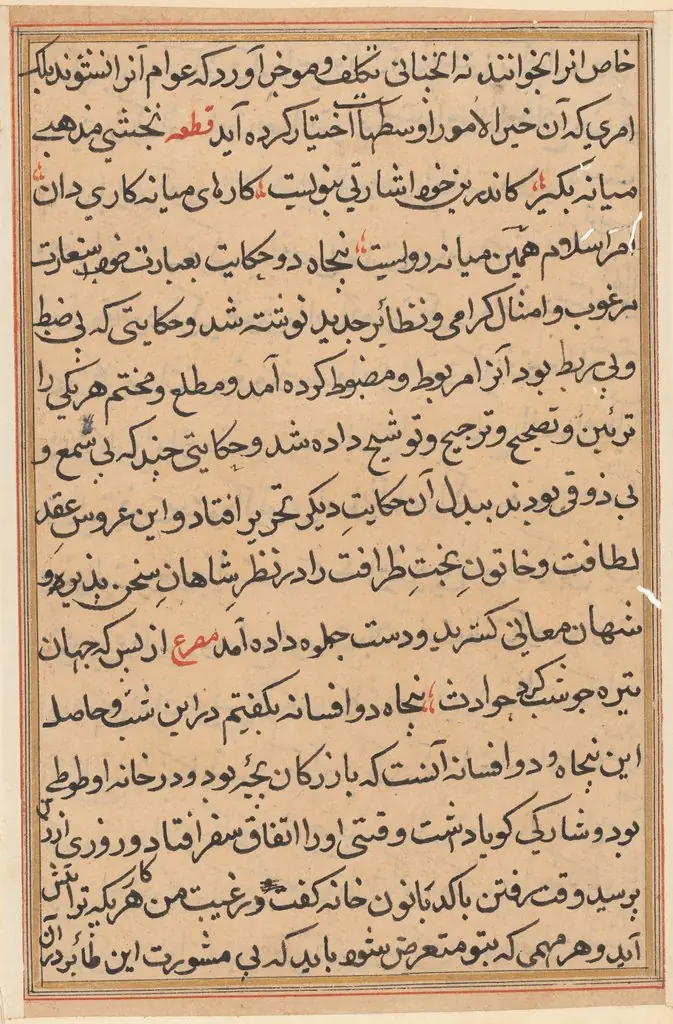 Page from Tales of a Parrot (Tuti-nama): text page
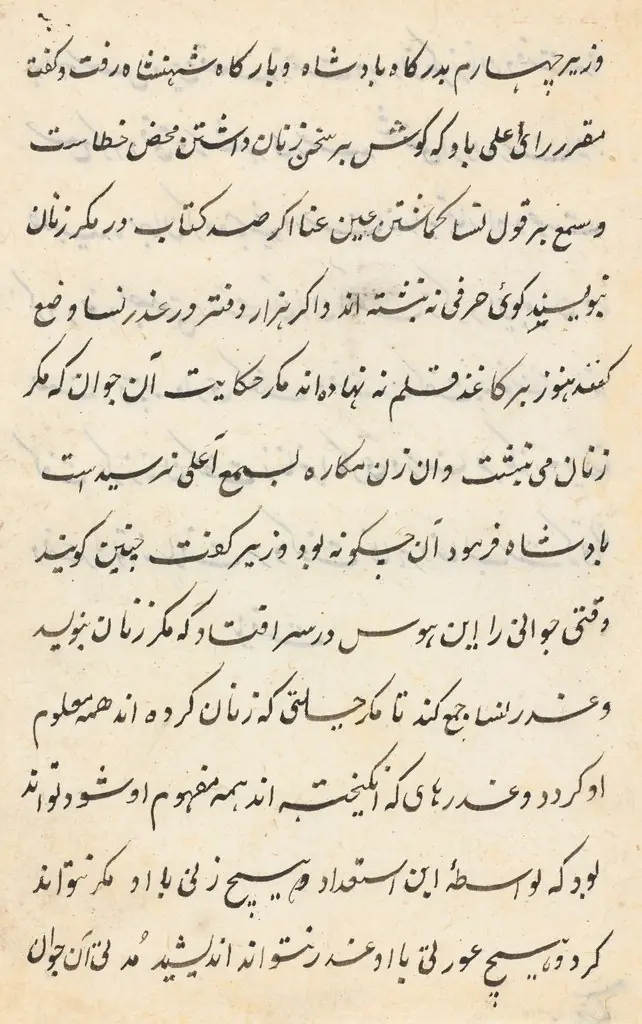 Page from Tales of a Parrot (Tuti-nama): text page
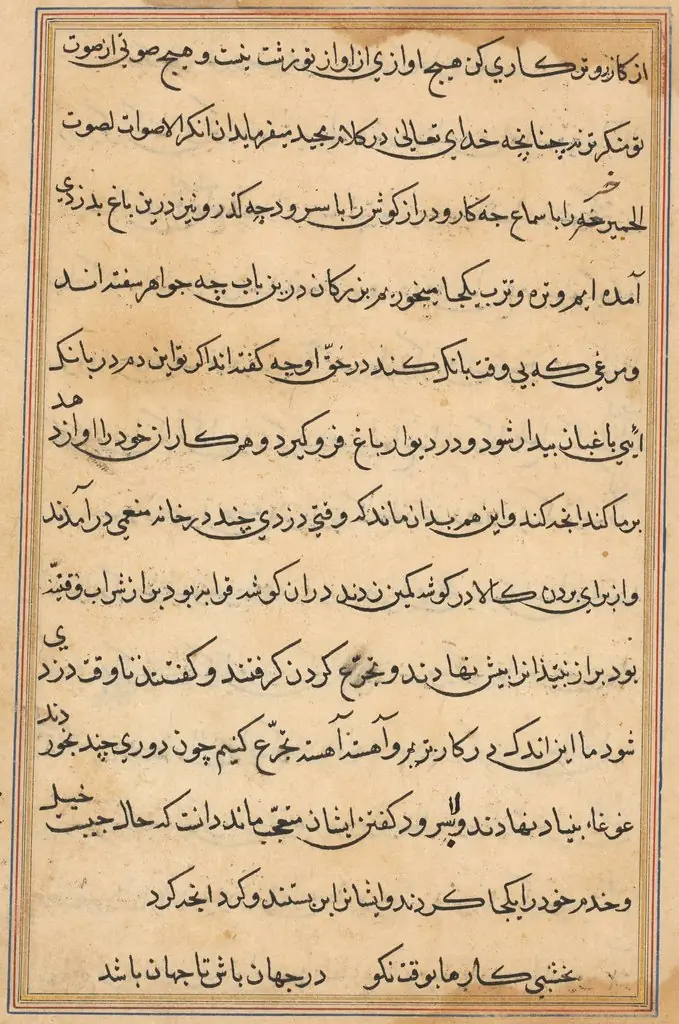 Page from Tales of a Parrot (Tuti-nama): text page
 Page from Tales of a Parrot (Tuti-nama): text page
 Page from Tales of a Parrot (Tuti-nama): text page
 Page from Tales of a Parrot (Tuti-nama): text page
 Page from Tales of a Parrot (Tuti-nama): text page
 Page from Tales of a Parrot (Tuti-nama): text page