Artwork
Page from Tales of a Parrot (Tuti-nama): text page
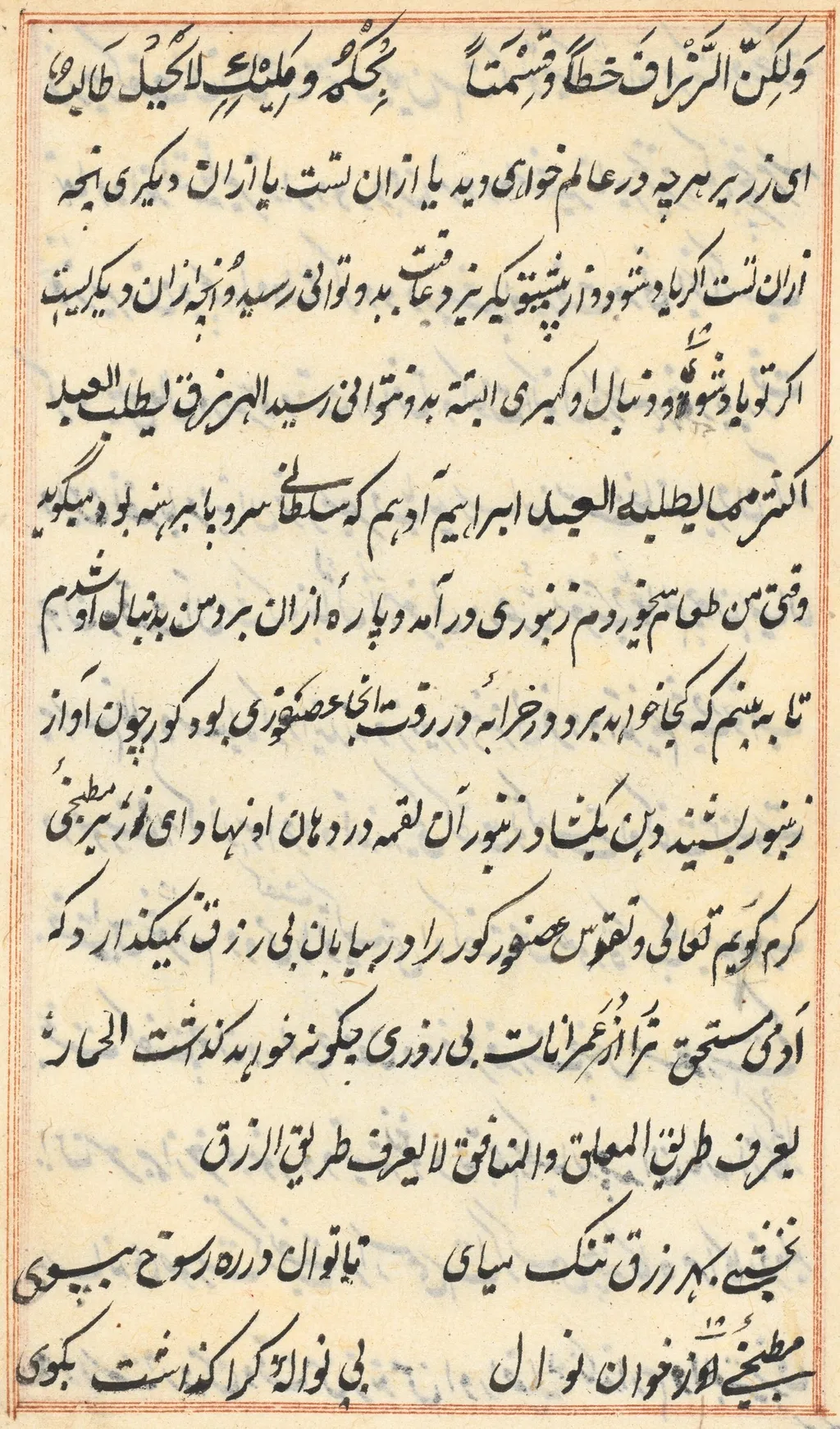
Page from Tales of a Parrot (Tuti-nama): text page is an unspecified painting. It dates from 1560 and is held in the collection of the Cleveland Museum of Art. This object is a single page from the illustrated manuscript known as Tales of a Parrot (Tuti‑nama).
About this work
History & Provenance
It comes from a celebrated illustrated manuscript of the period and is now held in the Cleveland Museum of Art under accession number 1962.
This text page from the Tales of a Parrot (Tuti-nama) was created around 1560 in Mughal India and is attributed to an unknown artist. It comes from a celebrated illustrated manuscript of the period and is now held in the Cleveland Museum of Art under accession number 1962.279.187.a, acquired in 1962. The available source records no commissioning patron, earlier provenance, or exhibition history for the page.
Legacy
The work shaped later narrative painting in Persianate regions, inspiring miniature cycles that retold the parrot frame story with added moral dialogues.
Its legacy is tied to Mughal court patronage, where text pages like this one informed illustrated adaptations in the 17th century.
The Cleveland Museum of Art holds the manuscript fragment, preserving its role in scholarly studies of Indo-Persian manuscript transmission.
Overview
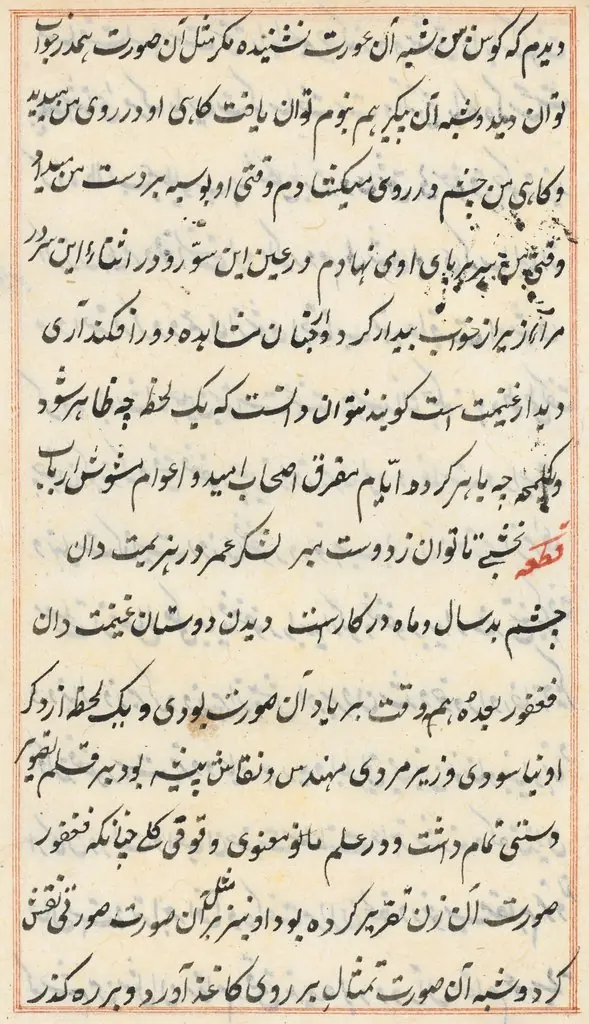
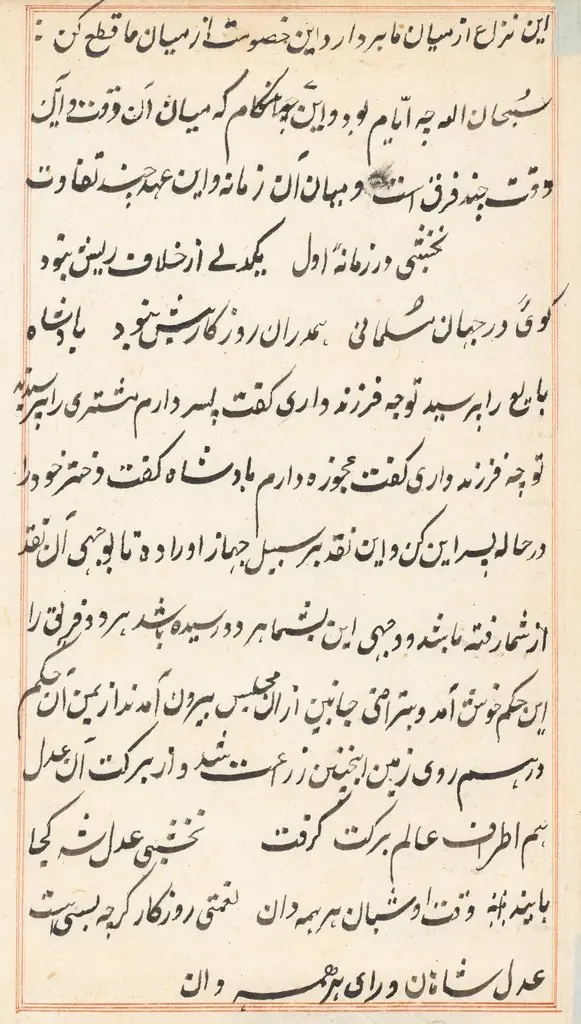
This object is a single page from the illustrated manuscript known as Tales of a Parrot (Tuti‑nama). Executed on paper, the surface bears dense black ink calligraphy against a light ground, framed by a subtle red border. The page shows signs of age, with slight wear and a softened edge, indicating its historic nature.
Subject & Meaning
The page contains Persian text rendered in verse, typical of the Tuti‑nama tradition, which recounts moral and didactic stories featuring a parrot narrator. The content reflects the literary genre of courtly poetry used to convey ethical lessons through allegorical animal characters.
Technique & Style
The script is executed in Nastaʿlīq, a Persian calligraphic hand that balances fluid cursive lines with angular accents. Ink is applied in uniform, tightly spaced lines, while occasional words appear larger or bolder, creating visual emphasis within the composition. The faint red border frames the text without detracting from the calligraphy.
Context
Tuti‑nama manuscripts were popular in Persian literary culture, often illustrated and circulated among elite patrons. The use of Nastaʿlīq reflects the aesthetic preferences of the period, when calligraphy was considered an art form equal to painting and poetry, and the manuscript would have been read aloud in courtly or scholarly settings.
Artist & collection

 Page from Tales of a Parrot (Tuti-nama): text page
 Page from Tales of a Parrot (Tuti-nama): text page
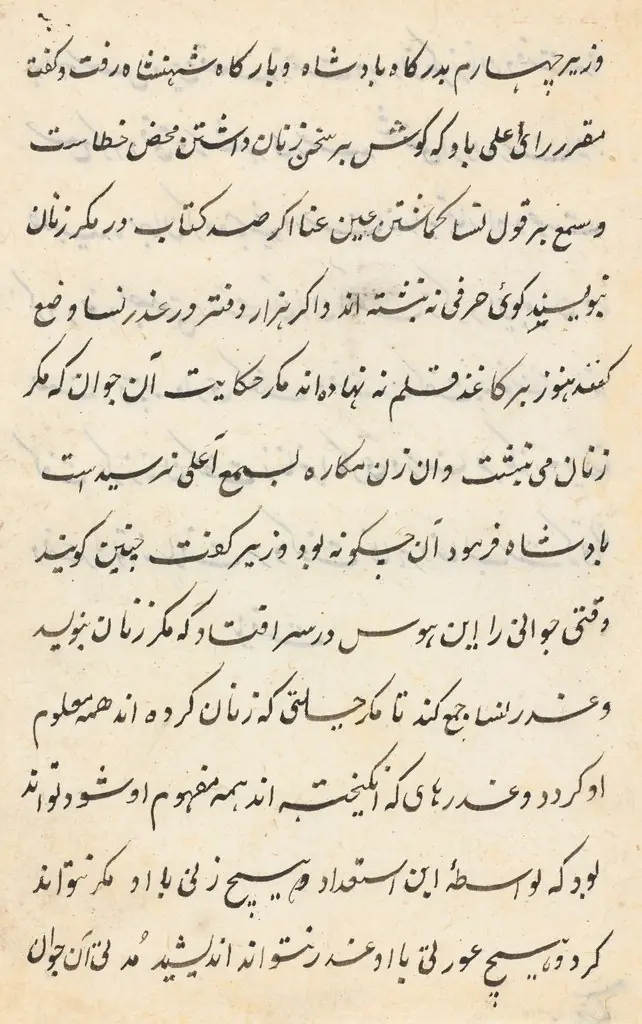 Page from Tales of a Parrot (Tuti-nama): text page
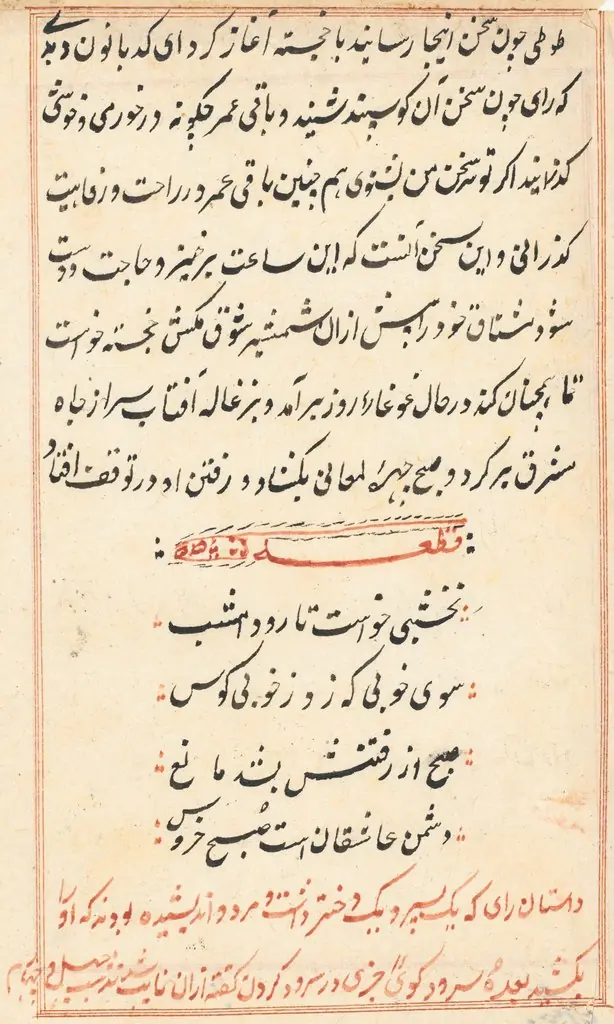 Page from Tales of a Parrot (Tuti-nama): text page
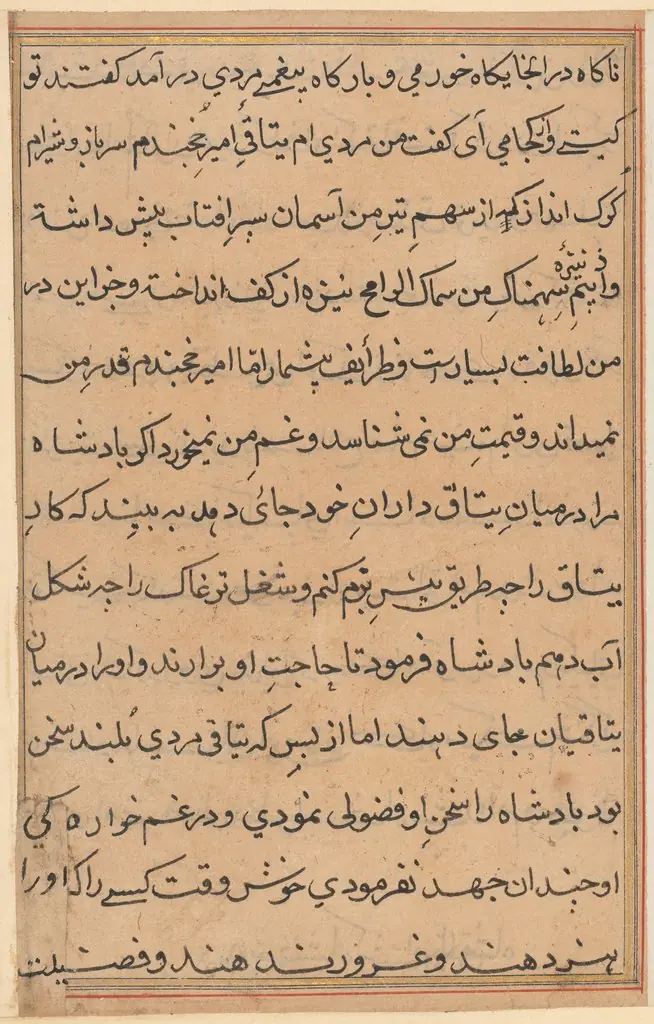 Page from Tales of a Parrot (Tuti-nama): text page
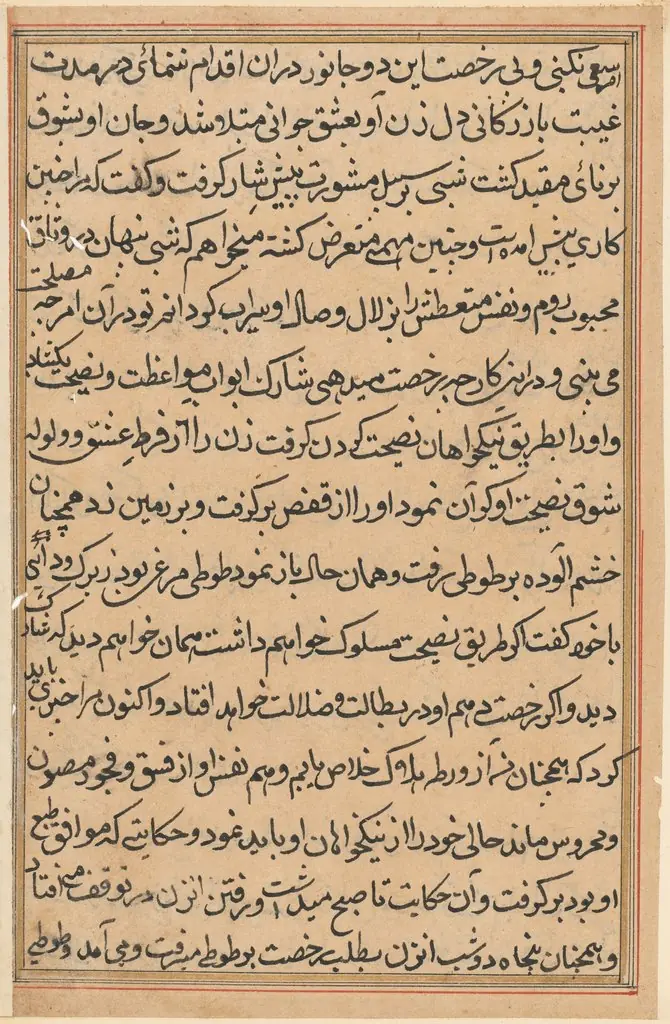 Page from Tales of a Parrot (Tuti-nama): text page
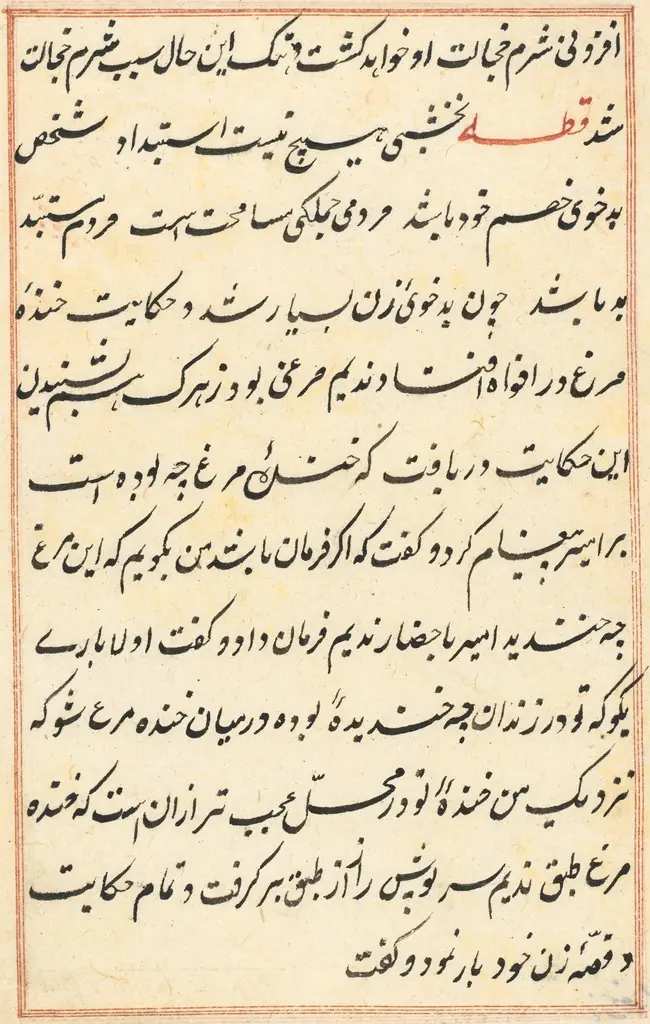 Page from Tales of a Parrot (Tuti-nama): text page
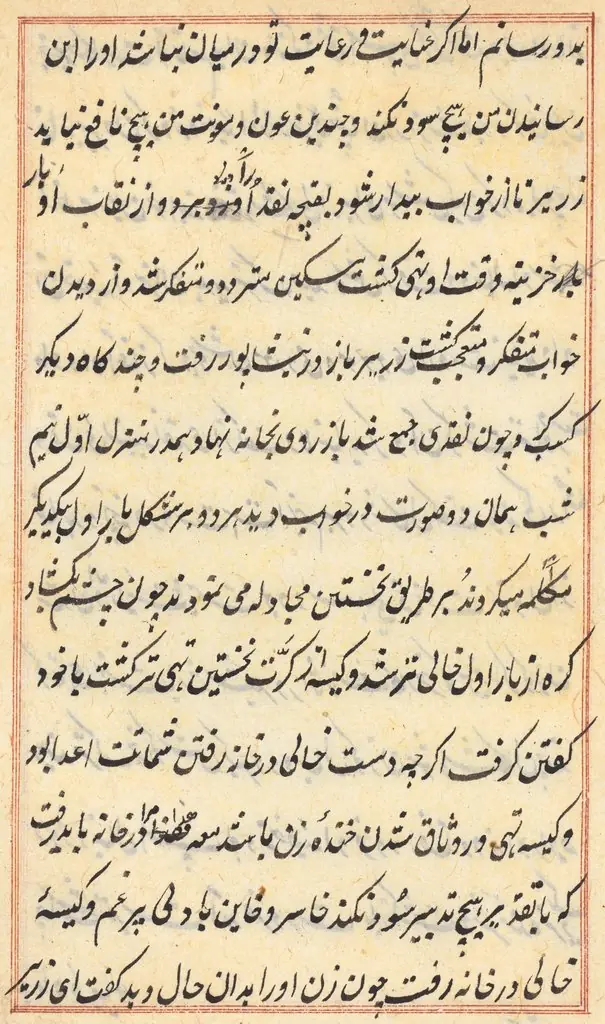 Page from Tales of a Parrot (Tuti-nama): text page
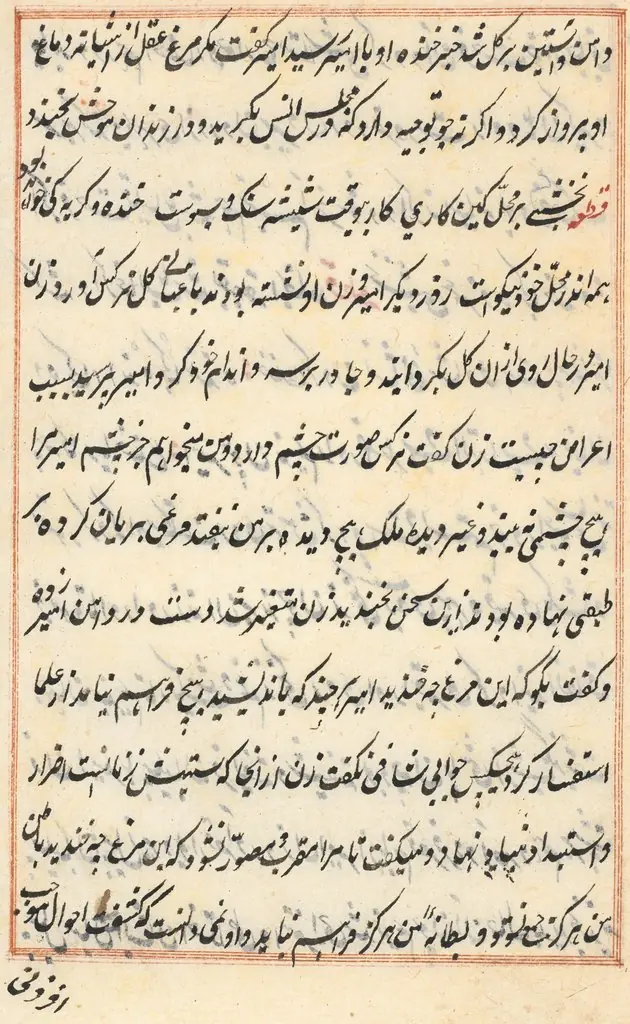 Page from Tales of a Parrot (Tuti-nama): text page
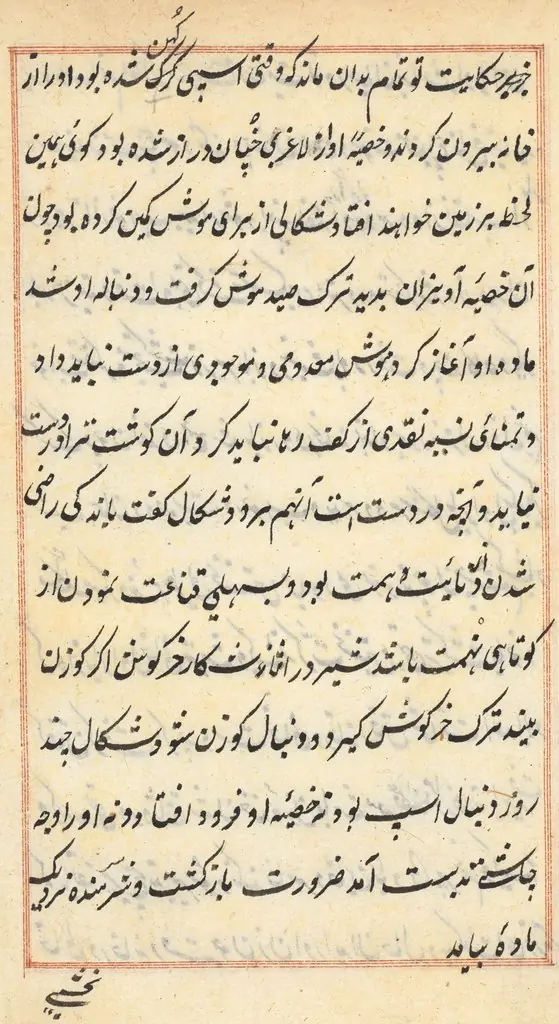 Page from Tales of a Parrot (Tuti-nama): text page