Artwork
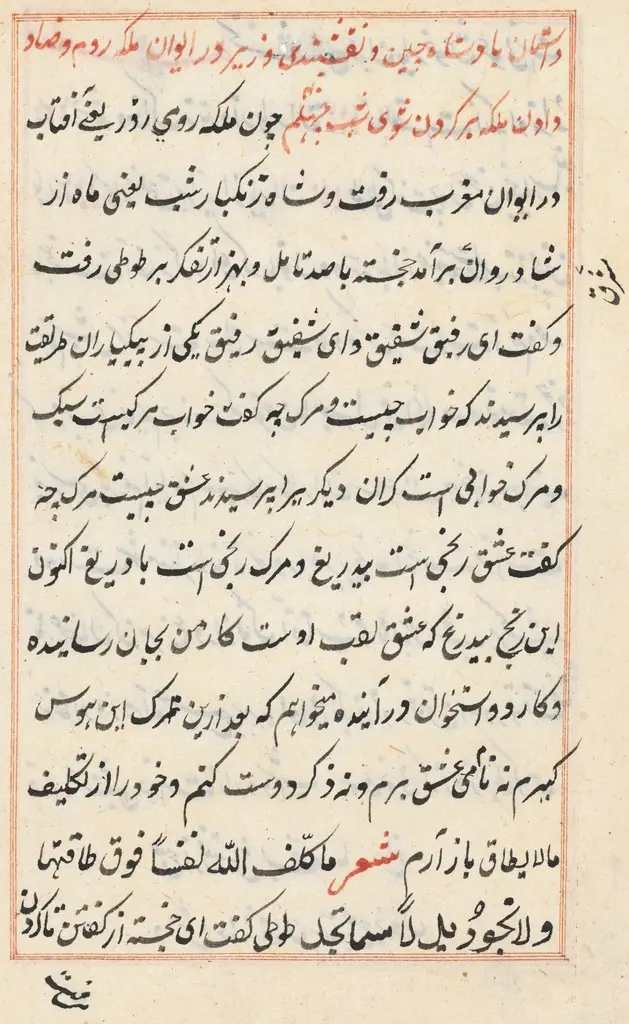
Page from Tales of a Parrot (Tuti-nama): text page
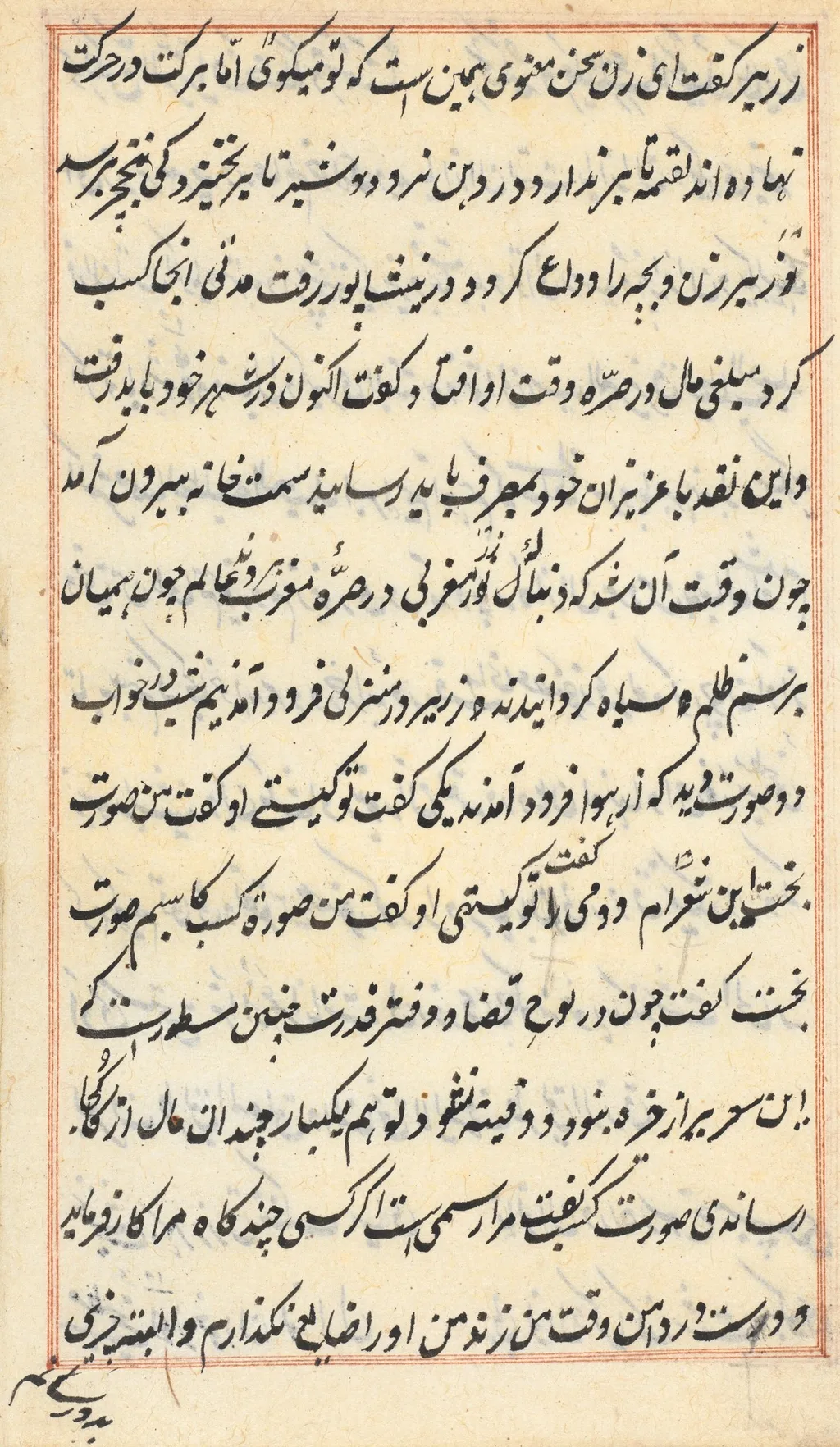
Page from Tales of a Parrot (Tuti-nama): text page is an unspecified painting. It dates from 1560 and is held in the collection of the Cleveland Museum of Art. This object is a single leaf from the illustrated manuscript known as Tales of a Parrot (Tuti‑nama).
About this work
Subject & Meaning
The page illustrates a parrot recounting a moral tale, a motif common in the Tuti-nama’s didactic narratives. The bird functions as a symbolic messenger, embodying wisdom and the transmission of ethical lessons within the Mughal courtly literary tradition. This scene reflects the broader theme of animal fables serving as vehicles for moral instruction in Persianate miniature painting.
Technique & Style
The page is a painted miniature executed in opaque pigments on paper, forming part of a Persian miniature tradition transmitted through Mughal workshops.
The page is a painted miniature executed in opaque pigments on paper, forming part of a Persian miniature tradition transmitted through Mughal workshops. The composition frames the text within a decorative border, employing flat planes of color and stylized figures characteristic of 16th‑century manuscript illustration. The work demonstrates fine brushwork and careful handling of line to delineate narrative elements, reflecting both the technical precision of courtly patronage and the visual storytelling conventions of the period.
History & Provenance
The page from the Tales of a Parrot (Tuti-nama) was created in 1560 within the Mughal Empire. Classified as a painting, it is associated with an unidentified artist. The work is held in the collection of the Cleveland Museum of Art, where it is catalogued under the accession number 1962.279.187.b.
The page is held in the collection of the Cleveland Museum of Art, where it is identified by the inventory designation 1962.279.187.b. Produced in 1560 within the Mughal Empire, the work entered the museum's holdings as part of its broader holding of illustrated manuscript folios from the Tales of a Parrot. No exhibition history is documented in the available sources.
Legacy
The miniature from the Tuti-nama manuscript exerted significant influence on later Indian painting conventions, particularly in its compositional balance and narrative framing, which were adopted by subsequent Mughal artists. Its stylized figures and intricate decorative borders contributed to a visual lexicon that persisted in regional schools of manuscript illumination, shaping aesthetic expectations for courtly storytelling in the subcontinent. The work's legacy is anchored in its presence at the Cleveland Museum of Art, where it remains part of the collection under accession number 1962.279.187.b, ensuring continued scholarly attention to its artistic innovations.
Overview
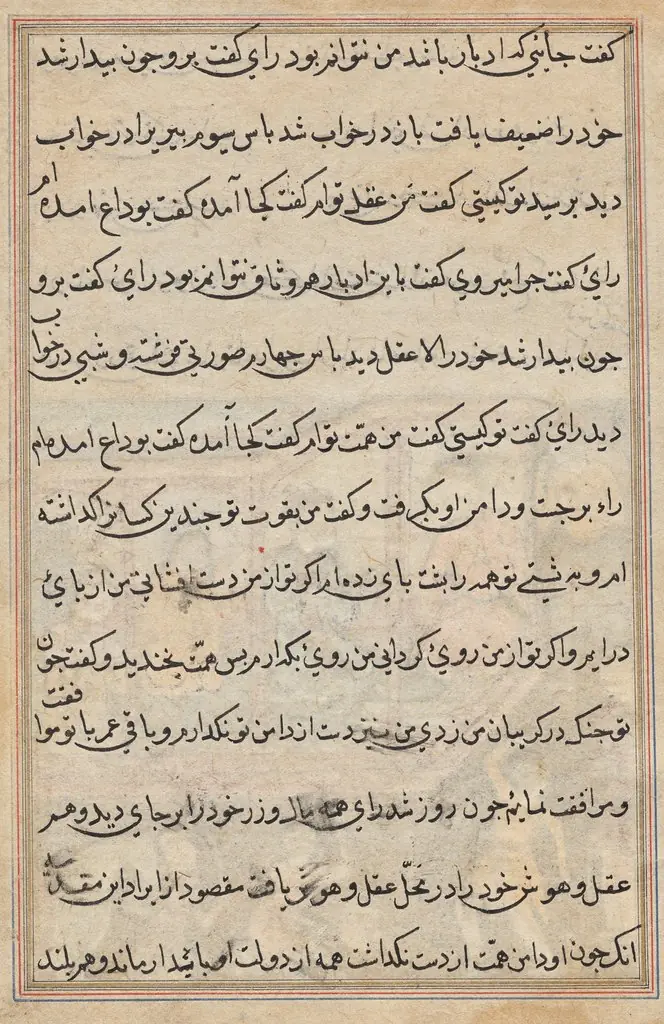
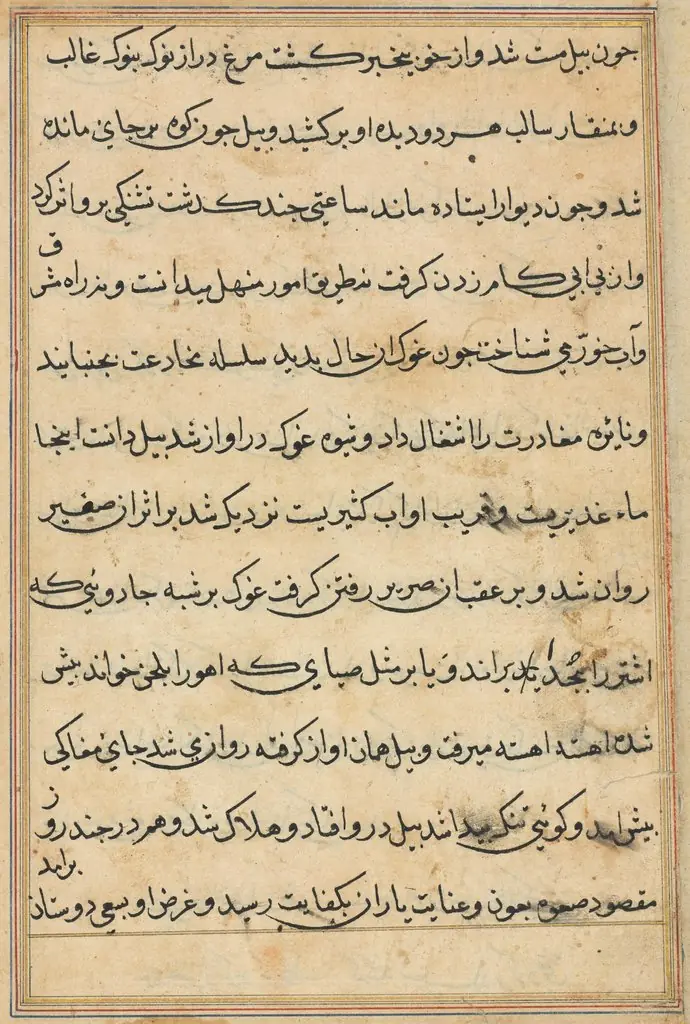
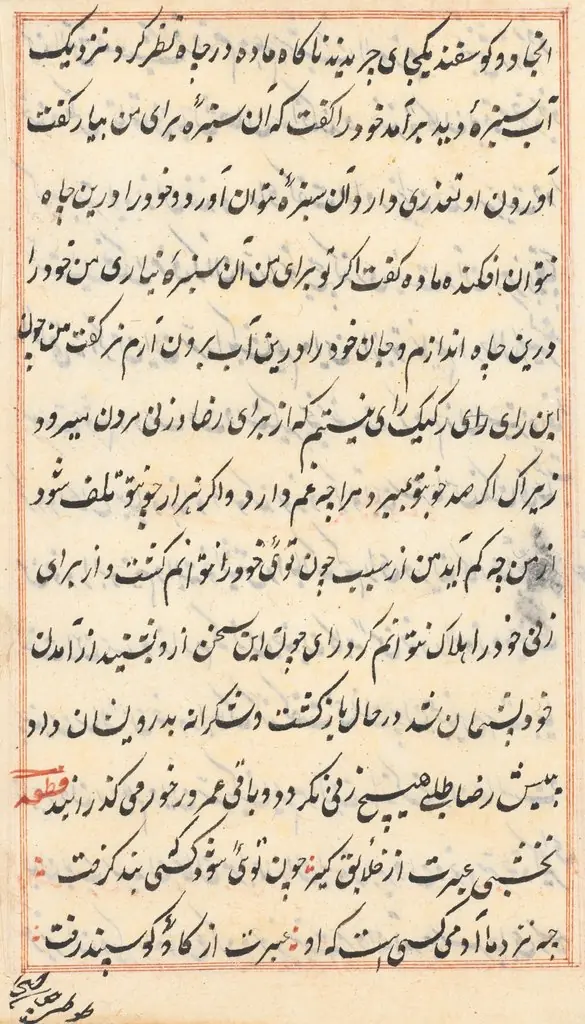
This object is a single leaf from the illustrated manuscript known as Tales of a Parrot (Tuti‑nama). The page is covered entirely with black calligraphic script, accented by occasional blue highlights, and is framed by a narrow red border. The support is paper that has aged to a yellowed tone, bearing faint stains and surface marks that attest to its antiquity.
Context
Manuscript culture in the region that produced Tales of a Parrot often combined literary content with visual embellishment, using color and border motifs to enhance readability and aesthetic appeal. The use of blue and red alongside black ink reflects a palette typical of courtly manuscripts, where limited but striking coloration was preferred.
Artist & collection

- Page from Tales of a Parrot (Tuti-nama): text page
 Page from Tales of a Parrot (Tuti-nama): text page
 Page from Tales of a Parrot (Tuti-nama): text page
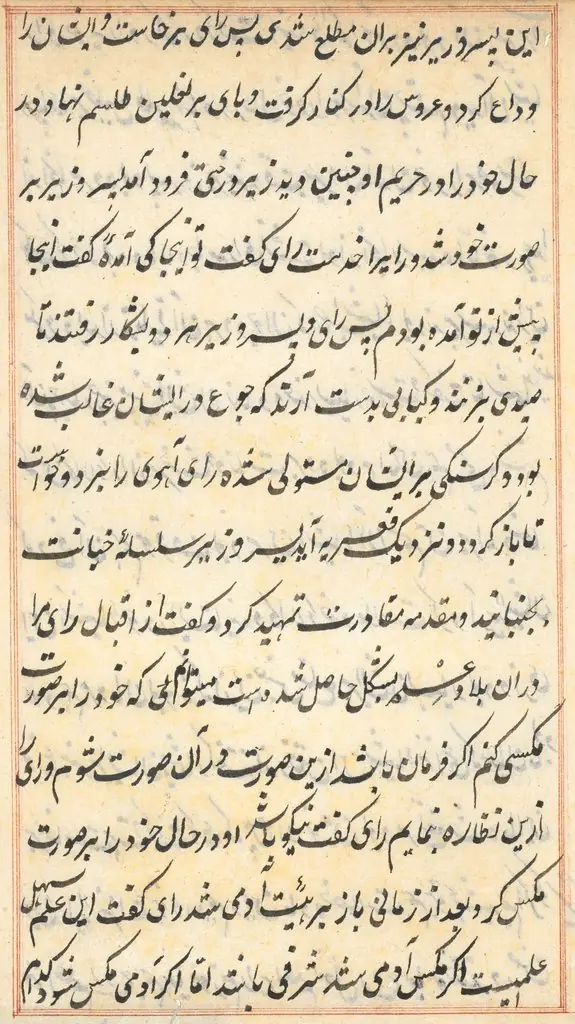 Page from Tales of a Parrot (Tuti-nama): text page
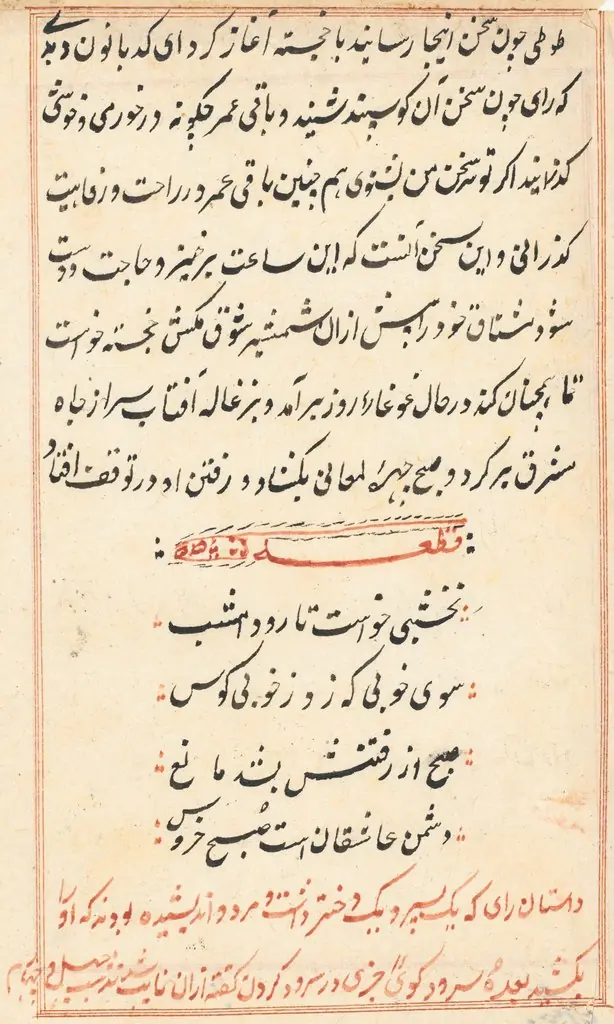 Page from Tales of a Parrot (Tuti-nama): text page
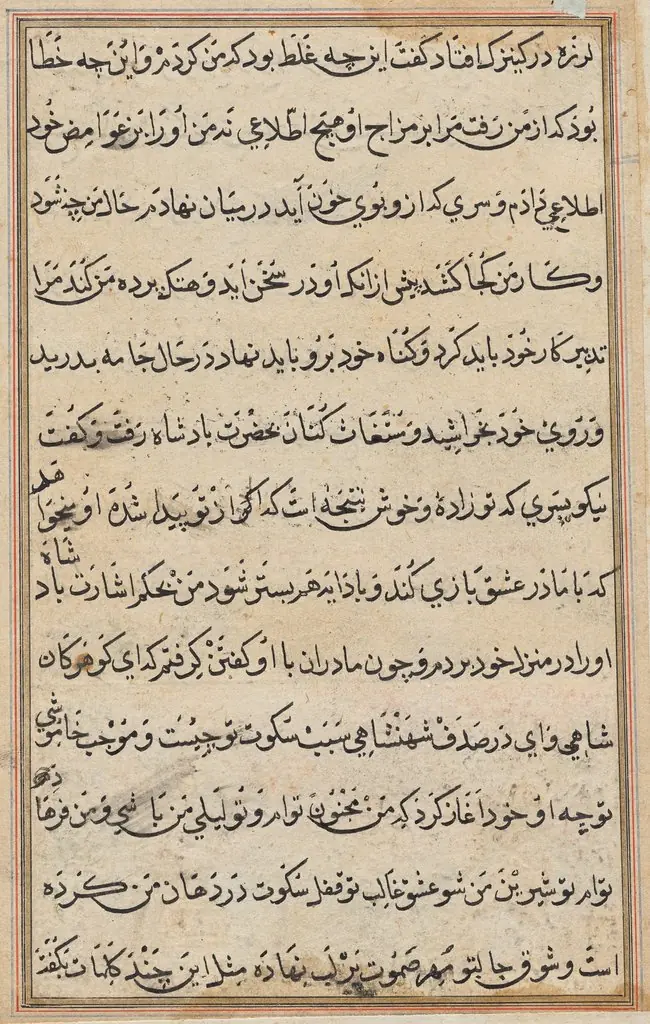 Page from Tales of a Parrot (Tuti-nama): text page
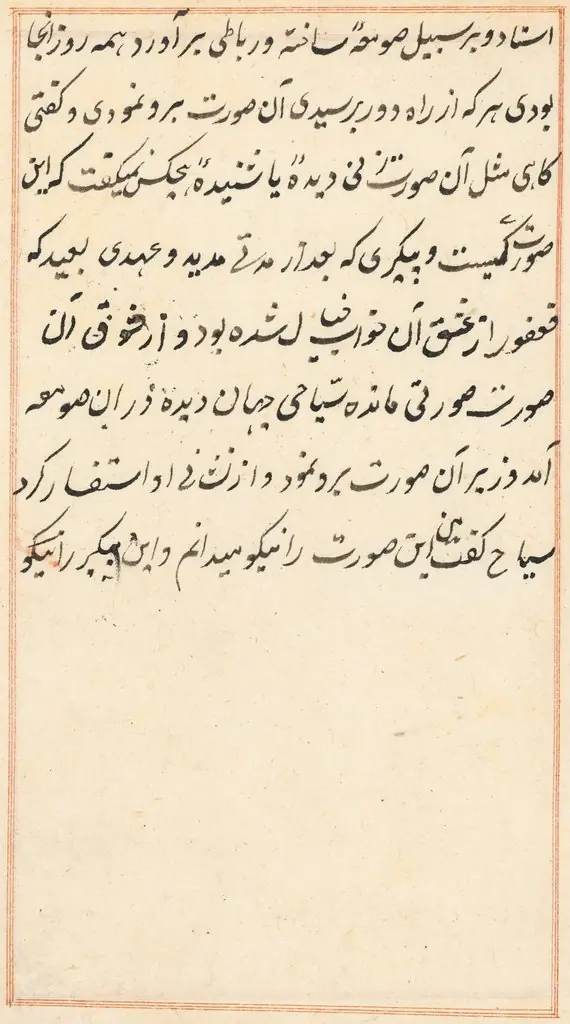 Page from Tales of a Parrot (Tuti-nama): text page
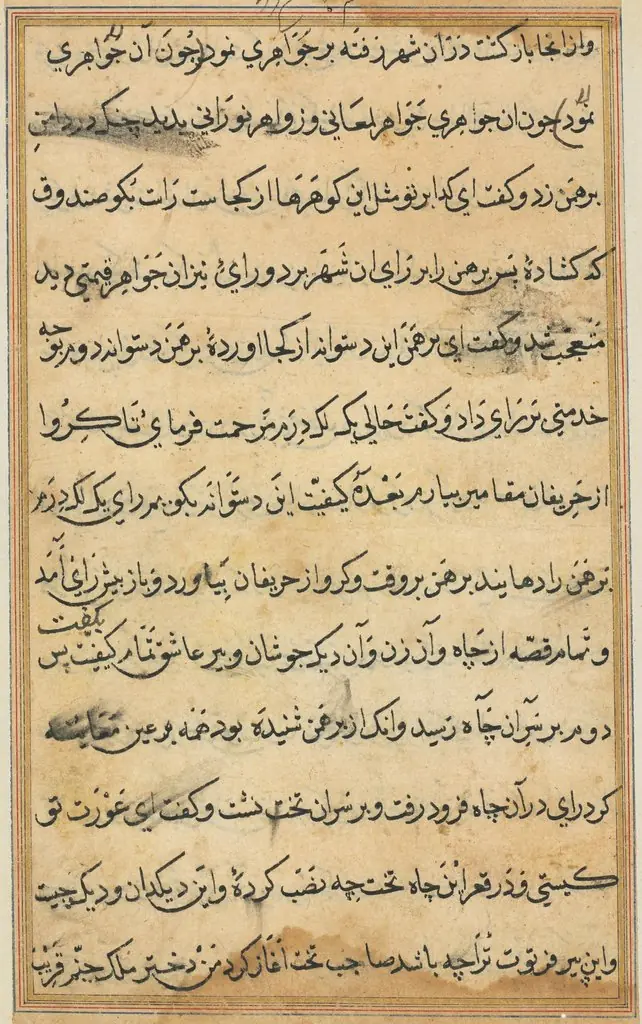 Page from Tales of a Parrot (Tuti-nama): text page
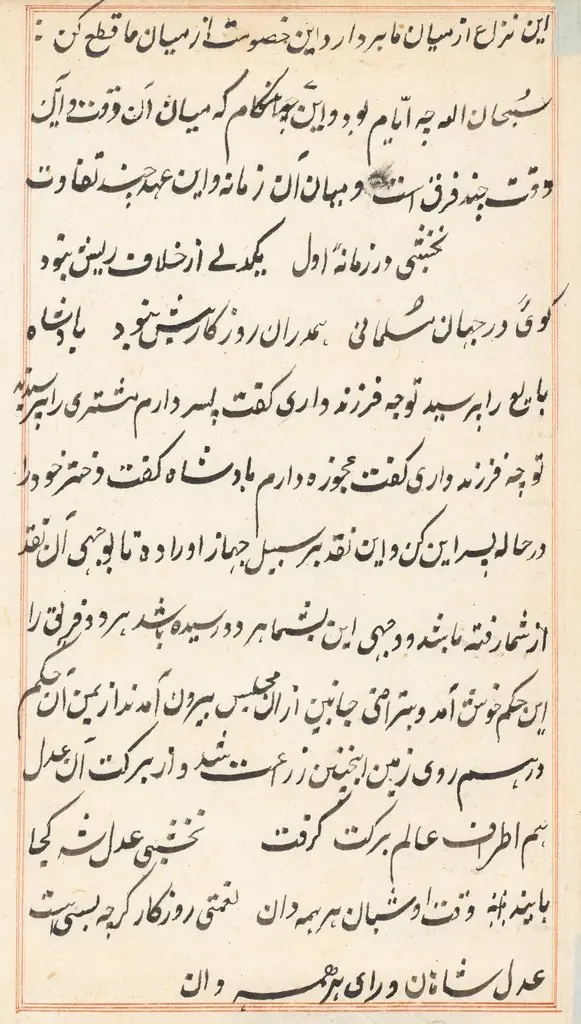 Page from Tales of a Parrot (Tuti-nama): text page
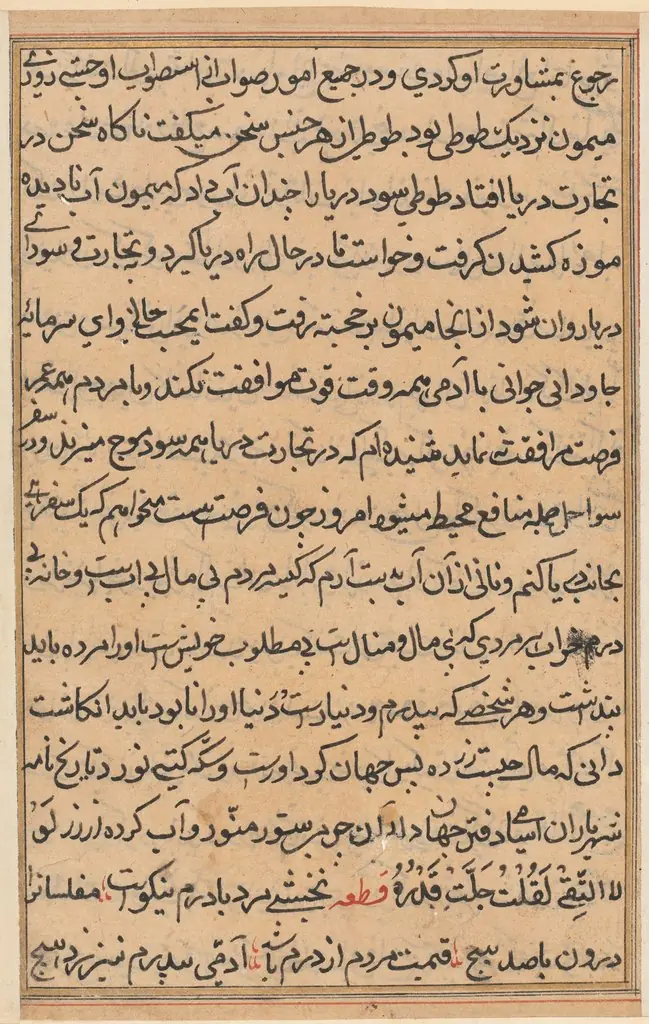 Page from Tales of a Parrot (Tuti-nama): text page
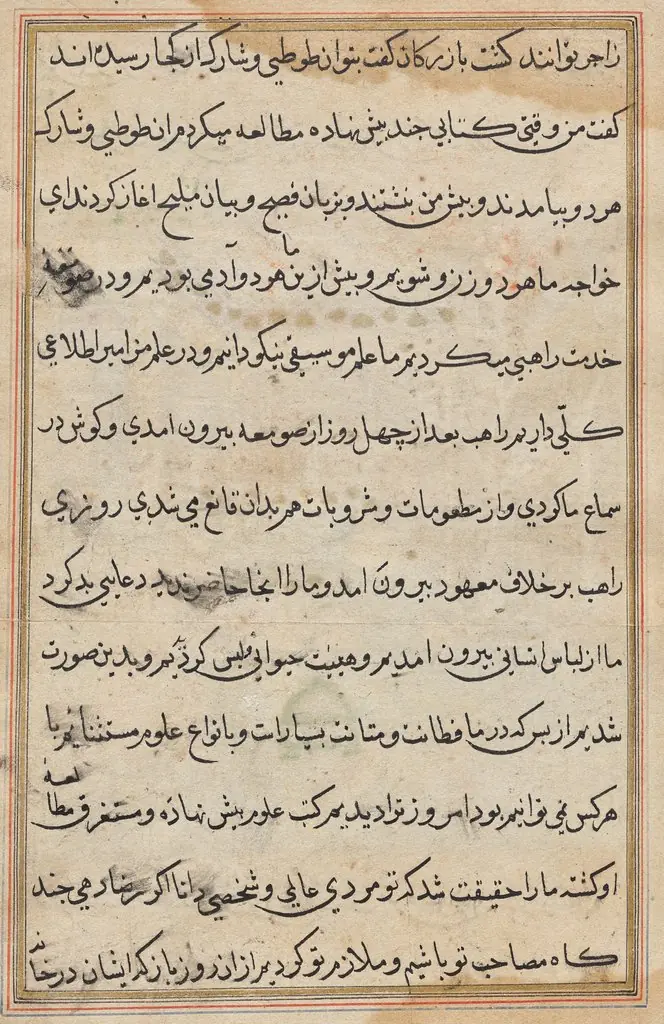 Page from Tales of a Parrot (Tuti-nama): text page
 Page from Tales of a Parrot (Tuti-nama): text page