Artwork
Page from Tales of a Parrot (Tuti-nama): text page
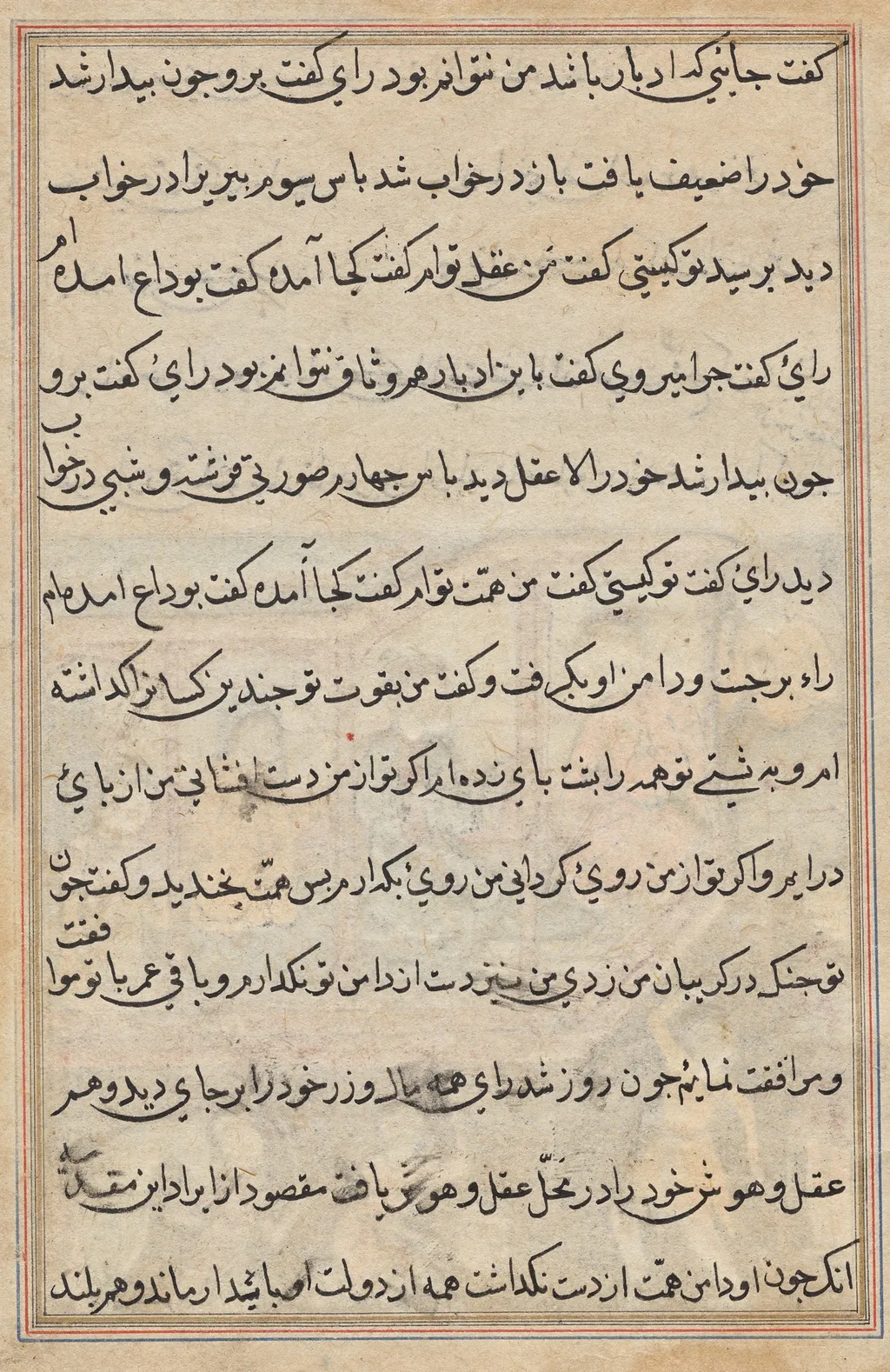
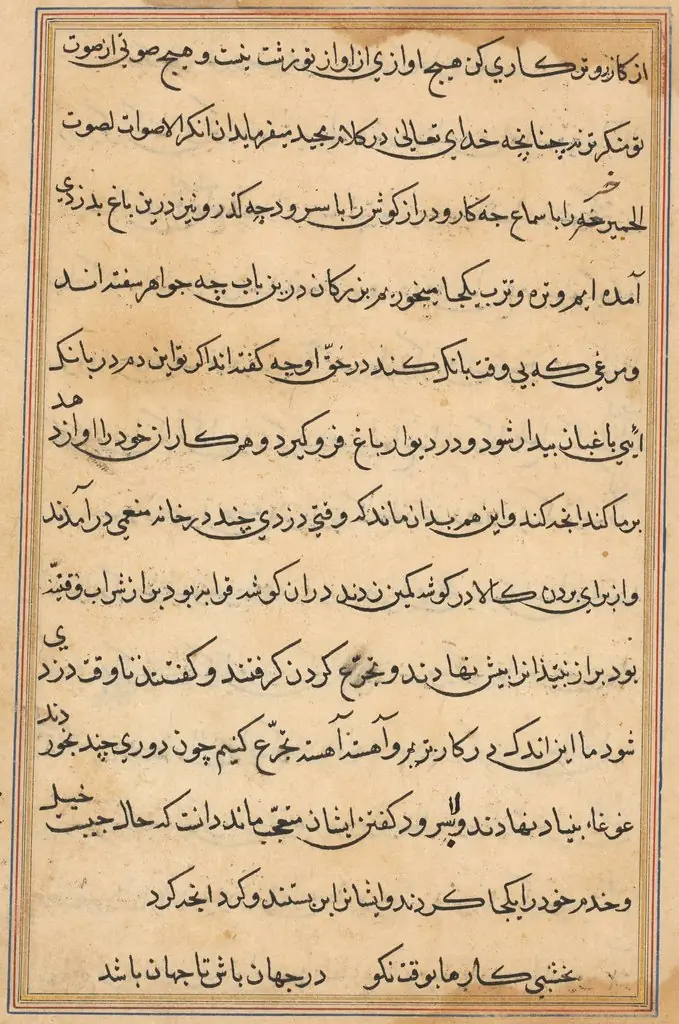
Page from Tales of a Parrot (Tuti-nama): text page is an unspecified painting. It dates from 1560 and is held in the collection of the Cleveland Museum of Art. This artifact is a single folio from the illustrated manuscript Tales of a Parrot (Tuti‑nama).
About this work
History & Provenance
The text page from the Tales of a Parrot (Tuti-nama) was produced around 1560 in the Mughal Empire by an unknown artist. While the sources do not record its earlier ownership or any commission, the work is presently held by the Cleveland Museum of Art, where it is catalogued under accession number 1962.279.240.a.
Legacy
Its compositional economy and stylized narrative framing are referenced in modern analyses of manuscript transmission across the Indian subcontinent.
The miniature from the Tuti-nama manuscript has been cited in scholarly studies of Mughal book arts as an early example of text-driven illustration that influenced later Persianate narrative painting traditions. Its compositional economy and stylized narrative framing are referenced in modern analyses of manuscript transmission across the Indian subcontinent. The work is part of the Cleveland Museum of Art’s collection, accessioned under the identifier 1962.279.240.a, which documents its provenance from a Mughal imperial workshop circa 1560.
Subsequent exhibitions of the manuscript at the museum have highlighted its role in shaping the visual grammar of Safavid and Deccan manuscript painting, reinforcing its reputation as a benchmark for narrative miniatures in Indo-Persian art history.
Overview
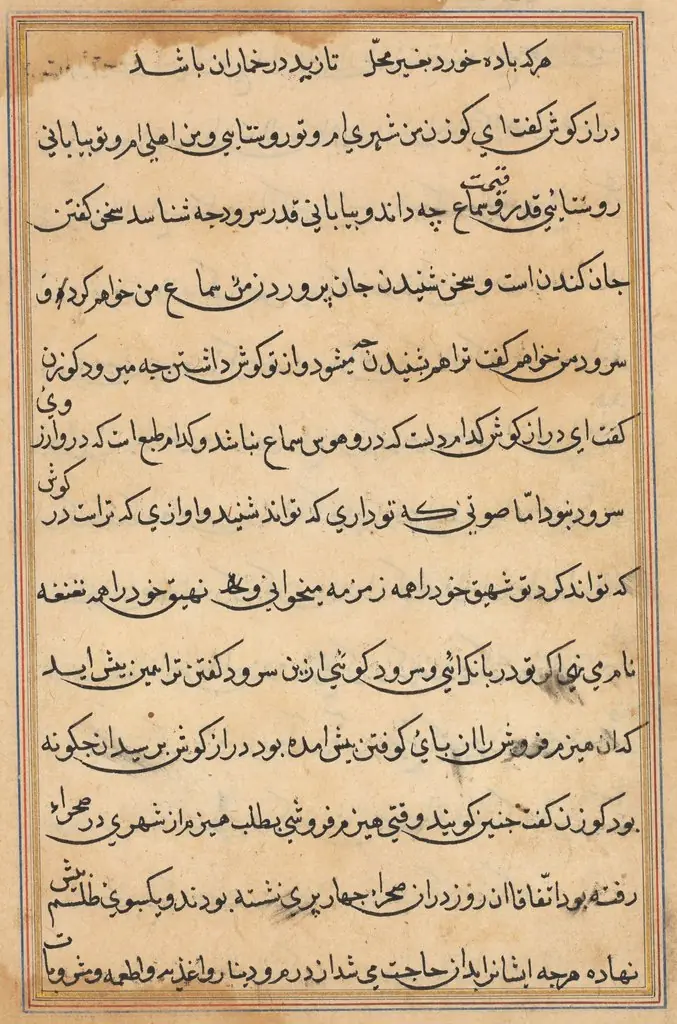
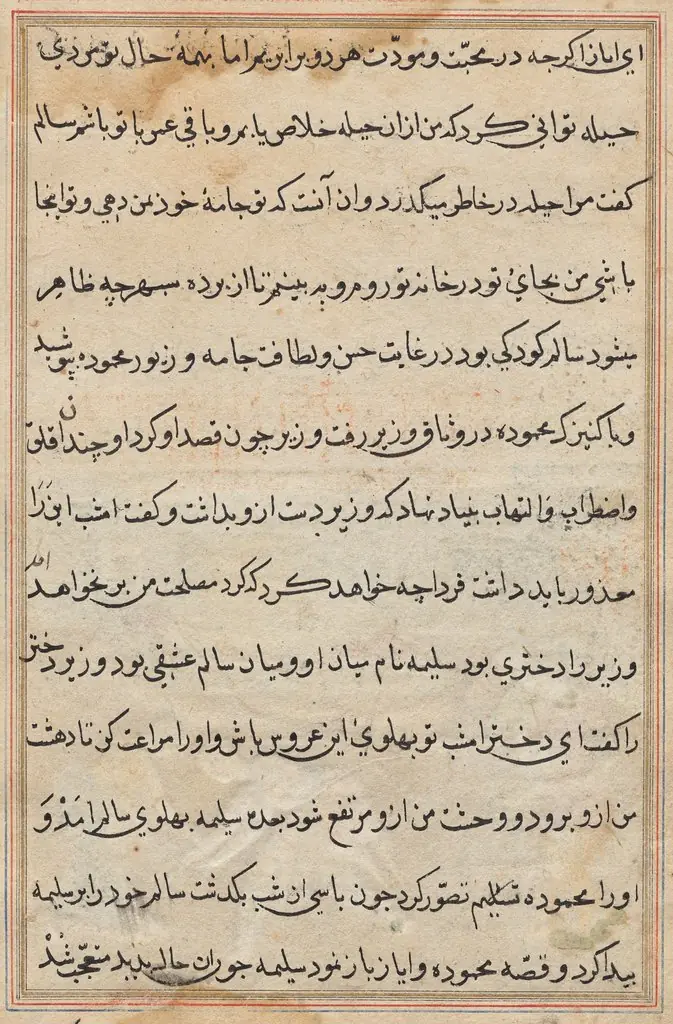
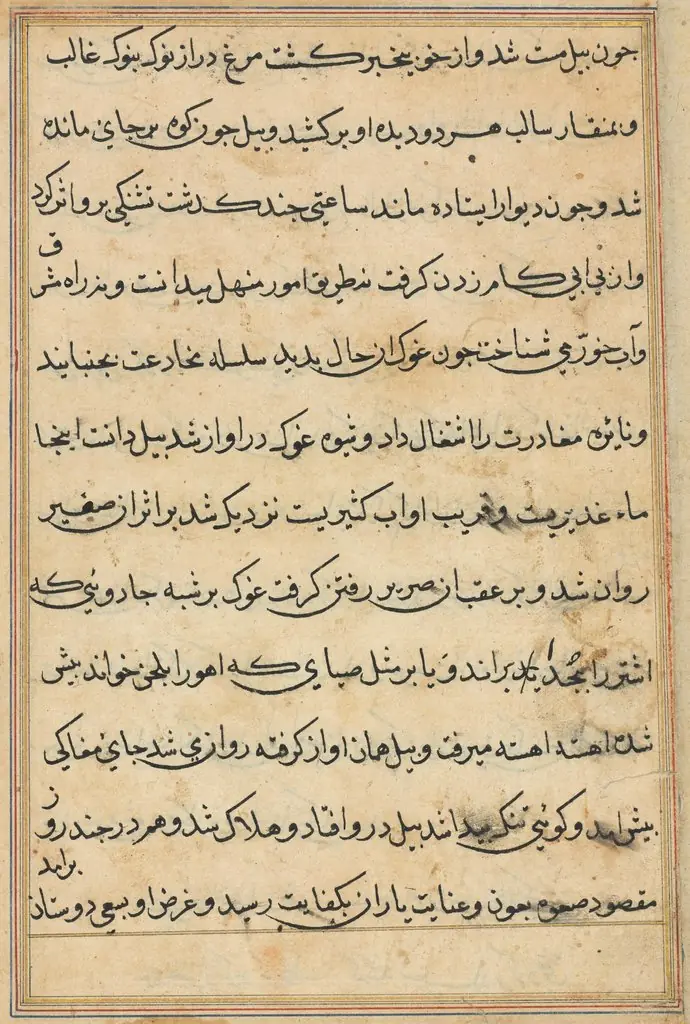
This artifact is a single folio from the illustrated manuscript Tales of a Parrot (Tuti‑nama). Executed as a painted page, it presents a dense block of black calligraphic text that fills the surface from margin to margin, punctuated by a small red mark near the centre. The paper exhibits a patinated appearance, with faint blue bands framing the upper and lower edges.
Subject & Meaning
The inscribed narrative was composed for Prince Salim, a member of the Mughal court, and forms part of a larger literary work that recounts moral and romantic episodes through the voice of a parrot. The careful, ornamental script underscores the text’s ceremonial importance and its role as a vehicle for courtly education and entertainment.
Technique & Style
The page combines fine black ink calligraphy with a single red pigment applied as a decorative dot, a common practice for emphasis or pagination in Persian manuscripts. The script is arranged in tightly spaced, curvilinear lines that interlock like vines, demonstrating the high level of penmanship expected of court scribes. The blue bands at the top and bottom are painted washes that frame the text without detracting from its legibility.
Artist & collection

- Page from Tales of a Parrot (Tuti-nama): text page
 Page from Tales of a Parrot (Tuti-nama): text page
 Page from Tales of a Parrot (Tuti-nama): text page
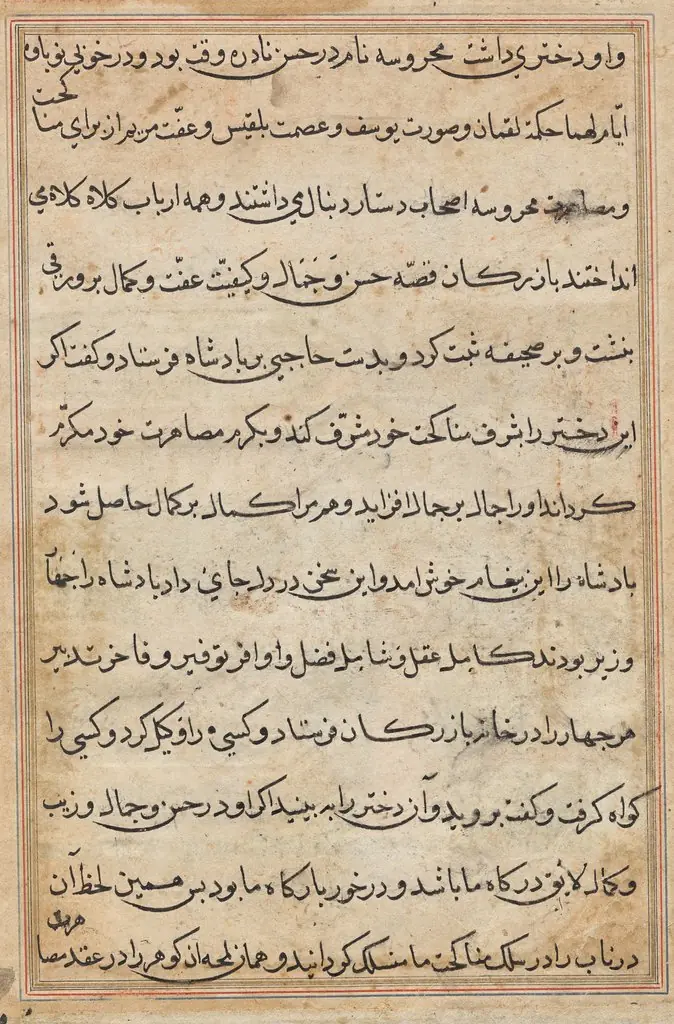 Page from Tales of a Parrot (Tuti-nama): text page
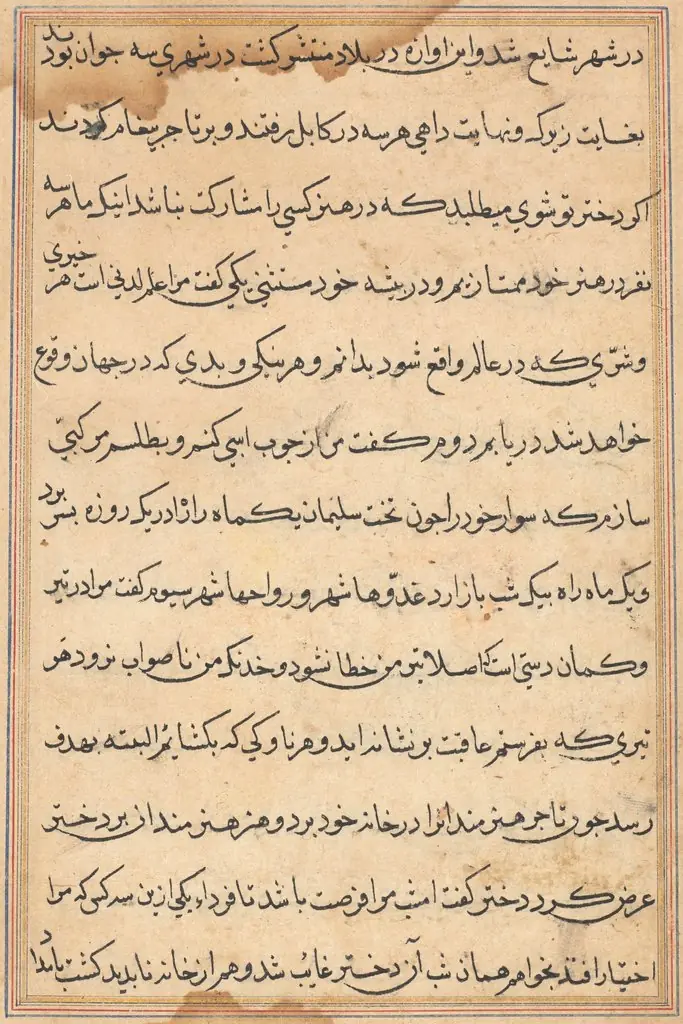 Page from Tales of a Parrot (Tuti-nama): text page
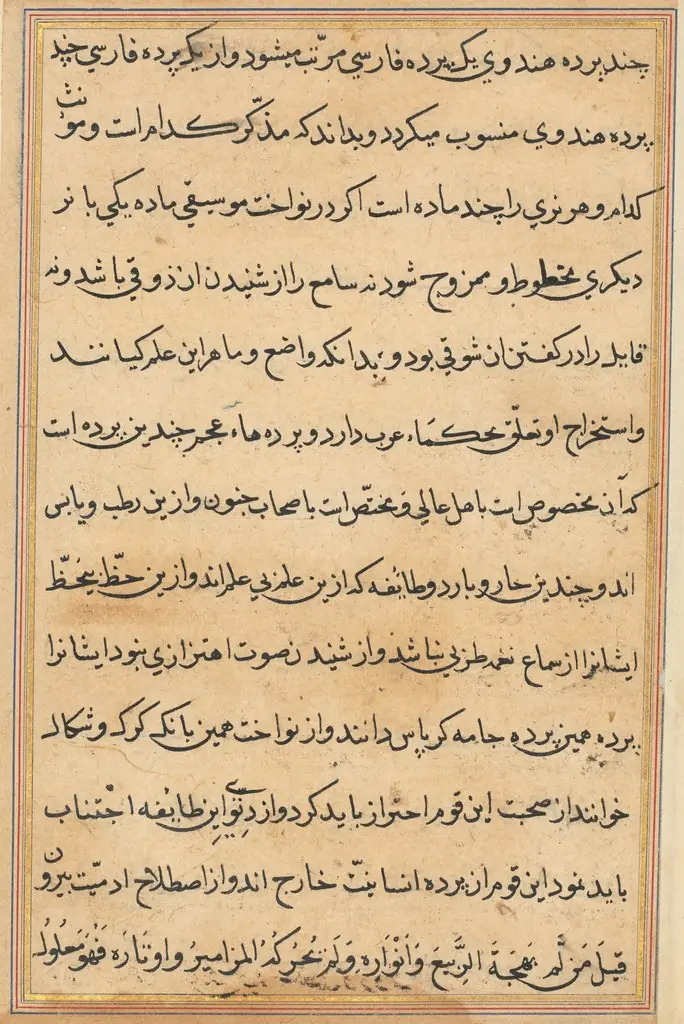 Page from Tales of a Parrot (Tuti-nama): text page
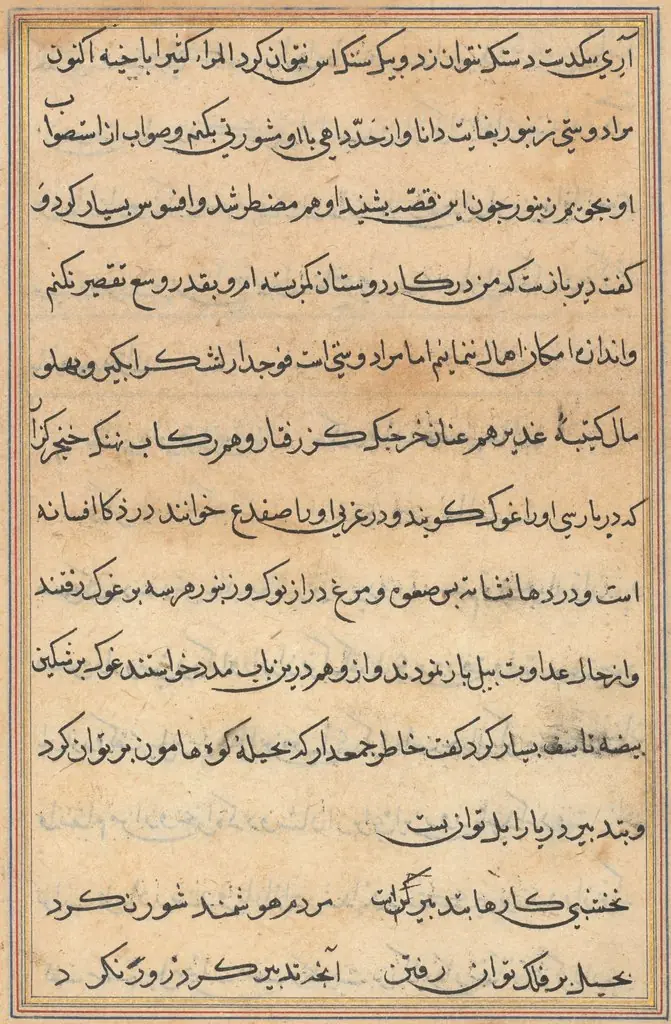 Page from Tales of a Parrot (Tuti-nama): text page
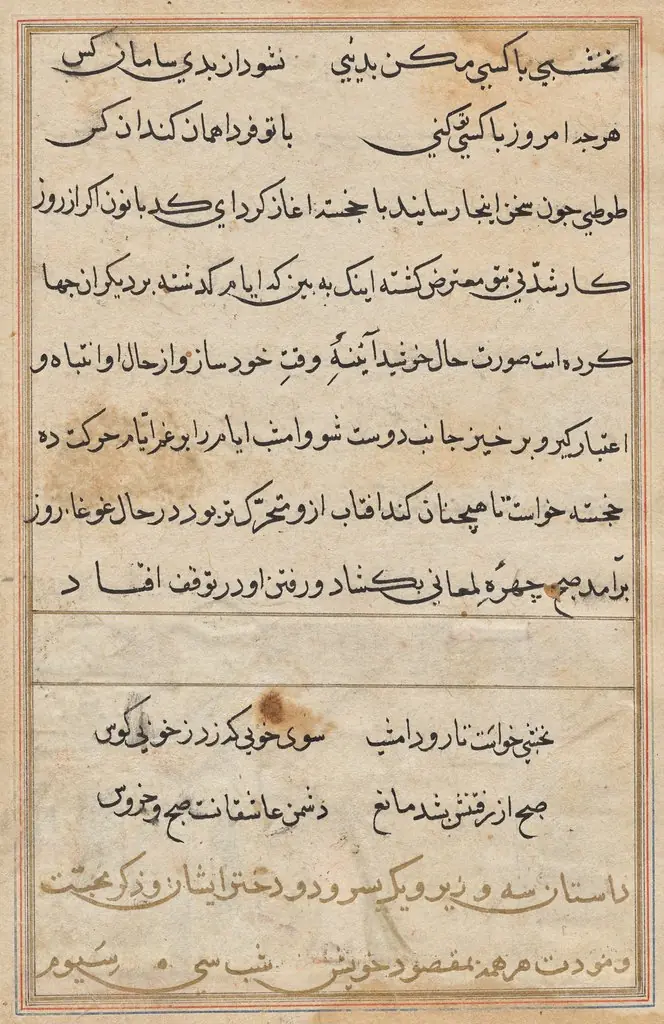 Page from Tales of a Parrot (Tuti-nama): text page
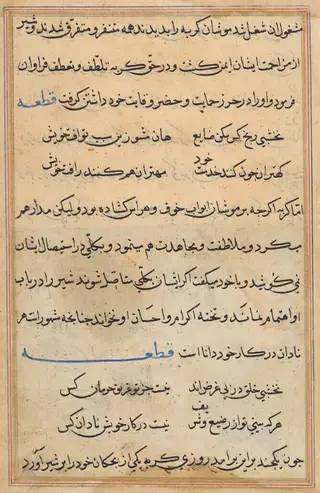 Page from Tales of a Parrot (Tuti-nama): text page
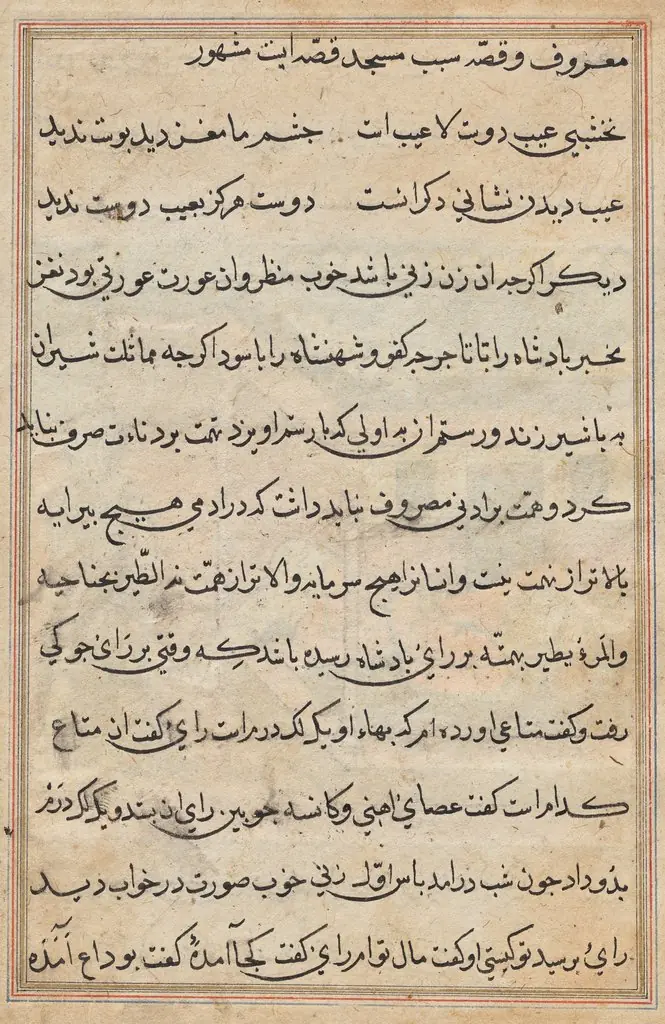 Page from Tales of a Parrot (Tuti-nama): text page
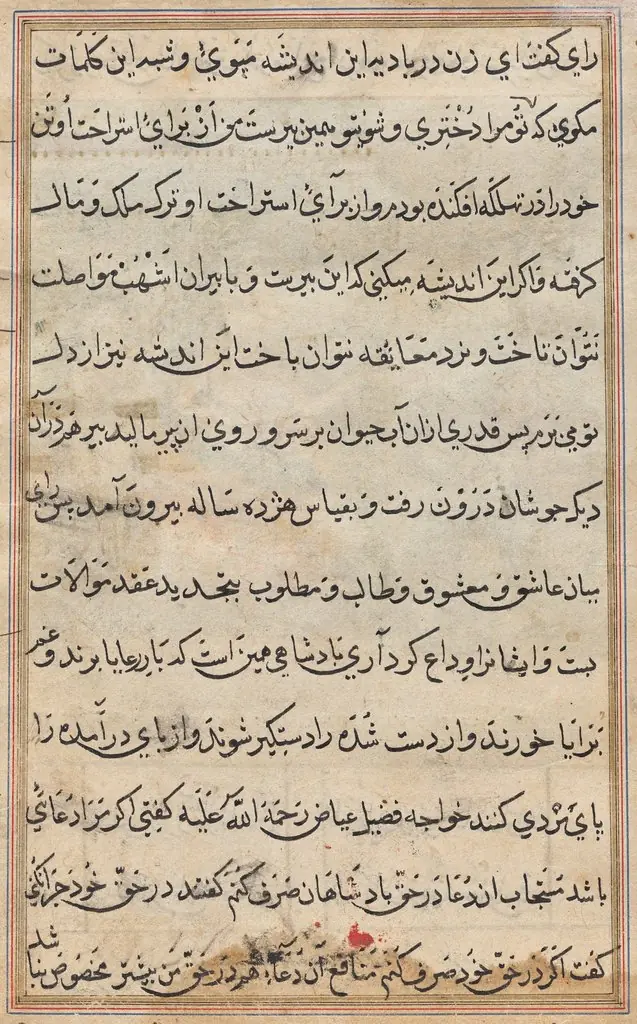 Page from Tales of a Parrot (Tuti-nama): text page
 Page from Tales of a Parrot (Tuti-nama): text page