Artwork
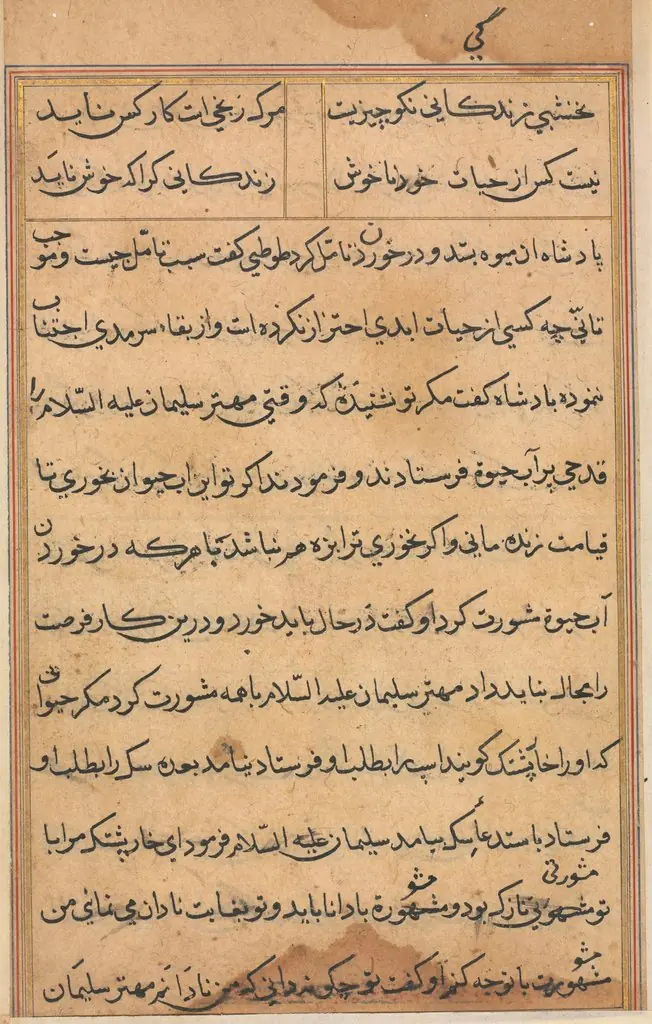
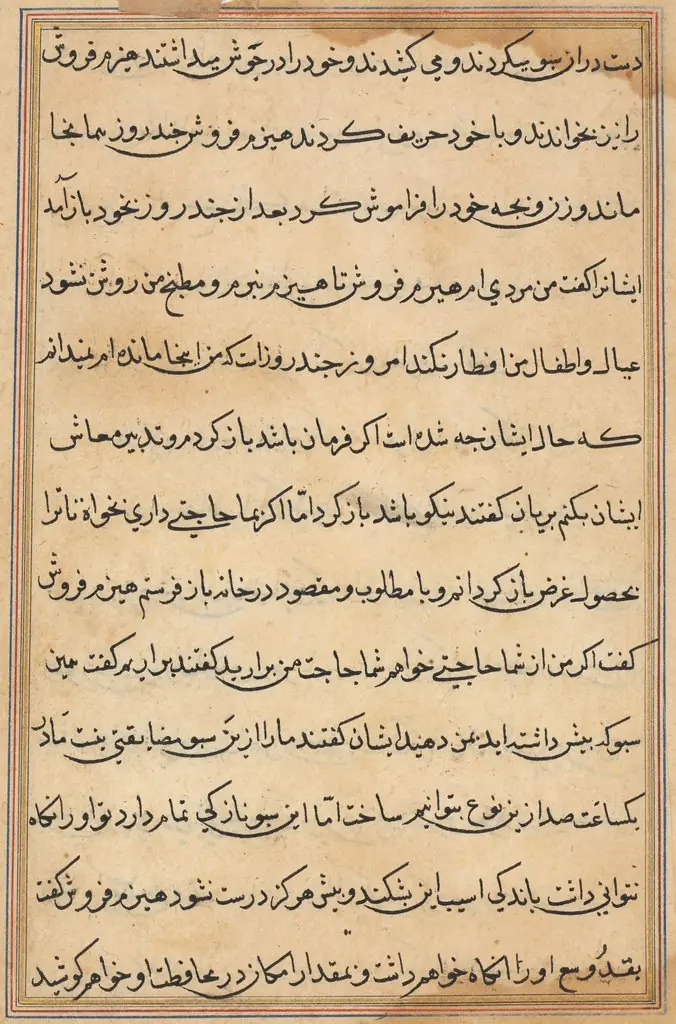
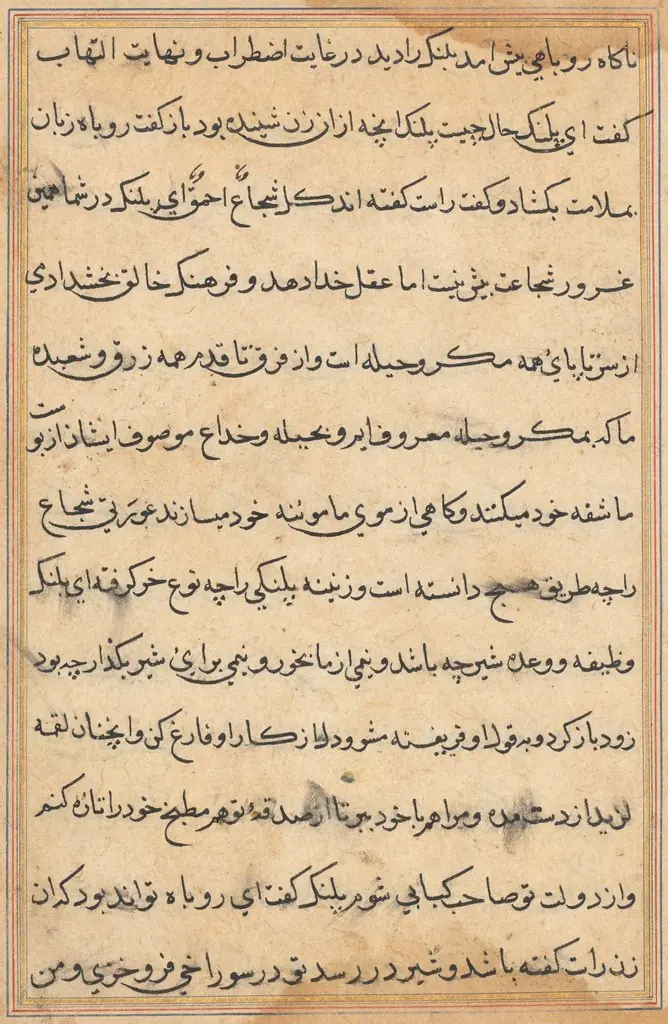
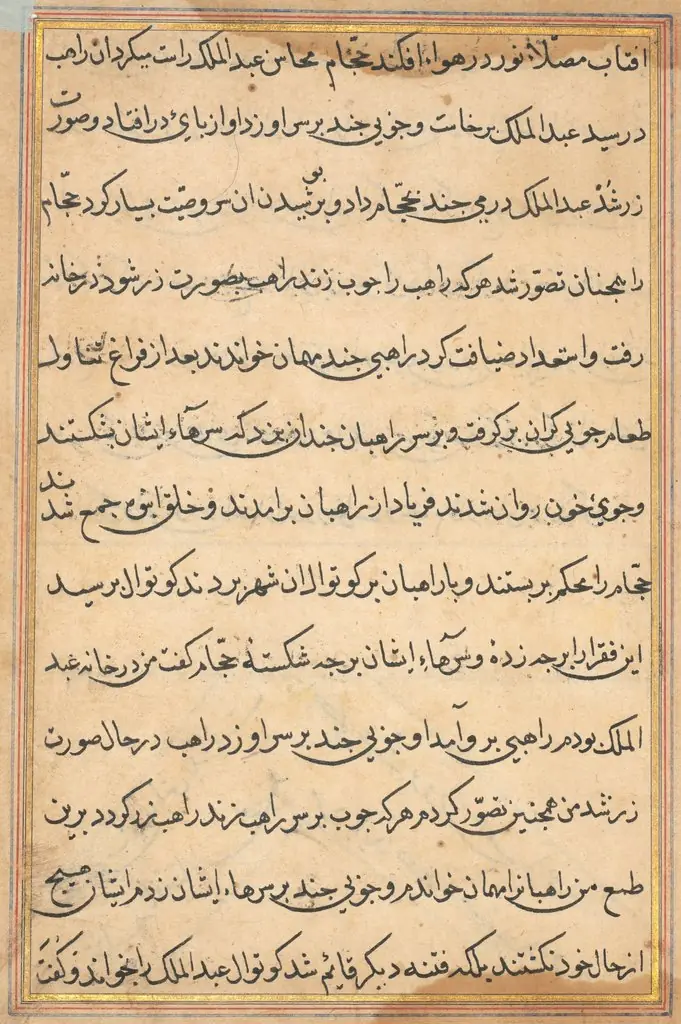
Page from Tales of a Parrot (Tuti-nama): text page
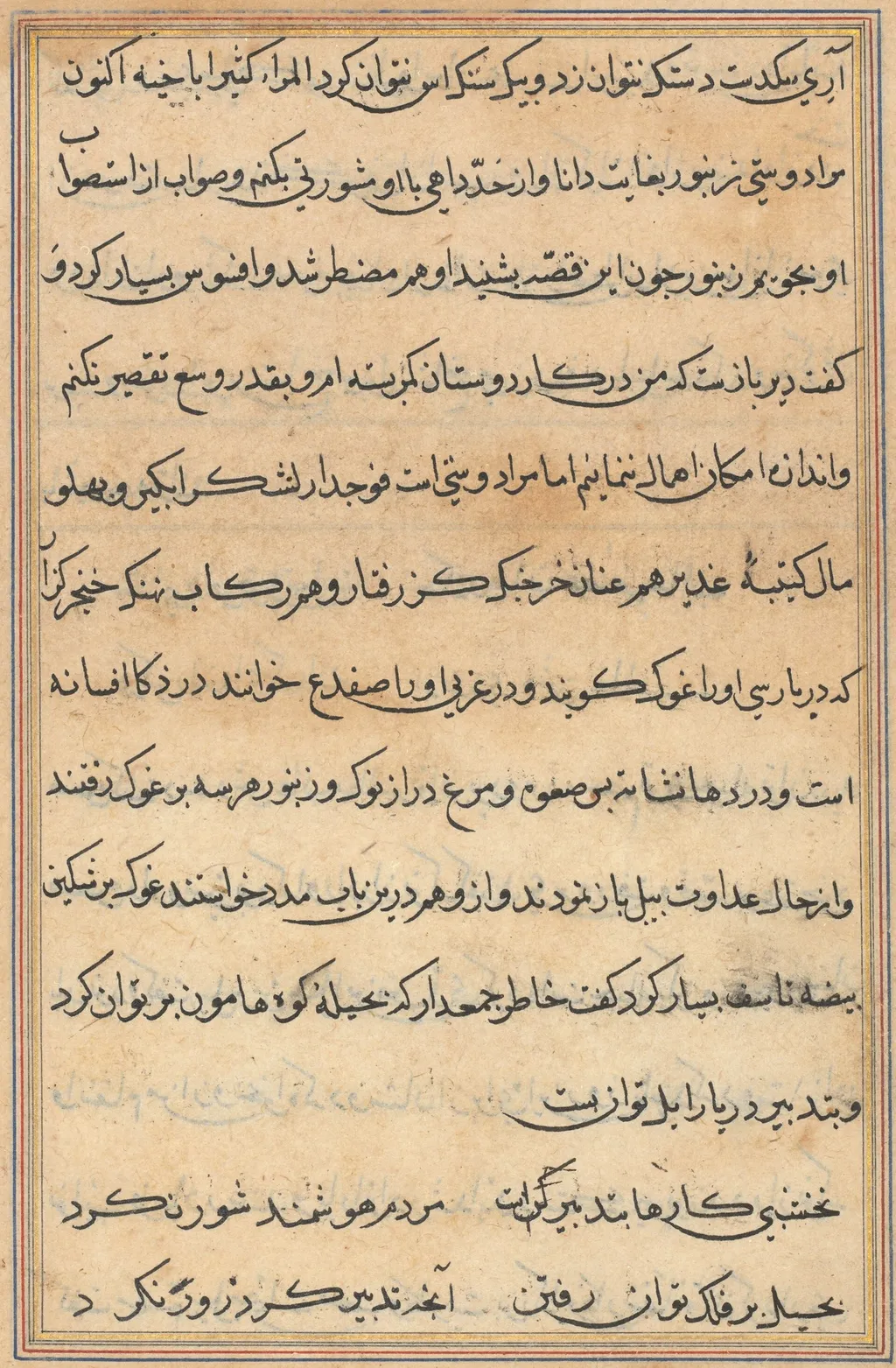
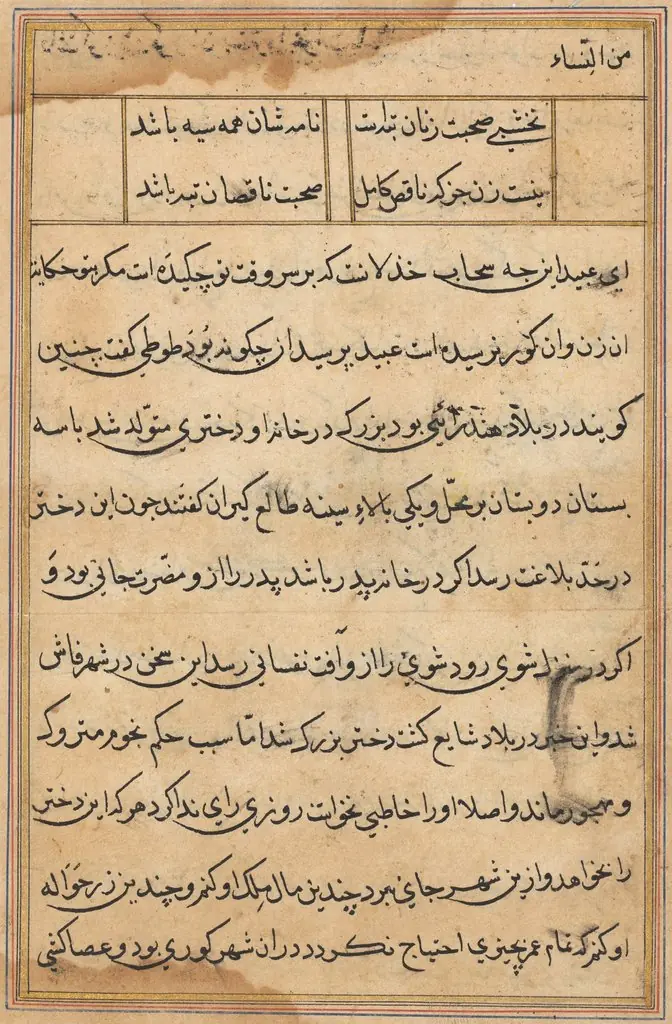
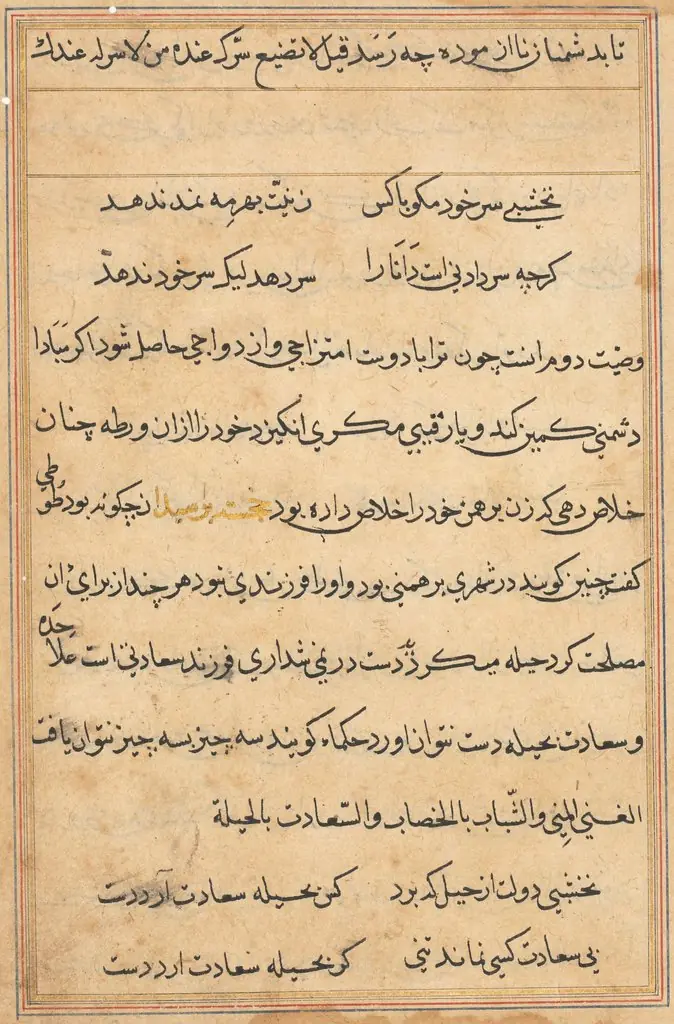
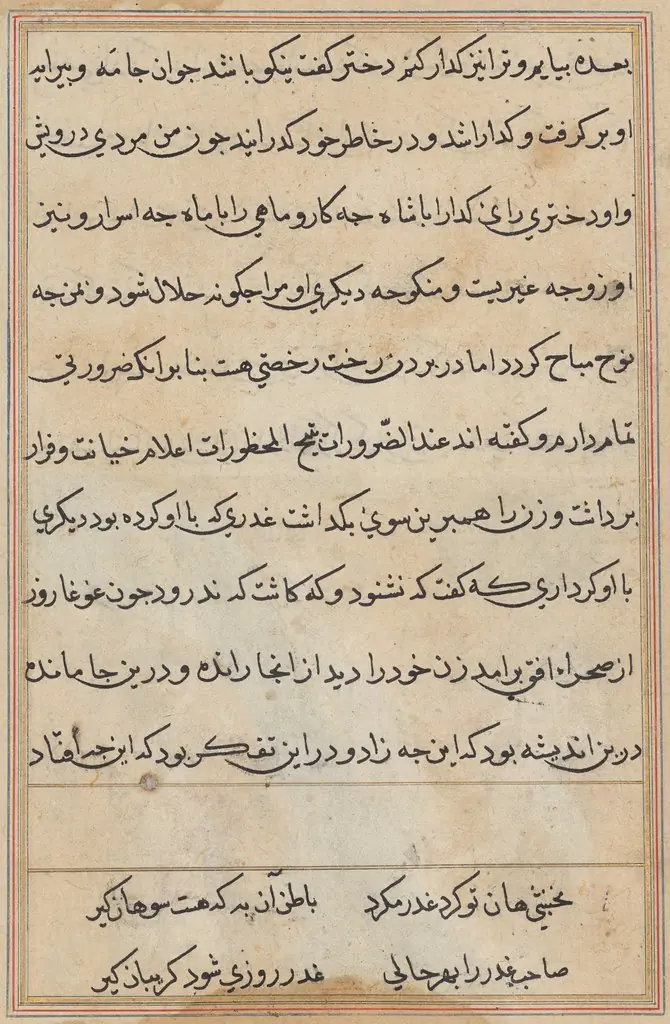
Page from Tales of a Parrot (Tuti-nama): text page is an unspecified painting. It dates from 1560 and is held in the collection of the Cleveland Museum of Art. This object is a single folio from the illustrated manuscript Tales of a Parrot (Tuti‑nama).
About this work
History & Provenance
Created in 1560 within the Mughal Empire, this text page from the Tuti-nama (Tales of a Parrot) was produced by an unidentified artist.
Created in 1560 within the Mughal Empire, this text page from the Tuti-nama (Tales of a Parrot) was produced by an unidentified artist. The work later entered the collection of the Cleveland Museum of Art, where it is cataloged under the accession number 1962.279.249.b. No specific details regarding the original commissioner or the intermediate ownership history between its creation in the sixteenth century and its acquisition by the museum are provided in the available records.
Context
This text page from the Tuti-nama (Tales of a Parrot), created in 1560, exemplifies the manuscript illumination tradition of the Mughal Empire under early Akbar-period patronage. Scholarship situates the Tuti-nama as a pivotal early Mughal commission, bridging Persian narrative traditions with emerging South Asian visual idioms. Its production within the imperial atelier underscores the court's role in synthesizing literary and pictorial cultures during the mid-16th century.
Critical reception has focused on the manuscript's dual function as both a literary artifact and a demonstration of Mughal artistic innovation. While individual text pages like this one are less frequently analyzed than the manuscript's illustrated folios, they are recognized as integral to the work's structural and aesthetic unity. The Tuti-nama's place in art history lies in its documentation of transitional techniques, reflecting the Mughal court's early experiments with narrative composition and calligraphic integration.
Overview
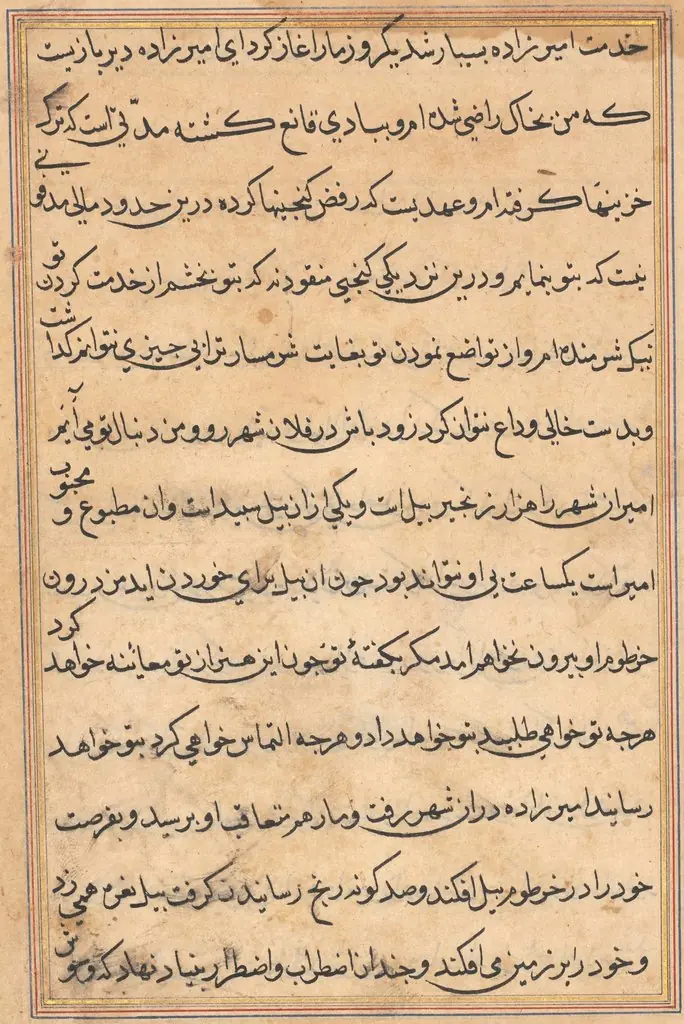
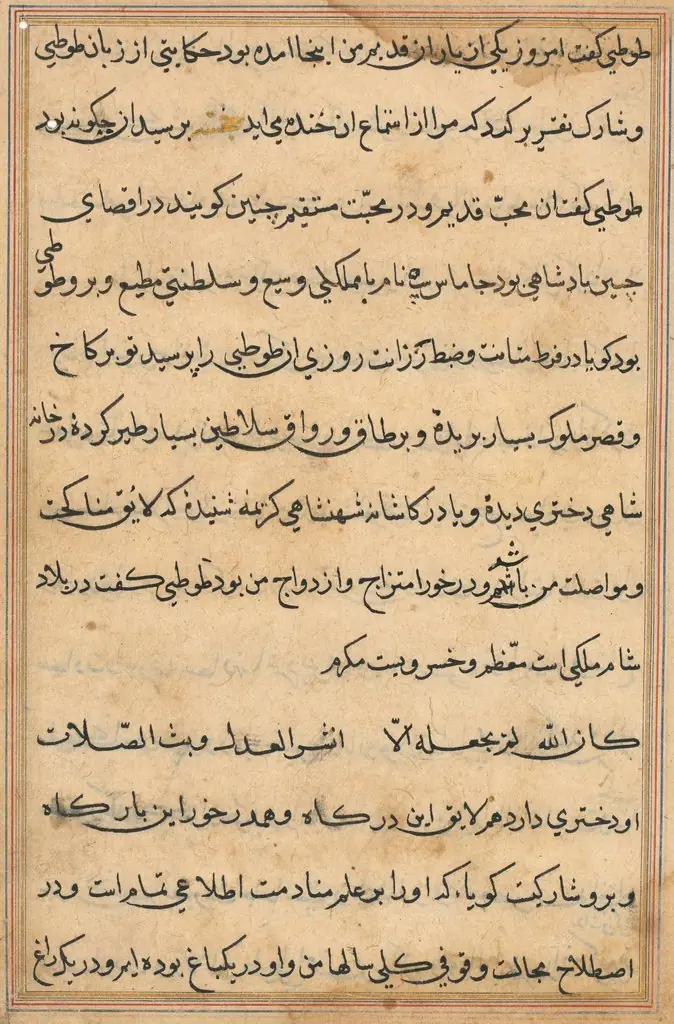
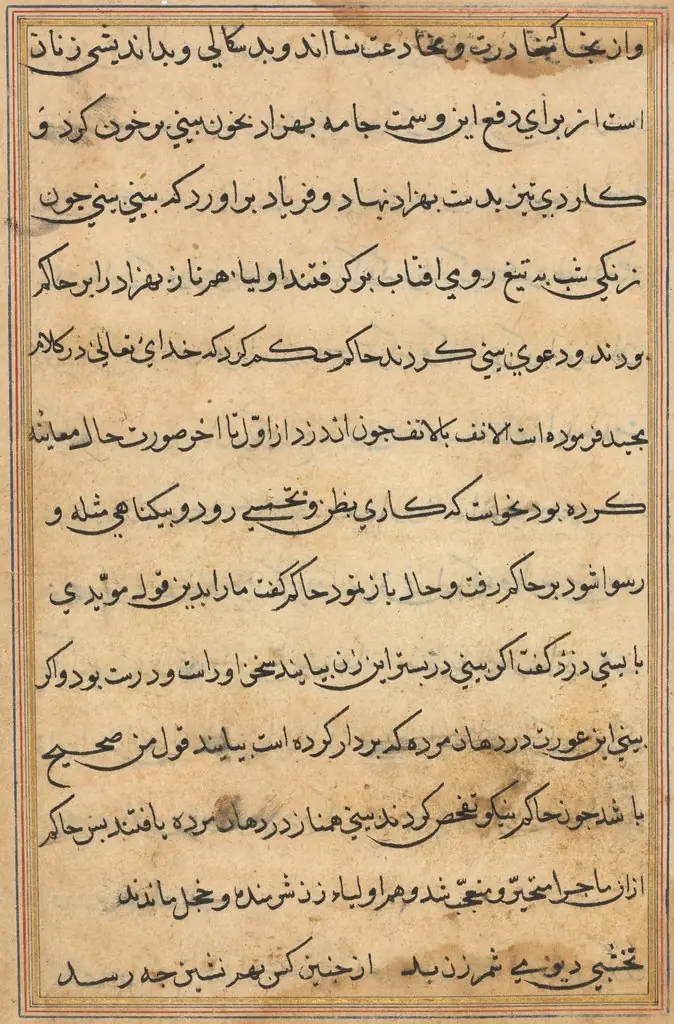
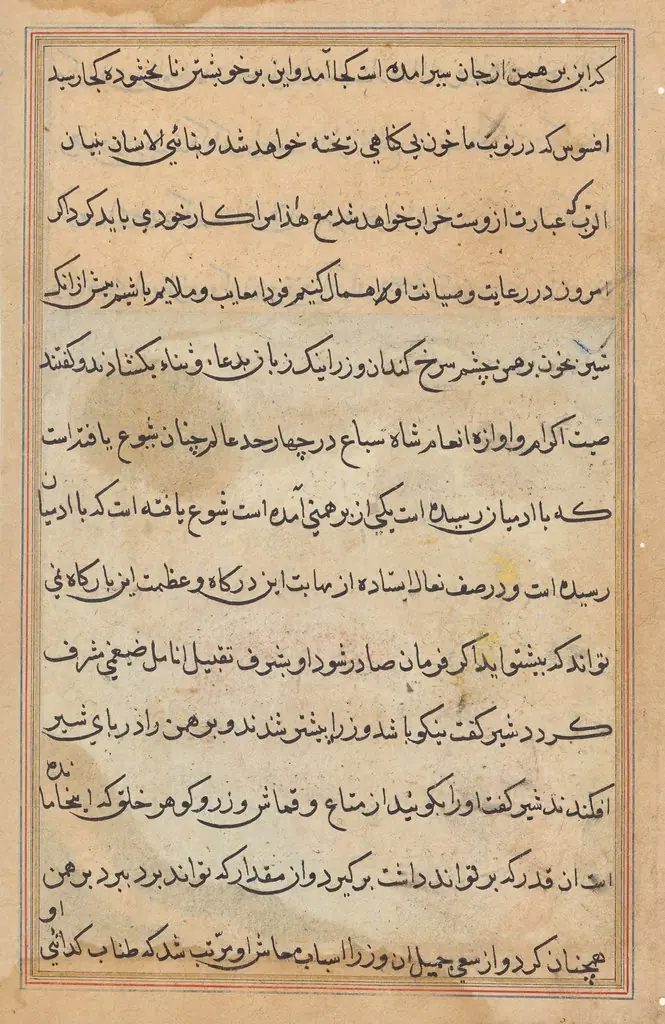
This object is a single folio from the illustrated manuscript Tales of a Parrot (Tuti‑nama). The page consists entirely of black calligraphic text, framed by a narrow decorative border in red, blue and gold. The paper has aged to a pale, yellowed tone and bears faint blue discolorations, indicating its historic materiality.
Subject & Meaning
The inscribed narrative was composed for Prince Salim, a royal patron, and forms part of a larger collection of moral and entertaining stories featuring a parrot as a storyteller. The dense, deliberate script suggests the text was intended for careful, contemplative reading, emphasizing the didactic purpose of the tales.
Technique & Style
The calligraphy displays a compact, uniform hand, characteristic of Persian manuscript traditions where legibility and aesthetic balance were paramount. The surrounding border employs a restrained palette of red, blue and gold, applied in fine linear motifs that delineate the textual field without competing with the script.
Artist & collection

 Page from Tales of a Parrot (Tuti-nama): text page
 Page from Tales of a Parrot (Tuti-nama): text page
 Page from Tales of a Parrot (Tuti-nama): text page
 Page from Tales of a Parrot (Tuti-nama): text page
 Page from Tales of a Parrot (Tuti-nama): text page
 Page from Tales of a Parrot (Tuti-nama): text page
 Page from Tales of a Parrot (Tuti-nama): text page
 Page from Tales of a Parrot (Tuti-nama): text page