Artwork
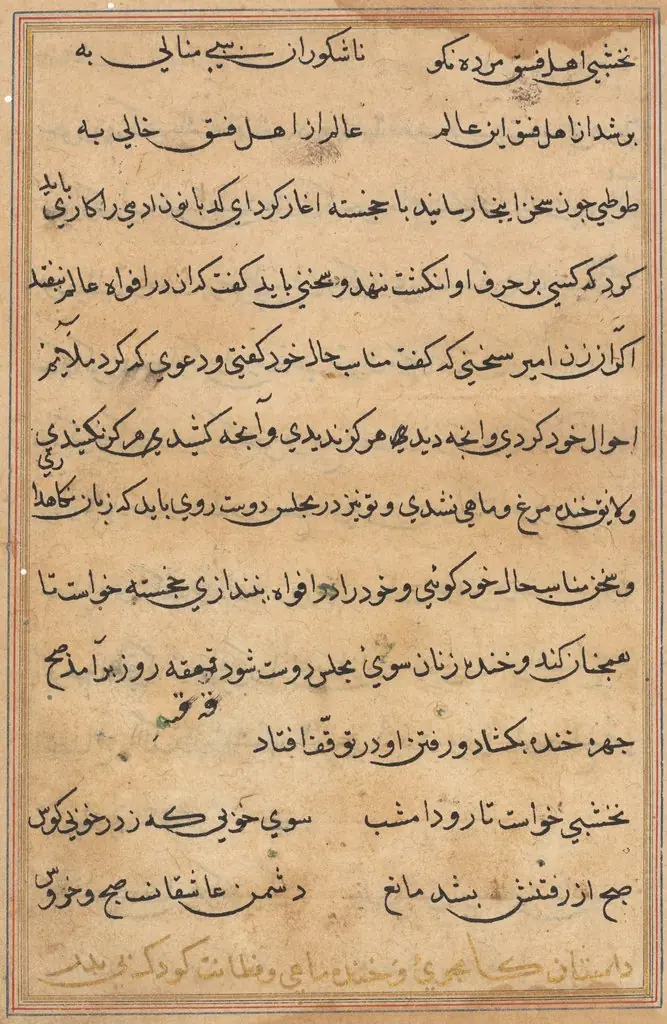
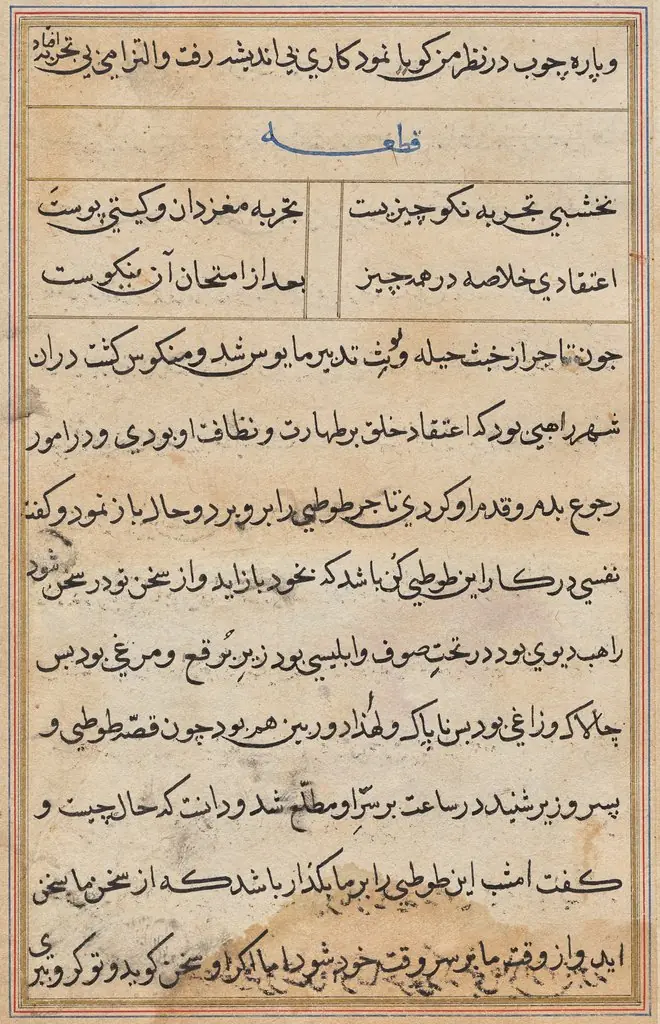
Page from Tales of a Parrot (Tuti-nama): text page
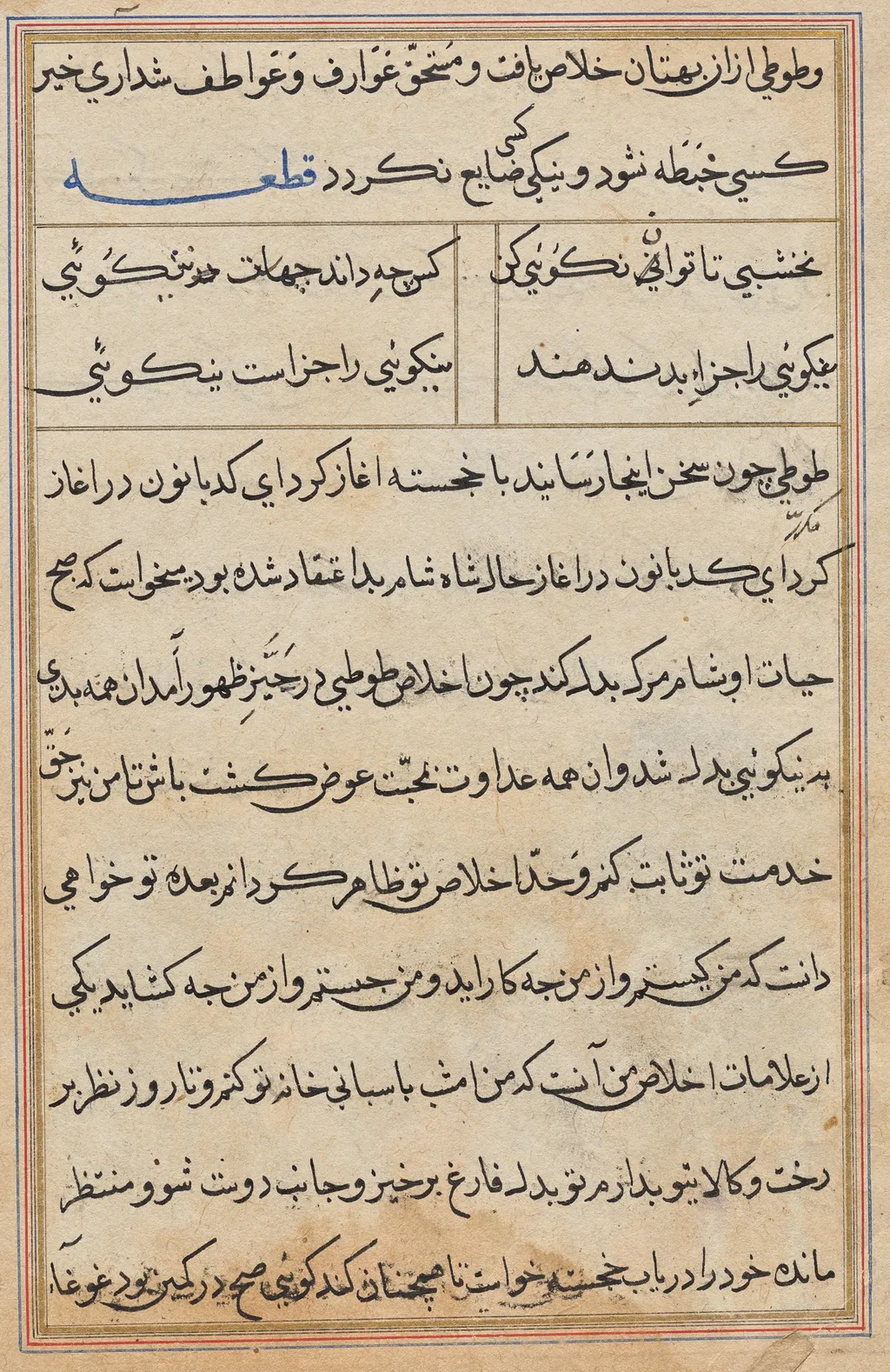
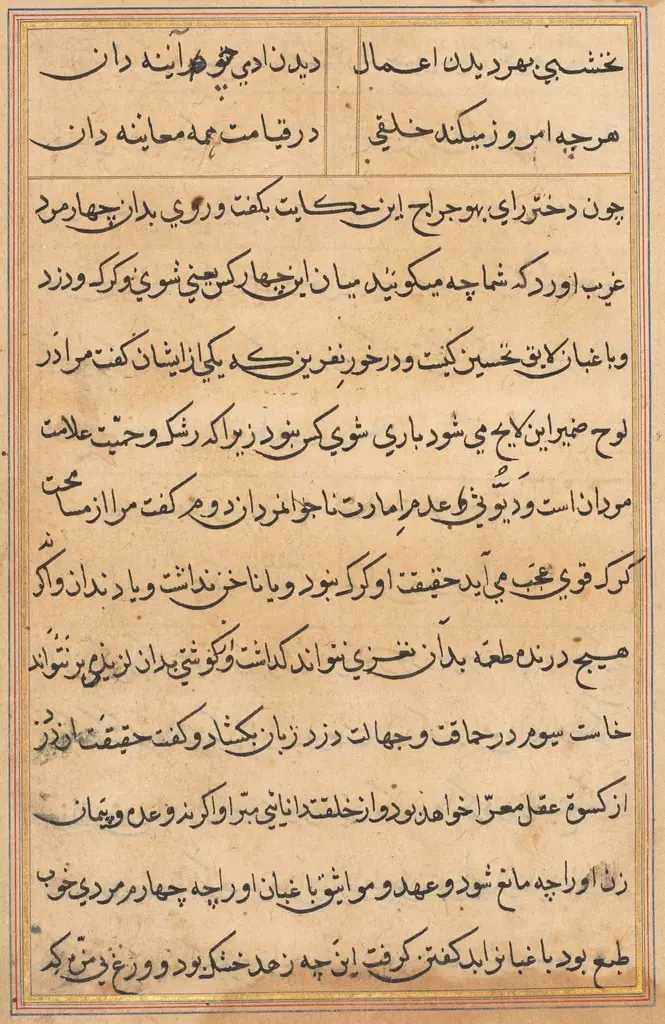
Page from Tales of a Parrot (Tuti-nama): text page is an unspecified painting. It dates from 1560 and is held in the collection of the Cleveland Museum of Art. The work presents a single folio from the manuscript known as Tuti‑nama (Tales of a Parrot).
About this work
History & Provenance
The provided sources confirm its location and inventory details but do not list specific exhibitions where the object has been displayed.
Created in 1560 within the Mughal Empire, this text page from the Tales of a Parrot (Tuti-nama) is attributed to an unknown artist. The work was produced as part of the larger manuscript tradition commissioned during the mid-sixteenth century, though the specific patron or commissioning details for this individual leaf are not recorded in the available records. The page eventually entered the collection of the Cleveland Museum of Art, where it is currently held as accession number 1962.279.79.b. Its provenance prior to this acquisition is not detailed in the provided sources.
The text page from the Tales of a Parrot (Tuti-nama) is held in the collection of the Cleveland Museum of Art. The institution assigns the work the accession number 1962.279.79.b. Created in 1560 within the Mughal Empire, this painting is attributed to an unknown artist. The provided sources confirm its location and inventory details but do not list specific exhibitions where the object has been displayed.
Overview
The work presents a single folio from the manuscript known as Tuti‑nama (Tales of a Parrot). Rendered as a painted reproduction, the sheet displays handwritten text in a cursive script resembling Arabic or Persian, set against a light‑brown parchment tone. A modest ornamental frame encloses the page, composed of fine lines and tiny geometric motifs, emphasizing the textual content without any illustrative imagery.
Subject & Meaning
The page contains narrative or didactic prose typical of the Tuti‑nama tradition, a collection of moral stories often conveyed through animal characters, particularly a parrot. The emphasis on calligraphic elegance suggests the text’s role as a vehicle for moral instruction as well as a display of literary culture.
Technique & Style
Executed in black ink, the script varies in size, with larger headings or initial letters distinguishing sections. The calligraphy follows the fluid, interconnected strokes characteristic of Persian‑influenced scripts, while the surrounding border employs delicate linear patterns that echo manuscript illumination practices without resorting to pictorial decoration.
Context
Manuscript culture in the Islamic world prized the harmonious integration of text and ornament. The Tuti‑nama belonged to a genre of didactic literature that circulated widely, and its pages often served both educational and aesthetic functions, showcasing the scribe’s skill and the patron’s taste for refined literary objects.
Artist & collection

- Page from Tales of a Parrot (Tuti-nama): text page
 Page from Tales of a Parrot (Tuti-nama): text page
 Page from Tales of a Parrot (Tuti-nama): text page
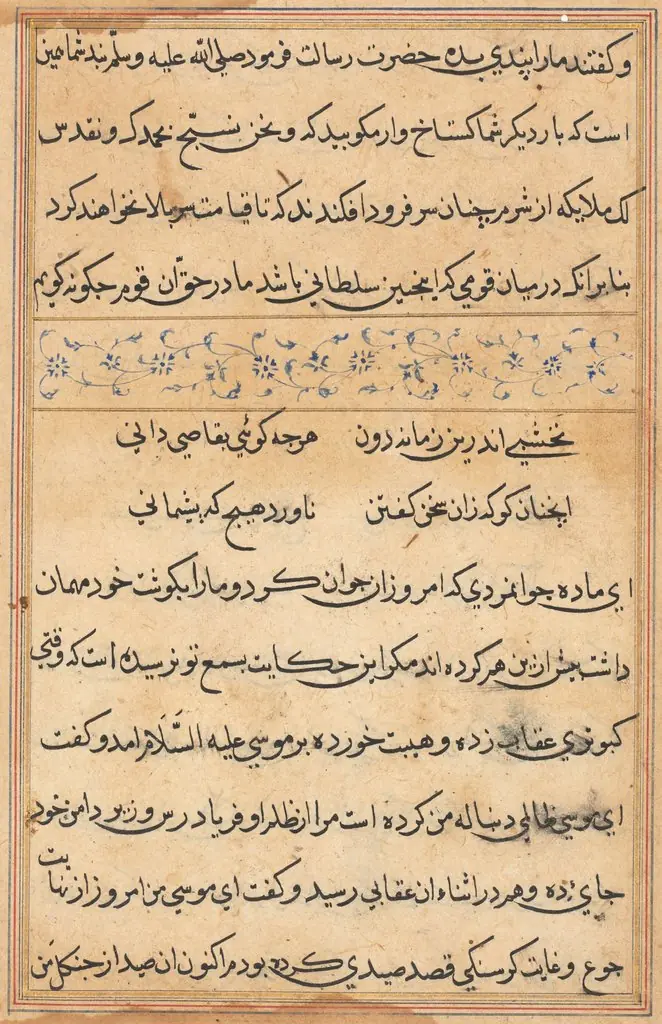 Page from Tales of a Parrot (Tuti-nama): text page
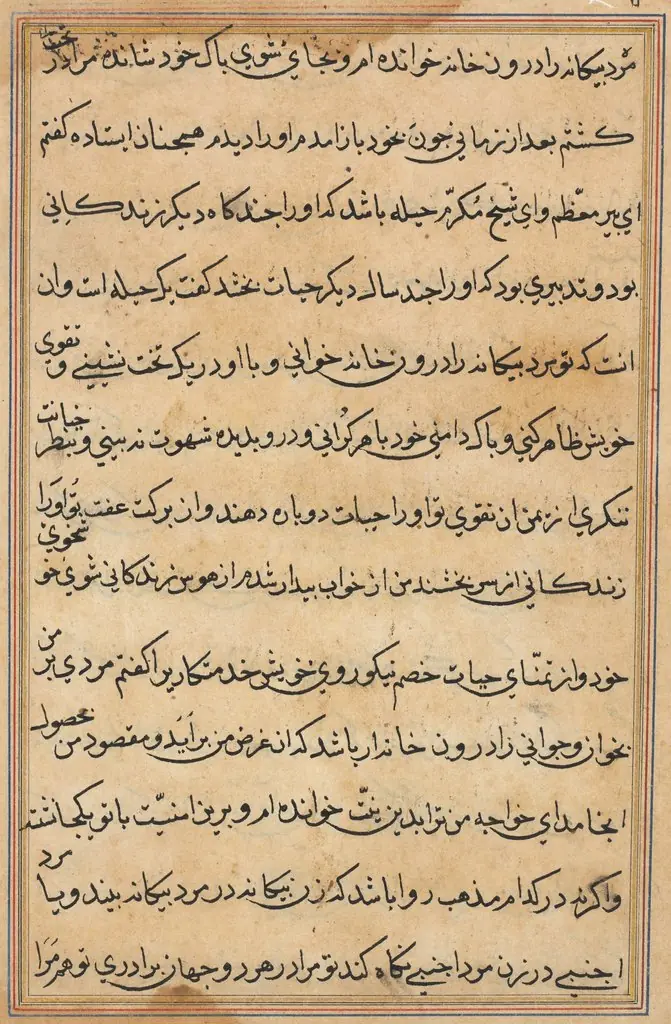 Page from Tales of a Parrot (Tuti-nama): text page
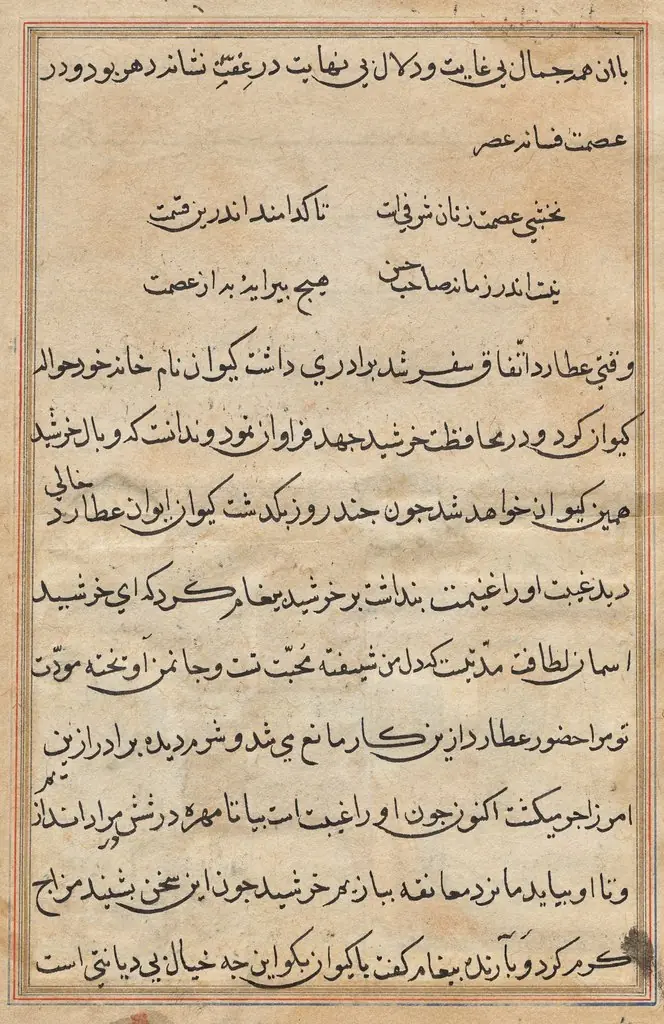 Page from Tales of a Parrot (Tuti-nama): text page
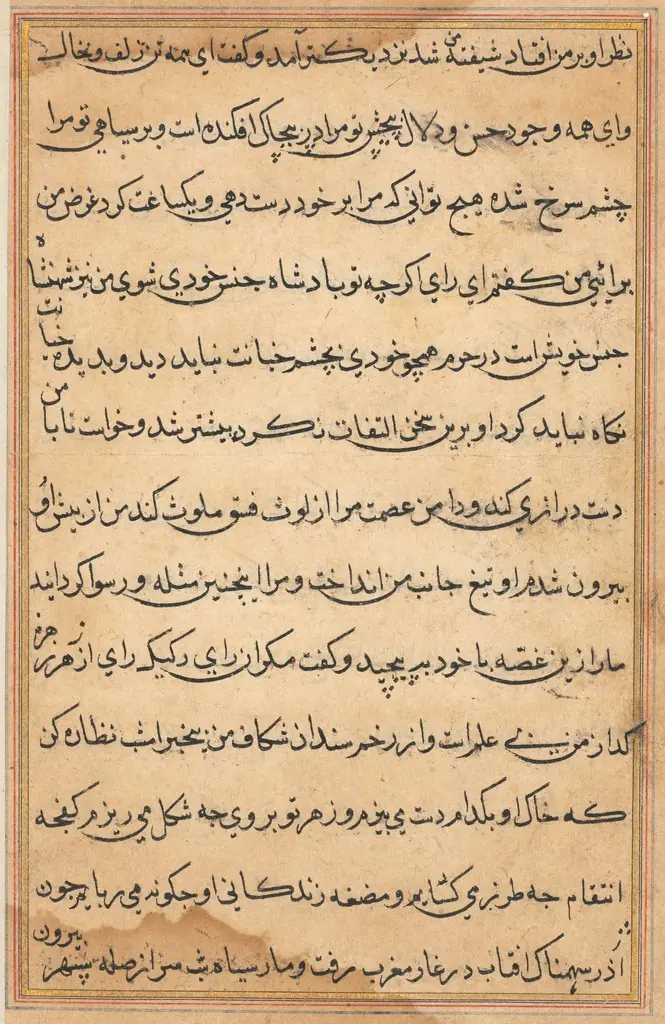 Page from Tales of a Parrot (Tuti-nama): text page
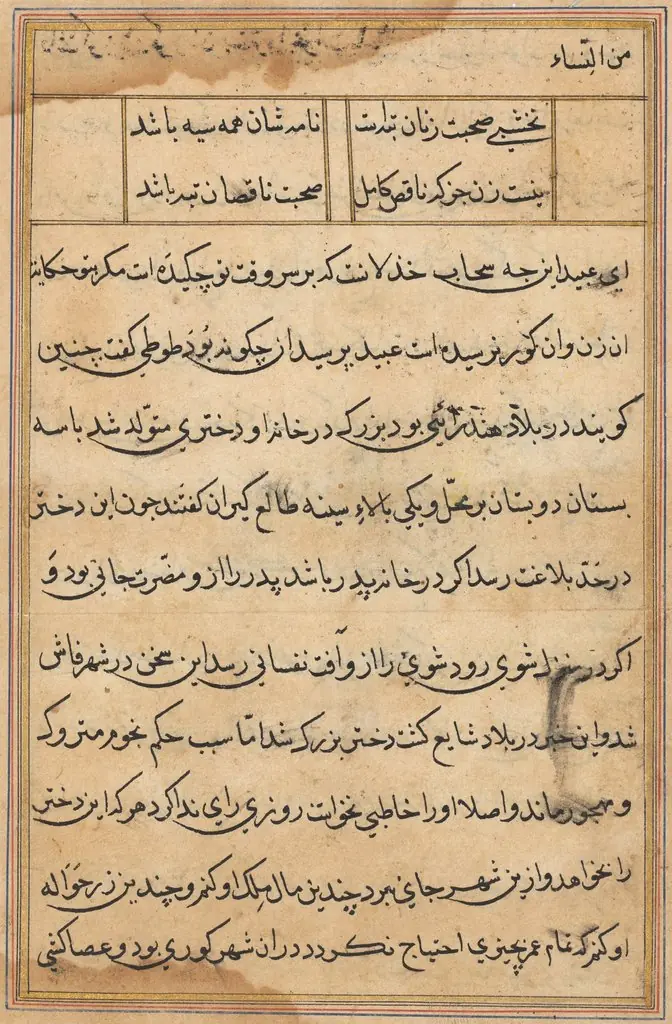 Page from Tales of a Parrot (Tuti-nama): text page
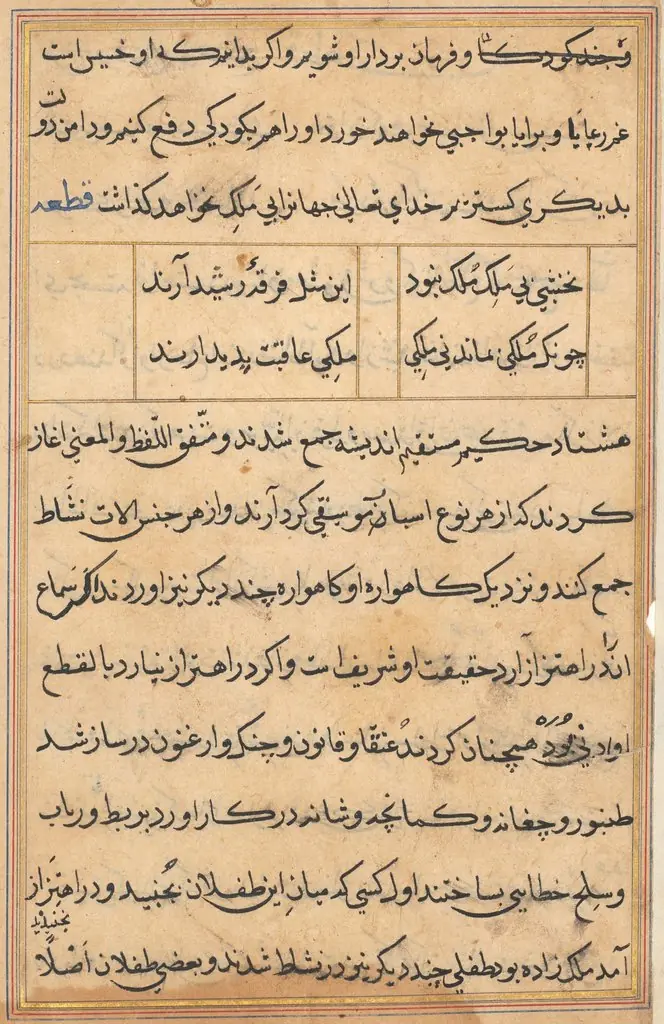 Page from Tales of a Parrot (Tuti-nama): text page
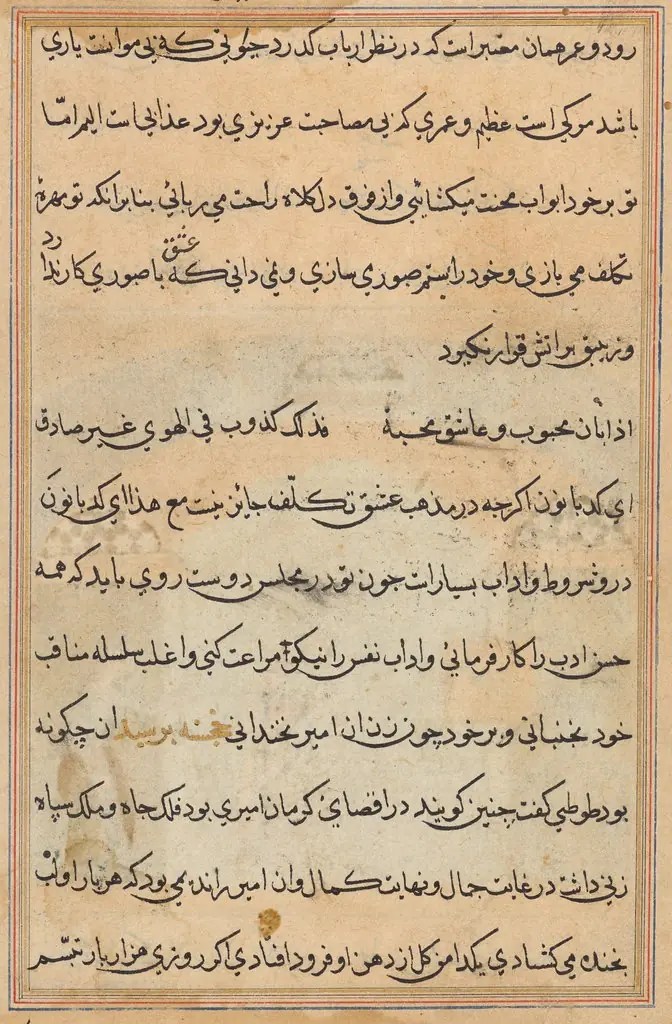 Page from Tales of a Parrot (Tuti-nama): text page
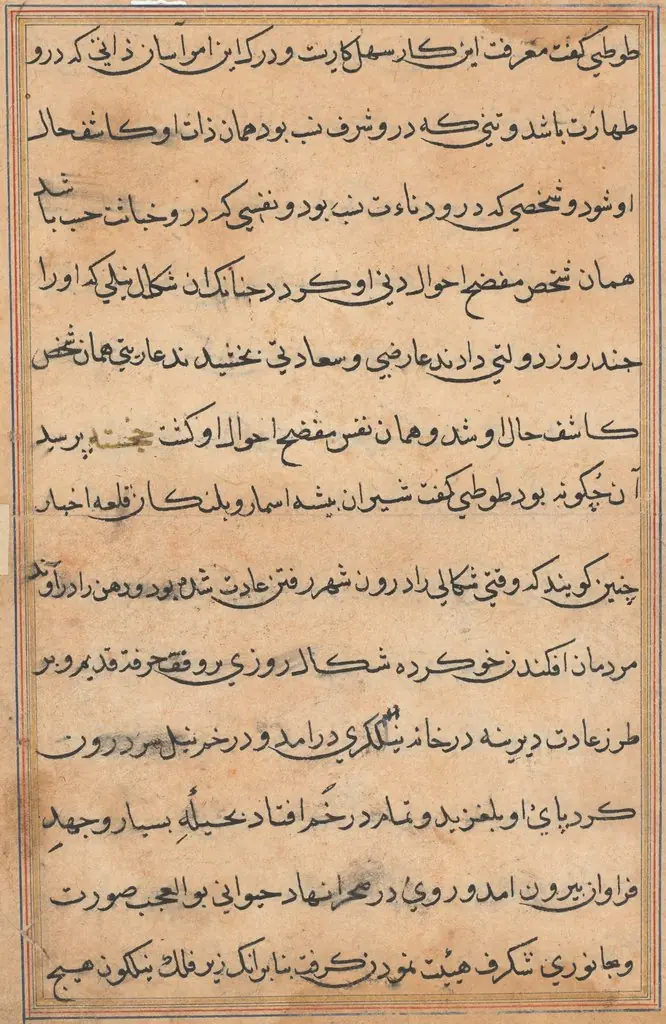 Page from Tales of a Parrot (Tuti-nama): text page
 Page from Tales of a Parrot (Tuti-nama): text page