Artwork
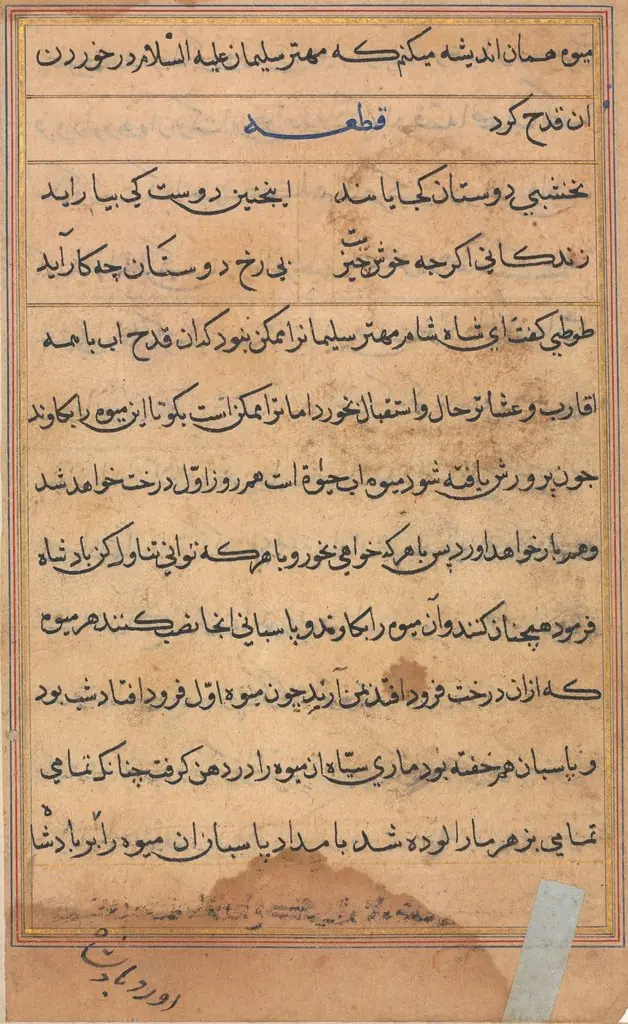
Page from Tales of a Parrot (Tuti-nama): text page
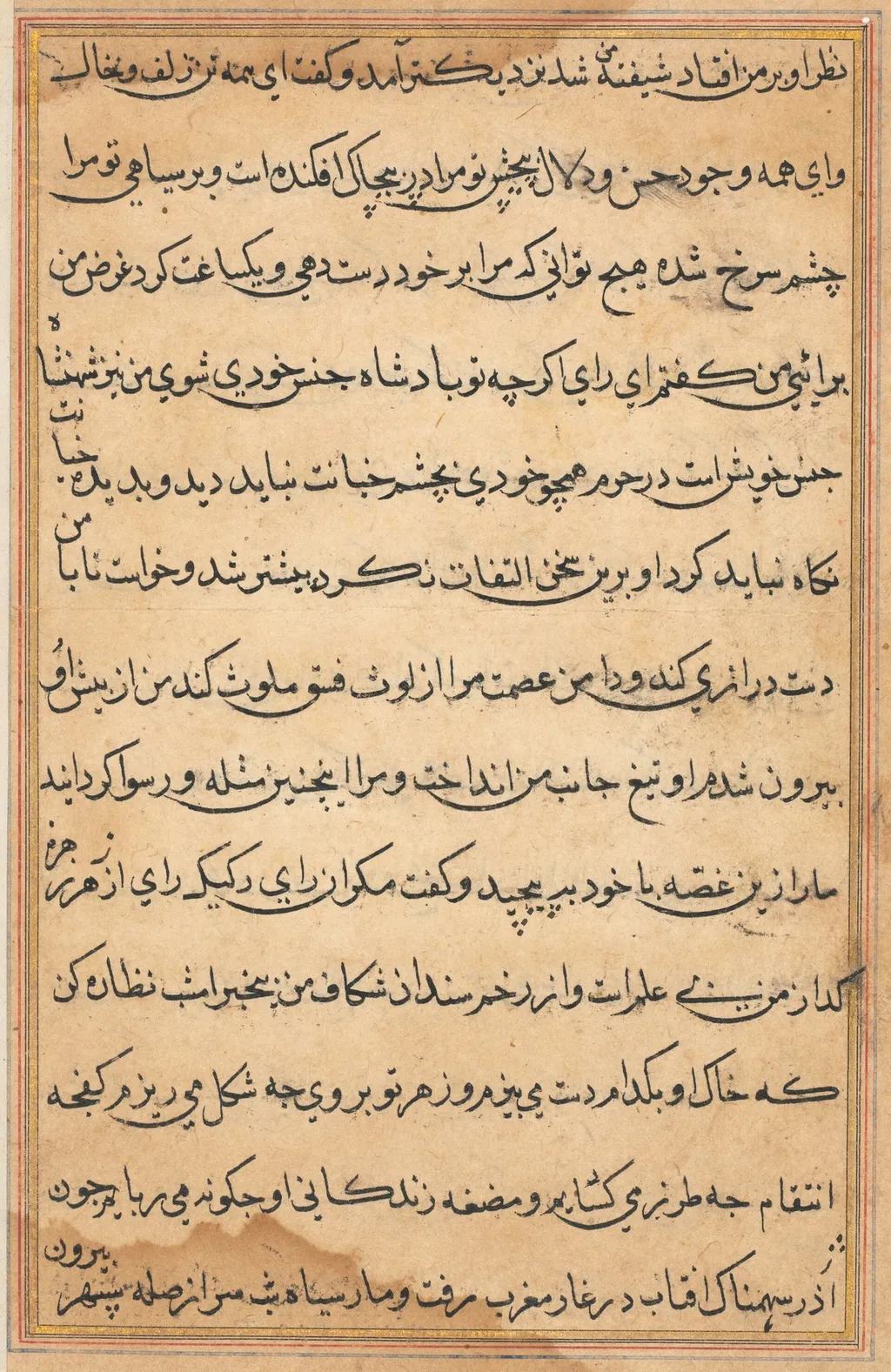
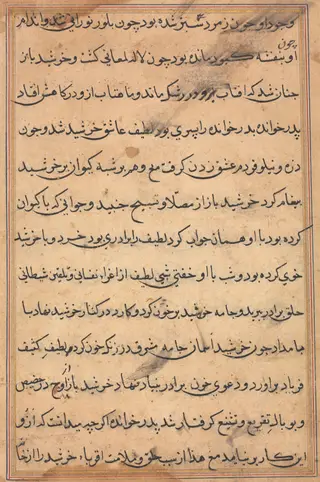
Page from Tales of a Parrot (Tuti-nama): text page is an unspecified painting. It dates from 1560 and is held in the collection of the Cleveland Museum of Art. This illuminated page originates from the Persian manuscript known as Tales of a Parrot (Tuti‑nama).
About this work
Subject & Meaning
The page illustrates a narrative scene from the Tuti-nama, a Persian moral tale composed in the 13th century and translated into Hindi during the reign of Akbar. In this particular fragment, a parrot recounts a story of a merchant's cunning test of faith, using the bird's speech to convey a lesson about trust and divine providence. The iconography of the parrot functions as a moral emblem, symbolizing wisdom and the transmission of spiritual teachings across linguistic and cultural boundaries within the Mughal court.
The composition reflects the synthesis of Persian literary themes with Indian artistic conventions, marking a distinctive phase in manuscript production under imperial patronage. Its presence in the Cleveland Museum of Art underscores the transregional movement of artistic objects and the enduring appeal of didactic storytelling in early modern visual culture.
History & Provenance
The page from the Tales of a Parrot (Tuti-nama) entered the Cleveland Museum of Art in 1962 as part of a gift, where it is currently held (accession 1962.279.277.b).
The work is dated to 1560 and attributed to an unknown artist active in the Mughal Empire, aligning with the manuscript’s production context during the mid-16th century under Mughal patronage.
Overview
This illuminated page originates from the Persian manuscript known as Tales of a Parrot (Tuti‑nama). Executed as a painted sheet, it features dense black calligraphy arranged in orderly rows on a light‑brown parchment, its margins accented by a slender red border that frames the text.
Technique & Style
Calligraphic work is rendered in a deliberate hand, with a mixture of connected and isolated letters that demonstrate the refined penmanship of a court scribe. The red border, painted with a thin brush, provides a subtle decorative contrast to the monochrome text, characteristic of Mughal manuscript aesthetics.
Context
During the early 17th century, Mughal rulers cultivated Persian literary culture, integrating it into courtly education and entertainment. Manuscripts such as the Tuti‑nama were produced in workshops attached to the imperial atelier, reflecting the synthesis of Persian textual tradition with Indian artistic sensibilities.
Artist & collection

- Page from Tales of a Parrot (Tuti-nama): text page
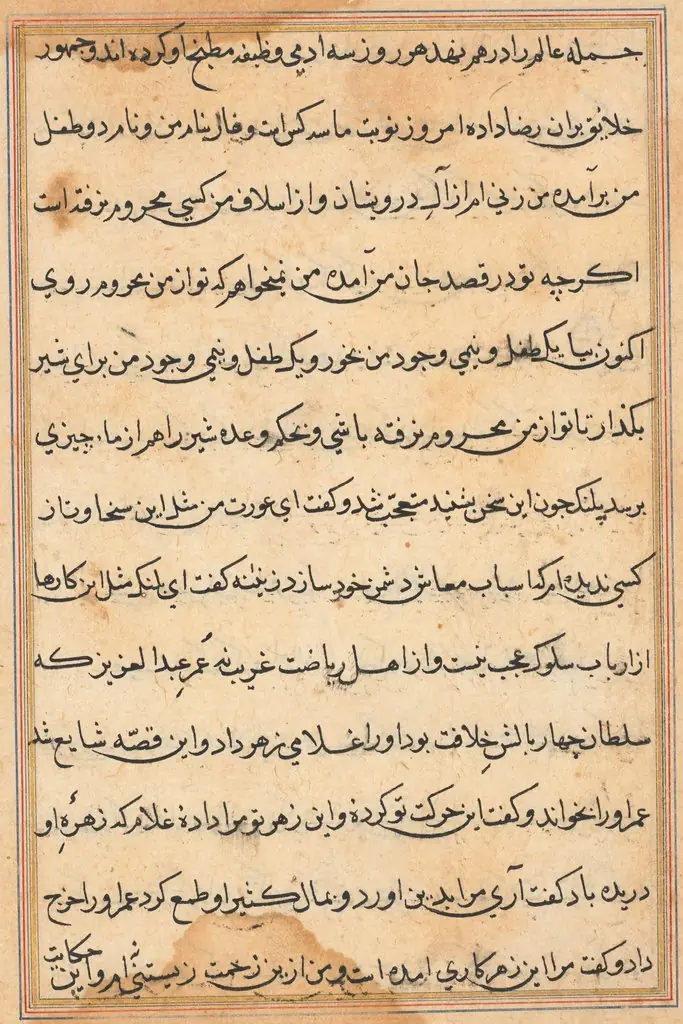 Page from Tales of a Parrot (Tuti-nama): text page
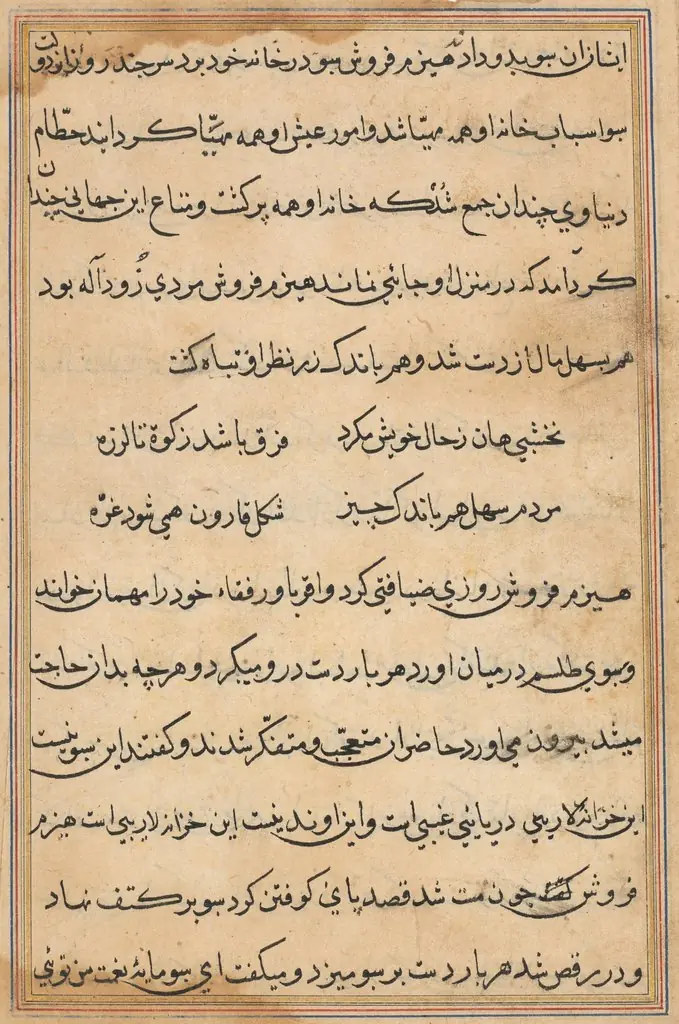 Page from Tales of a Parrot (Tuti-nama): text page
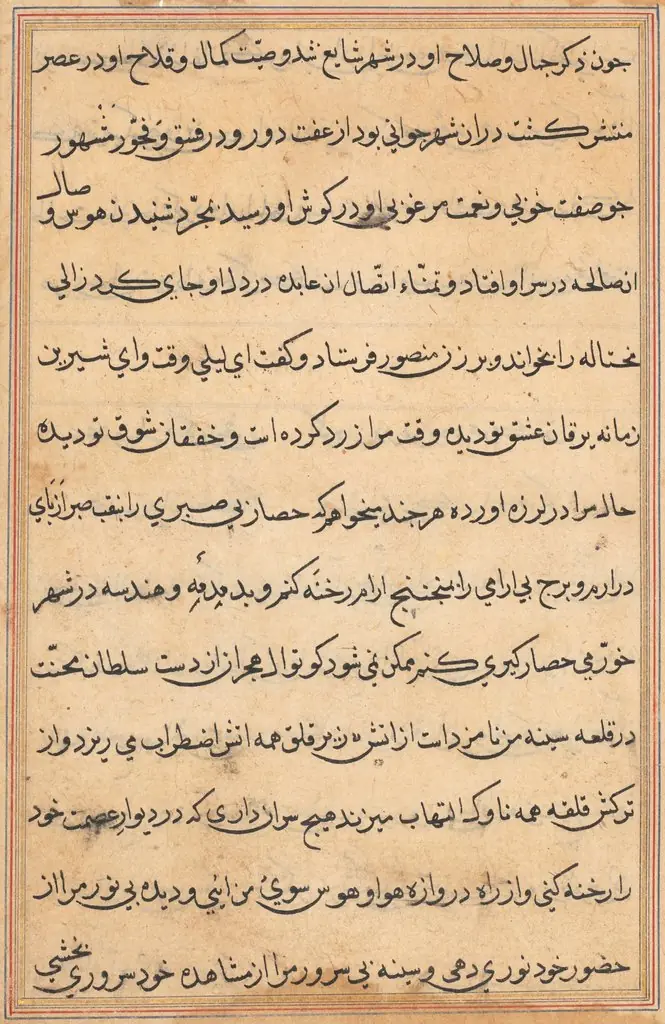 Page from Tales of a Parrot (Tuti-nama): text page
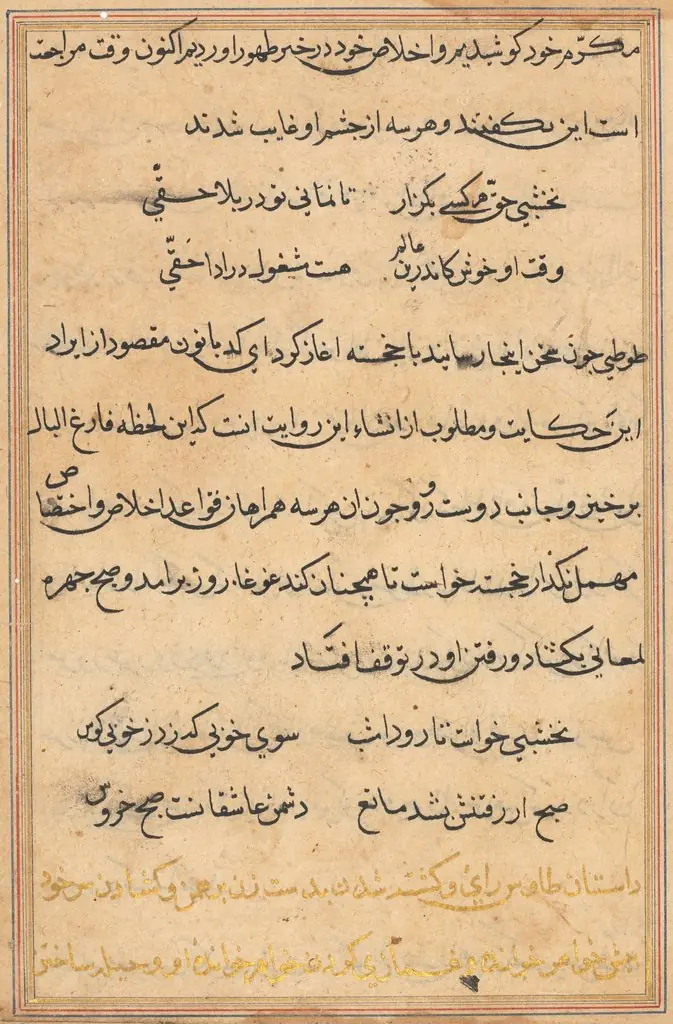 Page from Tales of a Parrot (Tuti-nama): text page
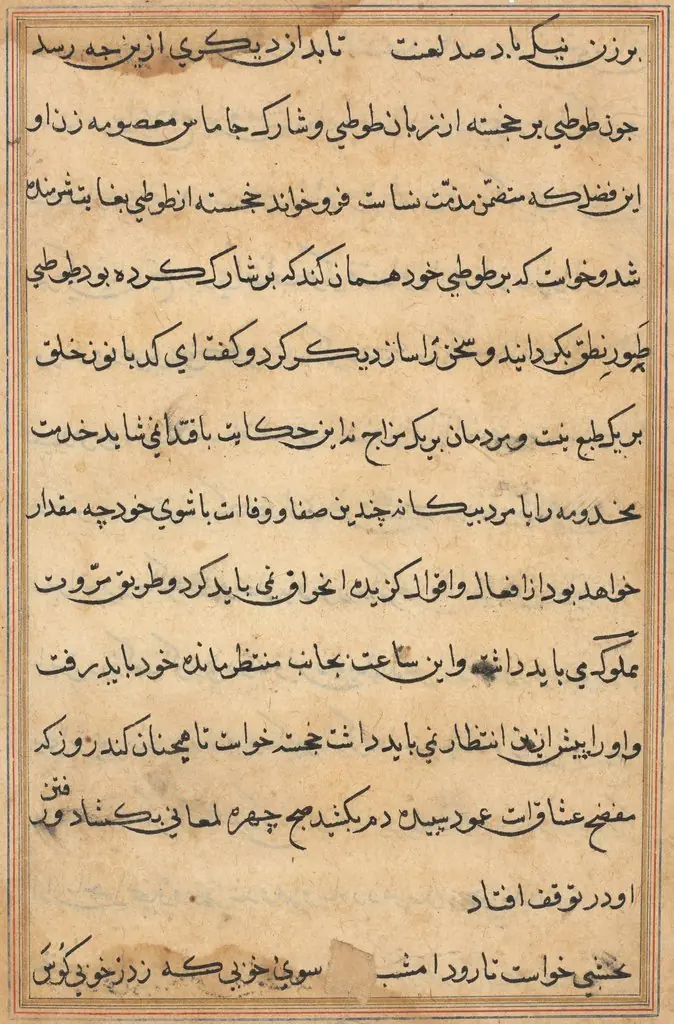 Page from Tales of a Parrot (Tuti-nama): text page
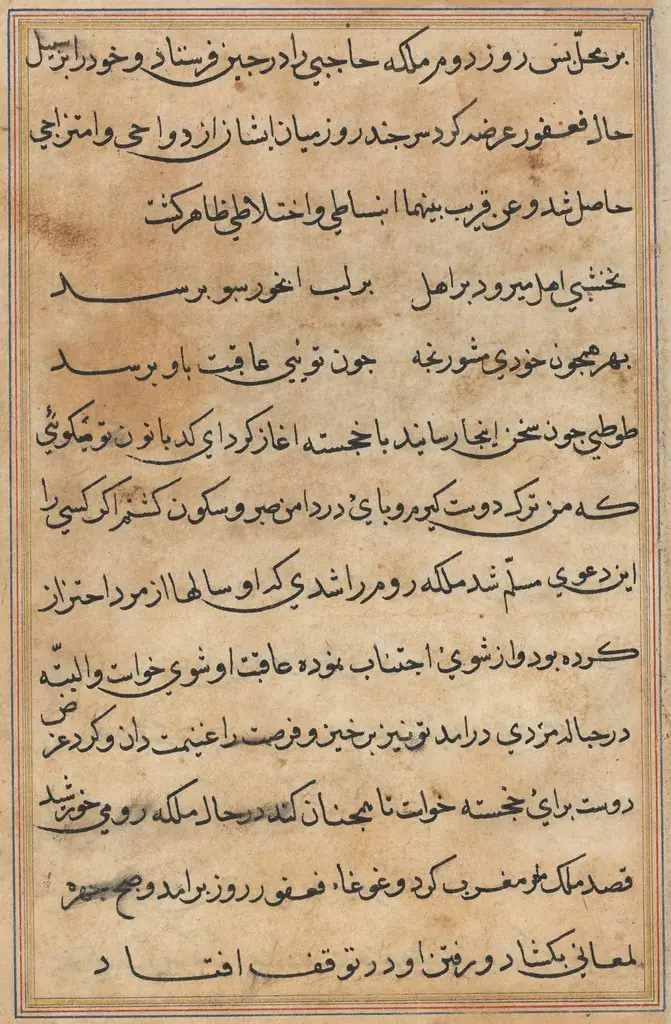 Page from Tales of a Parrot (Tuti-nama): text page
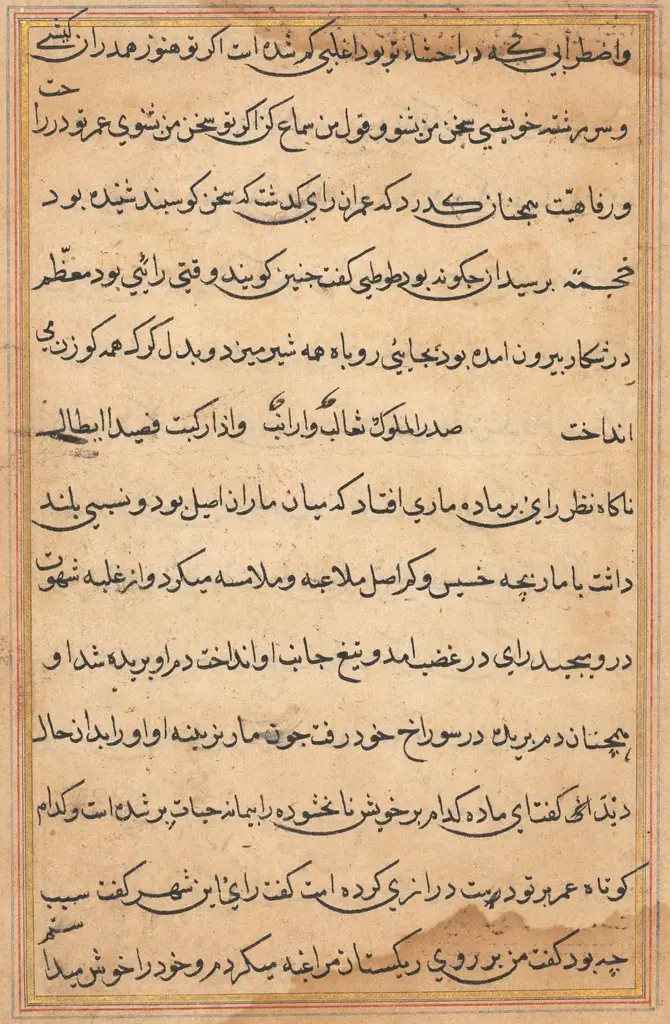 Page from Tales of a Parrot (Tuti-nama): text page
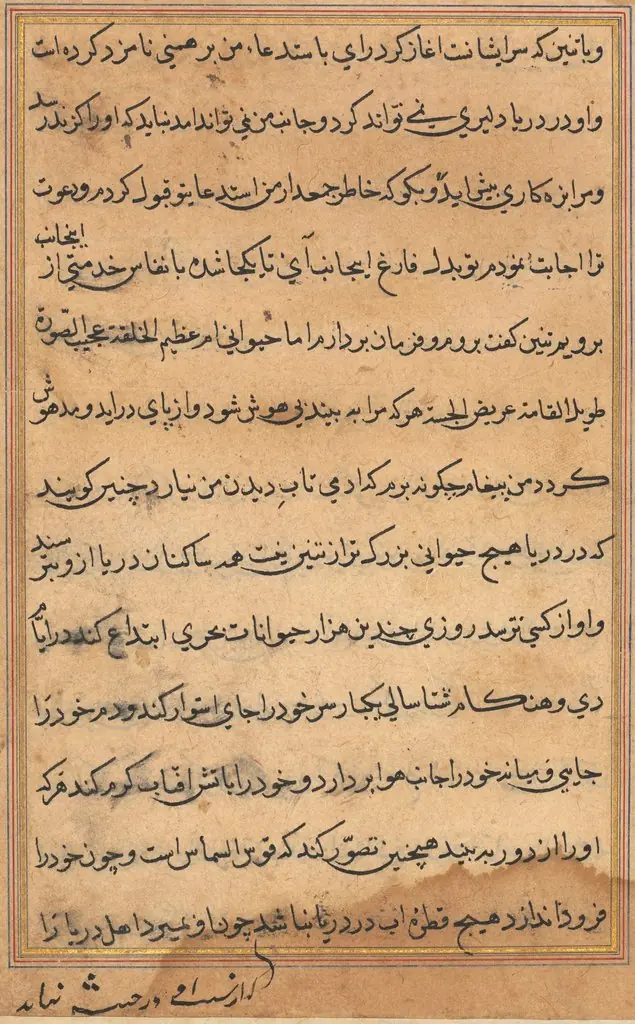 Page from Tales of a Parrot (Tuti-nama): text page
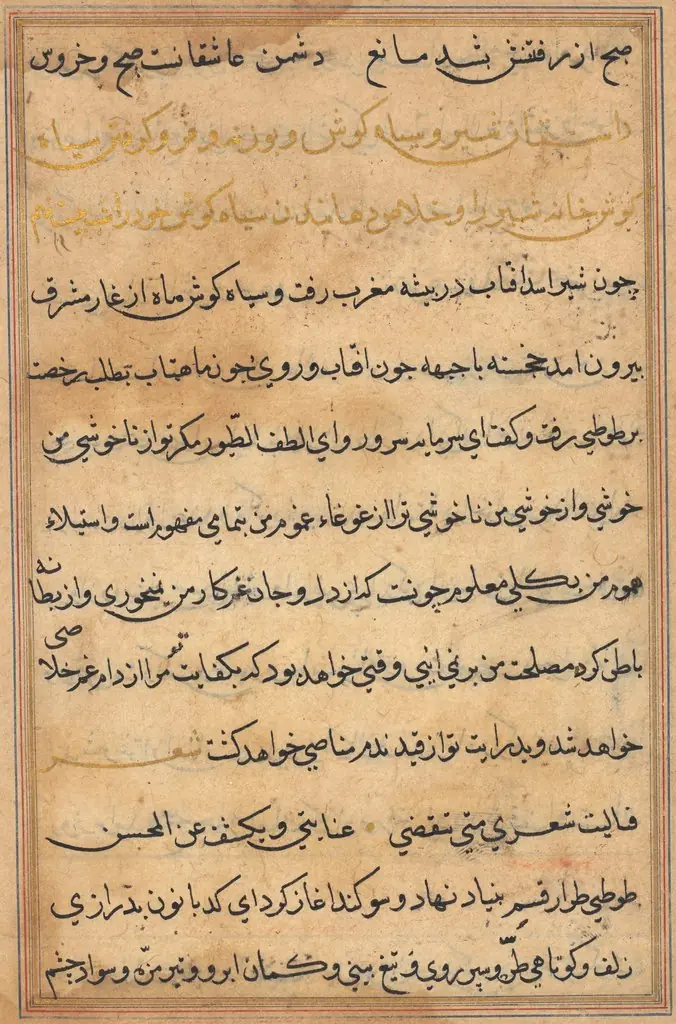 Page from Tales of a Parrot (Tuti-nama): text page
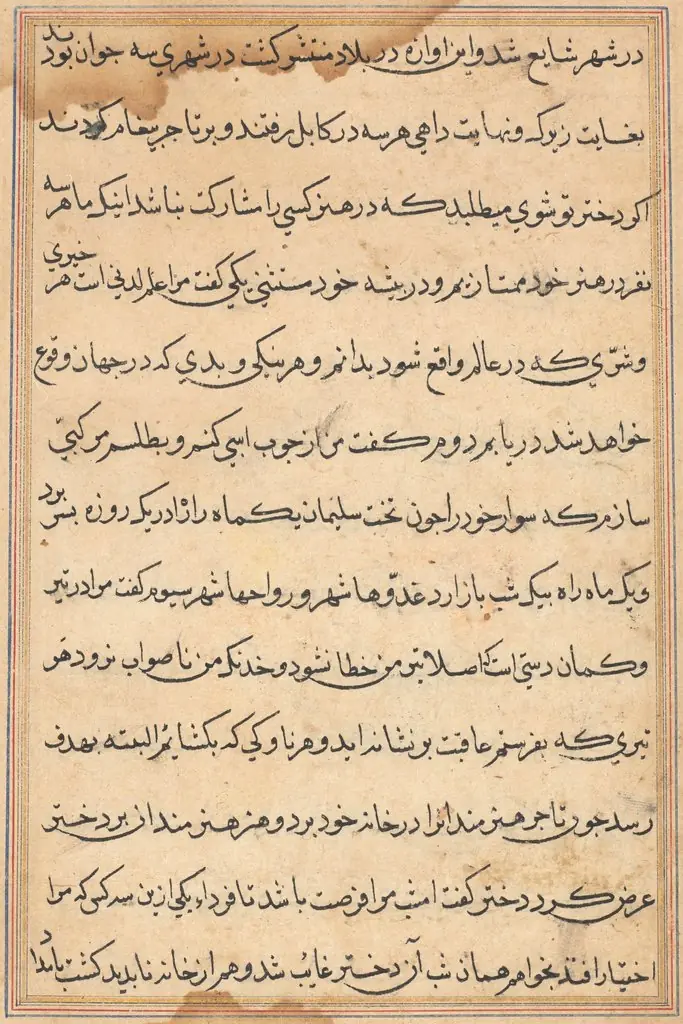 Page from Tales of a Parrot (Tuti-nama): text page
 Page from Tales of a Parrot (Tuti-nama): text page