Artwork
Page from Tales of a Parrot (Tuti-nama): text page
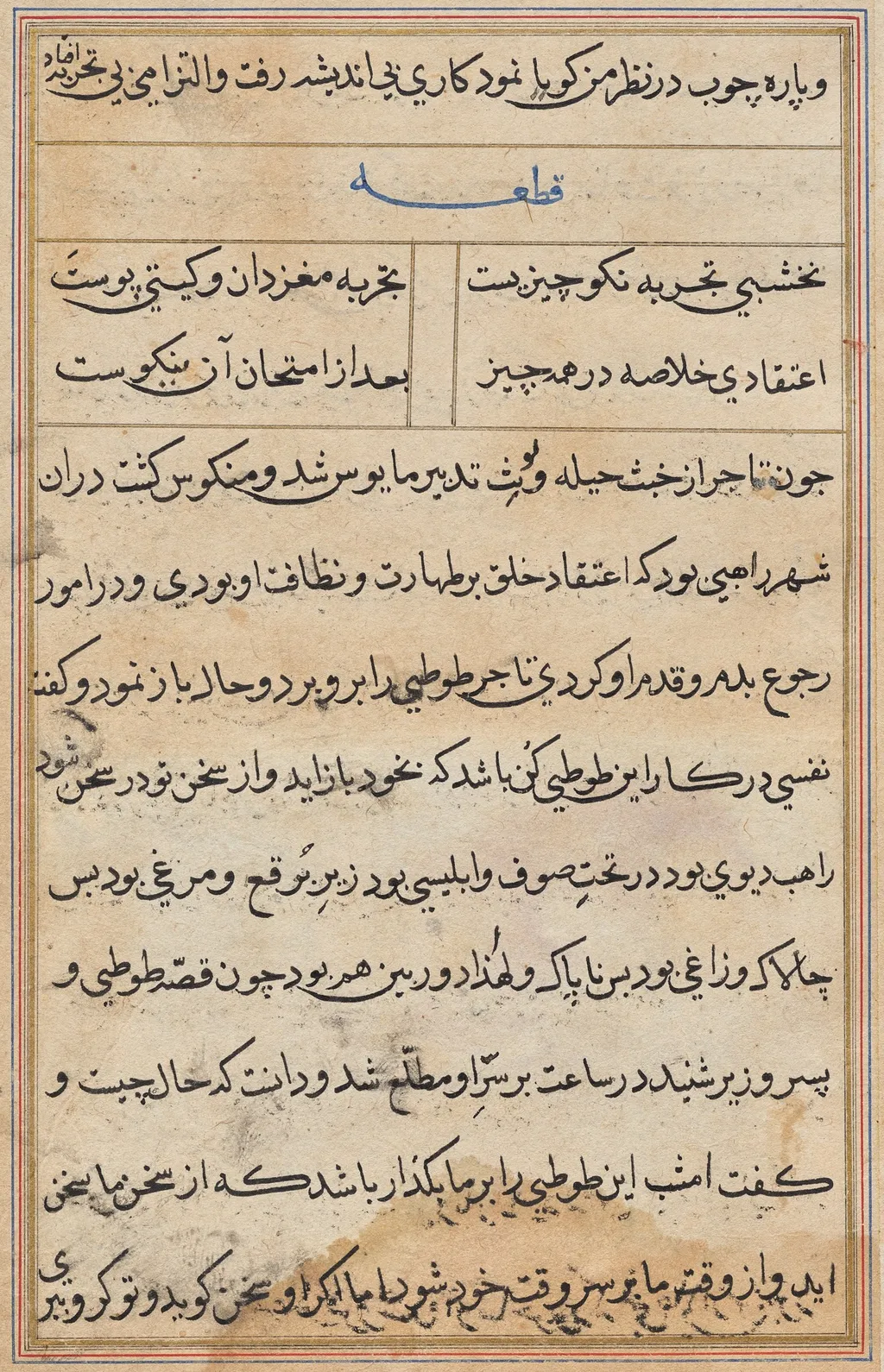
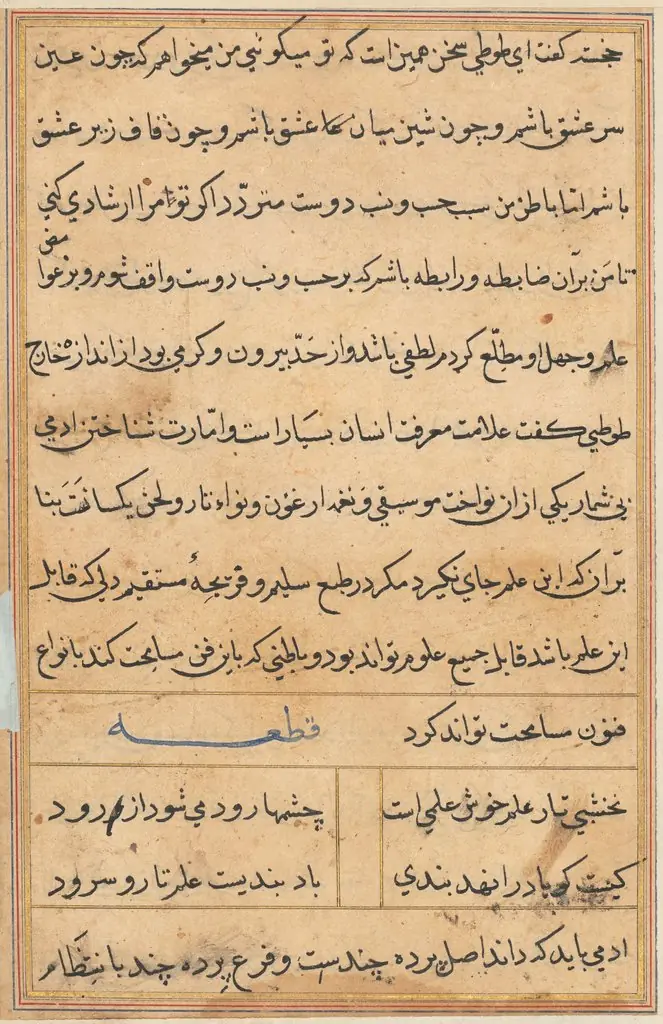
Page from Tales of a Parrot (Tuti-nama): text page is an unspecified painting. It dates from 1560 and is held in the collection of the Cleveland Museum of Art. The object is a painted page from the Persian manuscript known as the Tuti‑nama or “Tales of a Parrot.
About this work
Technique & Style
The page is an opaque watercolor and ink painting on paper, representing a text page from the Tuti-nama tradition.
The page is an opaque watercolor and ink painting on paper, representing a text page from the Tuti-nama tradition. It was created in 1560 within the Mughal Empire using pigments on paper as the support. The work exhibits fine line work and flat areas of color typical of manuscript illumination, with careful handling evident in the preservation of delicate washes. The condition is described as stable, showing minimal deterioration despite its age.
History & Provenance
The text page from the Tales of a Parrot (Tuti-nama) is dated to 1560 and was produced in the Mughal Empire by an unknown artist. It entered the Cleveland Museum of Art’s holdings with the accession number 1962.279.83.a, where it remains today. The sources do not record any earlier owners, patrons, or commission details for this folio, so its provenance prior to the museum acquisition is undocumented.
Consequently, the work’s creation history is limited to its place and date of manufacture within the Mughal painting tradition.
Overview
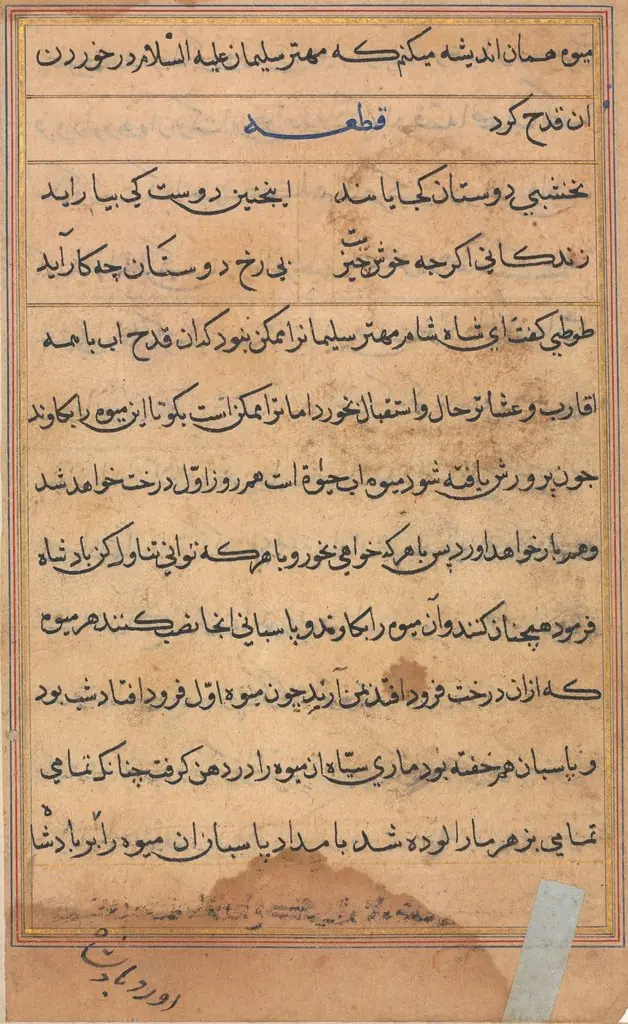
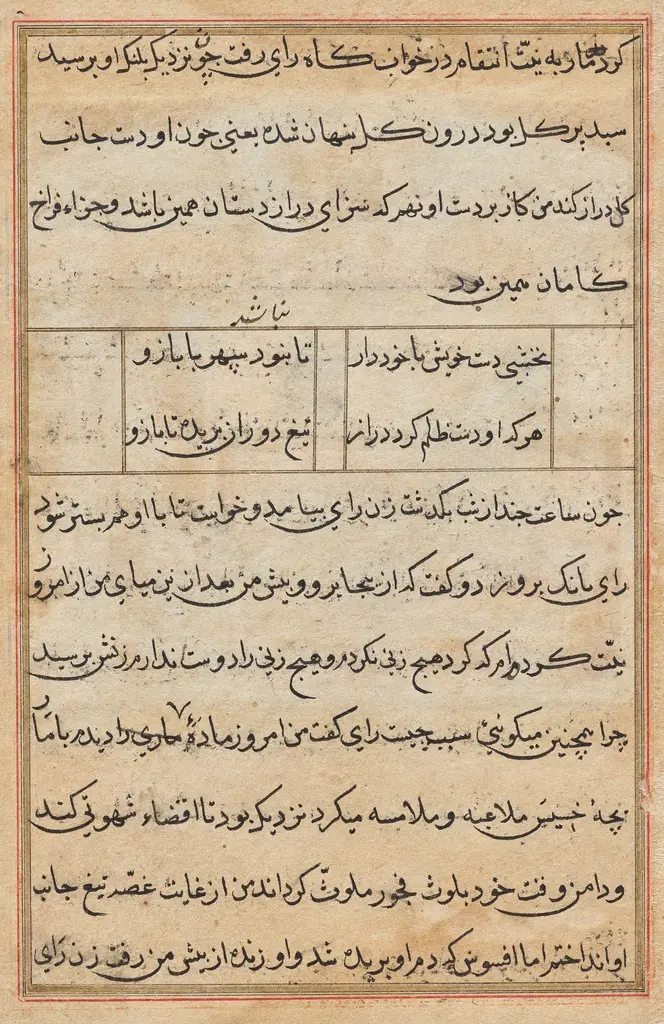
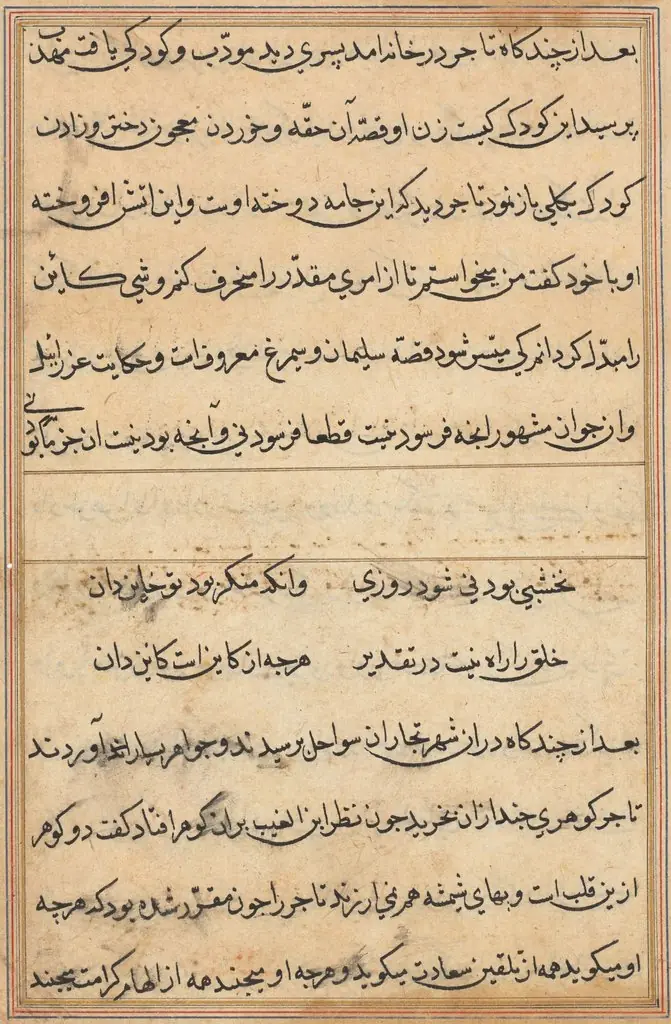
The object is a painted page from the Persian manuscript known as the Tuti‑nama or “Tales of a Parrot.” Executed on light‑brown paper, the surface is bordered in red and features a faint blue line that separates a block of text. The script is rendered in neat black hand‑writing, arranged in orderly rows and designed to be read from right to left, as is customary in Persian.
Subject & Meaning
The text on the page belongs to a collection of moral and didactic stories that use the voice of a parrot to convey ethical lessons. Though the specific episode is not identified, the Tuti‑nama traditionally blends allegory with practical advice, reflecting the literary culture of Safavid‑era Iran where such works served both entertainment and instruction.
Context
Manuscript production in Safavid Iran involved collaborative workshops where scribes, illuminators, and binders worked together. Pages such as this one illustrate the era’s emphasis on readability and modest decoration, contrasting with more lavishly illustrated folios that featured miniature paintings and gold leaf.
Legacy
While the Tuti‑nama is less frequently illustrated than other Persian epics, its moral narratives continue to be studied for insights into social values of early modern Iran. The preserved page offers scholars a tangible example of the scriptural aesthetics and pedagogical literature that shaped Persian literary tradition.
Artist & collection

- Page from Tales of a Parrot (Tuti-nama): text page
 Page from Tales of a Parrot (Tuti-nama): text page
 Page from Tales of a Parrot (Tuti-nama): text page
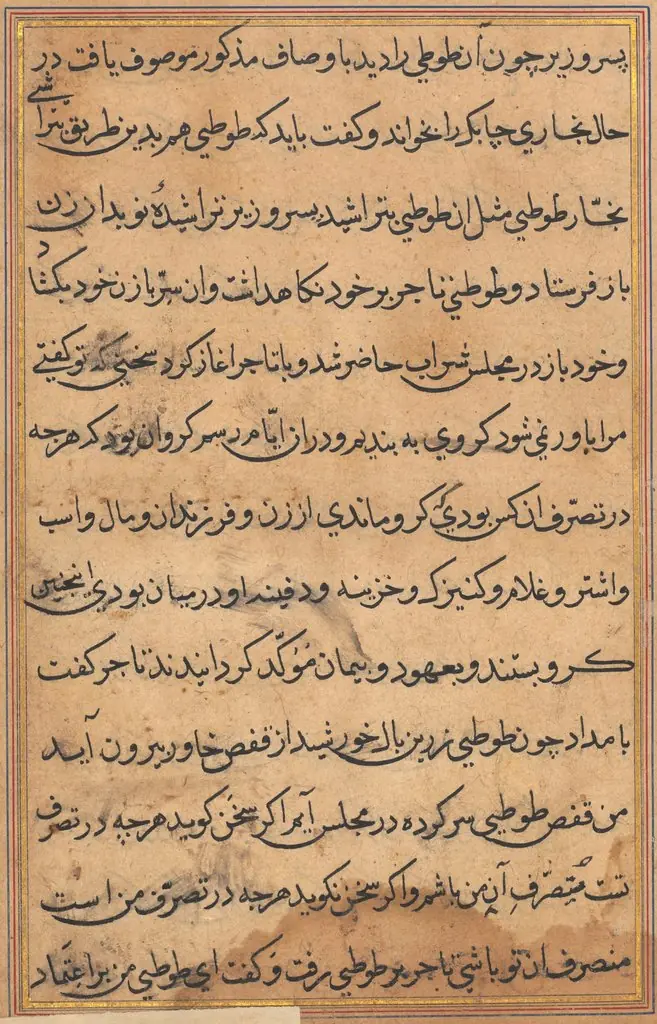 Page from Tales of a Parrot (Tuti-nama): text page
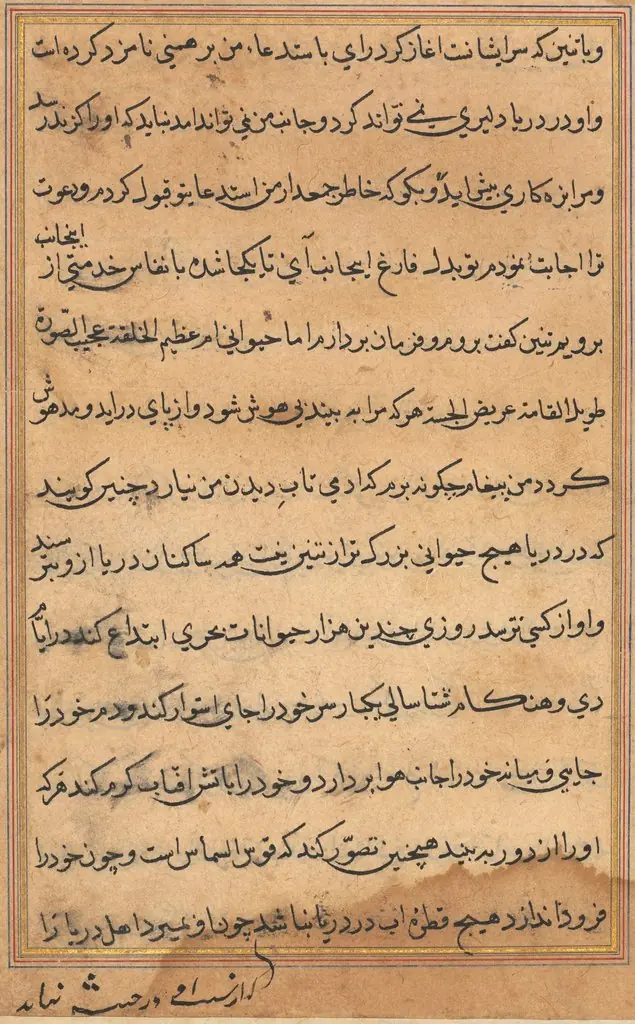 Page from Tales of a Parrot (Tuti-nama): text page
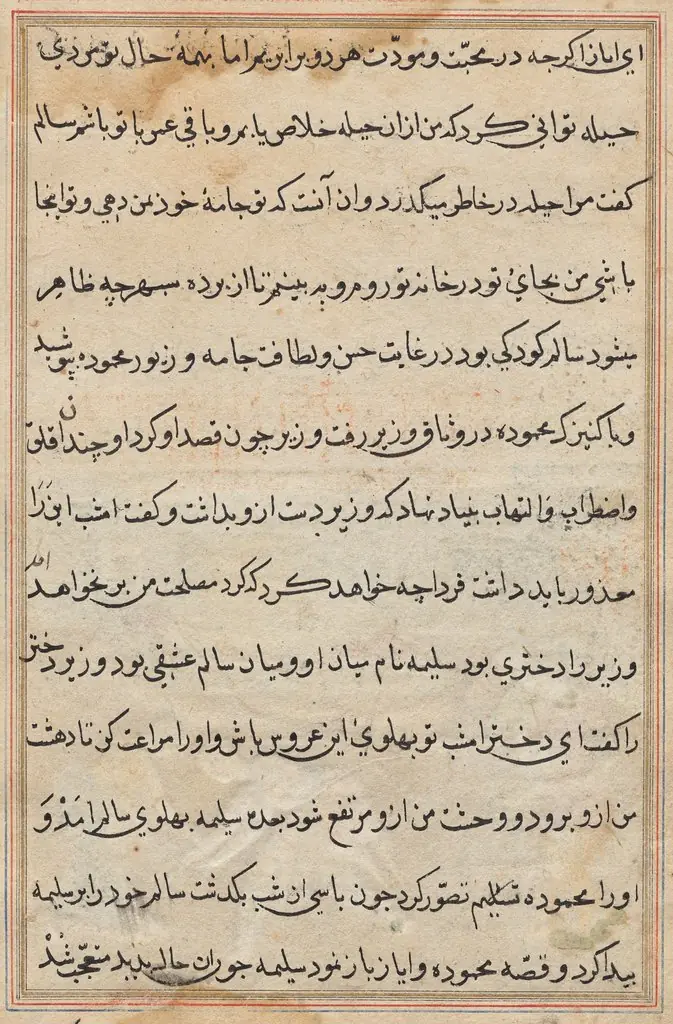 Page from Tales of a Parrot (Tuti-nama): text page
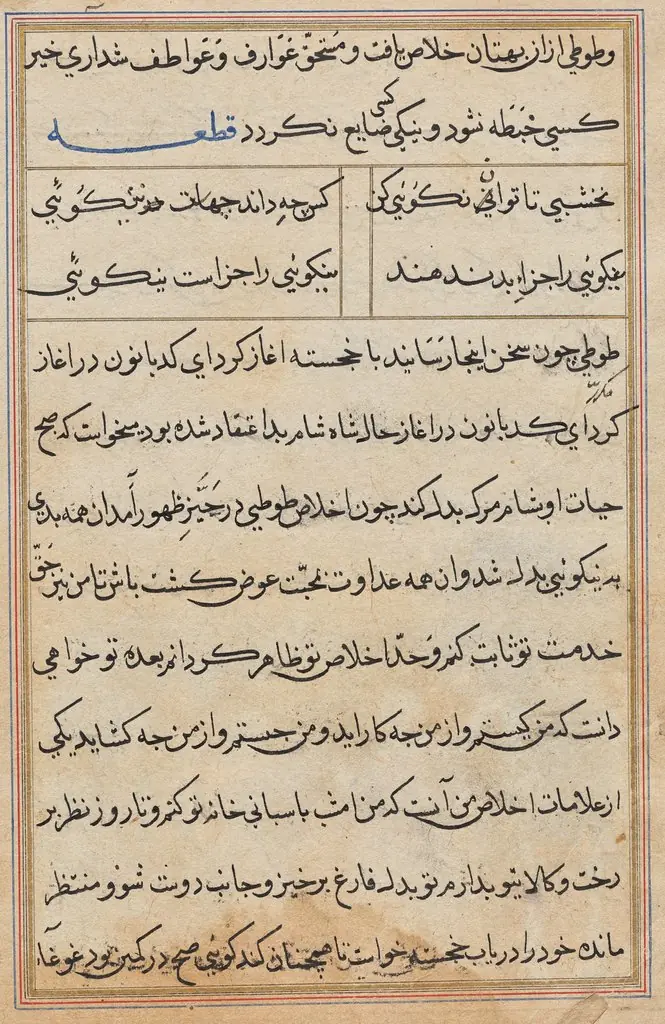 Page from Tales of a Parrot (Tuti-nama): text page
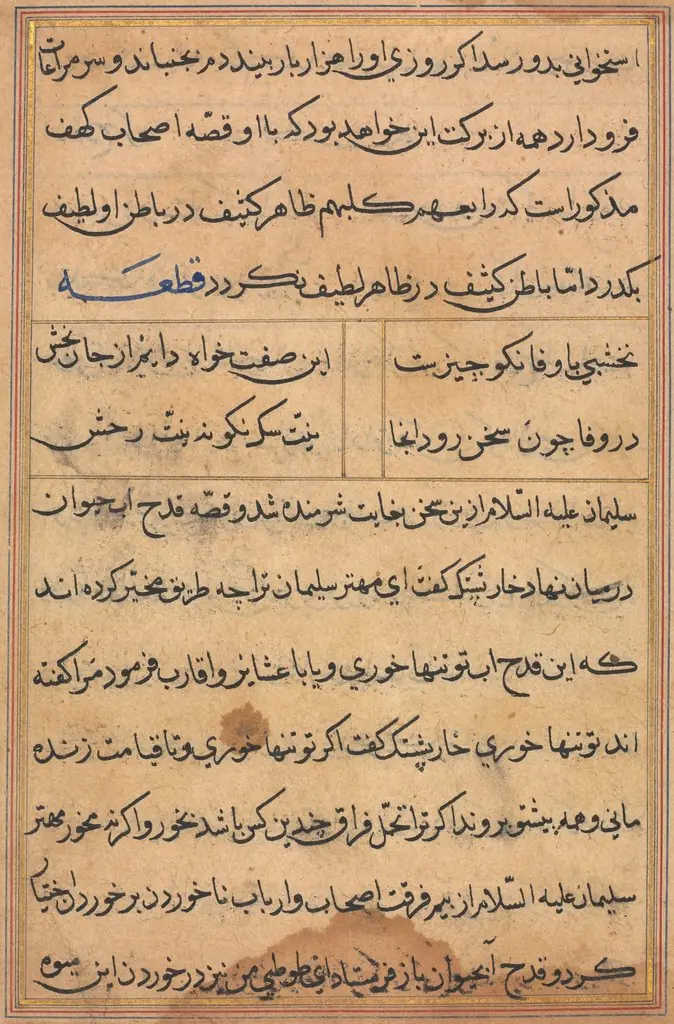 Page from Tales of a Parrot (Tuti-nama): text page
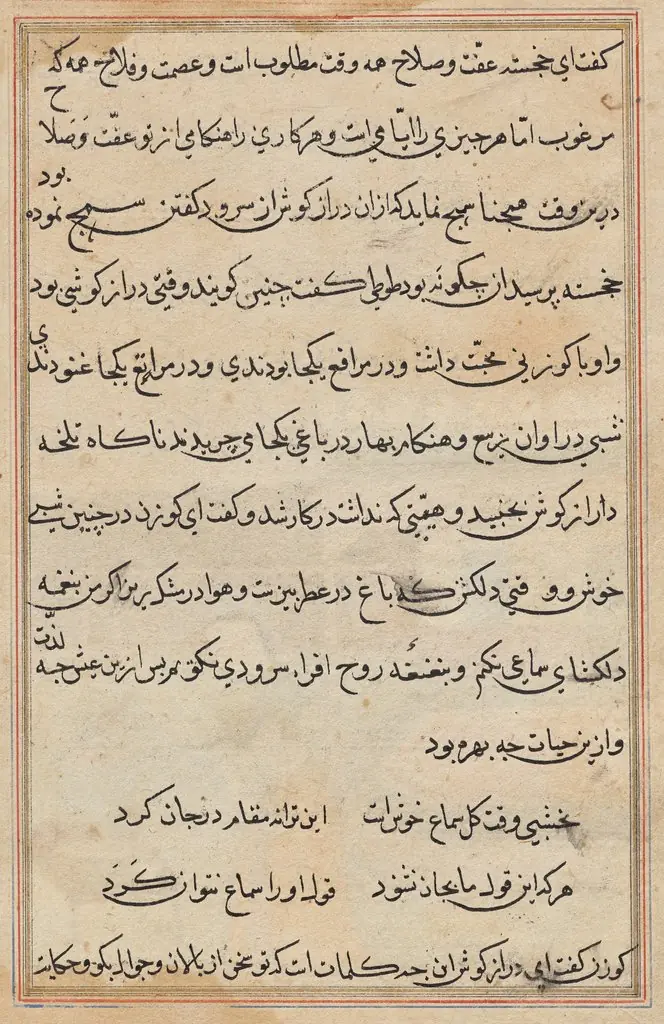 Page from Tales of a Parrot (Tuti-nama): text page
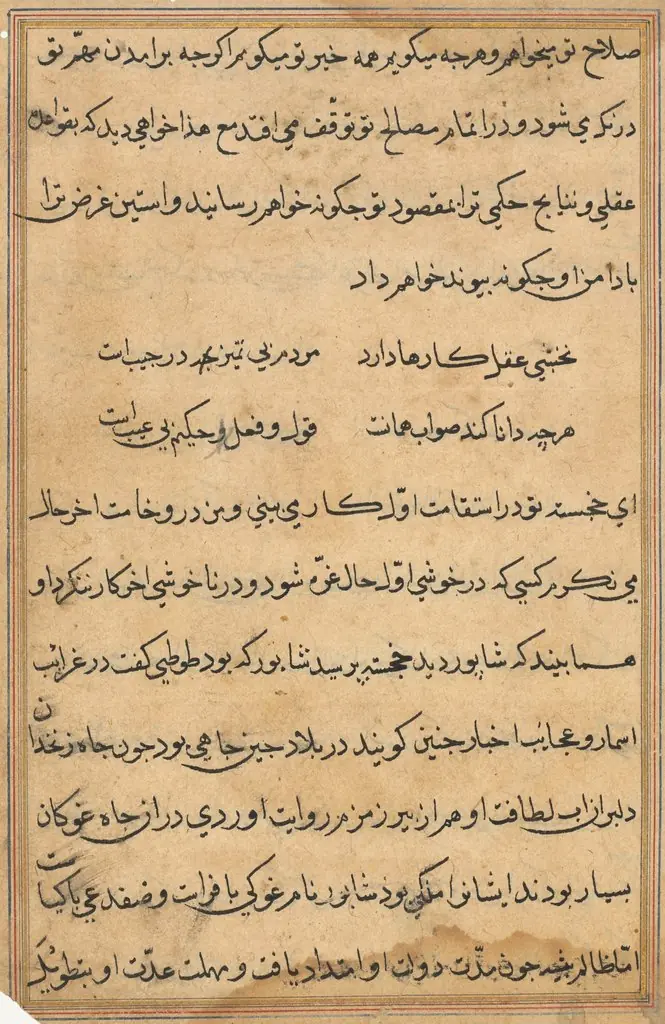 Page from Tales of a Parrot (Tuti-nama): text page
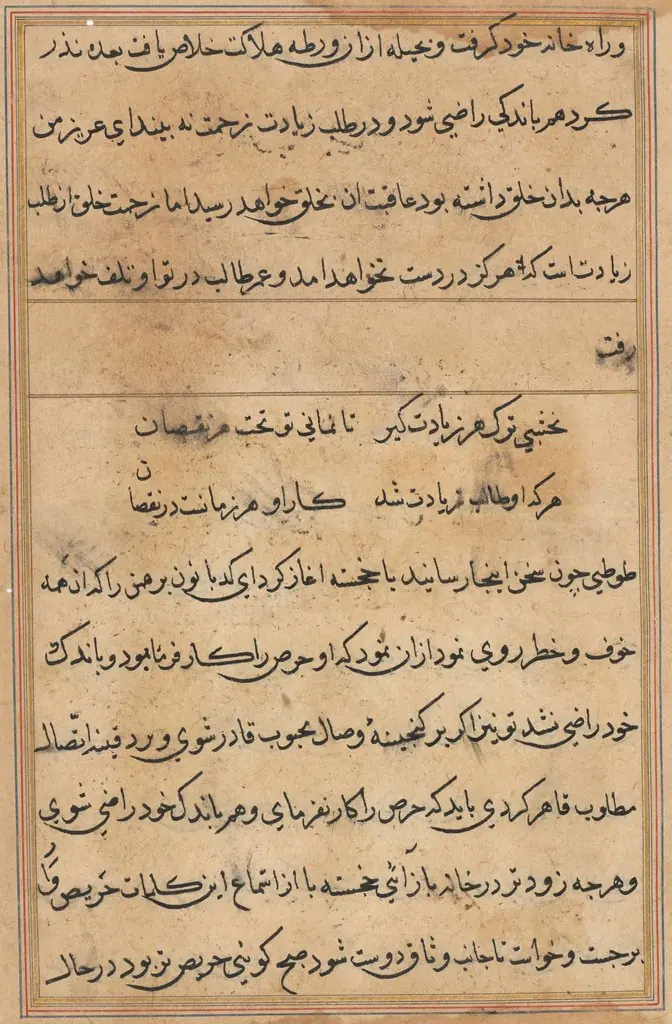 Page from Tales of a Parrot (Tuti-nama): text page
 Page from Tales of a Parrot (Tuti-nama): text page