Artwork
Page from Tales of a Parrot (Tuti-nama): text page
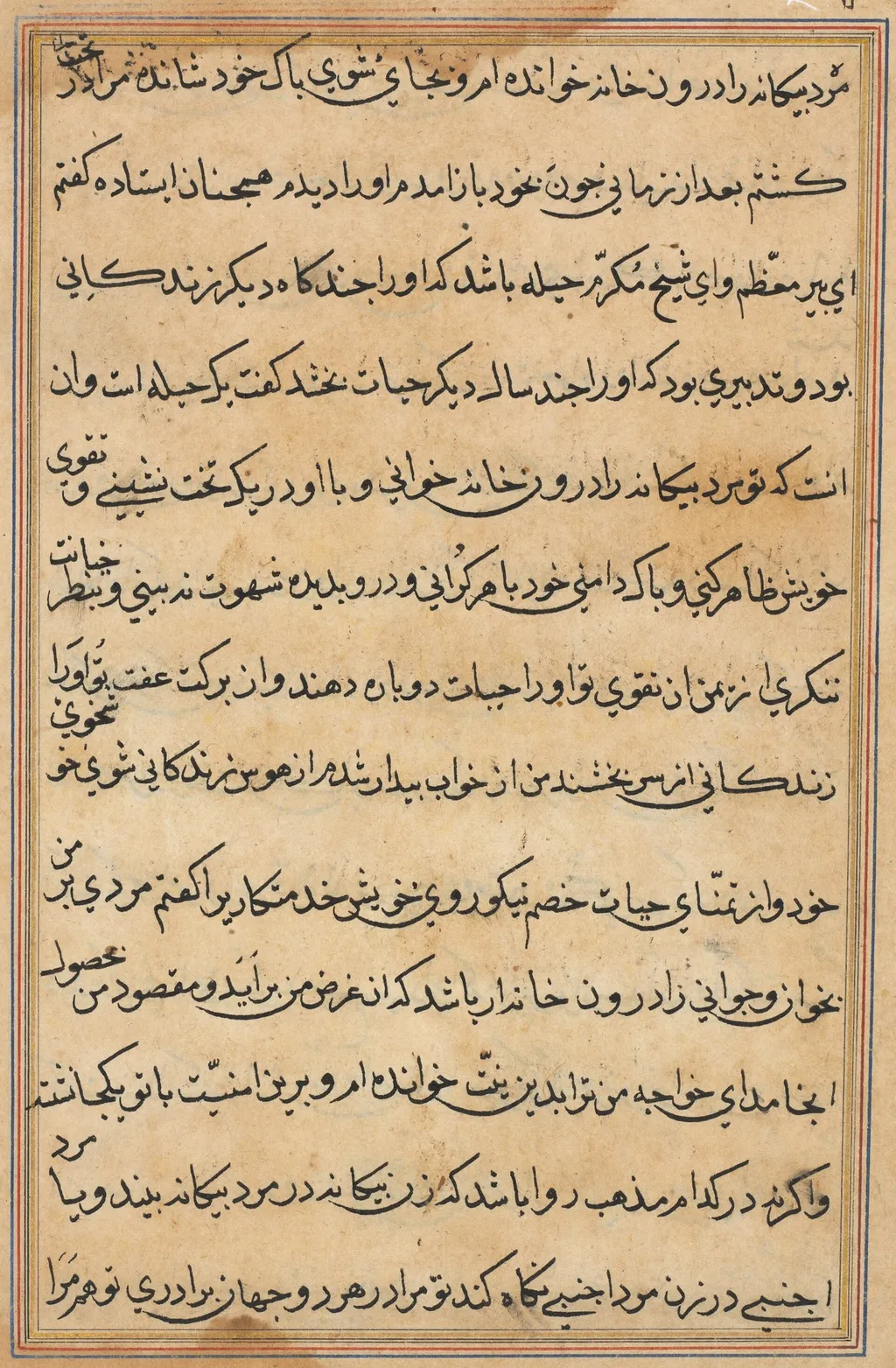
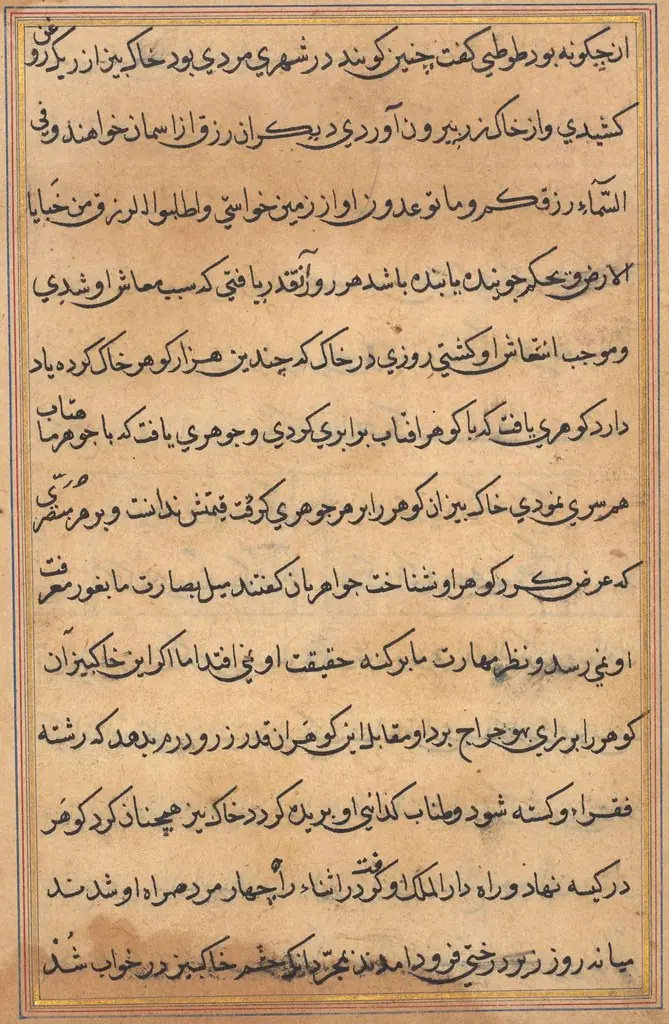
Page from Tales of a Parrot (Tuti-nama): text page is an unspecified painting. It dates from 1560 and is held in the collection of the Cleveland Museum of Art. This object is a single folio from the illustrated manuscript Tales of a Parrot (Tuti‑nama).
About this work
History & Provenance
No further details regarding its original commission or intermediate ownership history prior to its museum acquisition are provided in the available records.
This text page from the Tuti-nama (Tales of a Parrot) was created in 1560 within the Mughal Empire. While the specific artist remains unknown, the work is identified as a painting from this mid-sixteenth-century period. The manuscript page eventually entered the collection of the Cleveland Museum of Art, where it is held under the accession number 1962.279.260.b. No further details regarding its original commission or intermediate ownership history prior to its museum acquisition are provided in the available records.
Context
This page from the 1560 Tuti-nama exemplifies Mughal manuscript painting's synthesis of Persian narrative traditions and Indian artistic sensibilities, reflecting the imperial atelier's role in codifying courtly storytelling during Akbar's reign. The work's significance has been examined in scholarship on Indo-Persian artistic exchange, particularly regarding how such illustrated texts functioned as cultural artifacts within 16th-century Eurasian diplomatic and literary networks.
Attribution to an anonymous workshop within the Mughal imperial circle underscores the collaborative nature of manuscript production, while its presence in the Cleveland Museum of Art's collection (accession 1962.279.260.b) facilitates ongoing study of transregional artistic influence. Research contextualizes this piece within broader dialogues about manuscript patronage and the transmission of Sufi literary motifs across Persianate societies.
Legacy
The manuscript page from the Tuti-nama, produced circa 1560 in the Mughal Empire, exemplifies the sophisticated narrative illustration that influenced later Persianate painting traditions. Its compositional strategies and naturalistic figure rendering were studied by subsequent artists working in manuscript production across the Indian subcontinent and Safavid Persia. The work's presence in the Cleveland Museum of Art collection has enabled scholarly attention to its role in shaping narrative cycles in Islamic book arts, contributing to broader reevaluations of cross-cultural artistic exchange in early modern manuscript traditions.
Overview
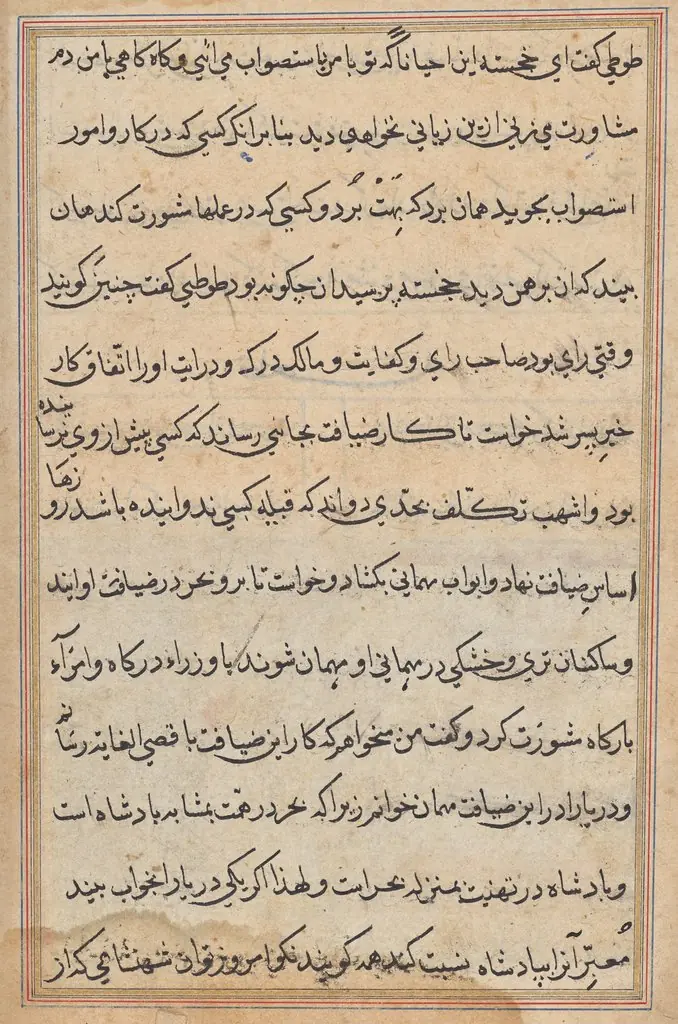
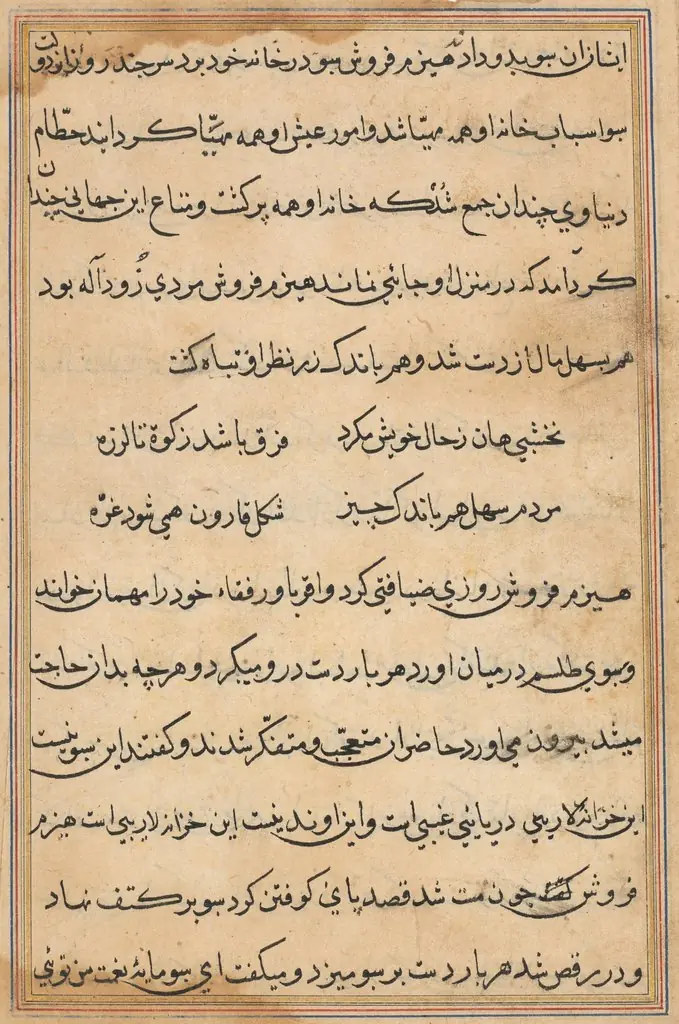
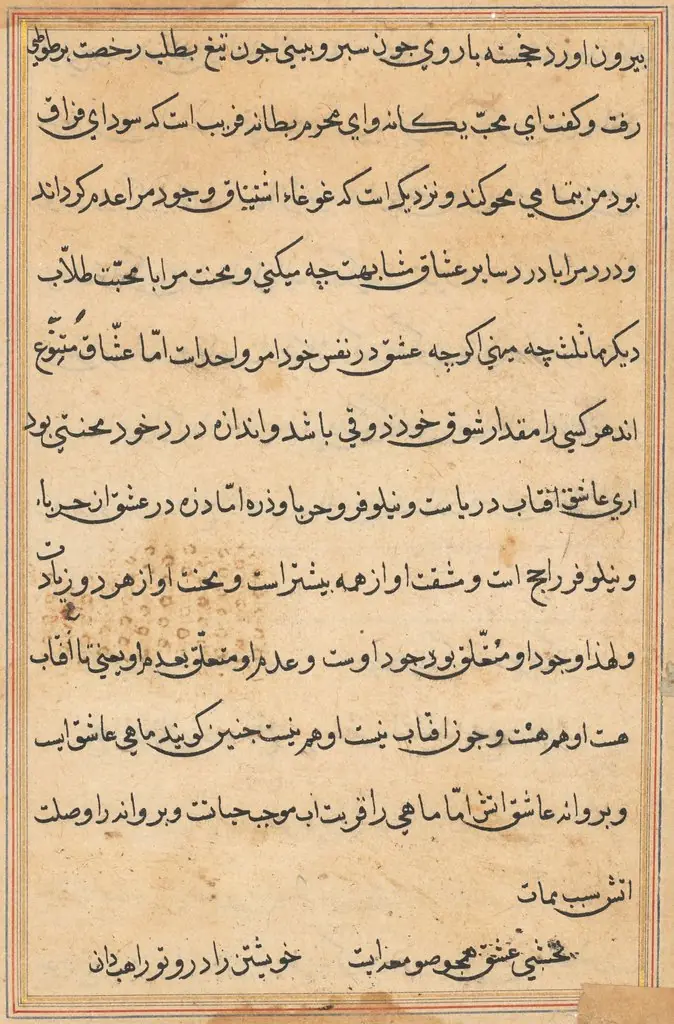
This object is a single folio from the illustrated manuscript Tales of a Parrot (Tuti‑nama). The page consists of dense black calligraphy arranged in tight, orderly rows on a warm‑toned paper, bordered by a slender red and gold frame. The script is legible and meticulously executed, reflecting the care of its production.
Subject & Meaning
The written passage forms part of a narrative composed for Prince Salim, a member of the Mughal court. The tale, conveyed through the voice of a parrot, was intended as moral instruction and entertainment, illustrating courtly values and the prince's cultural education.
Technique & Style
The calligrapher employed a fine black ink on paper that has acquired a slight yellowish patina with age. Letters are rendered with a blend of connected and isolated forms, characteristic of Persianate scripts of the period. The decorative red‑gold border frames the text, adding a subtle visual emphasis without overwhelming the script.
Artist & collection

- Page from Tales of a Parrot (Tuti-nama): text page
 Page from Tales of a Parrot (Tuti-nama): text page
 Page from Tales of a Parrot (Tuti-nama): text page
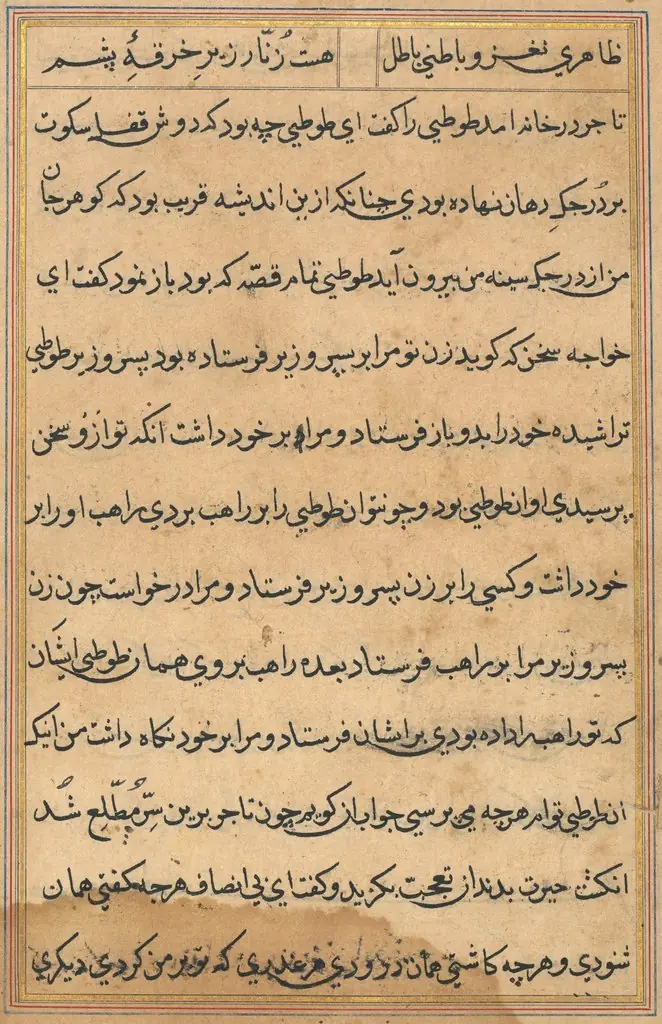 Page from Tales of a Parrot (Tuti-nama): text page
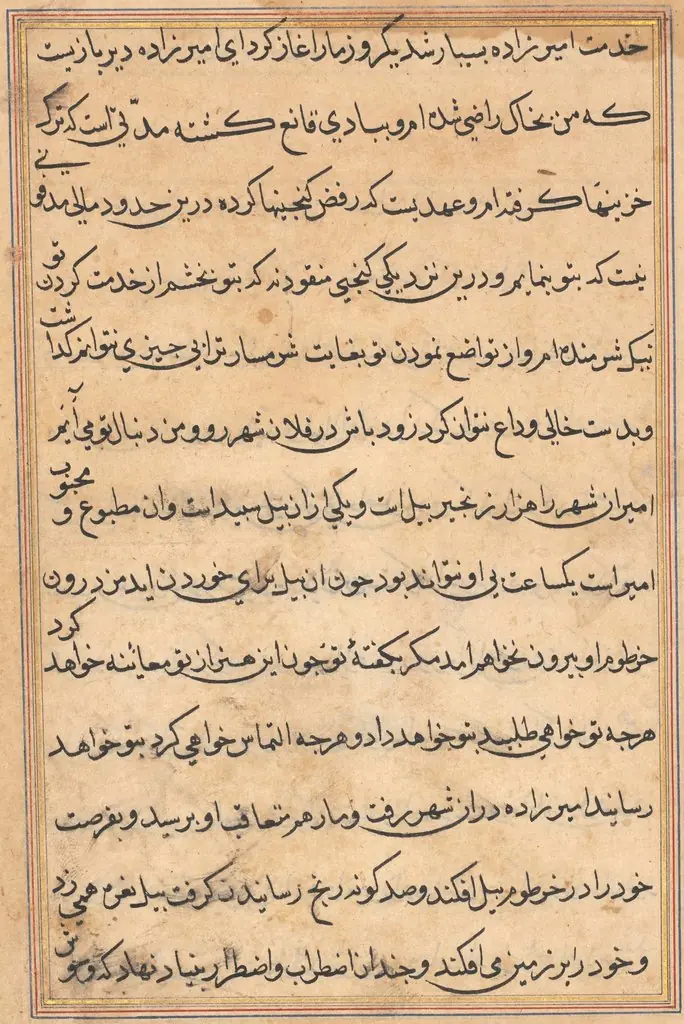 Page from Tales of a Parrot (Tuti-nama): text page
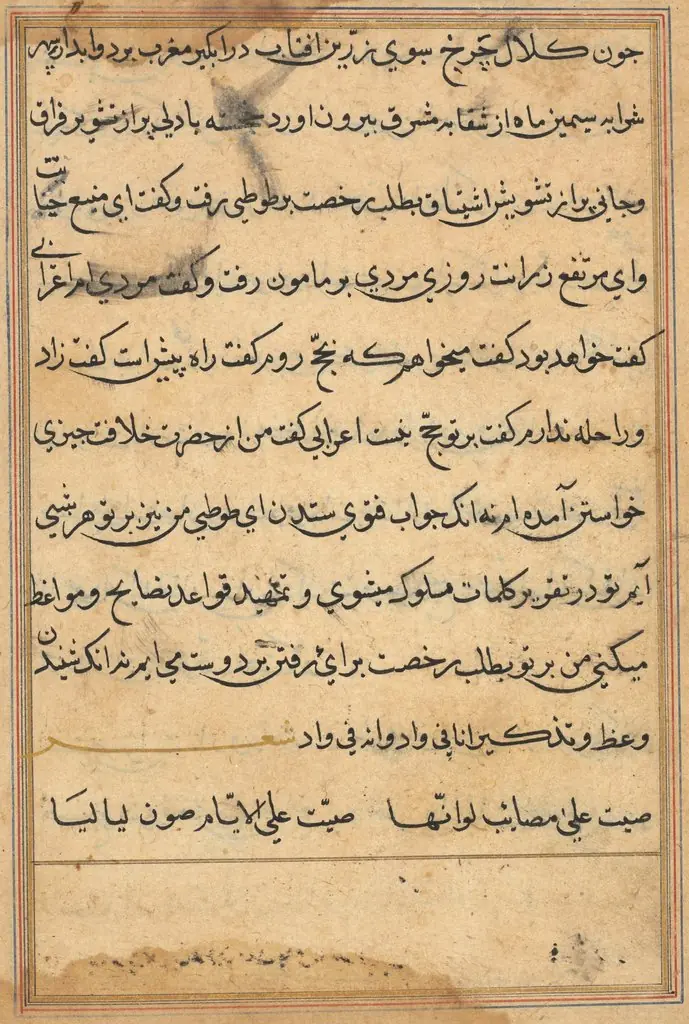 Page from Tales of a Parrot (Tuti-nama): text page
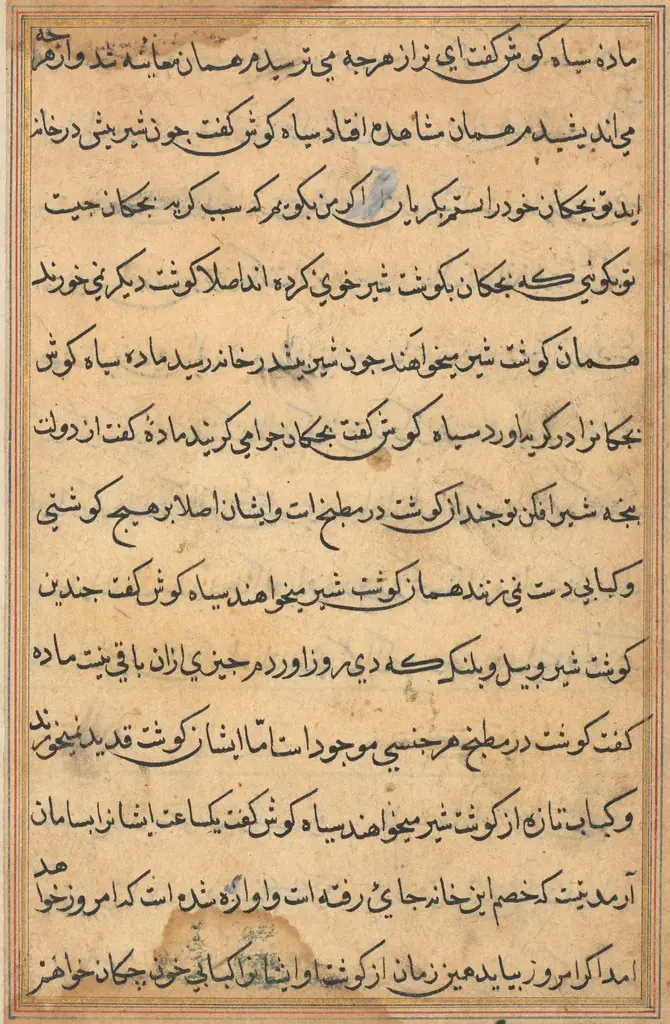 Page from Tales of a Parrot (Tuti-nama): text page
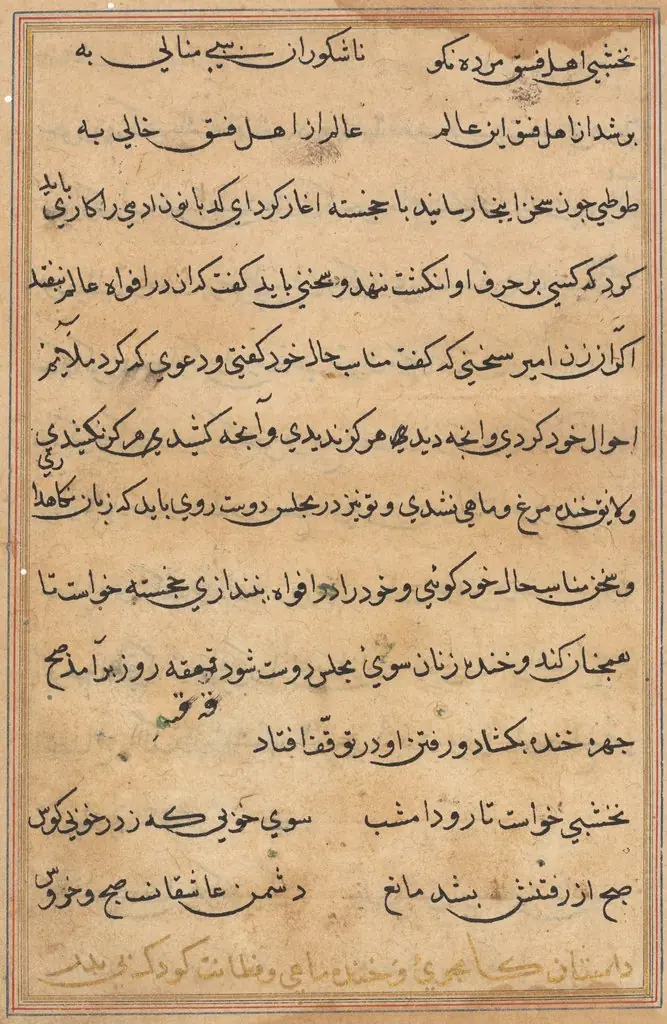 Page from Tales of a Parrot (Tuti-nama): text page
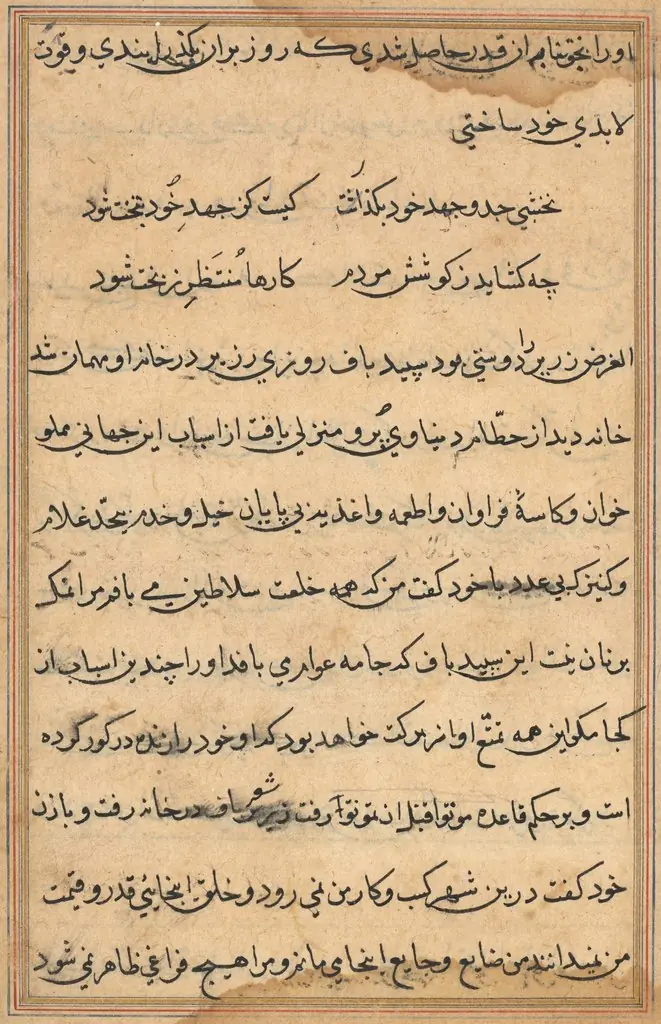 Page from Tales of a Parrot (Tuti-nama): text page
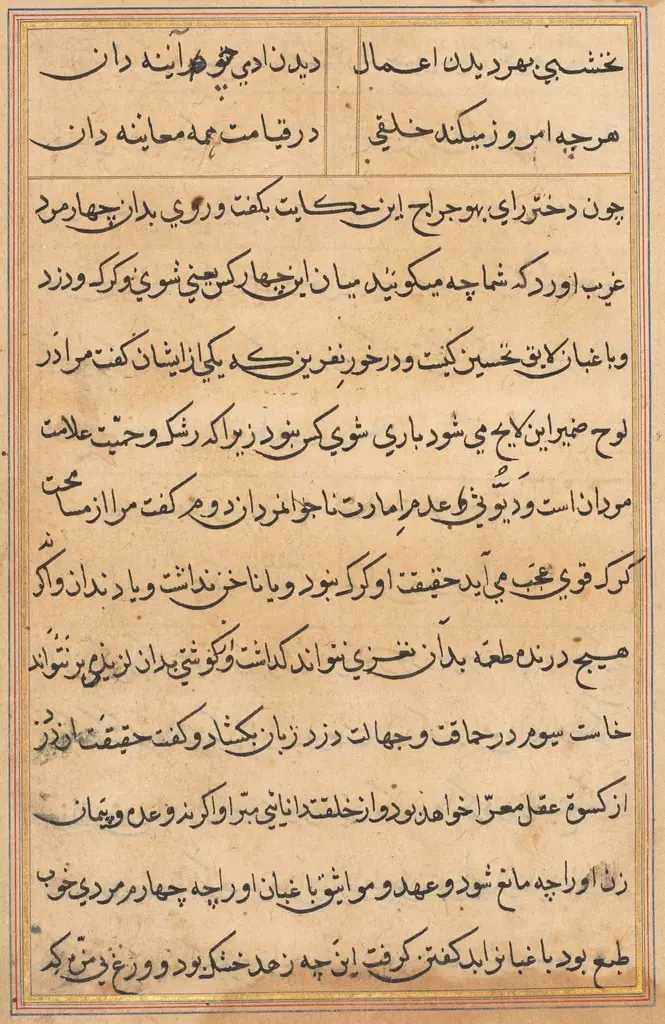 Page from Tales of a Parrot (Tuti-nama): text page
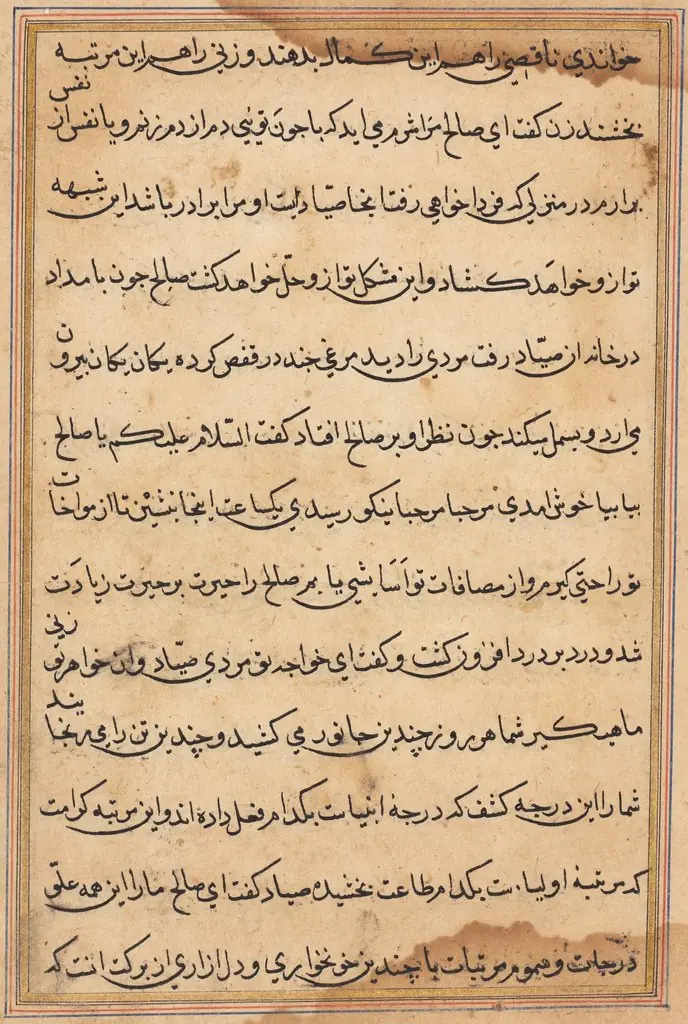 Page from Tales of a Parrot (Tuti-nama): text page
 Page from Tales of a Parrot (Tuti-nama): text page