Artwork
Page from Tales of a Parrot (Tuti-nama): text page
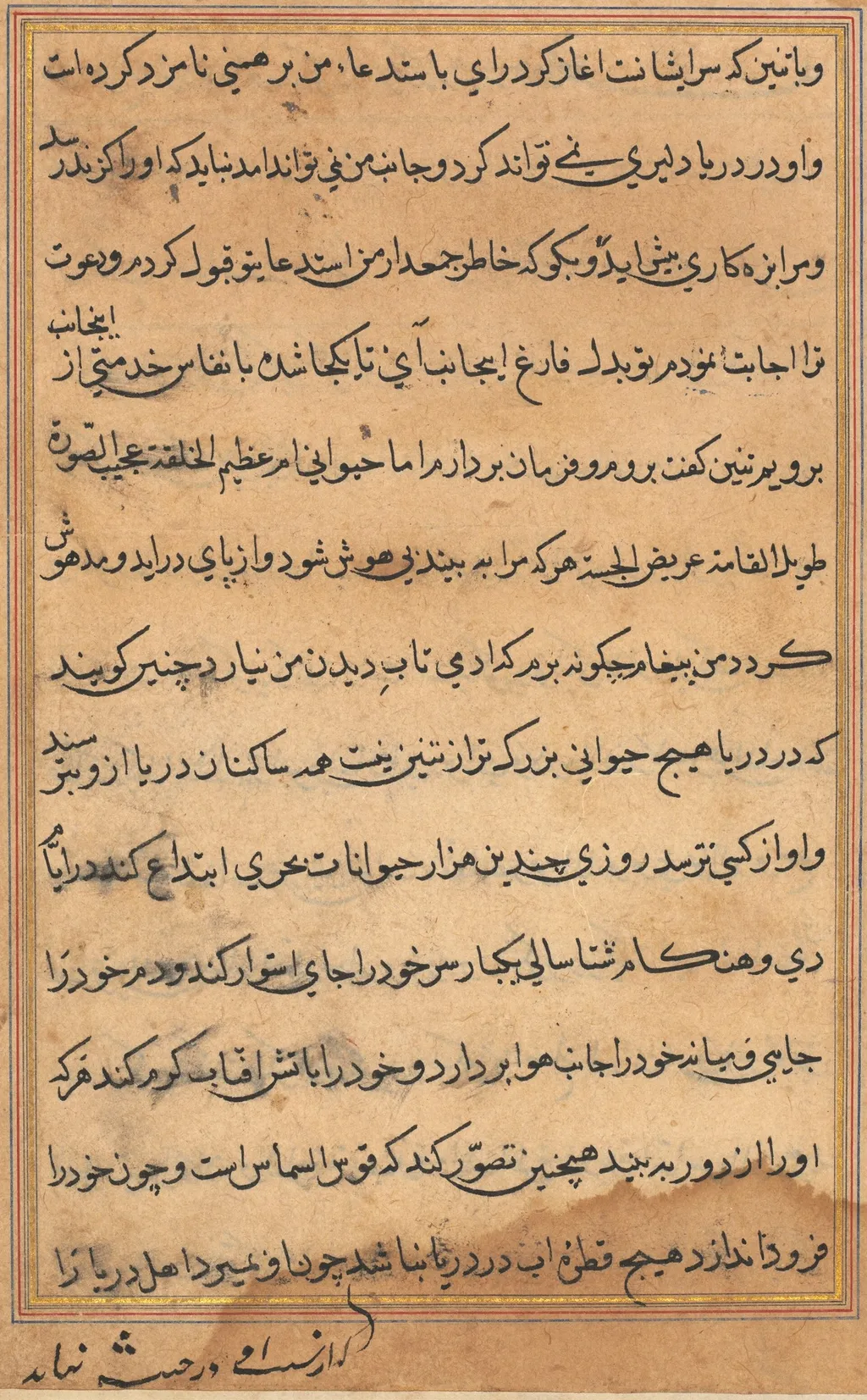
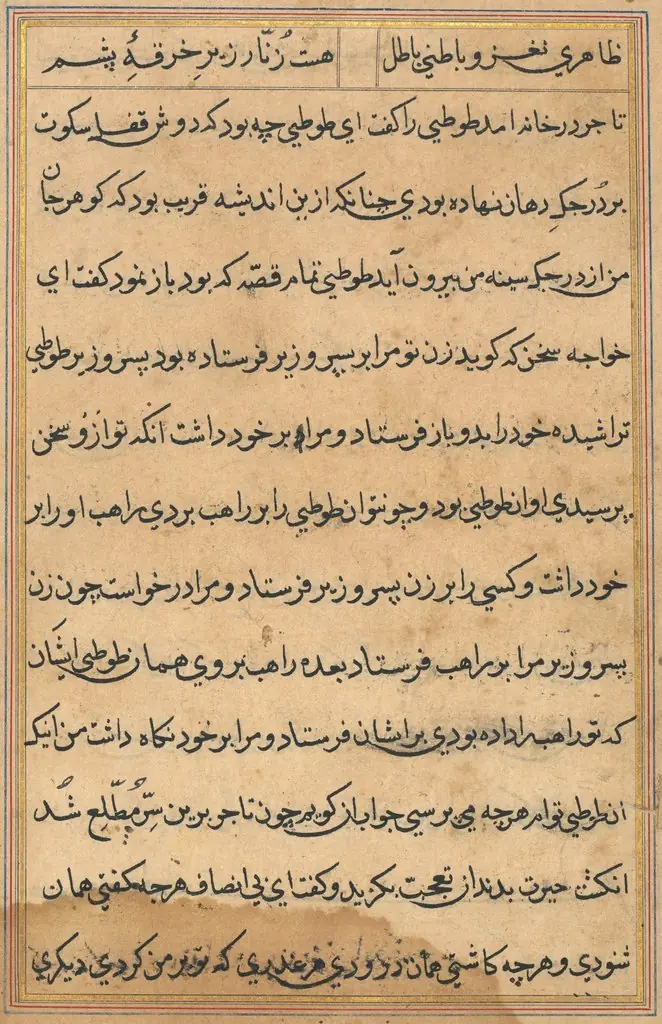
Page from Tales of a Parrot (Tuti-nama): text page is an unspecified painting. It dates from 1560 and is held in the collection of the Cleveland Museum of Art. This artifact is a single folio from the illustrated manuscript Tales of a Parrot (Tuti‑nama).
About this work
Subject & Meaning
The work is dated to 1560 and originates from the Mughal Empire, reflecting the period's synthesis of Persian literary motifs with Indian artistic conventions.
The page depicts a scene drawn from the Persian moral tale Tuti-nama, illustrating a parrot recounting a story to its owner. In this miniature the bird serves as a moral exemplar, embodying wisdom and the virtue of heeding counsel. The text page functions both as a narrative illustration and a didactic lesson, emphasizing themes of loyalty and prudent judgment within the Mughal cultural milieu.
The work is dated to 1560 and originates from the Mughal Empire, reflecting the period's synthesis of Persian literary motifs with Indian artistic conventions.
Technique & Style
The page is a miniature painting executed on paper, likely using tempera and ink pigments characteristic of Mughal book arts from the mid-sixteenth century. It functions as a text page within a copy of the Tuti-nama, depicting illustrated narrative content with fine linear drawing and restrained color fields typical of courtly Persianate manuscript production. The support is paper, handled as a folio within a bound album, and its condition remains stable with minimal foliation wear, preserving the formal balance of composition and legibility of Persian script.
Stylistically, the work reflects the naturalistic detail and flattened spatial perspective of Mughal atelier techniques, blending Persian manuscript traditions with imperial Indian aesthetics. The figure of the parrot is rendered with delicate contouring and gold accents, emphasizing narrative function over naturalistic realism. The Cleveland Museum of Art holds this piece as part of its collection of South Asian paintings.
The artwork was created in 1560 within the Mughal Empire, during a period of intense patronage of illustrated Persianate literature in India.
History & Provenance
This text page from a Tales of a Parrot (Tuti-nama) manuscript was created in 1560 within the Mughal Empire. The work is held in the collection of the Cleveland Museum of Art, where it is catalogued under the accession number 1962.279.90.a. The folio is attributed to an unknown artist.
Beyond the date of production and the institutional holding, the documented record does not include further information about prior ownership, commission, or chain of custody.
The painting is held in the collection of the Cleveland Museum of Art, cataloged under the accession number 1962.279.90.a. It was created in 1560 within the Mughal Empire. The work has not been documented in any major exhibition history.
Overview
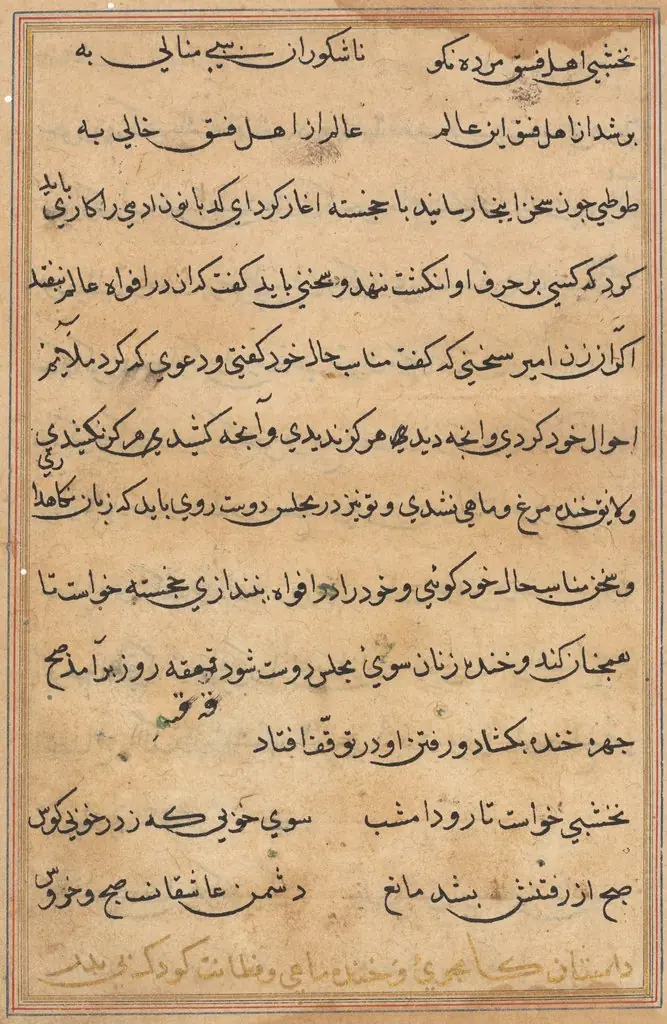
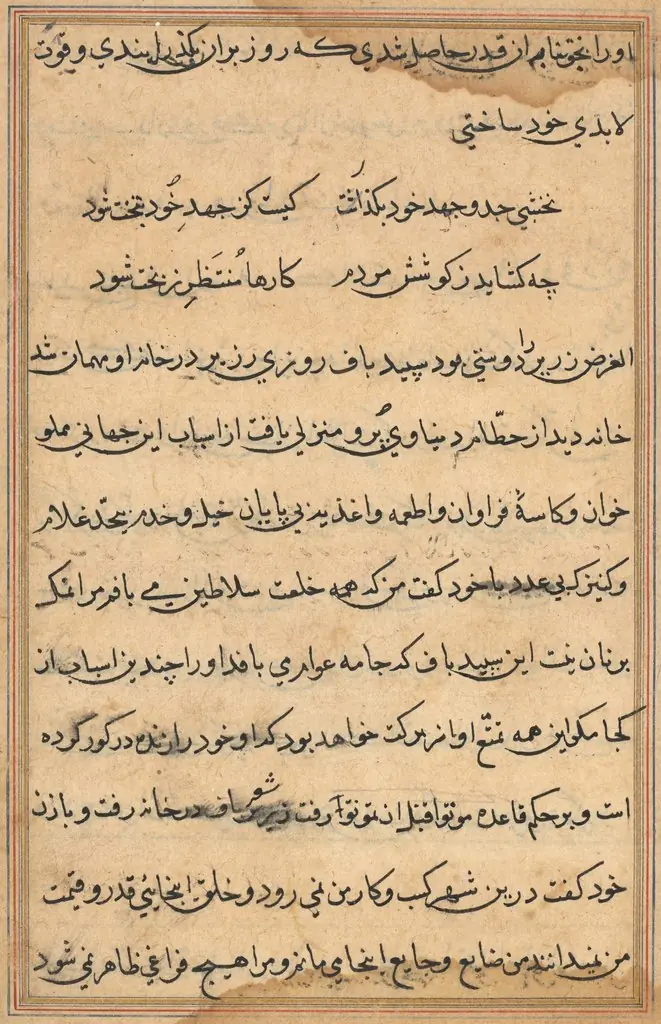
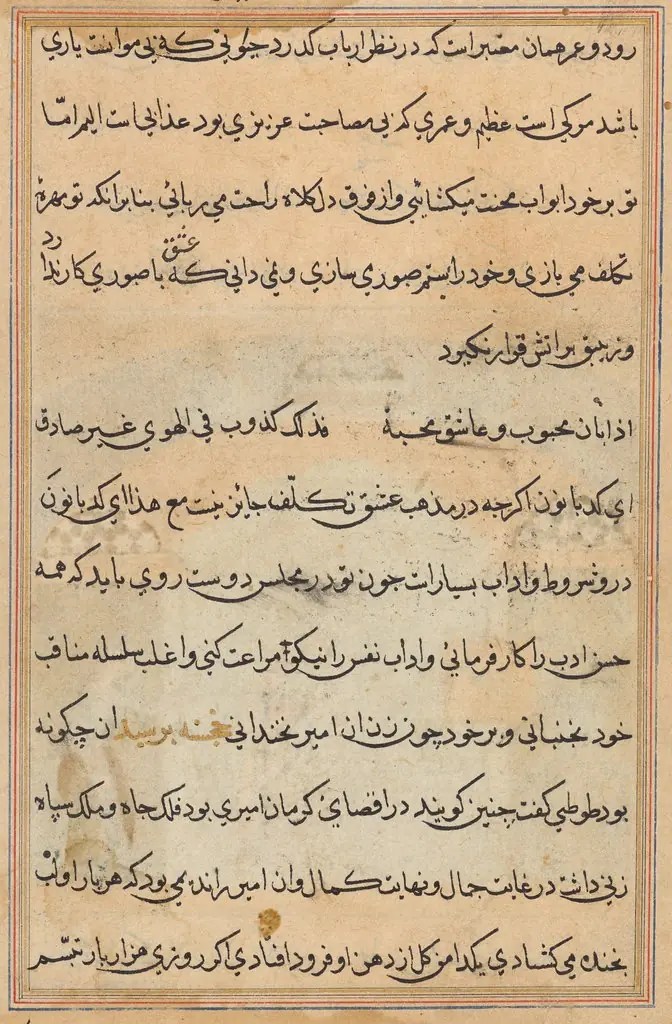
This artifact is a single folio from the illustrated manuscript Tales of a Parrot (Tuti‑nama). The page consists solely of densely packed black calligraphy arranged in tight, orderly rows, framed by a narrow red border. The paper, now aged to a pale tan, bears no pictorial decoration, presenting the narrative text in a compact, rhythmic layout.
Artist & collection

- Page from Tales of a Parrot (Tuti-nama): text page
 Page from Tales of a Parrot (Tuti-nama): text page
 Page from Tales of a Parrot (Tuti-nama): text page
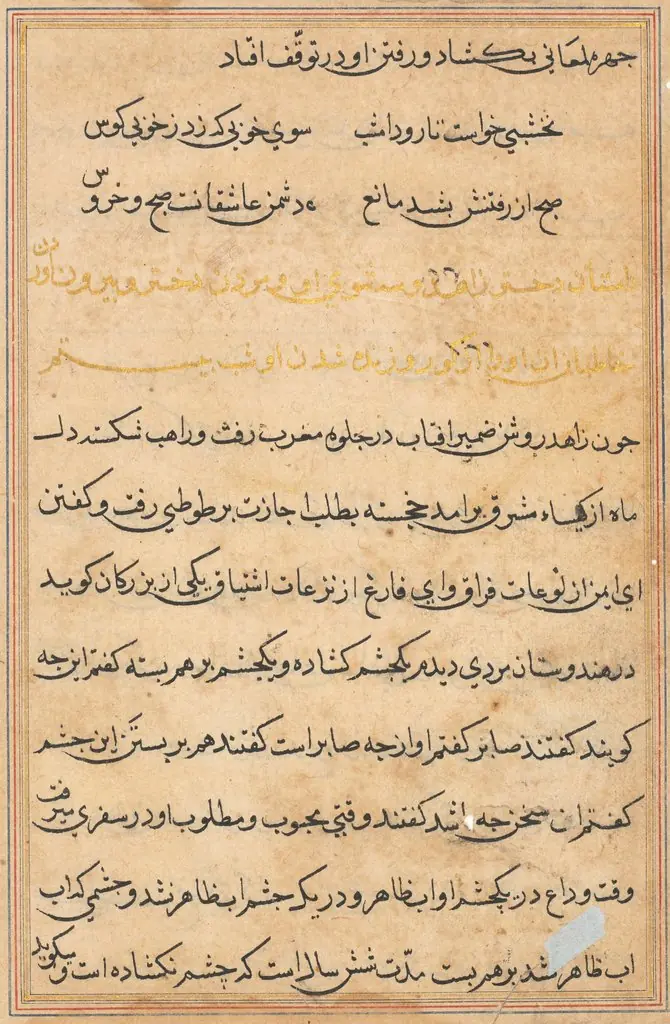 Page from Tales of a Parrot (Tuti-nama): text page
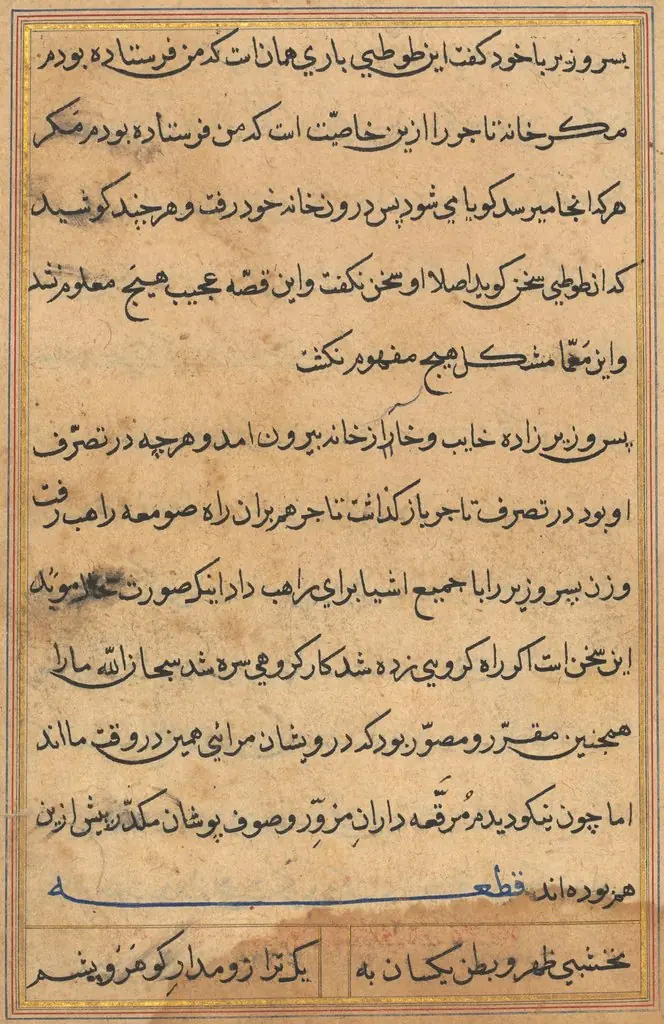 Page from Tales of a Parrot (Tuti-nama): text page
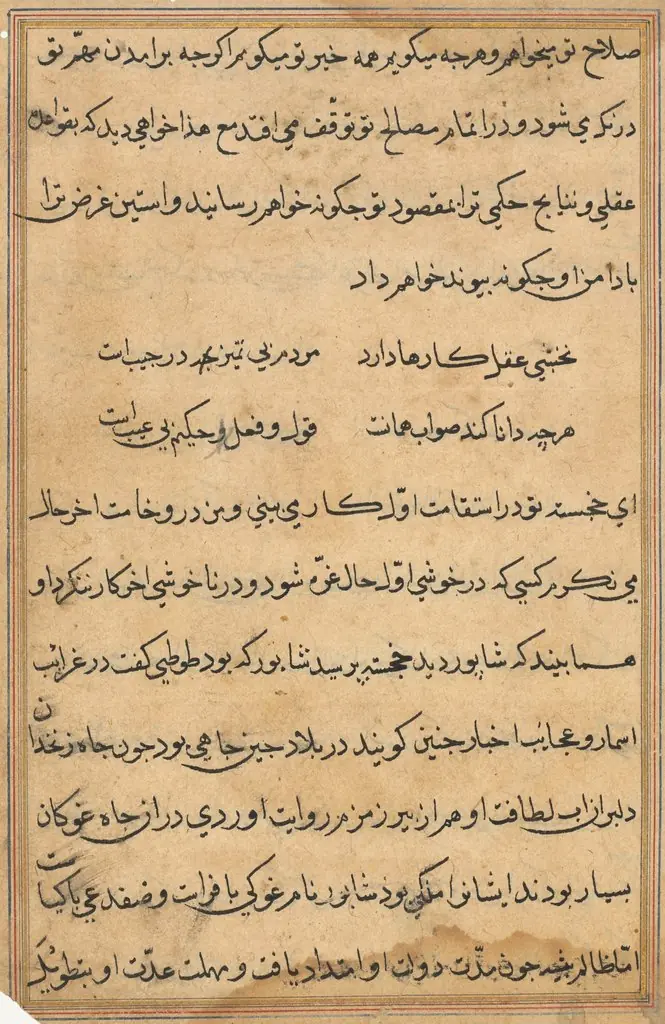 Page from Tales of a Parrot (Tuti-nama): text page
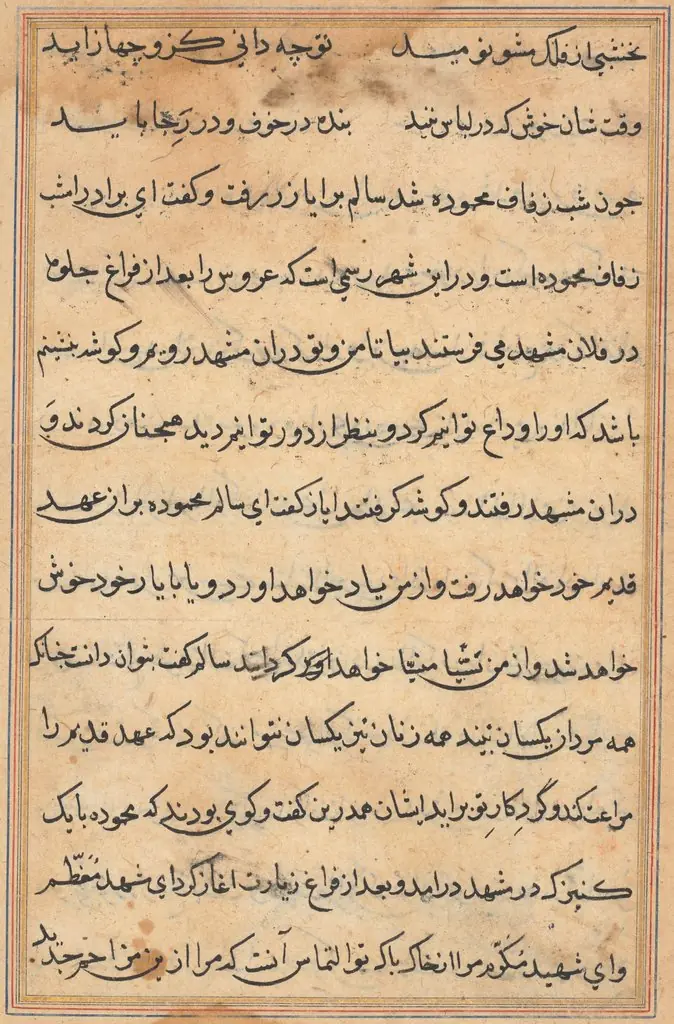 Page from Tales of a Parrot (Tuti-nama): text page
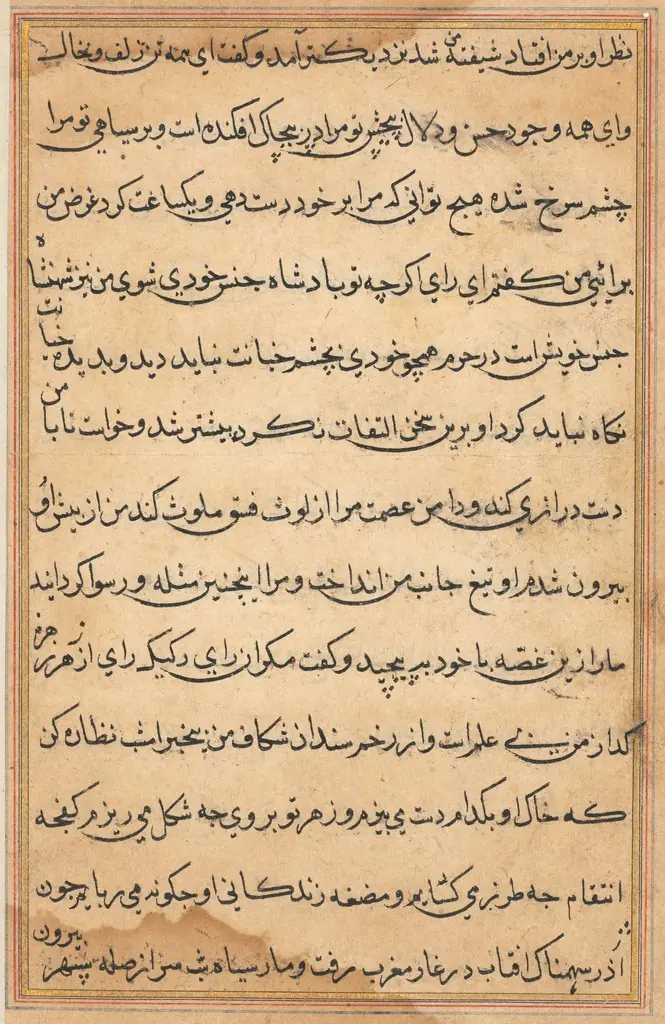 Page from Tales of a Parrot (Tuti-nama): text page
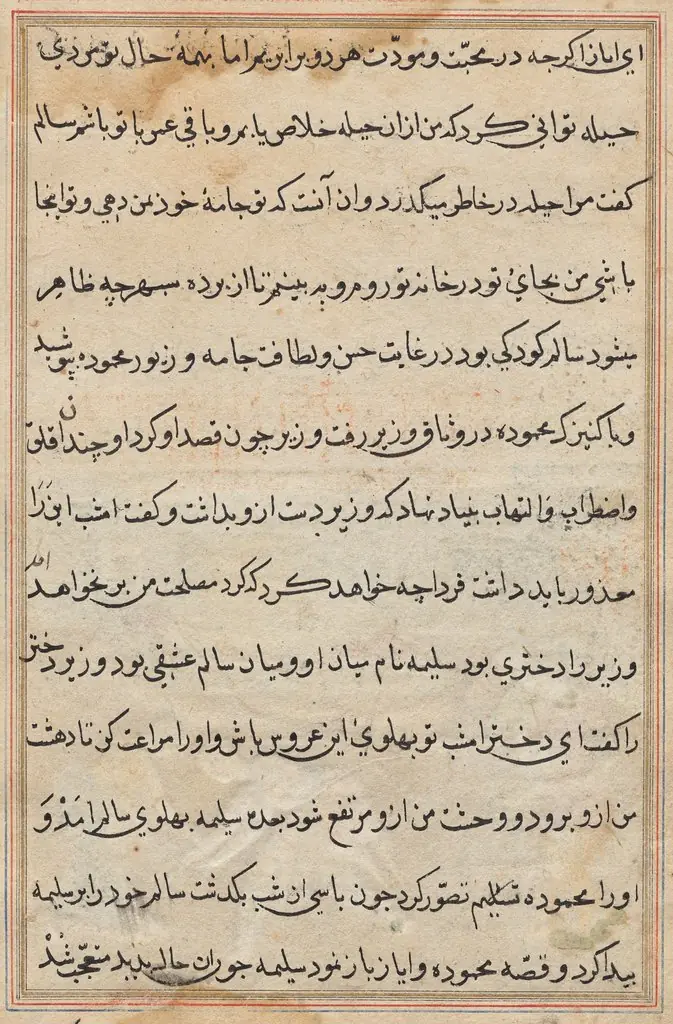 Page from Tales of a Parrot (Tuti-nama): text page
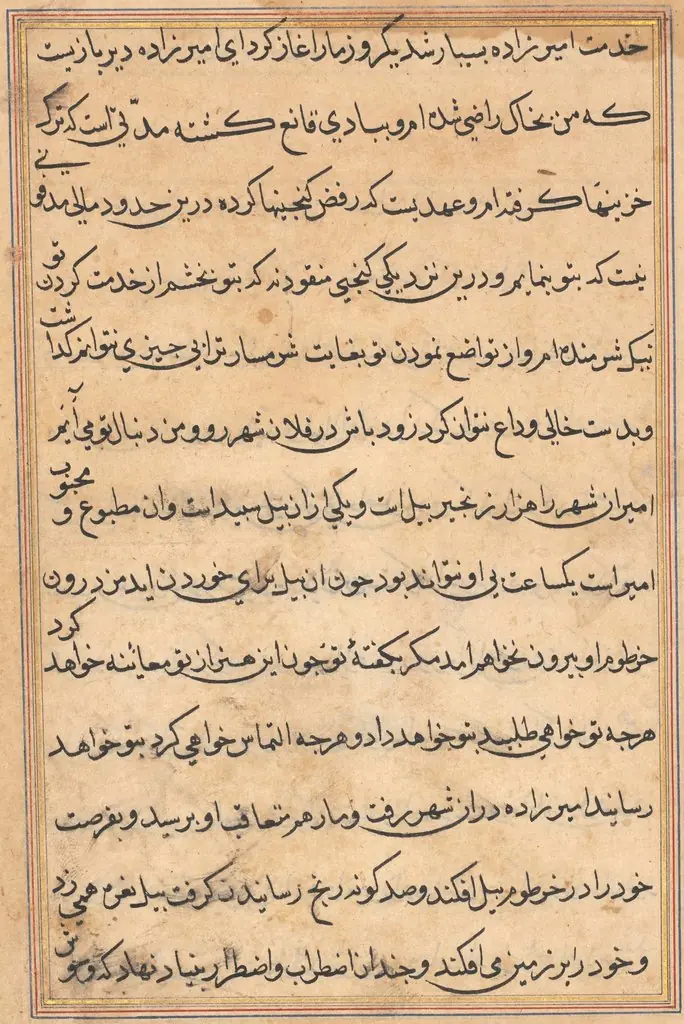 Page from Tales of a Parrot (Tuti-nama): text page
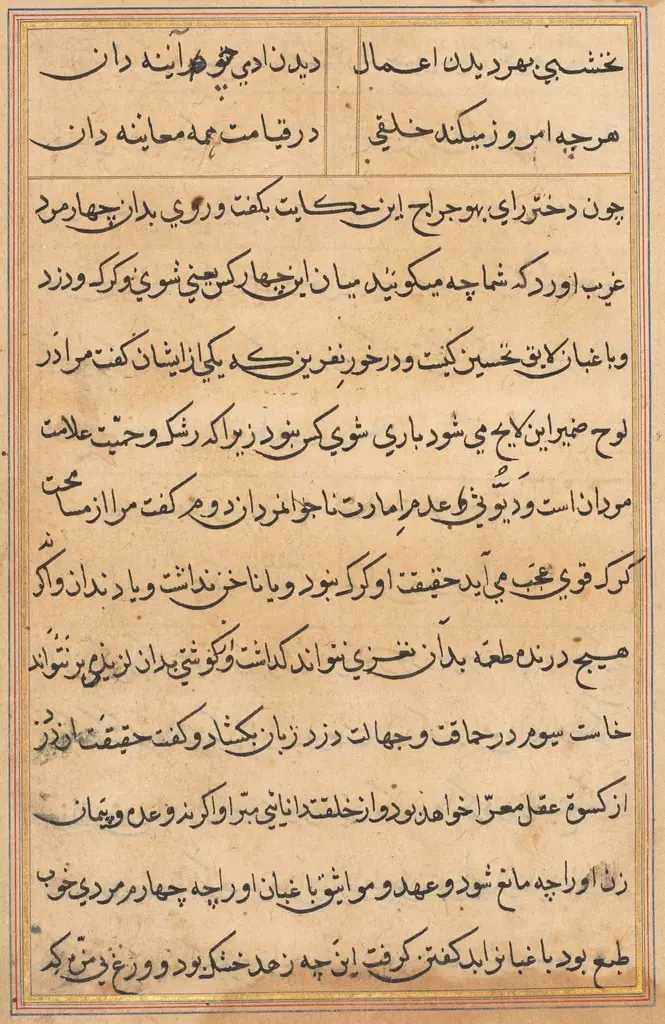 Page from Tales of a Parrot (Tuti-nama): text page
 Page from Tales of a Parrot (Tuti-nama): text page