Artwork
Page from Tales of a Parrot (Tuti-nama): text page
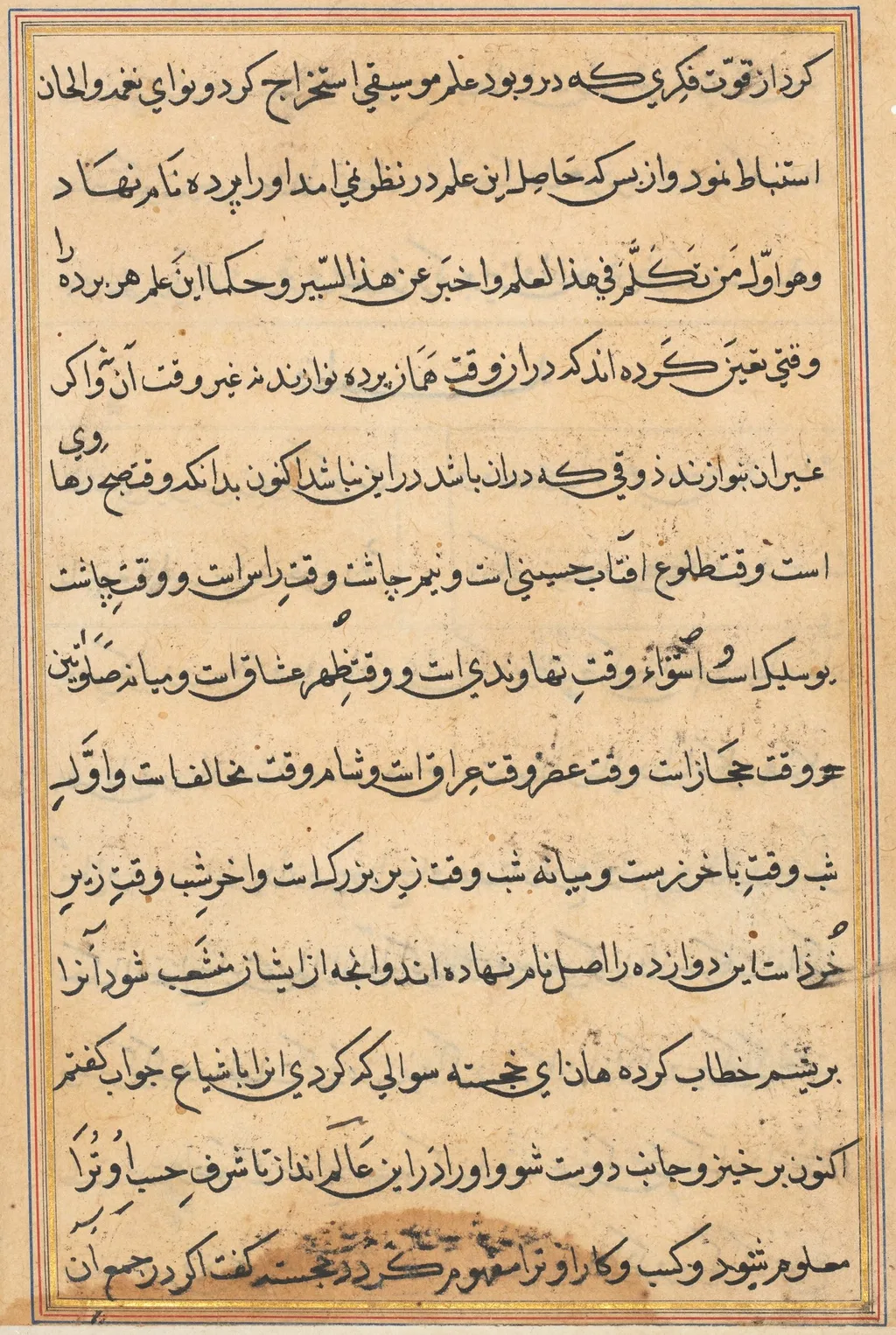
Page from Tales of a Parrot (Tuti-nama): text page is an unspecified painting. It dates from 1560 and is held in the collection of the Cleveland Museum of Art. This object is a painted page from the Persian manuscript known as the Tales of a Parrot (Tuti‑nama).
About this work
History & Provenance
The text page from the Tales of a Parrot (Tuti-nama) is held in the collection of the Cleveland Museum of Art, Cleveland, Ohio, with the accession number 1962.
Created in 1560 within the Mughal Empire, this text page from the Tuti-nama (Tales of a Parrot) was produced by an artist whose specific identity remains unrecorded. The work functions as part of a larger painted manuscript tradition from this period. In terms of ownership history, the page entered the collection of the Cleveland Museum of Art, where it is cataloged under the accession number 1962.279.109.b. This acquisition indicates the object has been held by the institution since 1962.
No further details regarding specific commissioners or intermediate owners prior to its museum acquisition are provided in the available records.
The text page from the Tales of a Parrot (Tuti-nama) is held in the collection of the Cleveland Museum of Art, Cleveland, Ohio, with the accession number 1962.279.109.b.
The work entered the museum’s holdings in 1962 as a gift, aligning with the institution’s acquisition records for the period.
Overview
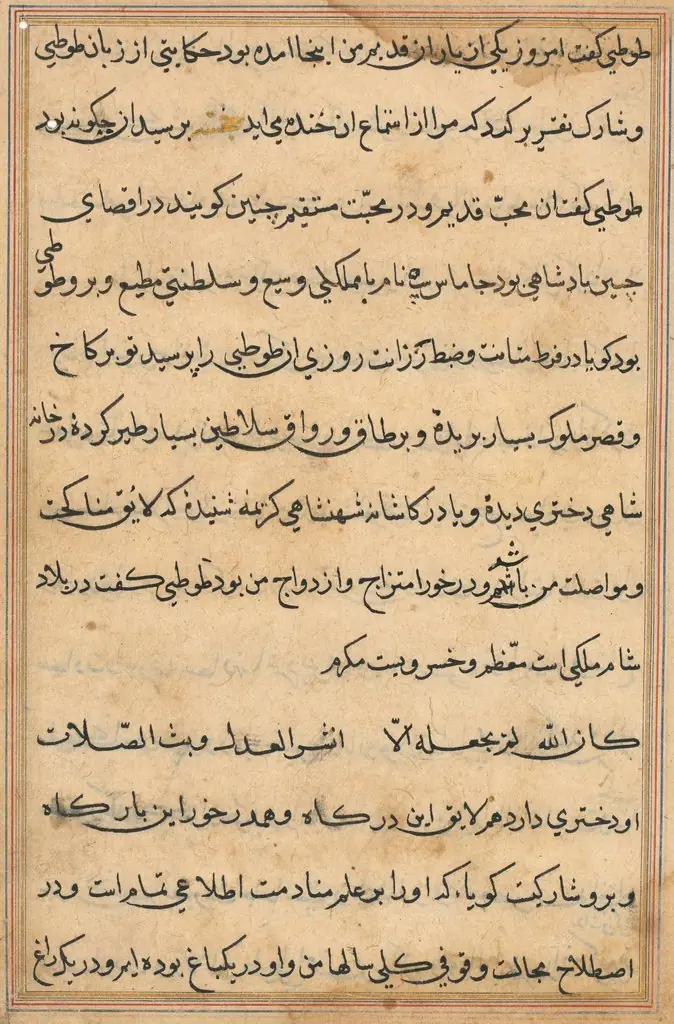
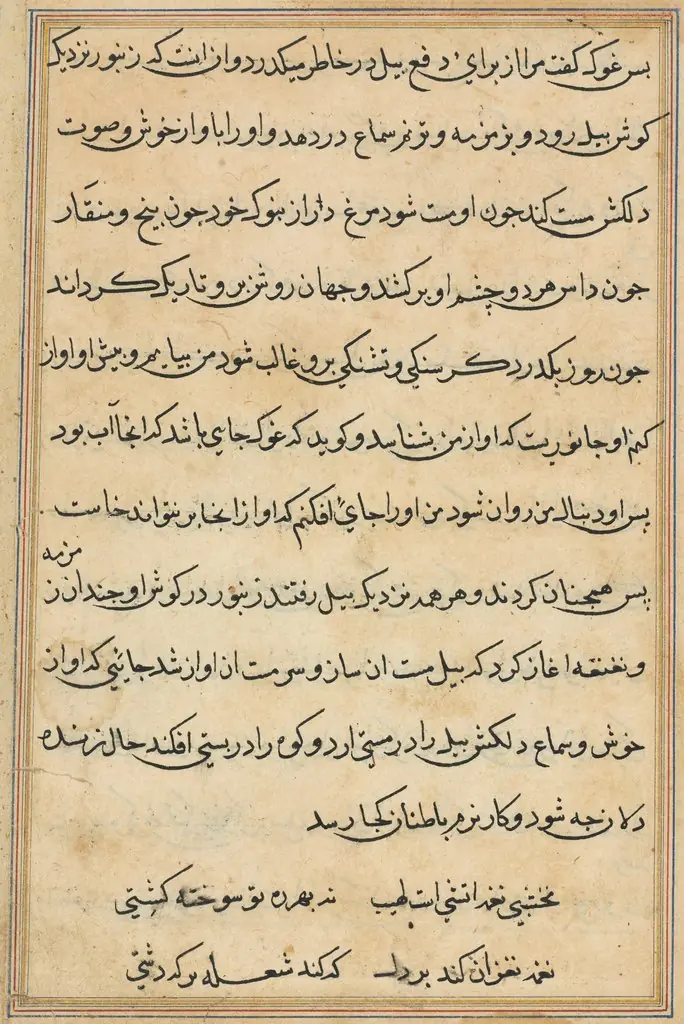
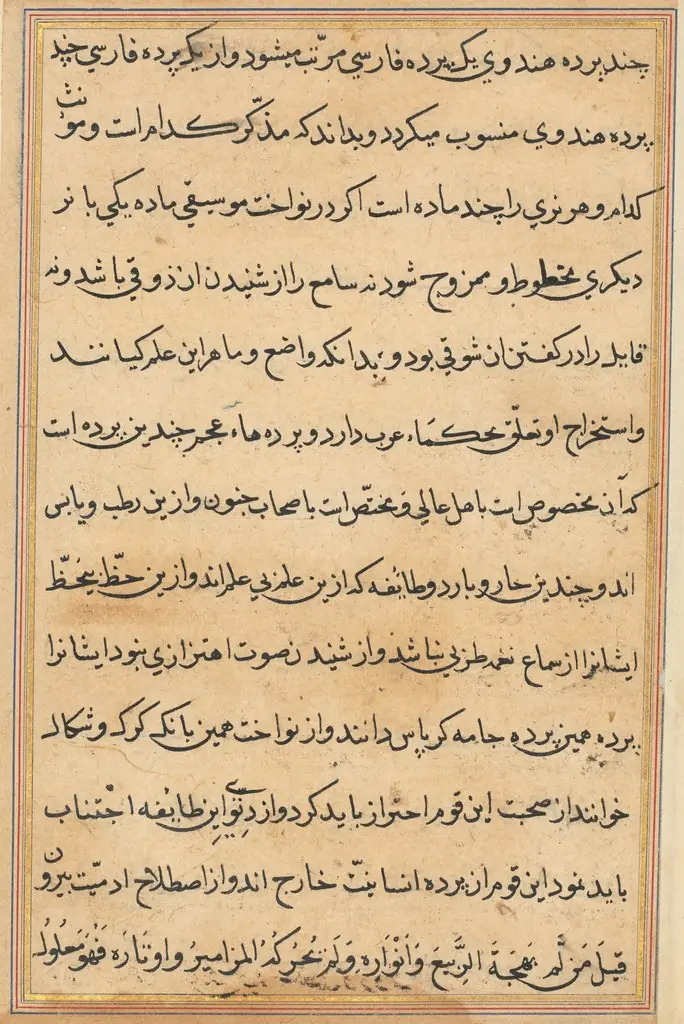
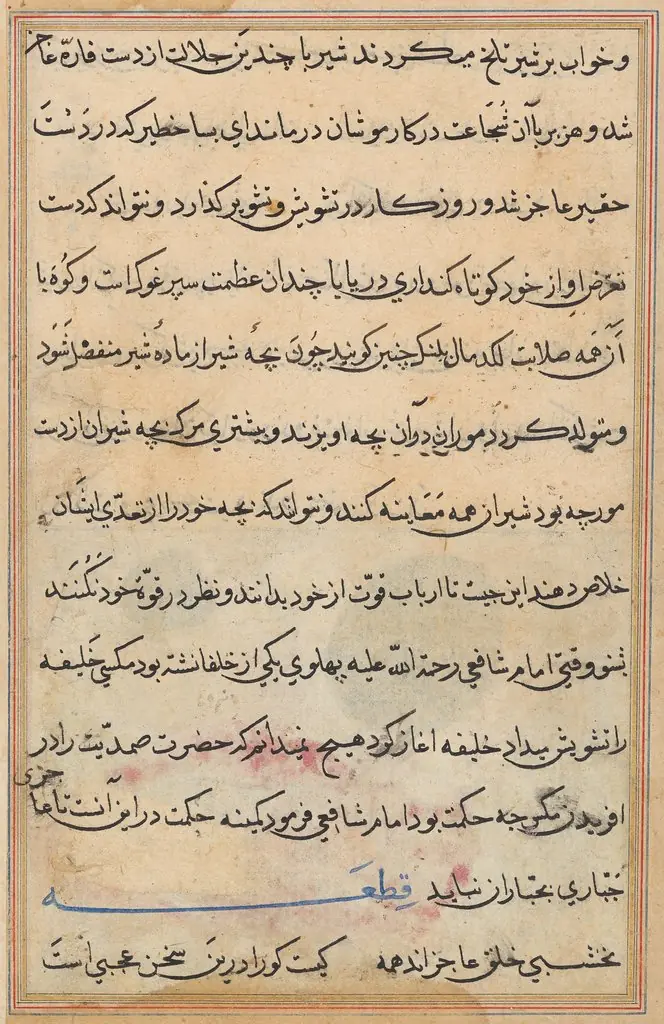
This object is a painted page from the Persian manuscript known as the Tales of a Parrot (Tuti‑nama). The surface is a light beige ground covered entirely with flowing black calligraphic script, bordered by a narrow strip of gold leaf. The composition is compact, with the text arranged in tidy lines across the page.
Subject & Meaning
The inscribed verses form a narrative episode from the larger collection of stories, traditionally intended for leisurely reading. The manuscript was commissioned for Prince Salim, suggesting a courtly audience and a purpose of entertainment or moral instruction within the royal household.
Technique & Style
The artist employed ink on a prepared paper support, using a graceful, curvilinear hand characteristic of Persian calligraphy of the period. A delicate gold border frames the text, while the faint red line along the edges and a small brown discoloration near the lower right corner indicate the work’s age and handling.
Artist & collection

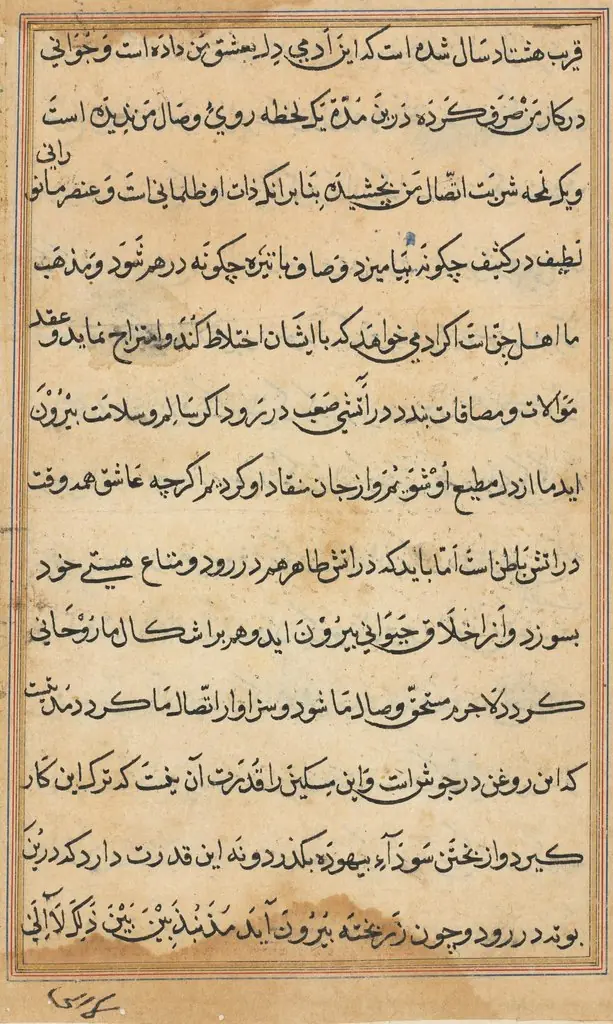 Page from Tales of a Parrot (Tuti-nama): text page
 Page from Tales of a Parrot (Tuti-nama): text page
 Page from Tales of a Parrot (Tuti-nama): text page
 Page from Tales of a Parrot (Tuti-nama): text page
 Page from Tales of a Parrot (Tuti-nama): text page
 Page from Tales of a Parrot (Tuti-nama): text page
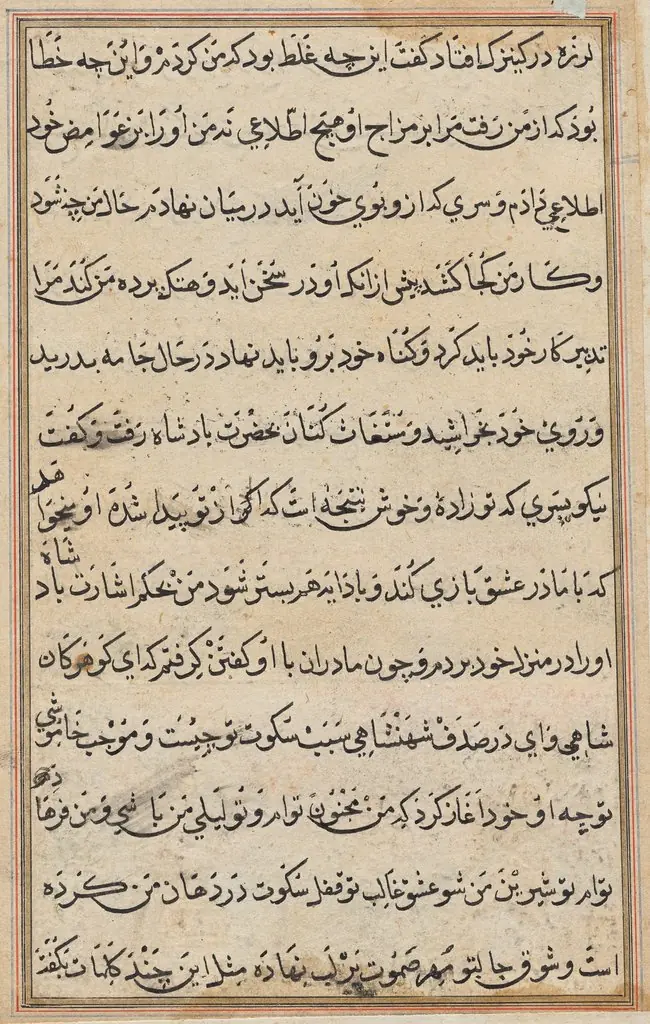 Page from Tales of a Parrot (Tuti-nama): text page
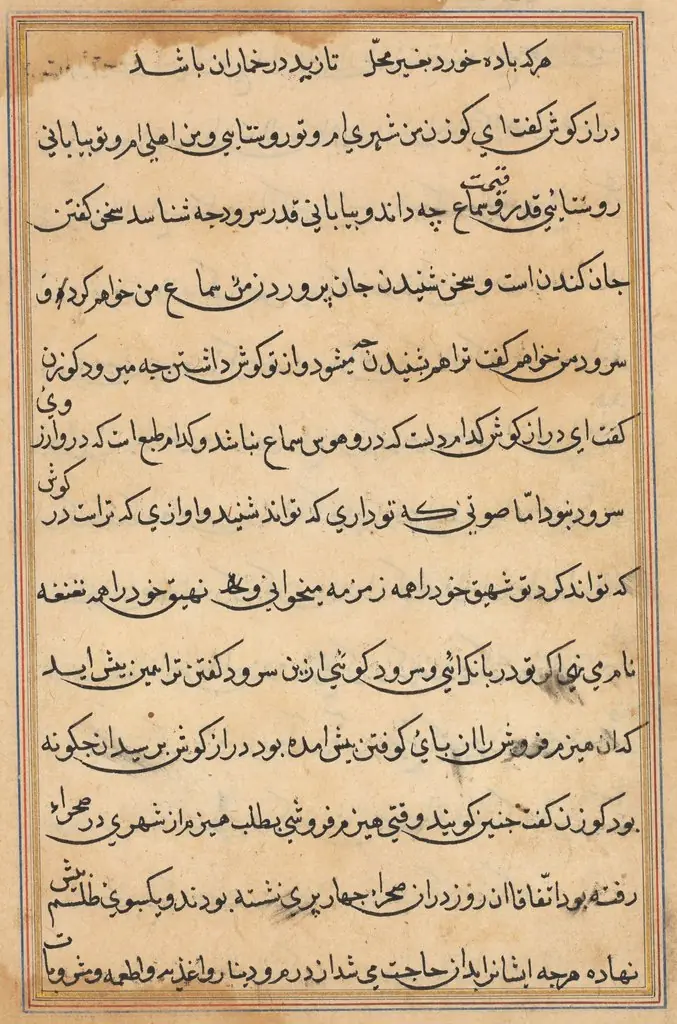 Page from Tales of a Parrot (Tuti-nama): text page
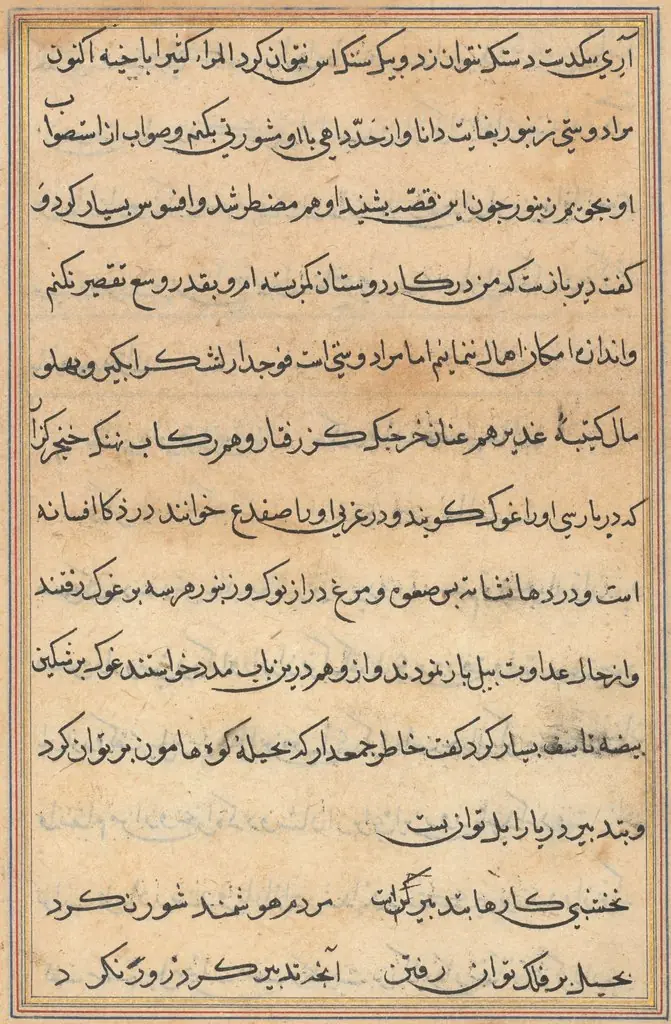 Page from Tales of a Parrot (Tuti-nama): text page
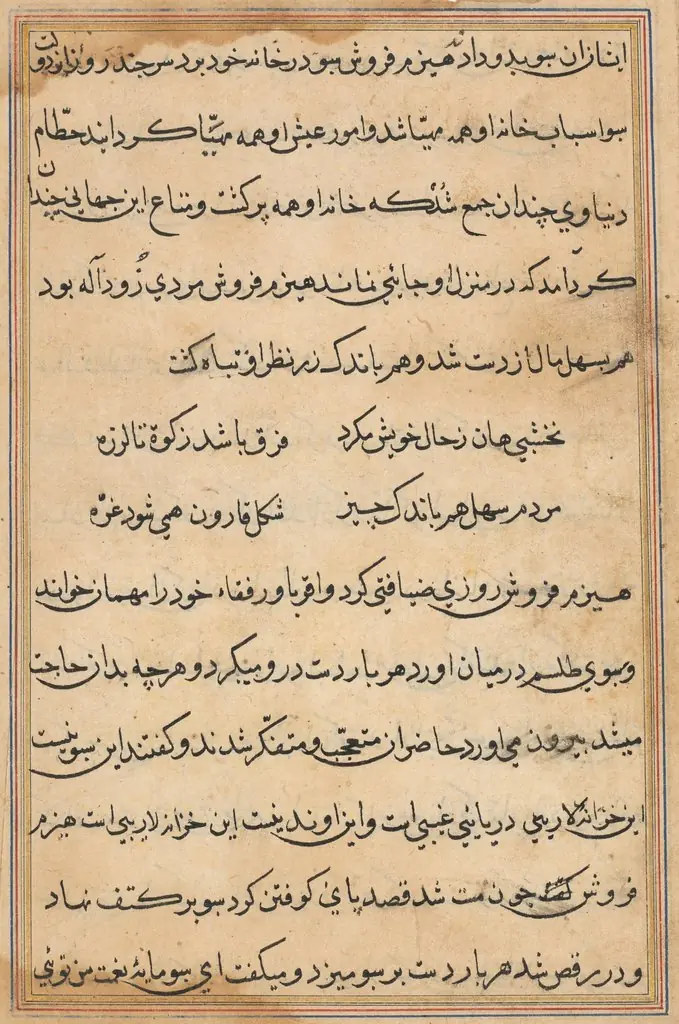 Page from Tales of a Parrot (Tuti-nama): text page