Artwork
Page from Tales of a Parrot (Tuti-nama): text page
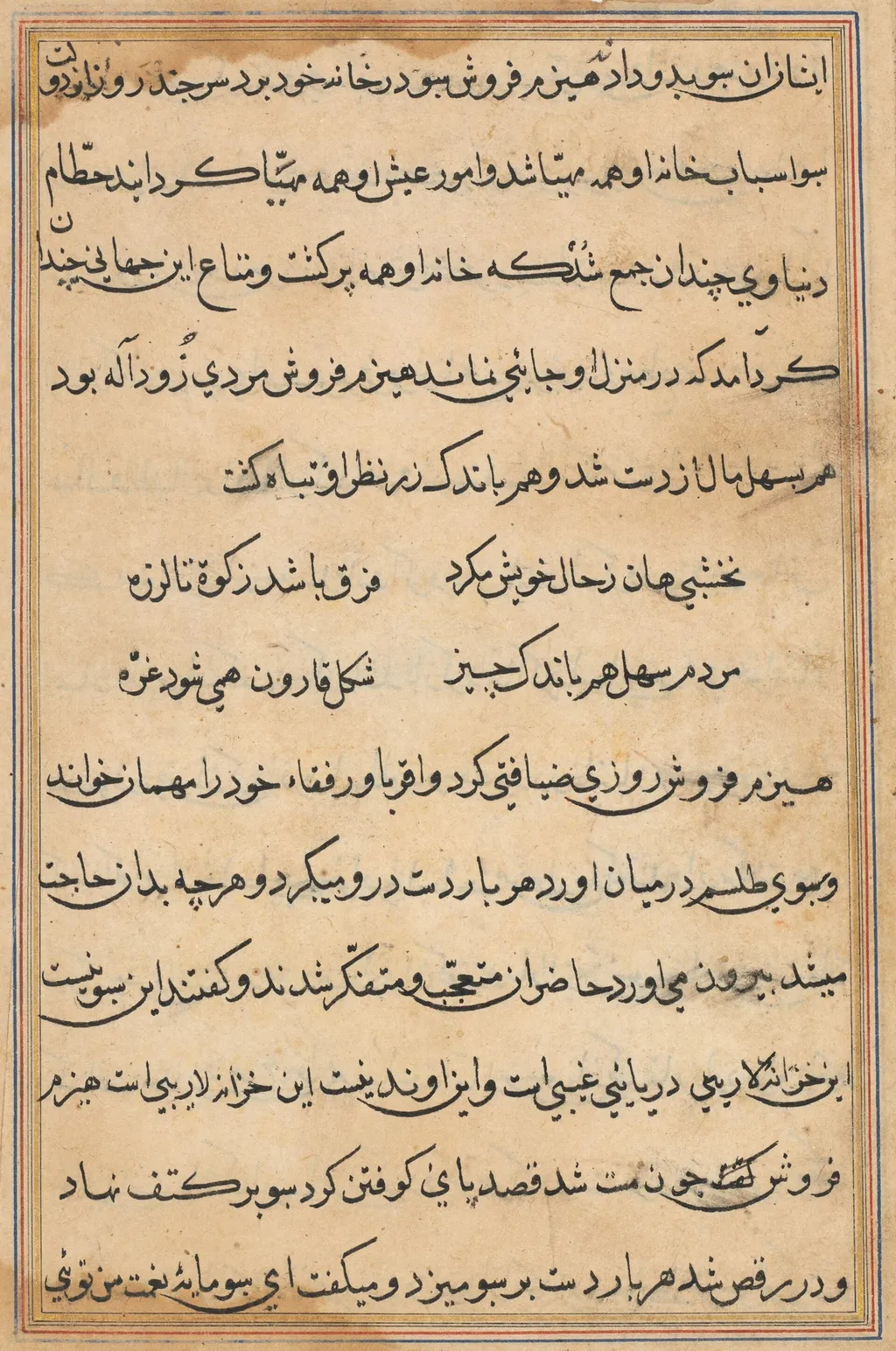
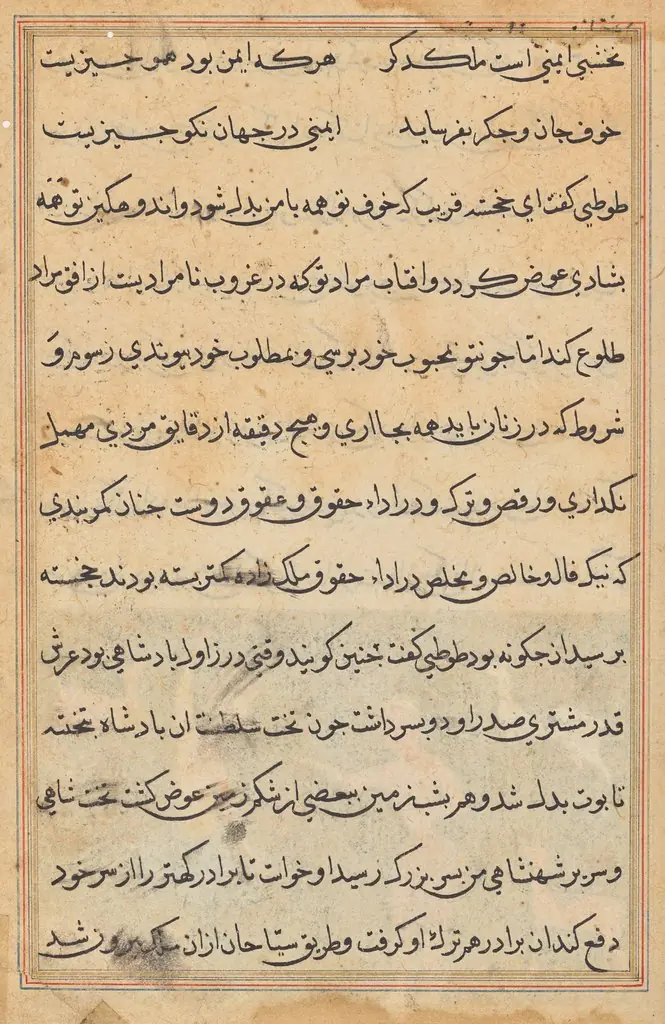
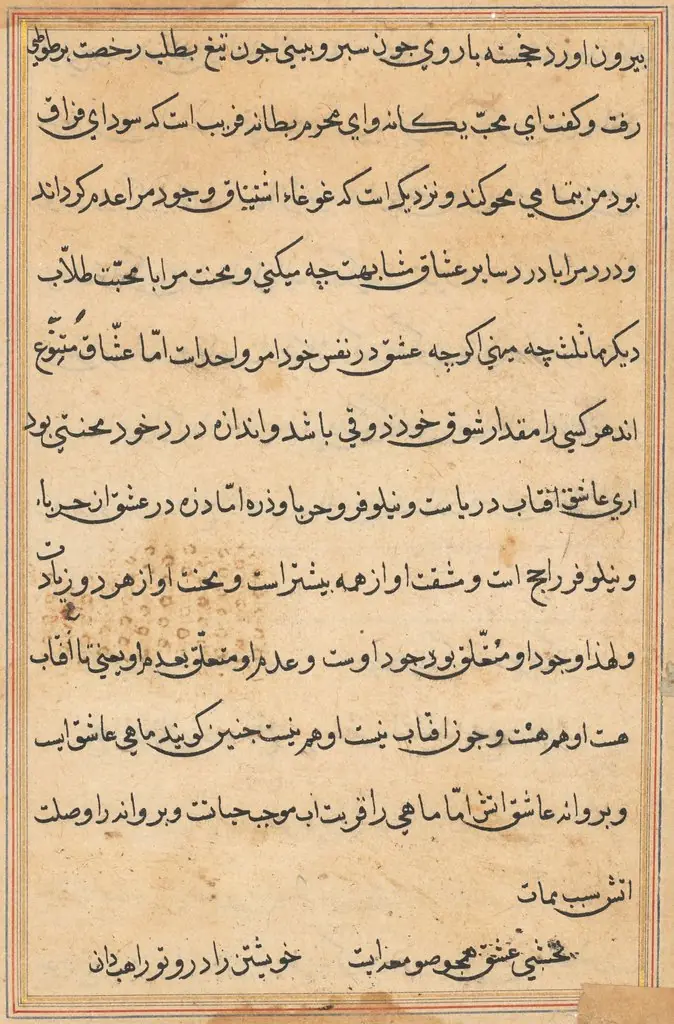
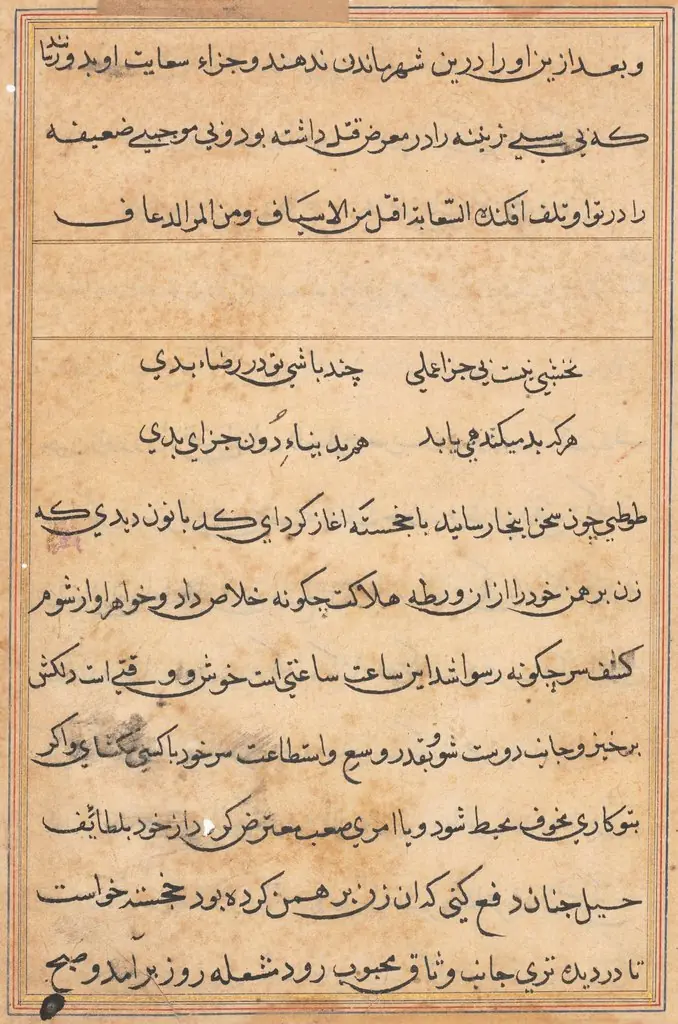
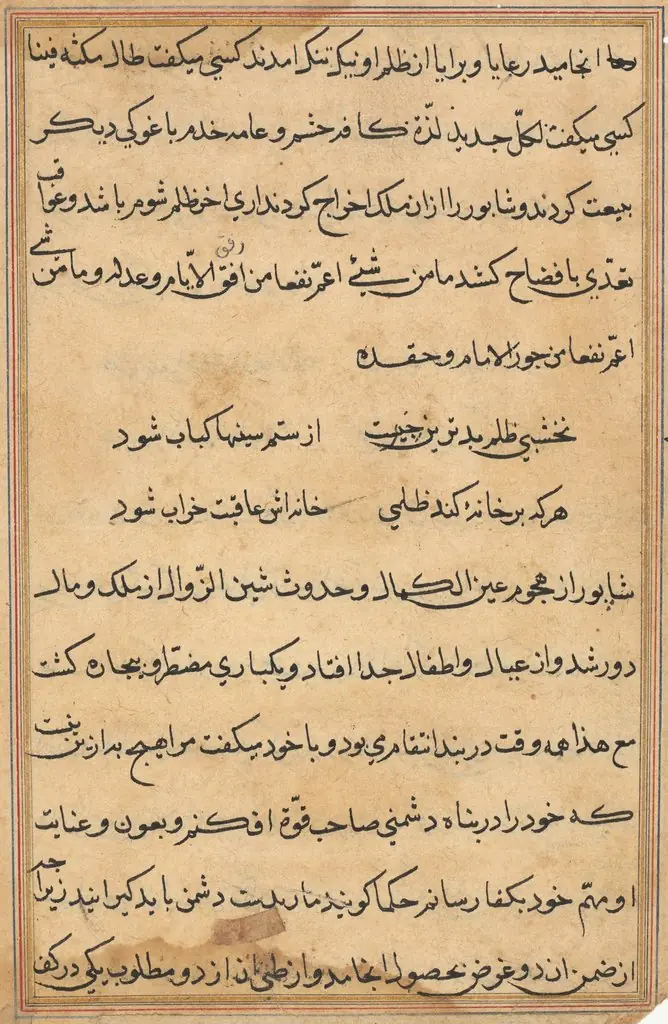
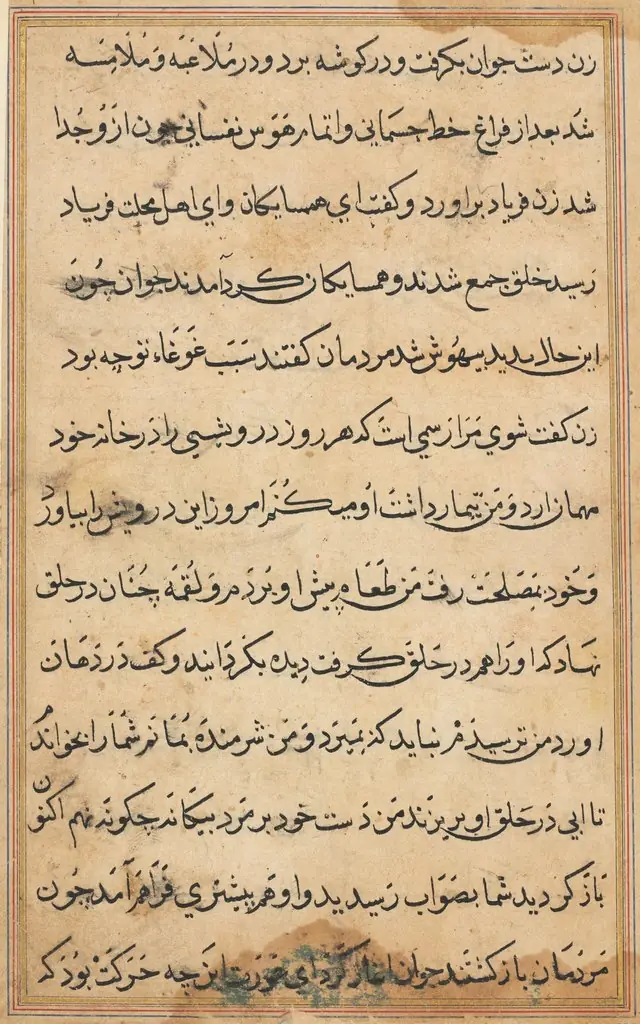
Page from Tales of a Parrot (Tuti-nama): text page is an unspecified painting. It dates from 1560 and is held in the collection of the Cleveland Museum of Art. This leaf belongs to the 16th‑century manuscript known as Tales of a Parrot (Tuti‑nama).
About this work
History & Provenance
The text page from the Tales of a Parrot (Tuti-nama), created in 1560, is held in the collection of the Cleveland Museum of Art in Cleveland.
Created in 1560 within the Mughal Empire, this text page from the Tales of a Parrot (Tuti-nama) was produced by an unknown artist. The work is a painting classified as part of a larger manuscript tradition, though the specific commissioning patron or workshop details are not identified in the available records. It later entered the collection of the Cleveland Museum of Art, where it is currently held under the accession number 1962.279.265.b.
The text page from the Tales of a Parrot (Tuti-nama), created in 1560, is held in the collection of the Cleveland Museum of Art in Cleveland. The work is identified by the accession number 1962.279.265.b. While the painting is attributed to an unknown artist and originated in the Mughal Empire, the provided sources do not list specific exhibition history or past display locations for this object.
Overview
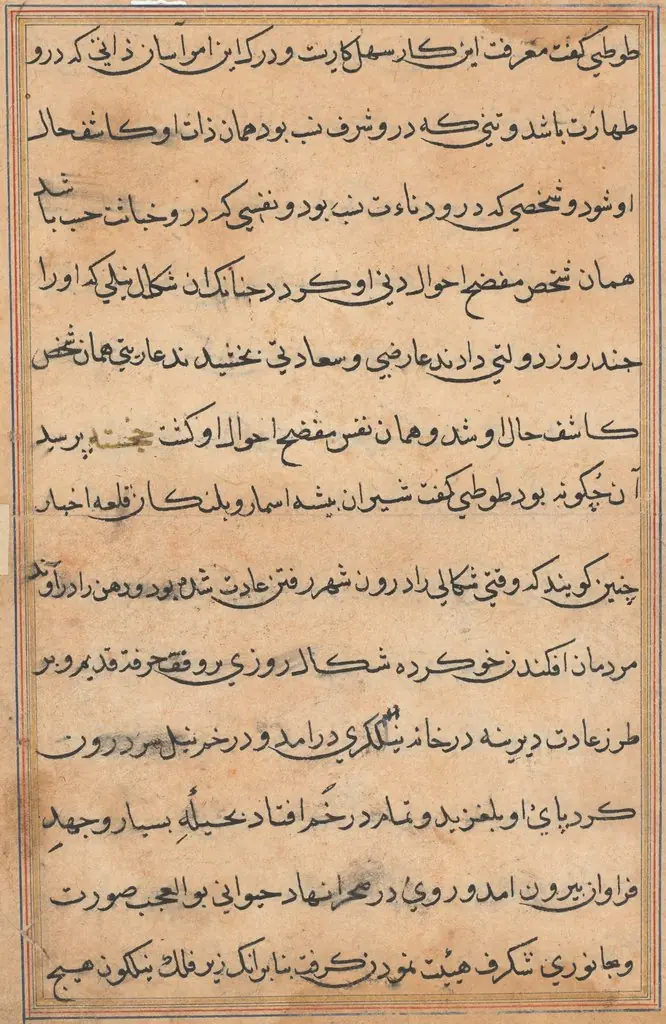
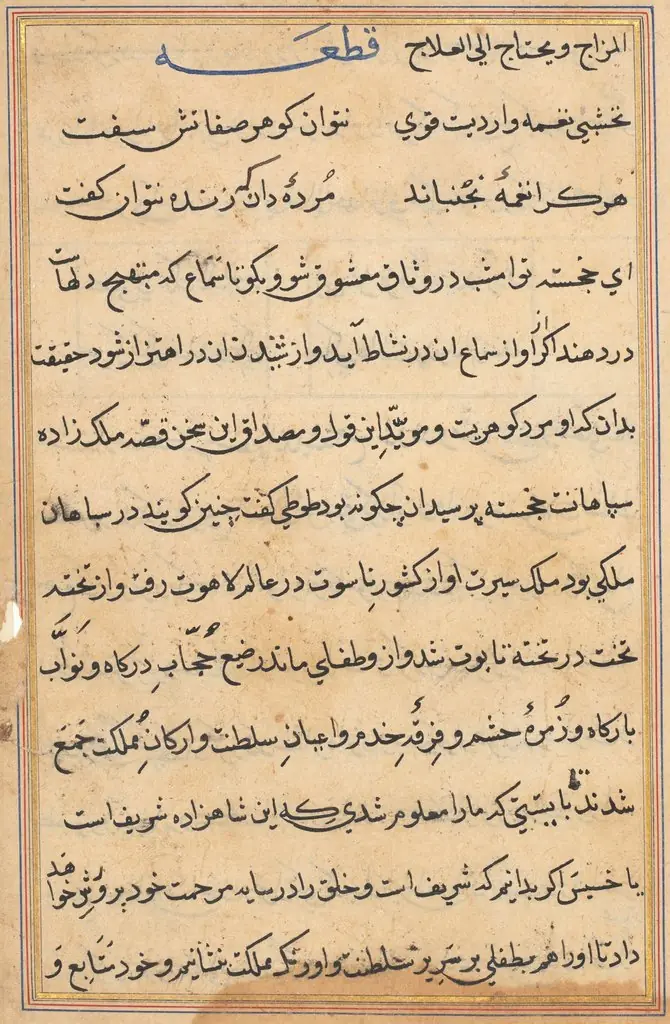
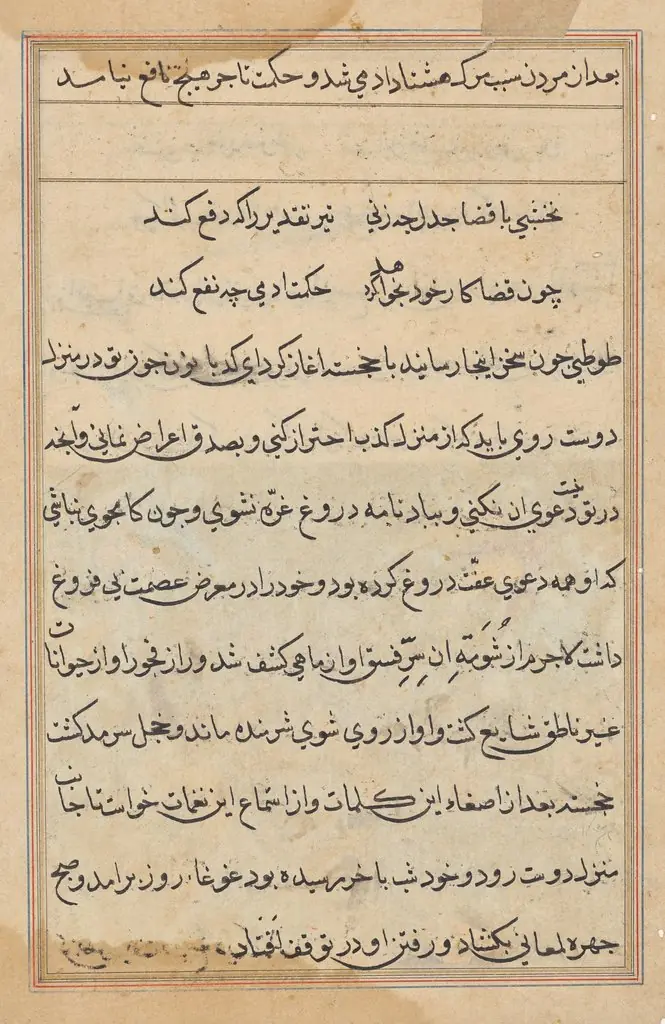
This leaf belongs to the 16th‑century manuscript known as Tales of a Parrot (Tuti‑nama). The page consists of black ink text set against a light‑colored parchment, arranged in a flowing cursive hand. It represents a typical textual folio from the work, illustrating the manuscript’s overall visual character.
Subject & Meaning
The written portion appears to be a passage from a narrative or poetic composition, organized in lines and short paragraphs. While the exact content is not specified, the title suggests a collection of stories centered on a parrot, a motif common in Persian literary tradition.
Technique & Style
The script is executed in an elegant, cursive hand, with occasional enlargement of particular words for emphasis. Decorative flourishes and ornamental strokes accompany the lettering, reflecting the elaborate penmanship practices of the period. The contrast between the dark ink and the beige parchment enhances legibility and visual appeal.
Context
Manuscript production in the 16th century often combined literary content with artistic calligraphy, serving both educational and aesthetic purposes. Tales of a Parrot fits within this tradition, where textual transmission was accompanied by refined script and modest decoration.
Artist & collection

- Page from Tales of a Parrot (Tuti-nama): text page
 Page from Tales of a Parrot (Tuti-nama): text page
 Page from Tales of a Parrot (Tuti-nama): text page
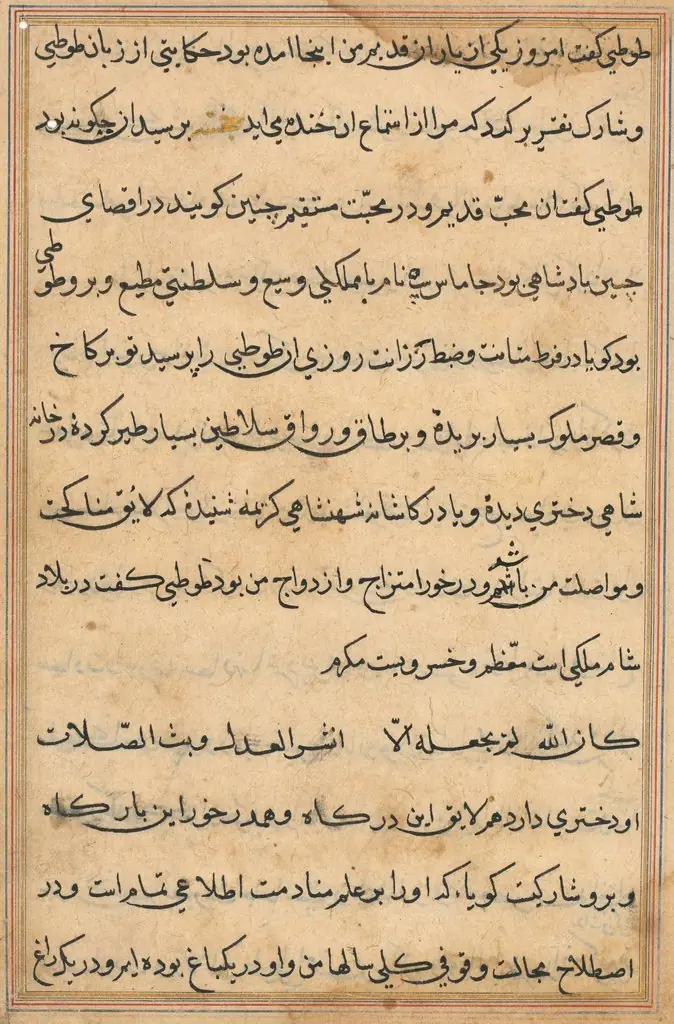 Page from Tales of a Parrot (Tuti-nama): text page
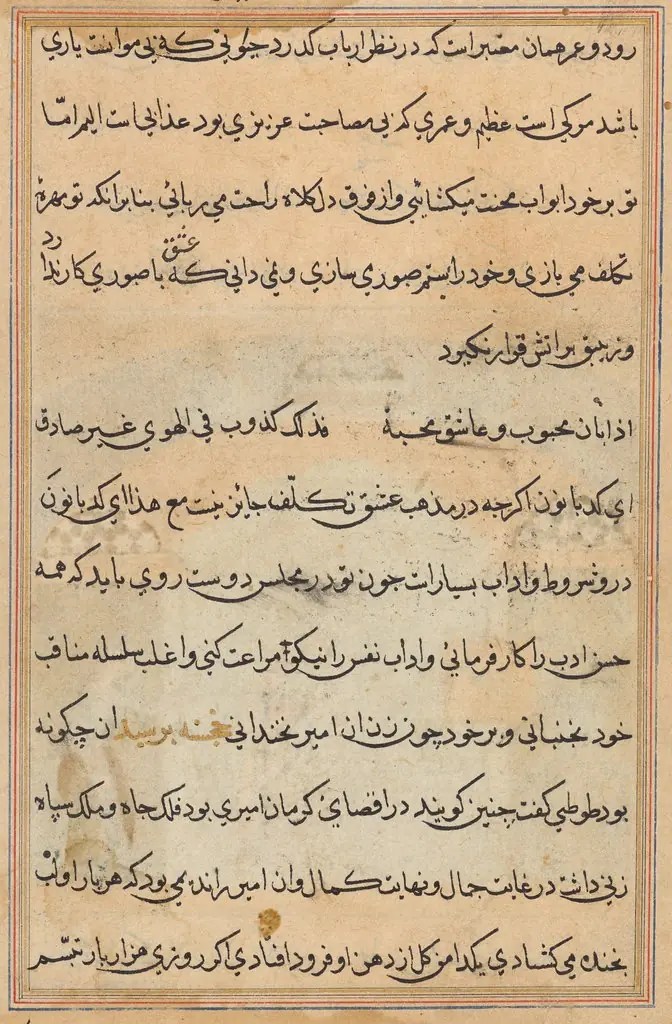 Page from Tales of a Parrot (Tuti-nama): text page
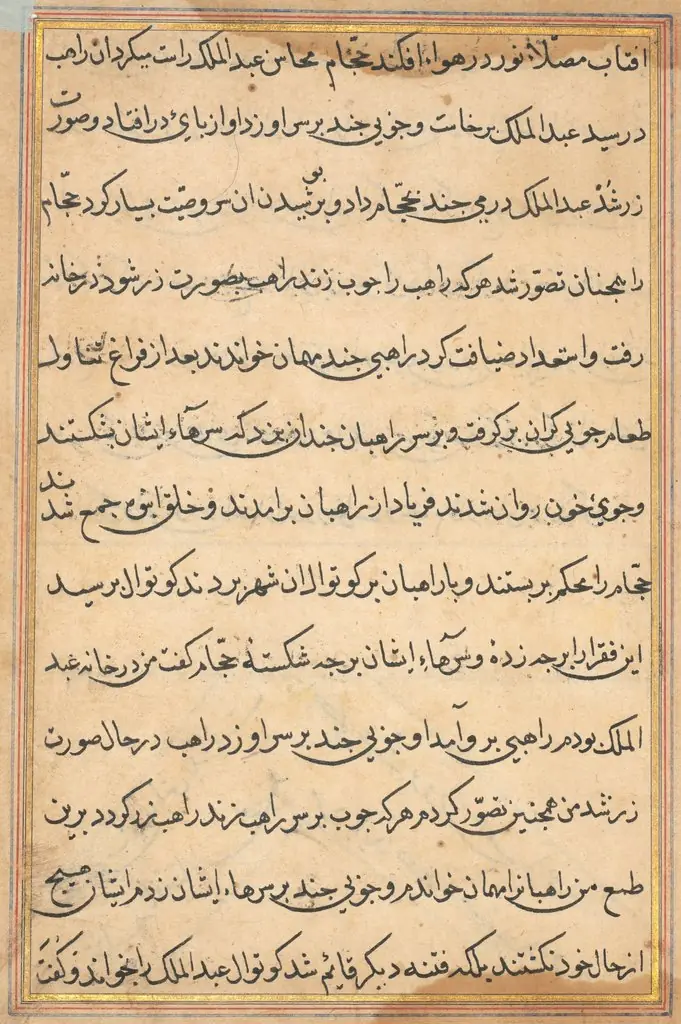 Page from Tales of a Parrot (Tuti-nama): text page
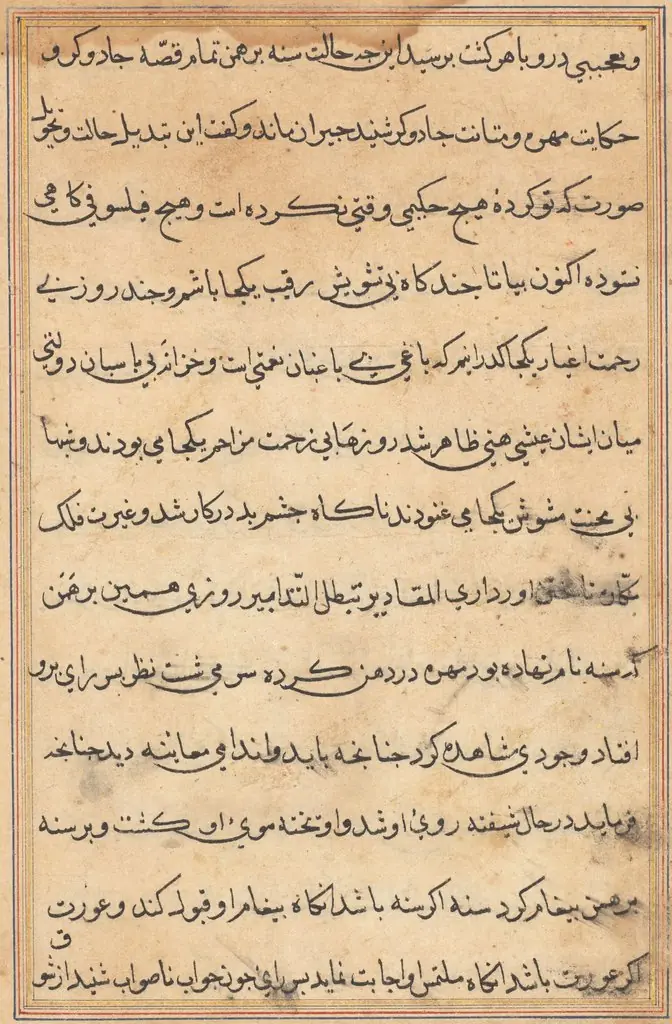 Page from Tales of a Parrot (Tuti-nama): text page
 Page from Tales of a Parrot (Tuti-nama): text page
 Page from Tales of a Parrot (Tuti-nama): text page
 Page from Tales of a Parrot (Tuti-nama): text page
 Page from Tales of a Parrot (Tuti-nama): text page
 Page from Tales of a Parrot (Tuti-nama): text page