Artwork
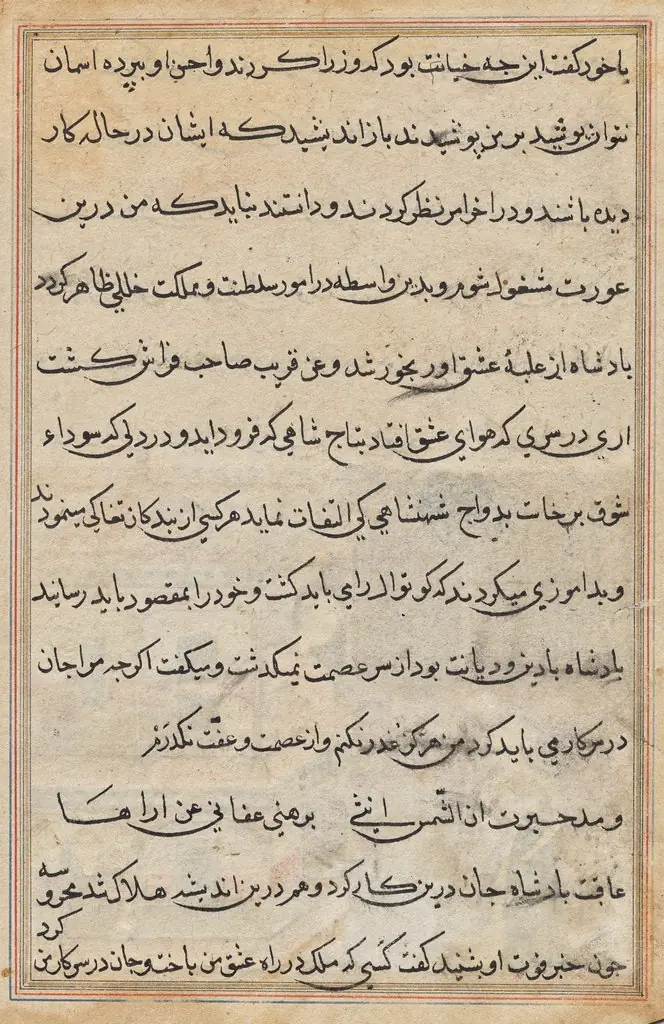
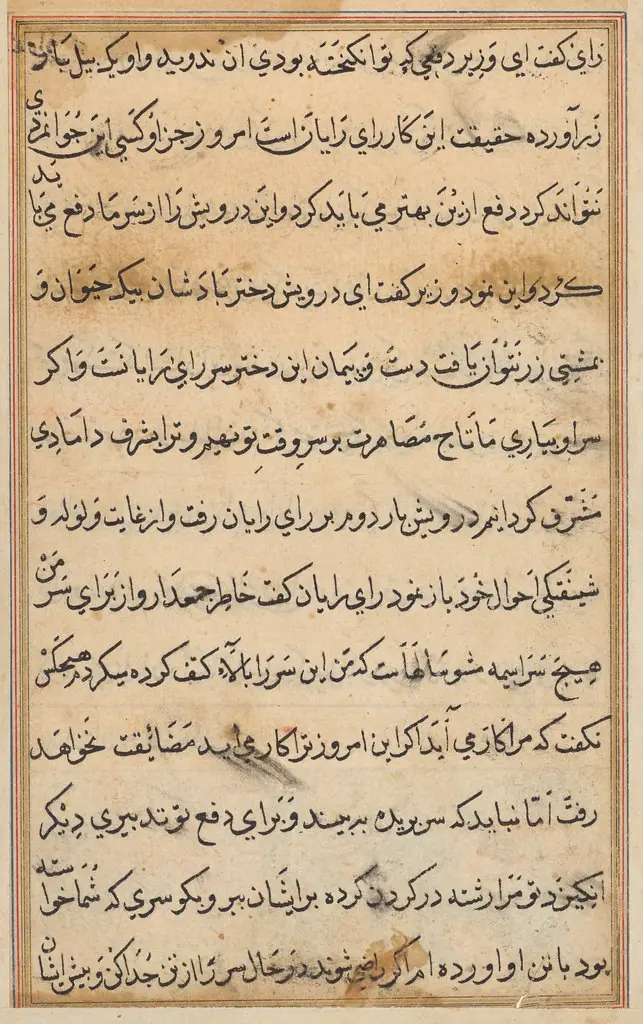
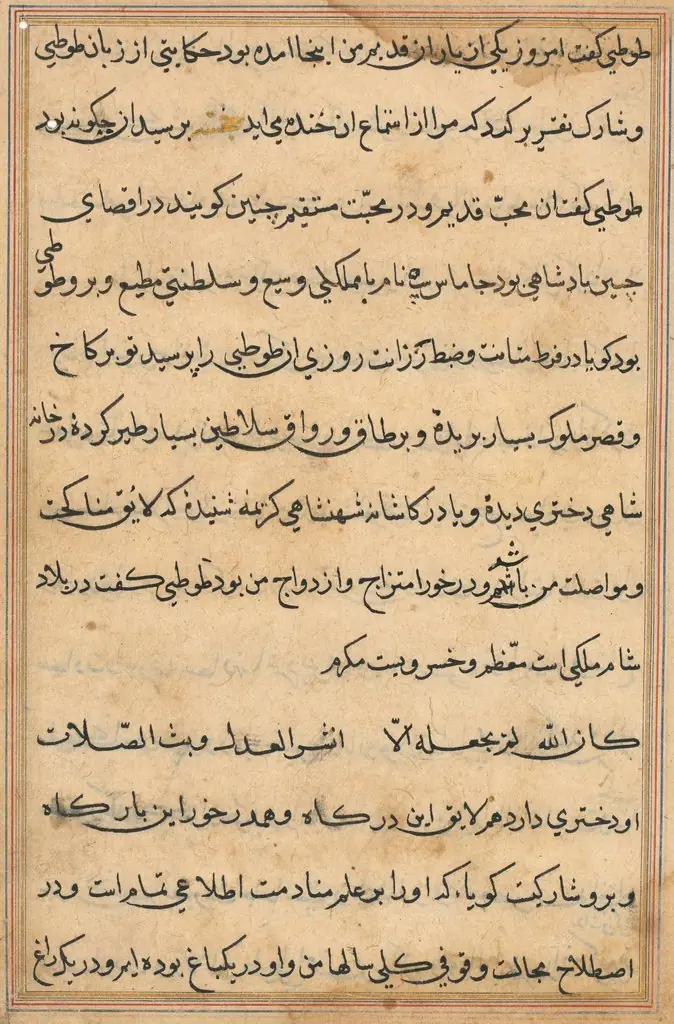
Page from Tales of a Parrot (Tuti-nama): text page
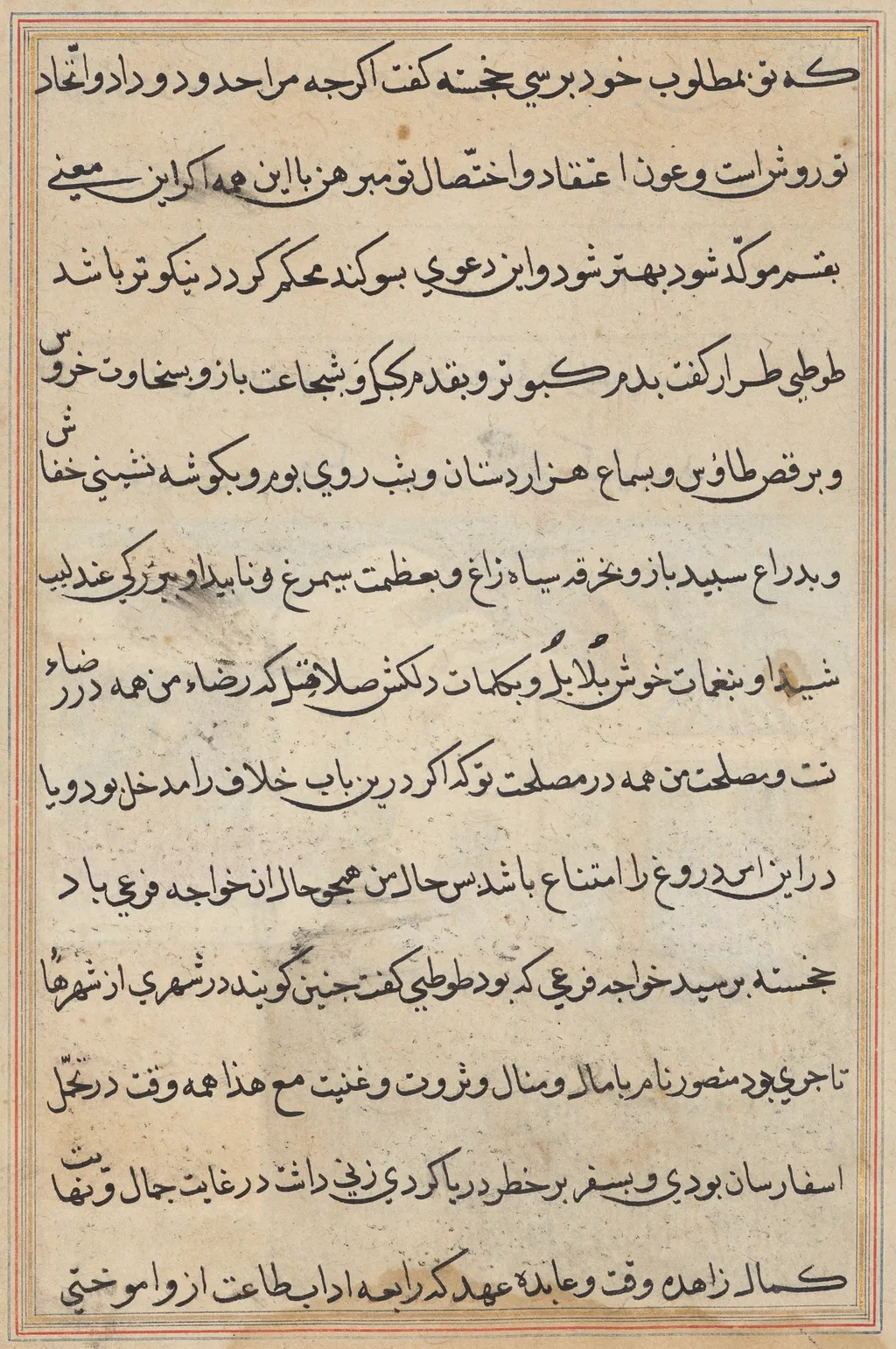
Page from Tales of a Parrot (Tuti-nama): text page is an unspecified painting. It dates from 1560 and is held in the collection of the Cleveland Museum of Art. This illuminated page originates from the Persian narrative collection known as Tales of a Parrot.
About this work
History & Provenance
The provided records confirm its location and inventory details but do not list specific exhibitions where the object has been displayed.
Created in 1560 within the Mughal Empire, this text page from the Tuti-nama (Tales of a Parrot) was produced by an artist whose specific identity remains unrecorded. The work entered the collection of the Cleveland Museum of Art, where it is cataloged under the accession number 1962.279.125.a. While the exact circumstances of its original commission are not detailed in available records, its inception date places it firmly within the mid-sixteenth century Mughal artistic tradition. The piece has been maintained as part of the museum's holdings since its acquisition in 1962.
The text page from the Tales of a Parrot (Tuti-nama) is held in the collection of the Cleveland Museum of Art. The institution assigns the work the accession number 1962.279.125.a. Created in 1560 within the Mughal Empire, the painting is attributed to an unknown artist.
The provided records confirm its location and inventory details but do not list specific exhibitions where the object has been displayed.
Overview
This illuminated page originates from the Persian narrative collection known as Tales of a Parrot. Executed as a painted manuscript leaf, it presents a continuous block of black ink set against a pale paper surface. The composition is framed by a narrow red border, and the sheet shows signs of age, including subtle staining near its lower edge.
Subject & Meaning
The text on the page forms part of a larger story composed for Prince Salim, a royal patron of the early seventeenth century. The narrative, centered on a talking parrot, functions as both entertainment and moral instruction, reflecting courtly tastes for allegorical tales that blend wit with ethical reflection.
Technique & Style
Calligraphic execution dominates the surface, with a flowing, decorative script arranged in orderly horizontal lines. Certain characters are elongated, creating visual rhythm and emphasizing key passages. The ink is a deep black, applied with a fine brush, while the thin red border was added with pigment mixed on a separate brush, highlighting the page’s margins without overwhelming the text.
Context
Produced during a period when Persian courts favored richly illustrated literary works, the page exemplifies the integration of visual artistry and literary culture. The careful balance of script and decorative elements mirrors contemporary aesthetic ideals that prized harmony, elegance, and the seamless fusion of text and image.
Artist & collection

- Page from Tales of a Parrot (Tuti-nama): text page
 Page from Tales of a Parrot (Tuti-nama): text page
 Page from Tales of a Parrot (Tuti-nama): text page
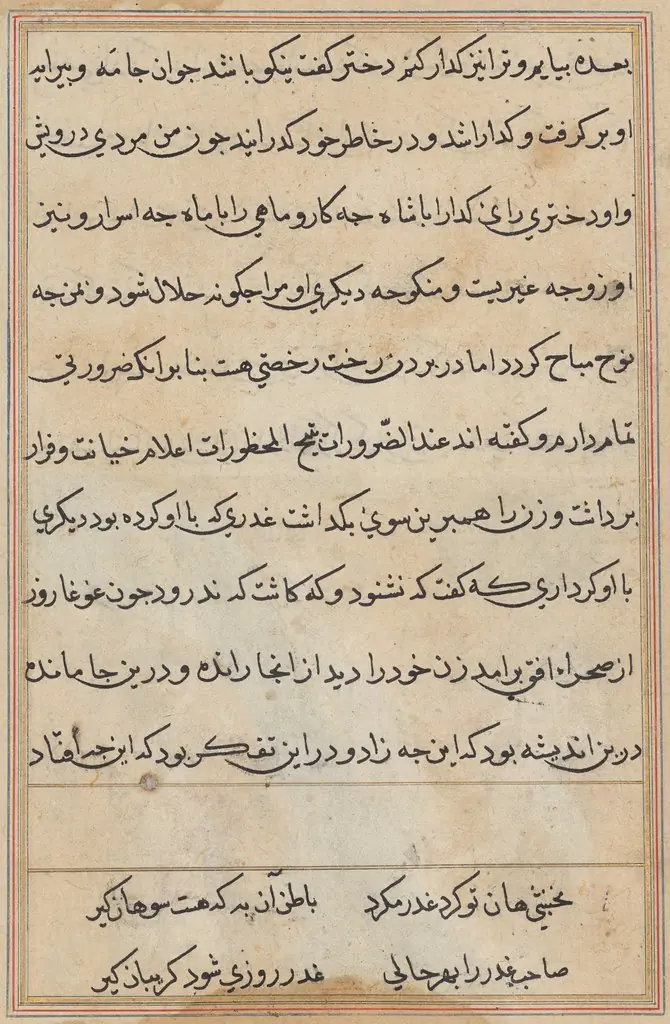 Page from Tales of a Parrot (Tuti-nama): text page
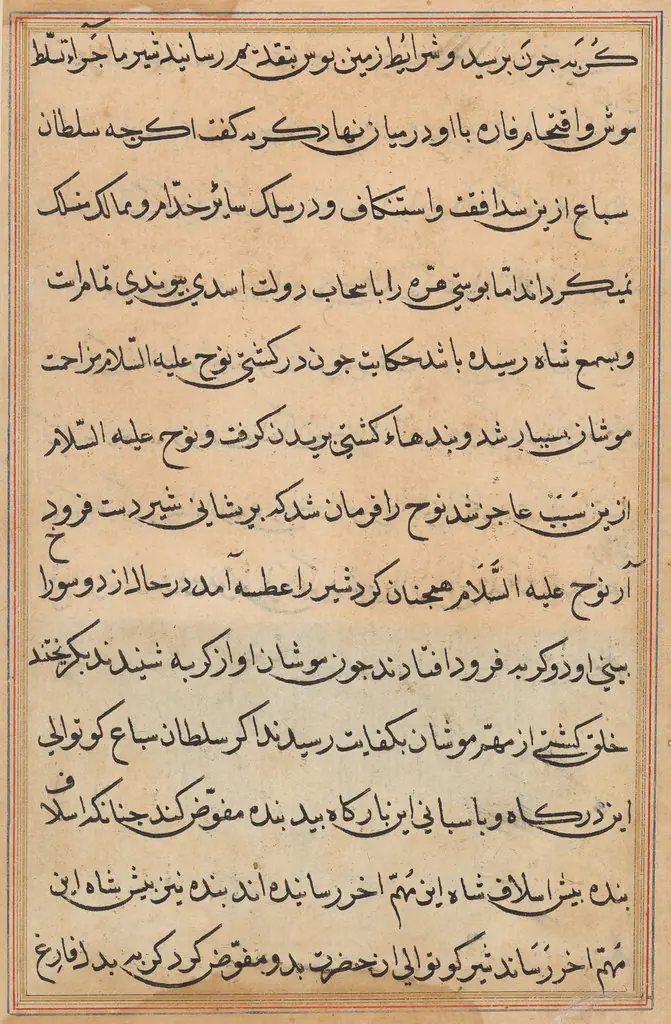 Page from Tales of a Parrot (Tuti-nama): text page
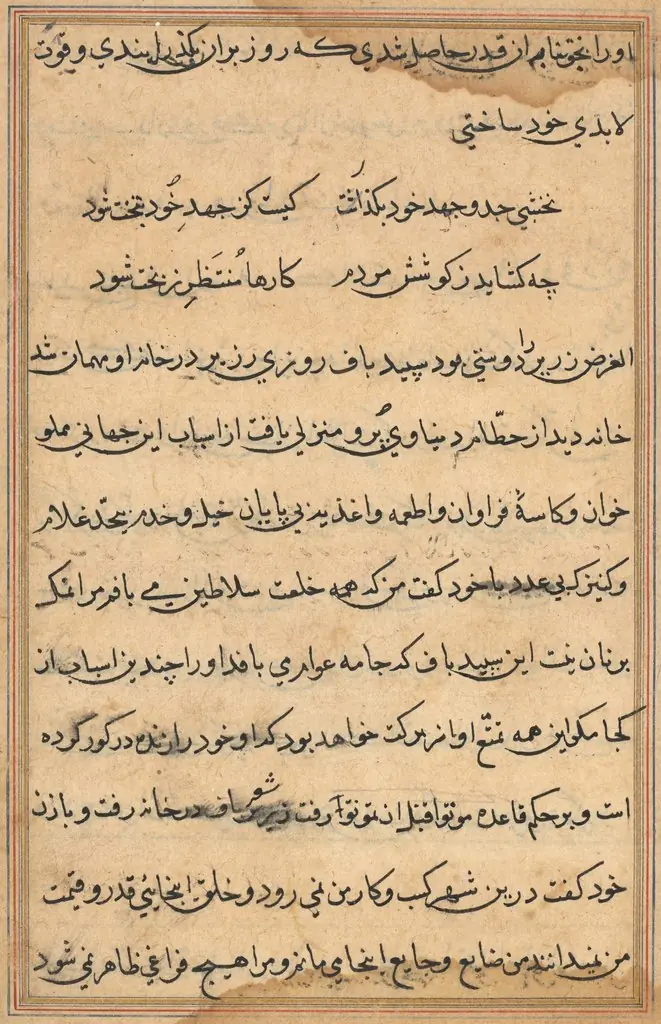 Page from Tales of a Parrot (Tuti-nama): text page
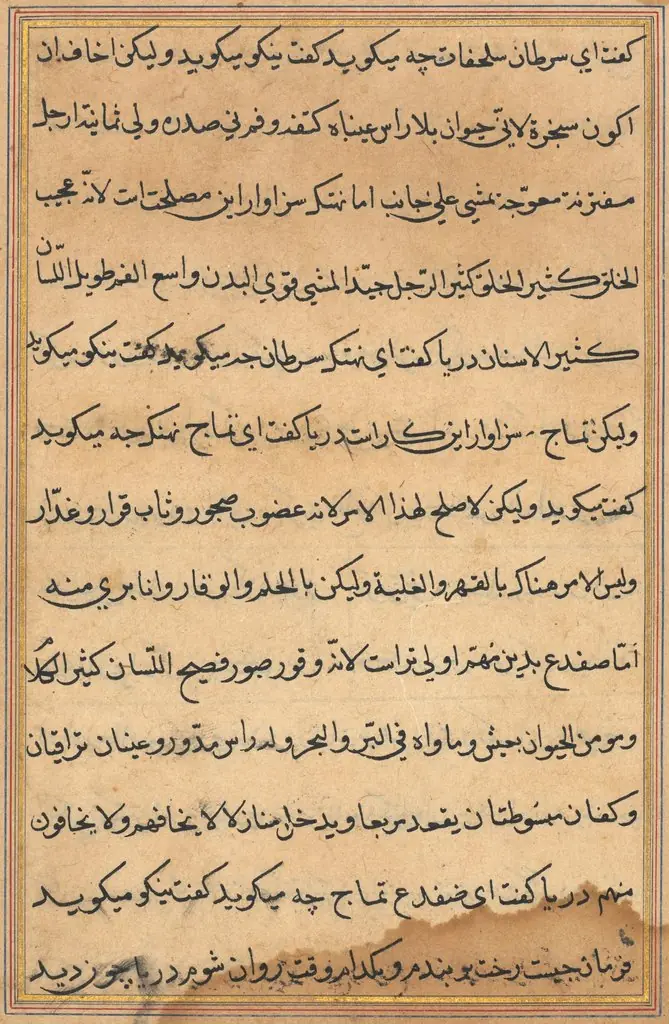 Page from Tales of a Parrot (Tuti-nama): text page
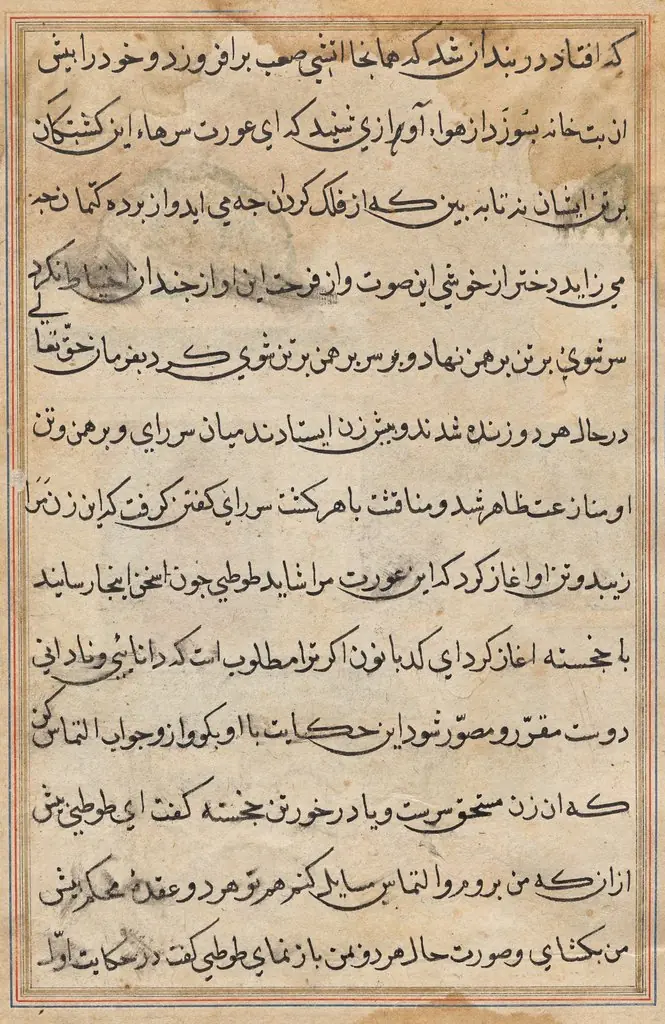 Page from Tales of a Parrot (Tuti-nama): text page
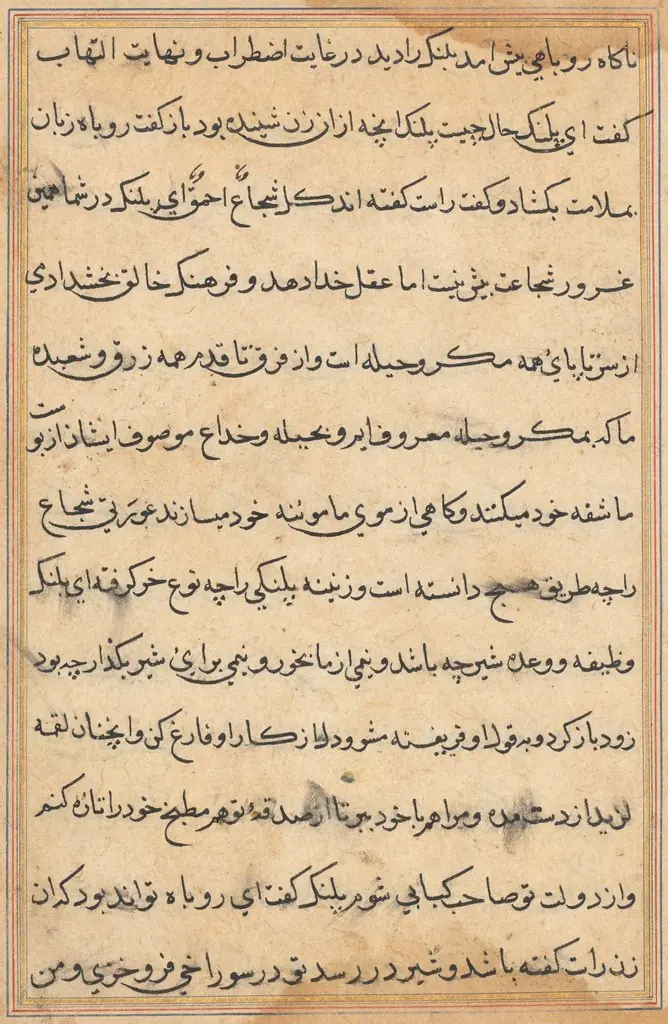 Page from Tales of a Parrot (Tuti-nama): text page
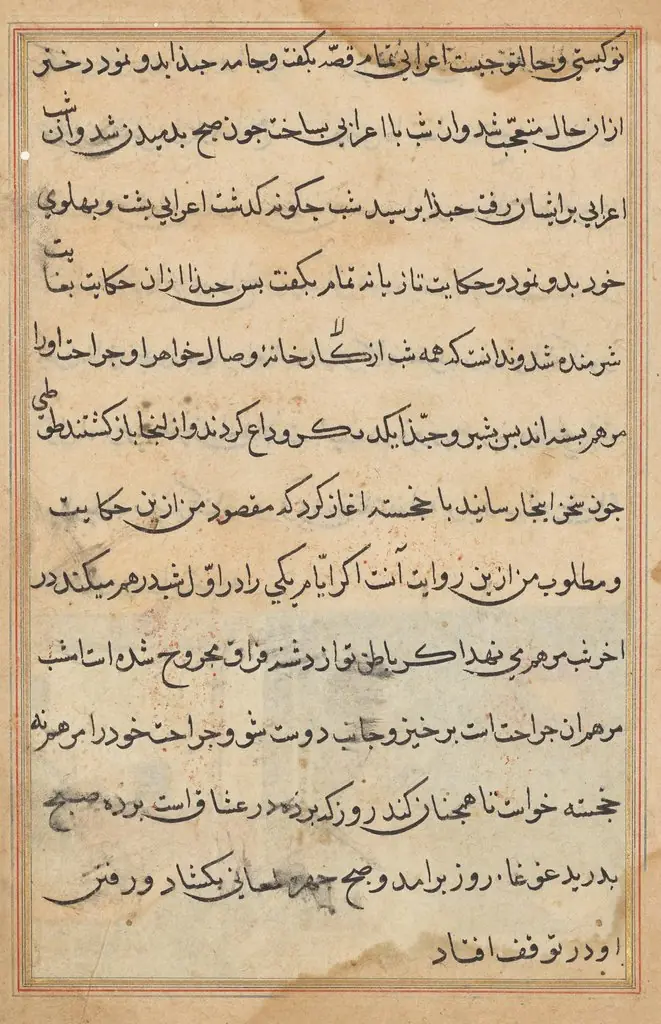 Page from Tales of a Parrot (Tuti-nama): text page