Artwork
Page from Tales of a Parrot (Tuti-nama): text page
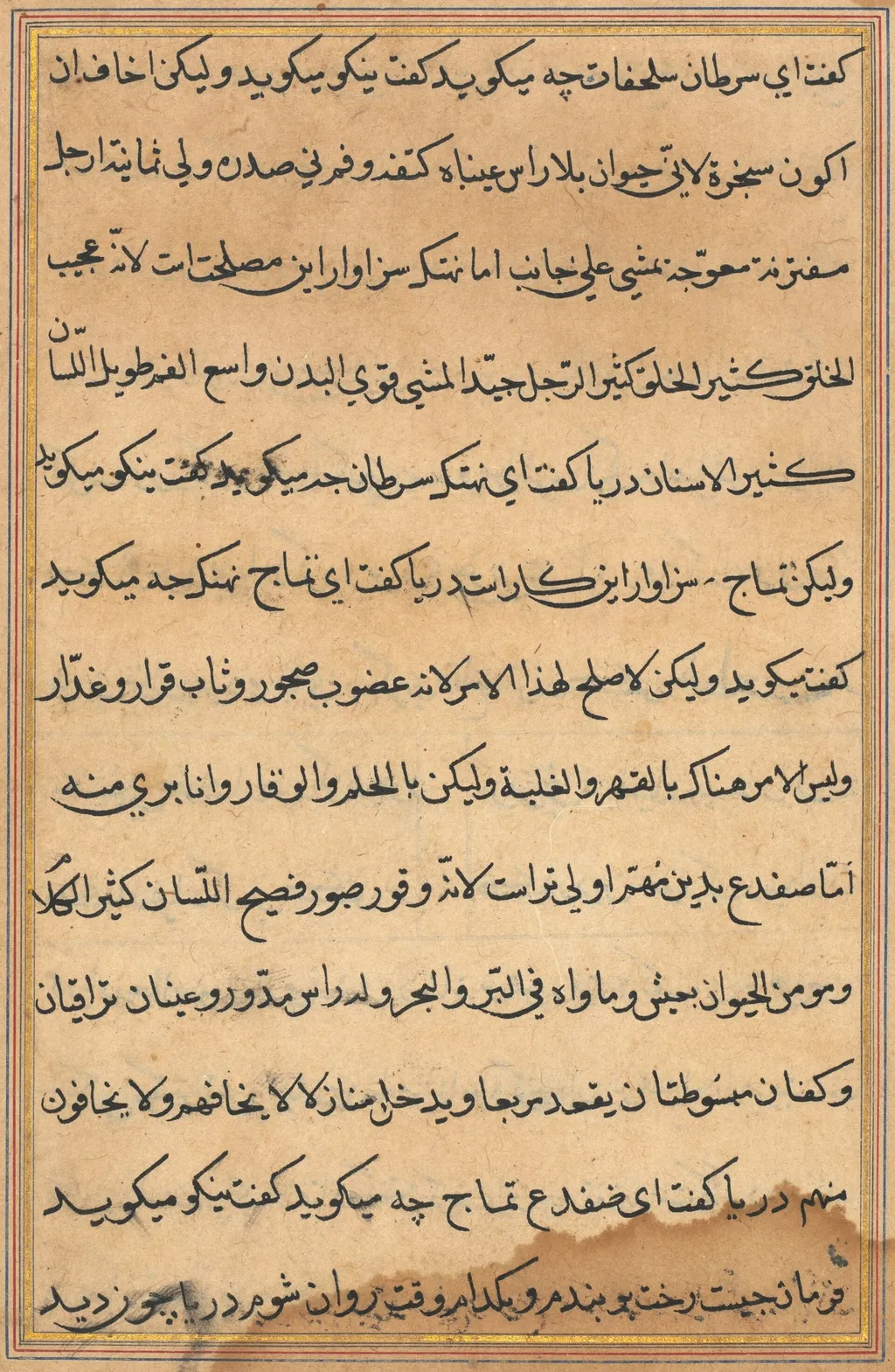
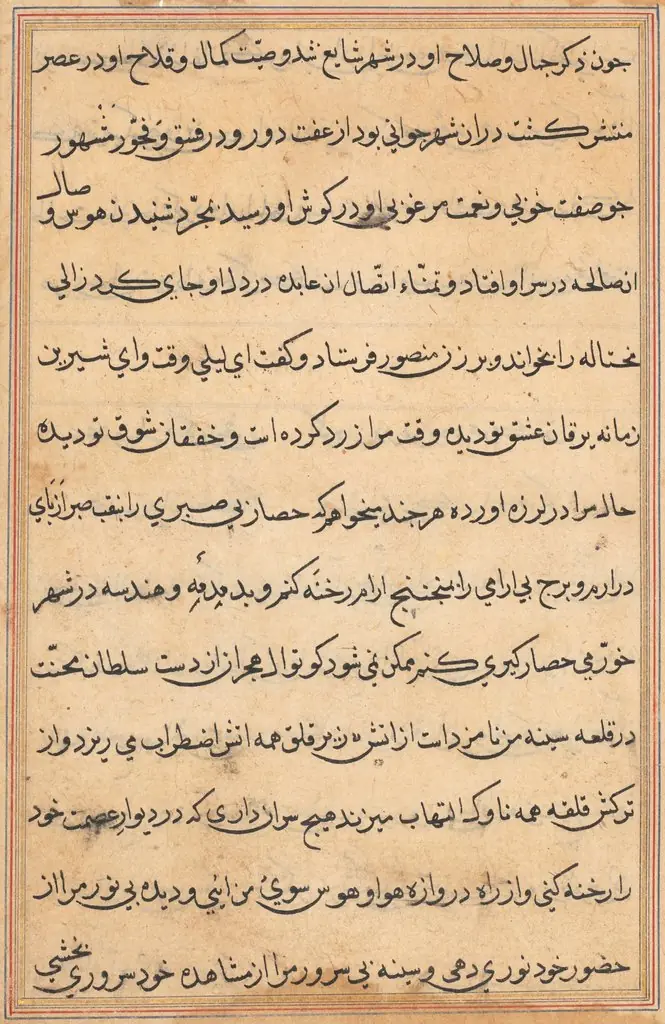
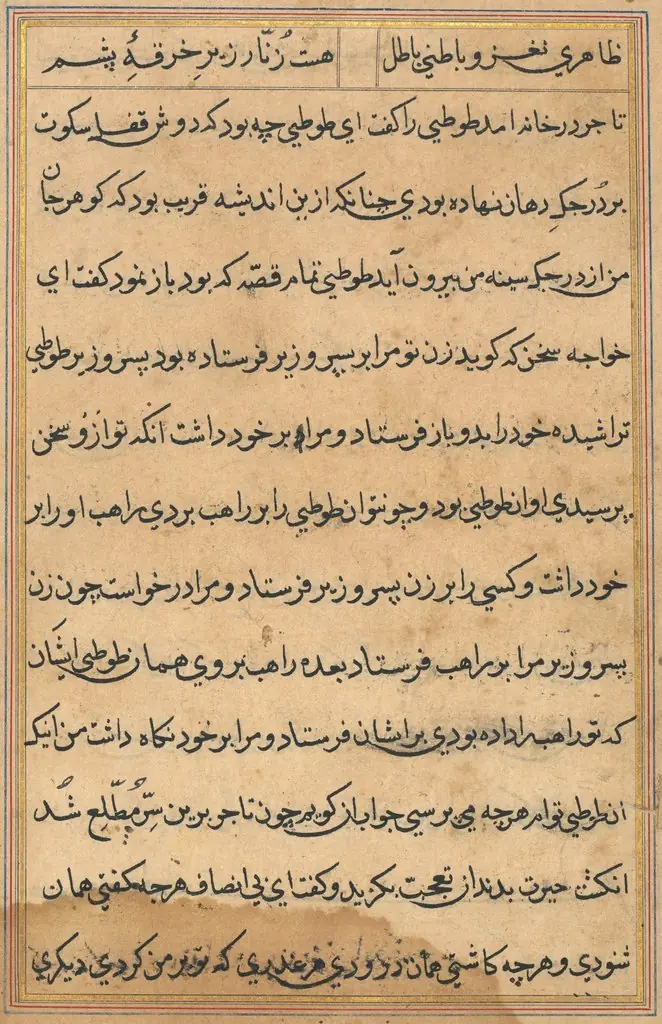
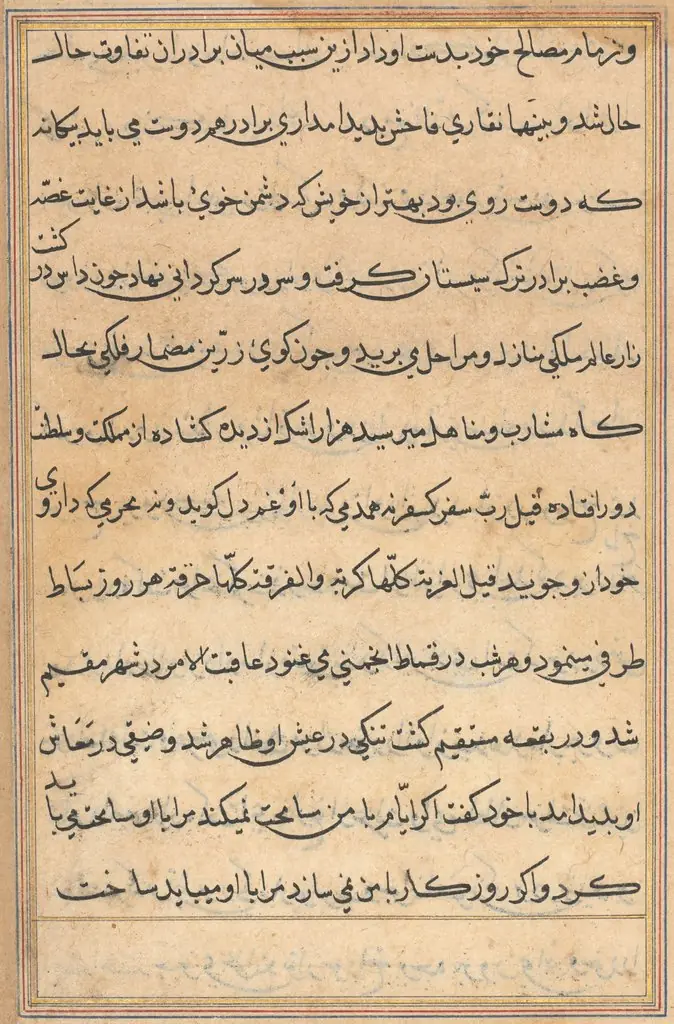
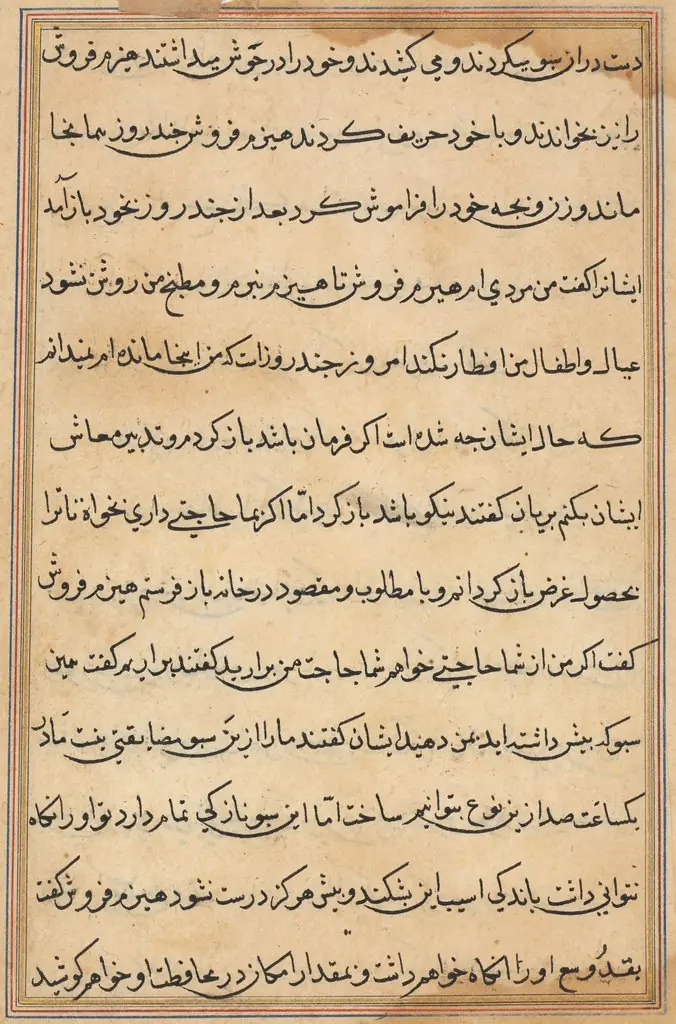
Page from Tales of a Parrot (Tuti-nama): text page is an unspecified painting. It dates from 1560 and is held in the collection of the Cleveland Museum of Art. This illuminated page belongs to the Persian manuscript Tales of a Parrot (Tuti‑nama).
About this work
Subject & Meaning
The text illustrates a moral lesson about the virtues of patience and the pitfalls of deception, themes central to the didactic purpose of the work.
The page from the Tuti-nama depicts a courtly scene drawn from the Persian narrative tradition in which a parrot recounts moral tales to a prince. The text illustrates a moral lesson about the virtues of patience and the pitfalls of deception, themes central to the didactic purpose of the work. Symbolically, the parrot serves as a messenger of wisdom, while the surrounding architectural motifs reflect the Mughal aesthetic of blending Persian literary forms with Indian courtly visual culture. The painting thus represents the synthesis of narrative illustration and courtly patronage in 16th-century Mughal art.
History & Provenance
The text page from the Tales of a Parrot (Tuti-nama) was created circa 1560 within the Mughal Empire. The work entered the Cleveland Museum of Art as part of its holdings, where it is currently located. The Cleveland Museum of Art records the painting’s inception date as 1560, aligning with the stylistic and historical context of Mughal manuscript illustration during the mid-16th century.
Overview
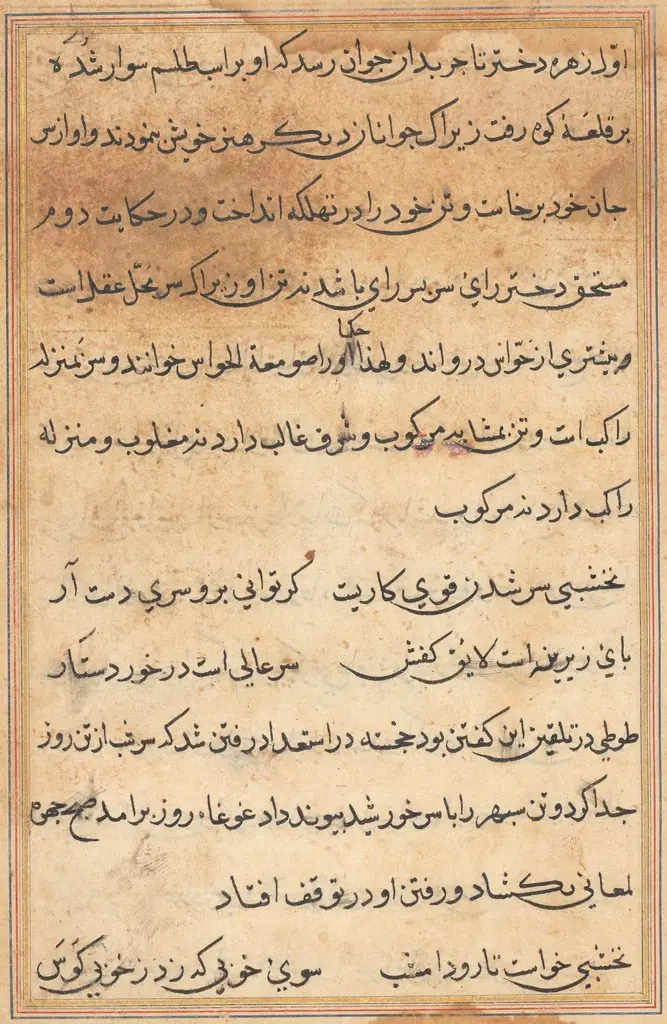
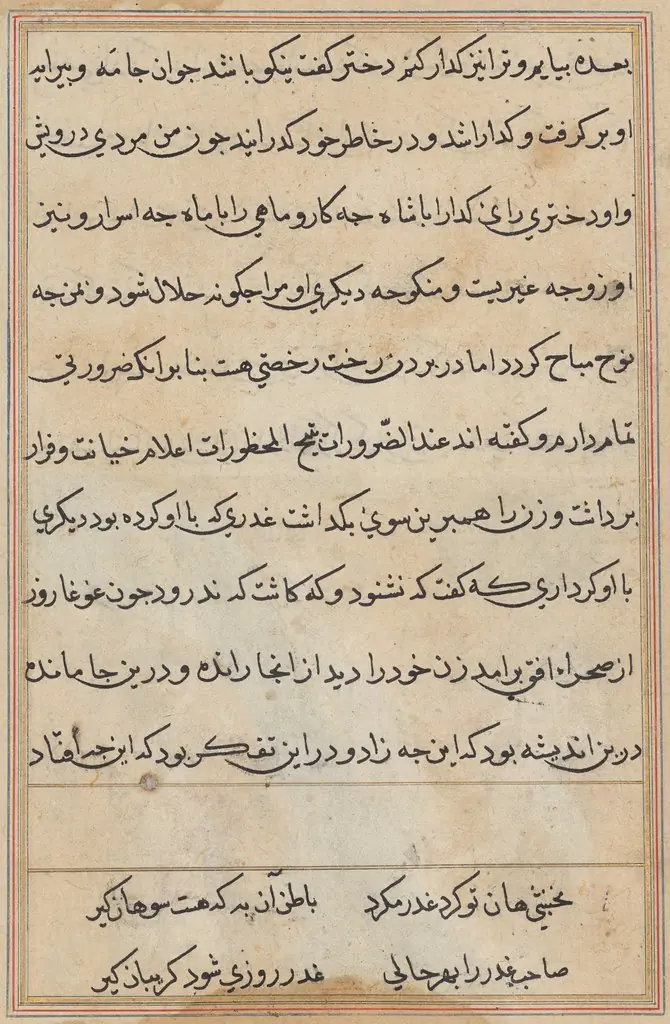
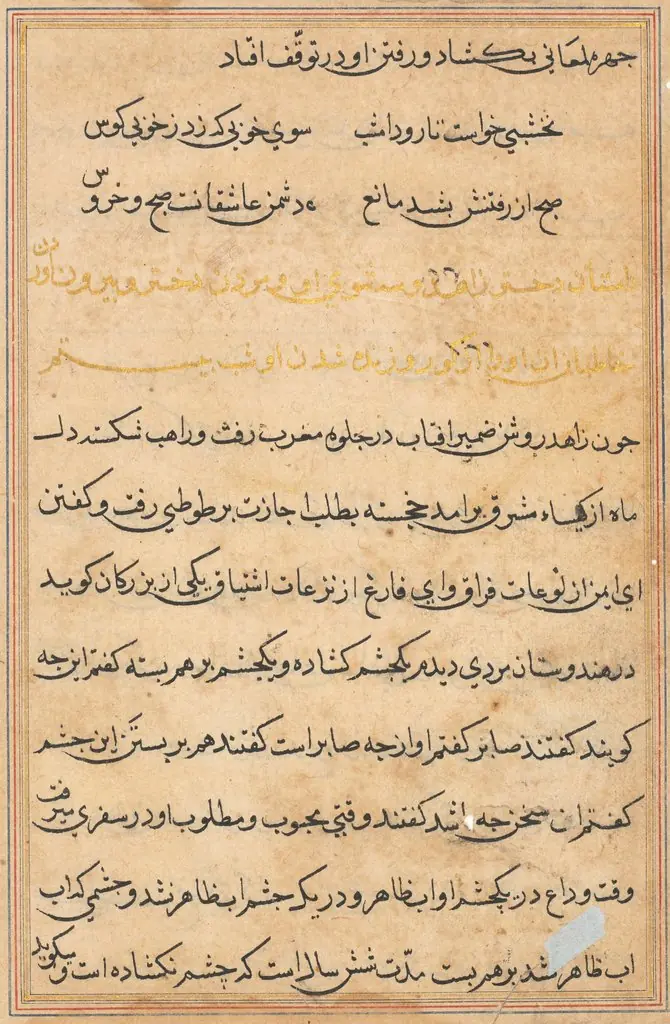
This illuminated page belongs to the Persian manuscript Tales of a Parrot (Tuti‑nama). Executed as a painted sheet, it features black calligraphic text set against a light tan ground, enclosed within a narrow red and blue ornamental frame. The work is part of the collection of the Cleveland Museum of Art and exemplifies the refined book art produced for elite patrons.
Technique & Style
The calligrapher employed a single‑brush technique, varying the line thickness to create visual rhythm and guide the reader’s eye across the verses. The surrounding border, painted in thin bands of red and blue, frames the script without overwhelming it, reflecting a restrained aesthetic typical of late Safavid manuscript production.
Context
During the Safavid era, illustrated manuscripts served as luxury objects that combined literary content with visual refinement. The Tales of a Parrot belongs to a broader tradition of animal‑centric moral tales, and its elegant presentation underscores the cultural value placed on literacy and patronage among the Persian elite.
Legacy
As a representative example of Persian narrative art, the page offers scholars insight into courtly calligraphic practices and the transmission of moral literature. Its preservation and display allow contemporary audiences to appreciate the nuanced interplay of text, color, and materiality in early modern Islamic book culture.
Artist & collection

 Page from Tales of a Parrot (Tuti-nama): text page
 Page from Tales of a Parrot (Tuti-nama): text page
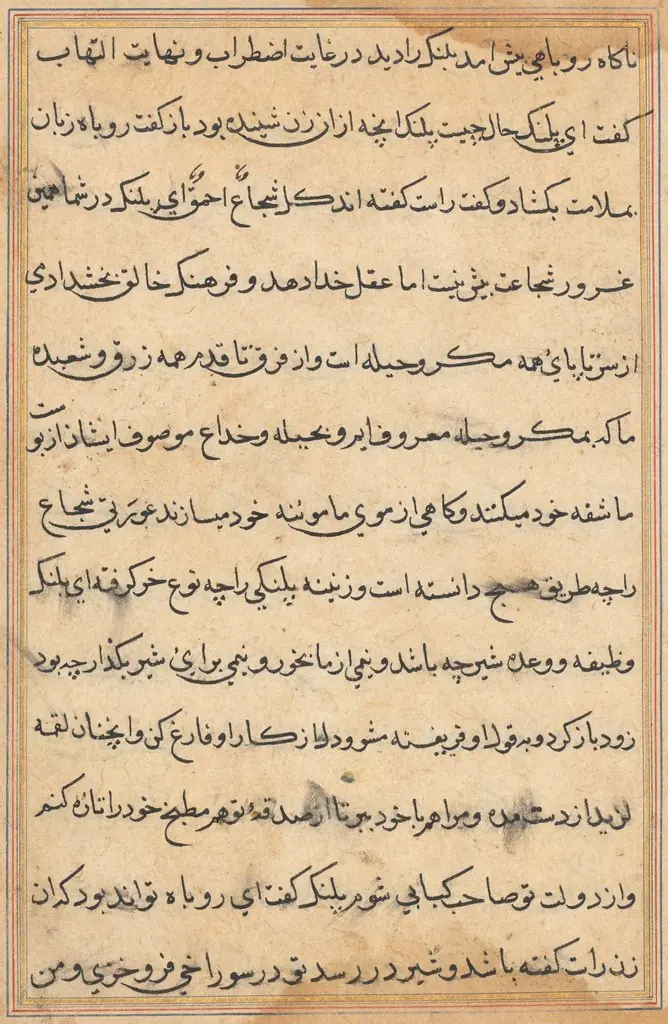 Page from Tales of a Parrot (Tuti-nama): text page
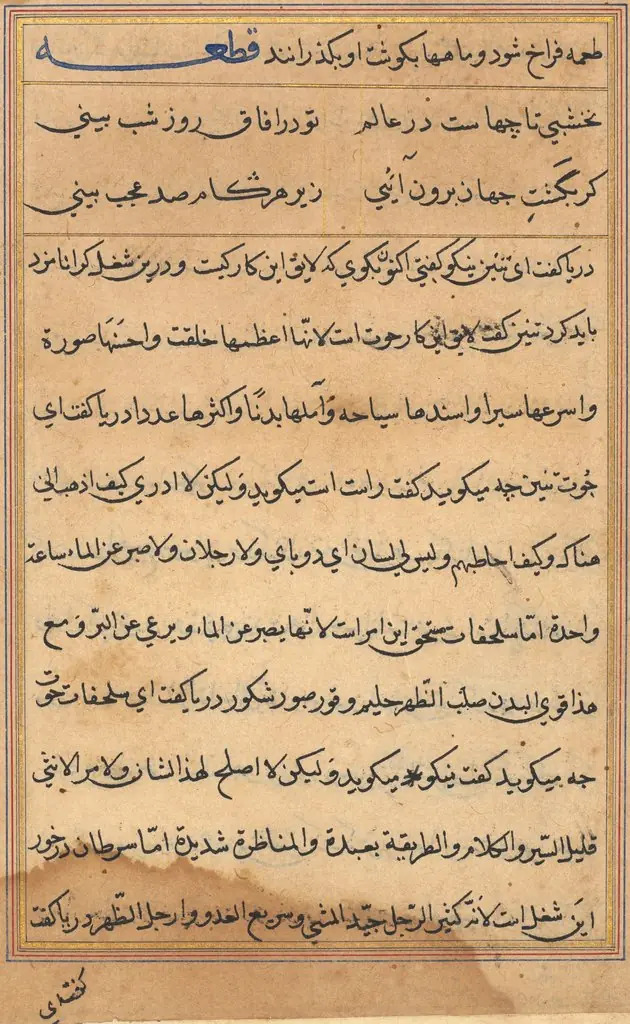 Page from Tales of a Parrot (Tuti-nama): text page
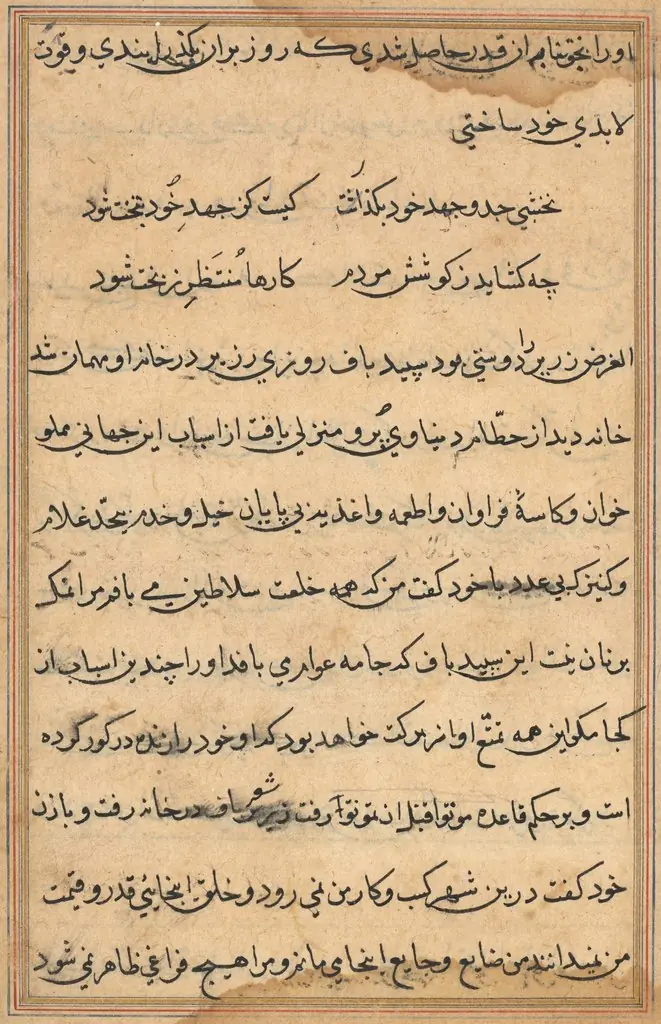 Page from Tales of a Parrot (Tuti-nama): text page
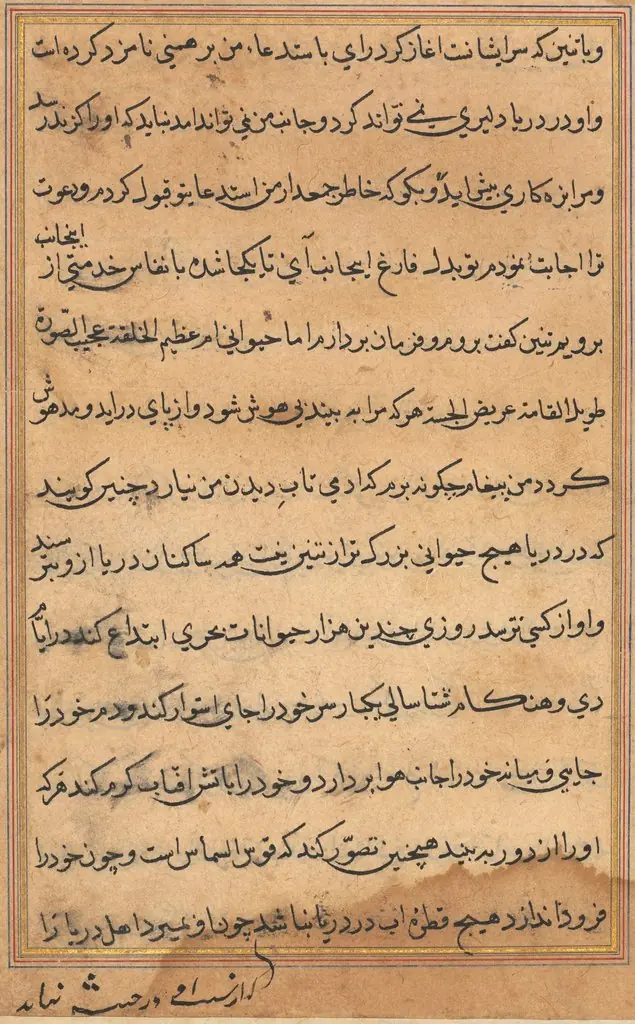 Page from Tales of a Parrot (Tuti-nama): text page
 Page from Tales of a Parrot (Tuti-nama): text page
 Page from Tales of a Parrot (Tuti-nama): text page
 Page from Tales of a Parrot (Tuti-nama): text page
 Page from Tales of a Parrot (Tuti-nama): text page