Artwork
Page from Tales of a Parrot (Tuti-nama): text page
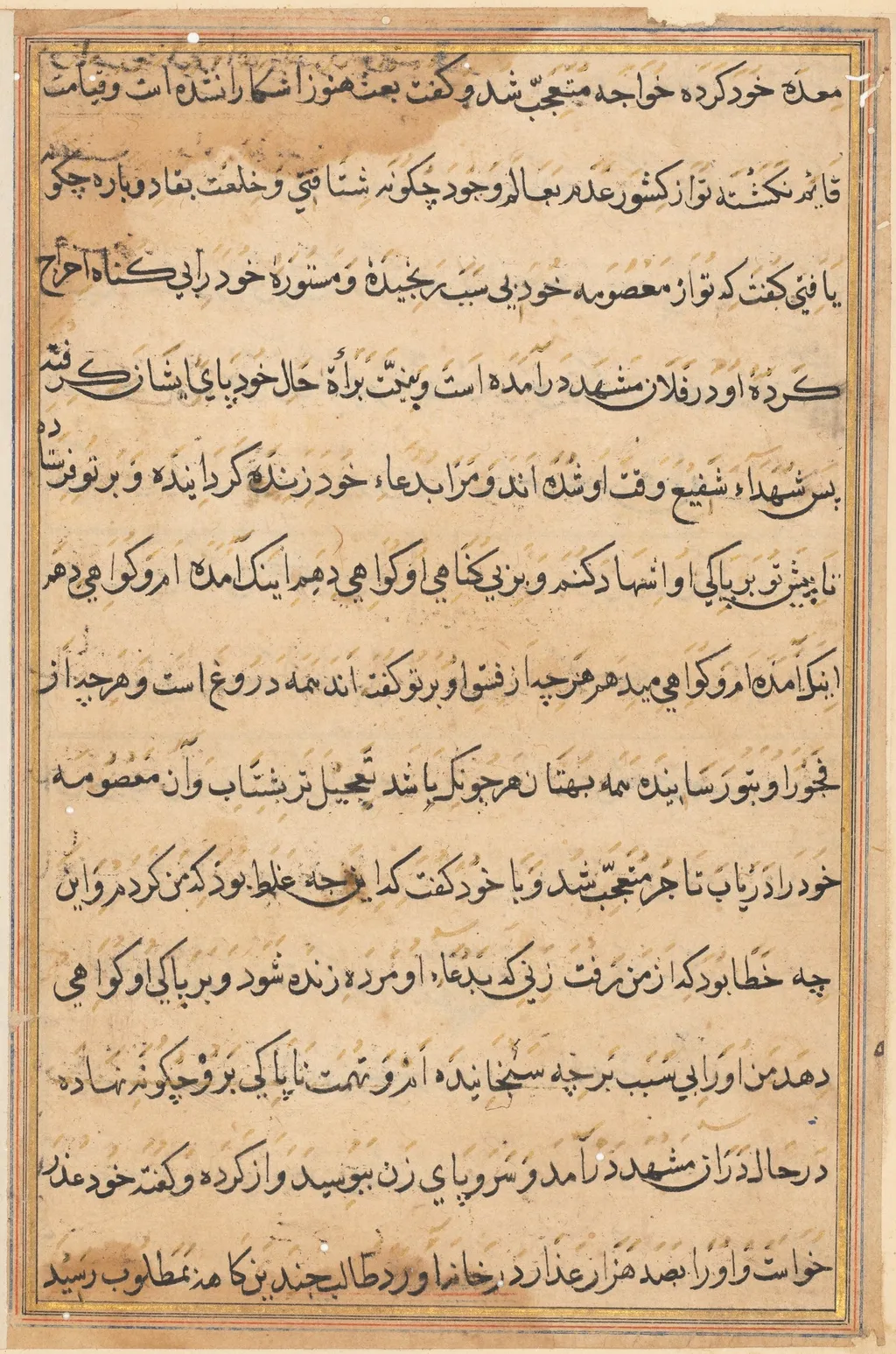
Page from Tales of a Parrot (Tuti-nama): text page is an unspecified painting. It dates from 1560 and is held in the collection of the Cleveland Museum of Art. The object is a single leaf from a manuscript titled Tuti‑nama (Tales of a Parrot).
About this work
Subject & Meaning
Its creation in the 16th century reflects the patronage of Mughal elites who commissioned Persian-language manuscripts for aesthetic and educational purposes.
The page from the Tuti-nama, painted around 1560 in the Mughal Empire, depicts a narrative scene involving a parrot within a literary context. As a text page from this illustrated manuscript, it combines figural storytelling with Persianate literary themes, reflecting the cultural milieu of the Mughal court. The work is part of the Cleveland Museum of Art's collection, underscoring its significance in the corpus of Indian subcontinent painting from this period.
The iconography centers on the parrot as a symbolic messenger in Sufi and Persian literary tradition, often representing wisdom or spiritual guidance. Within the Tuti-nama, such scenes convey moral and didactic lessons, embedding narrative meaning within miniature visual storytelling. This synthesis of text and image illustrates how the artwork functions as both literary artifact and artistic expression.
The painting’s meaning is rooted in its role within a broader manuscript tradition that merged poetic narrative with visual illustration, serving elite audiences in imperial courts. Its creation in the 16th century reflects the patronage of Mughal elites who commissioned Persian-language manuscripts for aesthetic and educational purposes.
History & Provenance
This text page from the Tales of a Parrot (Tuti-nama) was produced in the Mughal Empire around 1560, aligning with the manuscript’s documented creation period under Mughal patronage.
By the mid-20th century, the page entered the Cleveland Museum of Art’s collection as part of a larger acquisition, where it is currently held as accession number 1962.279.11.b.
The work is held by the Cleveland Museum of Art, Cleveland, Ohio, where it is accessioned as 1962.279.11.b.
The painting was created circa 1560 in the Mughal Empire and entered the museum’s collection in 1962 through an acquisition that included this page from the Tales of a Parrot manuscript.
Overview
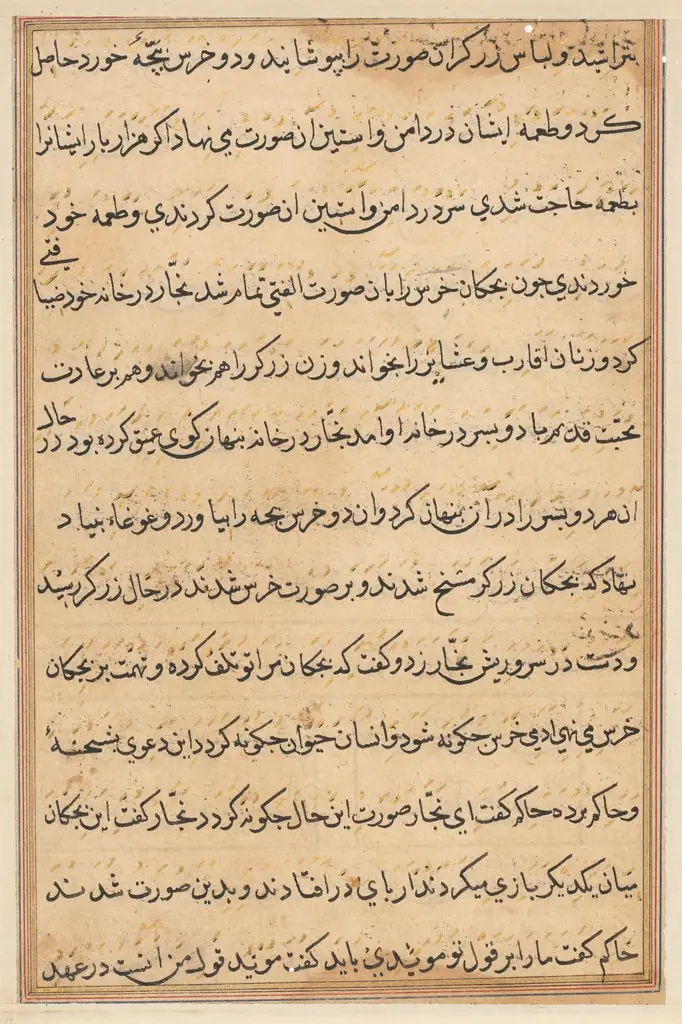
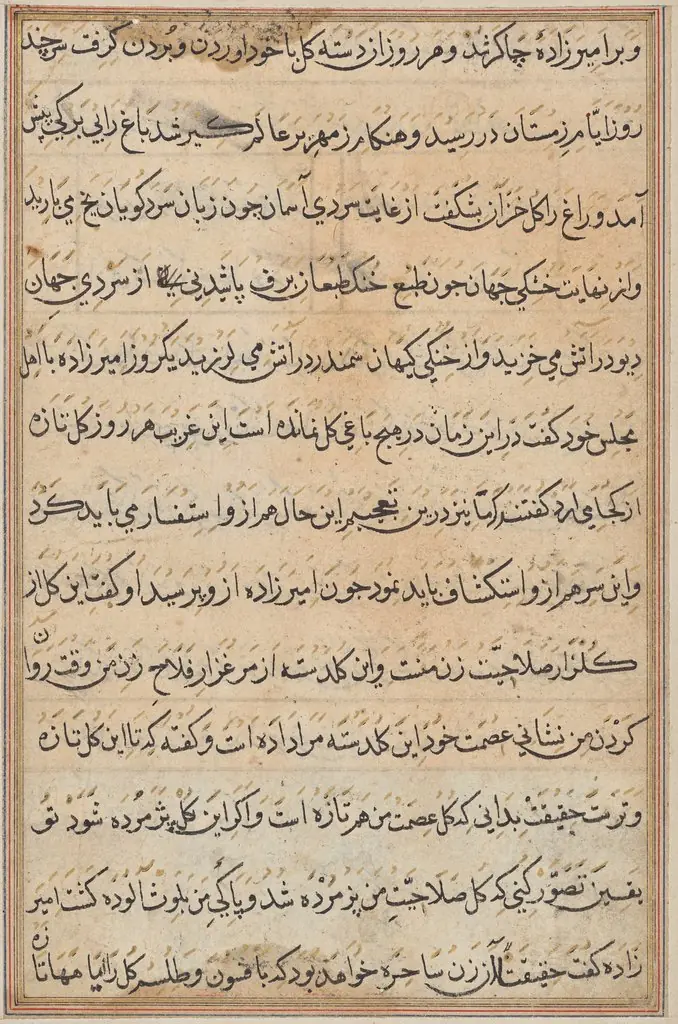
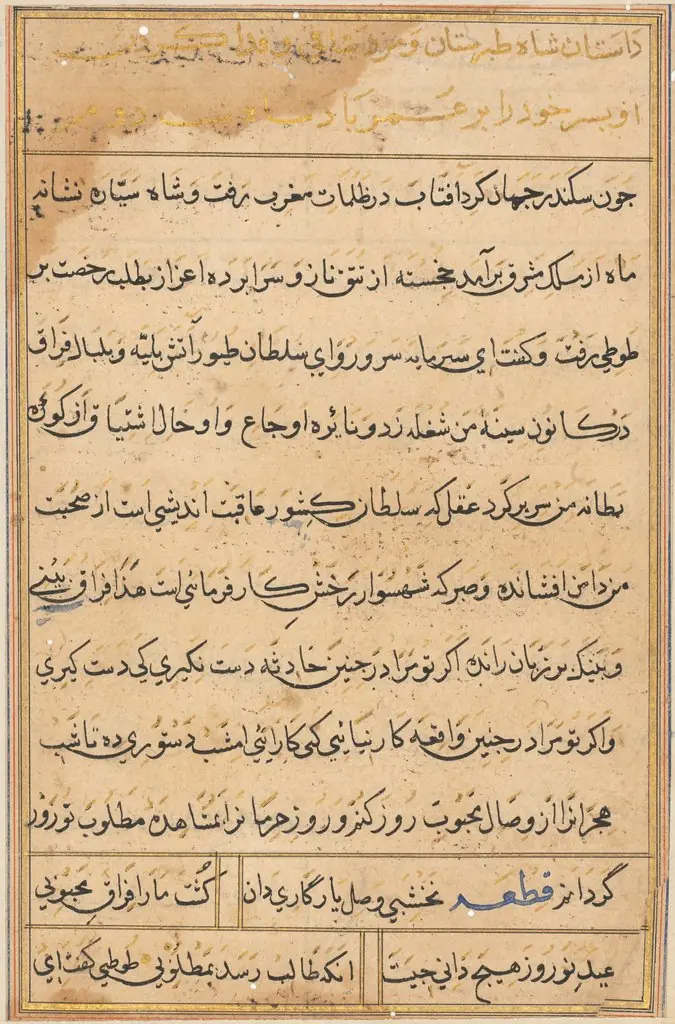
The object is a single leaf from a manuscript titled Tuti‑nama (Tales of a Parrot). The page consists of a warm‑toned paper surface, lightly flecked with gold particles, and is bordered by a thin blue strip. Across the interior, a continuous line of black script runs in orderly horizontal rows, with occasional variations in ink density indicating careful hand‑writing.
Technique & Style
The manuscript page demonstrates classic Persian calligraphic practice, employing a uniform, flowing hand that balances legibility with aesthetic grace. The gold specks embedded in the paper reflect a luxurious material choice, while the delicate blue border provides a subtle visual frame, enhancing the overall elegance without overwhelming the script.
Artist & collection

- Page from Tales of a Parrot (Tuti-nama): text page
 Page from Tales of a Parrot (Tuti-nama): text page
 Page from Tales of a Parrot (Tuti-nama): text page
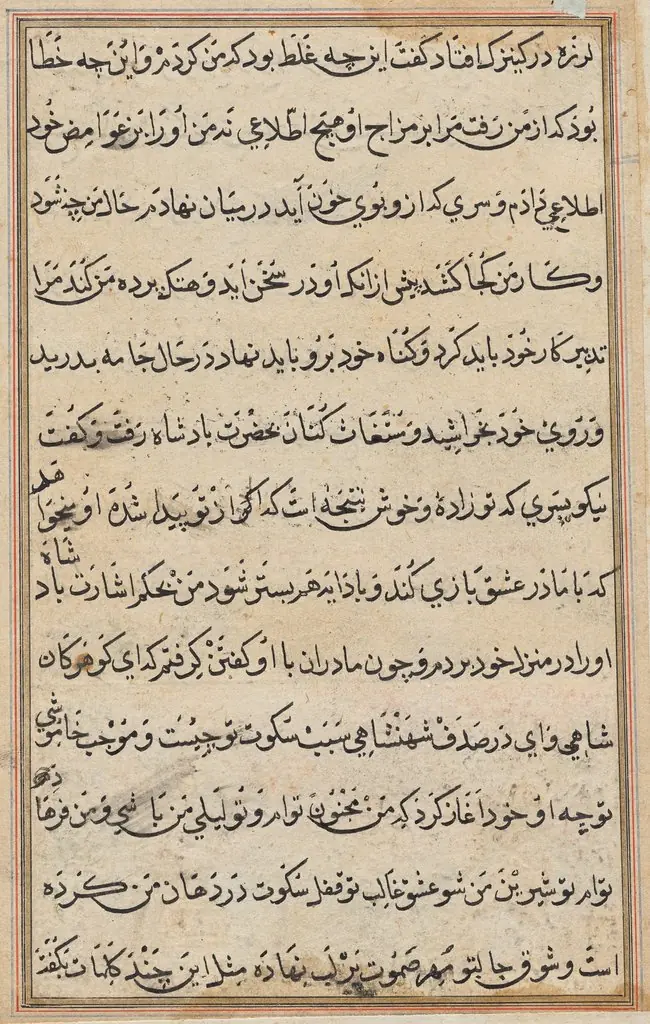 Page from Tales of a Parrot (Tuti-nama): text page
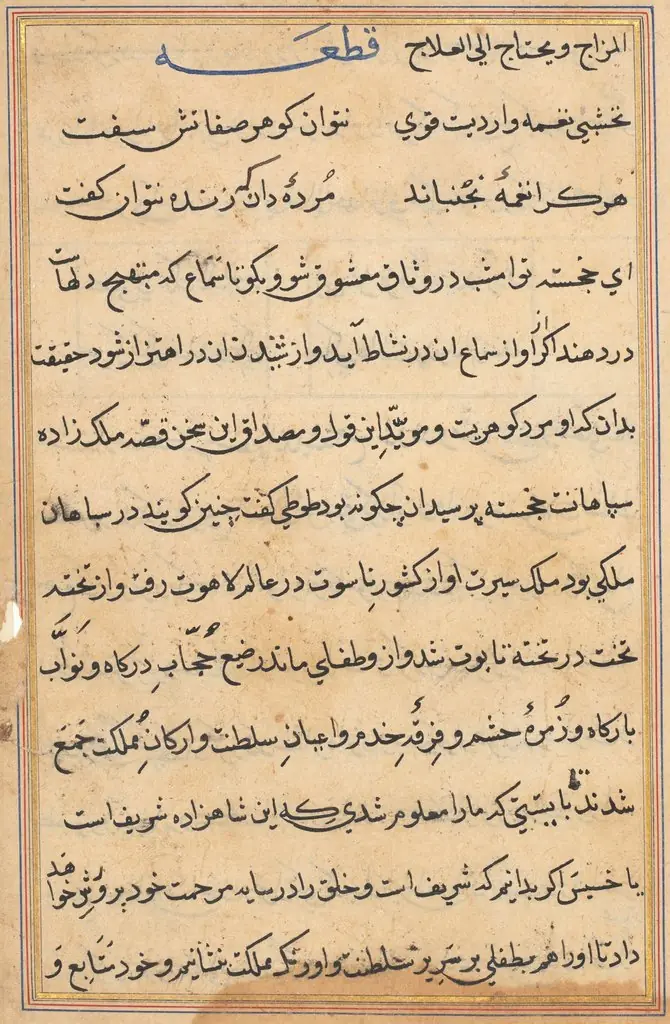 Page from Tales of a Parrot (Tuti-nama): text page
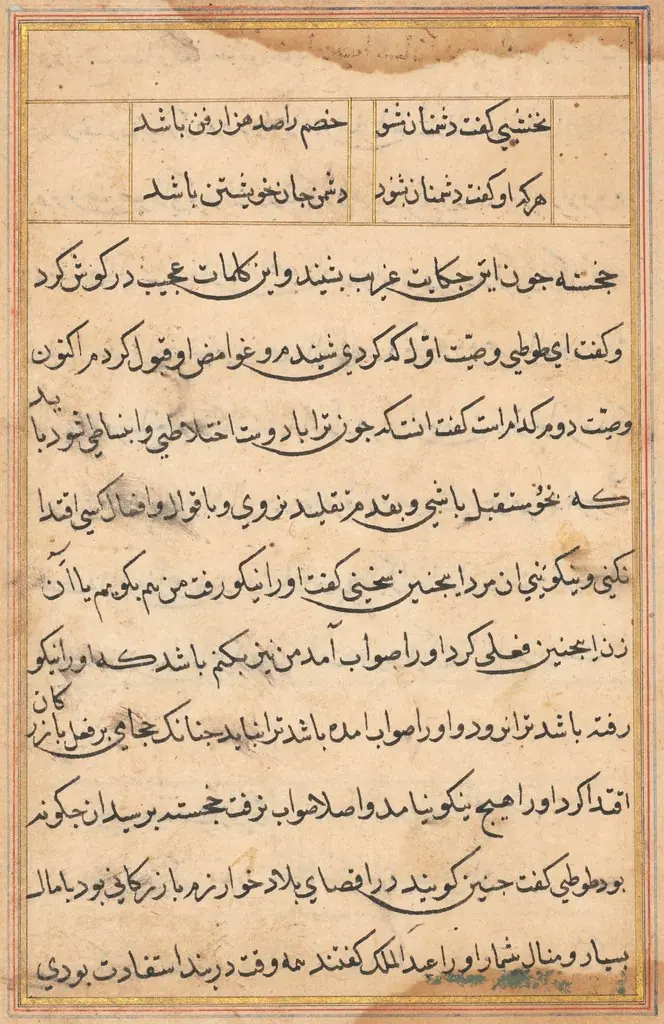 Page from Tales of a Parrot (Tuti-nama): text page
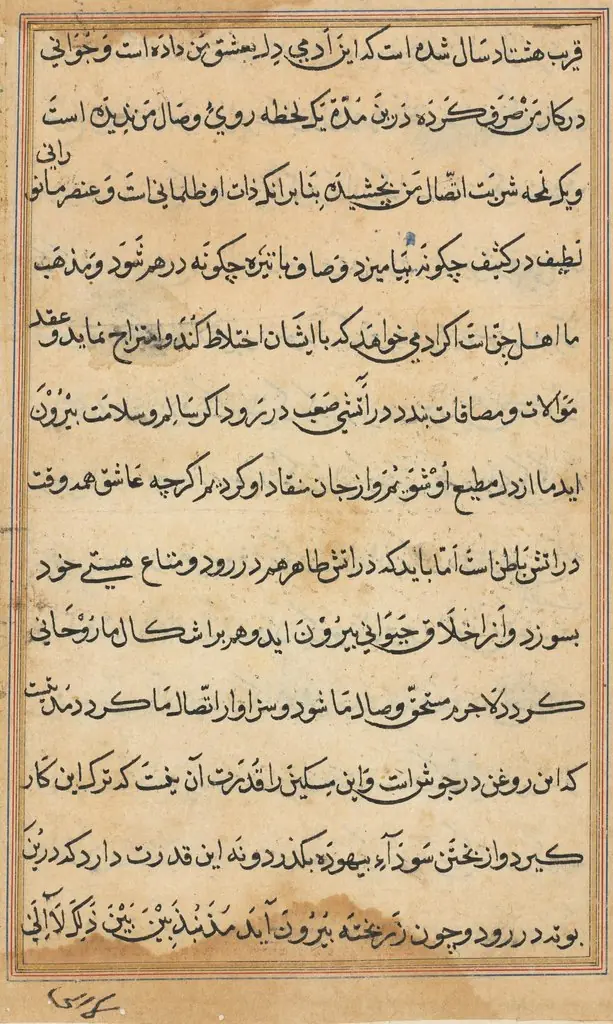 Page from Tales of a Parrot (Tuti-nama): text page
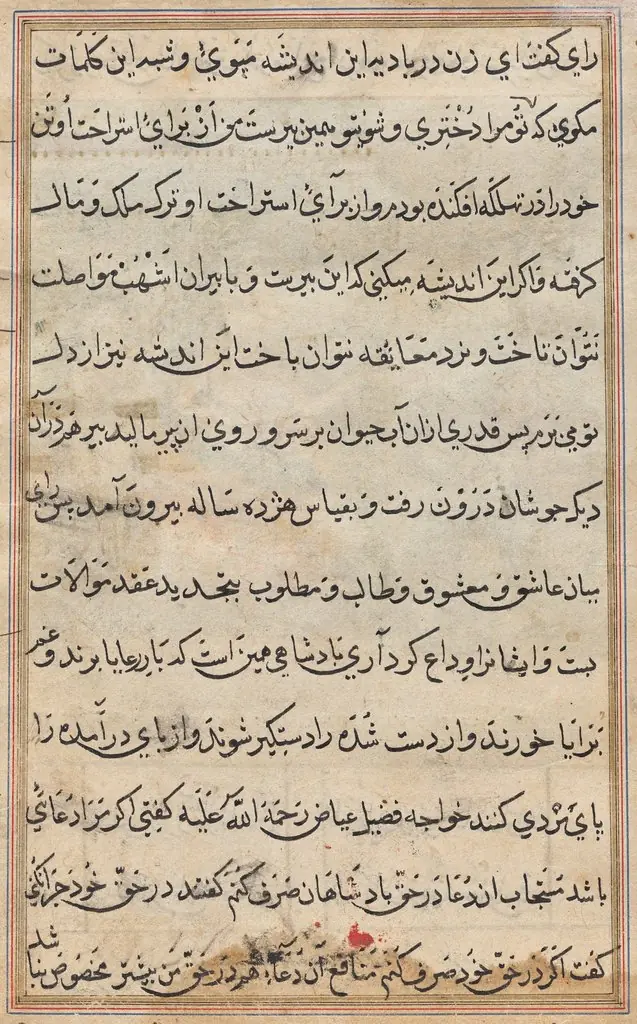 Page from Tales of a Parrot (Tuti-nama): text page
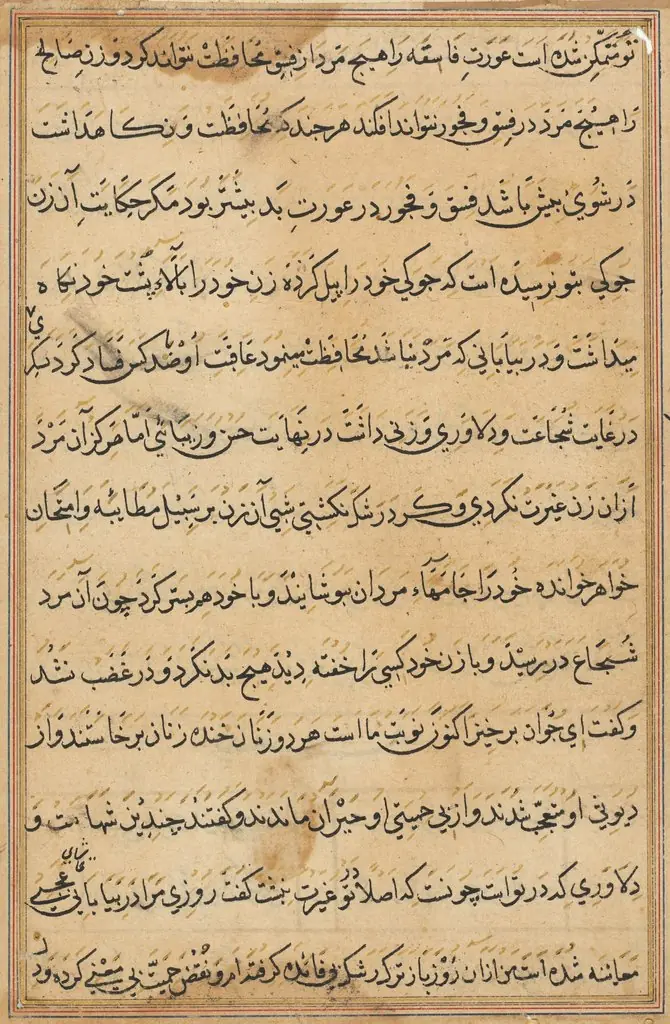 Page from Tales of a Parrot (Tuti-nama): text page
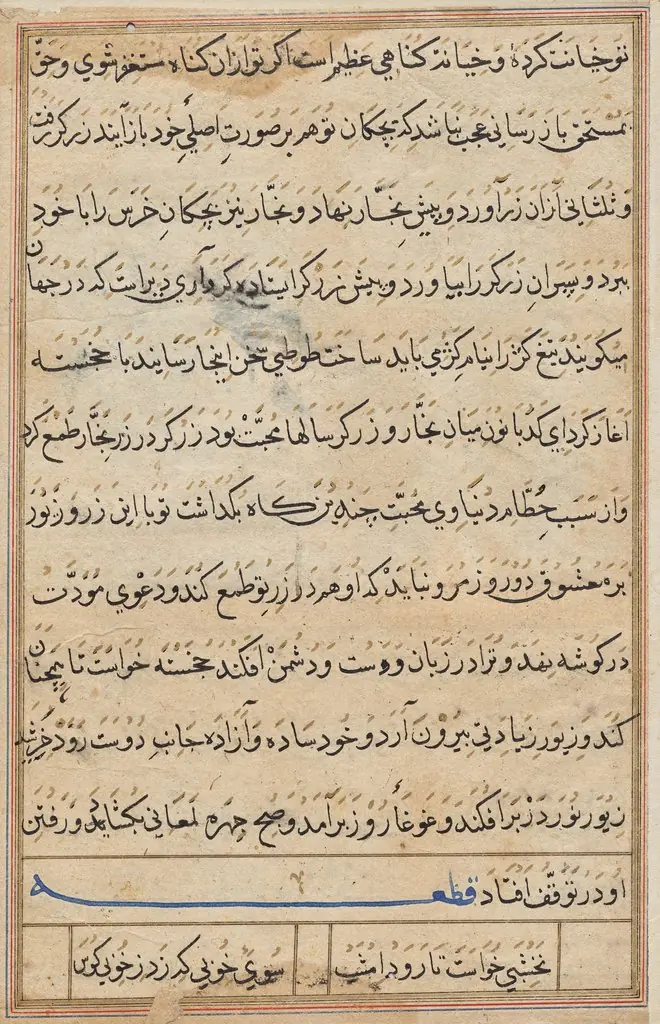 Page from Tales of a Parrot (Tuti-nama): text page