Artwork
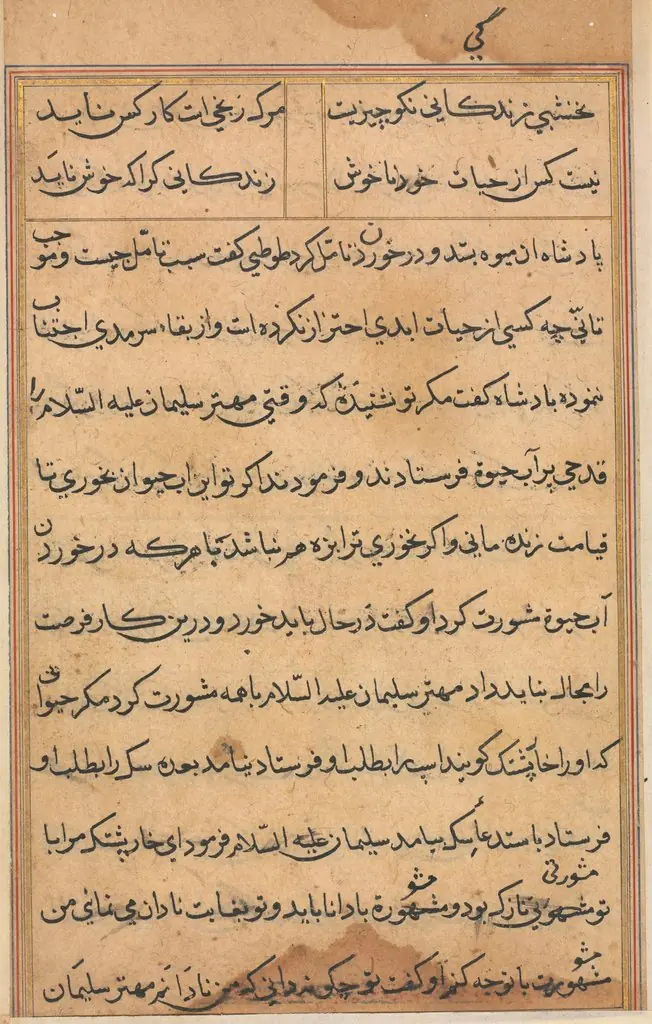
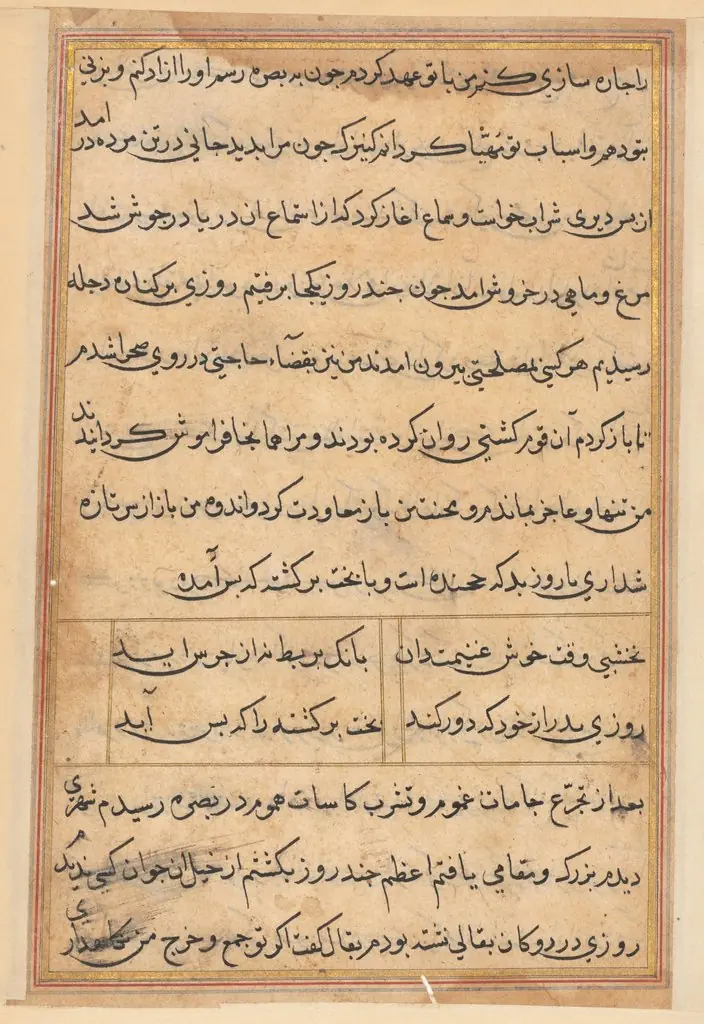
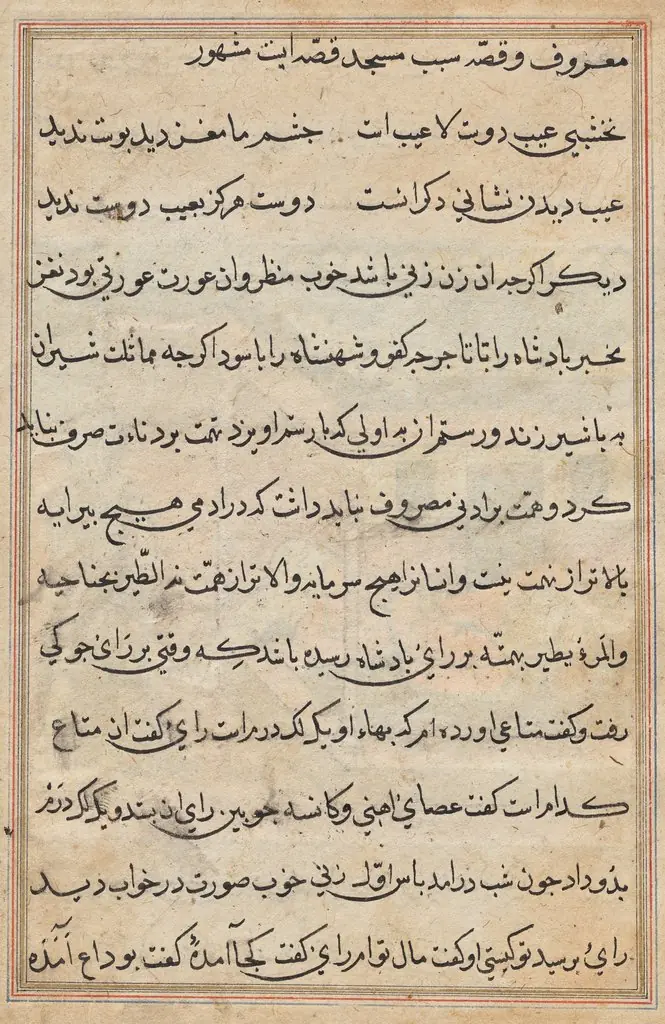
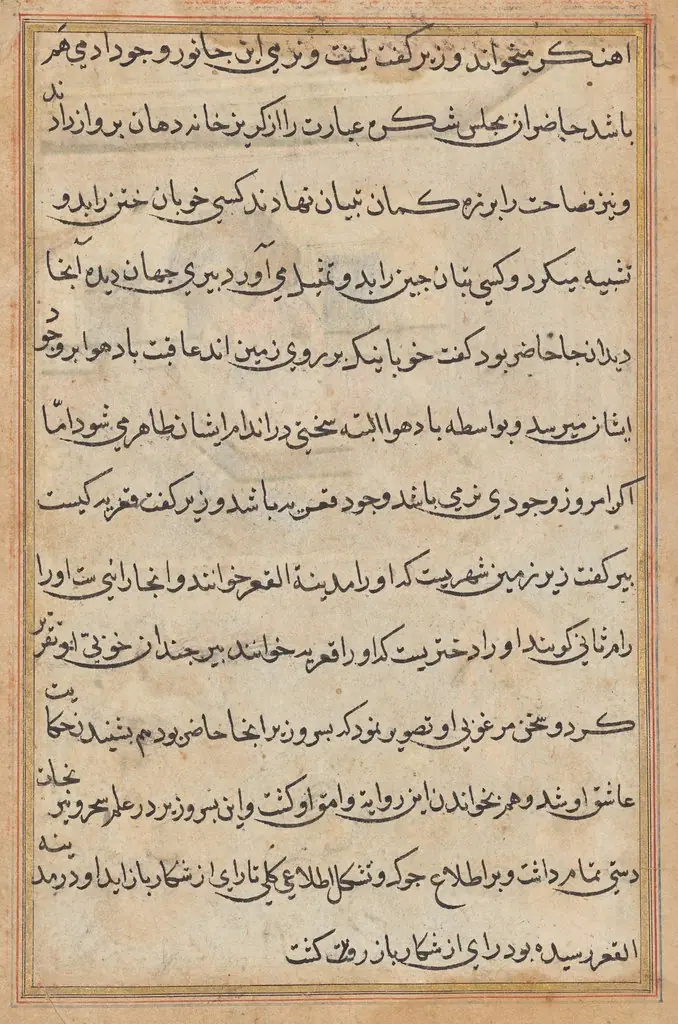
Page from Tales of a Parrot (Tuti-nama): text page
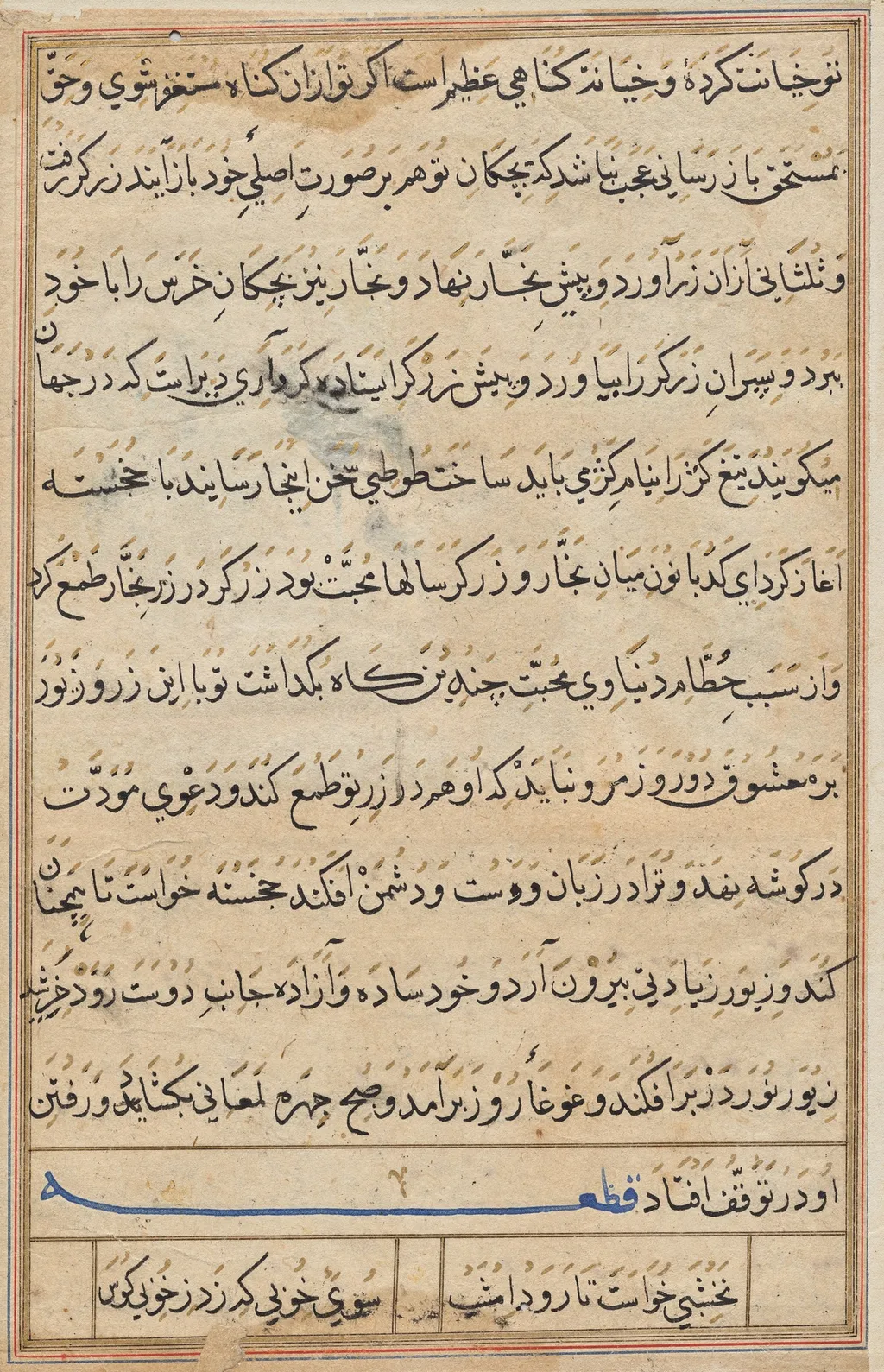
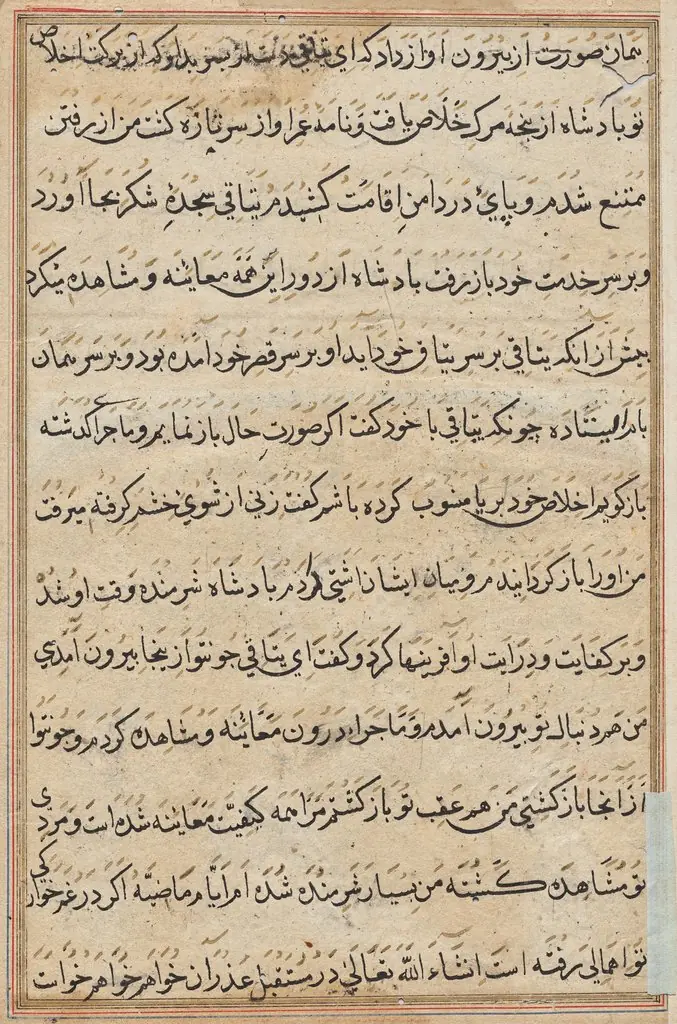
Page from Tales of a Parrot (Tuti-nama): text page is an unspecified painting. It dates from 1560 and is held in the collection of the Cleveland Museum of Art. The work is a painted page from the manuscript known as Tales of a Parrot (Tuti‑nama).
About this work
Technique & Style
The page is created as a miniature painting on paper, employing the tempera and ink technique typical of Mughal manuscript production in the mid-16th century.
The page is created as a miniature painting on paper, employing the tempera and ink technique typical of Mughal manuscript production in the mid-16th century. The support is paper, handled as a codex leaf, and the composition features delicate line work and flat, symbolic color fields that convey narrative content rather than naturalistic space. The work shows the characteristic Mughal emphasis on intricate patterning and stylized figures, reflecting the Persianate court aesthetic that shaped Indian painting during this period.
History & Provenance
This text page from the Tales of a Parrot (Tuti-nama) was created in 1560 within the Mughal Empire. The work is attributed to an unknown artist and is classified as a painting. It is currently held in the collection of the Cleveland Museum of Art, where it entered the museum's holdings in 1962 under the accession number 1962.279.23.b. The specific commissioning details and the full chain of ownership prior to its acquisition by the museum are not detailed in the available records.
The text page from the Tales of a Parrot (Tuti-nama), dated to 1560, is held in the collection of the Cleveland Museum of Art. The work is cataloged under the accession number 1962.279.23.b. Created within the Mughal Empire by an unknown artist, this painting represents a specific manuscript leaf from the mid-sixteenth century.
Current public records and available source data do not list specific exhibitions where this particular page has been displayed. The provenance information provided confirms its institutional location and inventory details without citing prior loan history or exhibition dates.
Legacy
The miniature exemplifies Mughal narrative painting conventions, influencing later Persianate manuscript traditions through its compositional clarity and naturalistic detail. Its presence in the Cleveland Museum of Art collection preserves a rare surviving text page from the 1560 Tuti-nama, cited in scholarship for its role in shaping illustrated storytelling in Indo-Persian art.
Overview
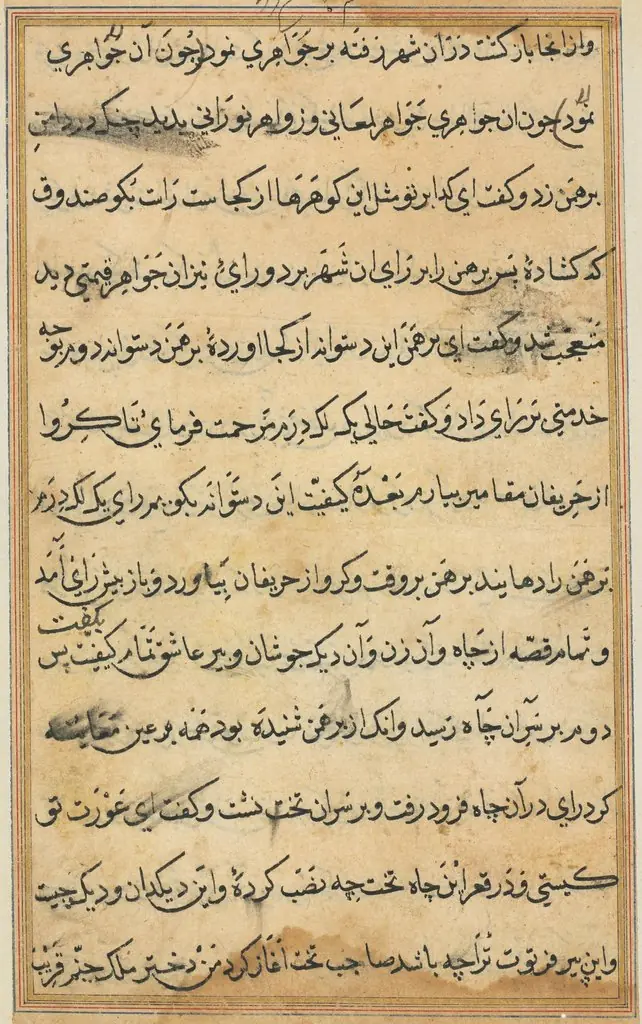
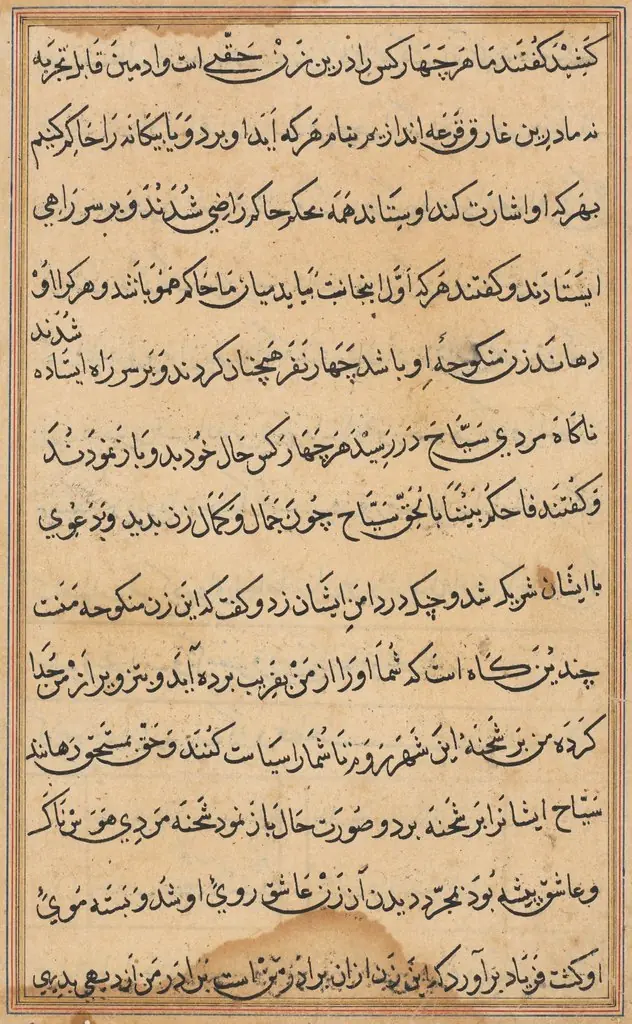
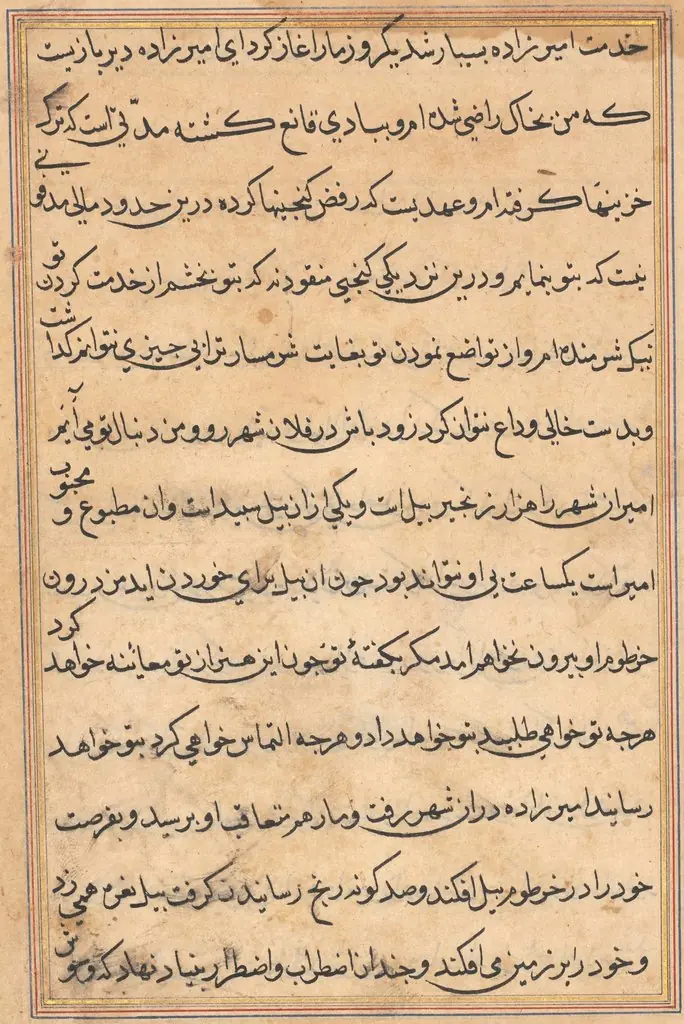
The work is a painted page from the manuscript known as Tales of a Parrot (Tuti‑nama). It presents a single folio covered in handwritten text rendered in black ink upon a light‑brown surface. The page is framed by a decorative border that combines a thin red line with a broader gold strip, and selected words are highlighted in gold pigment.
Subject & Meaning
The script appears to convey a narrative or poetic composition, likely drawn from the larger collection of stories in the Tuti‑nama. The inclusion of ornamental motifs and occasional illustrations suggests an intention to enhance the literary content with visual enchantment, inviting the viewer into a world of wonder.
Context
Manuscript pages such as this were often produced for elite patrons, combining literary and artistic skills to produce objects of both intellectual and aesthetic value. The decorative border and gold accents reflect a cultural emphasis on lavish presentation of texts.
Artist & collection

- Page from Tales of a Parrot (Tuti-nama): text page
 Page from Tales of a Parrot (Tuti-nama): text page
 Page from Tales of a Parrot (Tuti-nama): text page
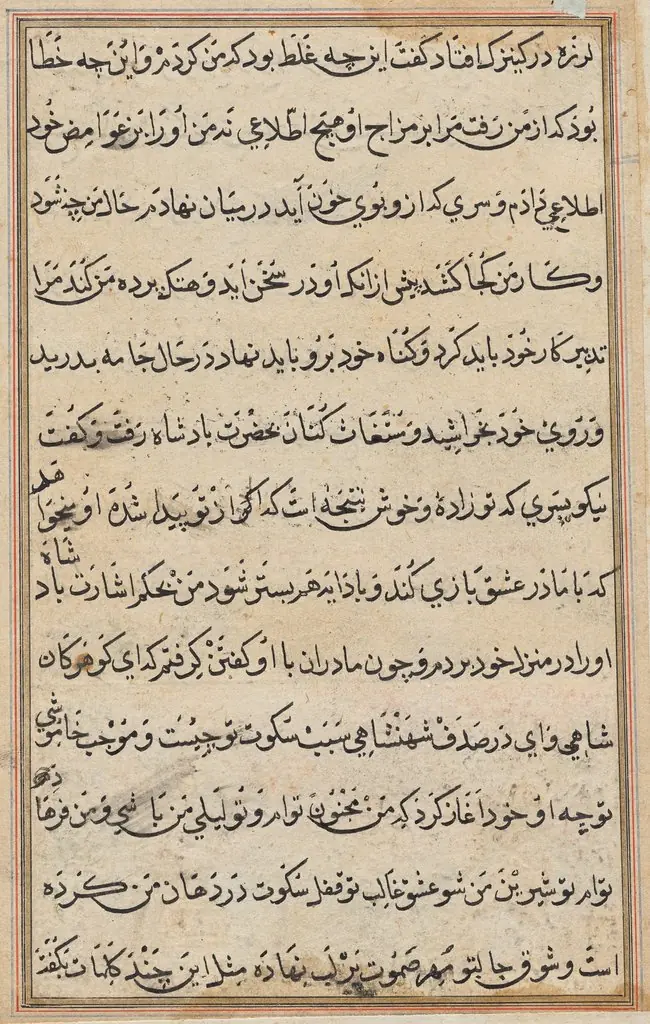 Page from Tales of a Parrot (Tuti-nama): text page
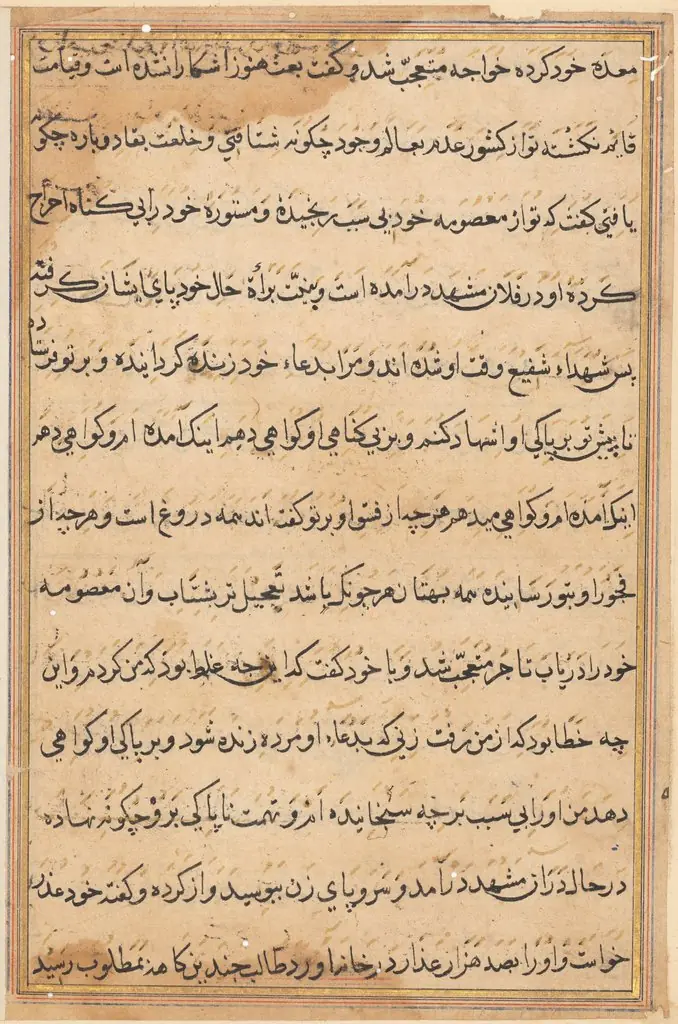 Page from Tales of a Parrot (Tuti-nama): text page
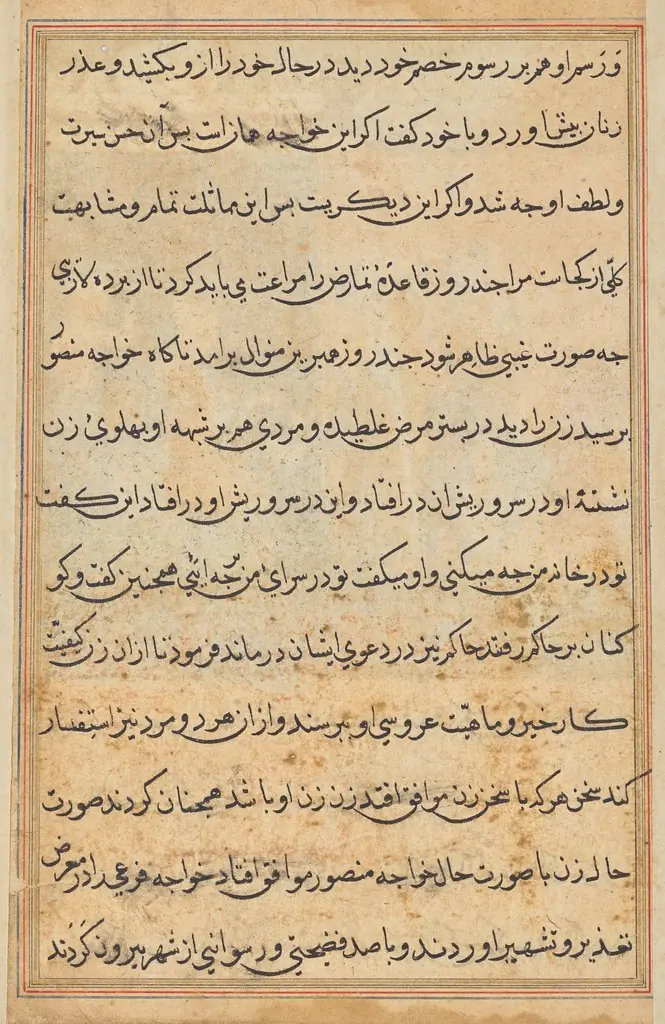 Page from Tales of a Parrot (Tuti-nama): text page
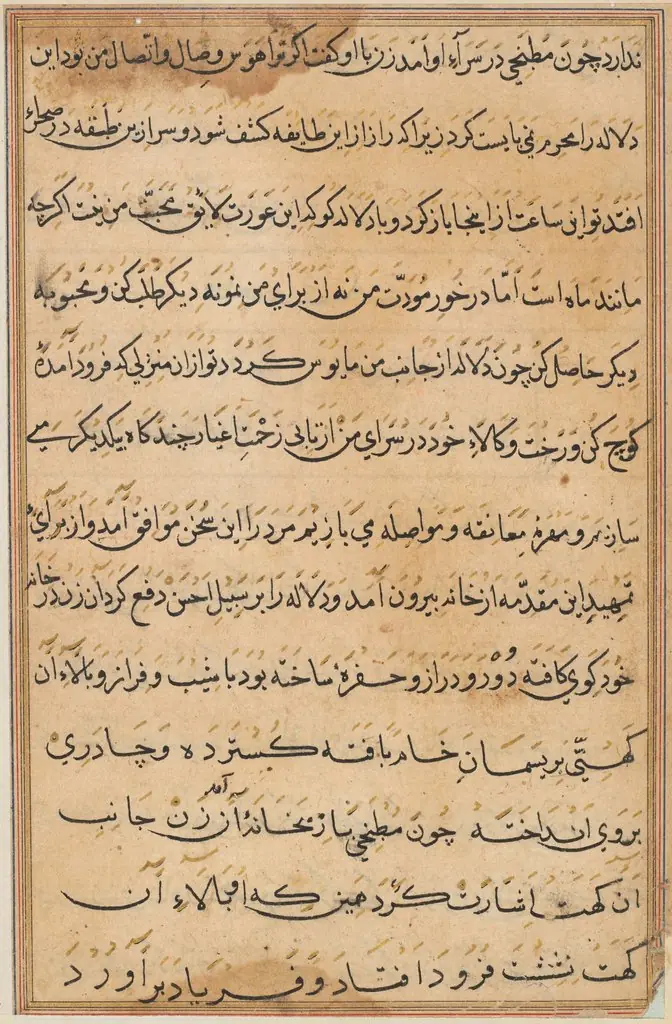 Page from Tales of a Parrot (Tuti-nama): text page
 Page from Tales of a Parrot (Tuti-nama): text page