Artwork
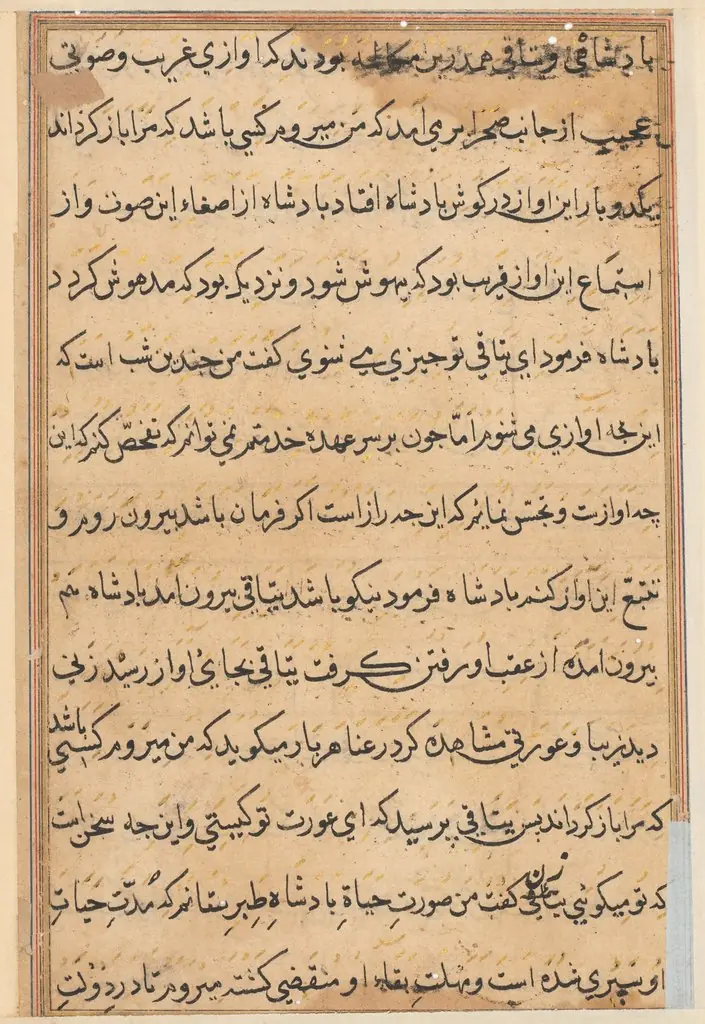
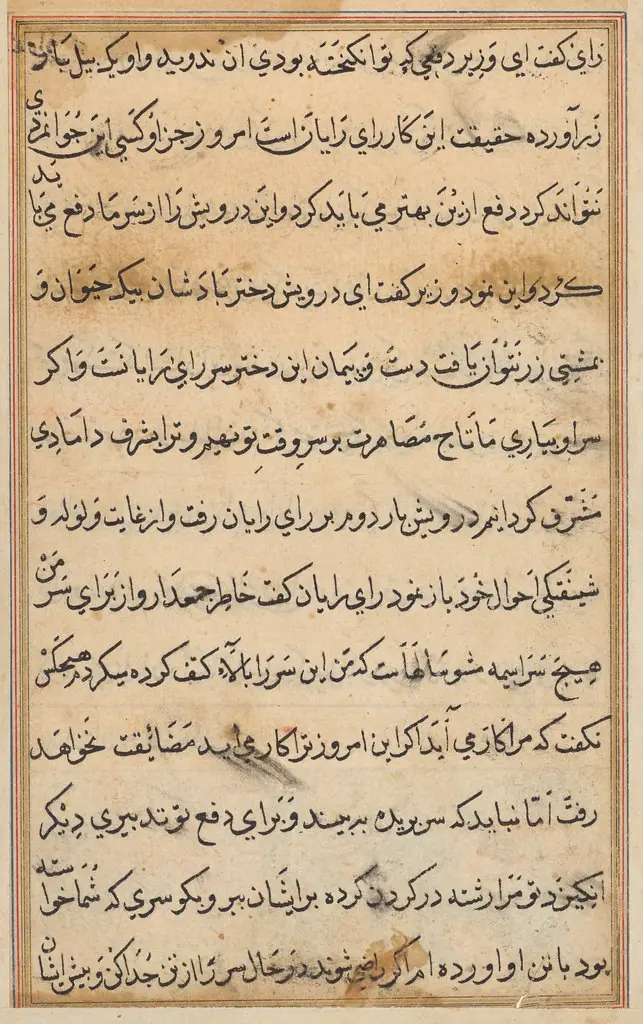
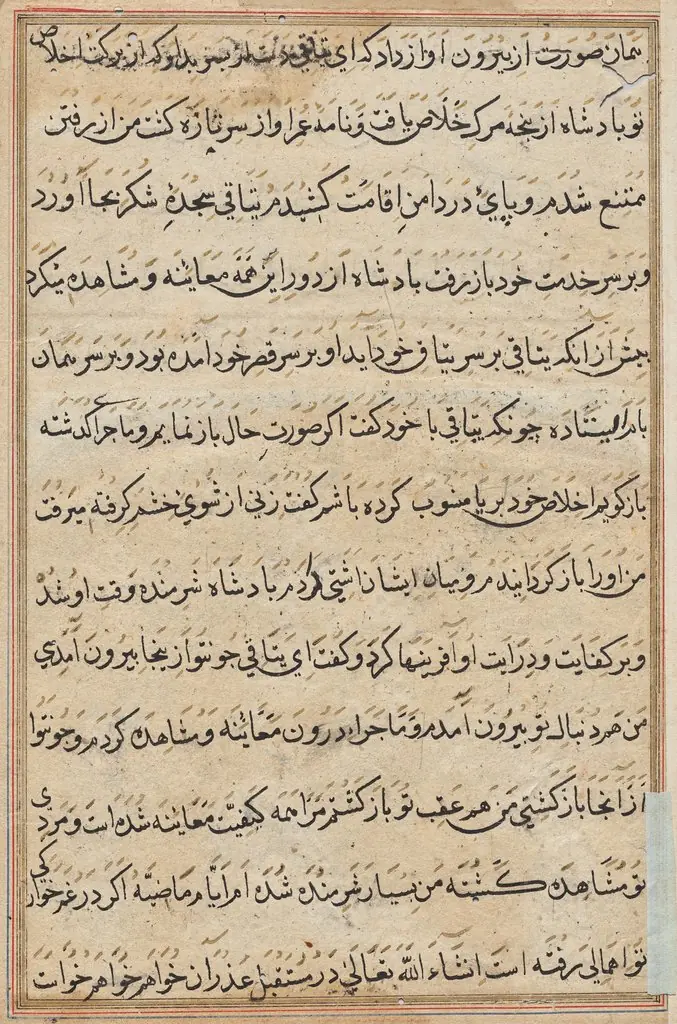
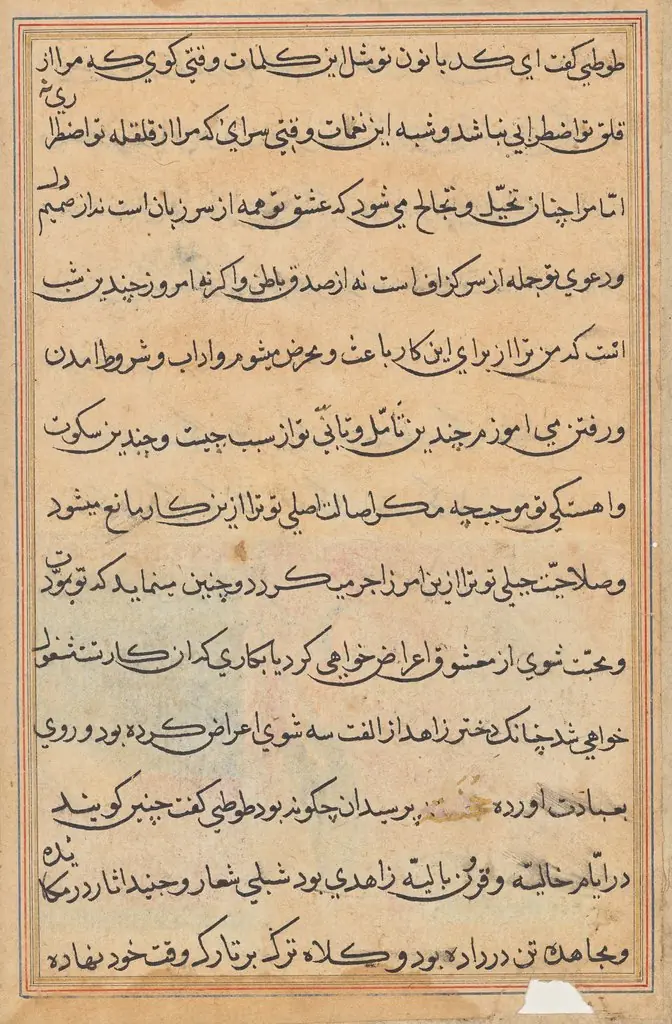
Page from Tales of a Parrot (Tuti-nama): text page
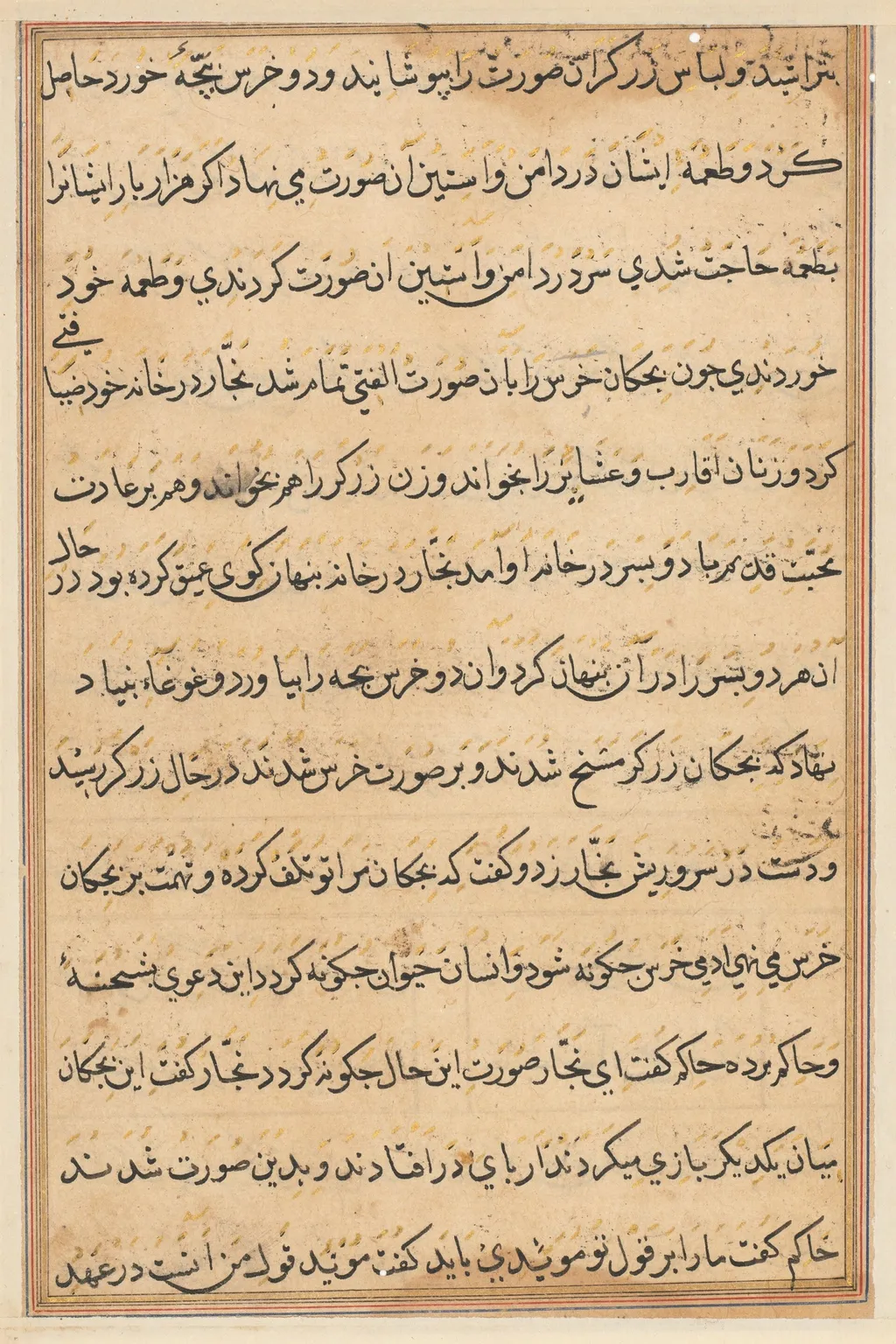
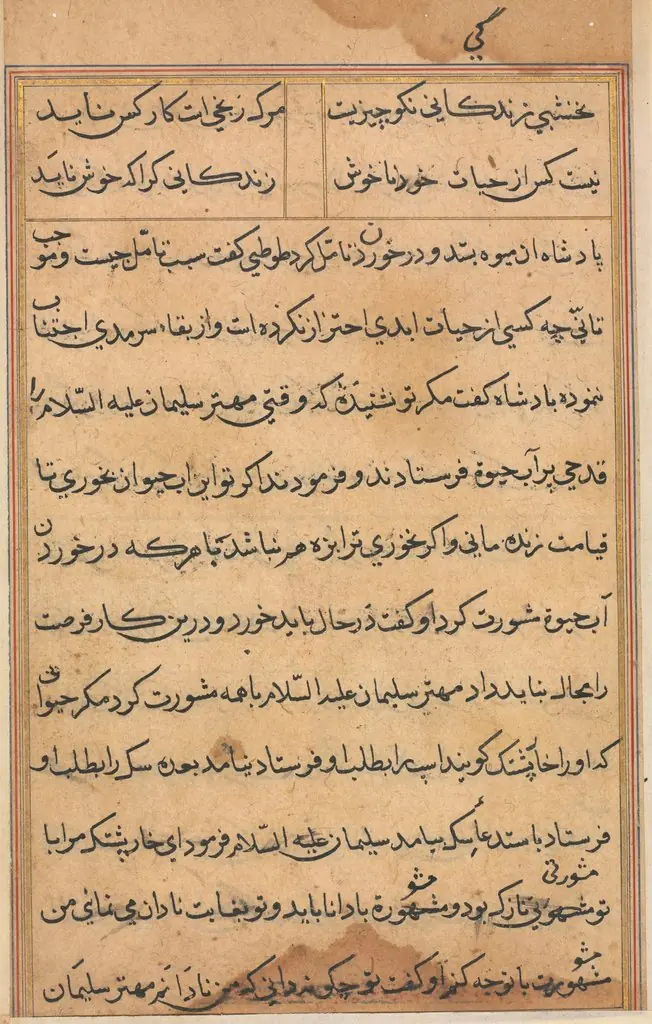
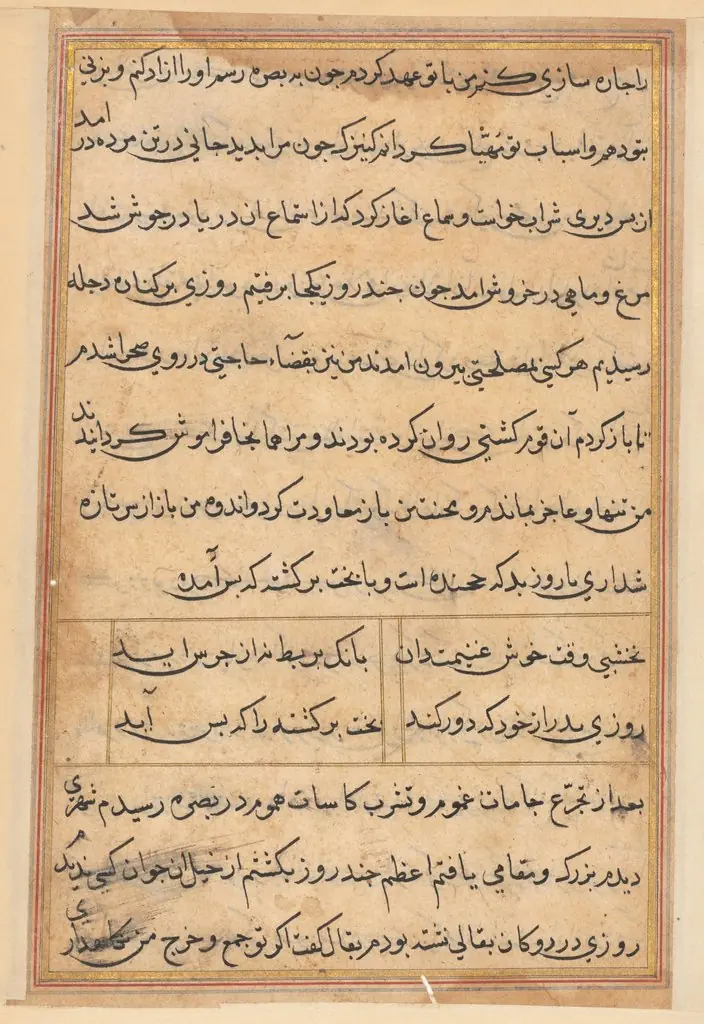
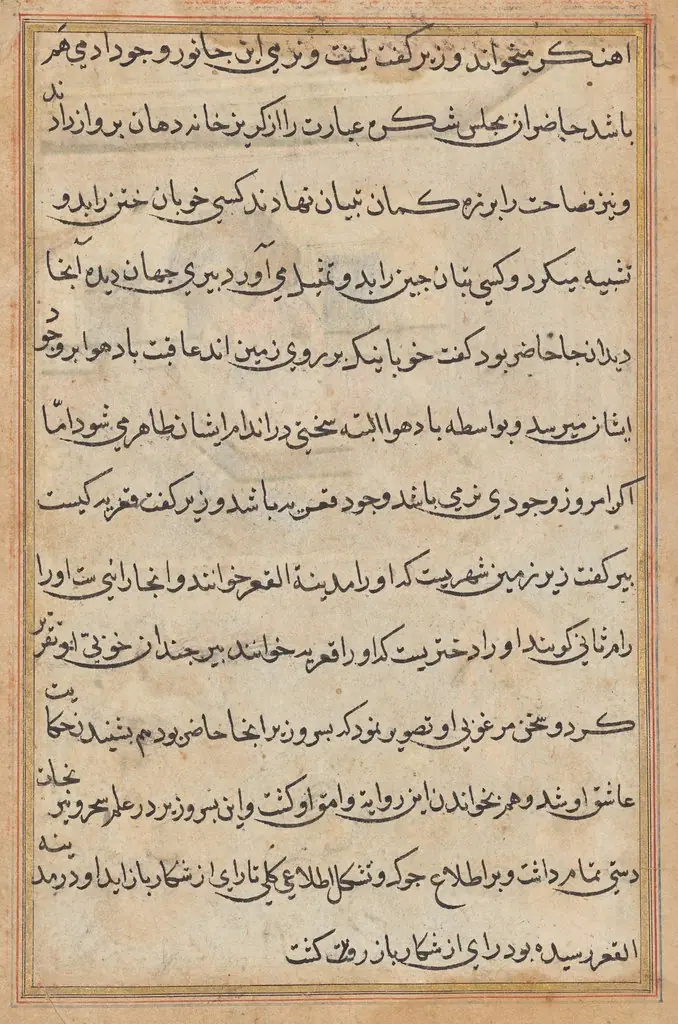
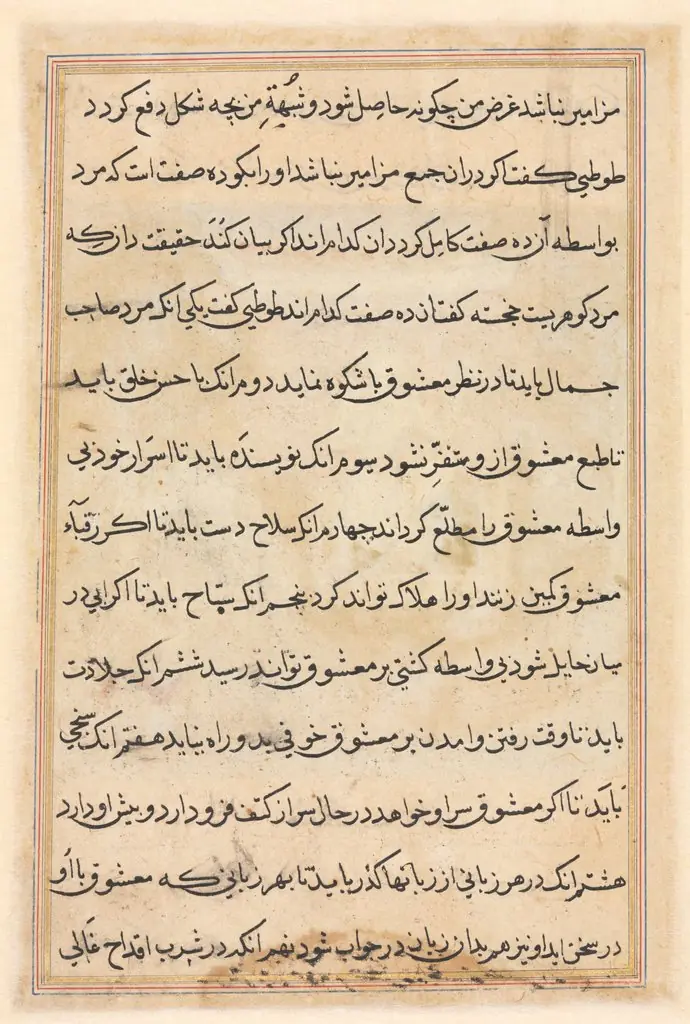
Page from Tales of a Parrot (Tuti-nama): text page is an unspecified painting. It dates from 1560 and is held in the collection of the Cleveland Museum of Art. This object is a single leaf from the illustrated manuscript known as Tales of a Parrot (Tuti‑nama).
About this work
History & Provenance
It currently forms part of the collection at the Cleveland Museum of Art, where it is cataloged under the accession number 1962.
This text page from the Tales of a Parrot (Tuti-nama) was created in 1560 within the Mughal Empire. The work is attributed to an unknown artist and is classified as a painting. It currently forms part of the collection at the Cleveland Museum of Art, where it is cataloged under the accession number 1962.279.22.a.
The specific circumstances regarding the original commission or the detailed ownership chain prior to its acquisition by the museum are not detailed in the available records.
The text page from the Tuti-nama originates from a 1560 manuscript produced in the Mughal Empire. It is cataloged in the Cleveland Museum of Art collection with accession number 1962.279.22.a. The work is part of the museum's holdings and has been exhibited in shows focused on Mughal artistic production.
Overview
This object is a single leaf from the illustrated manuscript known as Tales of a Parrot (Tuti‑nama). The page measures a modest size, its surface a warm, off‑white paper edged with a subtle golden border. The entire surface is occupied by dense black script arranged in tight, orderly rows, suggesting its function as a textual page rather than a decorative illustration.
Subject & Meaning
The text is written in a traditional script that reads from right to left, indicating its cultural origin in a region where such directionality is customary. While the exact content of the passage is not specified, the title of the manuscript implies a narrative or poetic work centered on a parrot, a motif often employed in folklore to convey moral or didactic themes.
Technique & Style
The calligraphy appears meticulously hand‑drawn, each character formed with precise, uniform strokes. The paper’s background is lightly speckled with tiny gold or brown flecks, providing a faint texture that does not compete with the legibility of the script. The golden border frames the page, adding a modest decorative element typical of manuscript production.
Context
Manuscript pages such as this one were produced before the widespread use of printing, requiring skilled scribes to copy texts by hand. The right‑to‑left orientation places the work within a broader tradition of Middle Eastern, South Asian, or Central Asian literary practices, where such scripts were common for religious, poetic, and narrative works.
Artist & collection

- Page from Tales of a Parrot (Tuti-nama): text page
 Page from Tales of a Parrot (Tuti-nama): text page
 Page from Tales of a Parrot (Tuti-nama): text page
 Page from Tales of a Parrot (Tuti-nama): text page
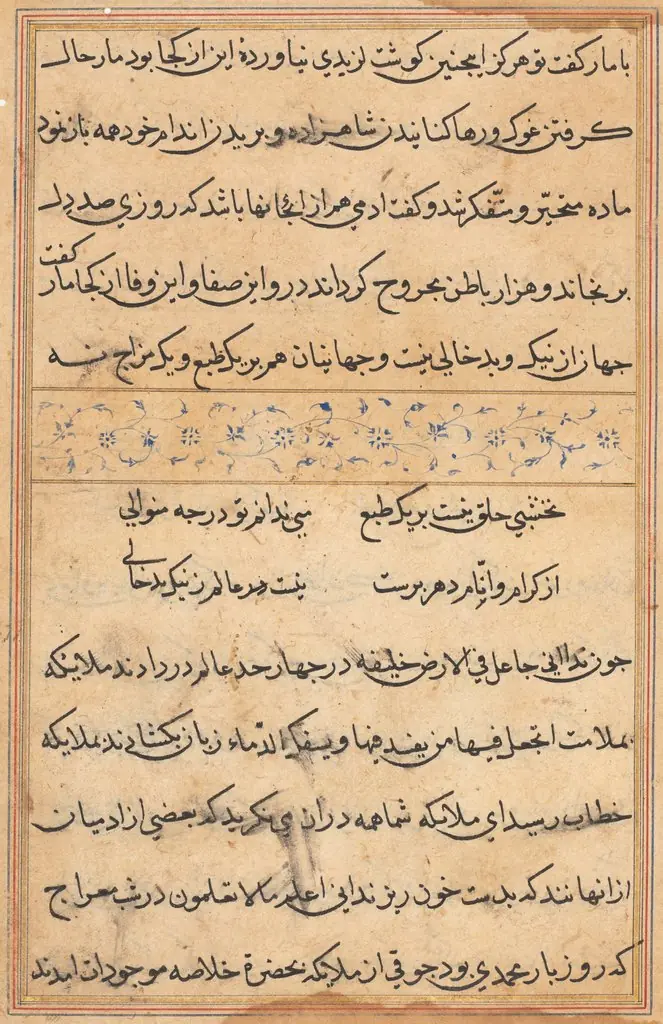 Page from Tales of a Parrot (Tuti-nama): text page
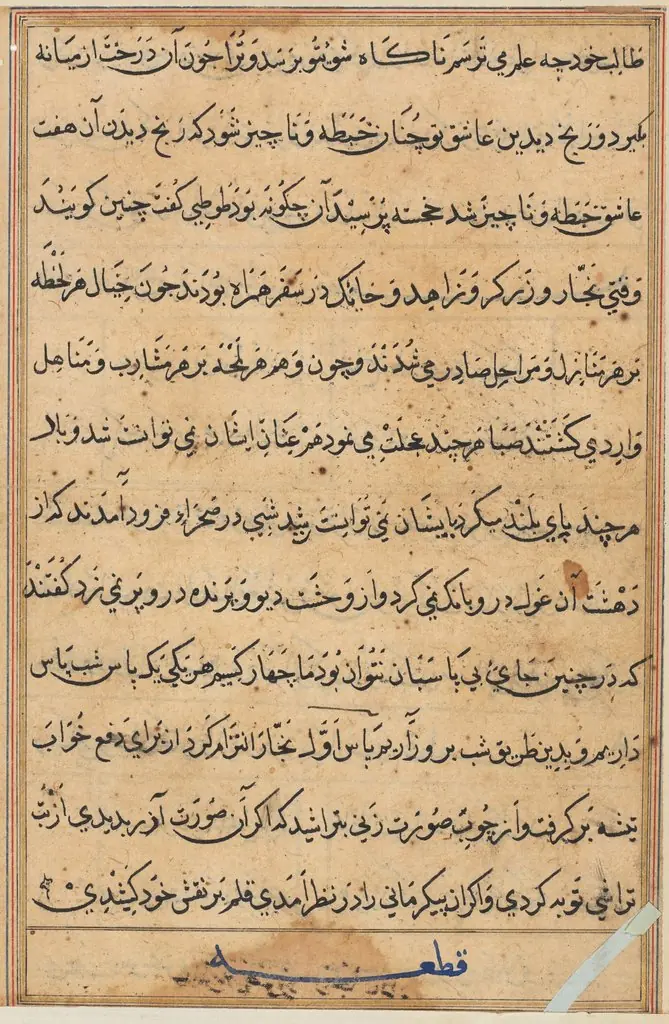 Page from Tales of a Parrot (Tuti-nama): text page
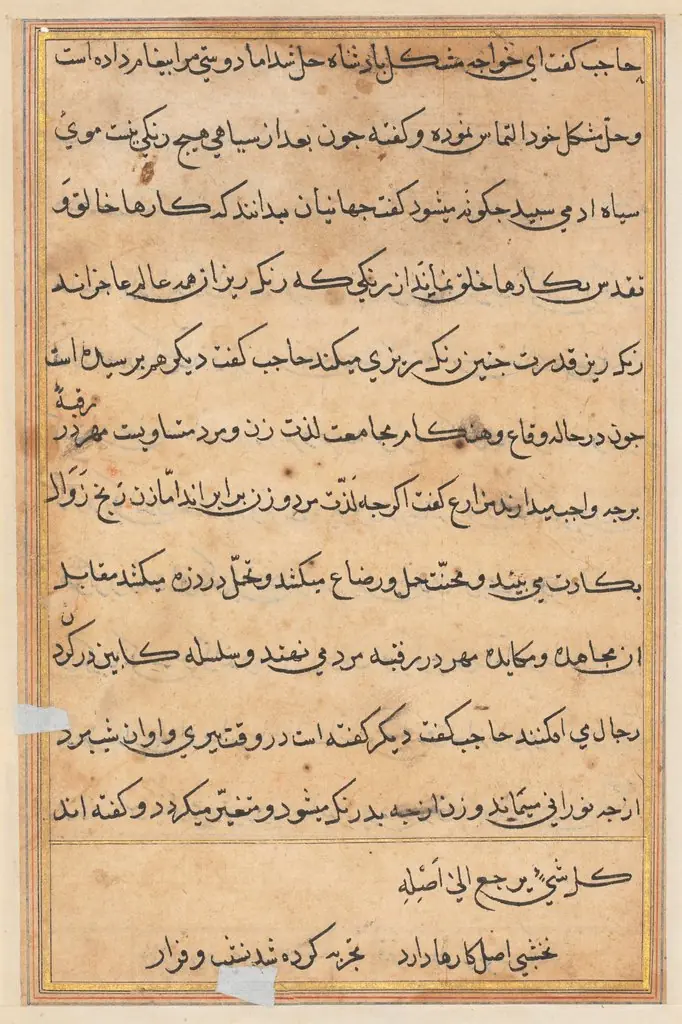 Page from Tales of a Parrot (Tuti-nama): text page
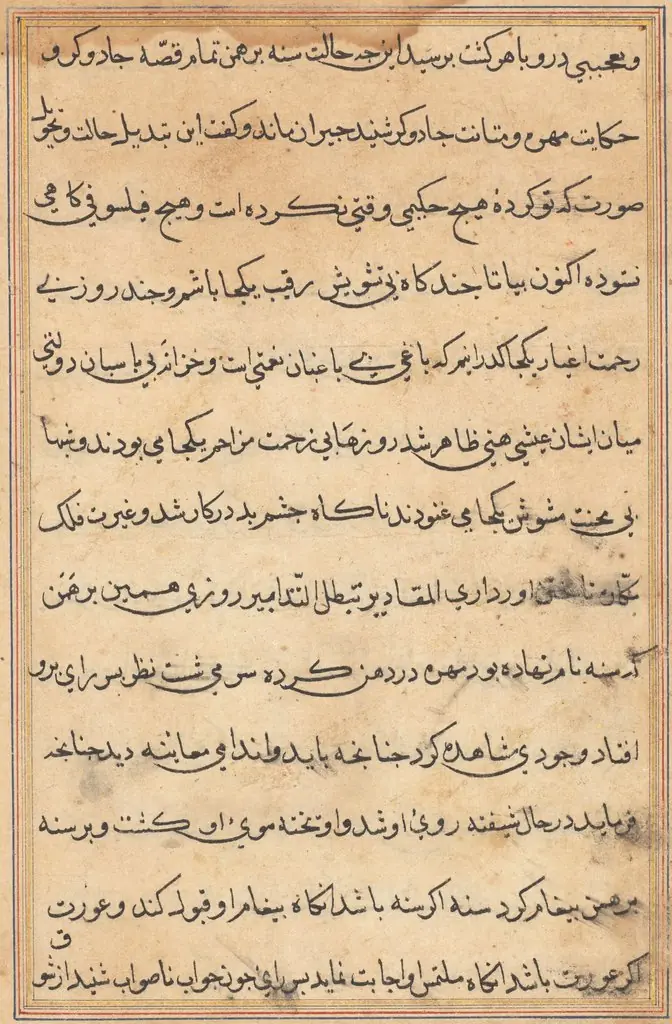 Page from Tales of a Parrot (Tuti-nama): text page
 Page from Tales of a Parrot (Tuti-nama): text page