Artwork
Page from Tales of a Parrot (Tuti-nama): text page
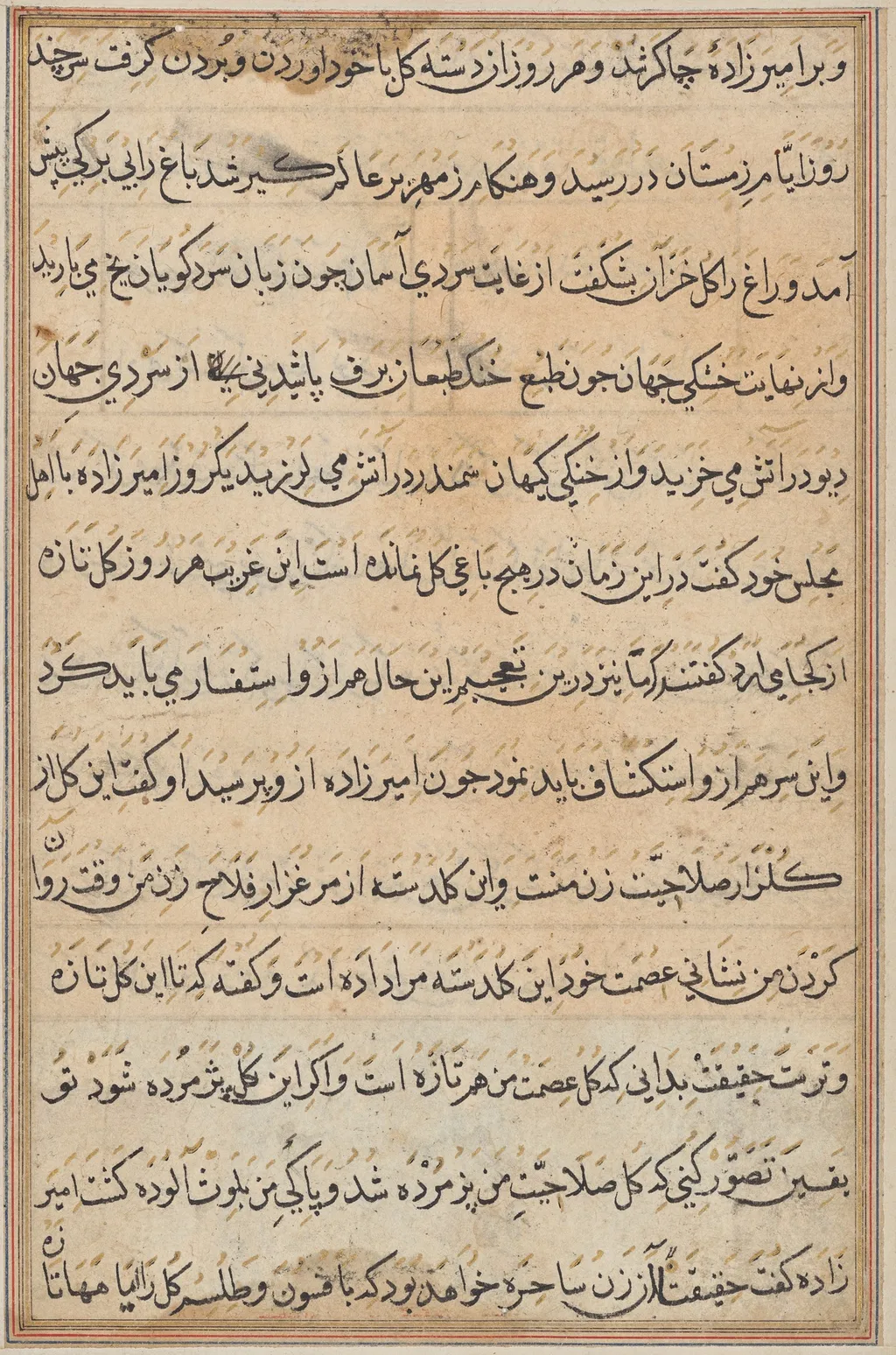
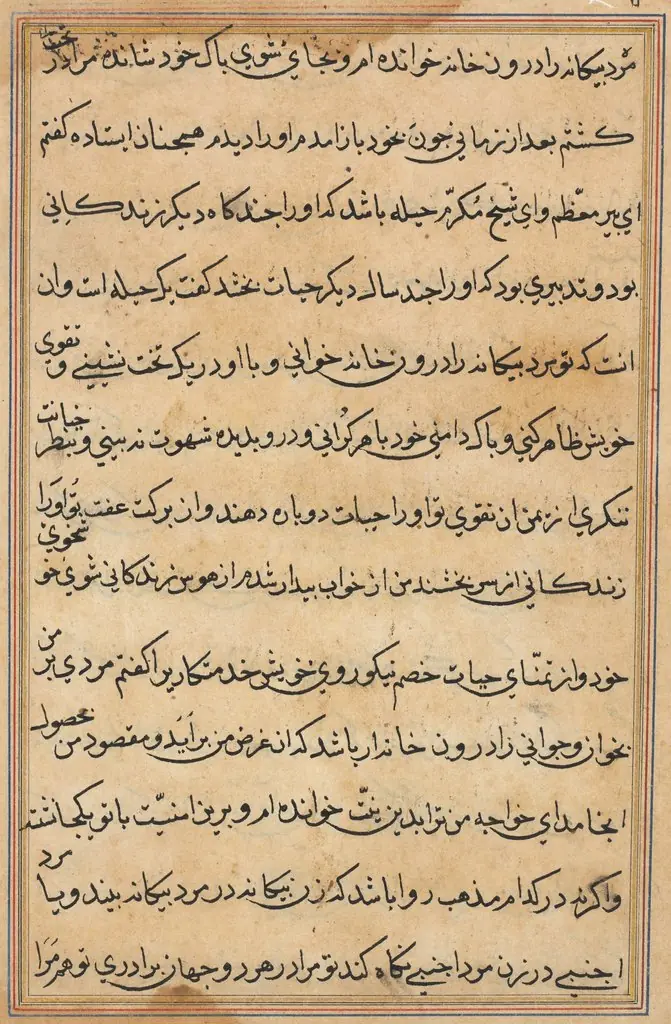
Page from Tales of a Parrot (Tuti-nama): text page is an unspecified painting. It dates from 1560 and is held in the collection of the Cleveland Museum of Art. The object is a single page from the illustrated manuscript known as Tales of a Parrot (Tuti‑nama).
About this work
History & Provenance
The work was acquired by the museum through a bequest that documented its provenance from a private collection in India to its current institutional home.
A single illustrated folio from the Persian Tuti-nama was produced in 1560 within the Mughal imperial workshop. The miniature bears the colophon of an unnamed painter and entered the collection of the Cleveland Museum of Art, where it remains on public view.
The manuscript page was commissioned as part of a royal Persian-language allegory intended for elite audiences in the court of Akbar. Its creation reflects the cross‑cultural exchange between Persian literary tradition and Mughal visual culture in the mid‑sixteenth century.
The work was acquired by the museum through a bequest that documented its provenance from a private collection in India to its current institutional home.
The work is part of the Cleveland Museum of Art collection, listed under inventory number 1962.279.27.b. It was created in 1560 in the Mughal Empire and has remained in the museum's holdings without documented exhibition history.
The painting is classified as a miniature from the Persian-language manuscript Tuti-nama, depicting a page of narrative text.
Page from Tales of a Parrot (Tuti-nama): text page is recorded as object number 1962.279.27.b within the Cleveland Museum of Art's collection.
The artwork originates from the Mughal imperial workshop and reflects the literary tradition of 16th-century Persian miniature painting.
Overview
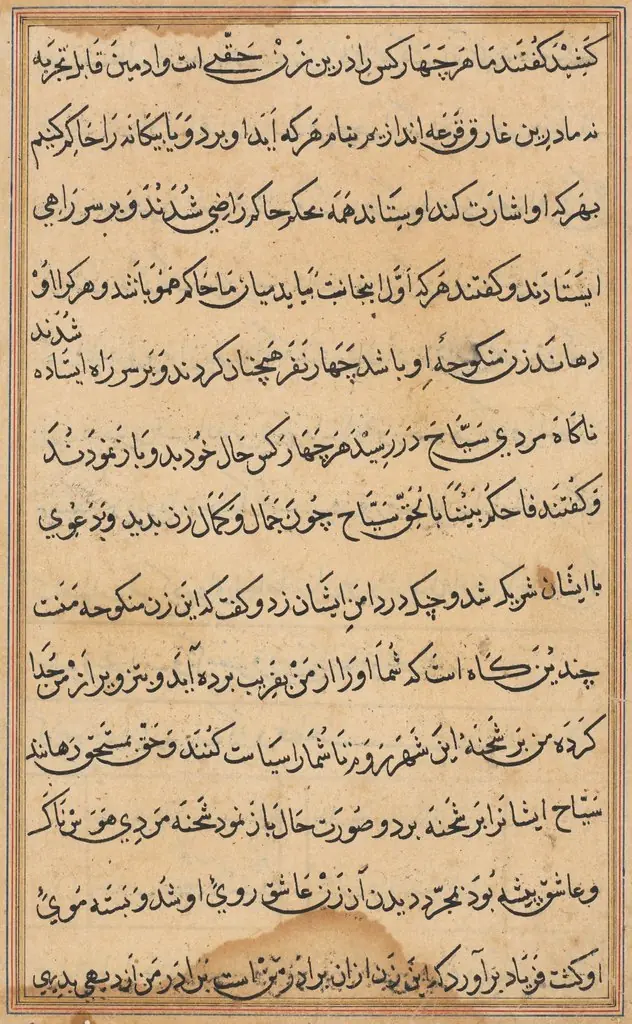
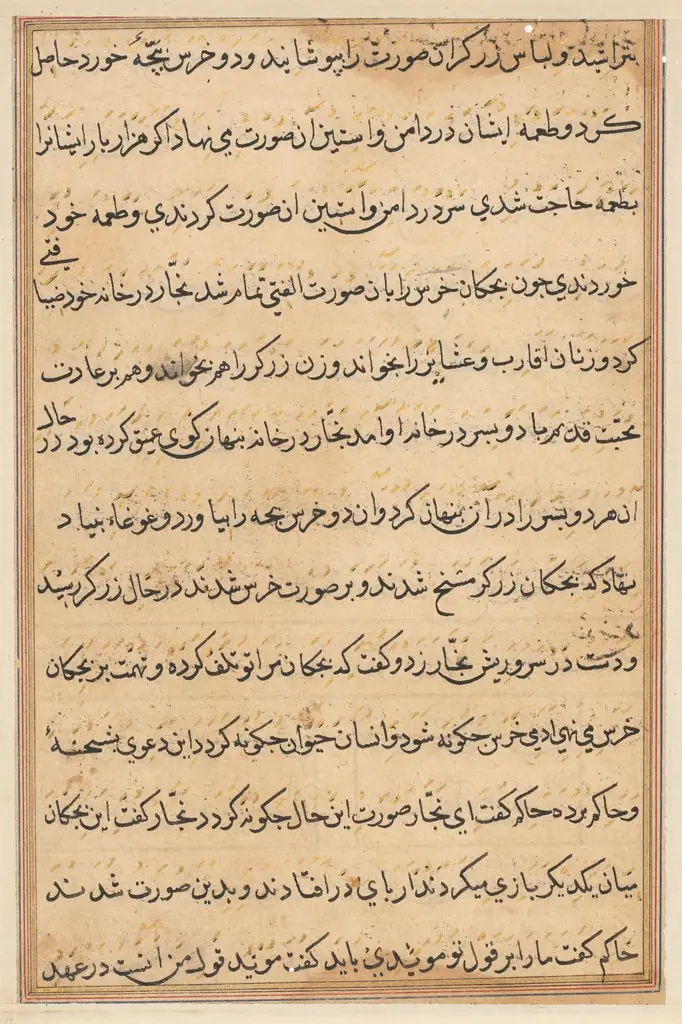
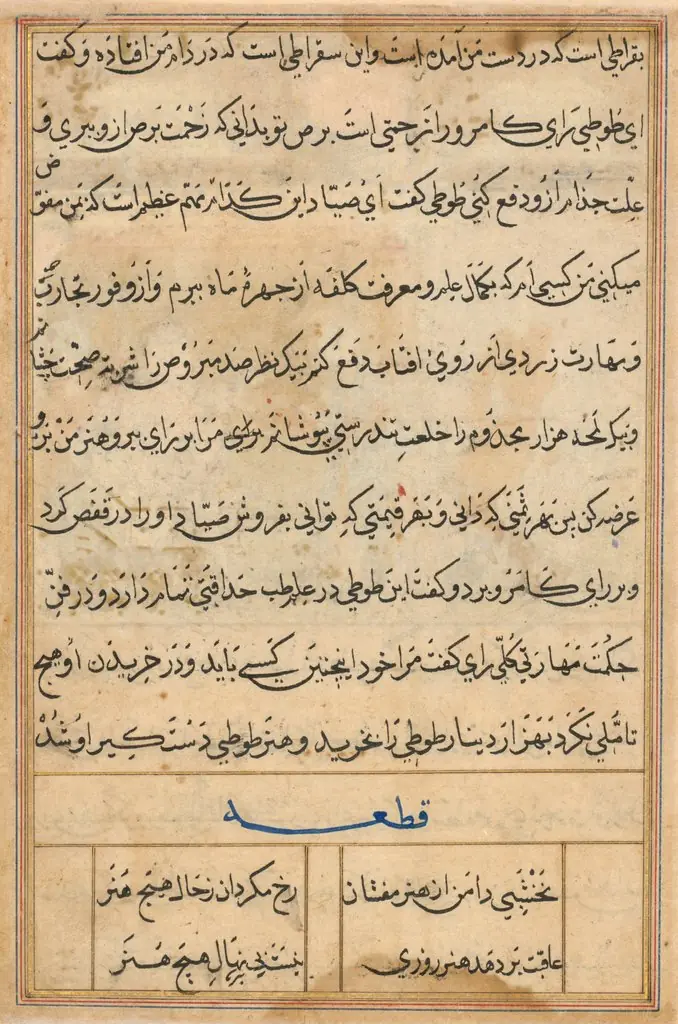
The object is a single page from the illustrated manuscript known as Tales of a Parrot (Tuti‑nama). It consists of densely set black calligraphic script on a light tan surface that resembles aged paper, bordered by a thin red strip. No pictorial elements accompany the text; the page functions purely as a written narrative.
Subject & Meaning
The script records a portion of the Tuti‑nama, a collection of moral and didactic stories traditionally conveyed through the voice of a parrot. While the specific episode on this leaf is not identified, the work as a whole serves to impart ethical lessons and entertain through allegorical storytelling.
Technique & Style
The calligraphy is executed in a refined, legible hand that balances decorative flourish with clarity, typical of Persianate manuscript traditions. The background features a subtle stippled pattern, and the red marginal frame is applied with a fine brush, suggesting careful preservation and aesthetic consideration.
Context
Manuscript pages such as this were produced in regions where Persian literary forms flourished, often for courtly or scholarly audiences. The Tuti‑nama belongs to a genre that blends storytelling with moral instruction, reflecting broader cultural practices of using animal narrators to convey human virtues.
Artist & collection

- Page from Tales of a Parrot (Tuti-nama): text page
 Page from Tales of a Parrot (Tuti-nama): text page
 Page from Tales of a Parrot (Tuti-nama): text page
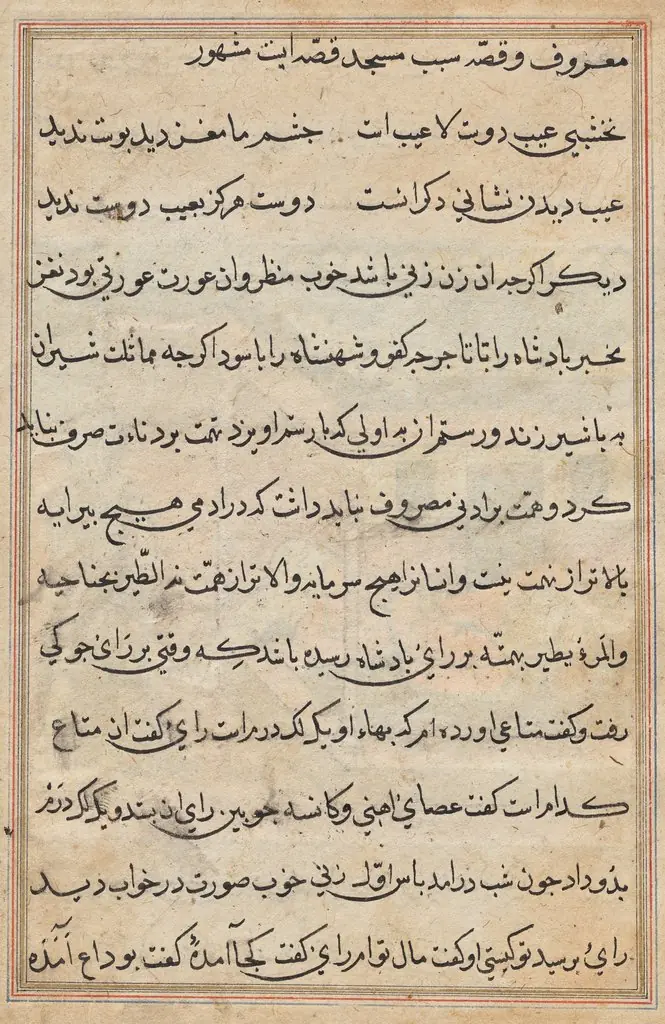 Page from Tales of a Parrot (Tuti-nama): text page
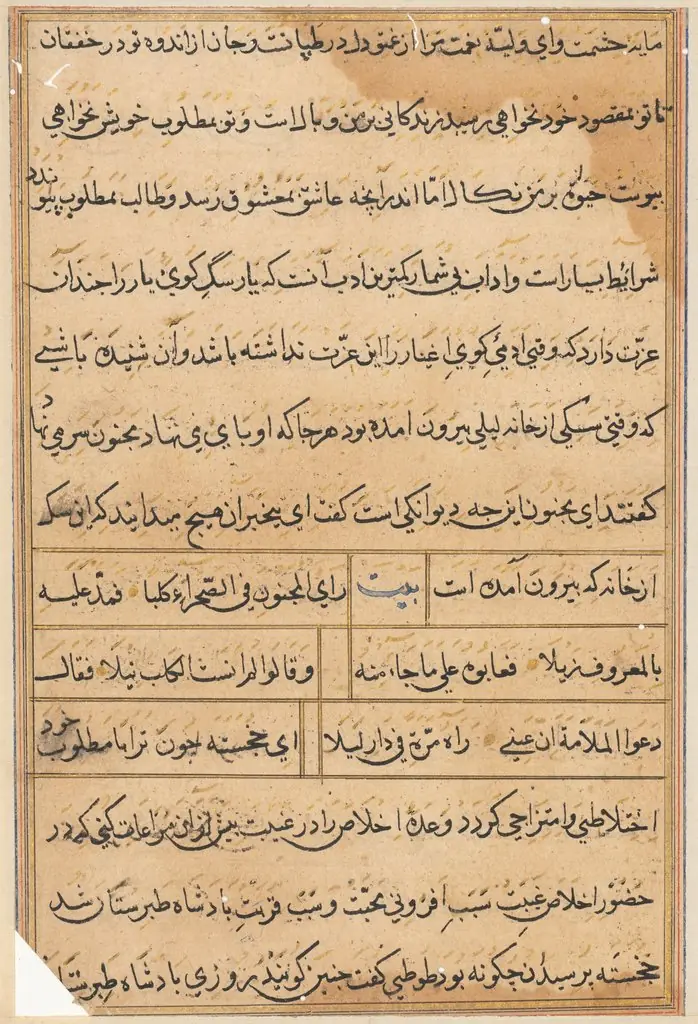 Page from Tales of a Parrot (Tuti-nama): text page
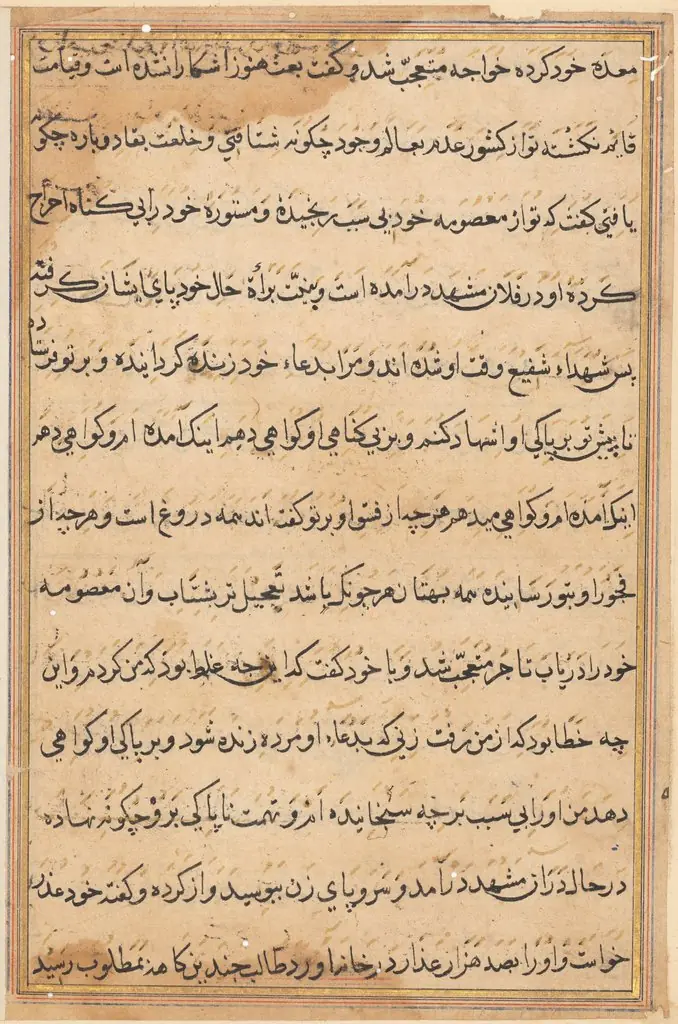 Page from Tales of a Parrot (Tuti-nama): text page
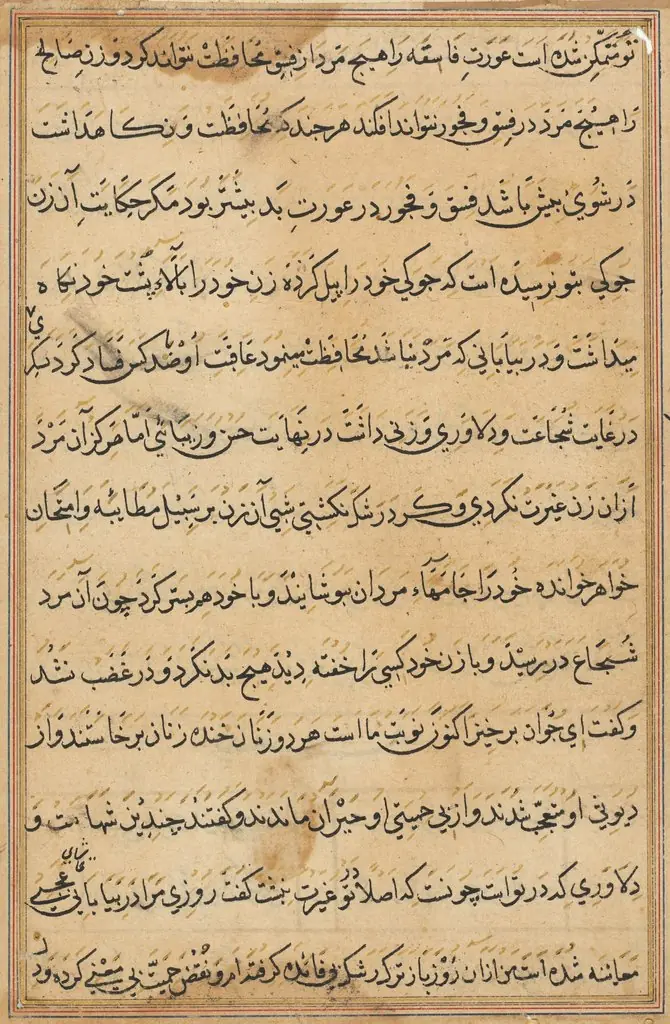 Page from Tales of a Parrot (Tuti-nama): text page
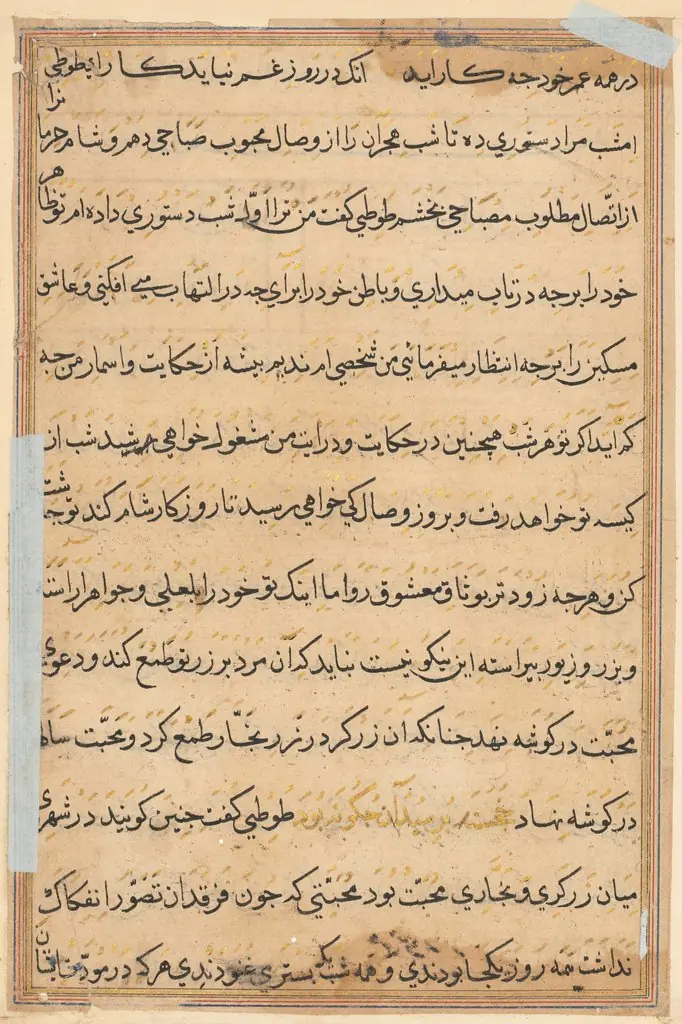 Page from Tales of a Parrot (Tuti-nama): text page
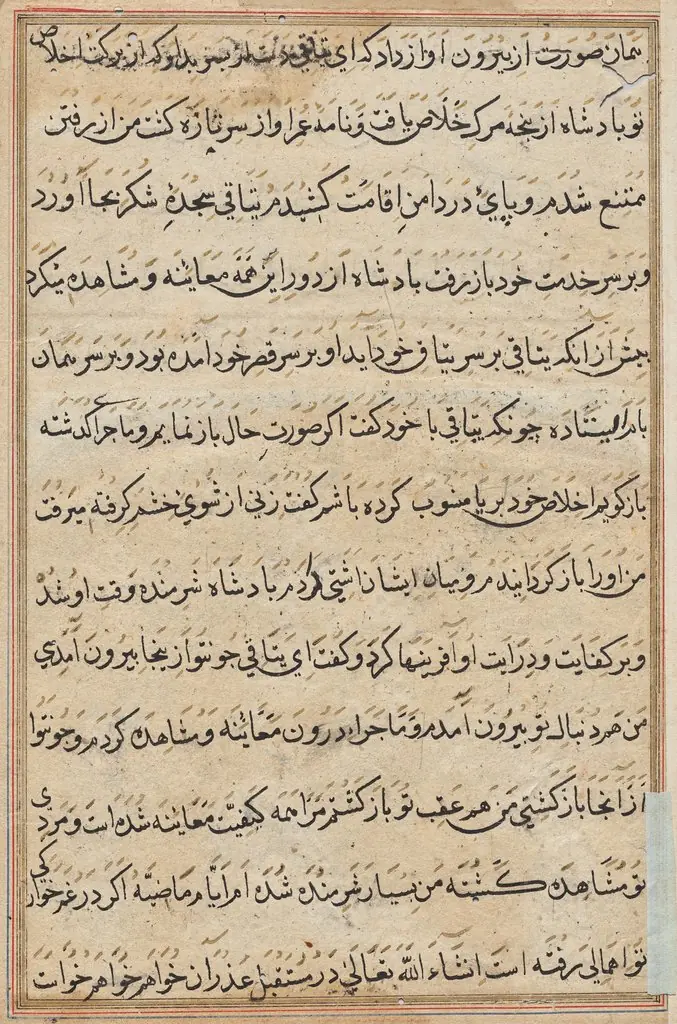 Page from Tales of a Parrot (Tuti-nama): text page
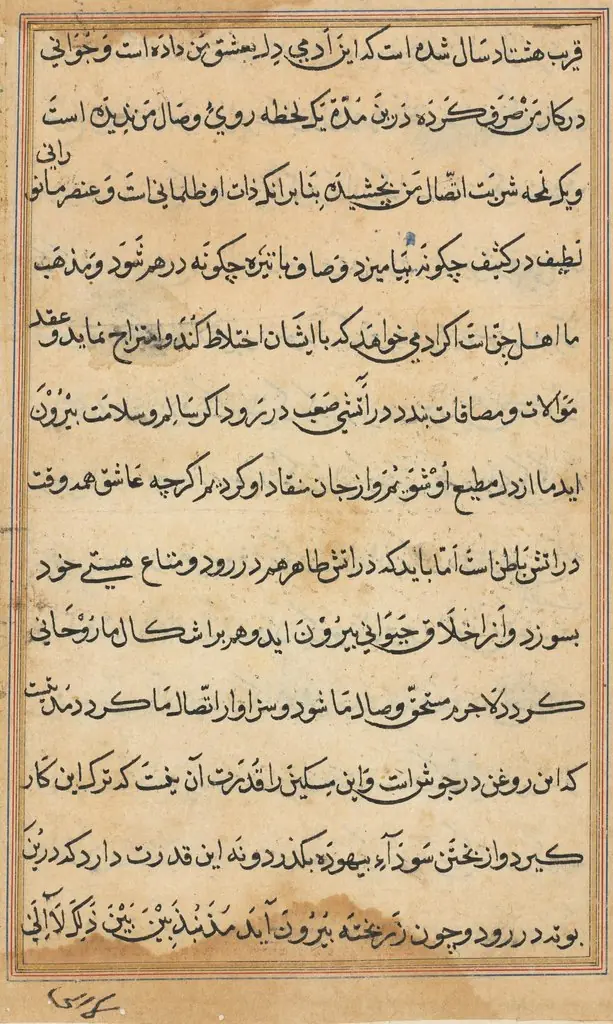 Page from Tales of a Parrot (Tuti-nama): text page
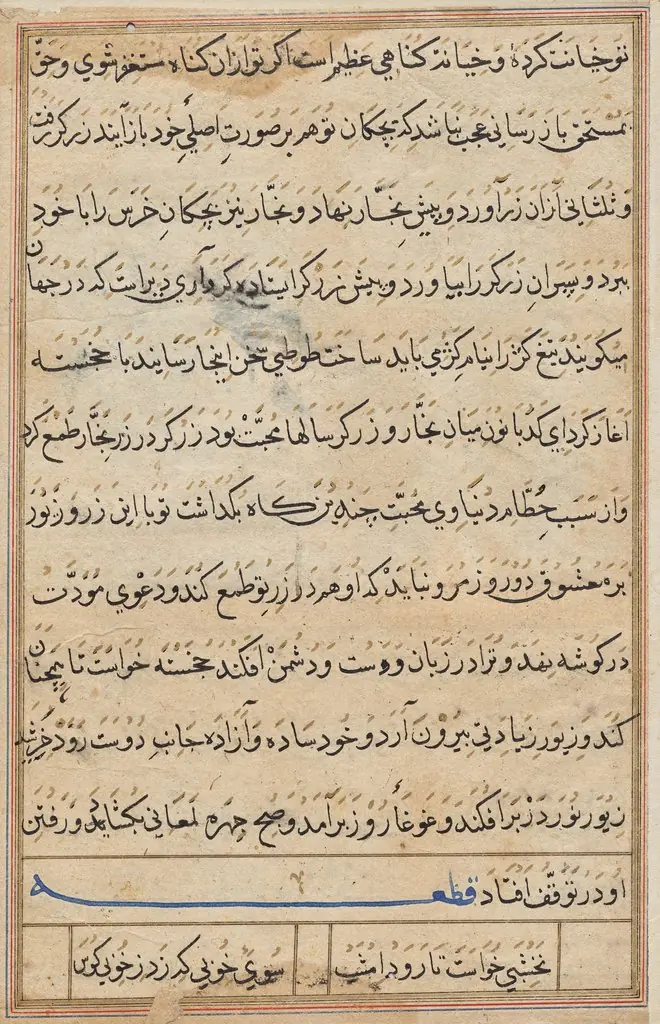 Page from Tales of a Parrot (Tuti-nama): text page
 Page from Tales of a Parrot (Tuti-nama): text page