Artwork
Page from Tales of a Parrot (Tuti-nama): text page
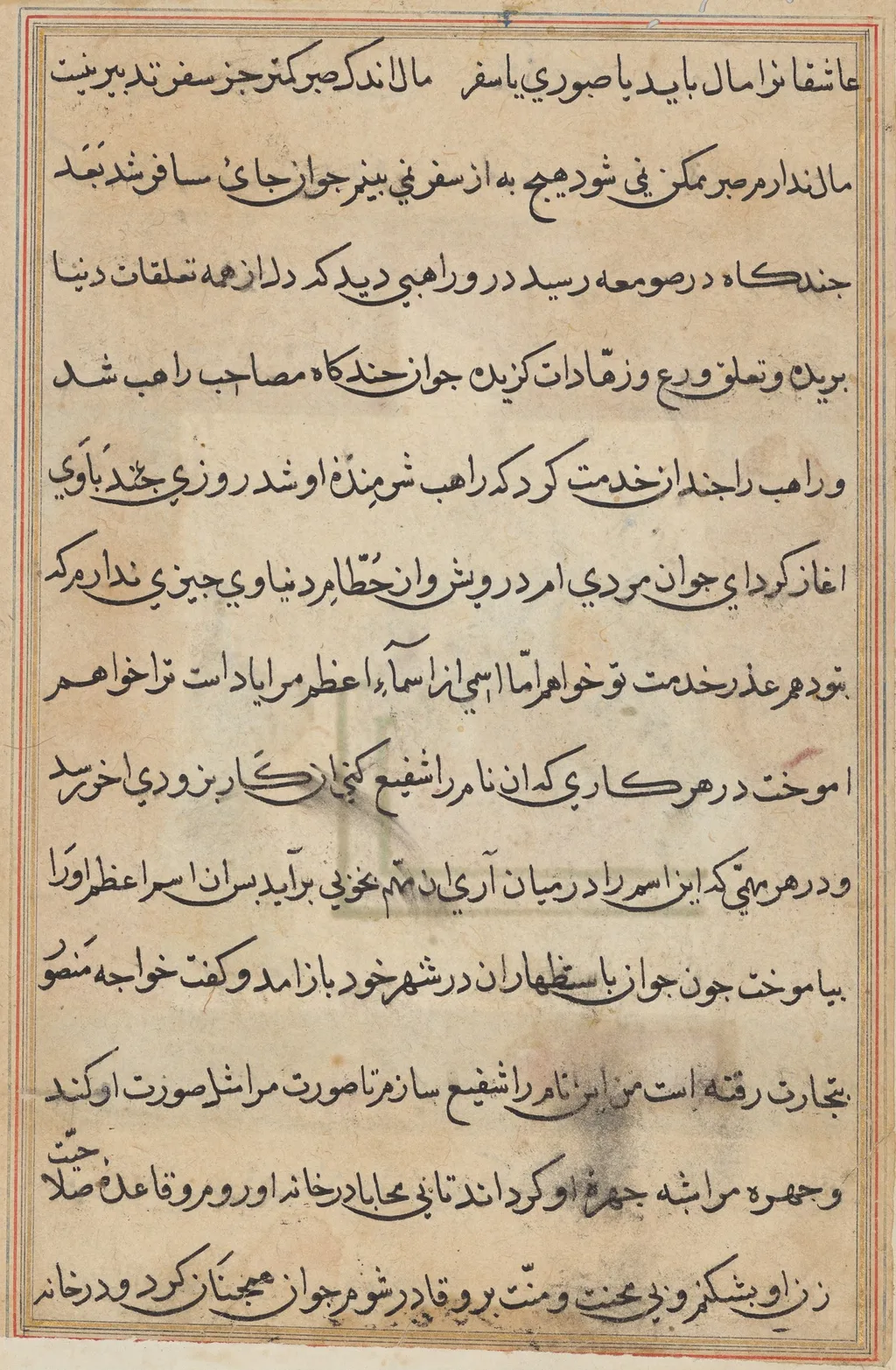
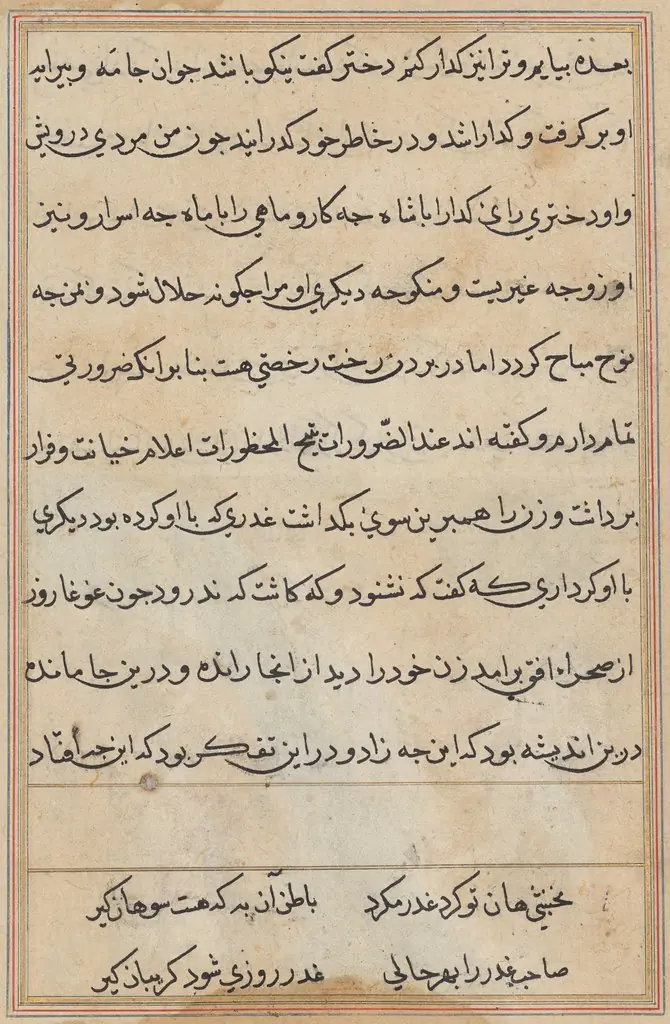
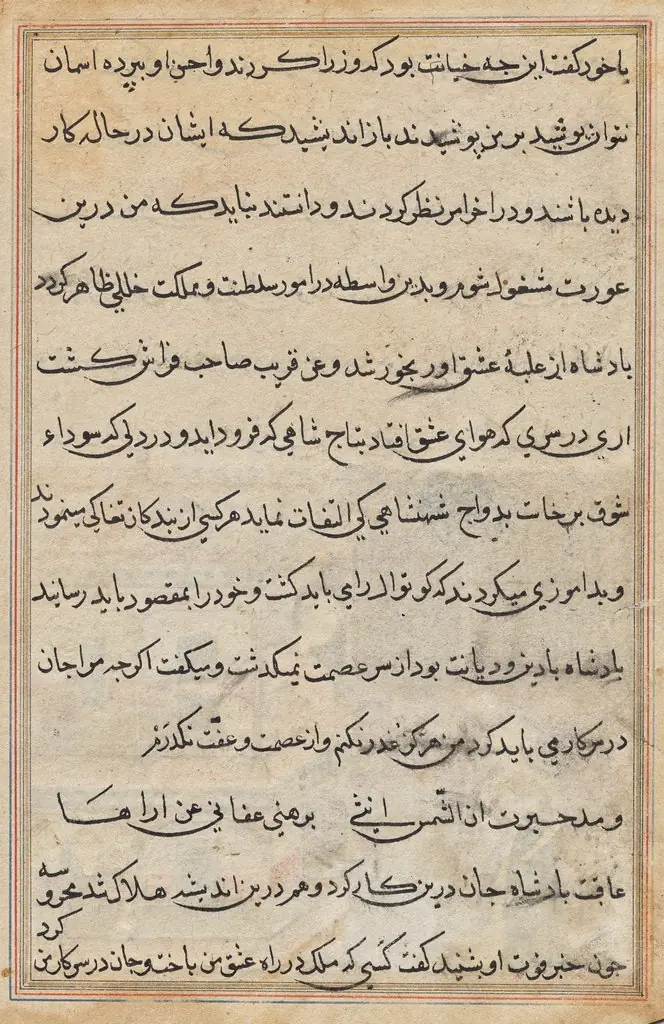
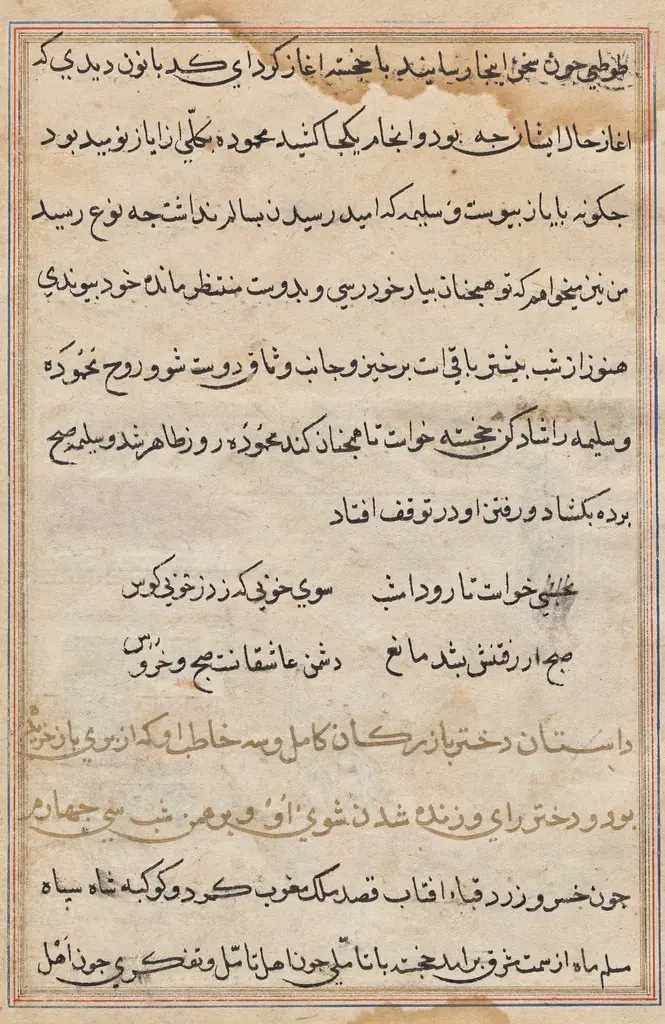
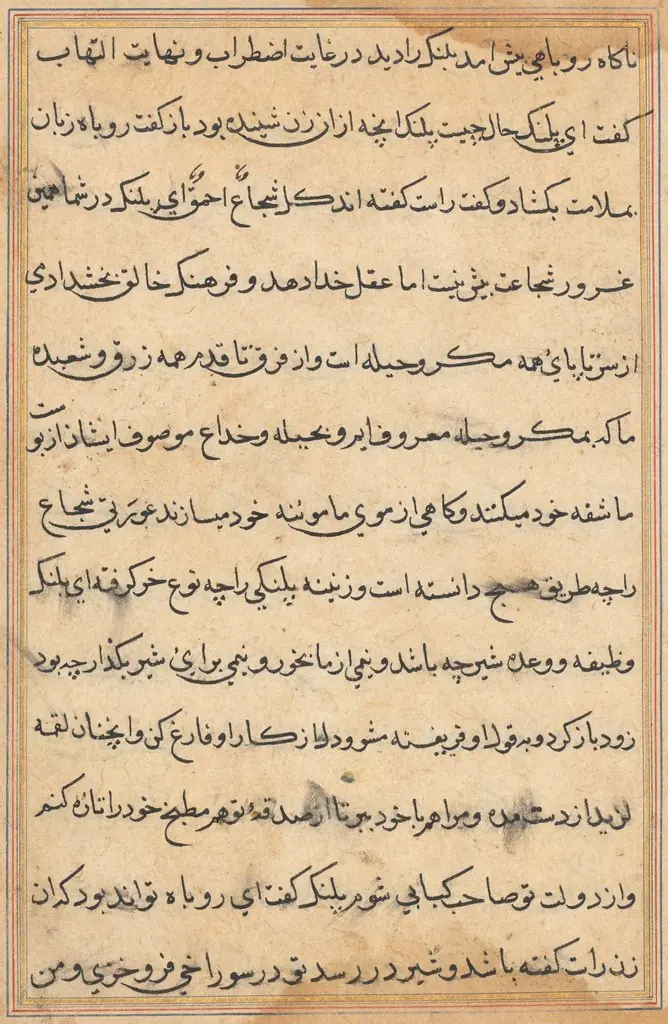
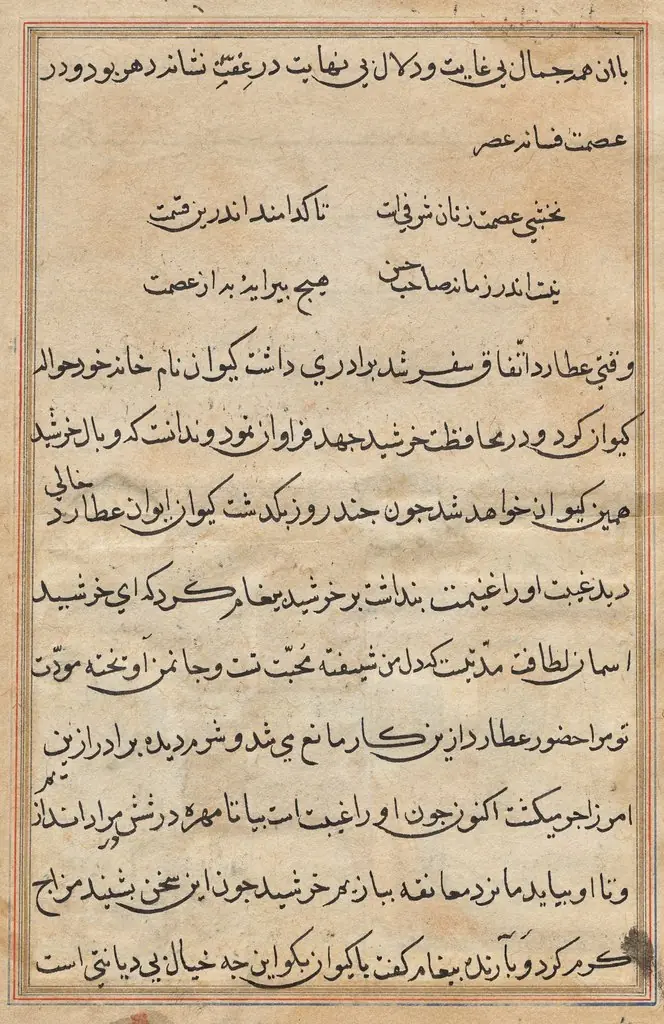
Page from Tales of a Parrot (Tuti-nama): text page is an unspecified painting. It dates from 1560 and is held in the collection of the Cleveland Museum of Art. The object is a single leaf from the illustrated manuscript known as Tuti‑nama or Tales of a Parrot.
About this work
History & Provenance
The work has been exhibited as part of the museum's display of Indian miniature paintings, including a 2012 exhibition of South Asian manuscripts.
This text page from a Tales of a Parrot (Tuti-nama) manuscript was created in 1560 within the Mughal Empire. The work is classified as a painting and is attributed to an unknown artist. It is held in the collection of the Cleveland Museum of Art, where it is catalogued under the accession number 1962.279.127.b. No further details regarding its commission, intermediate ownership, or acquisition history are documented in the available sources.
The text page from Tales of a Parrot (Tuti-nama) is held in the collection of the Cleveland Museum of Art, cataloged under accession number 1962.279.127.b. It was created in 1560 within the Mughal Empire and has been part of the museum's holdings since its acquisition. The work has been exhibited as part of the museum's display of Indian miniature paintings, including a 2012 exhibition of South Asian manuscripts.
Overview
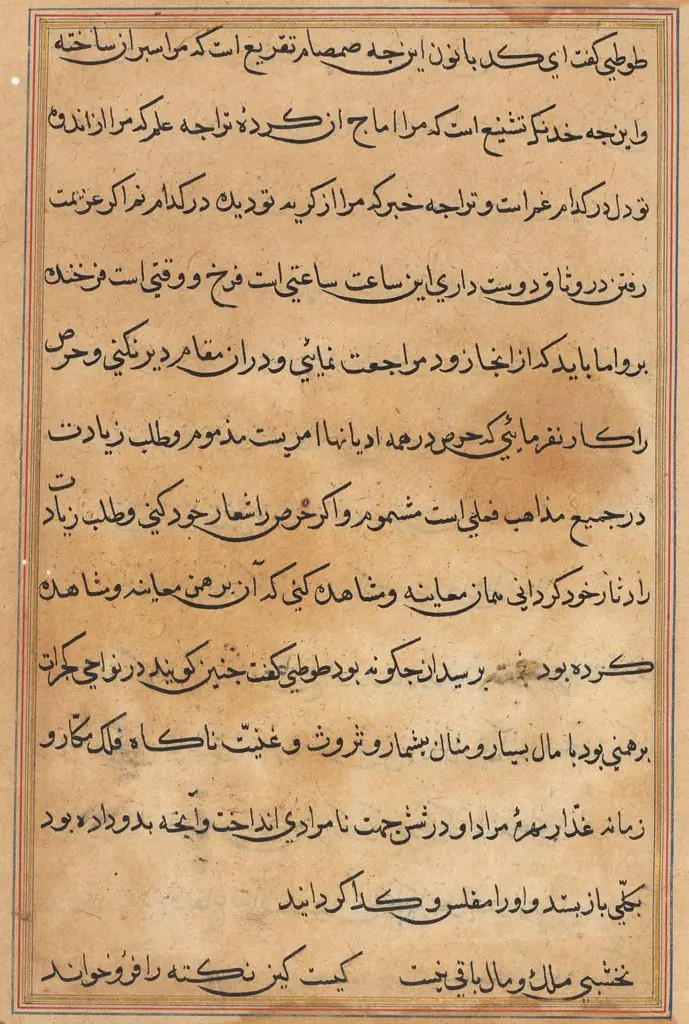
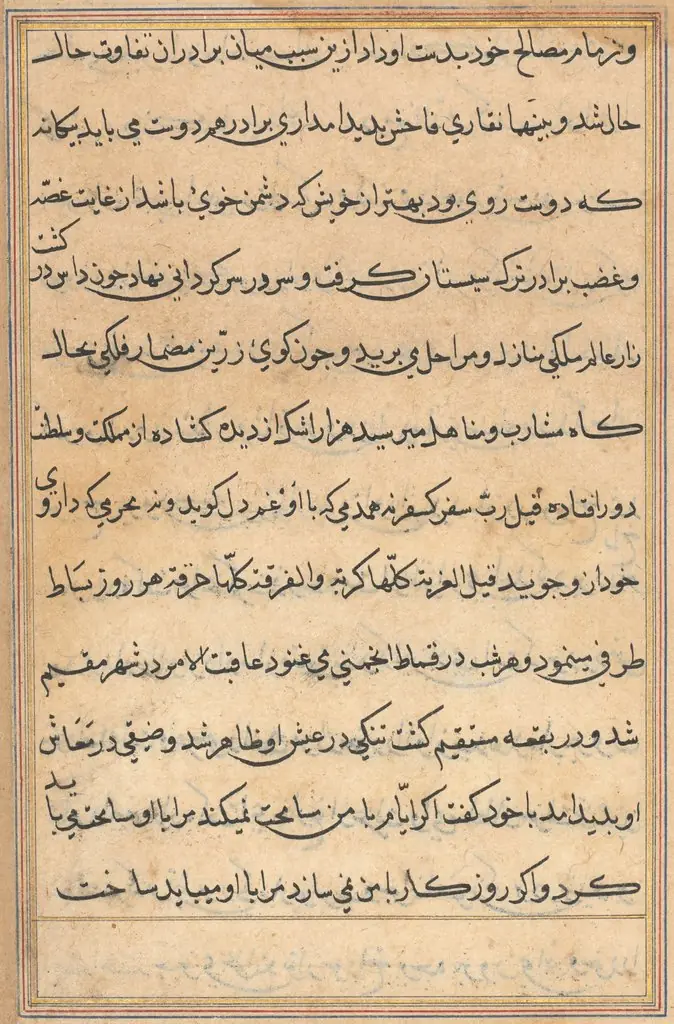
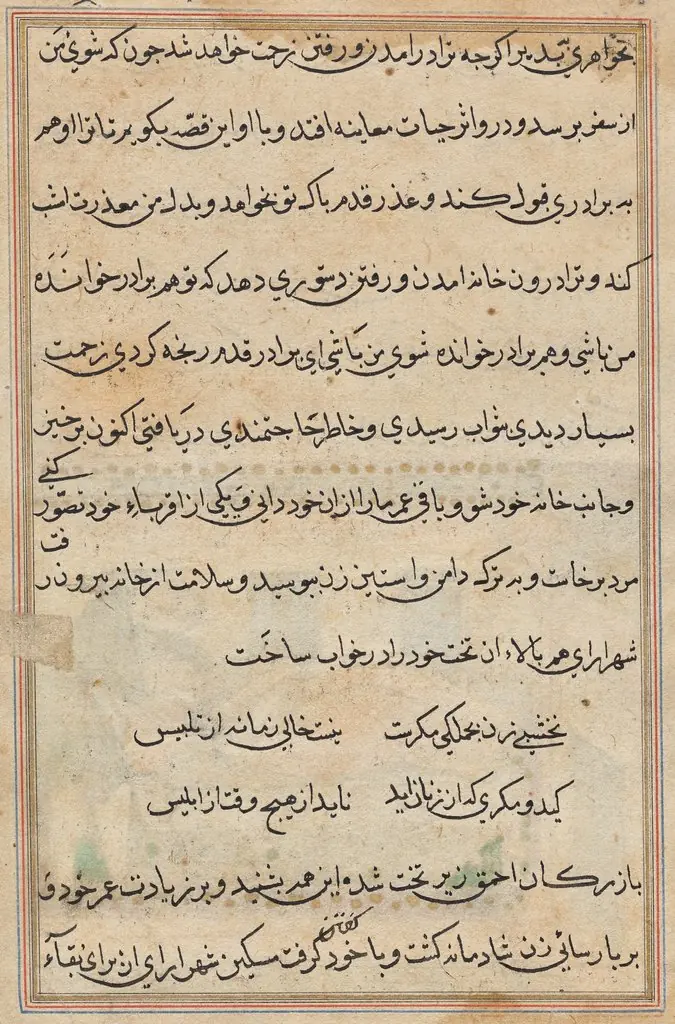
The object is a single leaf from the illustrated manuscript known as Tuti‑nama or Tales of a Parrot. Rendered on paper, the page is densely filled with black calligraphic text arranged in tight, orderly rows. A narrow red border outlines the margins, and the surface shows signs of age, including slight fading of the ink and occasional translucency where the paper substrate is visible.
Subject & Meaning
The script records a portion of a narrative traditionally associated with the Tuti‑nama, a collection of moral and didactic stories conveyed through a parrot’s recitations. While the specific episode on this leaf is not identified, the work as a whole functions as a literary guide, using allegorical tales to impart ethical instruction to its readers.
Technique & Style
The text is executed in nastaʿlīq, a Persian calligraphic hand that blends fluid cursive strokes with angular elements, producing a graceful, slanted line. The ink, originally a deep black, has faded over time, revealing the paper beneath in places. The thin red border was likely added by a later hand to delineate the page’s limits and enhance visual cohesion.
Artist & collection

- Page from Tales of a Parrot (Tuti-nama): text page
 Page from Tales of a Parrot (Tuti-nama): text page
 Page from Tales of a Parrot (Tuti-nama): text page
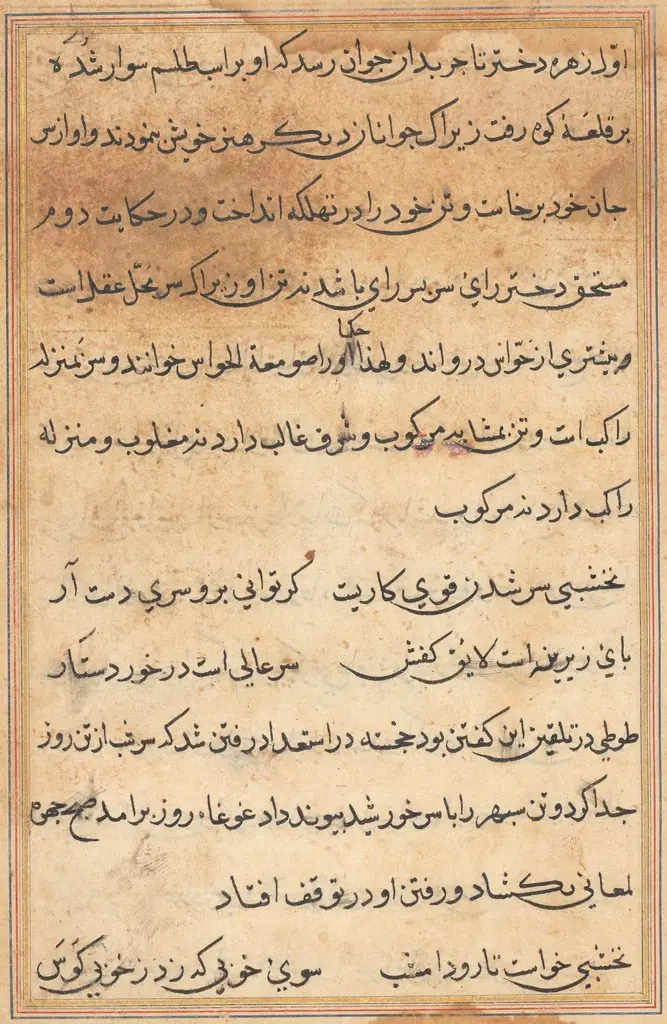 Page from Tales of a Parrot (Tuti-nama): text page
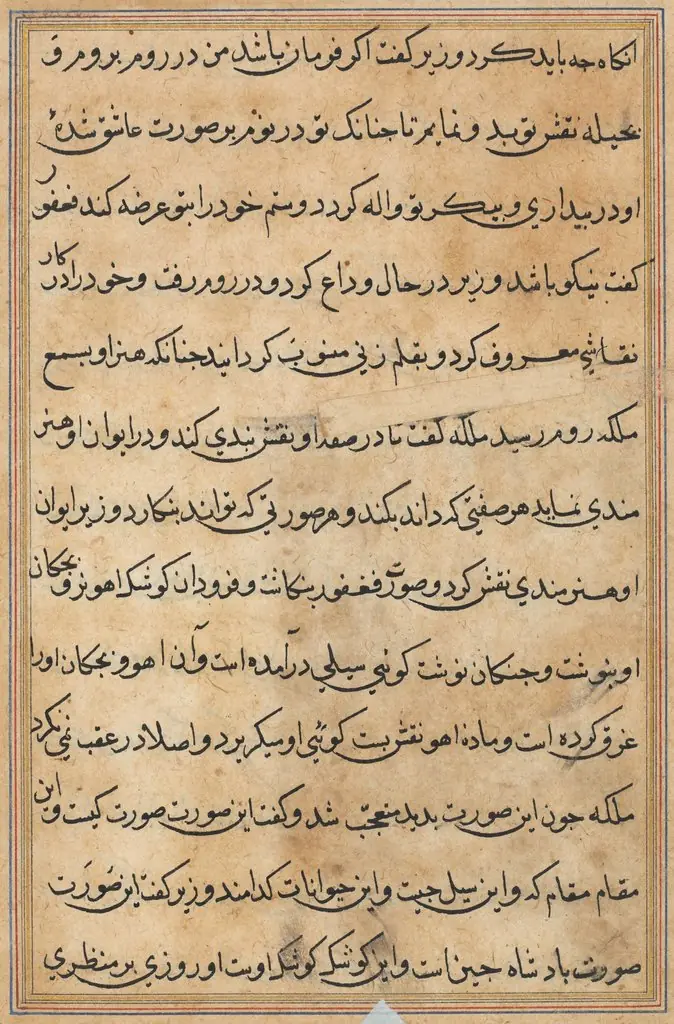 Page from Tales of a Parrot (Tuti-nama): text page
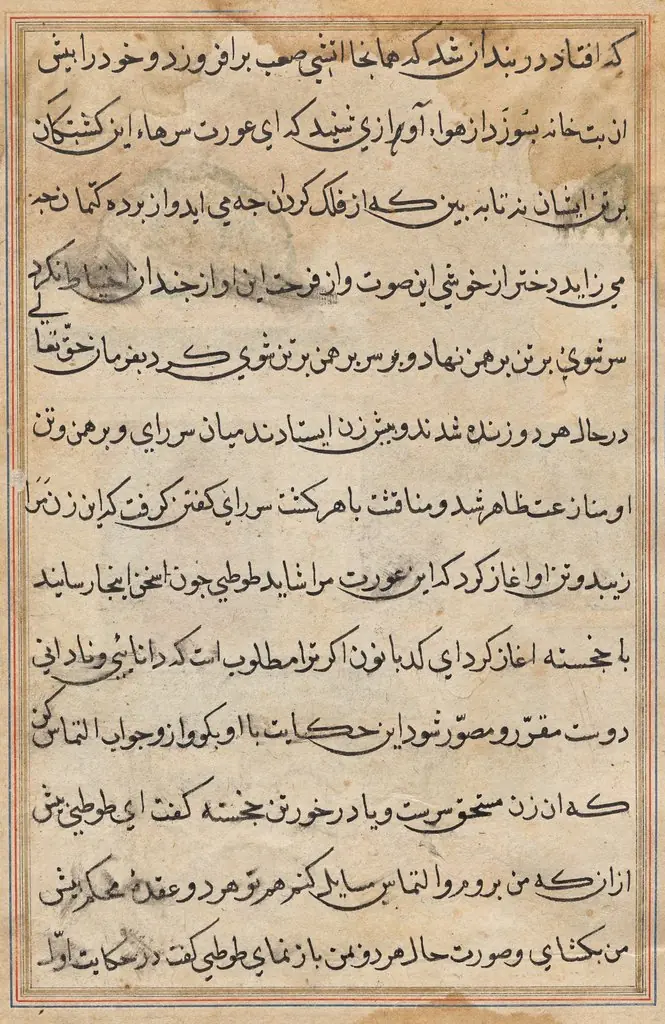 Page from Tales of a Parrot (Tuti-nama): text page
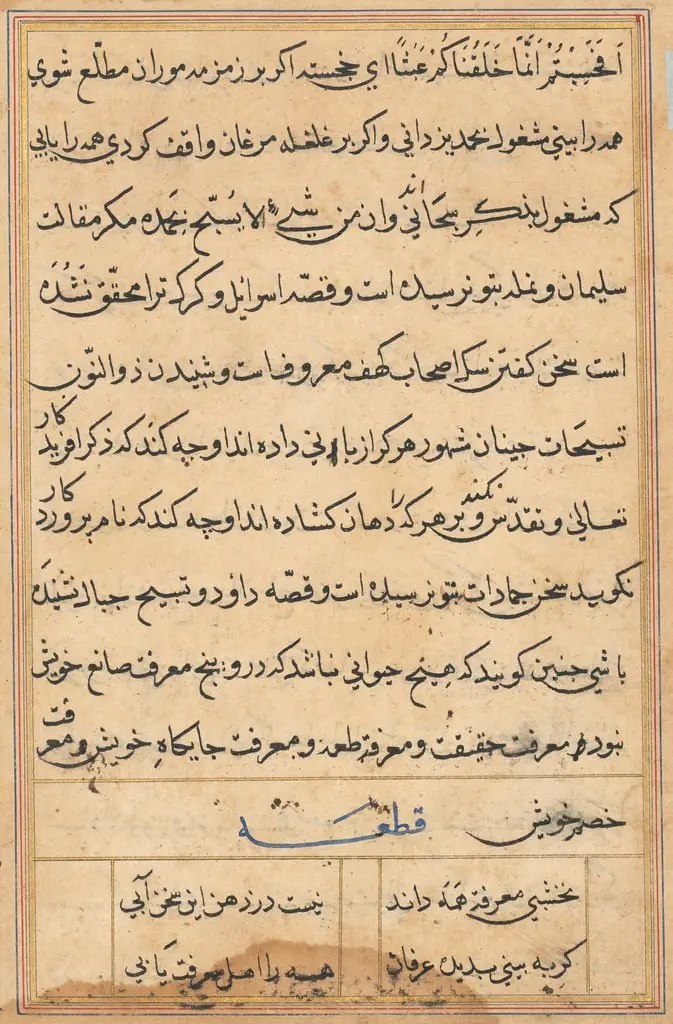 Page from Tales of a Parrot (Tuti-nama): text page
 Page from Tales of a Parrot (Tuti-nama): text page
 Page from Tales of a Parrot (Tuti-nama): text page
 Page from Tales of a Parrot (Tuti-nama): text page
 Page from Tales of a Parrot (Tuti-nama): text page
 Page from Tales of a Parrot (Tuti-nama): text page