Artwork
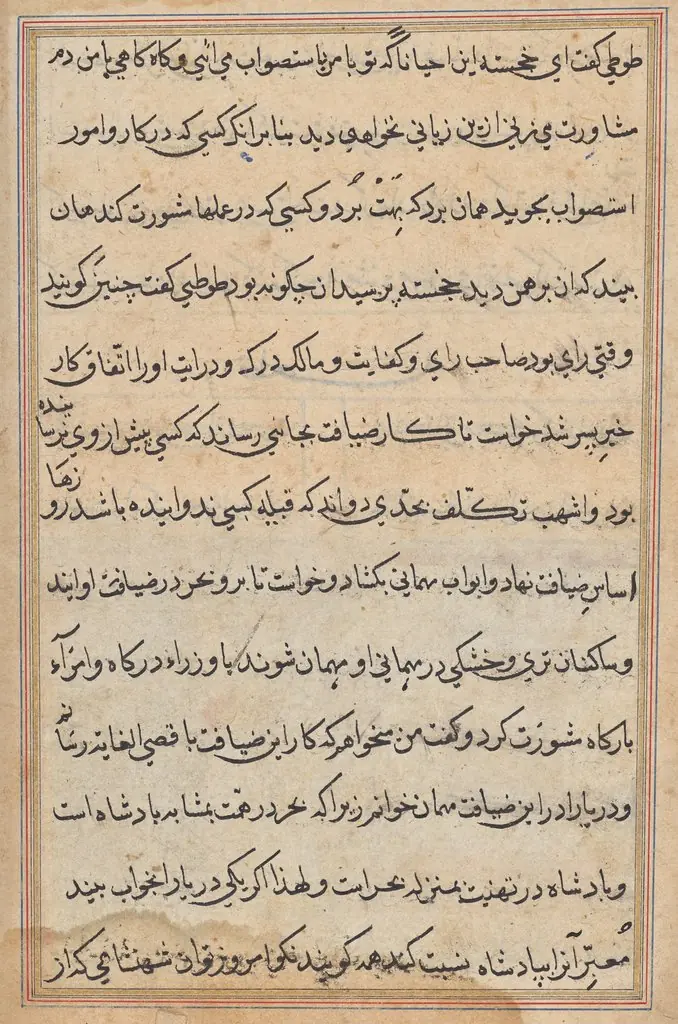
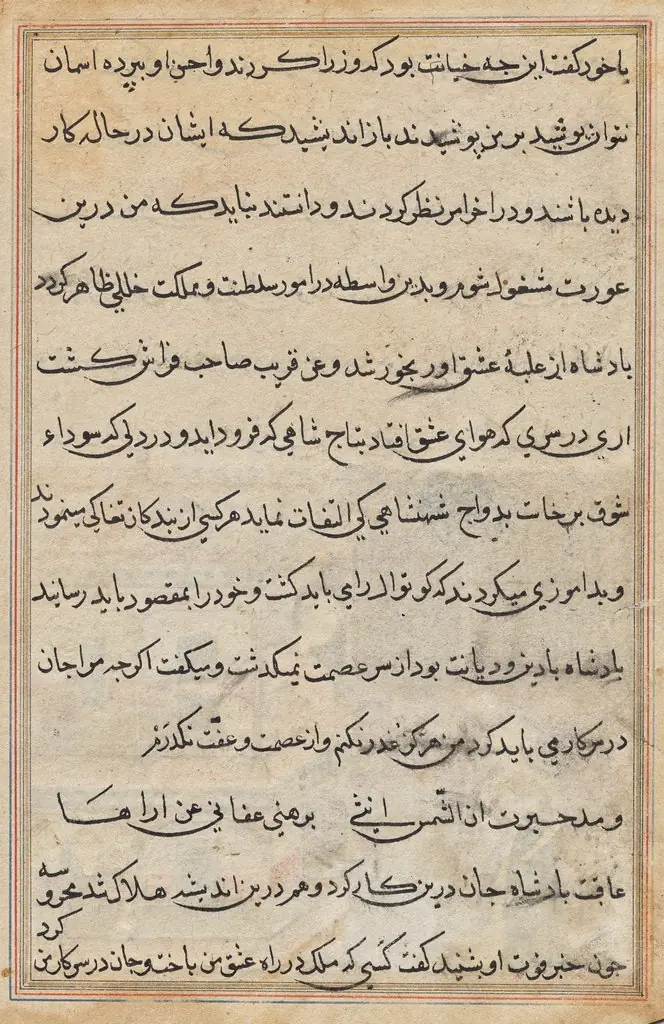
Page from Tales of a Parrot (Tuti-nama): text page
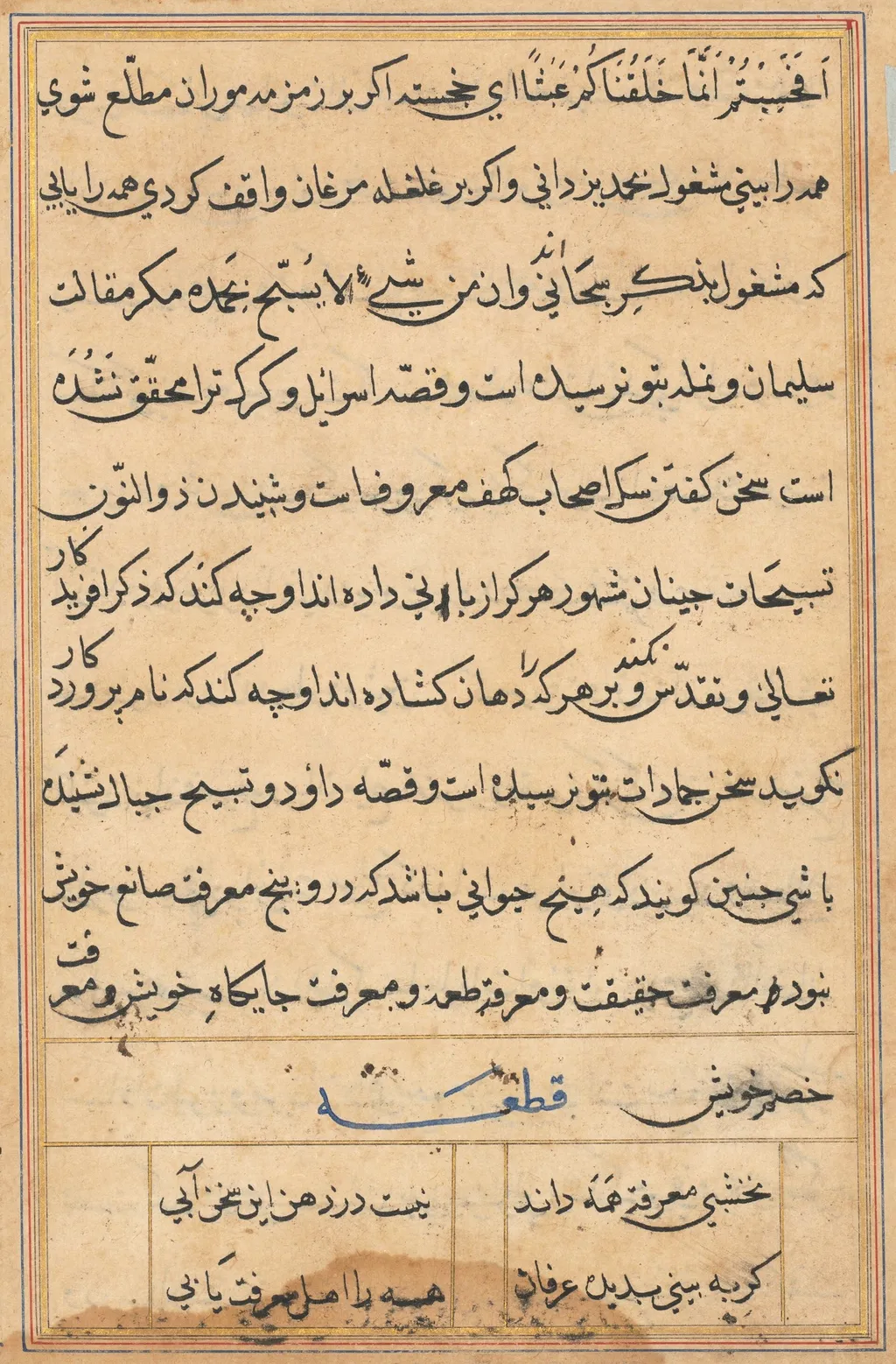
Page from Tales of a Parrot (Tuti-nama): text page is an unspecified painting. It dates from 1560 and is held in the collection of the Cleveland Museum of Art. This object is a single painted page from the illustrated manuscript known as Tales of a Parrot (Tuti‑nama).
About this work
History & Provenance
The page from Tales of a Parrot (Tuti-nama) is held in the collection of the Cleveland Museum of Art, where it is catalogued under accession number 1962.
The painting was created in 1560 within the Mughal Empire and is a page from the Tuti-nama, depicting a text illustration. It is attributed to an unknown artist and entered the collection of the Cleveland Museum of Art, where it remains on view as part of their Indian miniature holdings.
The work originally functioned as a folio within a 16th-century Persianate manuscript, later bound into a codex. Its journey to the West is not detailed in the source, but its formal attribution and dating align with Mughal artistic production of the period.
The Cleveland Museum of Art acquired the miniature under accession number 1962.279.107.b, establishing its current custodianship.
The page from Tales of a Parrot (Tuti-nama) is held in the collection of the Cleveland Museum of Art, where it is catalogued under accession number 1962.279.107.b. It was created in 1560 within the Mughal Empire and is classified as a painting. The work has not been documented in any major exhibition history according to the available records.
Context
The page forms part of the Tuti-nama manuscript produced during Akbar's reign and is attributed to an anonymous artist working in the Mughal imperial workshop. Its creation in 1560 places it within the early phase of Mughal manuscript painting that blended Persianate narrative traditions with local Indian aesthetics. The work is housed in the Cleveland Museum of Art, where it is catalogued as a miniature from the Tuti-nama series, reflecting the courtly literary culture of the time.
Scholars have noted its significance in understanding the transmission of didactic literature through illustrated texts in 16th-century India.
Overview
This object is a single painted page from the illustrated manuscript known as Tales of a Parrot (Tuti‑nama). The surface is entirely covered with black ink forming a continuous flow of Arabic calligraphy, bounded by a narrow red margin. At the lower edge a modest blue illustration of a bird, likely a parrot, appears alongside a brief passage rendered in a distinct script.
Subject & Meaning
The text on the page forms part of a narrative composed for a princely patron named Salim, recounting the adventures of a talking parrot. The inclusion of the bird’s image at the bottom serves as a visual cue to the story’s title and reinforces the manuscript’s function as a literary entertainment for an elite audience.
Technique & Style
The calligraphic composition employs a fluid, curvilinear Arabic hand typical of Persianate manuscript production, executed in black ink that fills the page uniformly. A thin red border delineates the text block, while the bird illustration is rendered in a simple blue wash, contrasting with the dense script and highlighting the page’s decorative hierarchy.
Artist & collection

- Page from Tales of a Parrot (Tuti-nama): text page
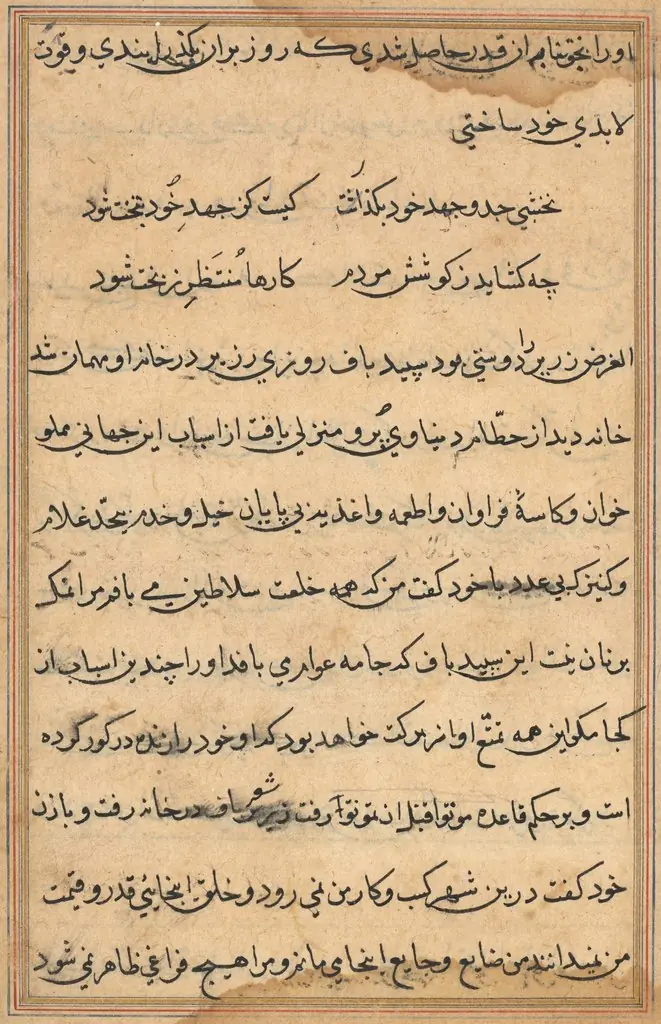 Page from Tales of a Parrot (Tuti-nama): text page
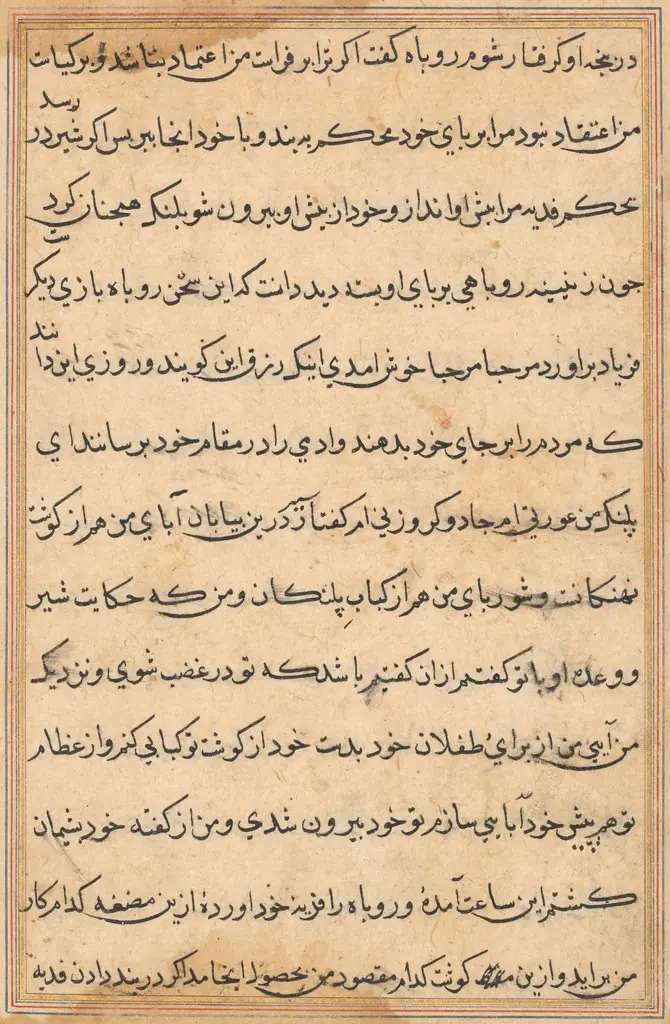 Page from Tales of a Parrot (Tuti-nama): text page
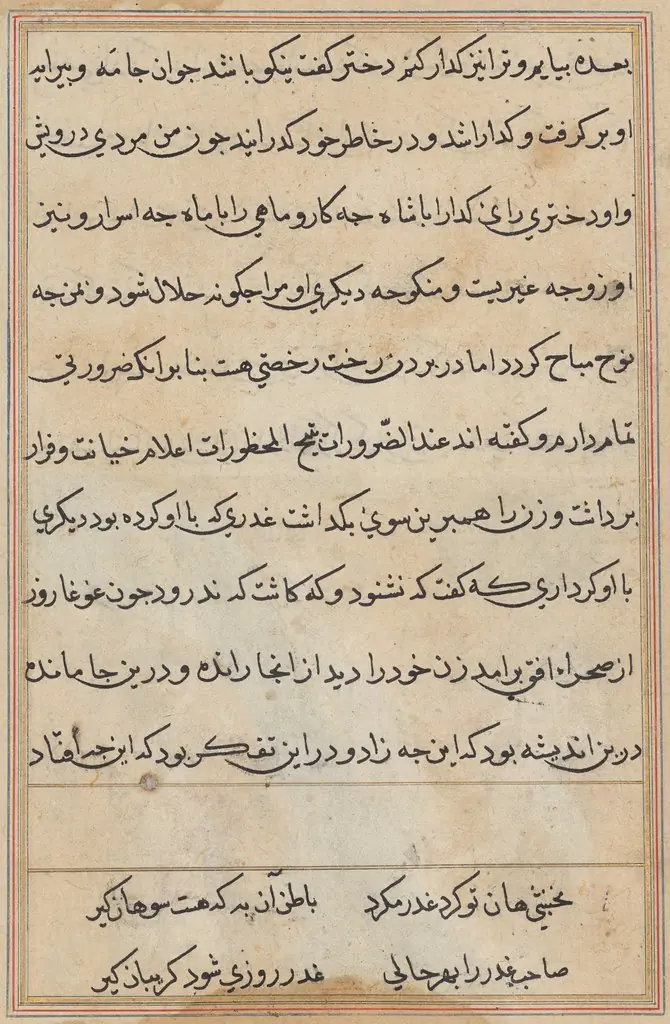 Page from Tales of a Parrot (Tuti-nama): text page
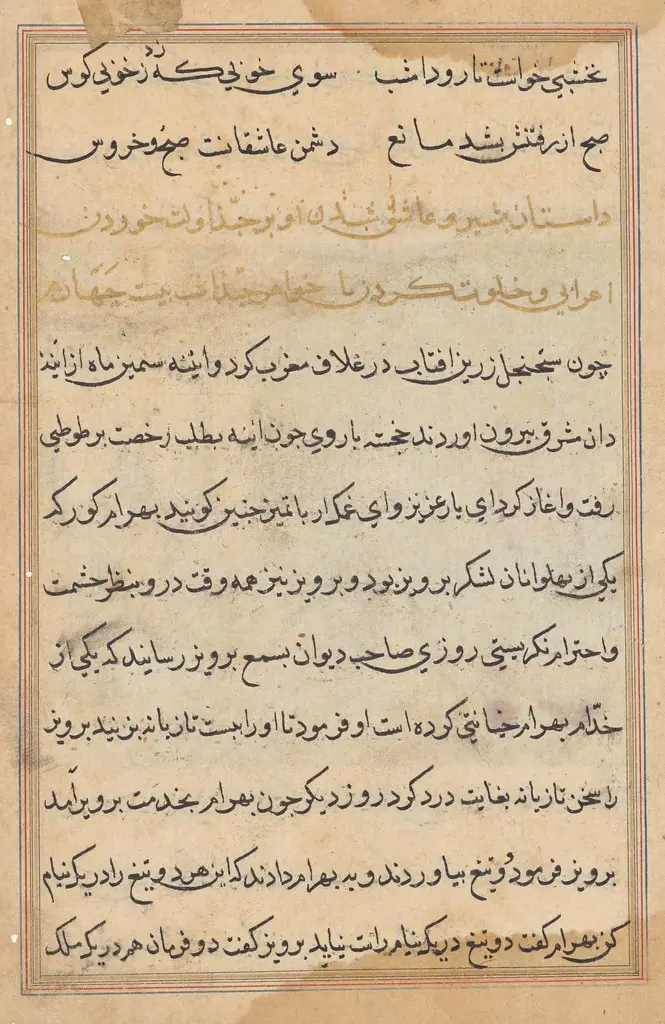 Page from Tales of a Parrot (Tuti-nama): text page
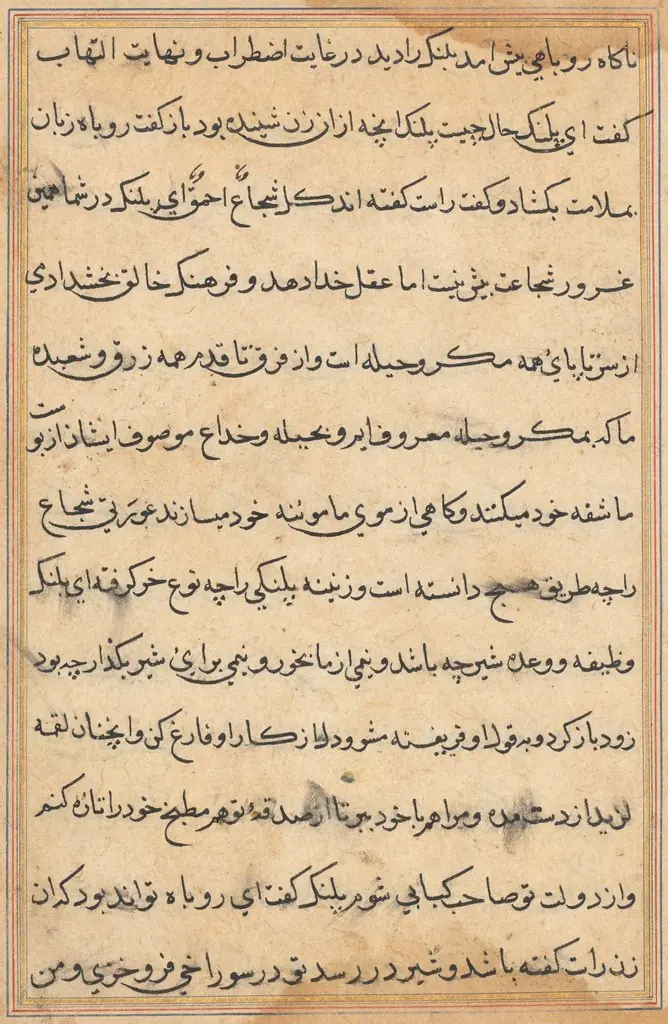 Page from Tales of a Parrot (Tuti-nama): text page
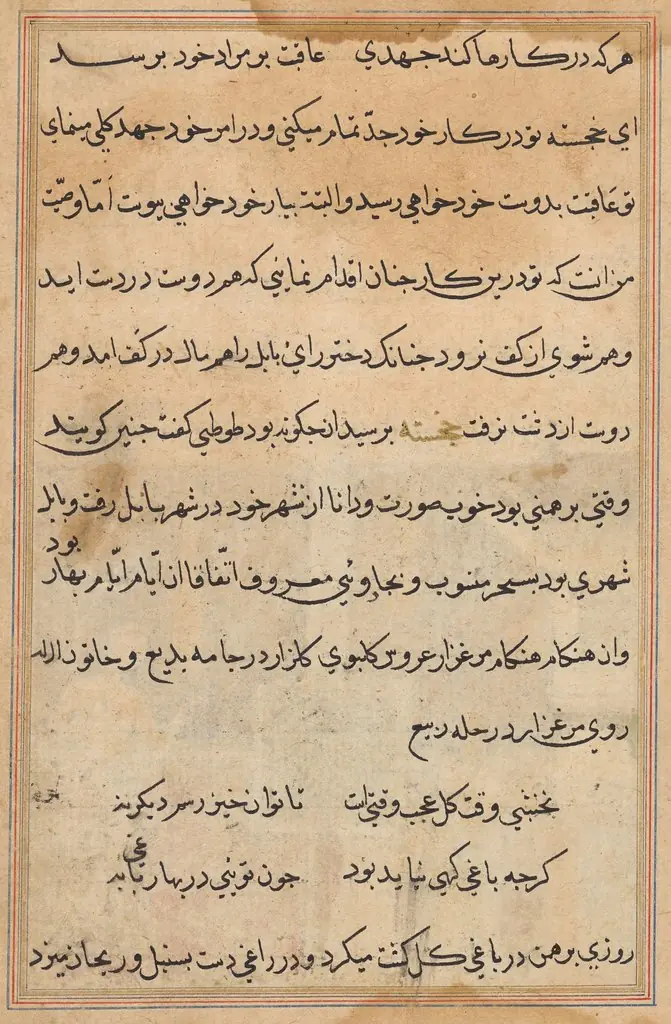 Page from Tales of a Parrot (Tuti-nama): text page
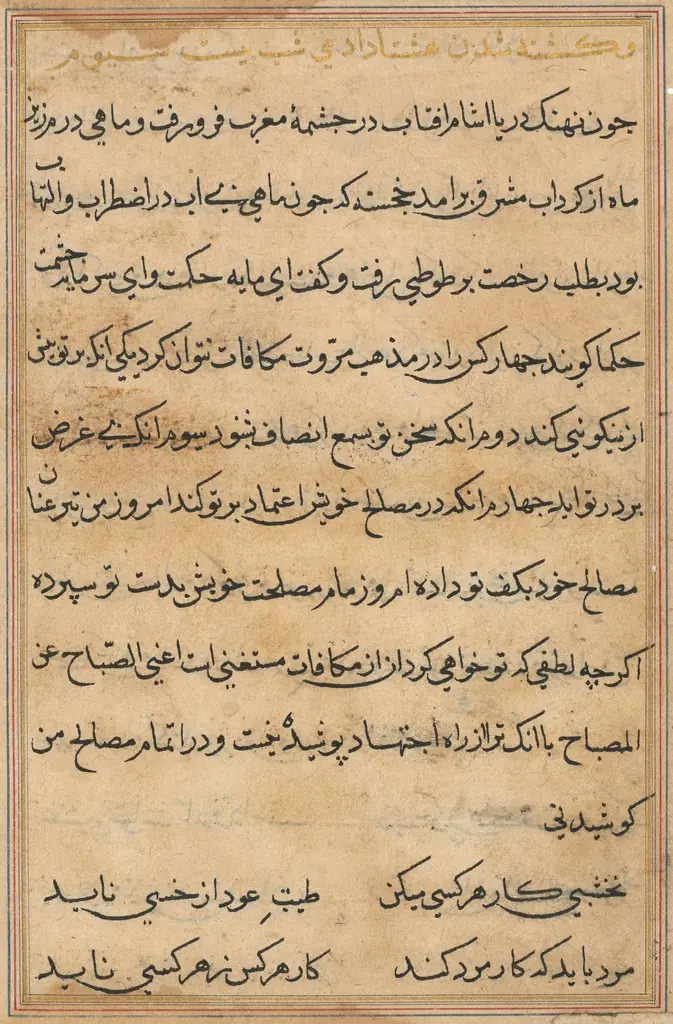 Page from Tales of a Parrot (Tuti-nama): text page
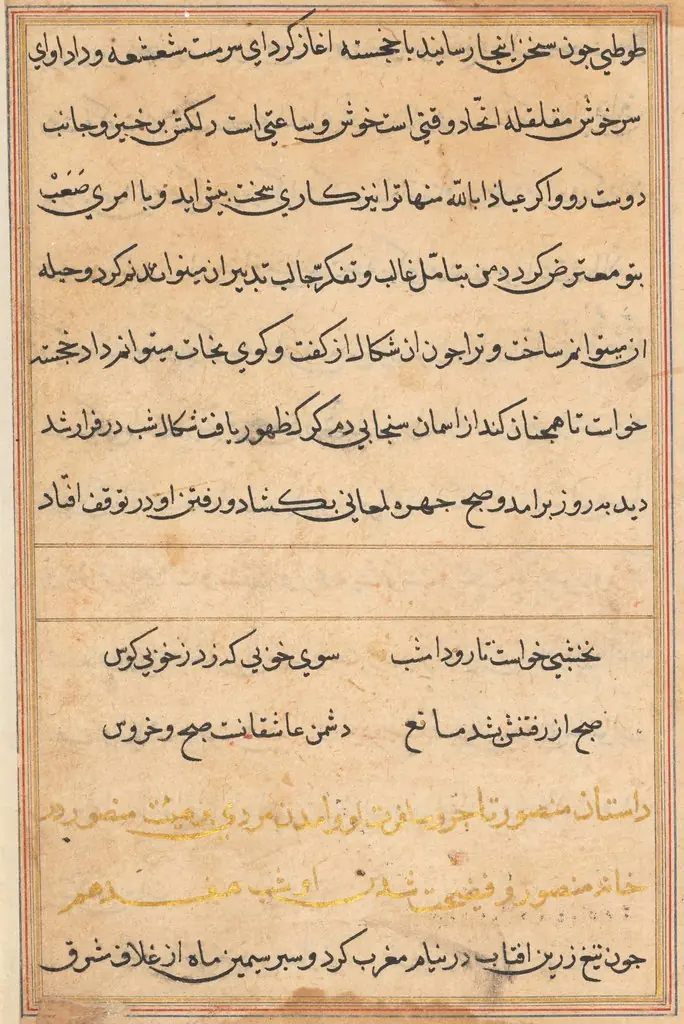 Page from Tales of a Parrot (Tuti-nama): text page
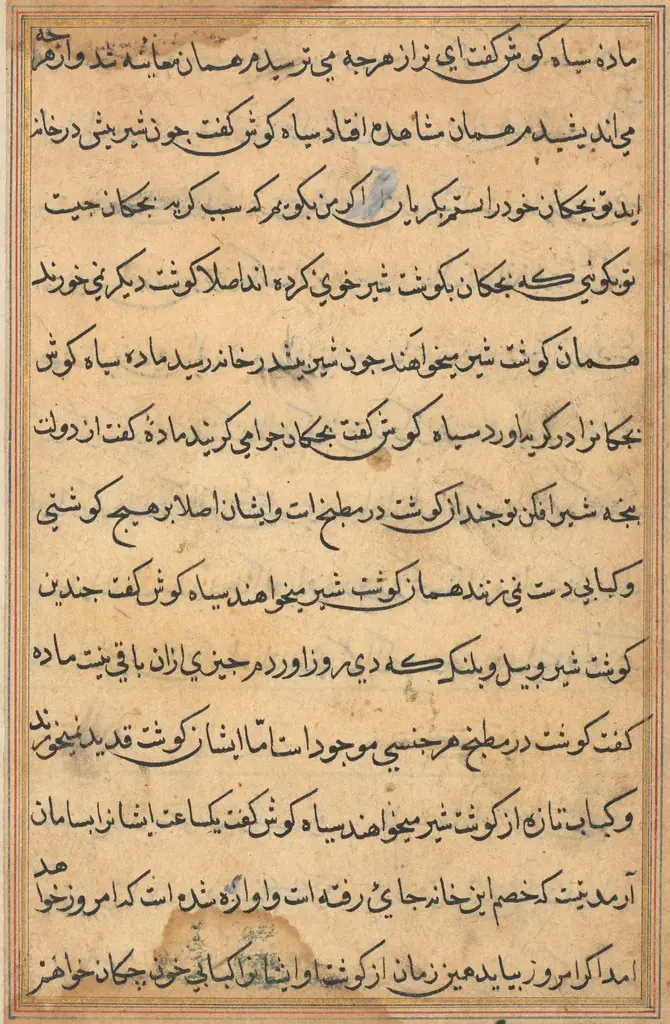 Page from Tales of a Parrot (Tuti-nama): text page
 Page from Tales of a Parrot (Tuti-nama): text page
 Page from Tales of a Parrot (Tuti-nama): text page