Artwork
Page from Tales of a Parrot (Tuti-nama): text page
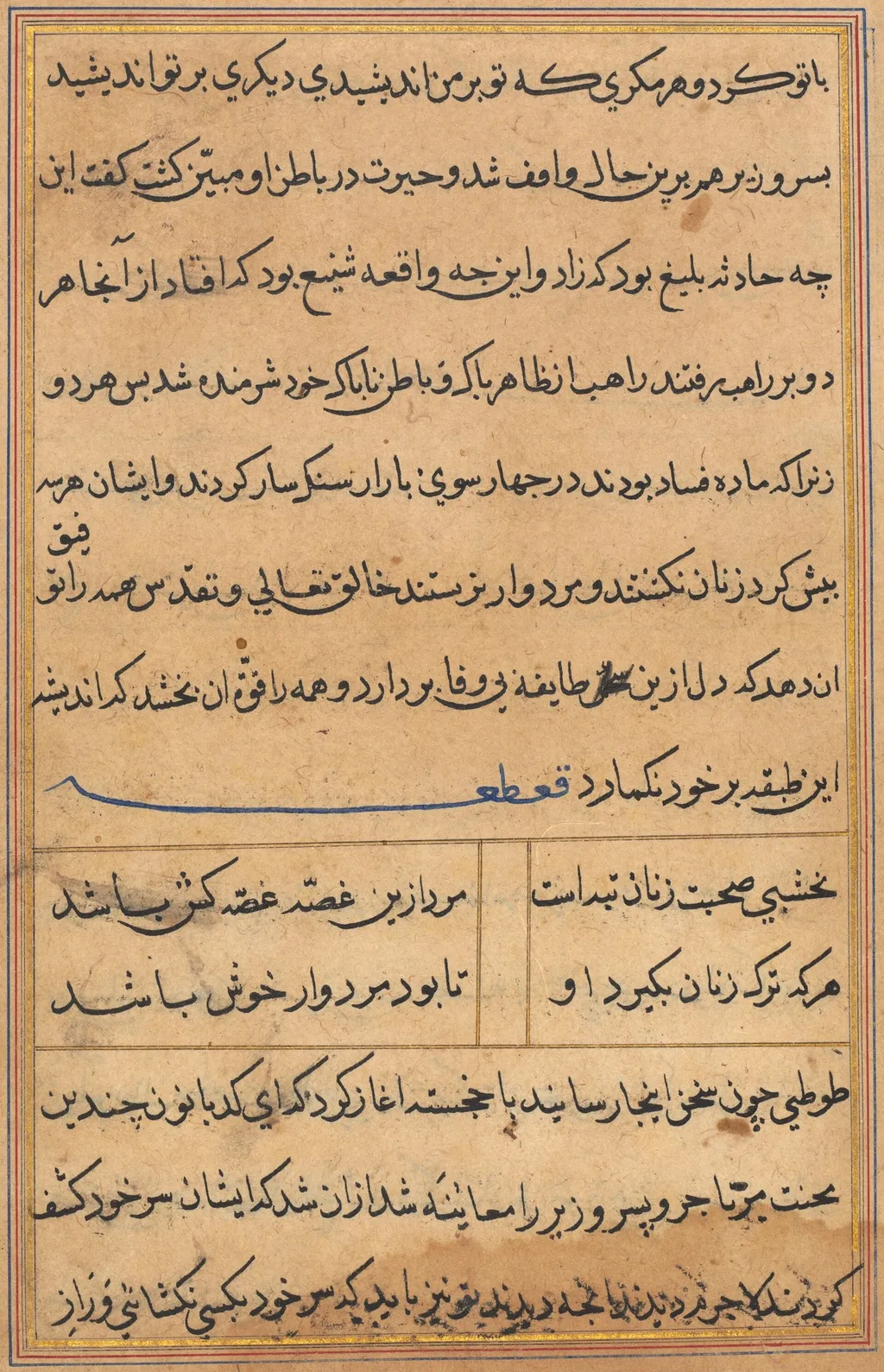
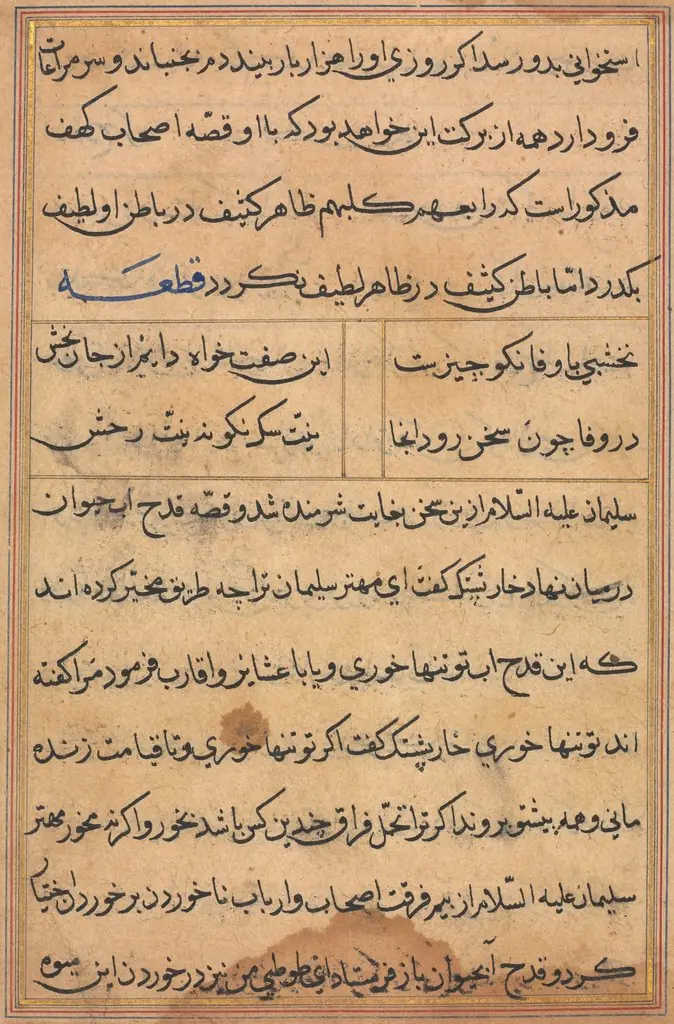
Page from Tales of a Parrot (Tuti-nama): text page is an unspecified painting. It dates from 1560 and is held in the collection of the Cleveland Museum of Art. This object is a single leaf from the Persian illustrated manuscript known as Tuti‑nama or Tales of a Parrot.
About this work
Technique & Style
As a manuscript page, it functions as a support for text, though the specific materials such as ink or paper type are not detailed in the available records.
Created in 1560 within the Mughal Empire, this text page from the Tales of a Parrot (Tuti-nama) is classified as a painting. The work was produced by an unknown artist and is currently held in the collection of the Cleveland Museum of Art. As a manuscript page, it functions as a support for text, though the specific materials such as ink or paper type are not detailed in the available records. The piece represents the artistic output of the Mughal period during the mid-sixteenth century.
History & Provenance
Created in 1560 within the Mughal Empire, this text page from the Tuti-nama (Tales of a Parrot) was produced by an unidentified artist. The work entered the collection of the Cleveland Museum of Art, where it is held under the accession number 1962.279.86.a. While the specific circumstances of its original commission and the detailed chain of ownership prior to its museum acquisition are not recorded in the available documentation, its inception is firmly established in the mid-sixteenth century.
Page from Tales of a Parrot (Tuti-nama): text page is held at the Cleveland Museum of Art, where it is cataloged under accession number 1962.279.86.a. The work dates to 1560 and originates from the Mughal Empire. It has not been documented in any public exhibition history within the provided sources.
The folio exemplifies Mughal manuscript painting, combining Persian narrative tradition with Indian artistic sensibilities. Its presence in a U.S. museum collection underscores the transnational transmission of South Asian artistic heritage during the early modern period.
The work remains part of the Cleveland Museum of Art's manuscript collection, contributing to scholarly study of cross-cultural exchange in early modern visual culture.
Context
The miniature from the Tuti-nama manuscript, produced in 1560 within the Mughal imperial context, exemplifies the synthesis of Persian narrative traditions and emerging Mughal visual styles. Its presence in the Cleveland Museum of Art collection underscores scholarly interest in cross-cultural manuscript production, though the attribution to an unknown artist reflects ongoing debates about workshop practices in 16th-century Indian painting.
Overview
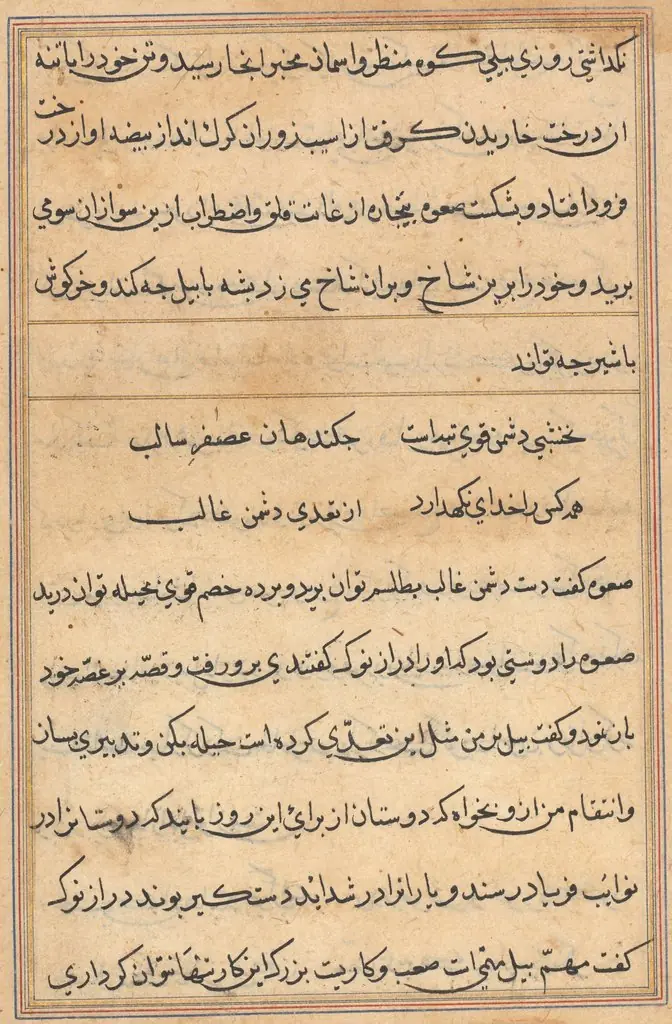
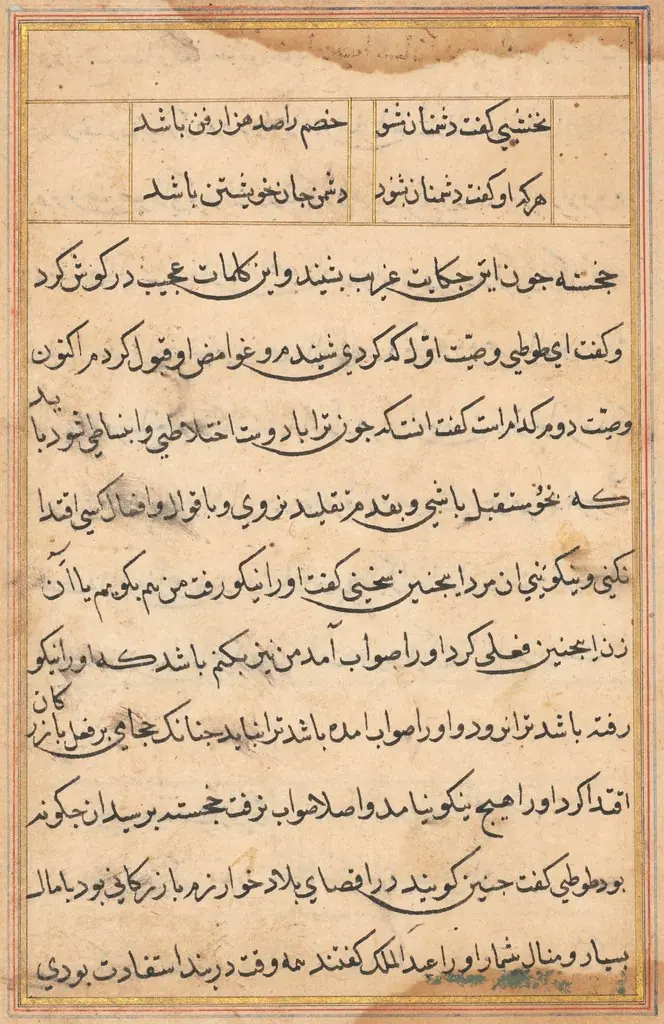
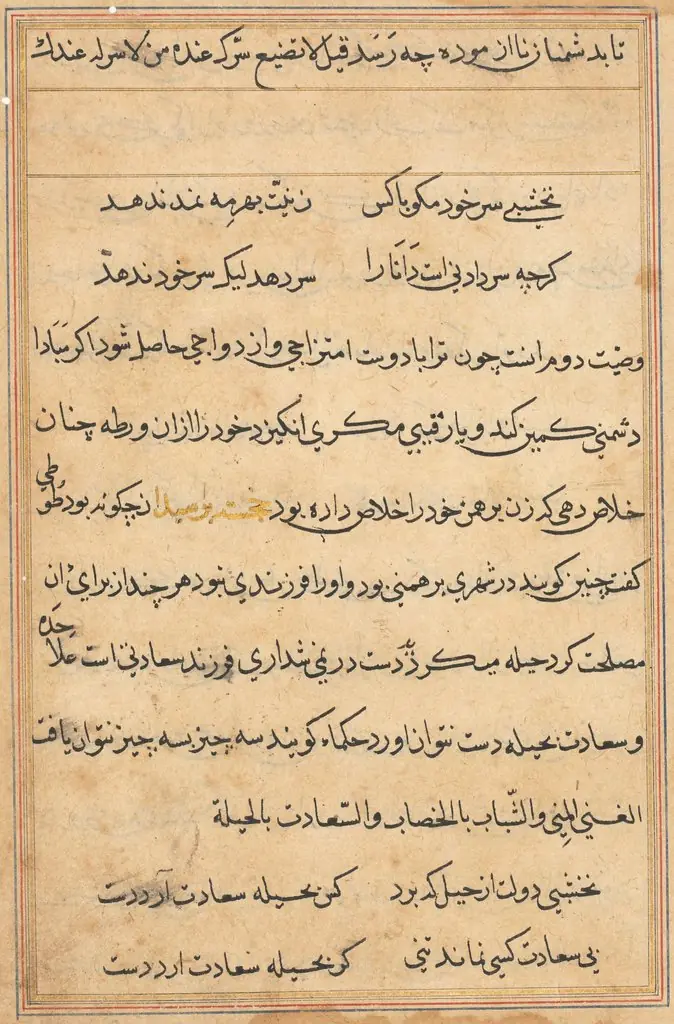
This object is a single leaf from the Persian illustrated manuscript known as Tuti‑nama or Tales of a Parrot. The page consists of a sheet of aged paper, yellowed with time and marked by faint brown specks, upon which dense black calligraphic text is set within a narrow gold‑lined frame. Small blue accents appear sporadically, and a brief passage at the bottom is rendered in a contrasting hue.
Subject & Meaning
The written portion contains a narrative drawn from the Tuti‑nama, a collection of moral and didactic stories traditionally conveyed through the voice of a parrot. The text’s purpose was instructional, offering ethical guidance through allegorical tales that were popular in Persian literary culture.
Artist & collection

- Page from Tales of a Parrot (Tuti-nama): text page
 Page from Tales of a Parrot (Tuti-nama): text page
 Page from Tales of a Parrot (Tuti-nama): text page
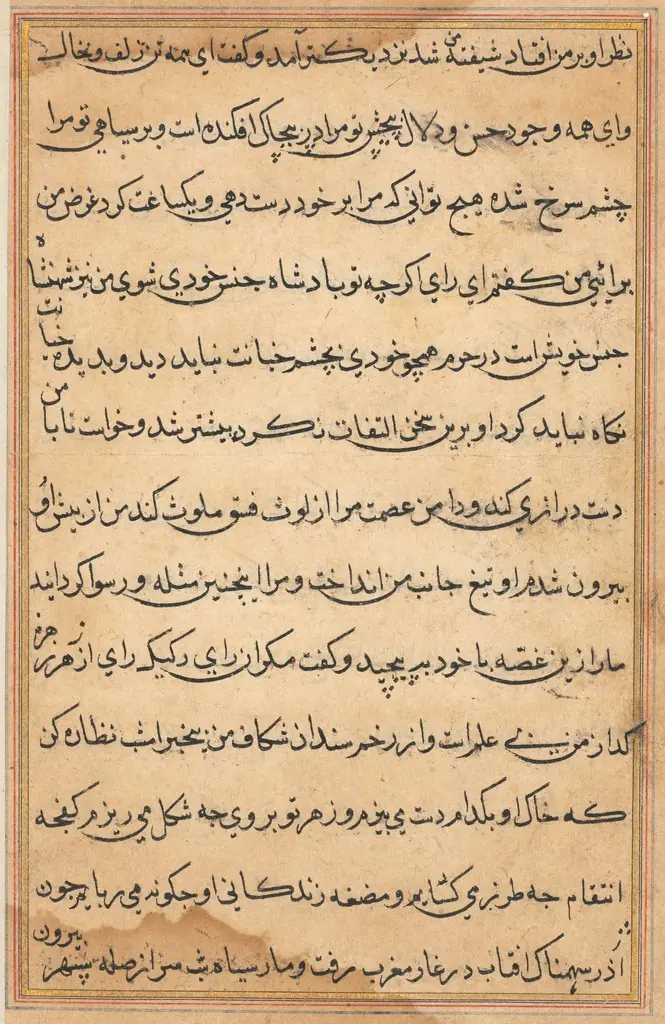 Page from Tales of a Parrot (Tuti-nama): text page
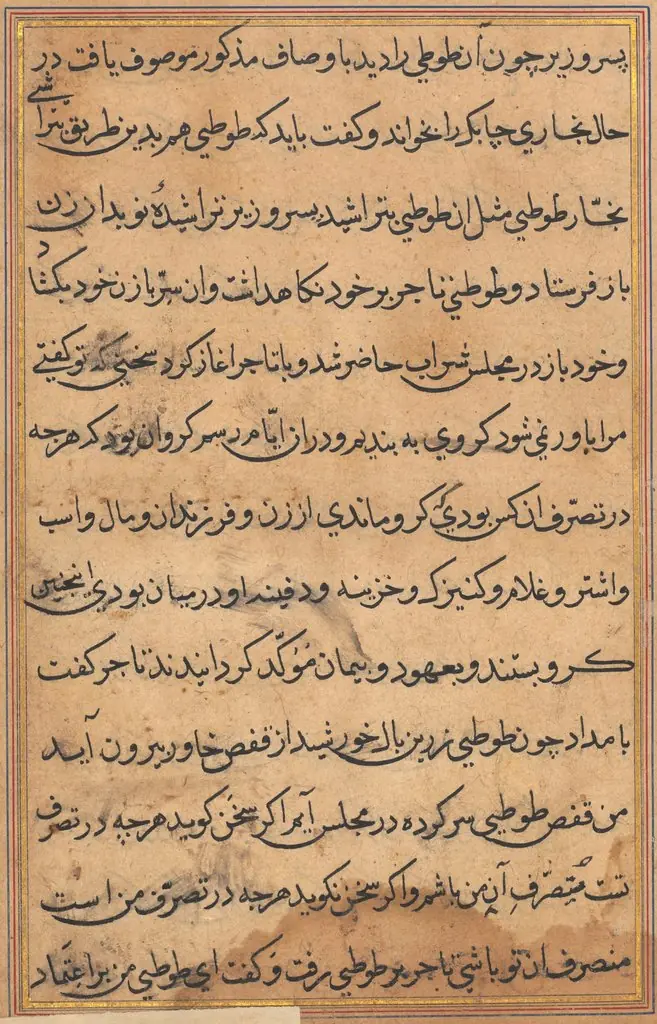 Page from Tales of a Parrot (Tuti-nama): text page
 Page from Tales of a Parrot (Tuti-nama): text page
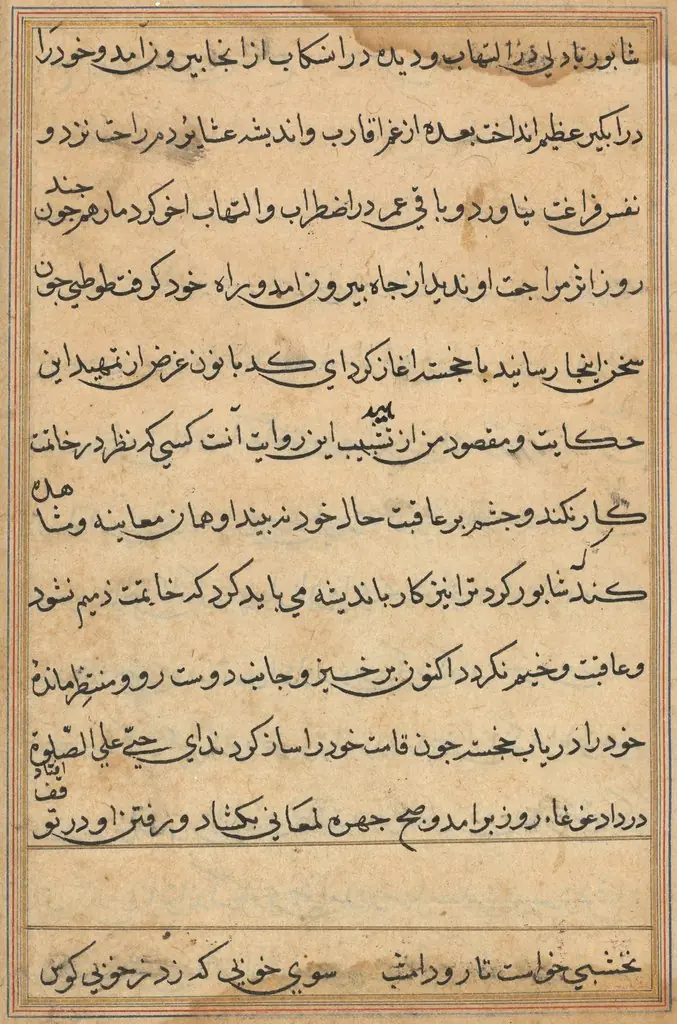 Page from Tales of a Parrot (Tuti-nama): text page
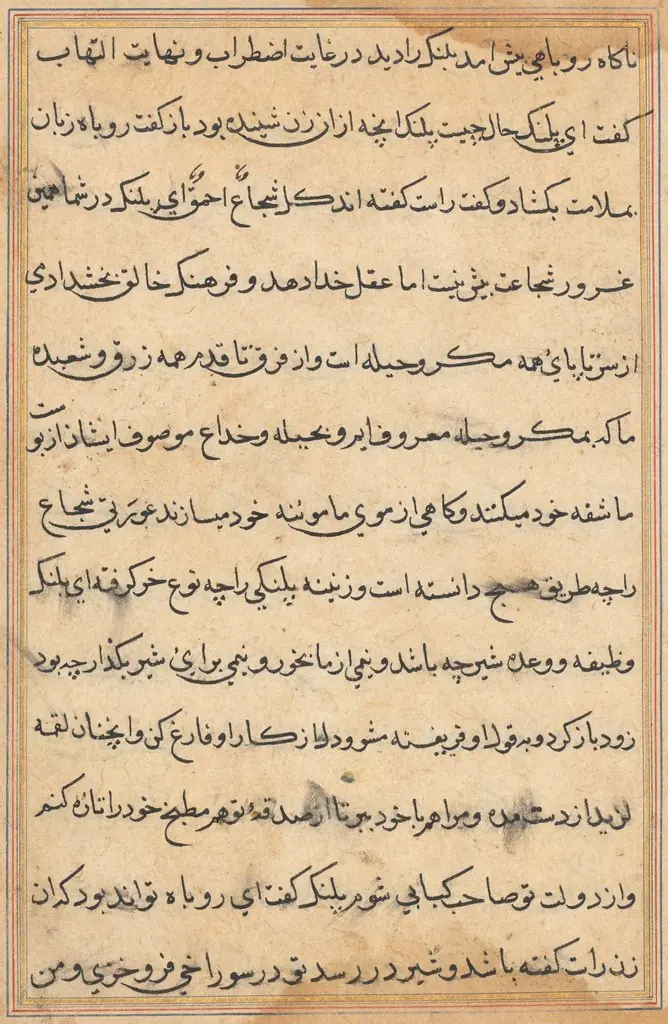 Page from Tales of a Parrot (Tuti-nama): text page
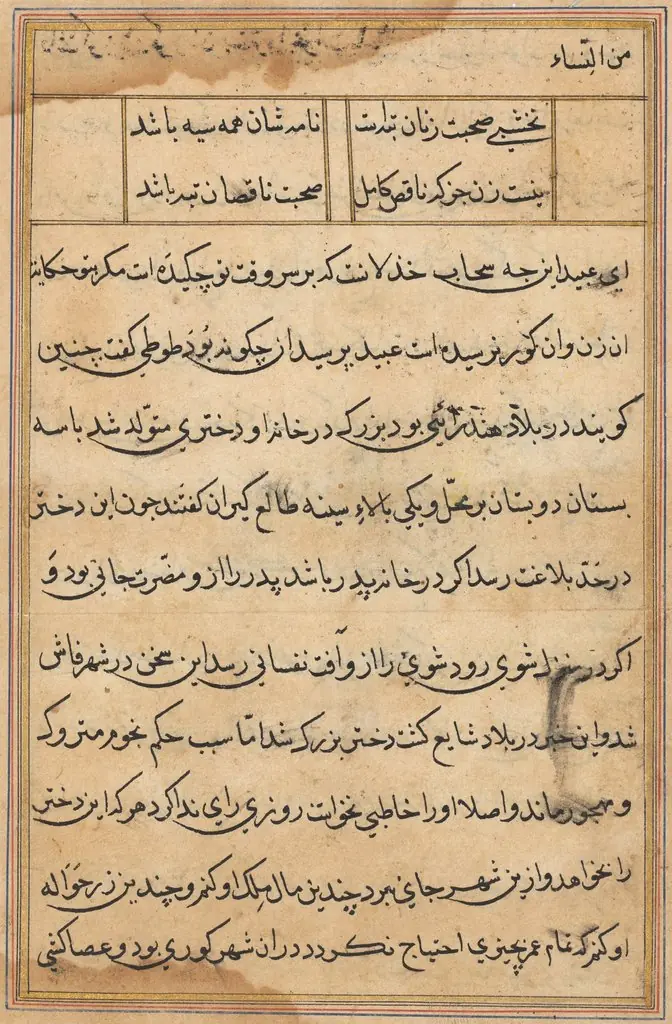 Page from Tales of a Parrot (Tuti-nama): text page
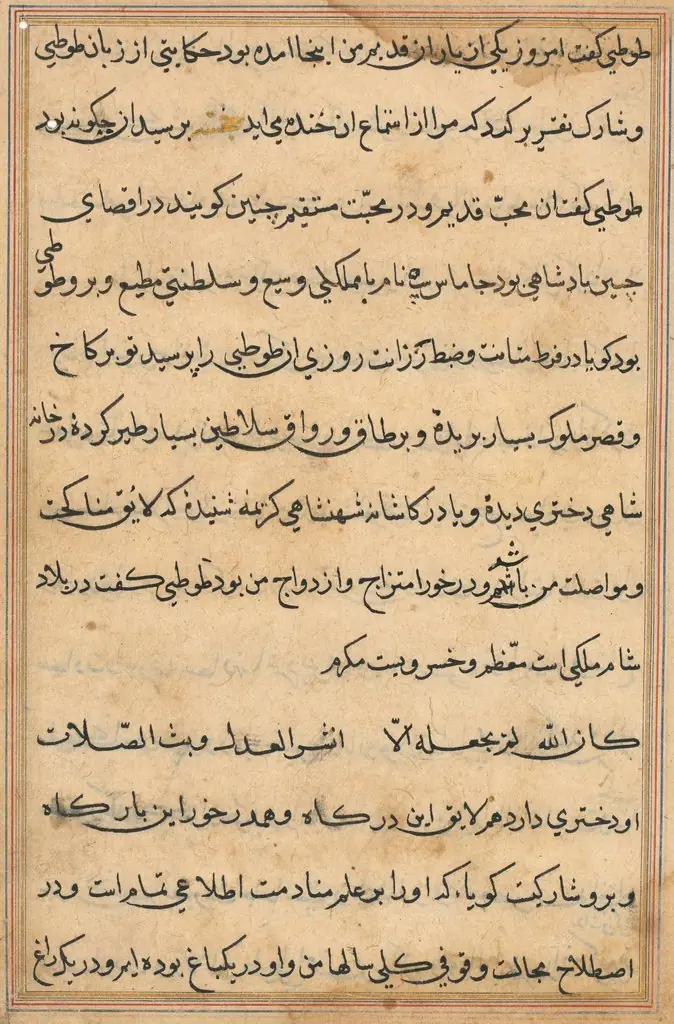 Page from Tales of a Parrot (Tuti-nama): text page
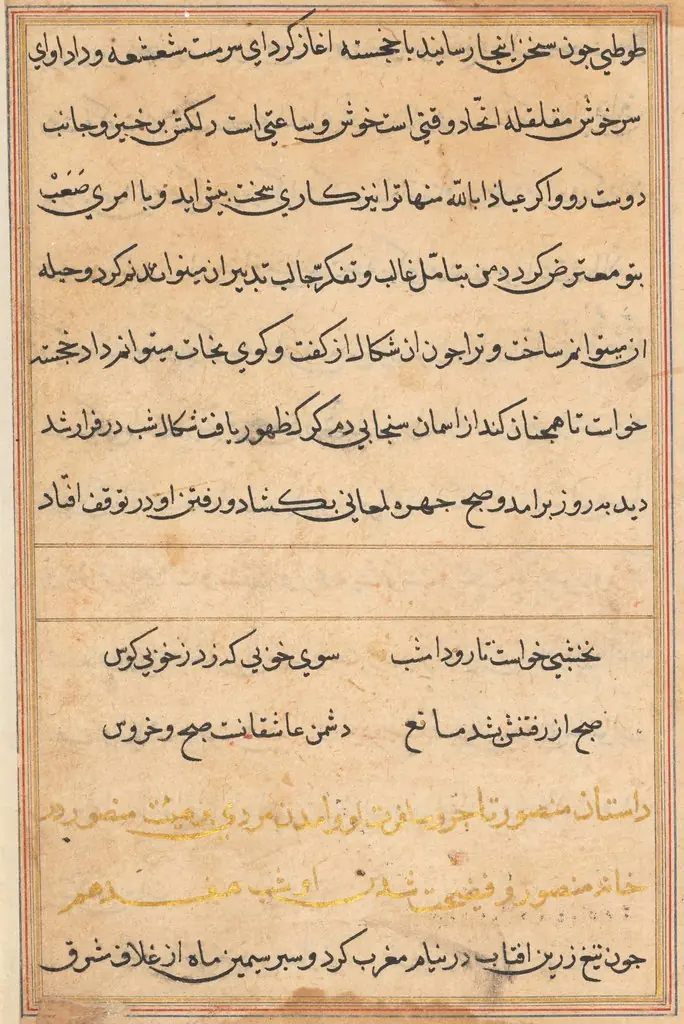 Page from Tales of a Parrot (Tuti-nama): text page
 Page from Tales of a Parrot (Tuti-nama): text page