Artwork
Page from Tales of a Parrot (Tuti-nama): text page
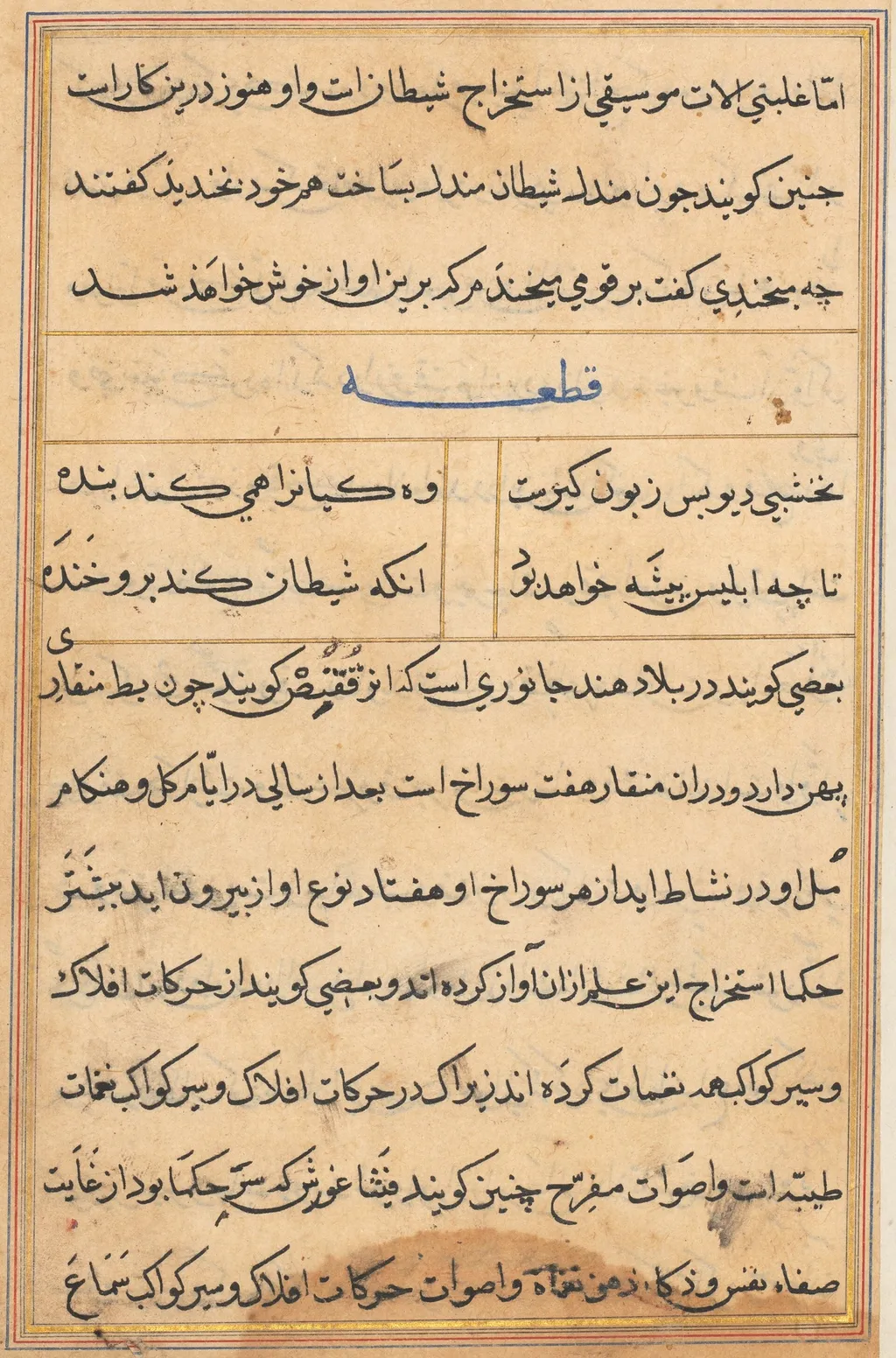
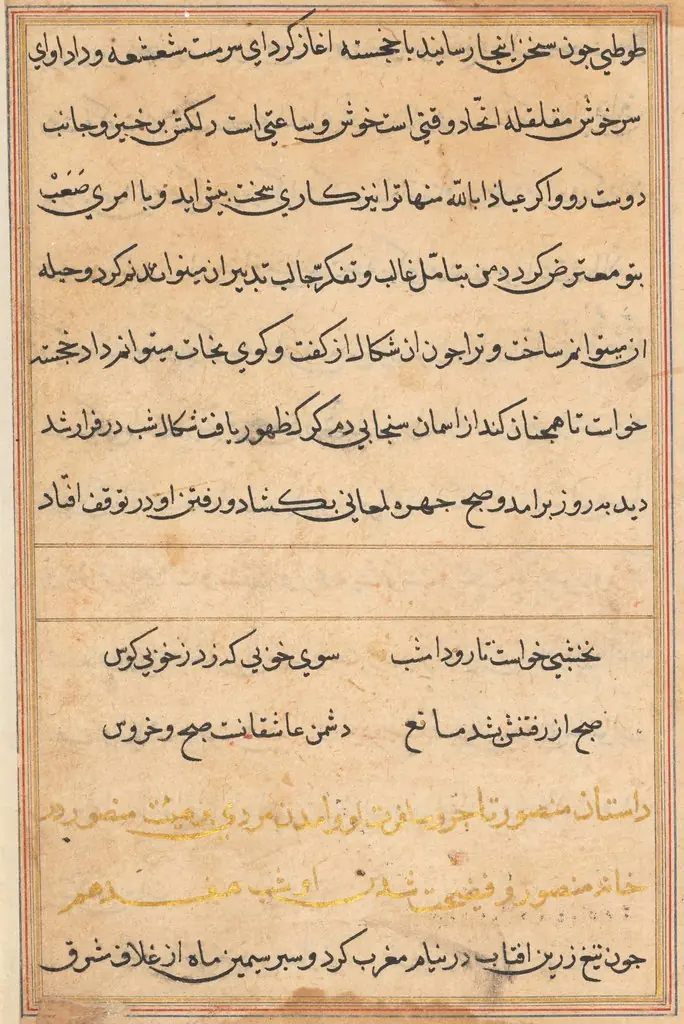
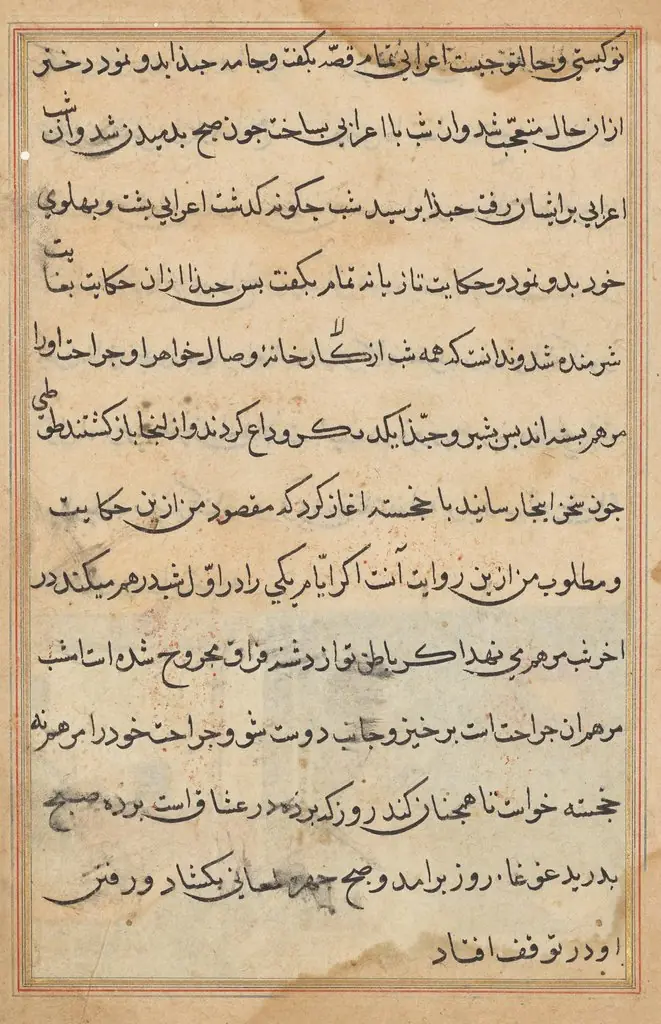
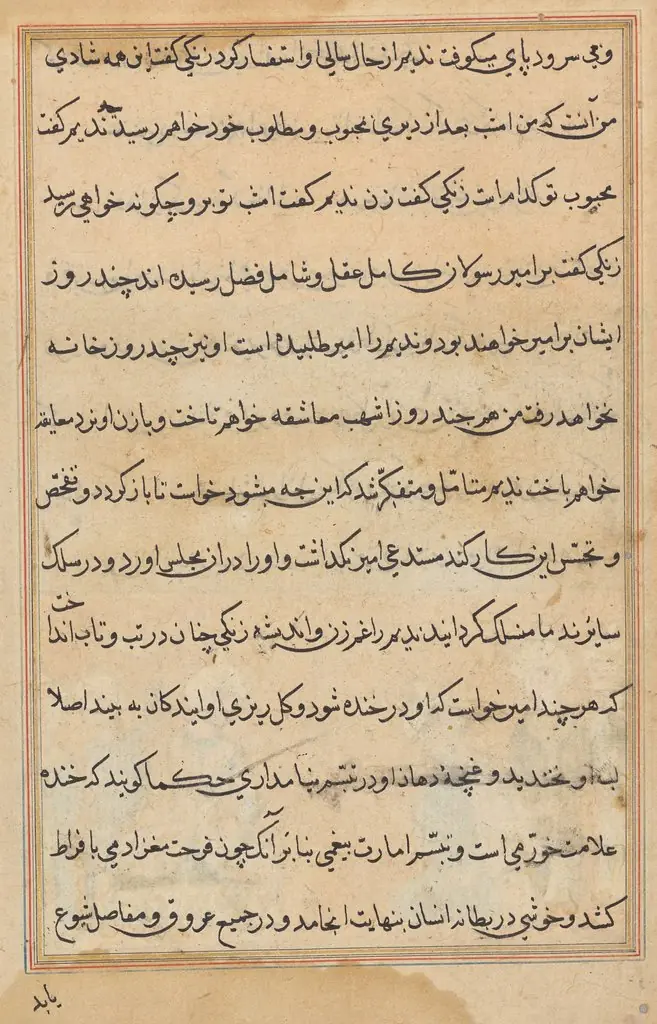
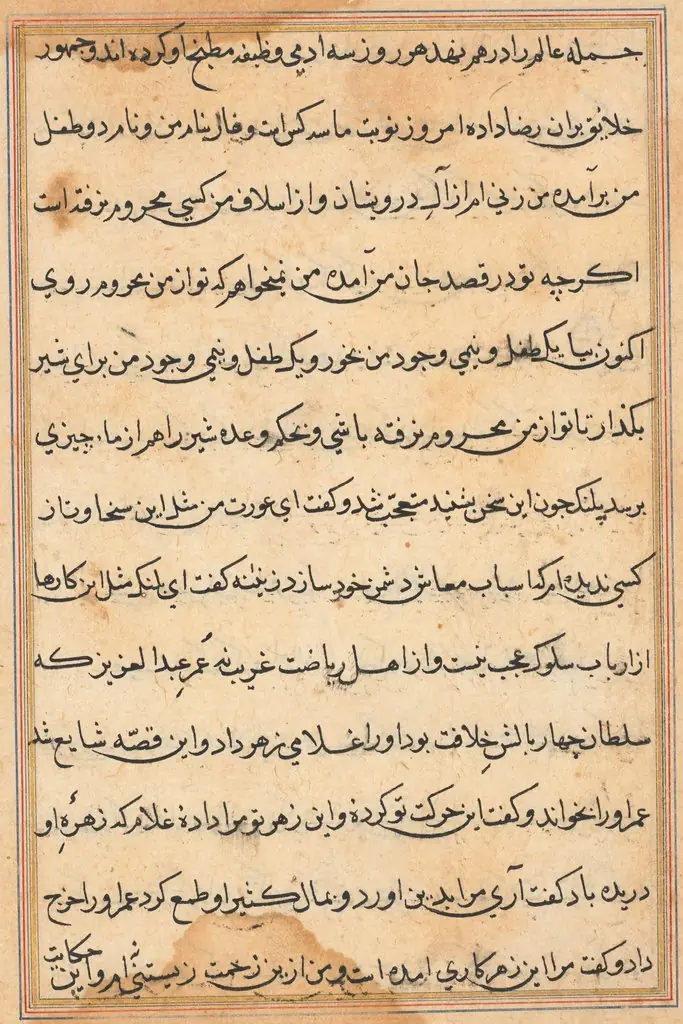
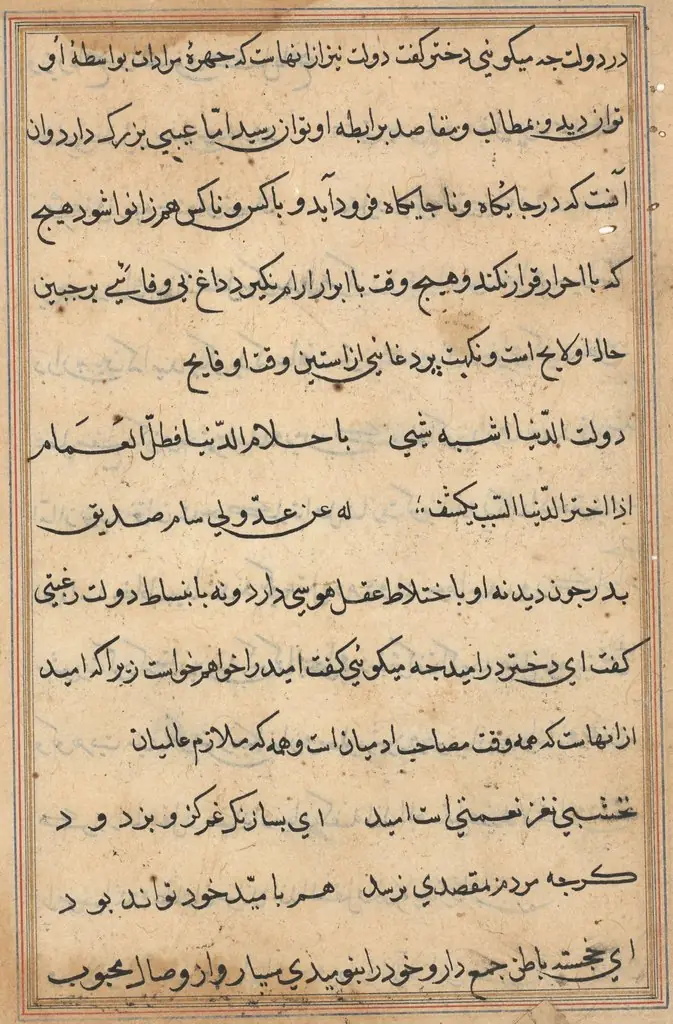
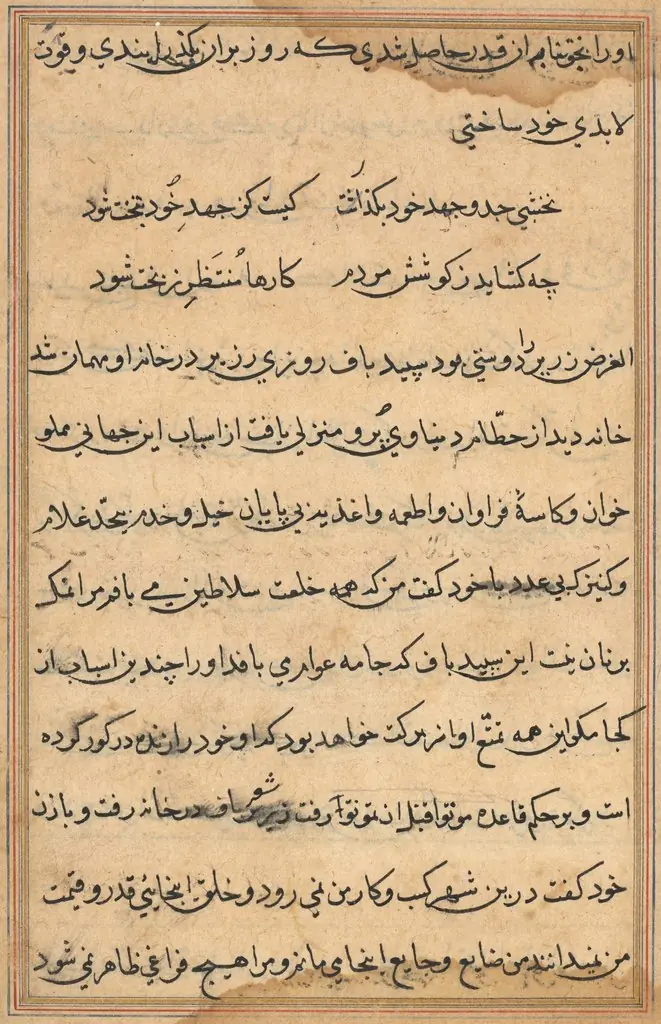
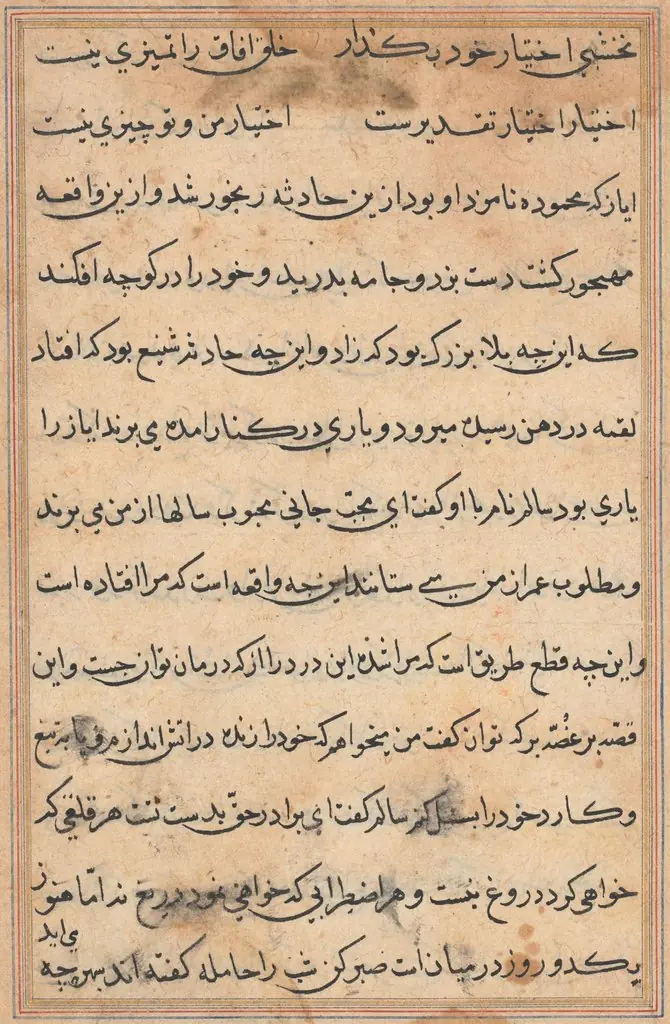
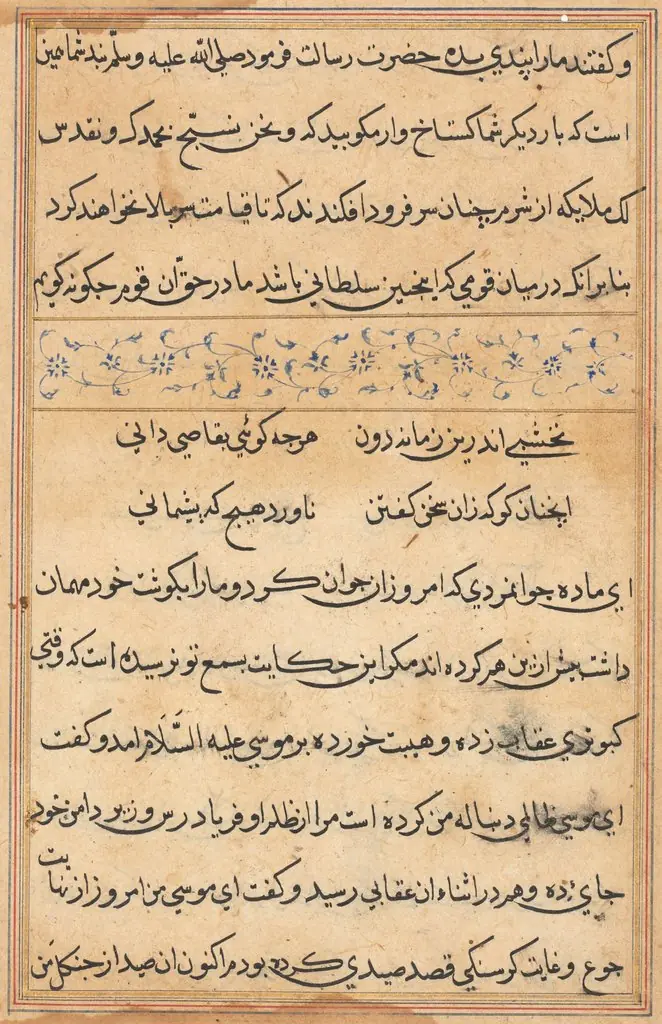
Page from Tales of a Parrot (Tuti-nama): text page is an unspecified painting. It dates from 1560 and is held in the collection of the Cleveland Museum of Art. This object is a single folio from the illustrated manuscript known as the Tales of a Parrot, or Tuti‑nama.
About this work
Technique & Style
The support remains stable with minor surface wear along the edges, though no structural damage is noted in the handling record.
The page is a miniature painting created on paper using tempera and ink, characteristic of Mughal book illustration. Pigment application shows fine brushwork with outlined contours typical of 16th-century Persian-influenced court painting. The support remains stable with minor surface wear along the edges, though no structural damage is noted in the handling record.
Formal composition features a central narrative text block framed by minimal decorative motifs, reflecting the restrained elegance of courtly manuscript production.
History & Provenance
The painting is housed in the Cleveland Museum of Art, where it is catalogued under accession number 1962.279.109.a. It was created in 1560 within the Mughal Empire and has remained in the museum's collection since its acquisition, with no recorded temporary exhibitions listed in the available documentation.
Context
The miniature originates from the Mughal imperial atelier during Akbar's reign when Persianate narrative painting merged with local traditions, reflecting the cosmopolitan artistic milieu of 16th-century India. Though attributed to an anonymous workshop, the work demonstrates the synthesis of Persian manuscript techniques and Indian sensibilities that defined elite visual culture of the period. The page's journey to the Cleveland Museum of Acquisition underscores ongoing scholarly interest in cross-cultural exchanges within Islamic art, though attribution complexities persist due to limited documentation of individual masters.
Its classification as a text page from a Tuti-nama manuscript highlights the didactic function of such illustrations in disseminating moral and mystical teachings through visual storytelling.
Overview
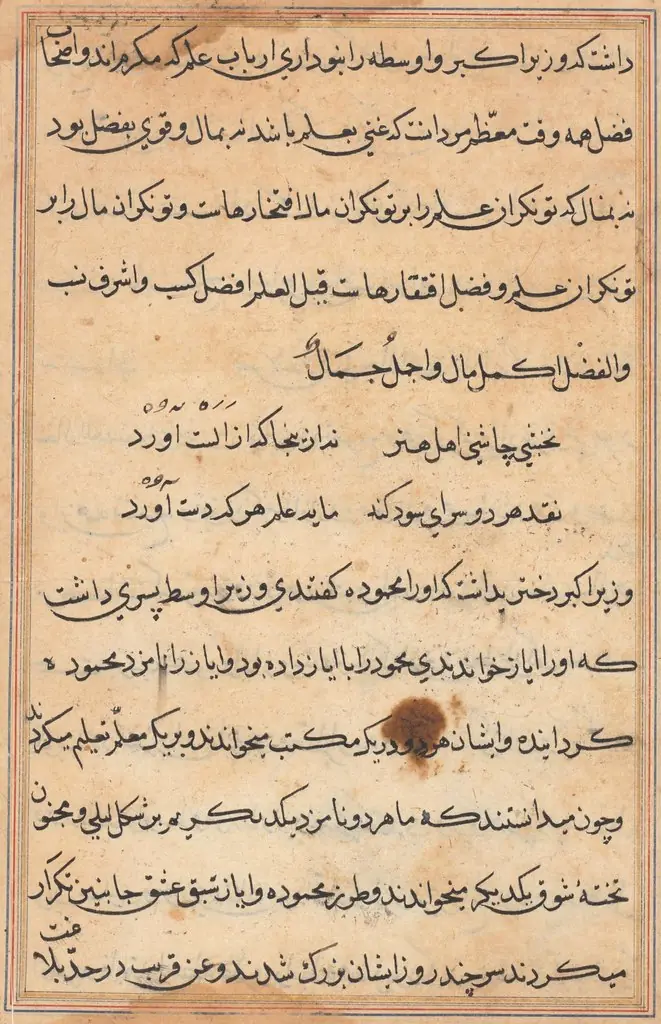
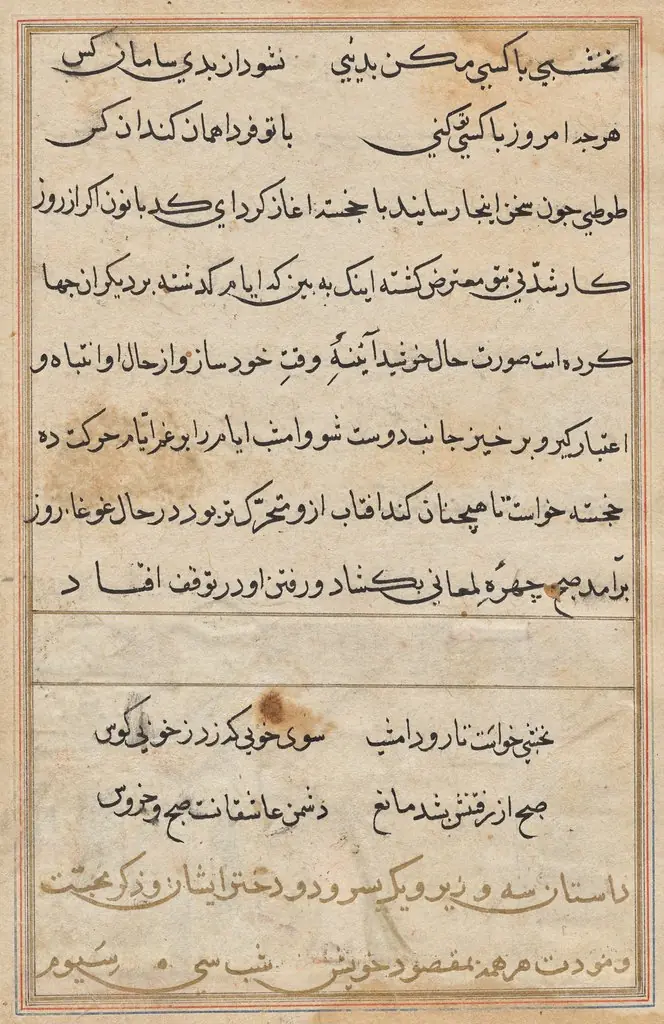
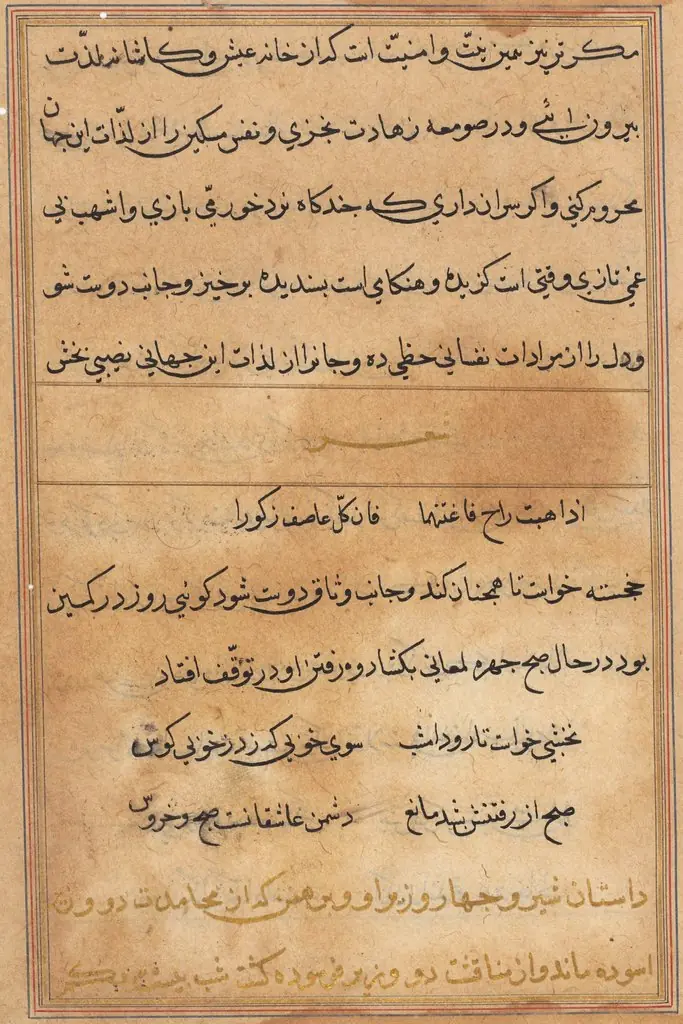
This object is a single folio from the illustrated manuscript known as the Tales of a Parrot, or Tuti‑nama. The page consists primarily of black Persian calligraphy, organized in tidy columns within a rectangular frame bordered by a narrow red and gold strip. The paper shows signs of age, including faint discolorations and irregular edges, indicating its historic origin.
Subject & Meaning
The text on the folio narrates one of the moral stories typical of the Tuti‑nama tradition, wherein a parrot recounts fables that convey ethical lessons. The Persian script suggests the work was intended for an educated audience familiar with literary allegory, using the bird’s voice as a didactic device.
Legacy
Pages like this exemplify the convergence of literary content and visual design in Persian manuscript culture, offering scholars insight into the aesthetics of calligraphy and the transmission of moral narratives across the Islamic world.
Artist & collection

- Page from Tales of a Parrot (Tuti-nama): text page
 Page from Tales of a Parrot (Tuti-nama): text page
 Page from Tales of a Parrot (Tuti-nama): text page
 Page from Tales of a Parrot (Tuti-nama): text page
 Page from Tales of a Parrot (Tuti-nama): text page
 Page from Tales of a Parrot (Tuti-nama): text page
 Page from Tales of a Parrot (Tuti-nama): text page
 Page from Tales of a Parrot (Tuti-nama): text page
 Page from Tales of a Parrot (Tuti-nama): text page
 Page from Tales of a Parrot (Tuti-nama): text page
 Page from Tales of a Parrot (Tuti-nama): text page
 Page from Tales of a Parrot (Tuti-nama): text page