Artwork
Page from Tales of a Parrot (Tuti-nama): text page
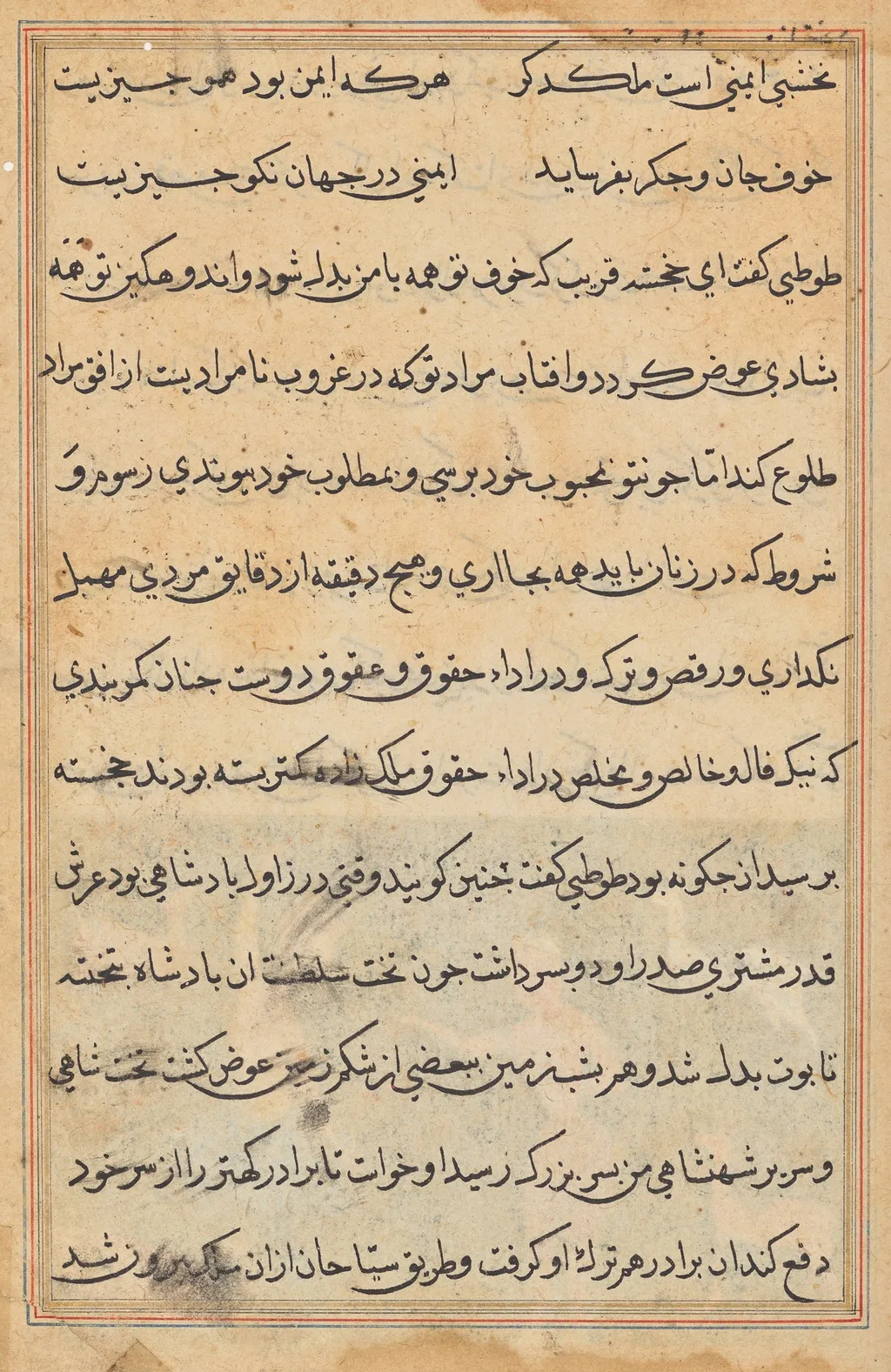
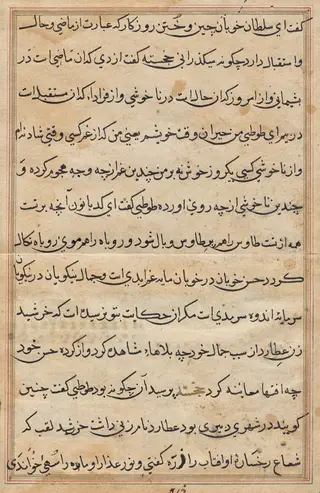
Page from Tales of a Parrot (Tuti-nama): text page is an unspecified painting. It dates from 1560 and is held in the collection of the Cleveland Museum of Art. This artifact is a single leaf from the illustrated manuscript Tales of a Parrot (Tuti‑nama).
About this work
Subject & Meaning
The page depicts a textual scene from the Persian narrative Tuti-nama, portraying a parrot's moral lesson within a scholarly setting.
The page depicts a textual scene from the Persian narrative Tuti-nama, portraying a parrot's moral lesson within a scholarly setting. The iconography includes a perched parrot, an open manuscript, and a contemplative figure, symbolizing wisdom, moral instruction, and the transmission of didactic tales. This work represents the integration of literary content with miniature painting traditions of the Mughal court, reflecting cultural exchange between Persian literary sources and Indian artistic practice. The subject underscores the didactic purpose of the text, emphasizing virtue and caution through visual allegory.
The miniature originates from the Mughal imperial atelier and showcases the synthesis of Persian narrative forms with Indian artistic execution, highlighting the cosmopolitan nature of 16th-century court culture.
History & Provenance
This single text folio from the Tales of a Parrot (Tuti-nama) is dated to circa 1560 and is attributed to an anonymous Mughal artist. It entered the Cleveland Museum of Art in 1962 as accession number 1962.279.131.a, where it remains in the permanent collection. The work was produced within the Mughal Empire during the mid-16th century, consistent with the manuscript’s known production context in that period.
Context
Created in 1560 within the Mughal Empire, this text page from the Tales of a Parrot (Tuti-nama) represents a foundational moment in the development of Mughal painting. The work is attributed to an unknown artist, reflecting the collaborative workshop practices characteristic of early imperial ateliers where individual signatures were often secondary to the collective output. As part of a manuscript produced during the reign of Emperor Akbar, the page exemplifies the synthesis of Persian narrative traditions with emerging Indian stylistic elements that defined the era's artistic evolution.
The Cleveland Museum of Art holds this specific leaf, preserving a key example of the transition toward a distinct Mughal visual language.
Overview
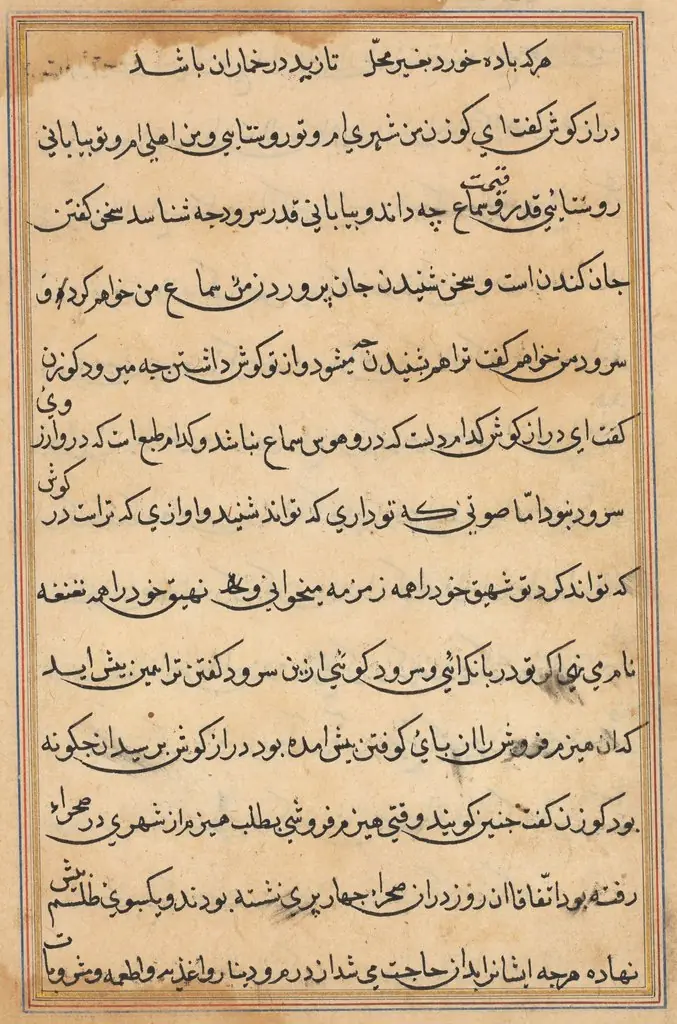
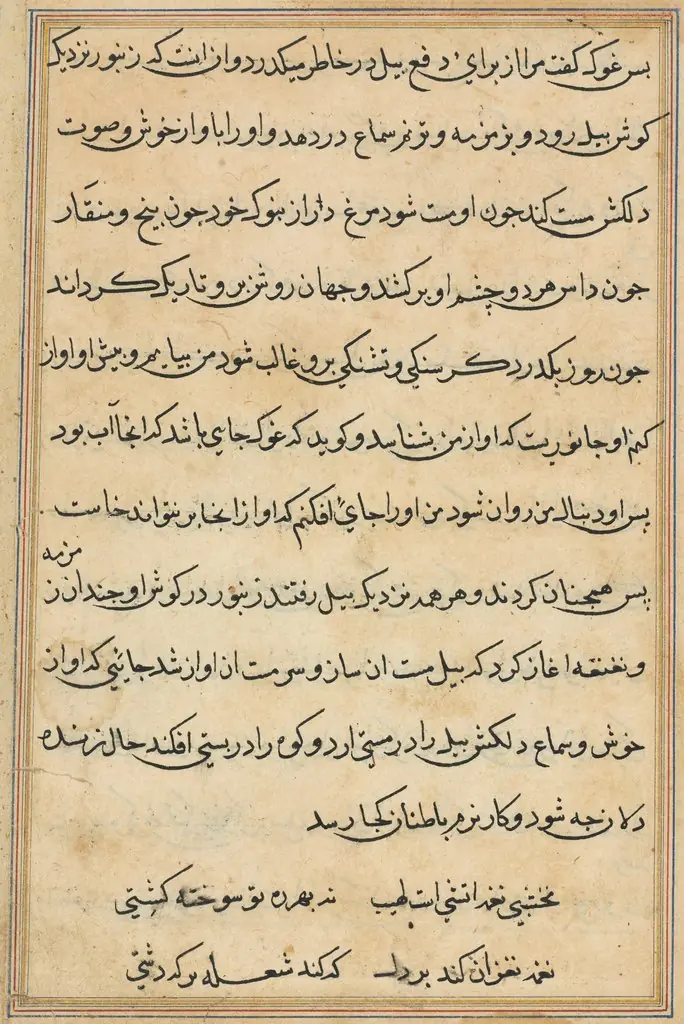
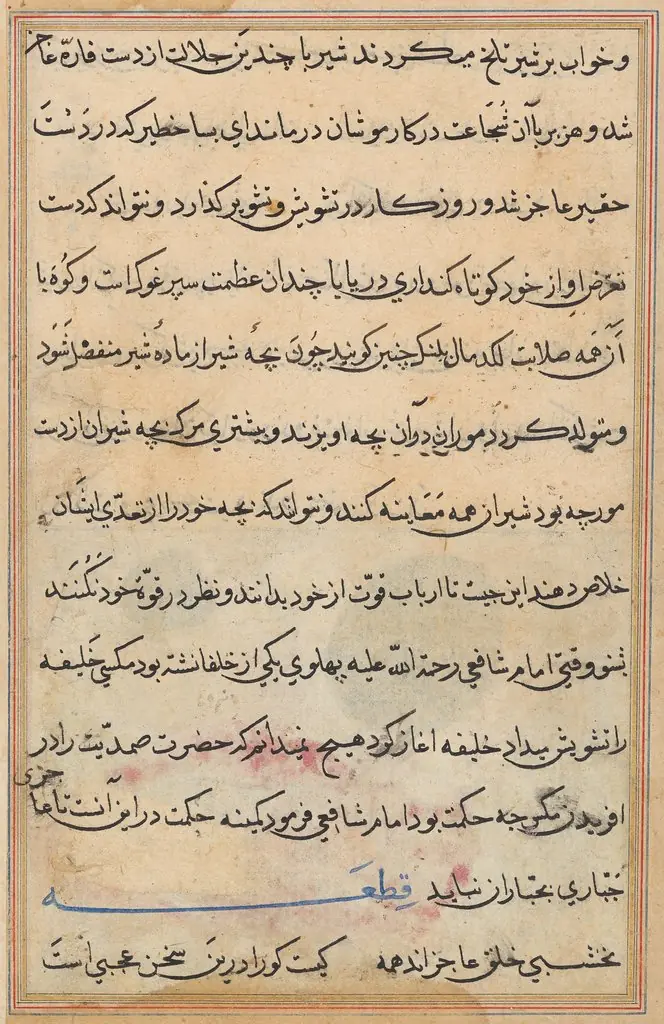
This artifact is a single leaf from the illustrated manuscript Tales of a Parrot (Tuti‑nama). Rendered on light‑colored paper, the surface is densely covered with black calligraphic script arranged in tight, orderly rows. A slender red border outlines the page, and the paper shows signs of age, including faint ink bleed and surface spotting.
Technique & Style
The calligraphy is executed in a flowing black ink, with each character meticulously formed by hand. The script’s curves intertwine like vines, creating a continuous visual rhythm across the page. A thin red pigment line frames the margins, providing a subtle decorative contrast to the monochrome text.
Artist & collection

- Page from Tales of a Parrot (Tuti-nama): text page
 Page from Tales of a Parrot (Tuti-nama): text page
 Page from Tales of a Parrot (Tuti-nama): text page
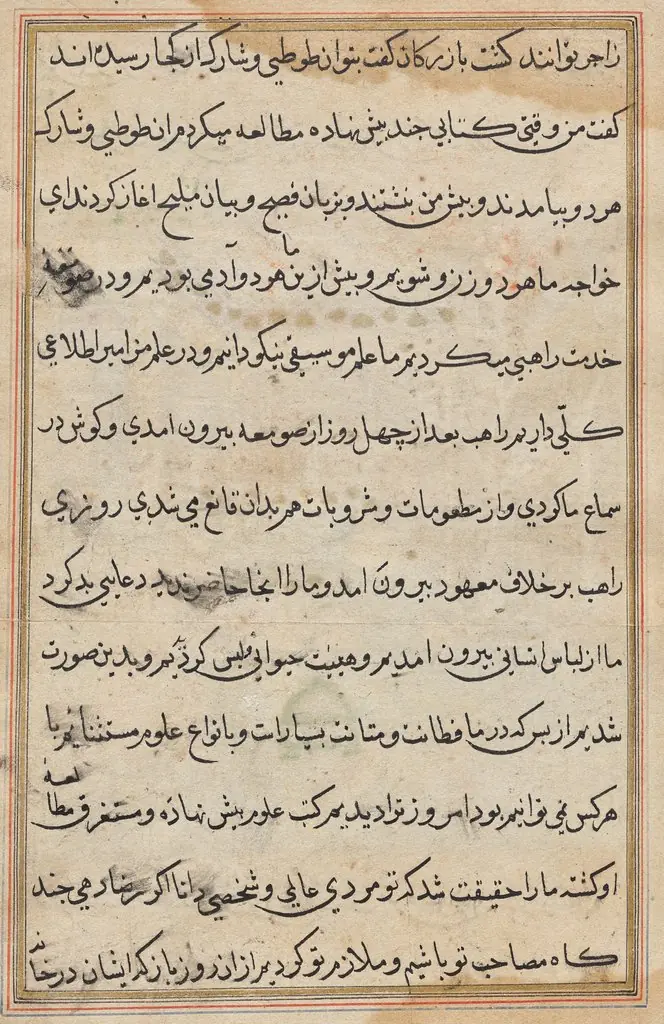 Page from Tales of a Parrot (Tuti-nama): text page
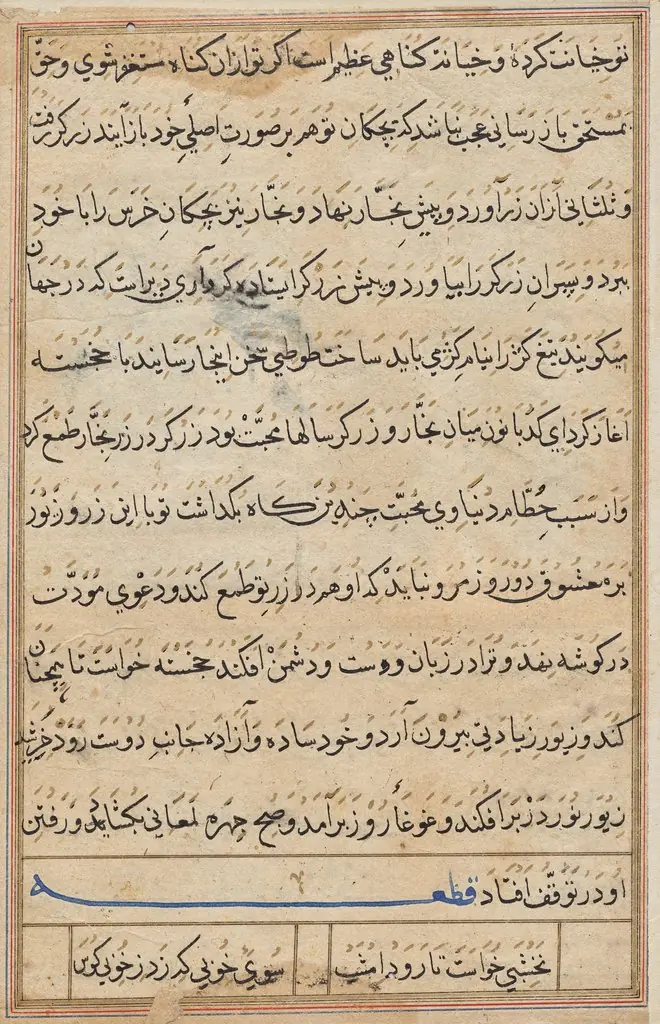 Page from Tales of a Parrot (Tuti-nama): text page
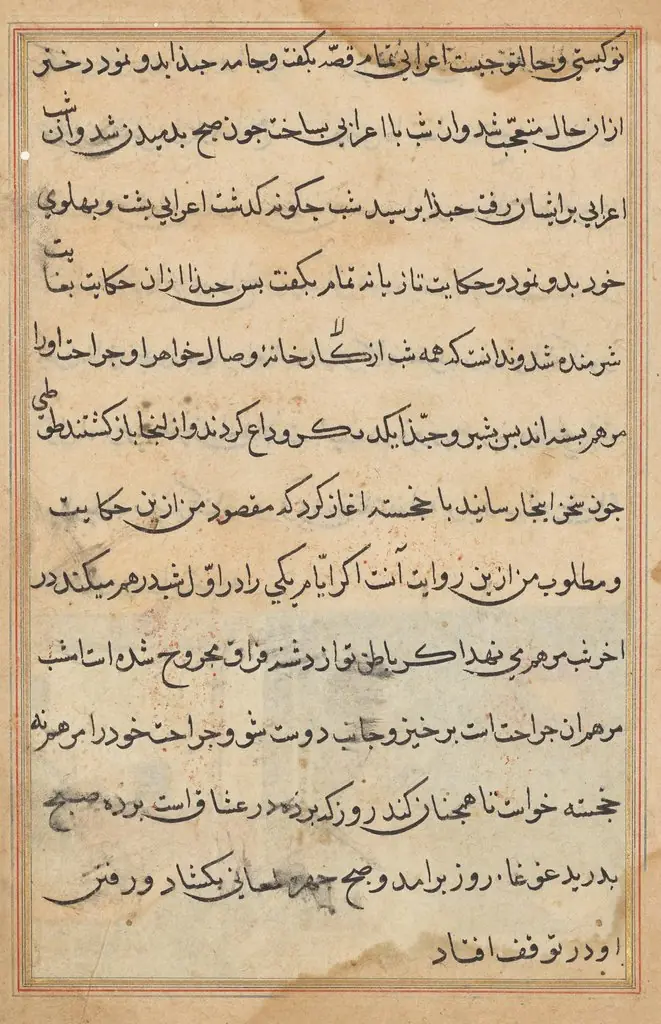 Page from Tales of a Parrot (Tuti-nama): text page
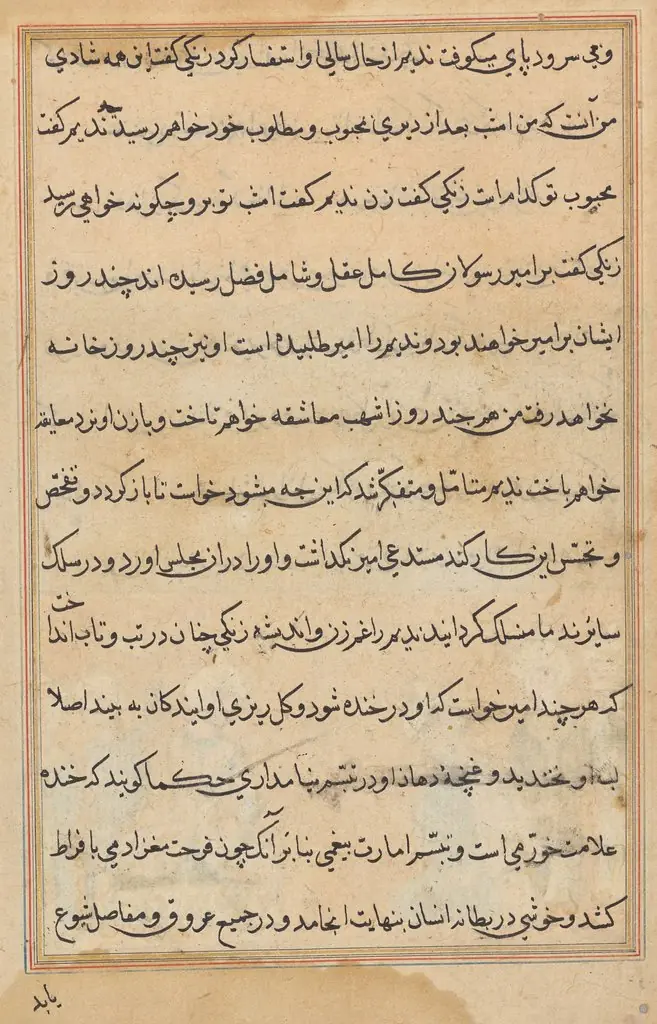 Page from Tales of a Parrot (Tuti-nama): text page
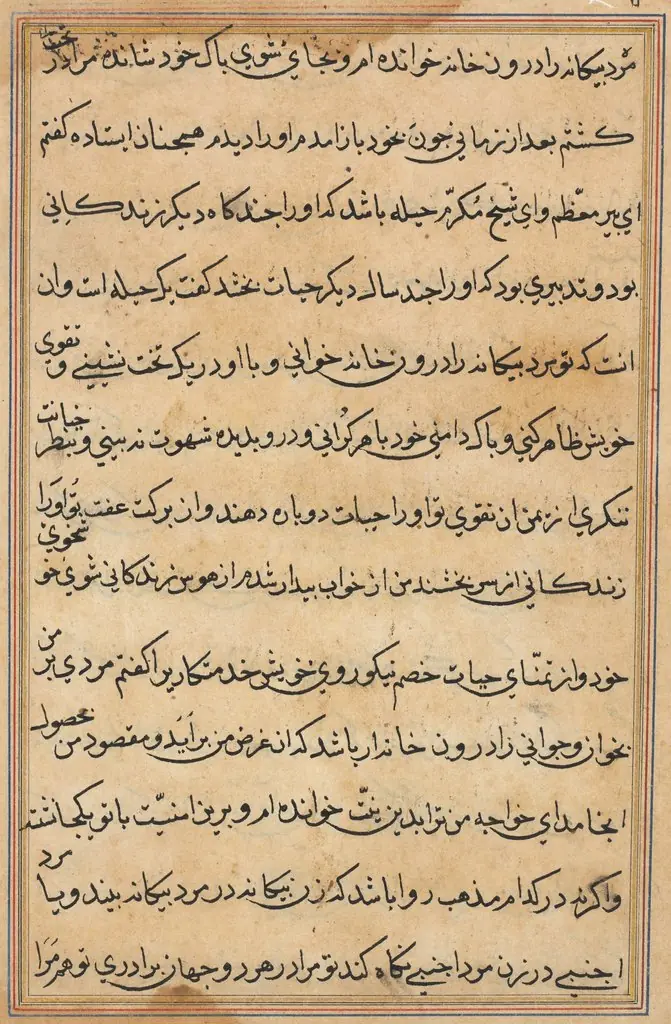 Page from Tales of a Parrot (Tuti-nama): text page
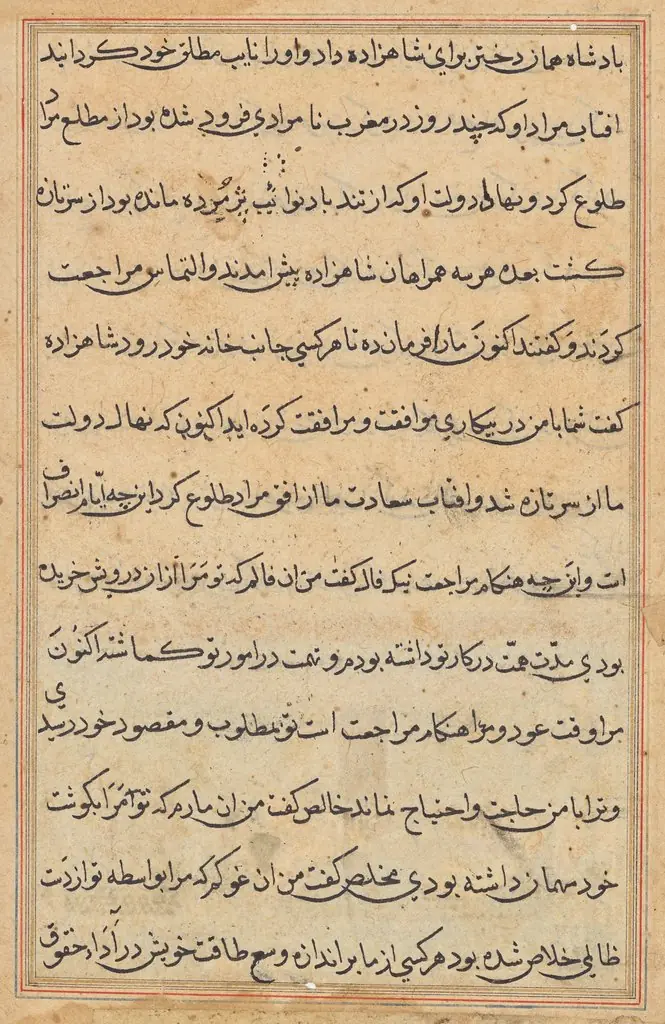 Page from Tales of a Parrot (Tuti-nama): text page
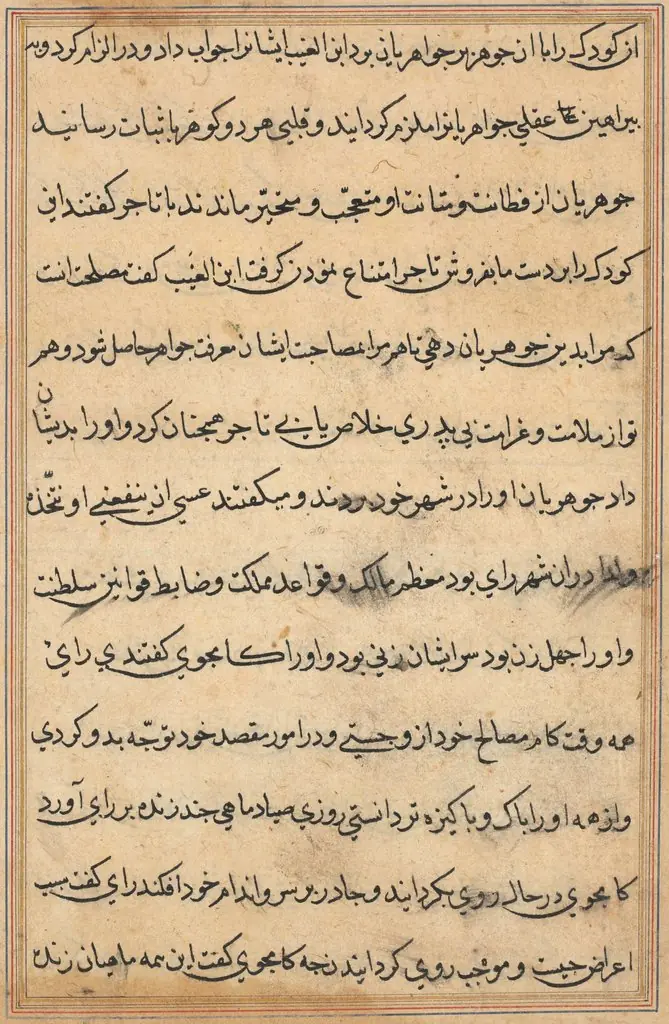 Page from Tales of a Parrot (Tuti-nama): text page
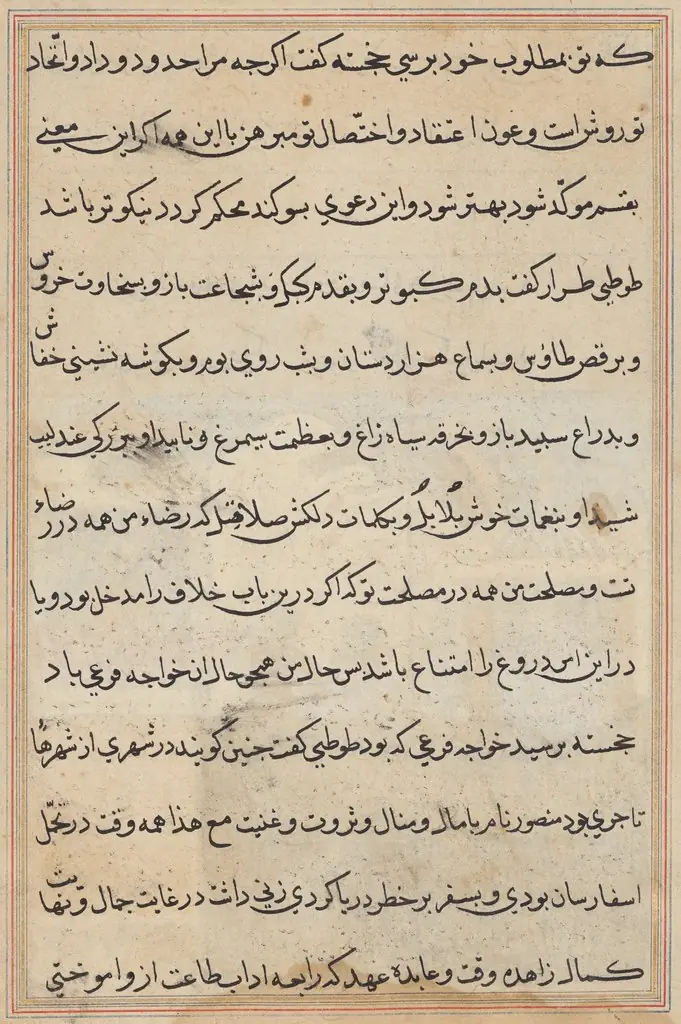 Page from Tales of a Parrot (Tuti-nama): text page
 Page from Tales of a Parrot (Tuti-nama): text page