Artwork
Page from Tales of a Parrot (Tuti-nama): text page
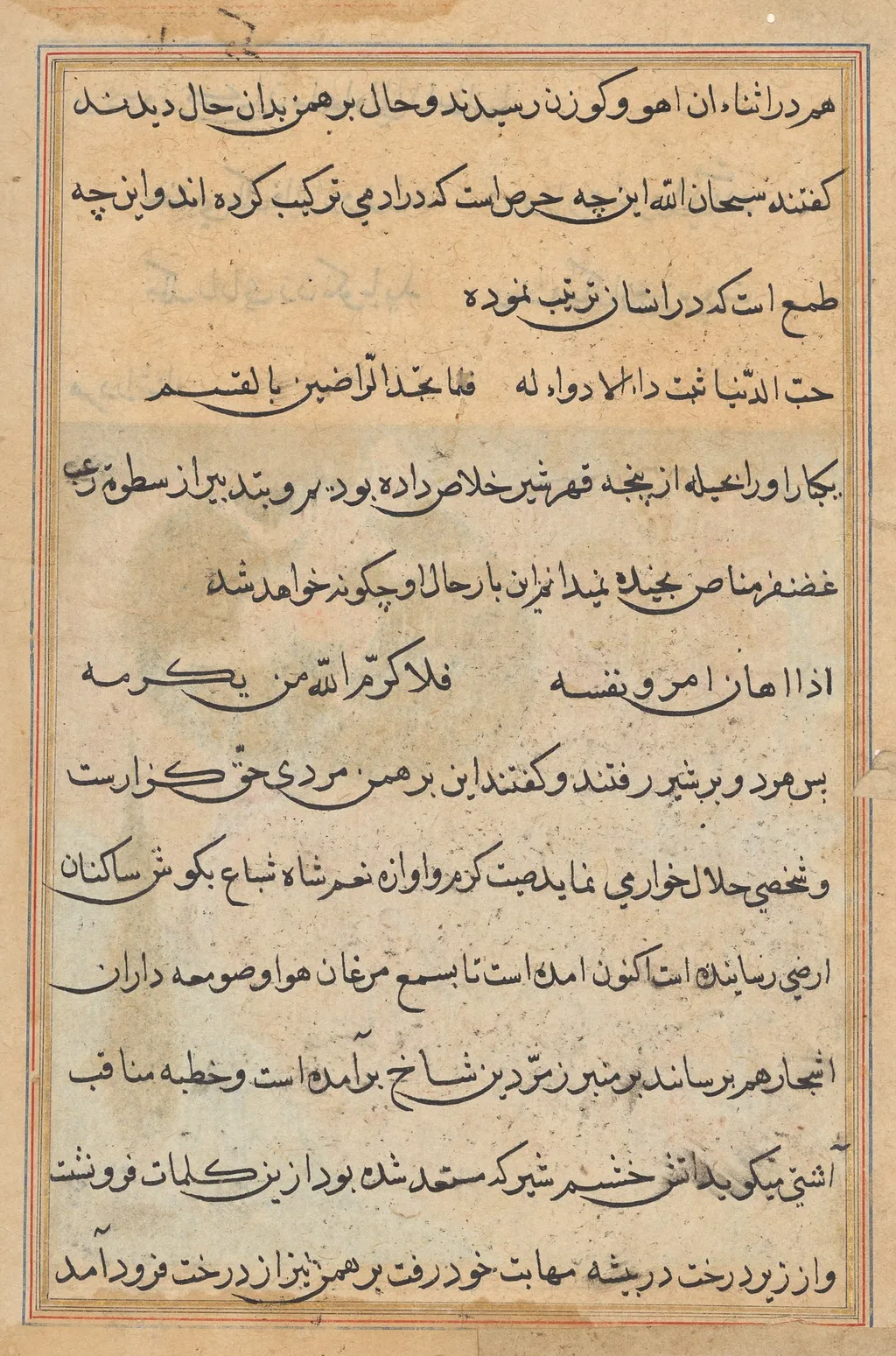
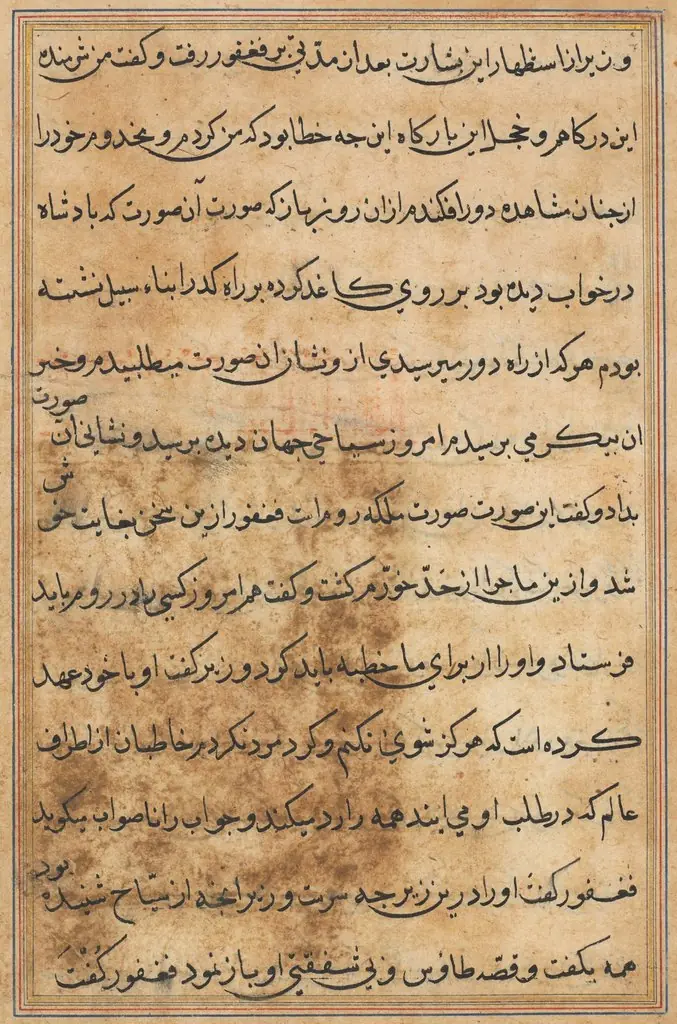
Page from Tales of a Parrot (Tuti-nama): text page is an unspecified painting. It dates from 1560 and is held in the collection of the Cleveland Museum of Art. The object is a painted page from the manuscript known as Tales of a Parrot (Tuti‑nama).
About this work
History & Provenance
This text page from the Tales of a Parrot (Tuti-nama), created in 1560 within the Mughal Empire, is held by the Cleveland Museum of Art in Cleveland.
The miniature page originates from a 1560 manuscript produced during the Mughal period, likely commissioned within elite courtly circles. It was created in India as part of an illustrated Tuti-nama manuscript, reflecting the artistic patronage of the era. The work entered the collection of the Cleveland Museum of Art, where it remains today.
This text page from the Tales of a Parrot (Tuti-nama), created in 1560 within the Mughal Empire, is held by the Cleveland Museum of Art in Cleveland. The museum accessioned the work in 1962, assigning it the inventory number 1962.279.152.b. The page is part of the museum's collection of paintings attributed to an unknown artist from the period.
Overview
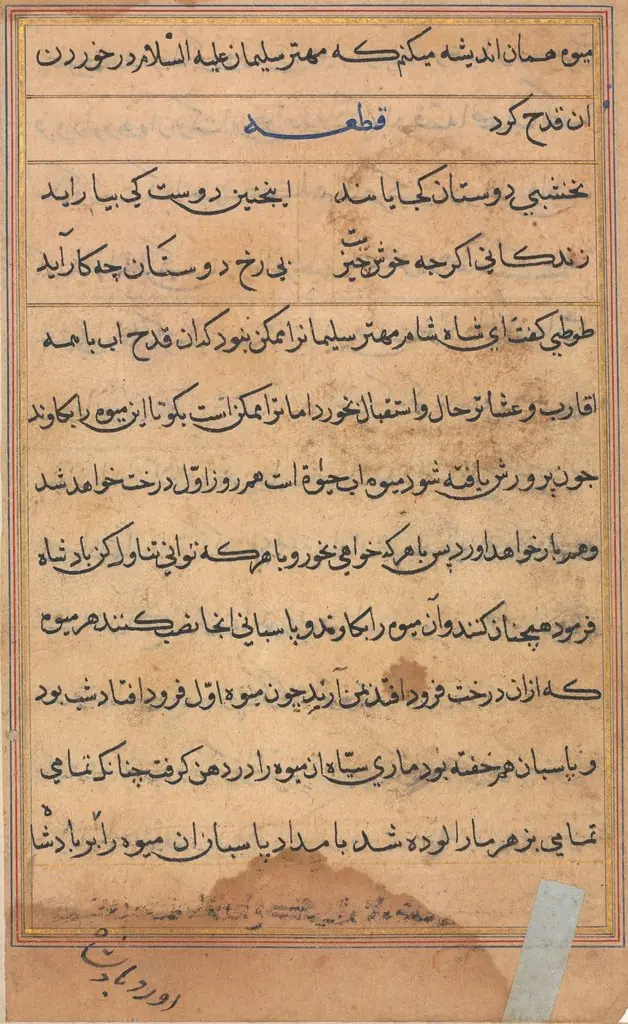
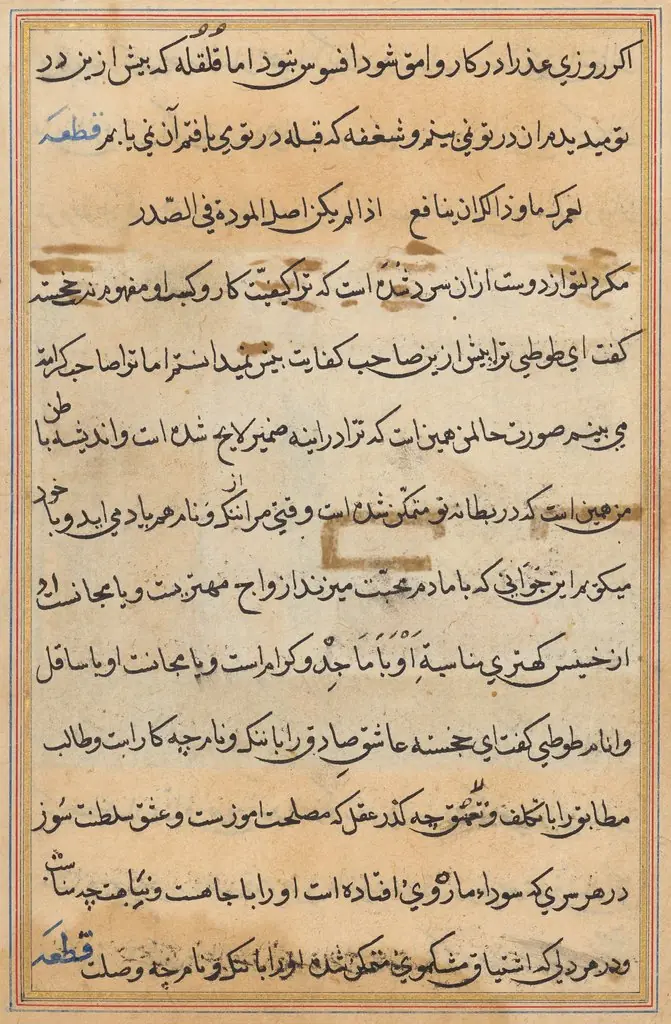
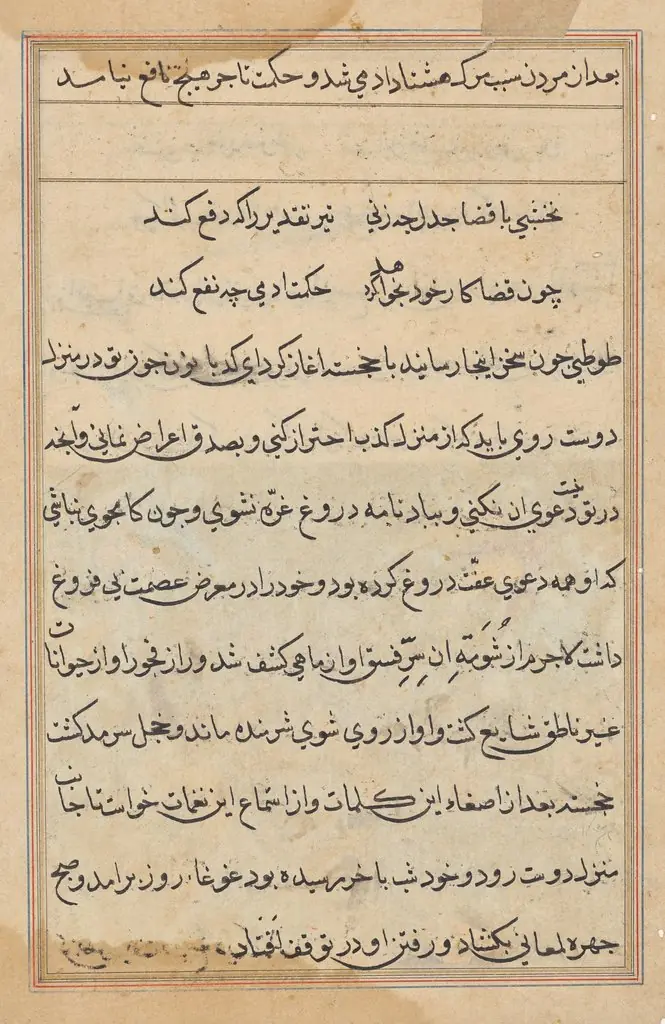
The object is a painted page from the manuscript known as Tales of a Parrot (Tuti‑nama). It consists of a single leaf of light‑brown, aged paper bearing black ink text. The script is hand‑written, with portions rendered in a more ornamental hand, and the page contains no illustrative imagery.
Subject & Meaning
The text forms part of a literary work that recounts stories associated with a parrot, a motif common in Persian and South Asian narrative traditions. While the specific content of this leaf is not described, the title suggests the page contributes to a collection of moral or entertaining tales conveyed through the voice of a bird.
Technique & Style
The page was created using ink applied by hand, likely with a reed or quill pen, on a substrate of rag‑based paper typical of pre‑modern manuscripts. The calligraphic style varies, indicating a skilled scribe who employed decorative strokes for emphasis, a practice that blends functional writing with aesthetic embellishment.
Context
Manuscript culture in the regions where the Tuti‑nama was produced valued the integration of text and visual refinement. Even without illustrations, the decorative script reflects the cultural importance of presenting literary works with a degree of visual elegance, enhancing the reader’s engagement with the narrative.
Artist & collection

- Page from Tales of a Parrot (Tuti-nama): text page
 Page from Tales of a Parrot (Tuti-nama): text page
 Page from Tales of a Parrot (Tuti-nama): text page
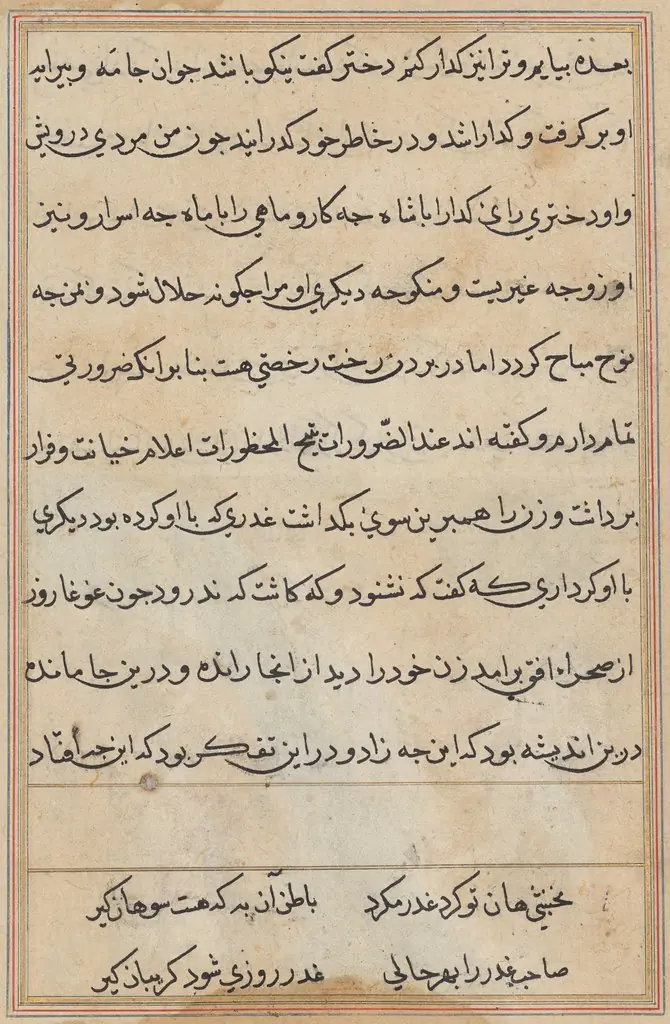 Page from Tales of a Parrot (Tuti-nama): text page
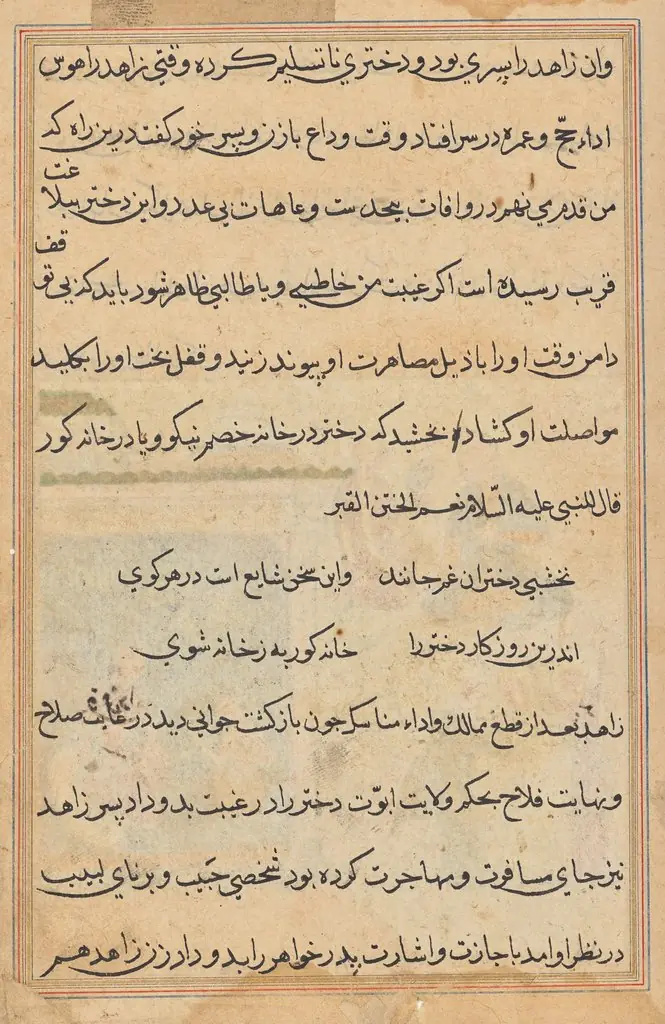 Page from Tales of a Parrot (Tuti-nama): text page
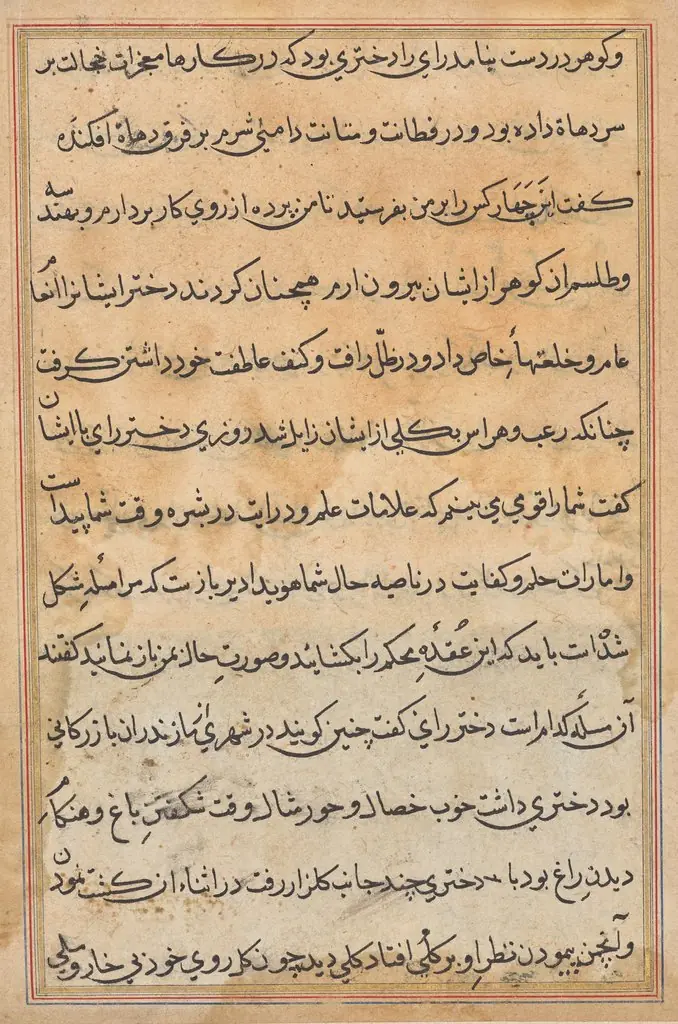 Page from Tales of a Parrot (Tuti-nama): text page
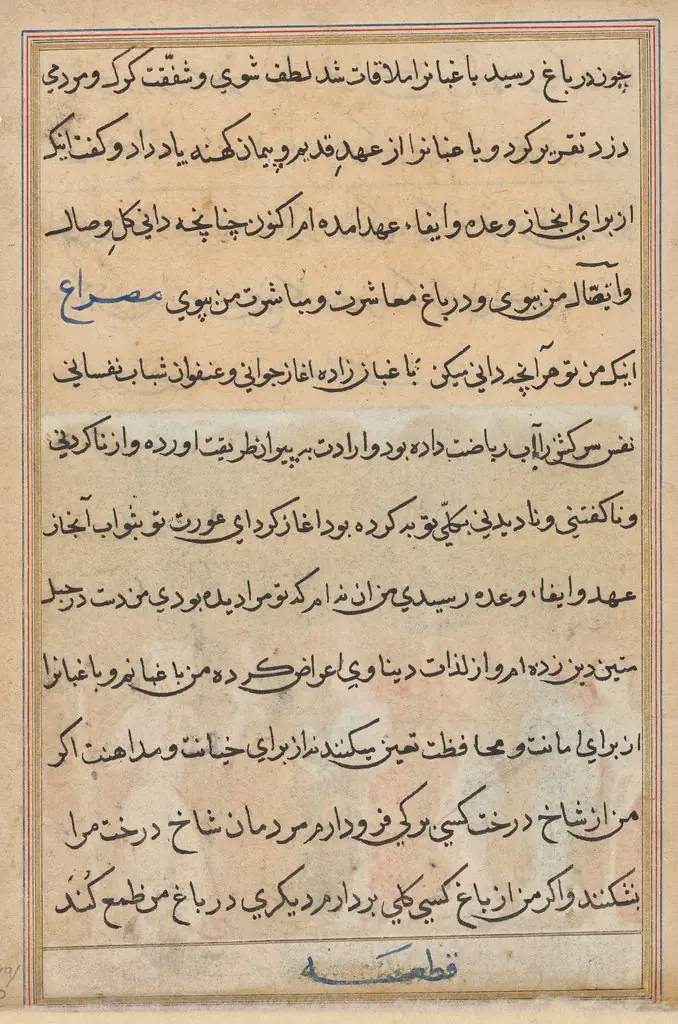 Page from Tales of a Parrot (Tuti-nama): text page
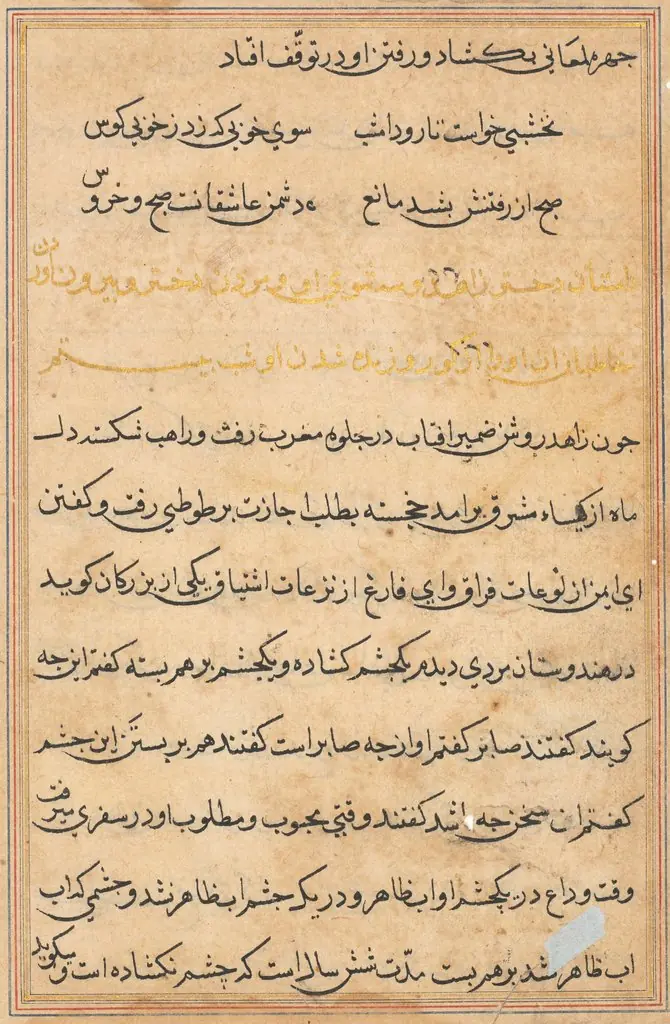 Page from Tales of a Parrot (Tuti-nama): text page
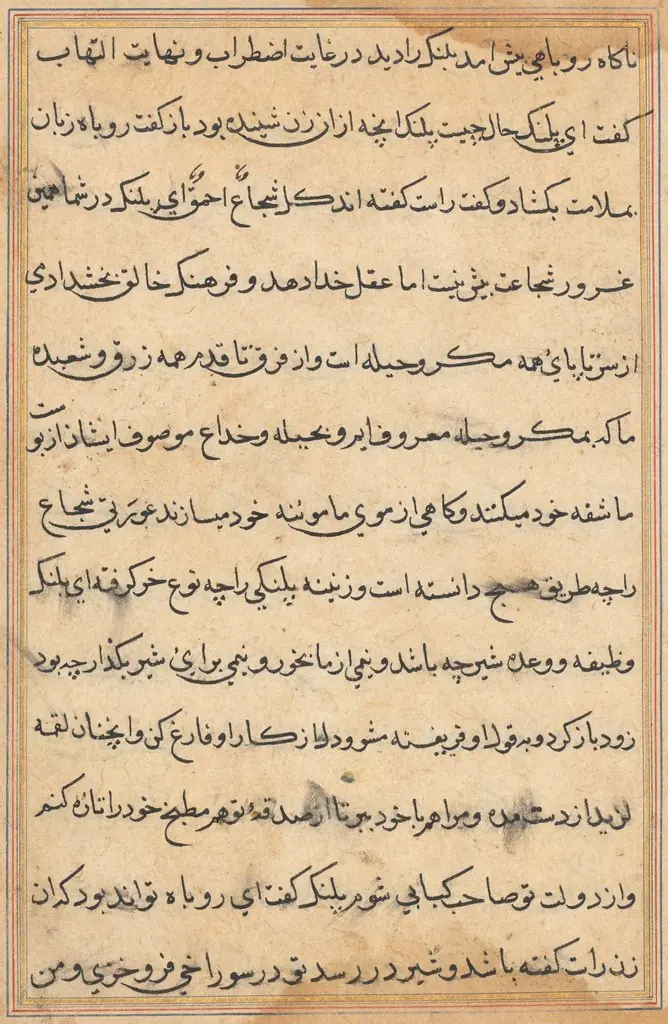 Page from Tales of a Parrot (Tuti-nama): text page
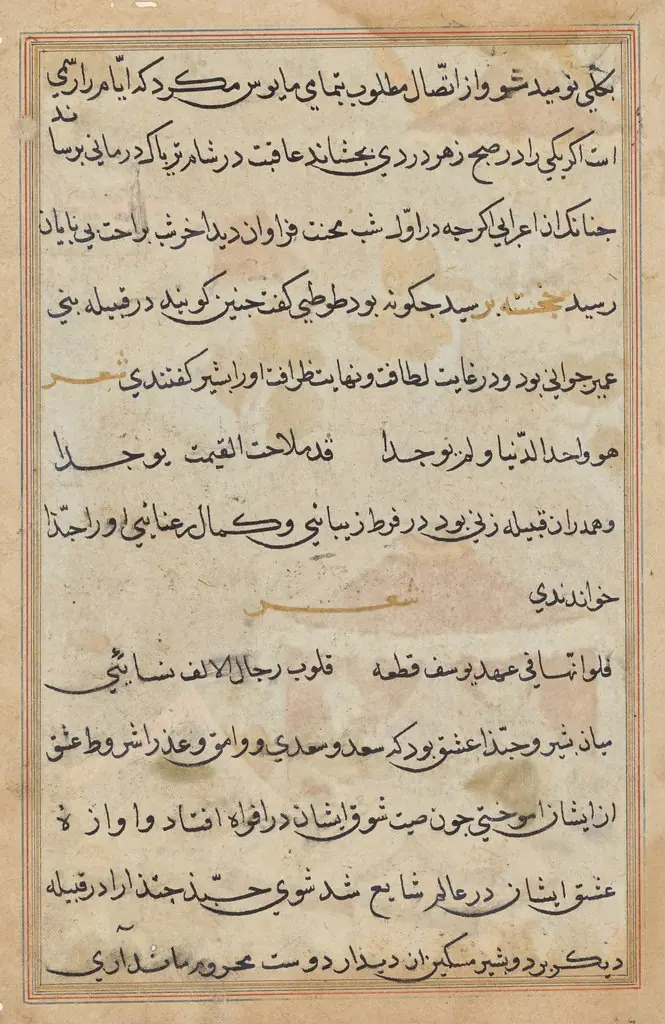 Page from Tales of a Parrot (Tuti-nama): text page
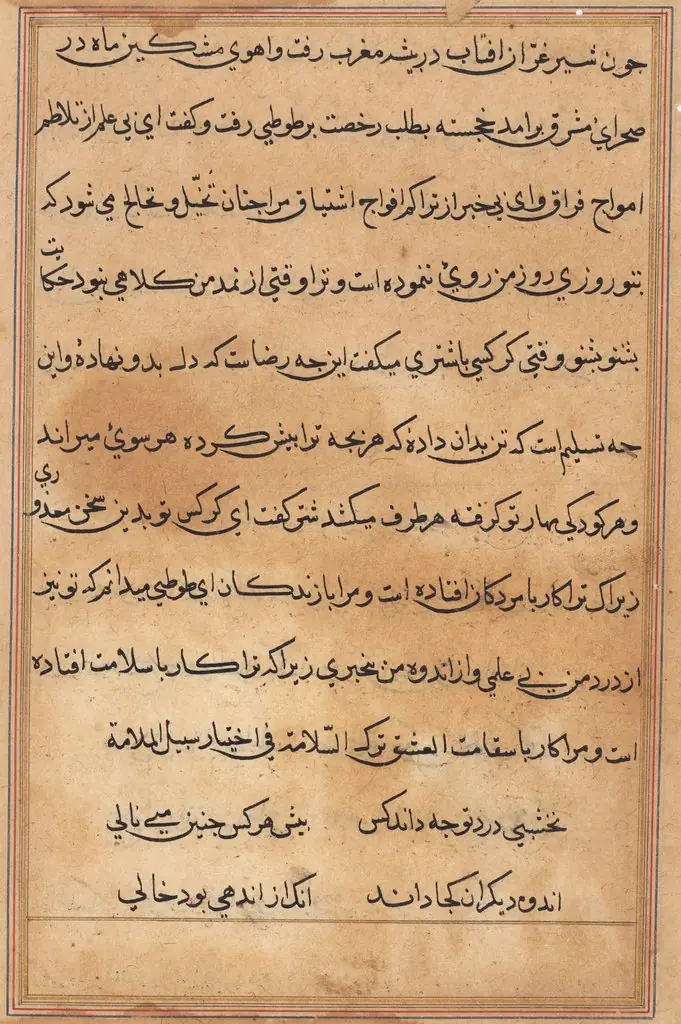 Page from Tales of a Parrot (Tuti-nama): text page
 Page from Tales of a Parrot (Tuti-nama): text page