Artwork
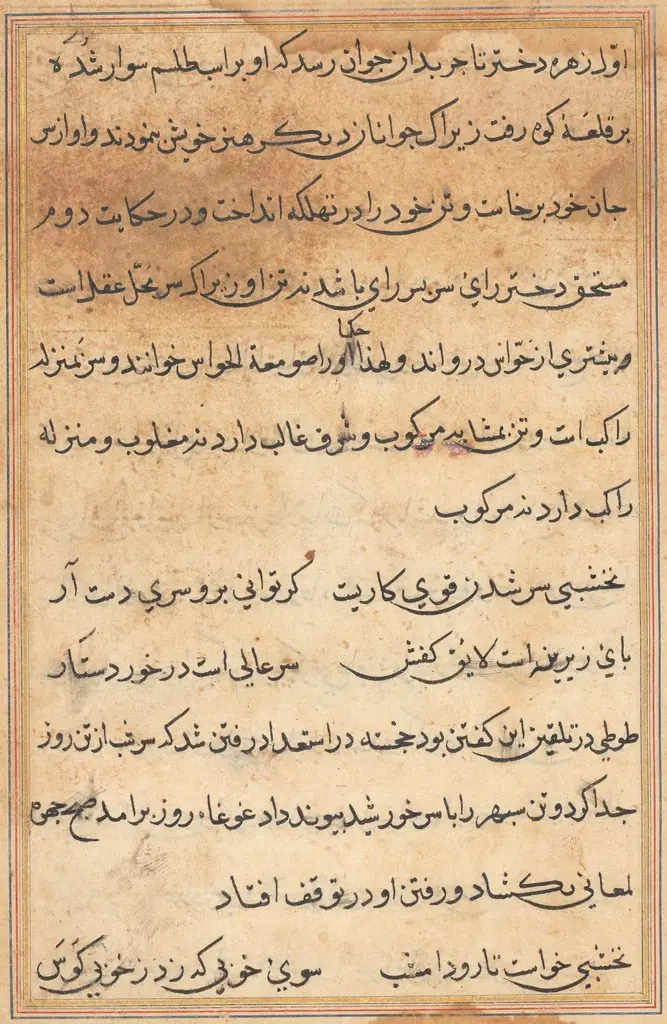
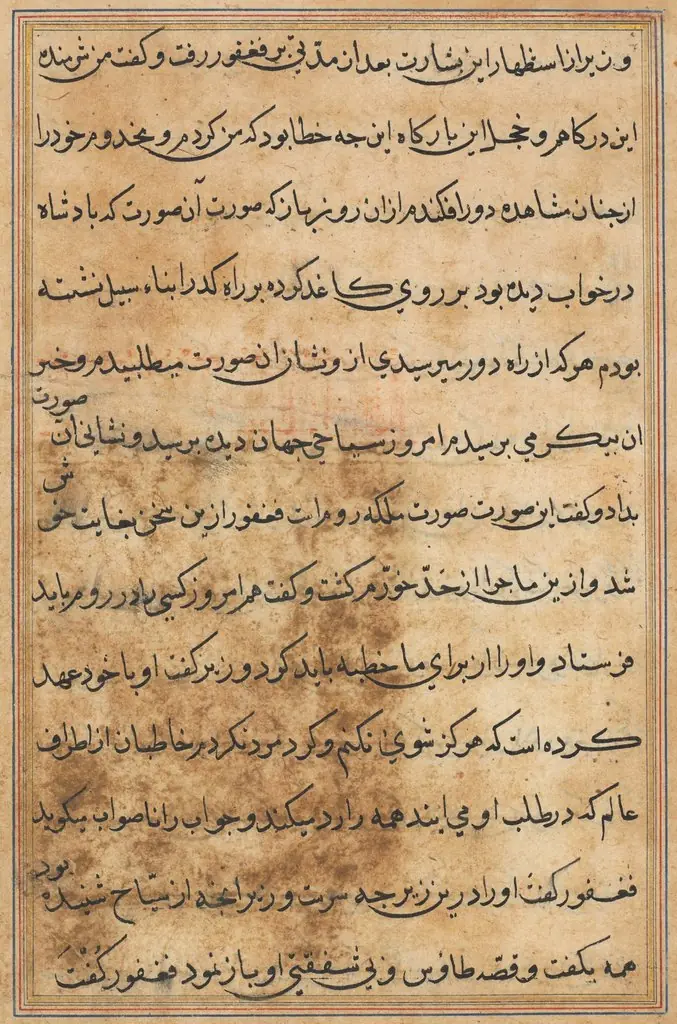
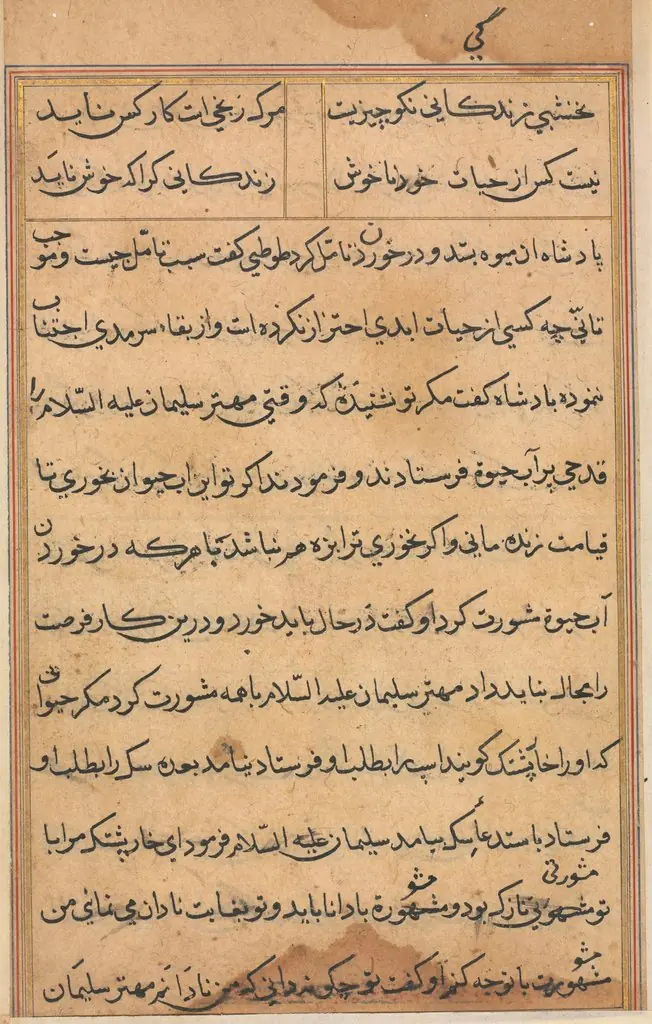
Page from Tales of a Parrot (Tuti-nama): text page
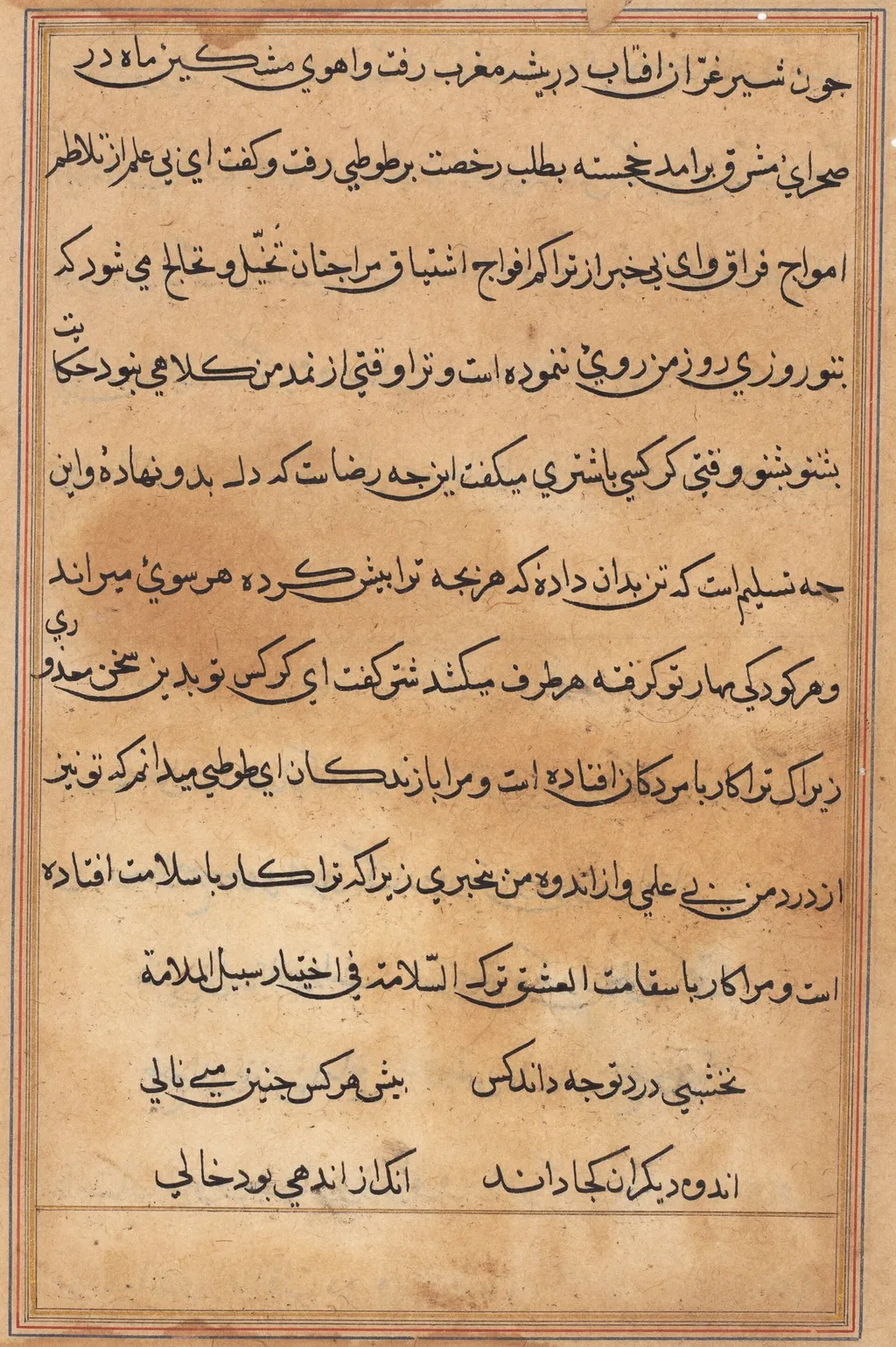
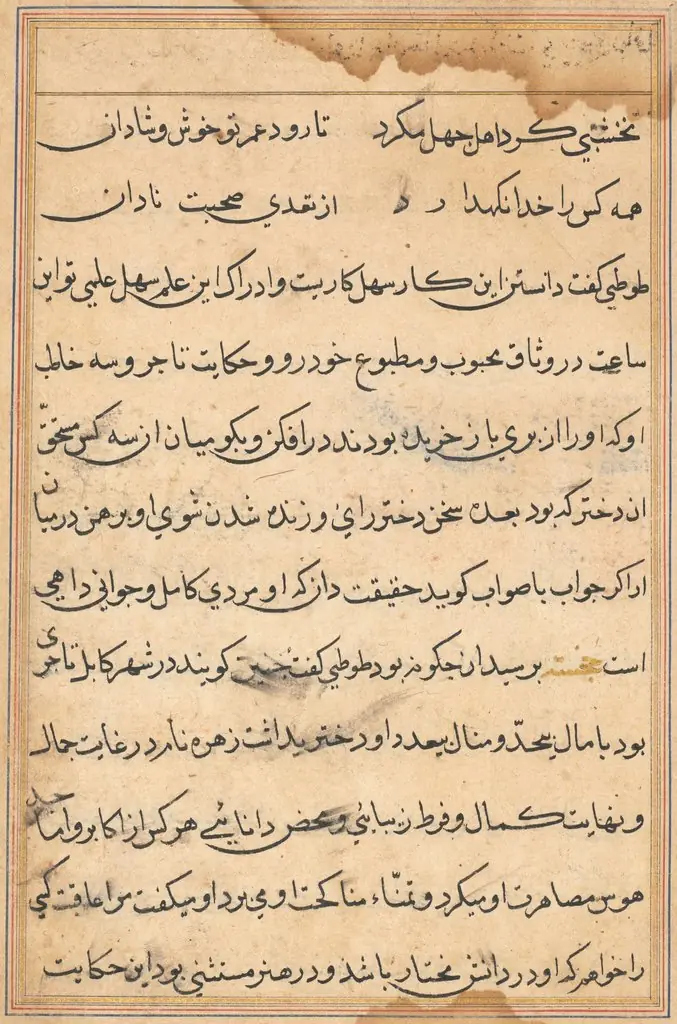
Page from Tales of a Parrot (Tuti-nama): text page is an unspecified painting. It dates from 1560 and is held in the collection of the Cleveland Museum of Art. This object is a single leaf from the illustrated manuscript Tales of a Parrot (Tuti‑nama).
About this work
History & Provenance
It was produced in 1560 within the Mughal Empire and entered the museum's collection as part of a manuscript of the Tales of a Parrot (Tuti-nama).
Created around 1560 in the Mughal Empire, this text page from the Tales of a Parrot (Tuti-nama) was produced by an unknown artist. The work’s original patronage and early ownership are undocumented. It entered the collection of the Cleveland Museum of Art in 1962, receiving the accession number 1962.279.148.b, and has remained there since.
The work is dated to 1560, as indicated by the museum’s inception date. No further details about its commission or intermediate provenance are recorded in the available sources.
The page is held by the Cleveland Museum of Art, where it is catalogued under the inventory number 1962.279.148.b. It was produced in 1560 within the Mughal Empire and entered the museum's collection as part of a manuscript of the Tales of a Parrot (Tuti-nama). No exhibition history is documented in the available sources.
Context
The miniature from the Tuti-nama, dated to 1560, occupies a pivotal position in Mughal painting's evolution during the early imperial period. As part of an illustrated manuscript produced under imperial patronage, it exemplifies the synthesis of Persianate narrative traditions with emerging naturalistic techniques characteristic of the Mughal atelier. Scholarship emphasizes its significance as a textual artifact within the broader corpus of Indo-Persian book arts, reflecting courtly interests in moral instruction through didactic literature.
The work's stylistic features, including its delicate brushwork and flattened spatial composition, align with contemporaneous developments observed in other illustrated manuscripts from Akbar's reign, situating it within the formative phase of Mughal visual culture. Its presence in the Cleveland Museum of Art collection preserves a rare surviving example of 16th-century manuscript illumination from the Indian subcontinent.
Overview
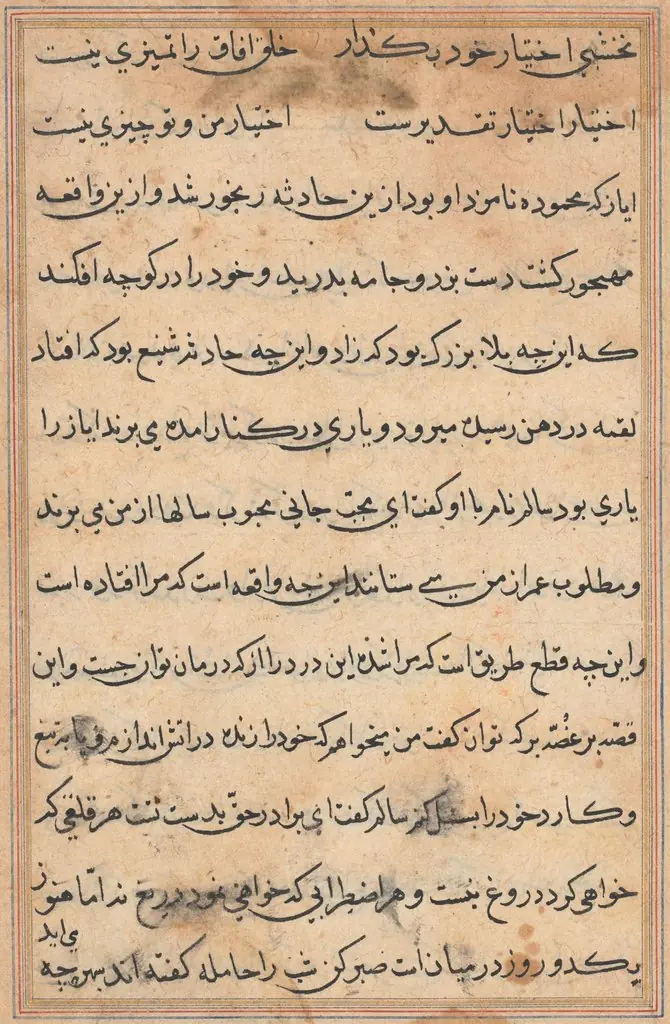
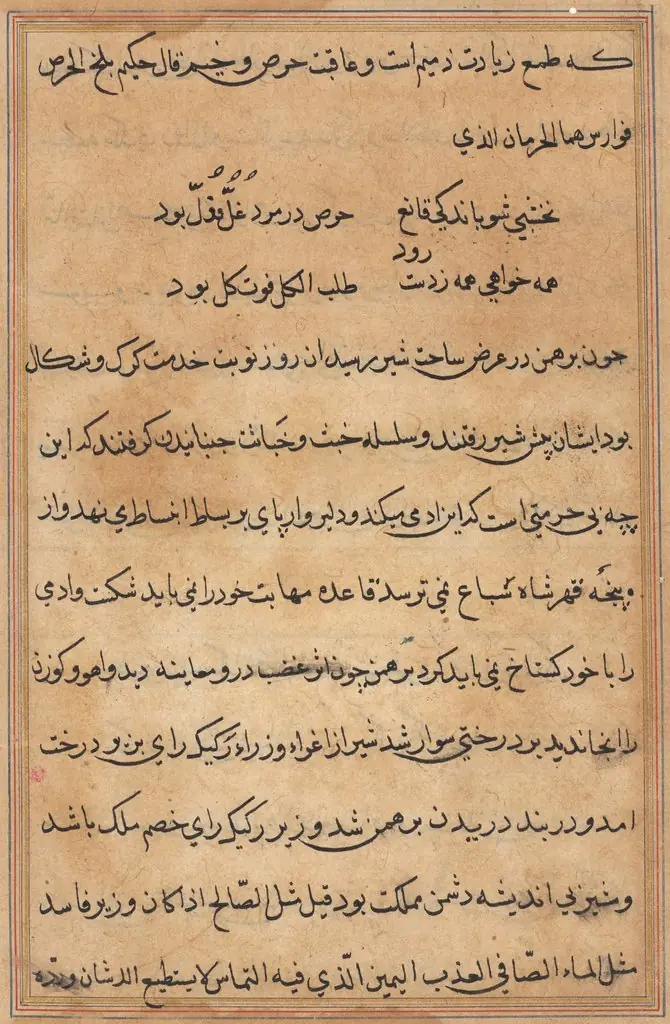
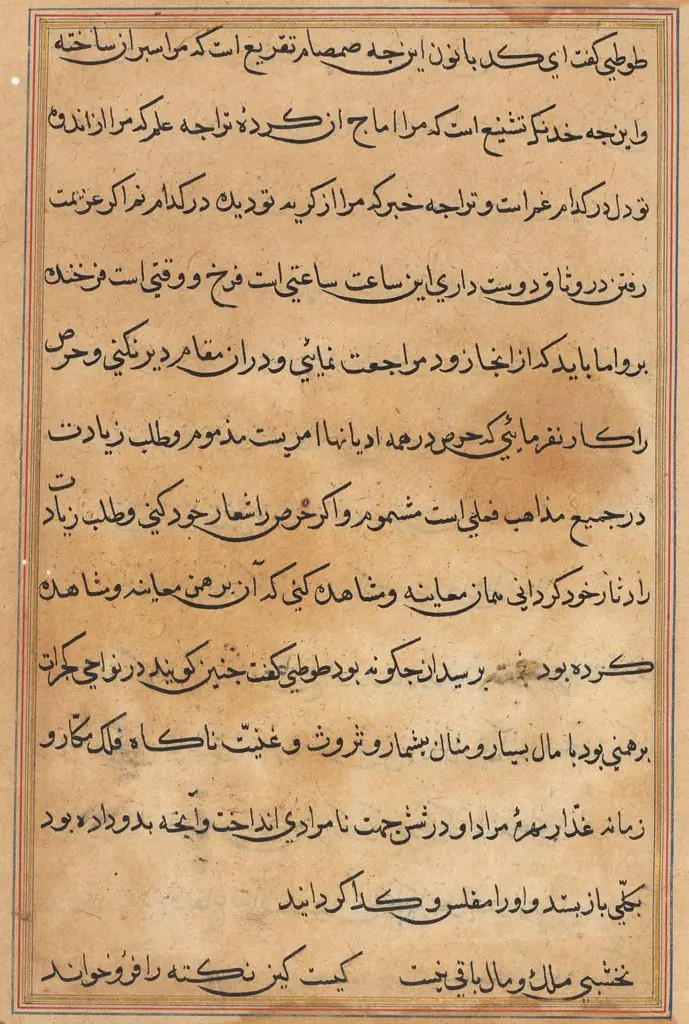
This object is a single leaf from the illustrated manuscript Tales of a Parrot (Tuti‑nama). The page consists solely of dense black calligraphy set against a warm, slightly yellowed paper surface, framed by a thin red margin that defines the text block. No decorative images accompany the script, emphasizing its literary function.
Subject & Meaning
The text is written in Persian and was composed for Prince Salim, a patron of the arts in the early modern period. The narrative content, typical of the Tuti‑nama tradition, presents moral and didactic stories conveyed through the voice of a parrot, inviting a contemplative, leisurely reading.
Technique & Style
Calligraphic execution displays a refined, flowing hand, with each line meticulously spaced to guide the reader’s eye from top to bottom. The red border, applied with a fine brush, serves both as a visual frame and as a subtle decorative element, contrasting with the black ink without overwhelming the text.
Artist & collection

- Page from Tales of a Parrot (Tuti-nama): text page
 Page from Tales of a Parrot (Tuti-nama): text page
 Page from Tales of a Parrot (Tuti-nama): text page
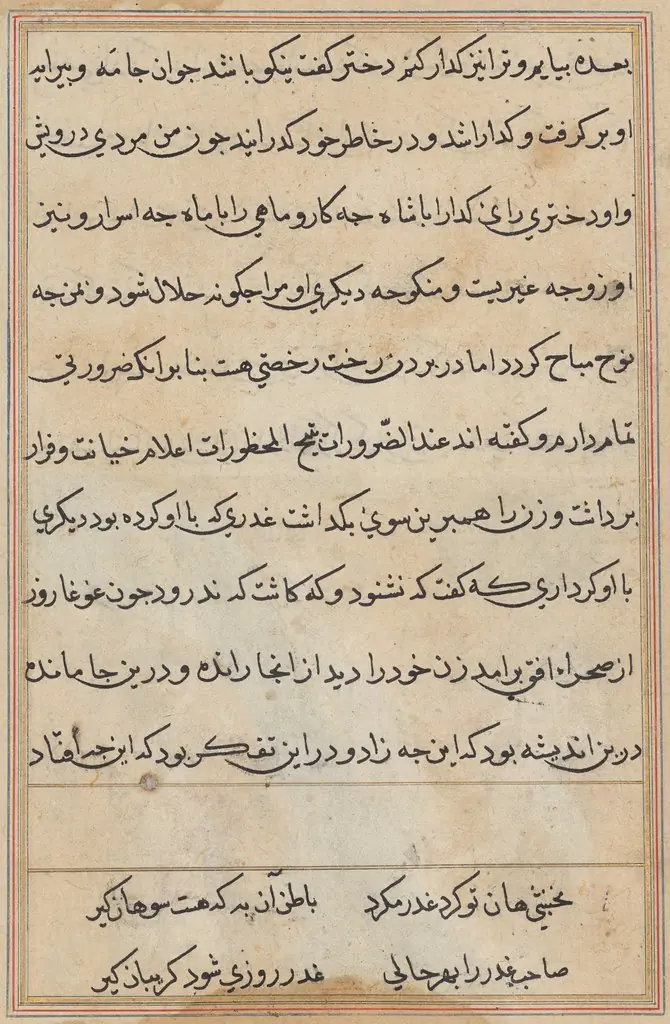 Page from Tales of a Parrot (Tuti-nama): text page
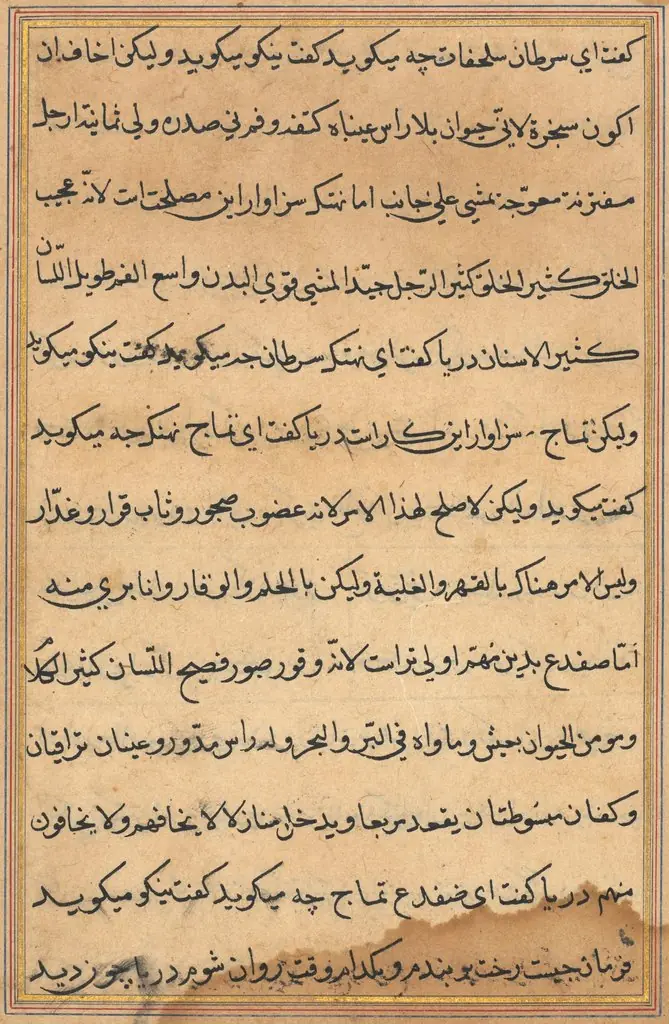 Page from Tales of a Parrot (Tuti-nama): text page
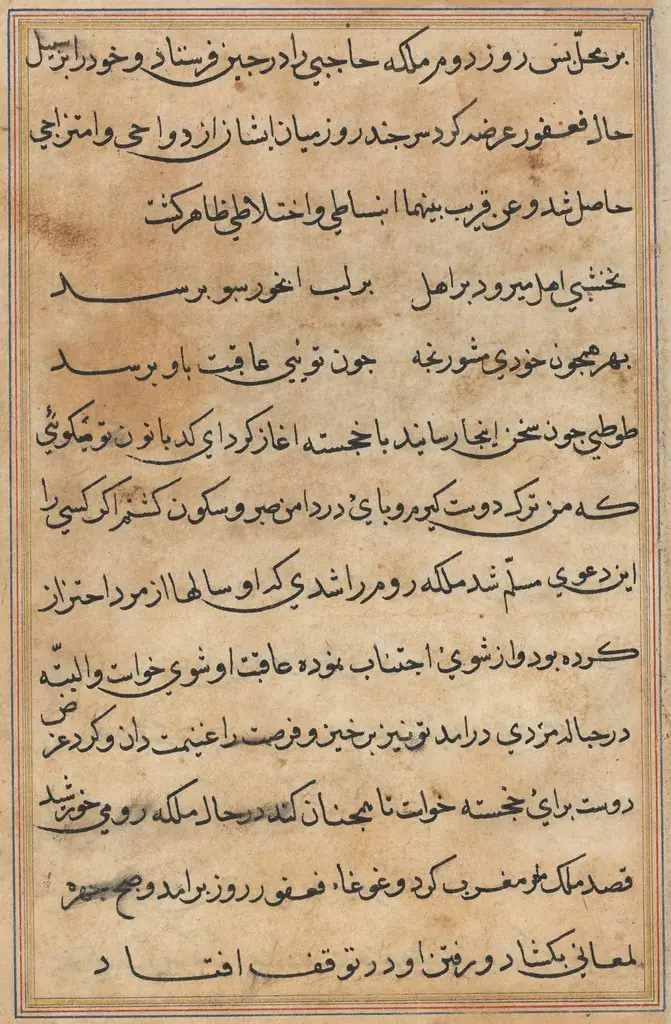 Page from Tales of a Parrot (Tuti-nama): text page
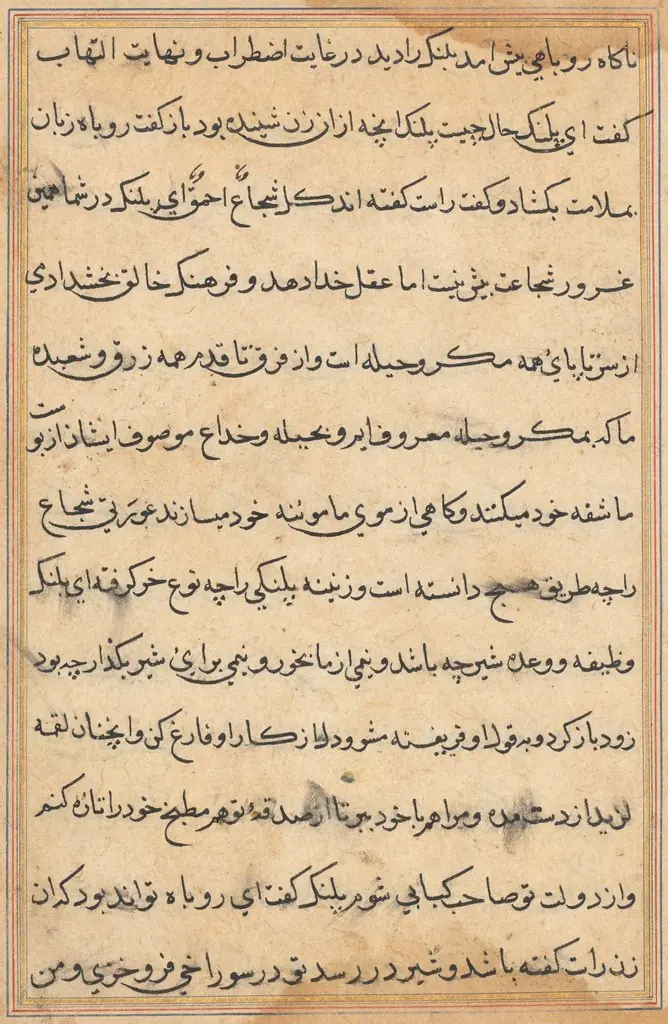 Page from Tales of a Parrot (Tuti-nama): text page
 Page from Tales of a Parrot (Tuti-nama): text page