Artwork
Page from Tales of a Parrot (Tuti-nama): text page
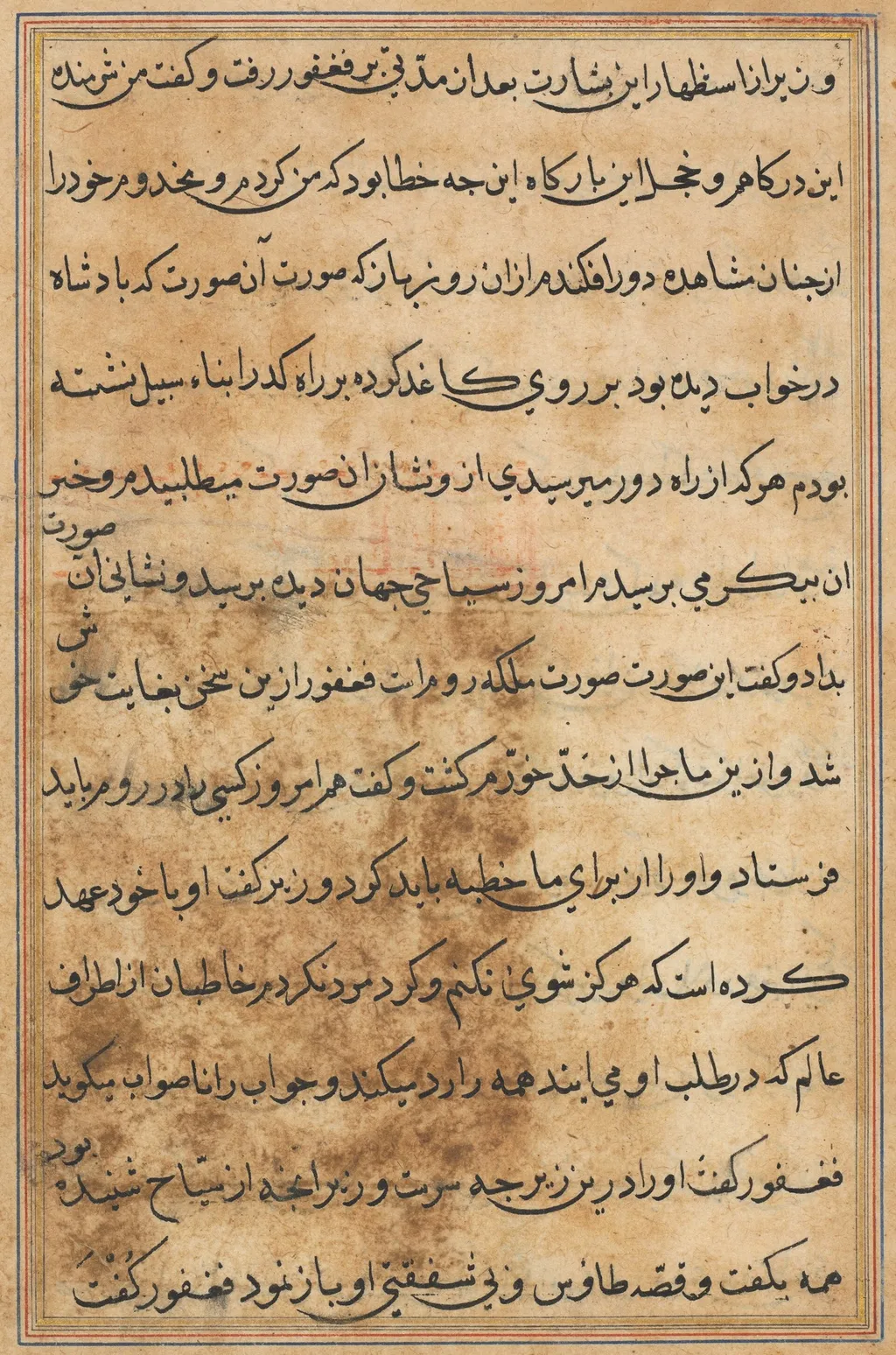
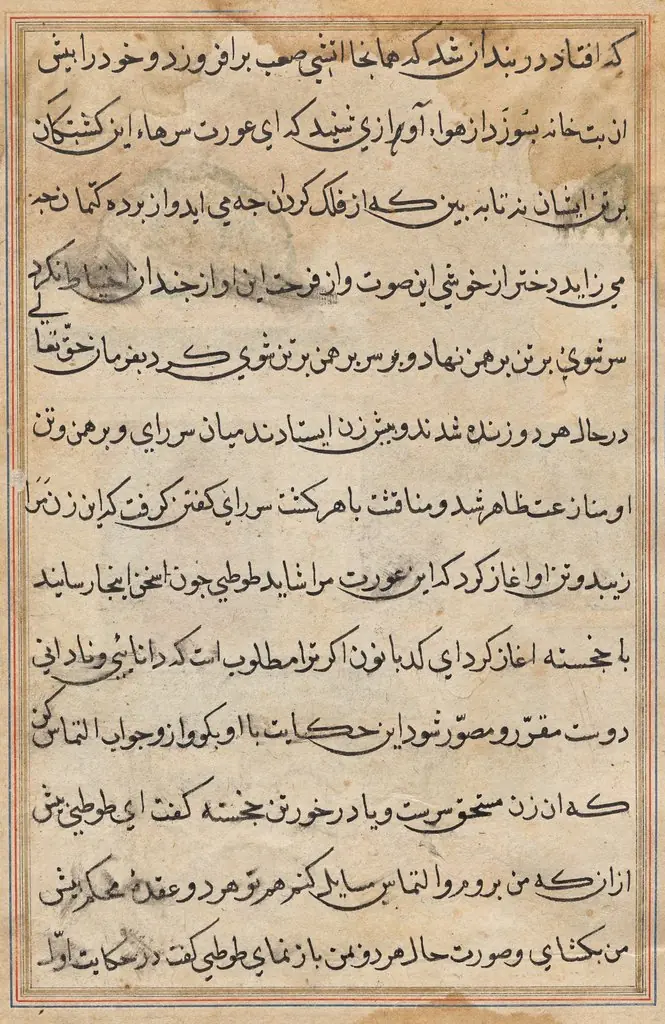
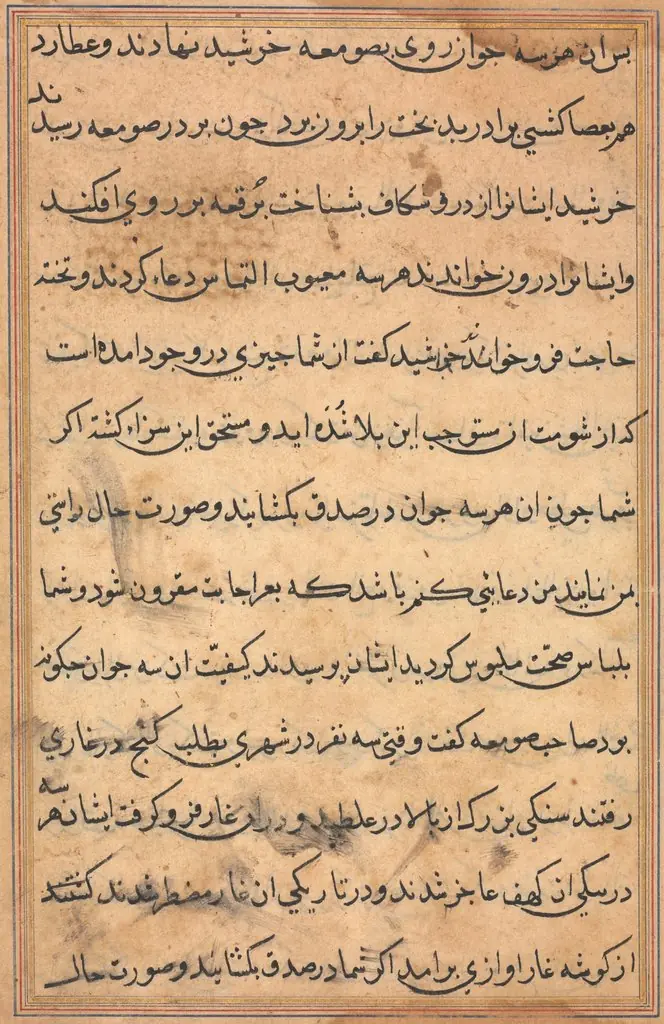
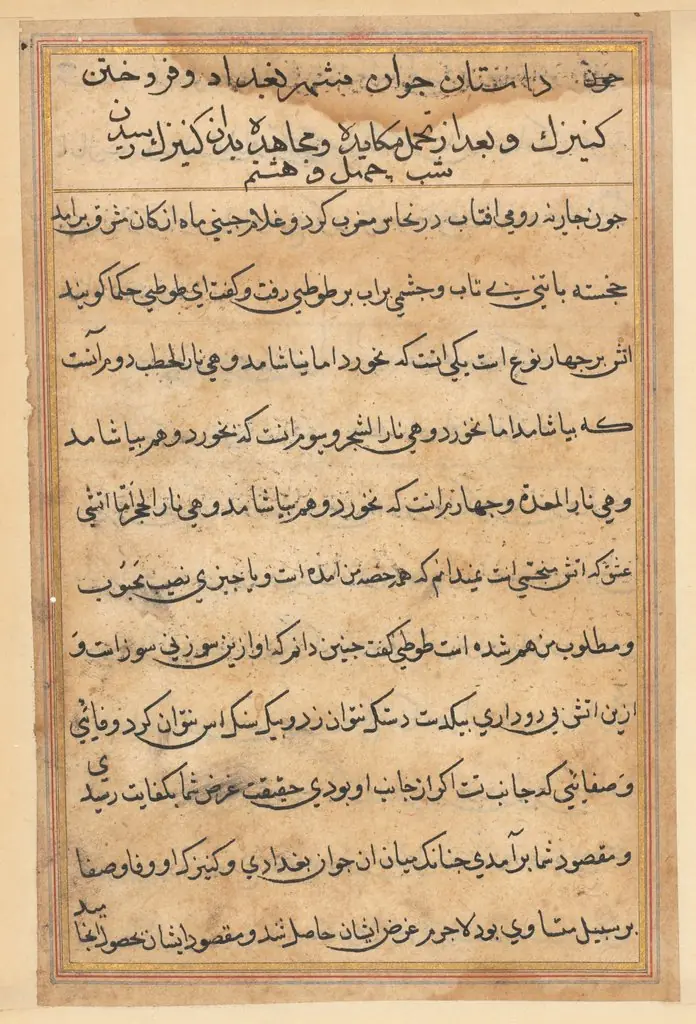
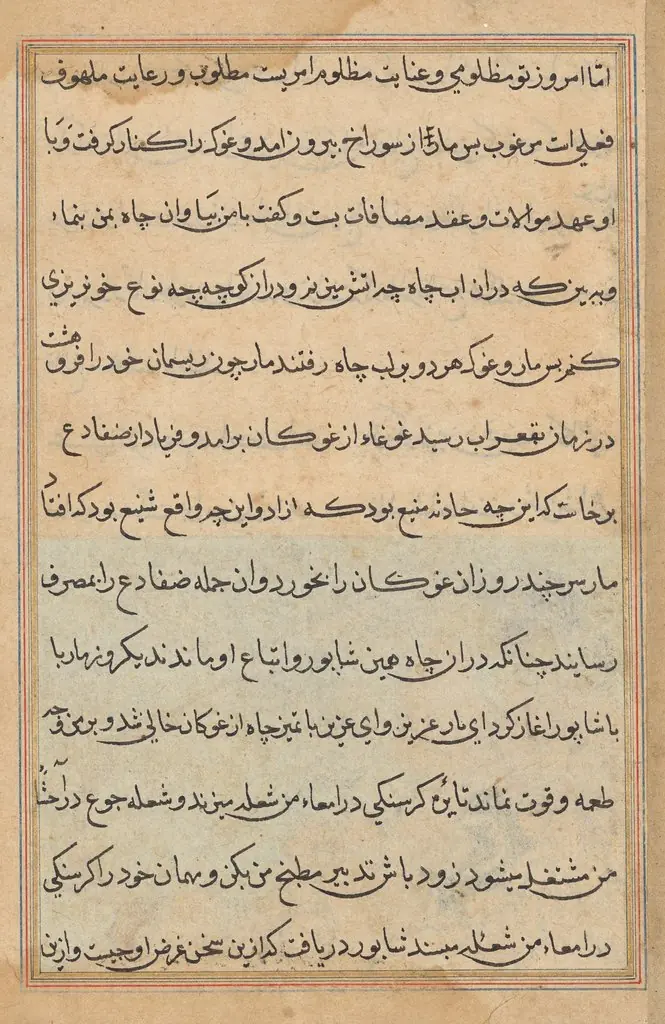
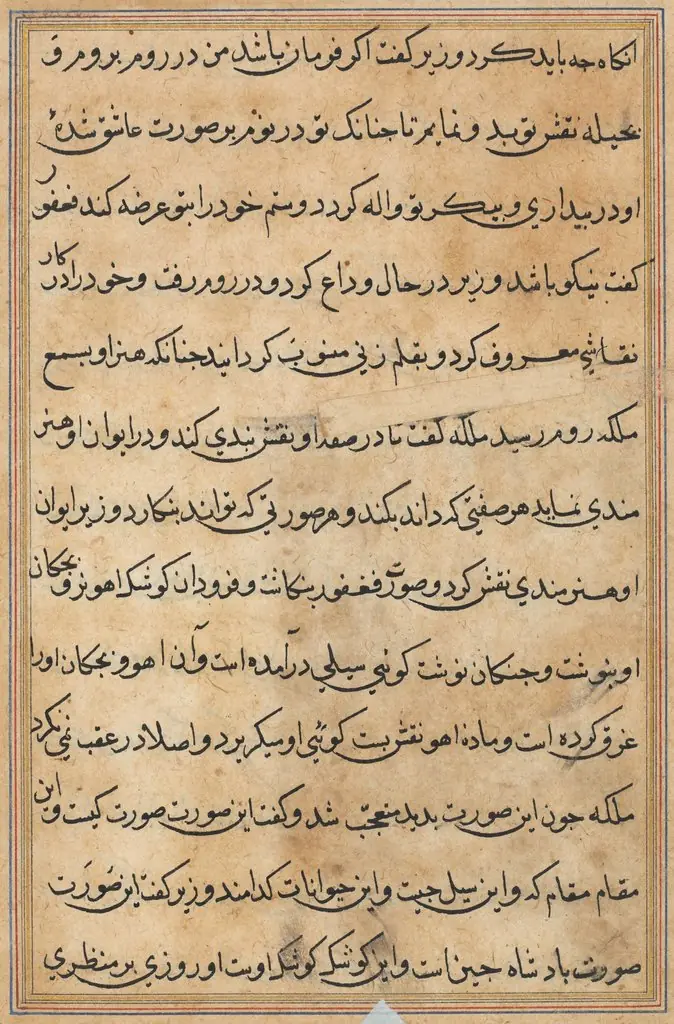
Page from Tales of a Parrot (Tuti-nama): text page is an unspecified painting. It dates from 1560 and is held in the collection of the Cleveland Museum of Art. The work is a painted representation of a single page from the manuscript known as Tales of a Parrot (Tuti‑nama).
About this work
Subject & Meaning
Symbolically, the parrot functions as a didactic figure, embodying didactic instruction and moral counsel typical of Safavid artistic conventions.
The page depicts a narrative scene from the Tuti-nama, a Persian illustrated manuscript recounting animal fables. The text illustrates a parrot’s moral lesson, reflecting themes of wisdom and caution within the Mughal cultural milieu. Symbolically, the parrot functions as a didactic figure, embodying didactic instruction and moral counsel typical of Safavid artistic conventions.
This work belongs to the Mughal Empire’s artistic production in the 16th century, marking its integration of Persian literary subjects into Indian court patronage.
History & Provenance
The page originates from the Mughal Empire and dates to 1560, produced as part of the manuscript tradition of the Tales of a Parrot (Tuti-nama). It is classified as a painting within this corpus and was made in the year 1560 according to the canonical record.
The work is held by the Cleveland Museum of Art, where it is catalogued under accession reference 1962.279.255.a. No further details of commission, prior ownership, or chain of custody are documented in the available sources.
The text page from the Tales of a Parrot (Tuti-nama) is held in the collection of the Cleveland Museum of Art. The work is identified within the museum's records by the accession number 1962.279.255.a. Created in 1560 during the Mughal Empire, this painting remains part of the institution's holdings in Cleveland.
Overview
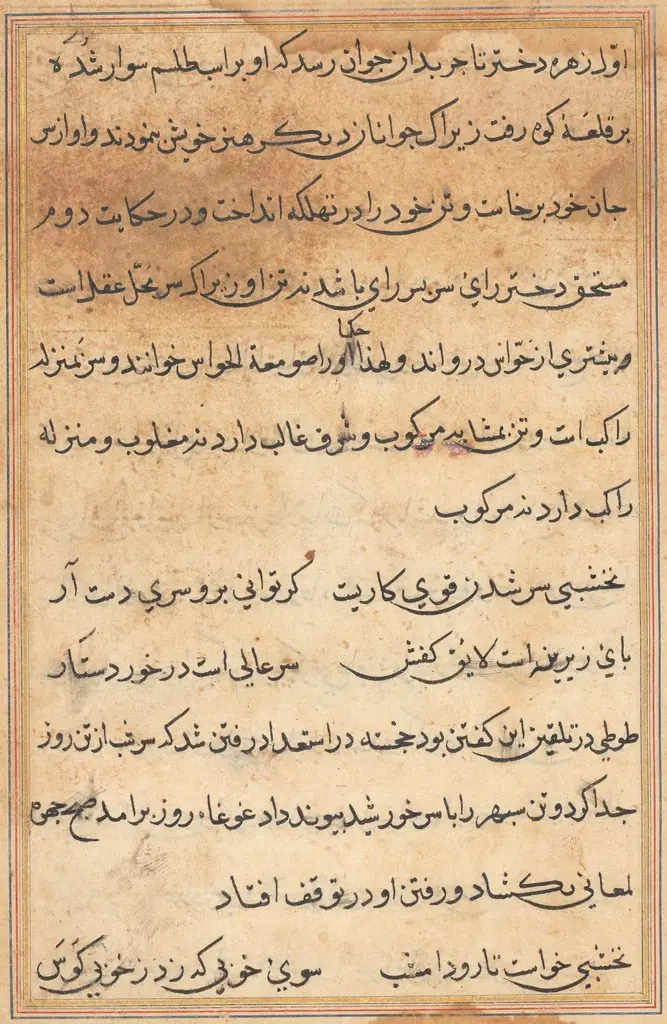
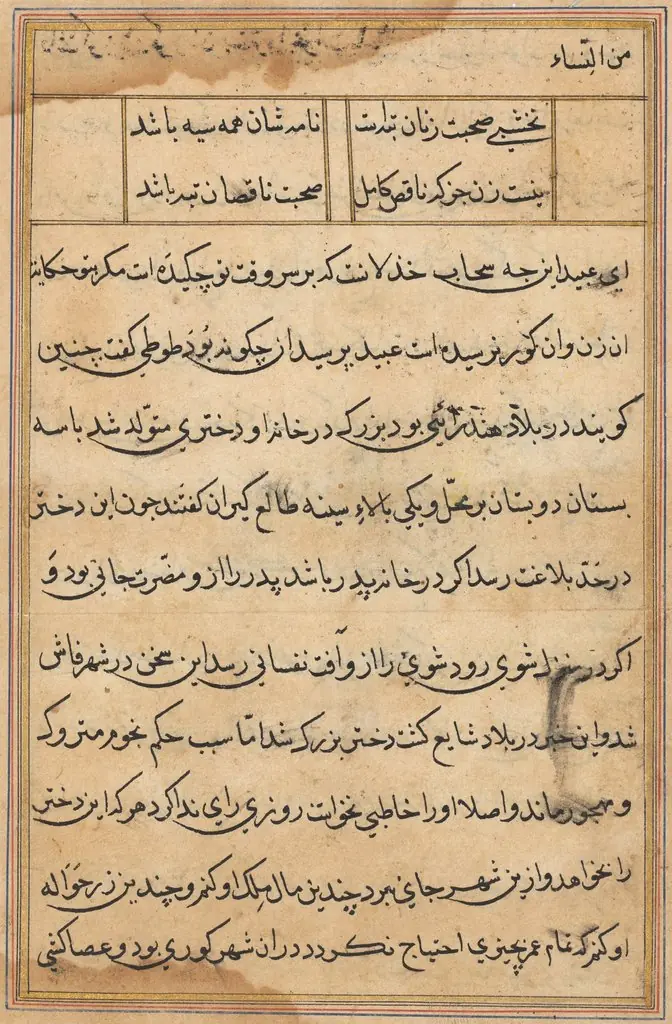
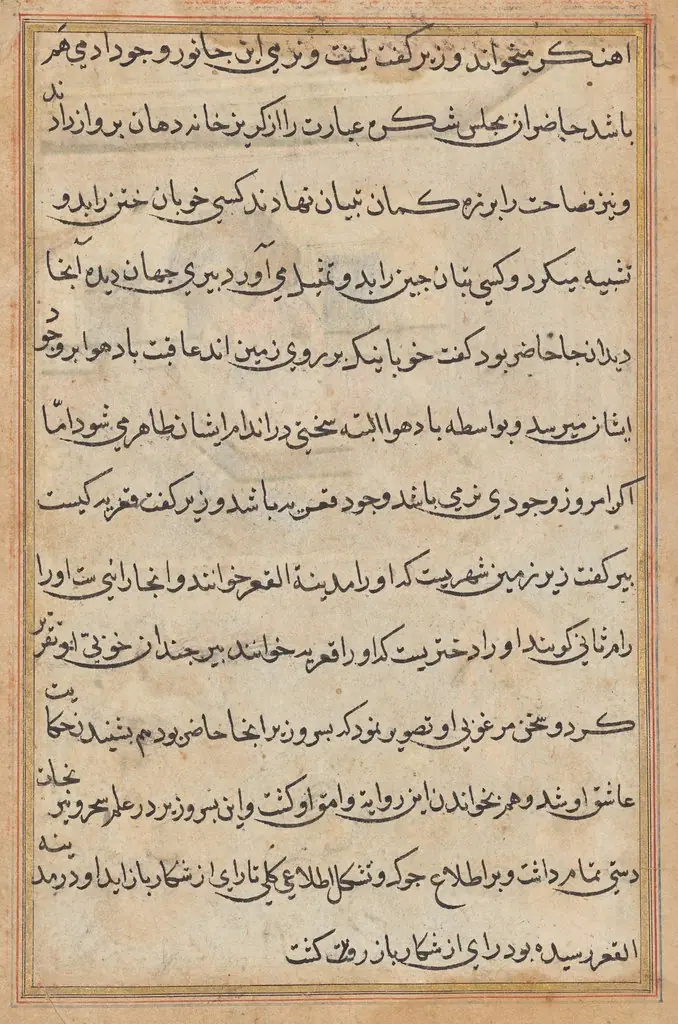
The work is a painted representation of a single page from the manuscript known as Tales of a Parrot (Tuti‑nama). The surface imitates aged paper, featuring a light‑brown ground mottled with darker brown stains and a thin peripheral border. Black ink outlines a dense block of handwritten text, with occasional red underlines or highlights that draw attention to specific words or phrases.
Technique & Style
The artist reproduces the texture of old paper through layered pigments that create discoloration and wear. Ink is applied with fine brushes to mimic the look of handwritten calligraphy, while the red accents are rendered with a contrasting pigment to simulate highlighting. The overall effect balances realism in material depiction with a stylized representation of script.
Artist & collection

- Page from Tales of a Parrot (Tuti-nama): text page
 Page from Tales of a Parrot (Tuti-nama): text page
 Page from Tales of a Parrot (Tuti-nama): text page
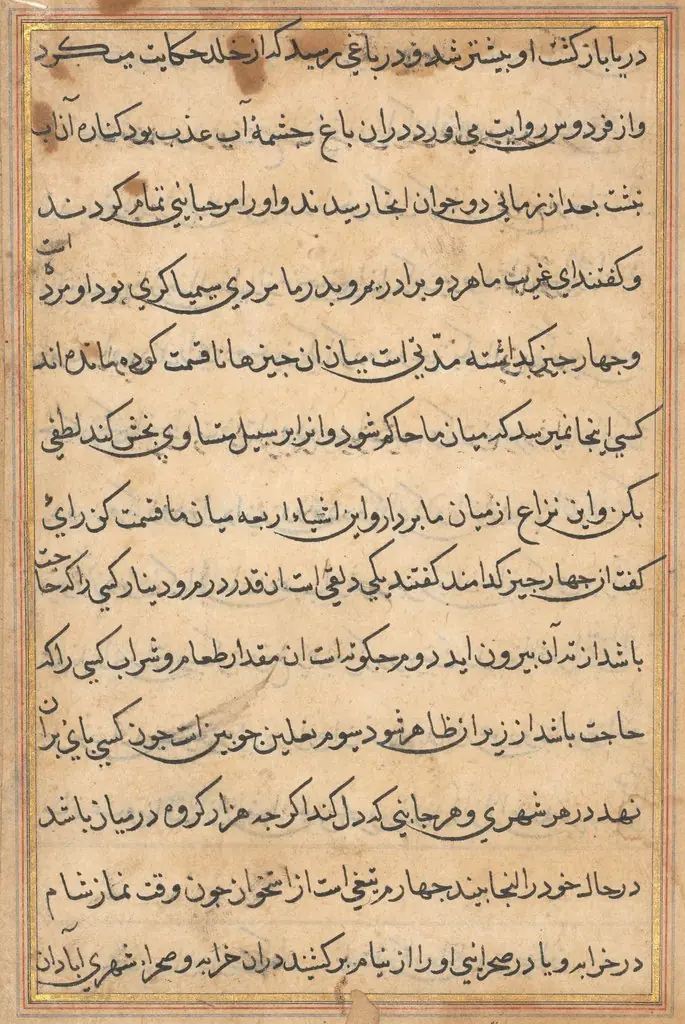 Page from Tales of a Parrot (Tuti-nama): text page
 Page from Tales of a Parrot (Tuti-nama): text page
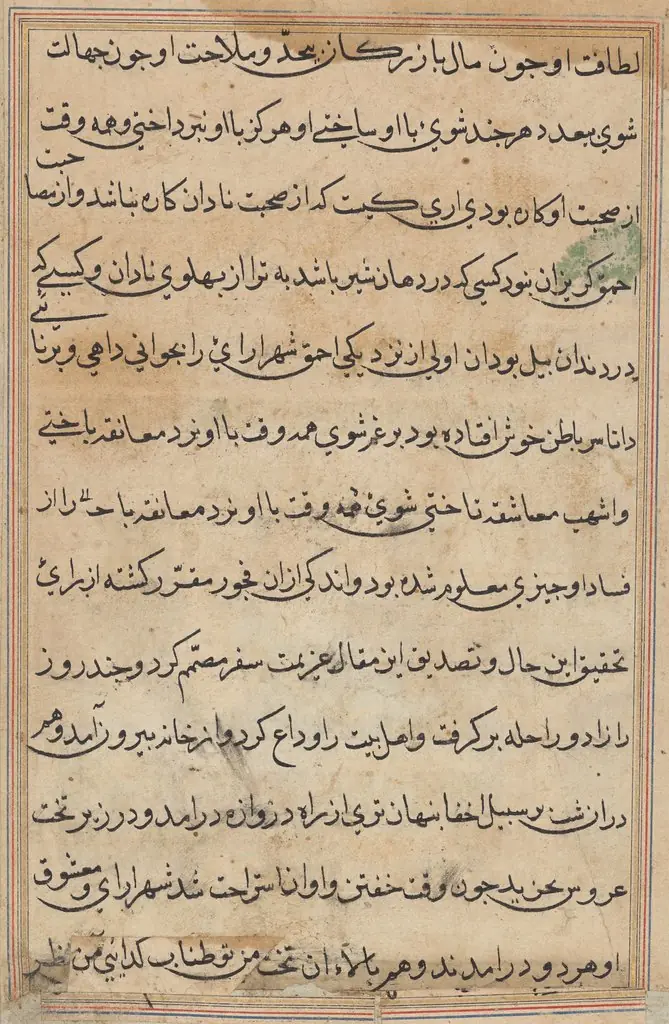 Page from Tales of a Parrot (Tuti-nama): text page
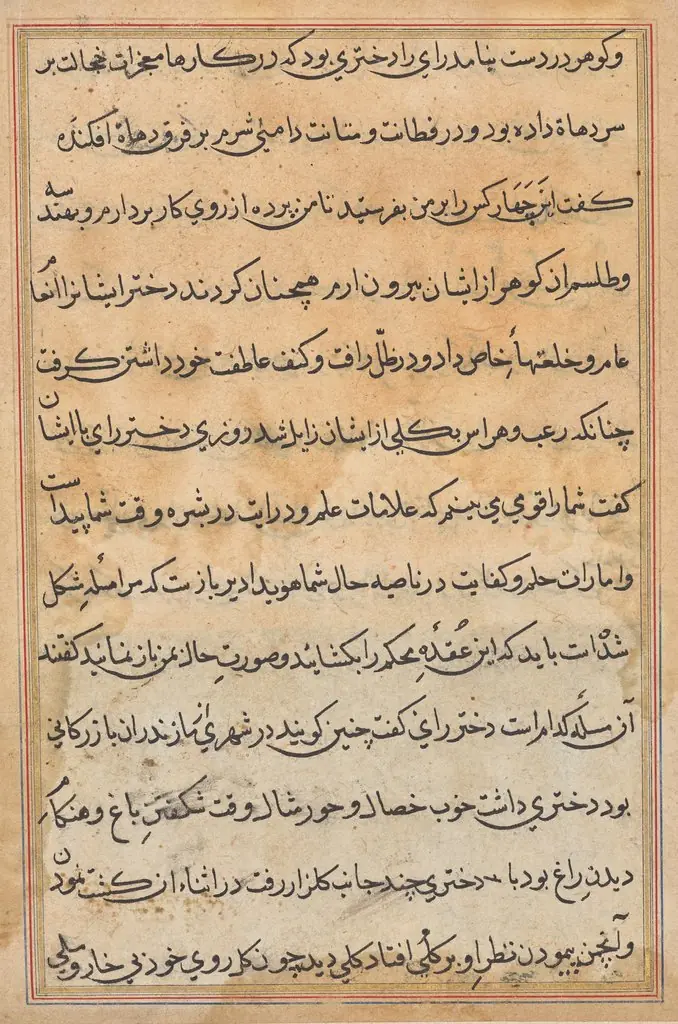 Page from Tales of a Parrot (Tuti-nama): text page
 Page from Tales of a Parrot (Tuti-nama): text page
 Page from Tales of a Parrot (Tuti-nama): text page
 Page from Tales of a Parrot (Tuti-nama): text page
 Page from Tales of a Parrot (Tuti-nama): text page
 Page from Tales of a Parrot (Tuti-nama): text page