Artwork
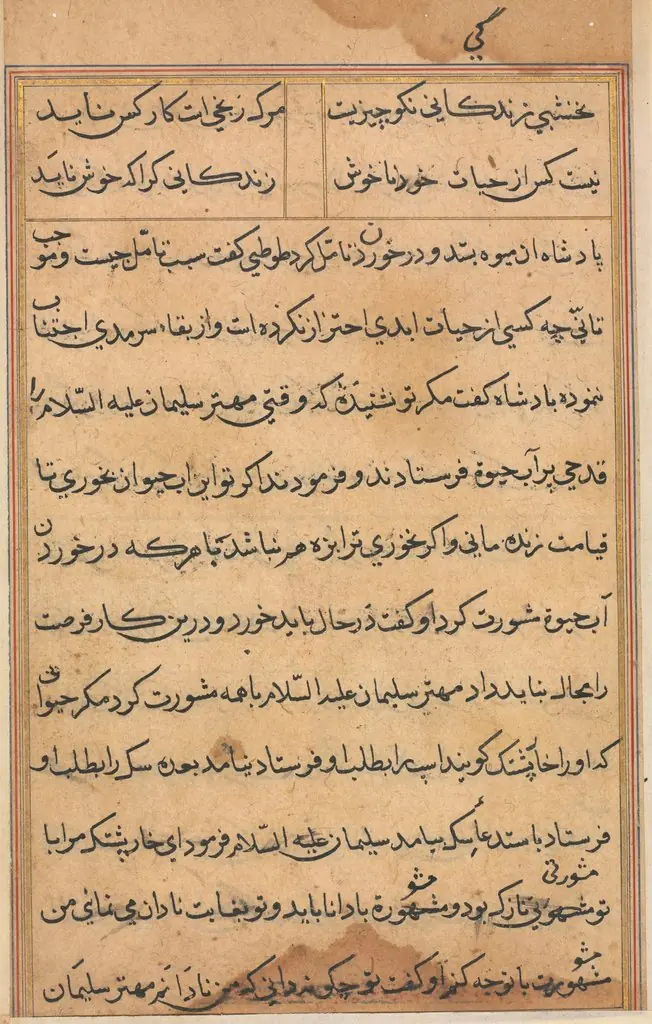
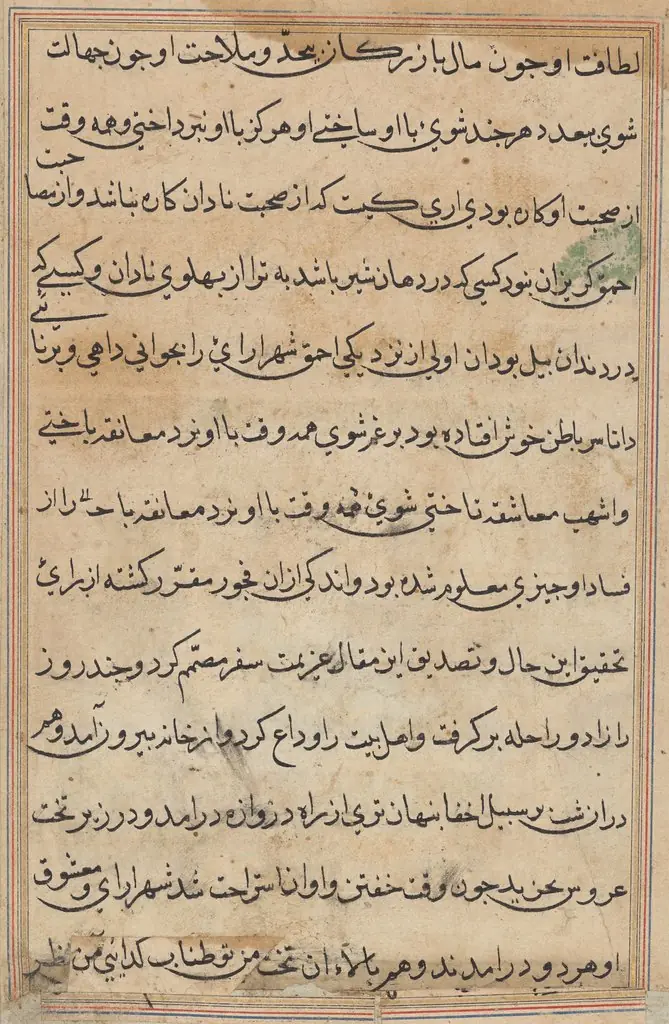
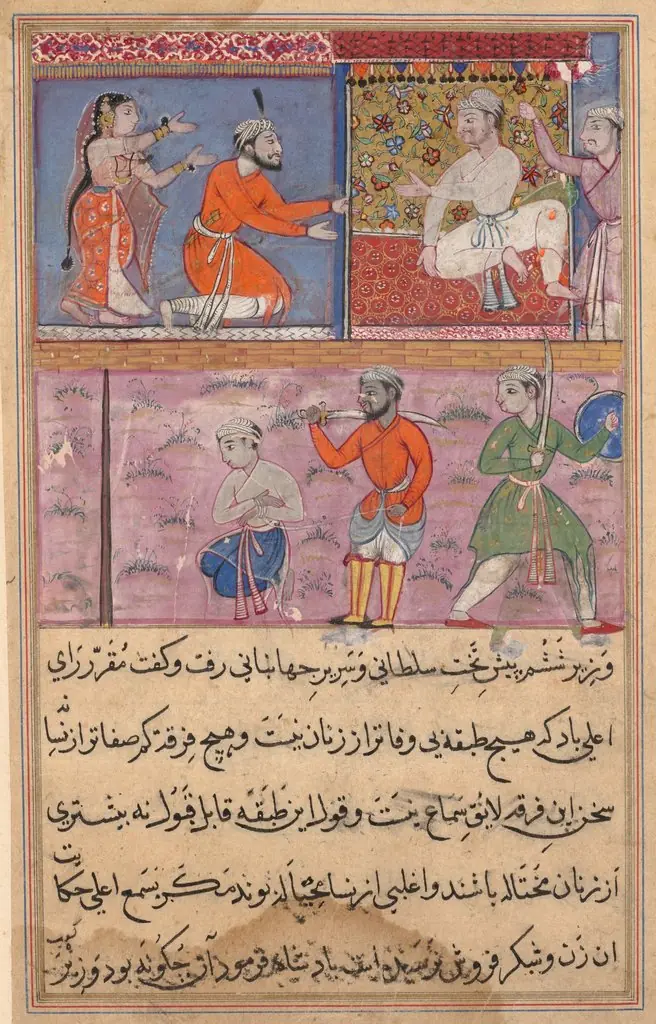
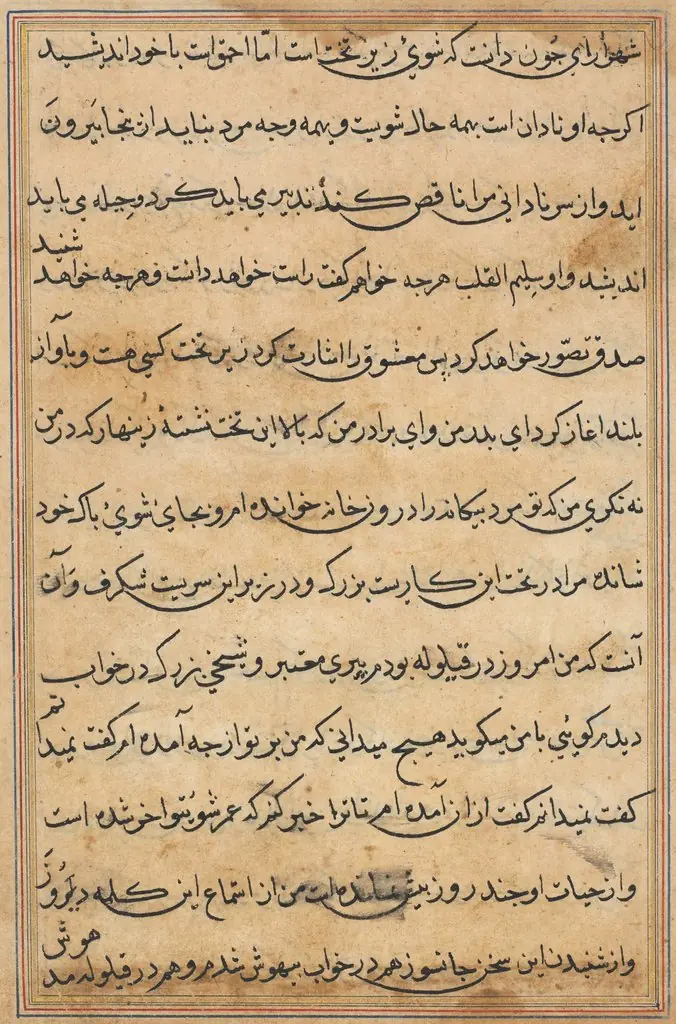
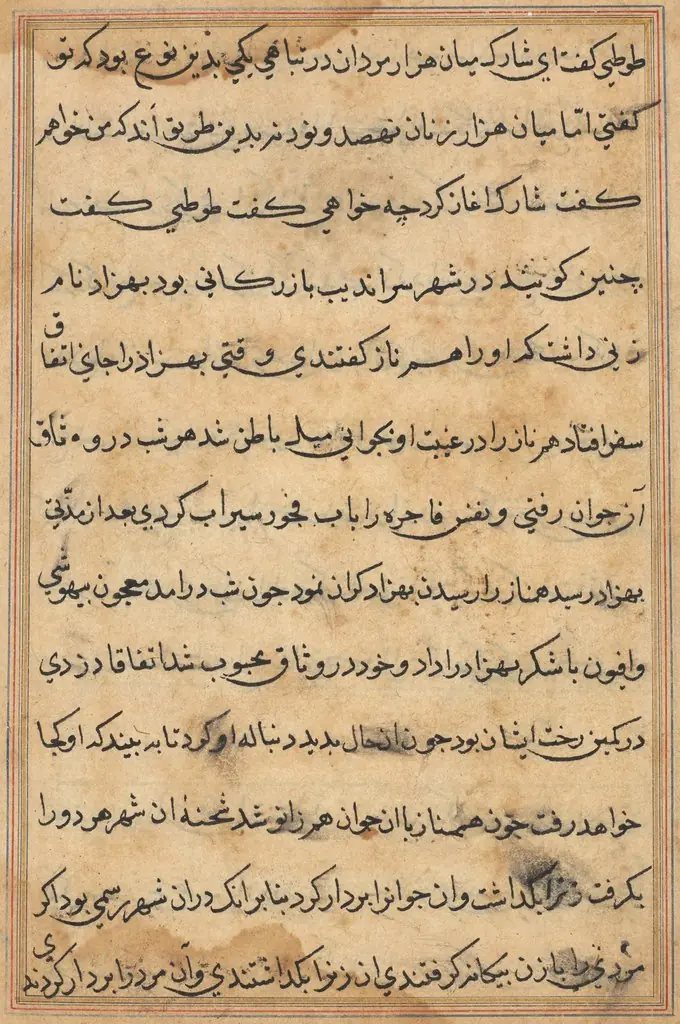
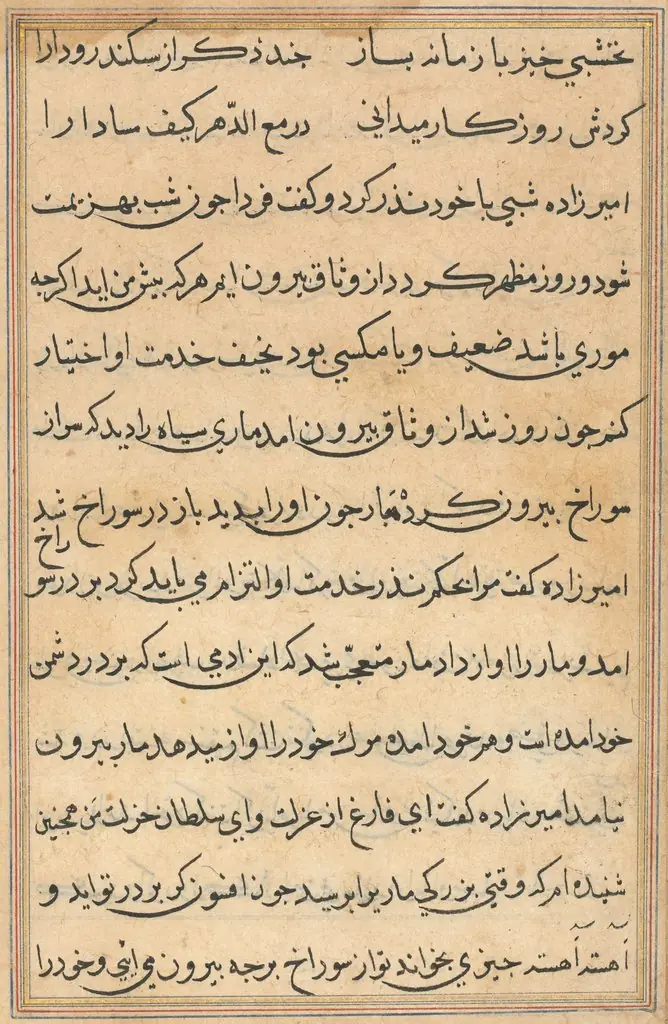
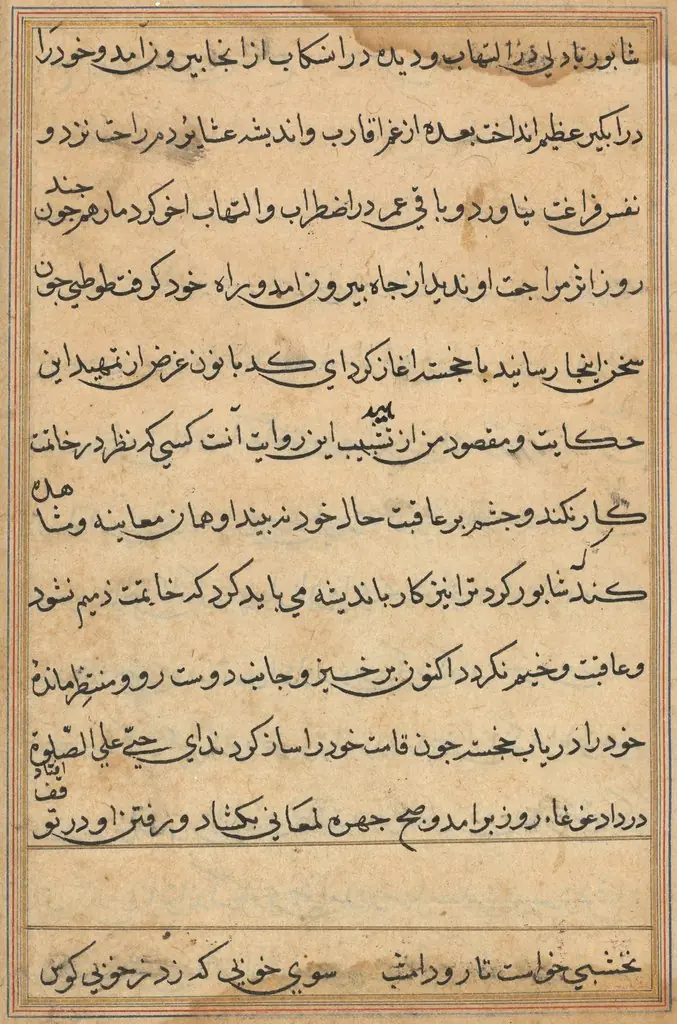
Page from Tales of a Parrot (Tuti-nama): text page
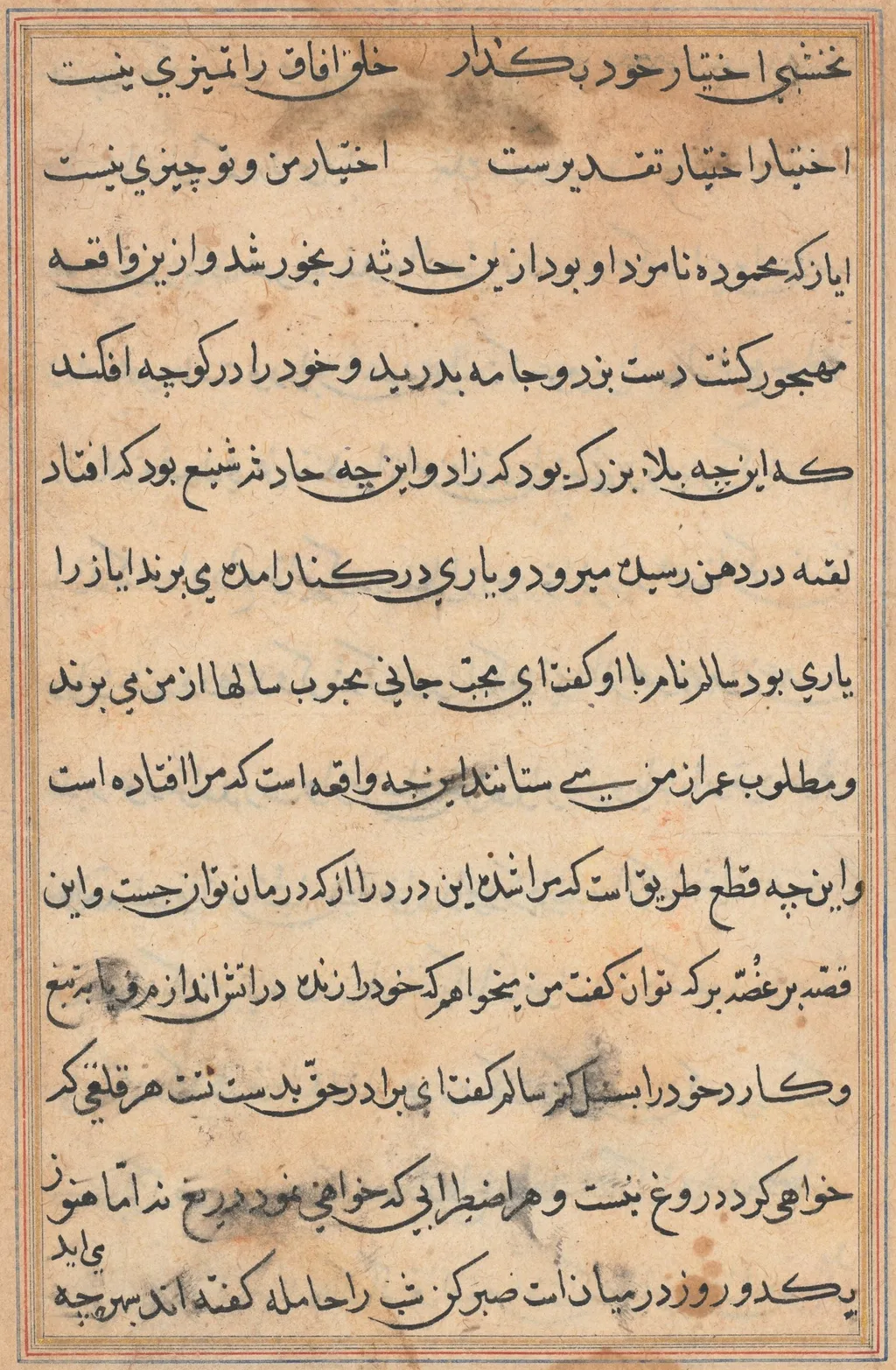
Page from Tales of a Parrot (Tuti-nama): text page is an unspecified painting. It dates from 1560 and is held in the collection of the Cleveland Museum of Art.
About this work
History & Provenance
It was created in 1560 within the Mughal Empire and has not been recorded in any major exhibition history according to the available documentation.
The text page from the Tales of a Parrot (Tuti-nama) was produced around 1560 in the Mughal Empire by an unknown artist. It is now held by the Cleveland Museum of Art, where it is accessioned as 1962.279.220.a. No further details about its original commission or earlier ownership are recorded in the available sources.
The painting is held in the collection of the Cleveland Museum of Art, where it is catalogued as accession number 1962.279.220.a. It was created in 1560 within the Mughal Empire and has not been recorded in any major exhibition history according to the available documentation.
Overview
This illuminated page belongs to the Persian manuscript Tales of a Parrot (Tuti‑nama), a literary work commissioned for a young prince named Salim. Executed on light‑brown paper, the surface is entirely covered by a dense network of black ink calligraphy, framed by a narrow red line along the margins. The paper bears subtle signs of age, indicating centuries of handling.
Subject & Meaning
The text on the page conveys a segment of the parrot’s narrative, a popular moral tale in Persian literature that uses the bird’s speech to impart ethical lessons. Though the visual focus is the script itself, the content reflects the courtly interest in didactic storytelling and the cultivation of refined taste among elite patrons.
Technique & Style
The calligrapher employed a precise, decorative hand characteristic of late Safavid manuscript production. Black ink flows in tightly curving lines that interlock to fill the entire field, creating a rhythmic visual texture. A thin red border, applied with a fine brush, delineates the page edges, while the paper’s warm tone provides a subtle contrast that enhances legibility.
Artist & collection

- Page from Tales of a Parrot (Tuti-nama): text page
 Page from Tales of a Parrot (Tuti-nama): text page
 Page from Tales of a Parrot (Tuti-nama): text page
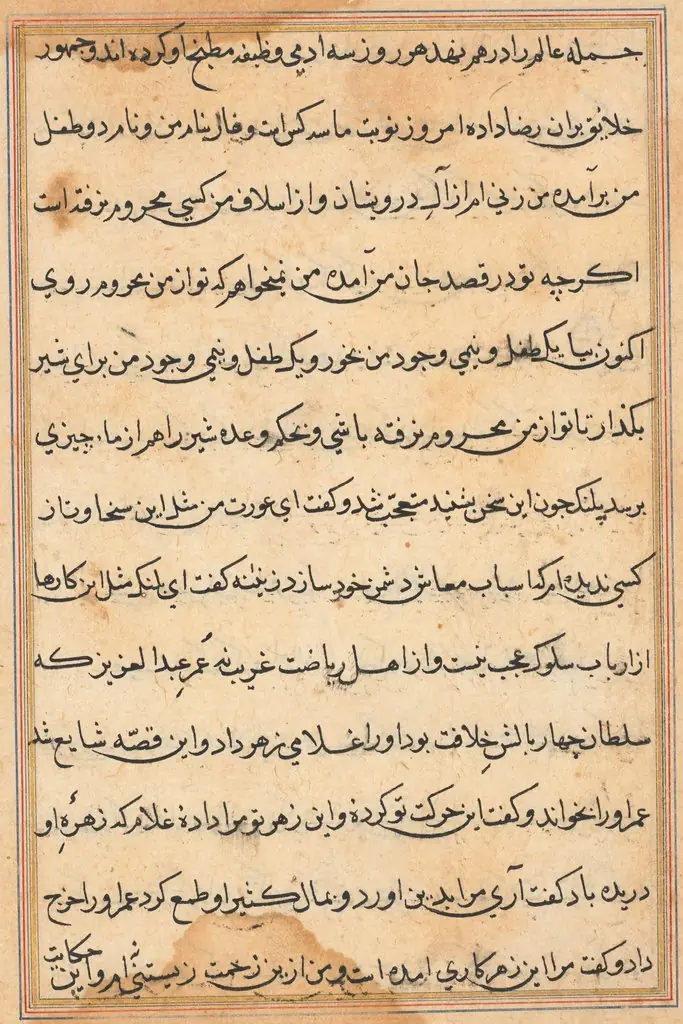 Page from Tales of a Parrot (Tuti-nama): text page
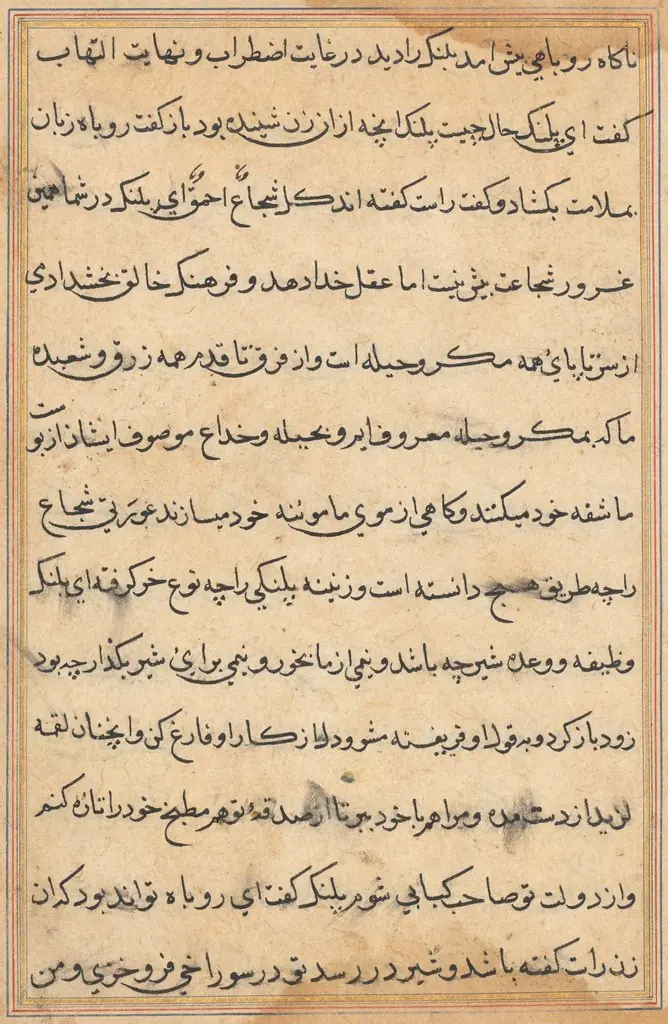 Page from Tales of a Parrot (Tuti-nama): text page
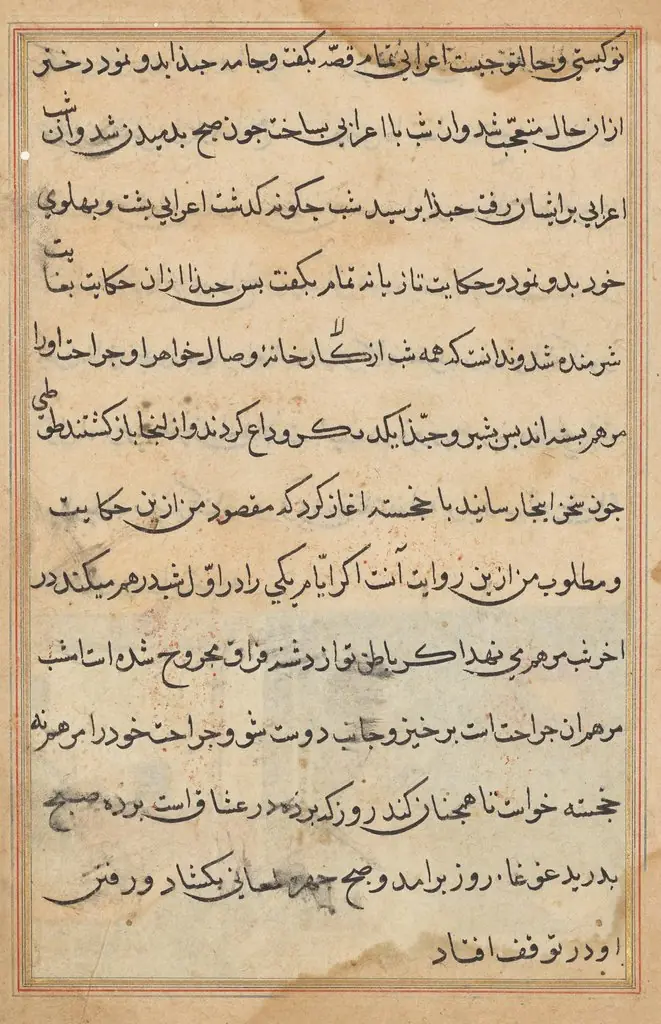 Page from Tales of a Parrot (Tuti-nama): text page
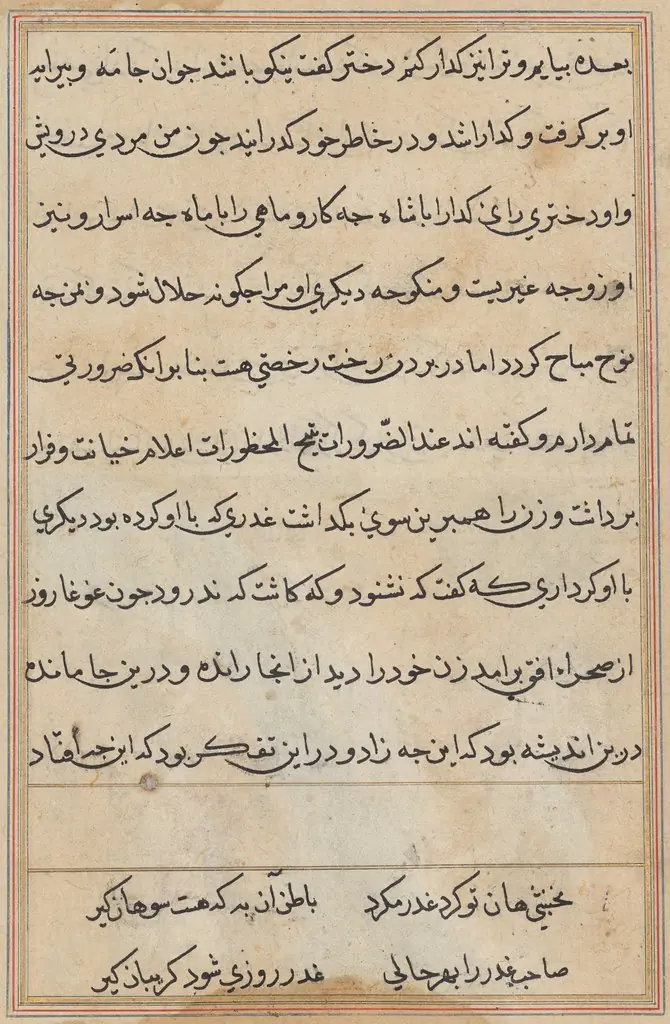 Page from Tales of a Parrot (Tuti-nama): text page
 Page from Tales of a Parrot (Tuti-nama): text page