Artwork
Page from Tales of a Parrot (Tuti-nama): text page
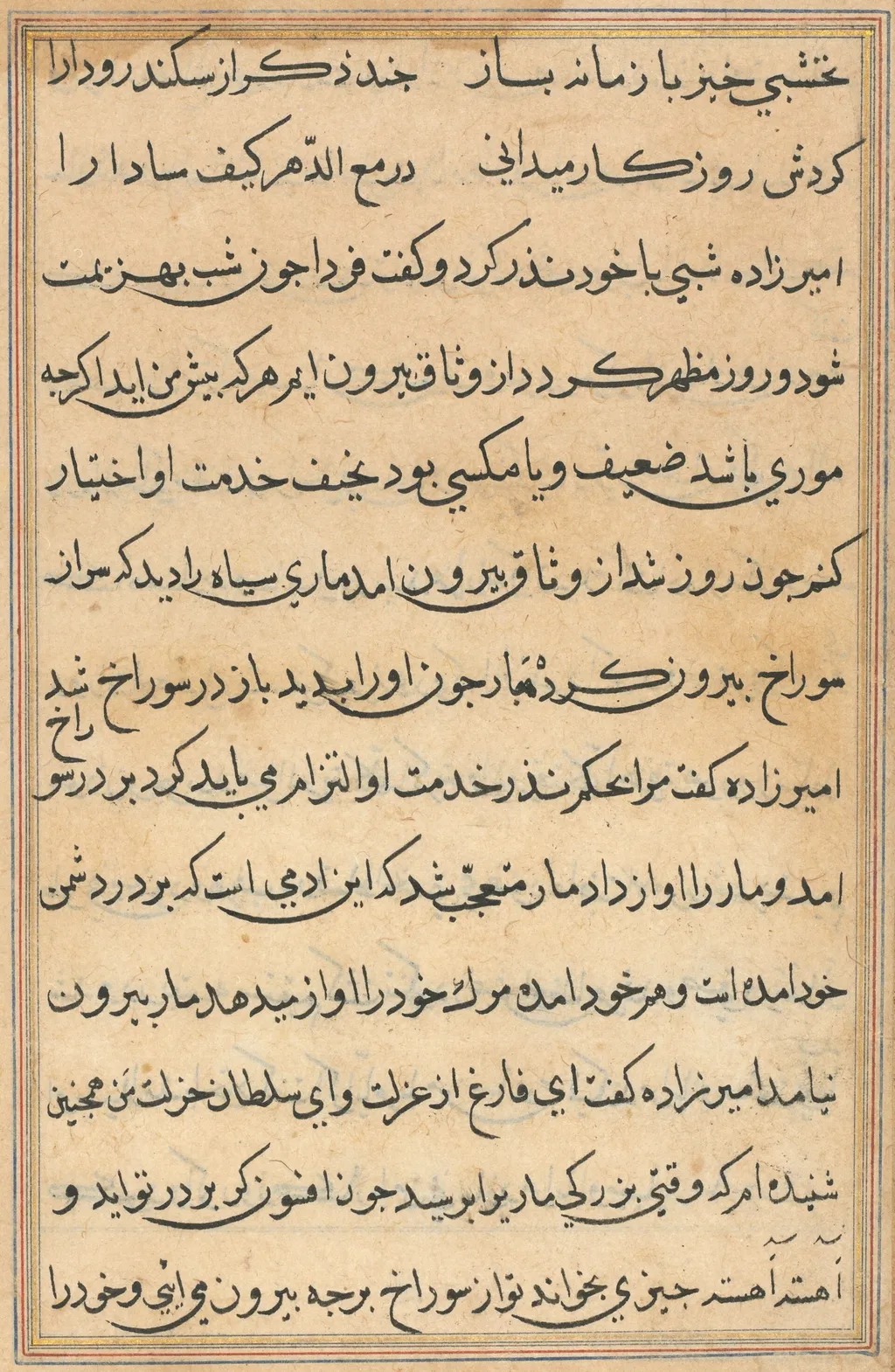
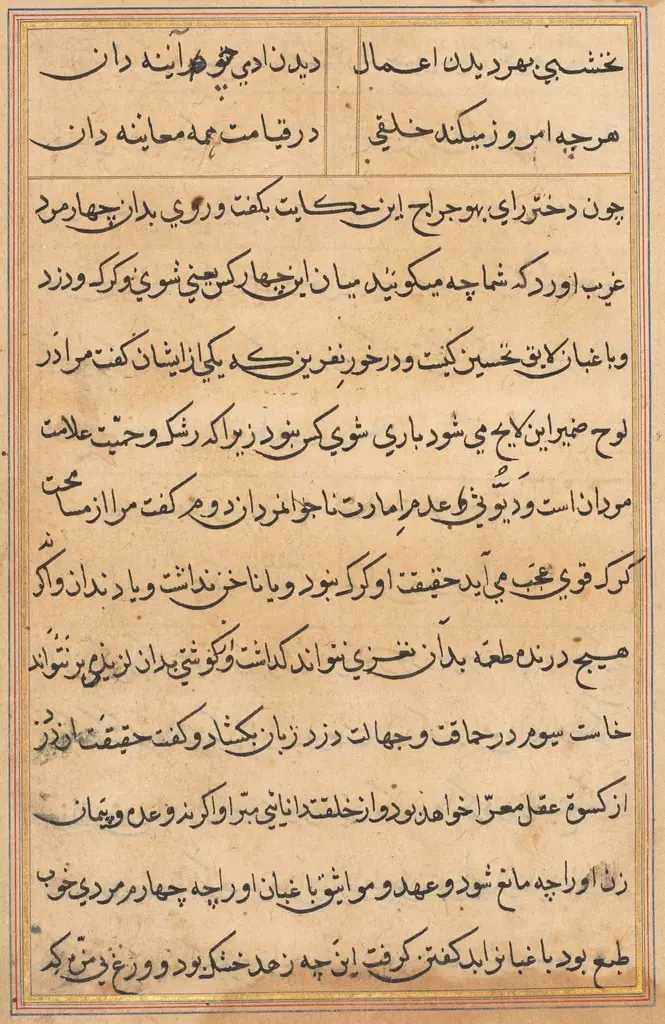
Page from Tales of a Parrot (Tuti-nama): text page is an unspecified painting. It dates from 1560 and is held in the collection of the Cleveland Museum of Art. The work presents a single leaf from a manuscript titled Tales of a Parrot (Tuti‑nama).
About this work
History & Provenance
It currently resides in the collection of the Cleveland Museum of Art, where it is cataloged under the accession number 1962.
This text page from the Tales of a Parrot (Tuti-nama) was created in 1560 within the Mughal Empire. The work is attributed to an unknown artist and is classified as a painting. It currently resides in the collection of the Cleveland Museum of Art, where it is cataloged under the accession number 1962.279.244.b. The specific chain of ownership prior to its arrival at the museum is not detailed in the available records.
Context
The miniature likely originates from the Mughal artistic milieu of the 1560s, reflecting the cosmopolitan court patronage that embraced Persian narrative traditions.
It forms part of a dispersed series of illustrated manuscripts collectively referred to as the Tuti-nama, which circulated among elite circles in South and Central Asia.
Scholarship situates these works within the broader trajectory of Persianate painting, noting their role in mediating cross-cultural exchanges through illustrated storytelling.
Overview
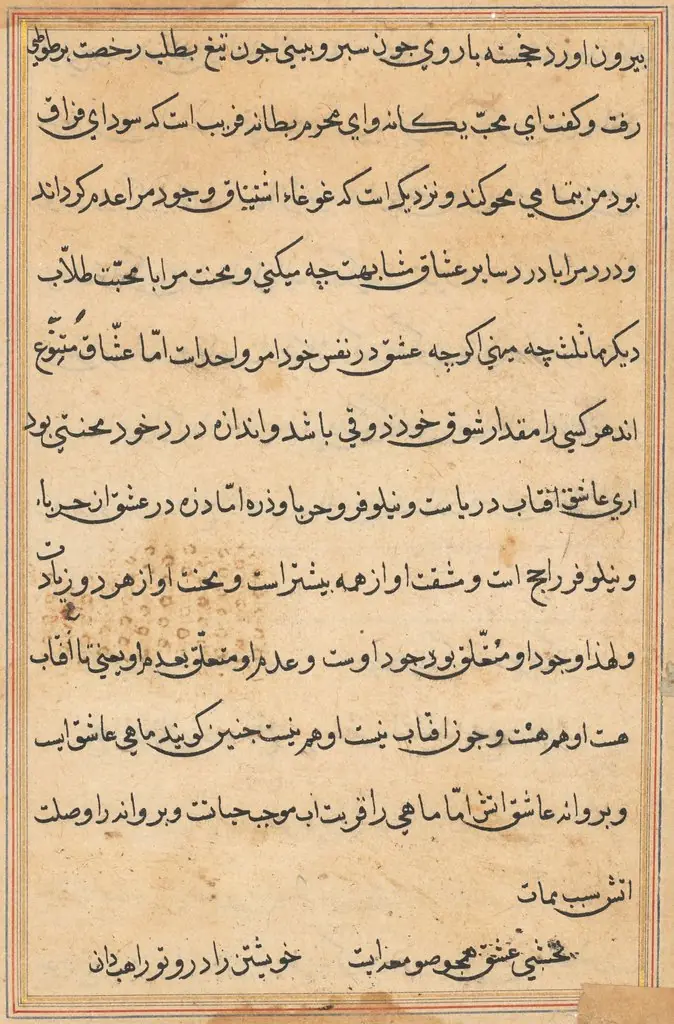
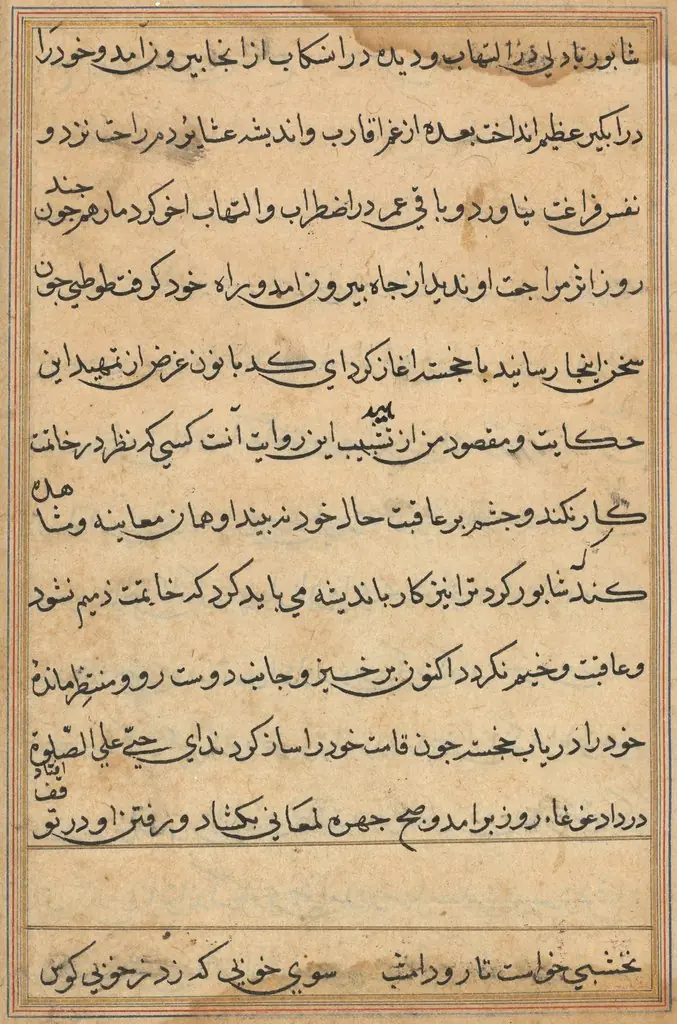
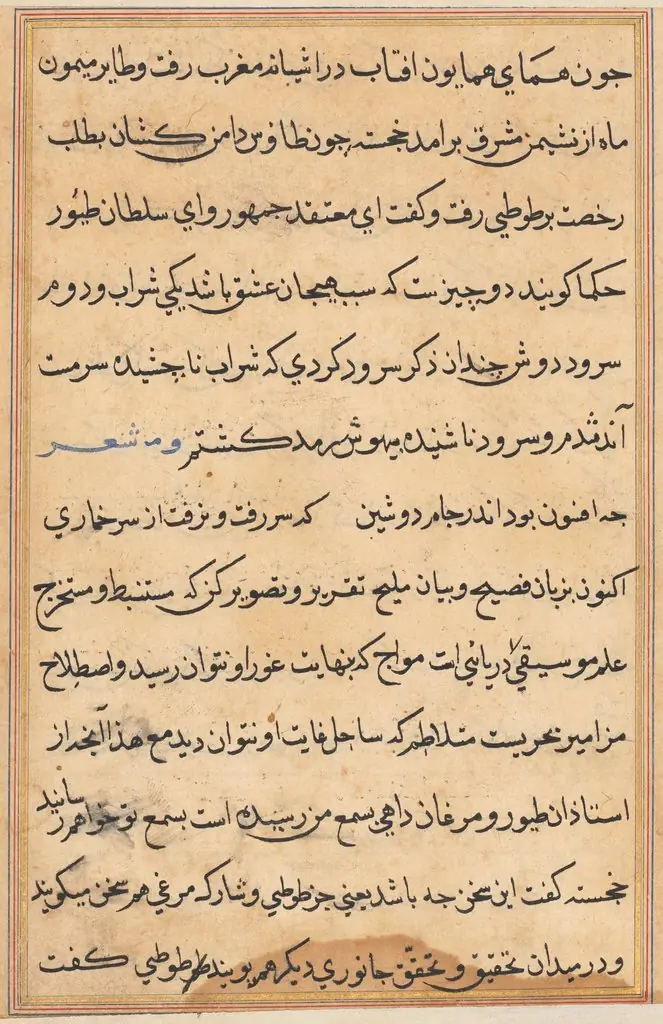
The work presents a single leaf from a manuscript titled Tales of a Parrot (Tuti‑nama). Rendered as a painted representation of a book page, it shows black ink text set against a light beige surface, framed by a narrow margin. The composition isolates the page, emphasizing its calligraphic content rather than any illustrative imagery.
Subject & Meaning
The page contains a continuous block of writing in an unidentified script, arranged in several compact sections. The formal, cursive hand and ornamental flourishes suggest a literary or poetic text, likely intended for an elite audience familiar with the language and its conventions.
Technique & Style
Executed with careful brushwork, the artist reproduced the inked letters and decorative elements with precision, preserving the density of the original manuscript. The beige background mimics aged paper, while the thin border delineates the page’s limits, creating a restrained yet refined visual effect.
Artist & collection

- Page from Tales of a Parrot (Tuti-nama): text page
 Page from Tales of a Parrot (Tuti-nama): text page
 Page from Tales of a Parrot (Tuti-nama): text page
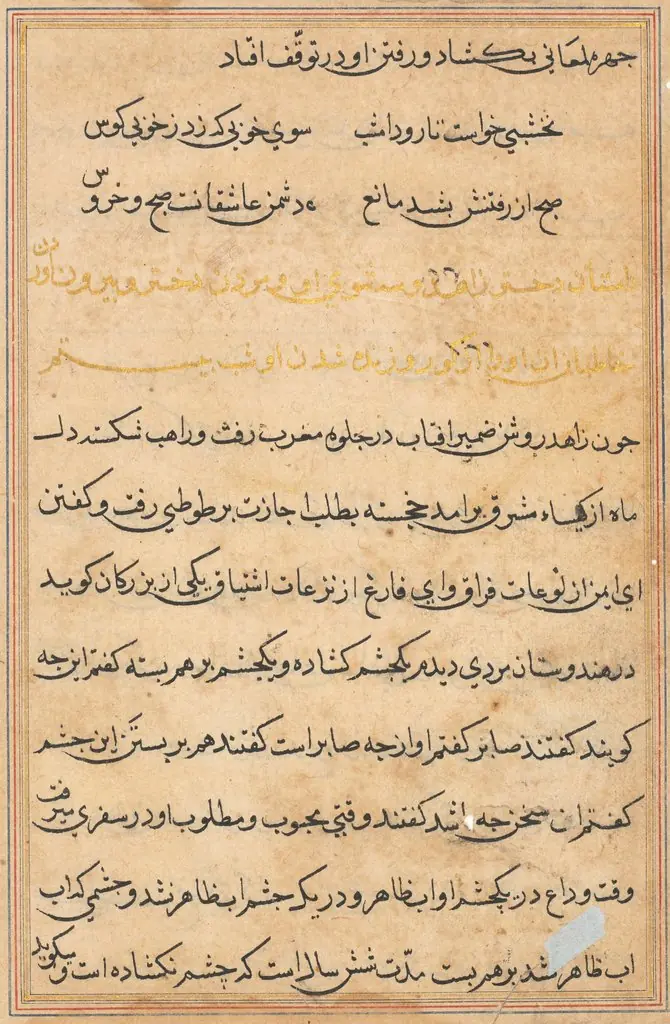 Page from Tales of a Parrot (Tuti-nama): text page
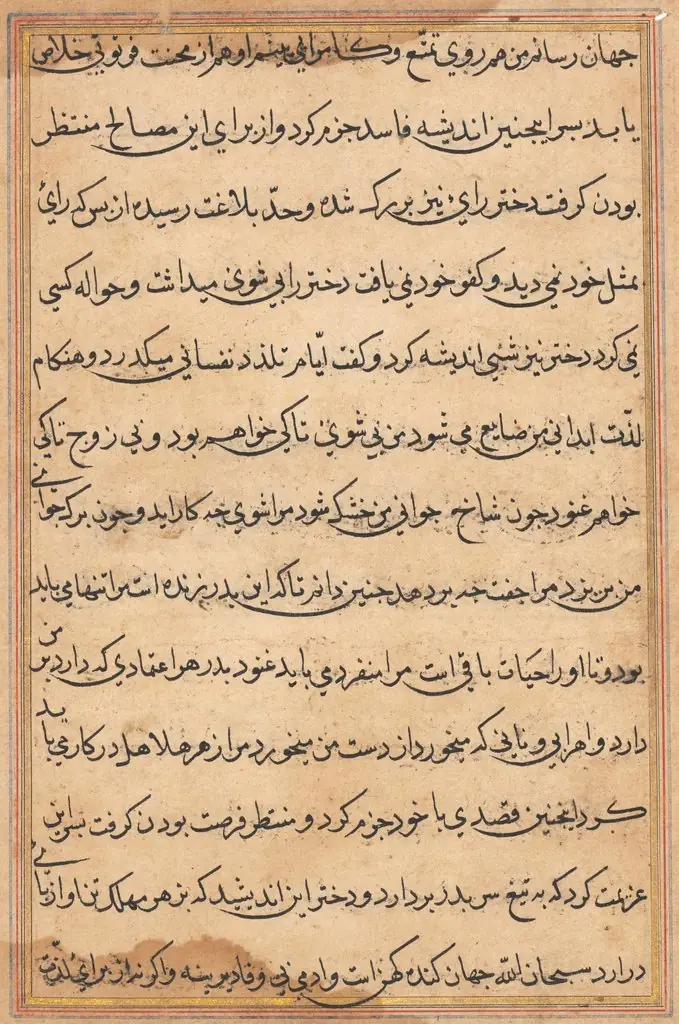 Page from Tales of a Parrot (Tuti-nama): text page
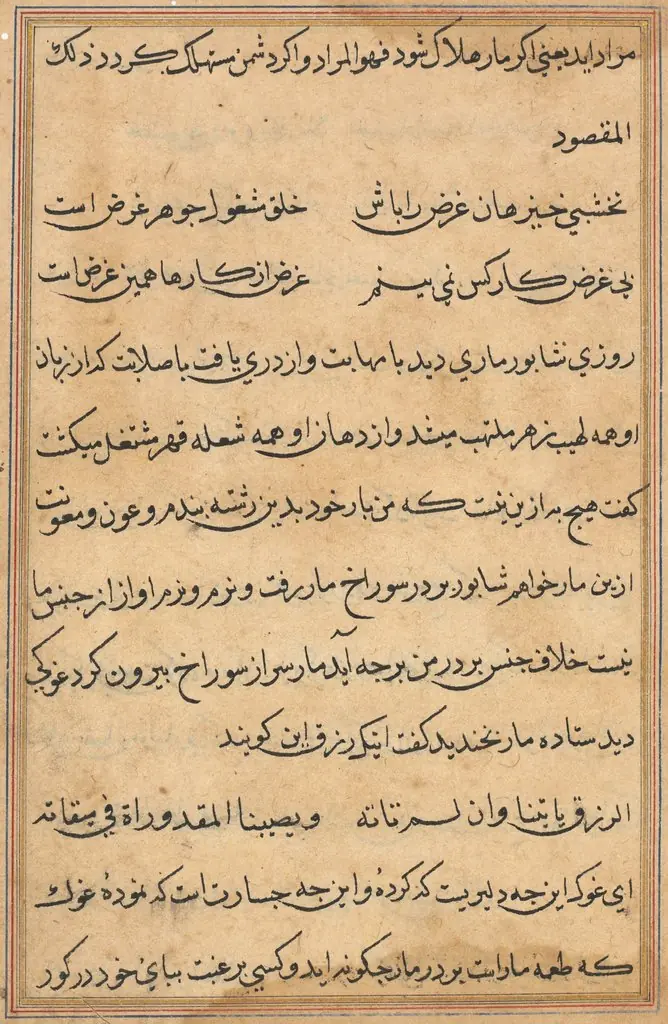 Page from Tales of a Parrot (Tuti-nama): text page
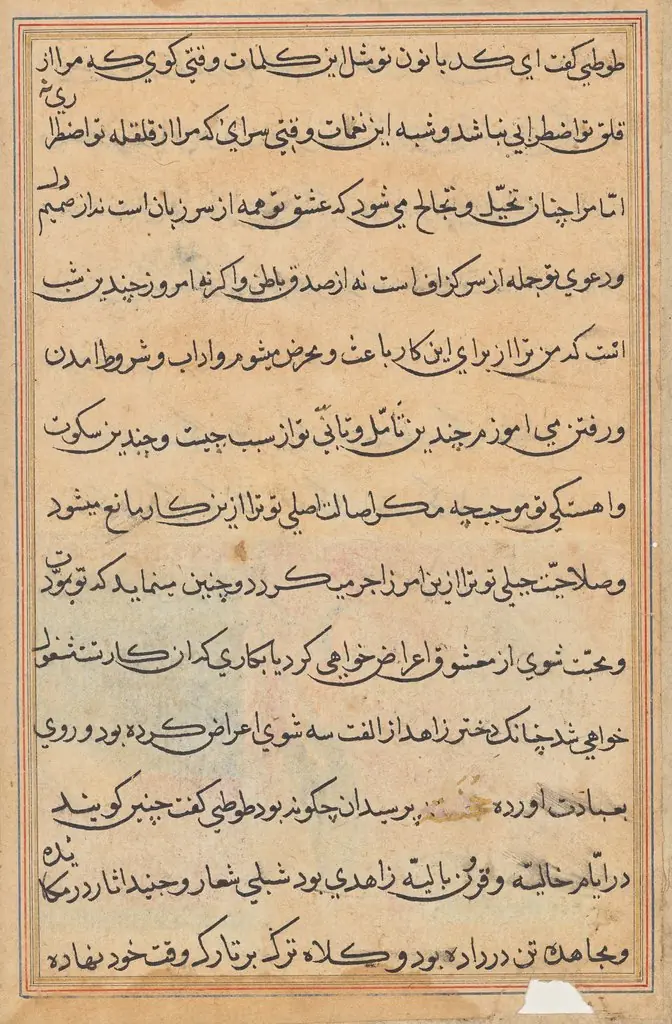 Page from Tales of a Parrot (Tuti-nama): text page
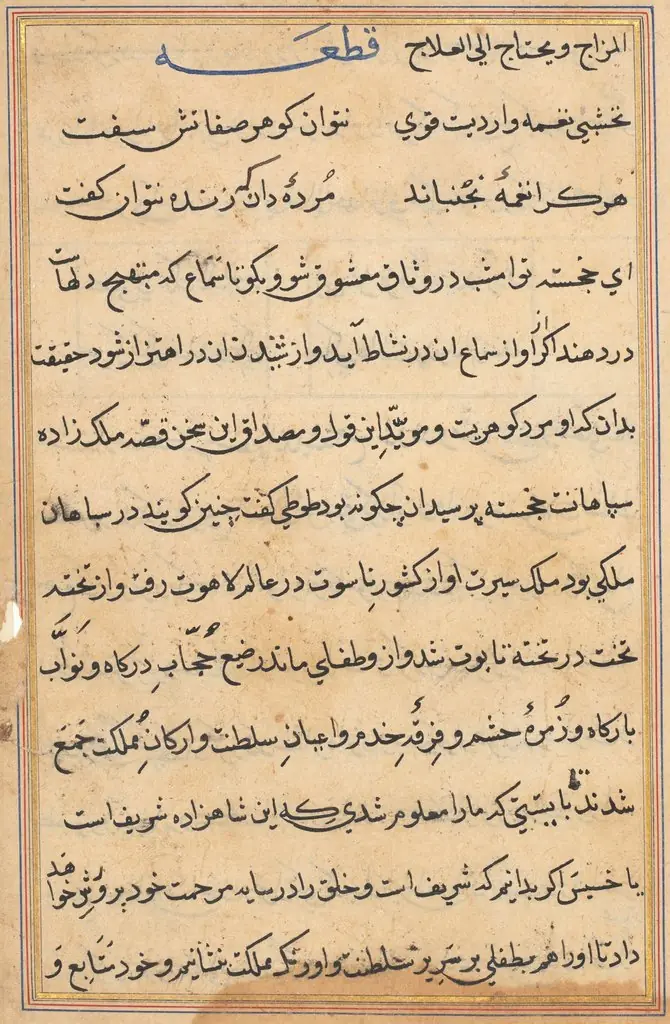 Page from Tales of a Parrot (Tuti-nama): text page
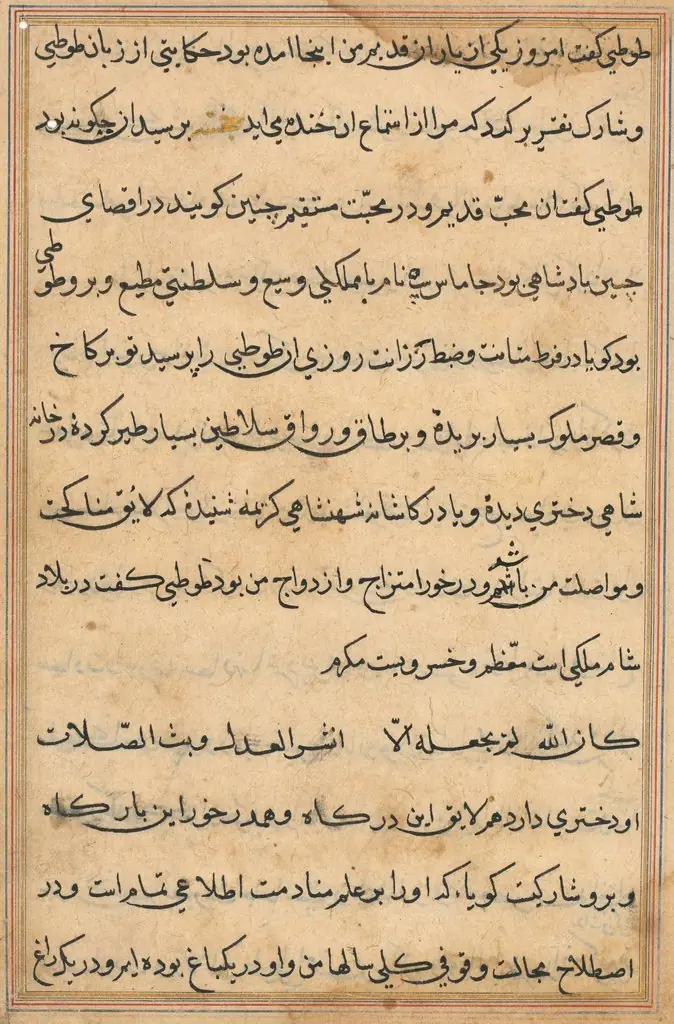 Page from Tales of a Parrot (Tuti-nama): text page
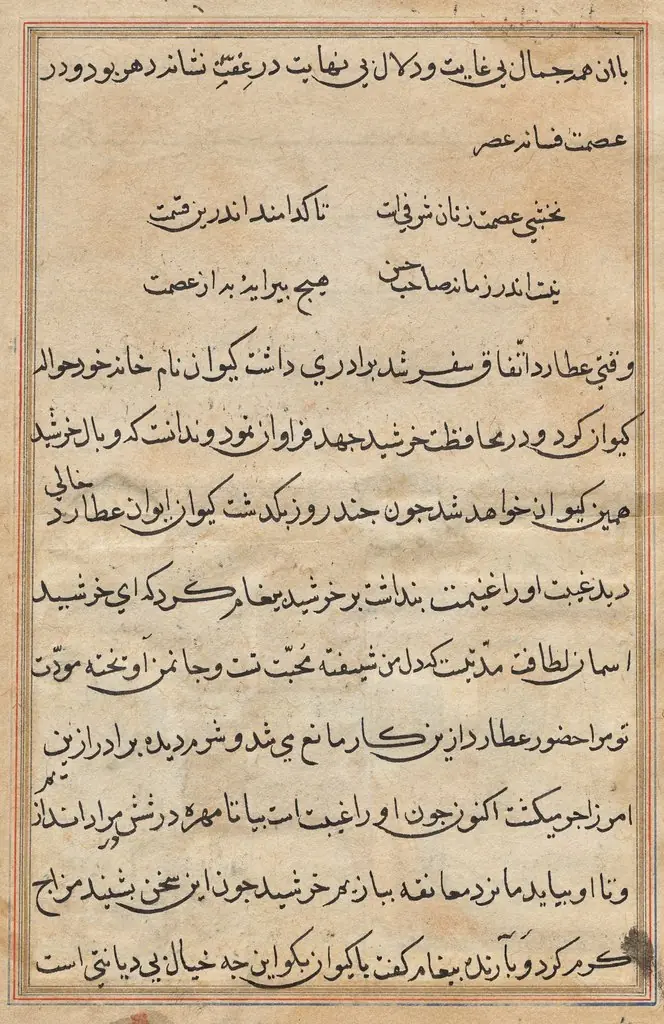 Page from Tales of a Parrot (Tuti-nama): text page
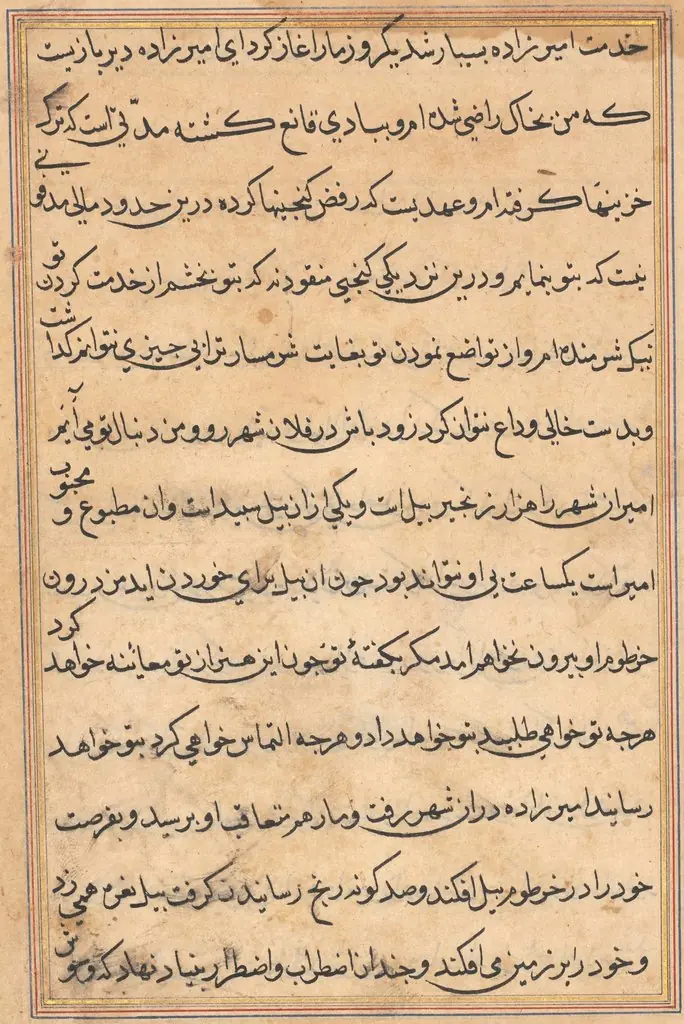 Page from Tales of a Parrot (Tuti-nama): text page
 Page from Tales of a Parrot (Tuti-nama): text page