Artwork
Page from Tales of a Parrot (Tuti-nama): text page
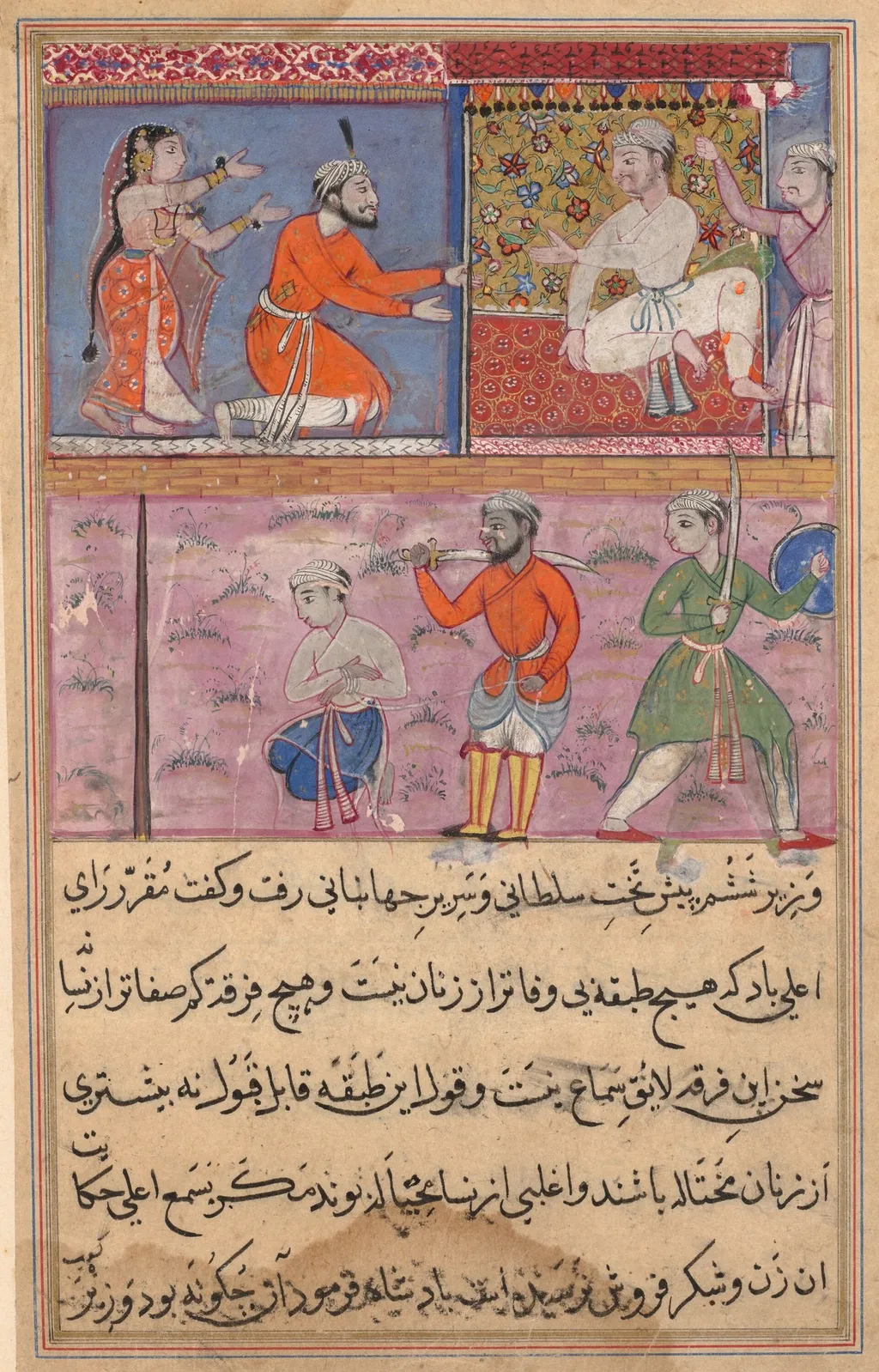
Page from Tales of a Parrot (Tuti-nama): text page is an unspecified painting. It dates from 1560 and is held in the collection of the Cleveland Museum of Art. This illuminated page originates from the Persian manuscript known as the Tales of a Parrot (Tuti‑nama).
About this work
Subject & Meaning
As a text folio rather than an illustrated one, the page carries the written narrative rather than a painted scene.
This is a text page from a 1560 manuscript of the Tales of a Parrot (Tuti-nama), a collection of moral tales structured around a parrot that recounts stories to detain its mistress. As a text folio rather than an illustrated one, the page carries the written narrative rather than a painted scene. The Tuti-nama's framing device of the storytelling parrot served a didactic purpose, reflecting the broader emphasis on moral instruction in 16th-century Persianate literature. The work was produced in the Mughal Empire and is housed in the Cleveland Museum of Art.
Technique & Style
The page is a text folio from the 1560 Tuti-nama manuscript, created in Mughal India in ink on paper. It belongs to the Cleveland Museum of Art's collection. The support is paper, handled as a leaf within a bound manuscript, and the text is arranged in a vertical format in Nastaliq script.
The available sources do not document specific decorative elements, gilding, or condition details for this text page beyond its identification as part of the imperial manuscript.
History & Provenance
The text page from the Tales of a Parrot (Tuti-nama) was created in 1560 within the Mughal Empire, as recorded in its cataloguing data, and is attributed to an unknown artist. It is held in the collection of the Cleveland Museum of Art, where it is accessioned as 1962.279.69.a. No further details about its earlier ownership chain, commission, or the path by which it entered the museum's holdings are documented in the available sources.
Context
The page originates from a 1560 manuscript produced in the Mughal Empire, part of an illustrated copy of the Tuti-nama that brought together text and painting in the collaborative workshop traditions of the period. Its attribution to an unknown artist aligns with the anonymity often observed in manuscript production of the era. The work's presence in the Cleveland Museum of Art collection underscores its significance within the study of Indo-Persian artistic exchange, and scholarship on the Tuti-nama emphasizes its role in transmitting moral and didactic narratives through illustrated texts in 16th-century Persianate manuscript culture.
Overview
This illuminated page originates from the Persian manuscript known as the Tales of a Parrot (Tuti‑nama). It consists of a painted text leaf in which two miniature scenes are set within window‑like frames, each rendered in vivid, flat colour without modelling. The composition reflects the decorative aesthetic typical of courtly book production.
Artist & collection

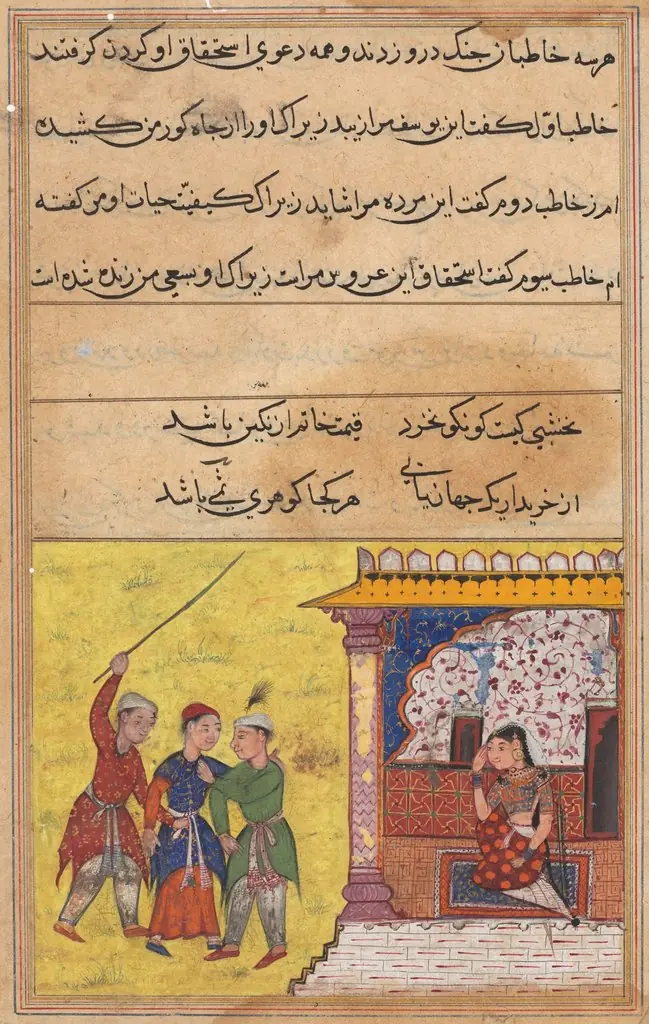 The three suitors again begin to quarrel among themselves for the hand of the devotee’s daughter, from a Tuti-nama (Tales of a Parrot): Twentieth Night
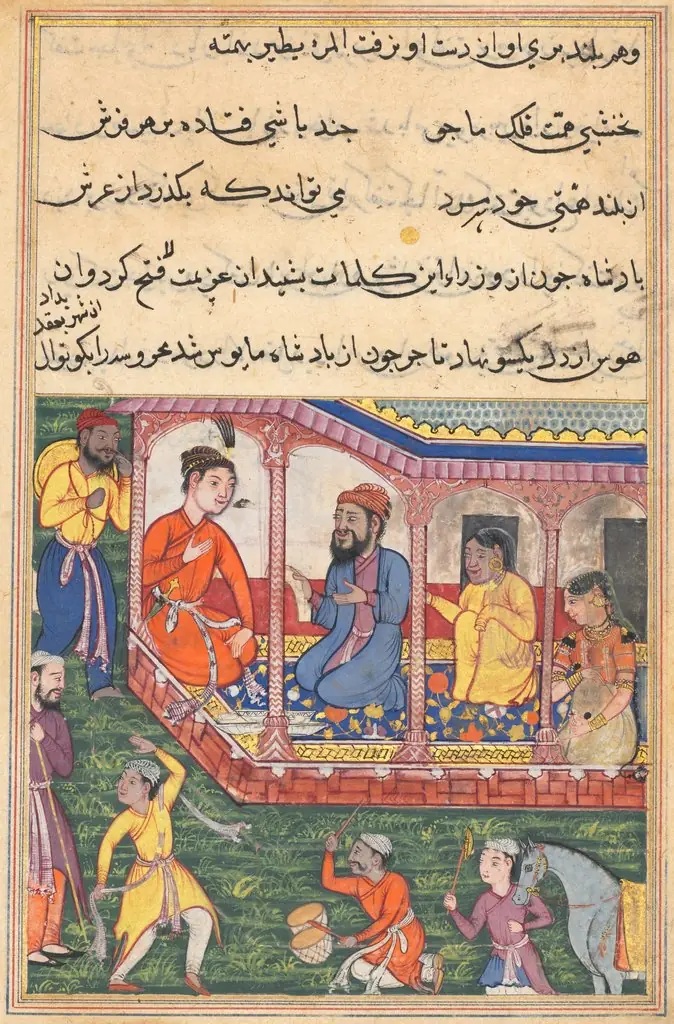 Mahrusa’s marriage to the prefect of the city, from a Tuti-nama (Tales of a Parrot): Thirty-sixth Night
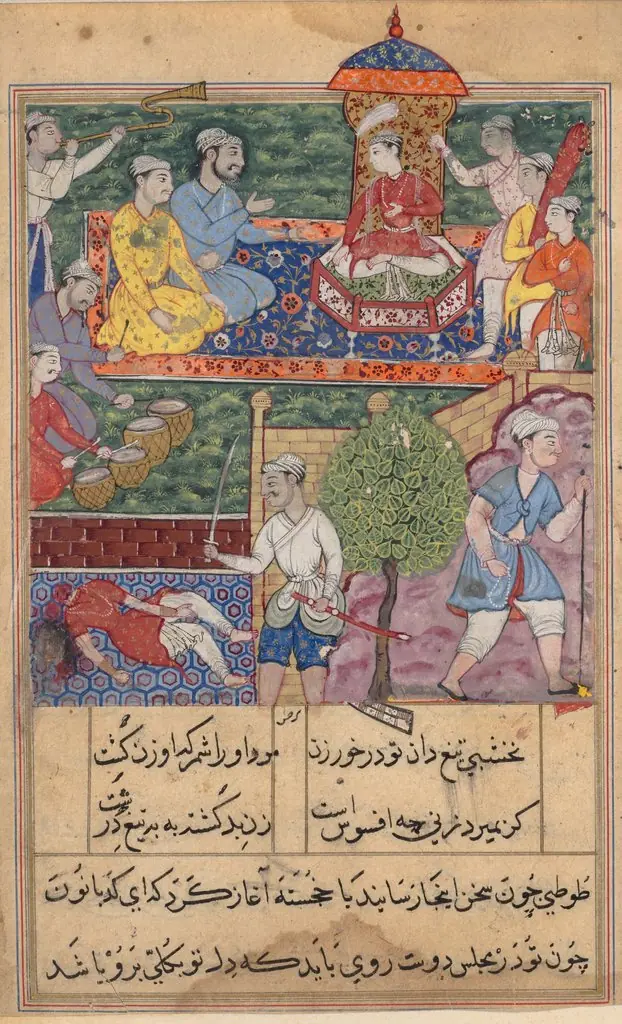 Page from Tales of a Parrot (Tuti-nama): text page
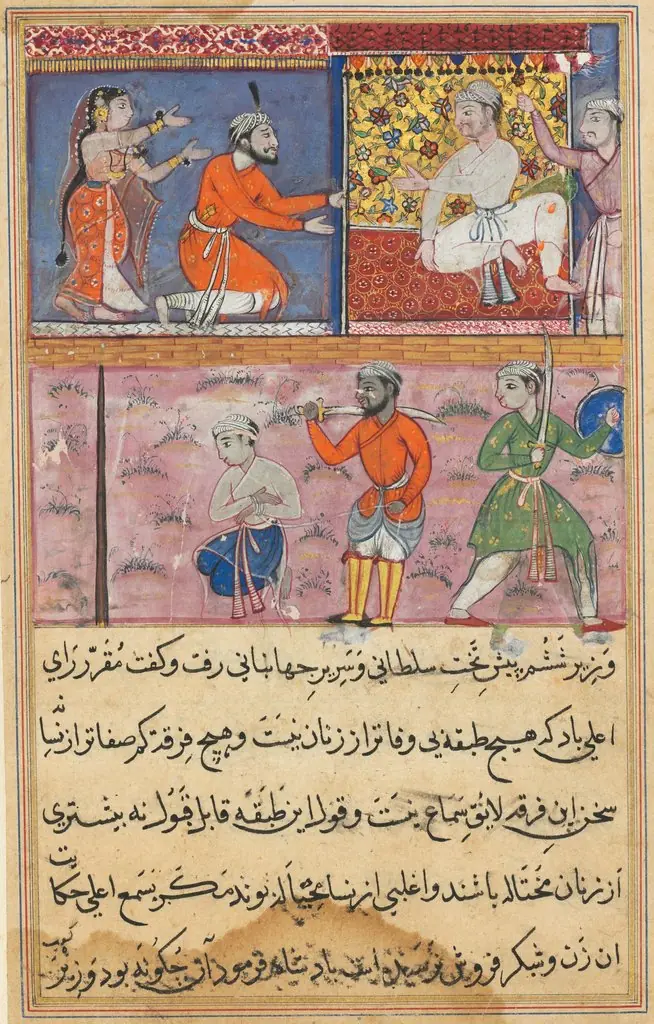 The prince sent back to the place of execution for the sixth time, from a Tuti-nama (Tales of a Parrot): Eighth Night
 The prince sent back to the place of execution for the sixth time, from a Tuti-nama (Tales of a Parrot): Eighth Night
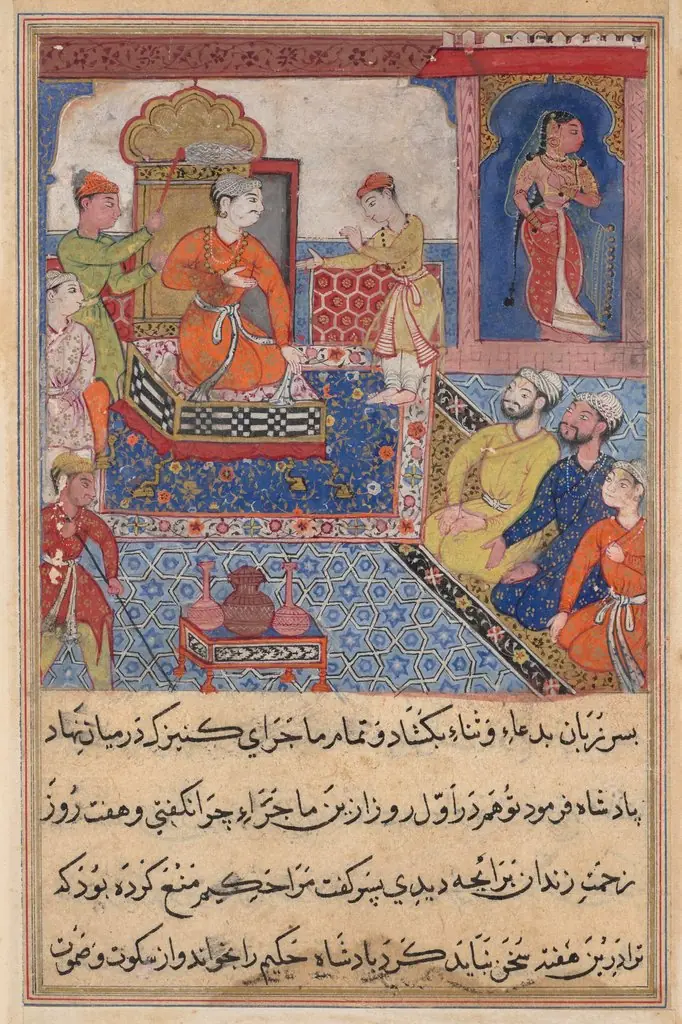
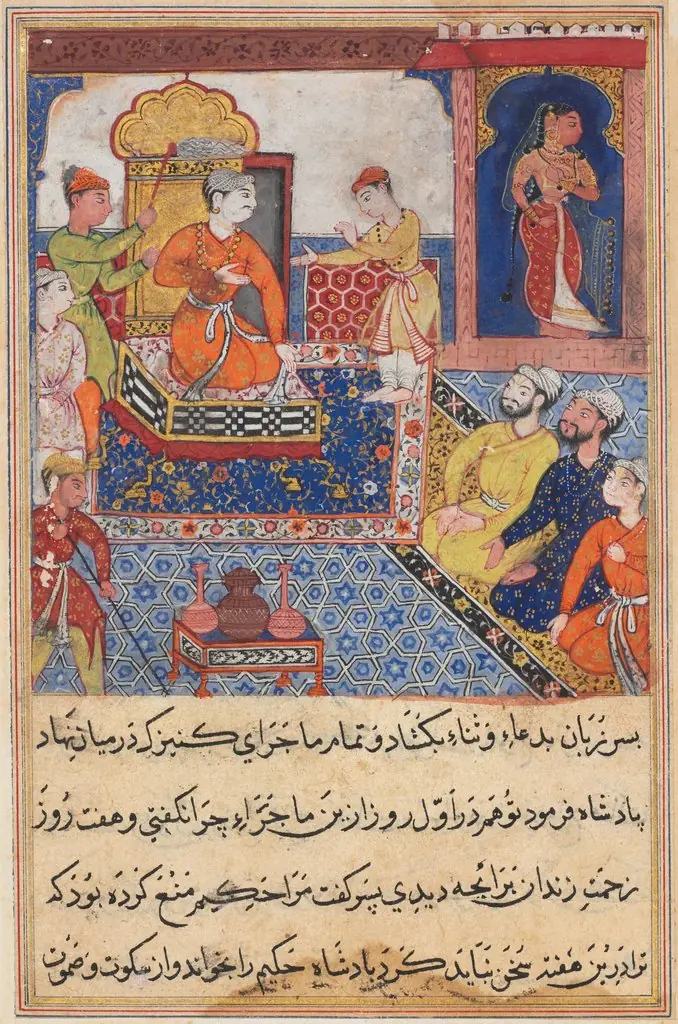 The young prince recounts his experiences to his father, the king, from a Tuti-nama (Tales of a Parrot): Eighth Night
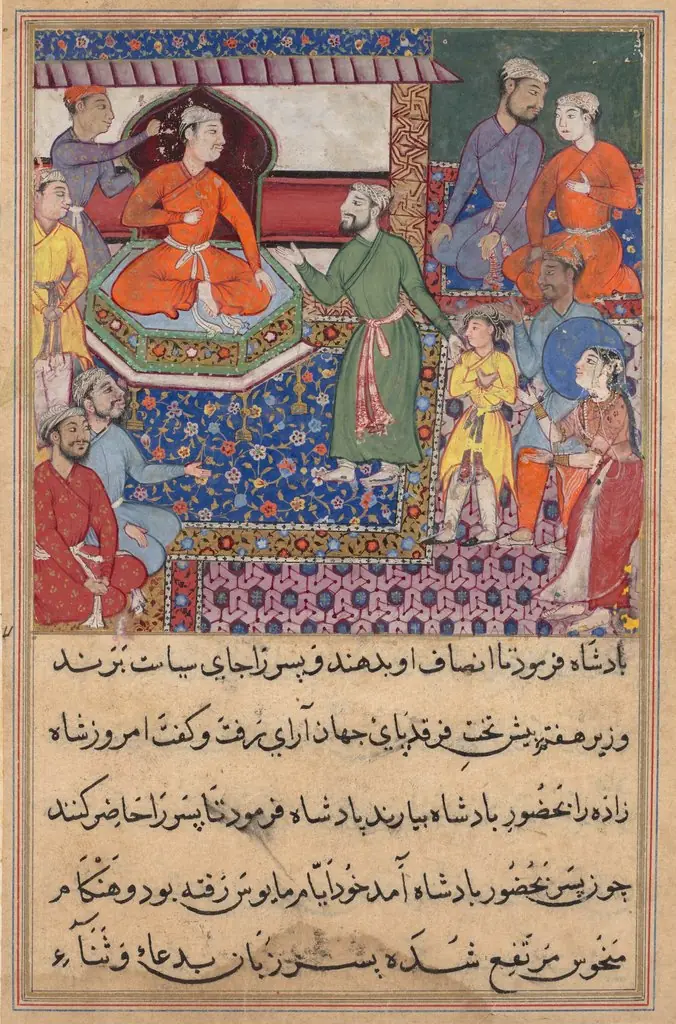 Page from Tales of a Parrot (Tuti-nama): text page
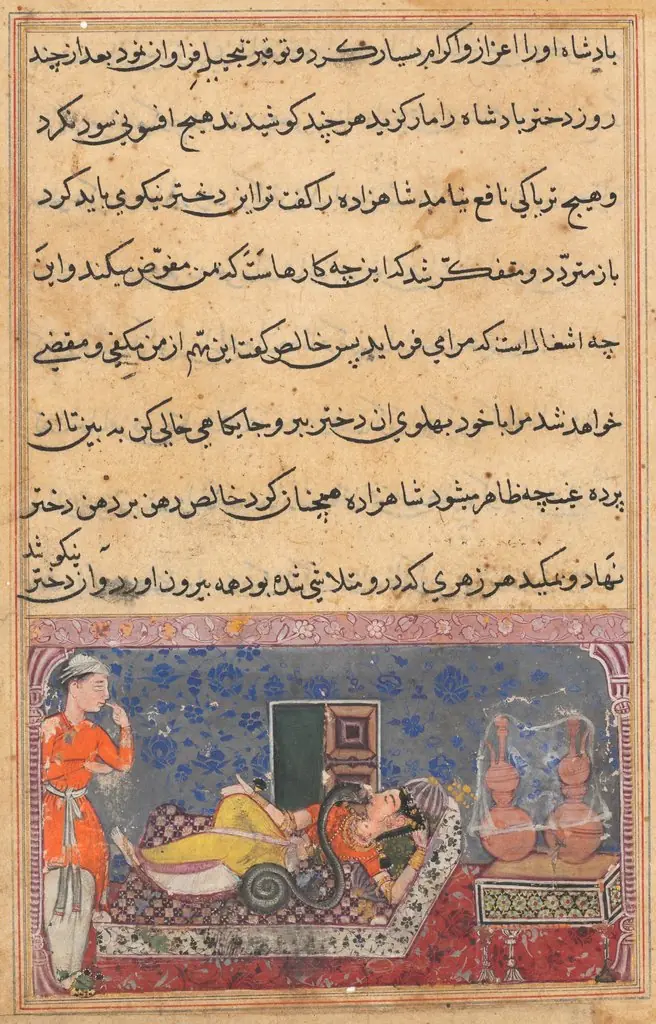 Khalis repays the prince for his kindness by changing into a snake and sucking the poison from the king’s daughter, from a Tuti-nama (Tales of a Parrot): Eighteenth Night
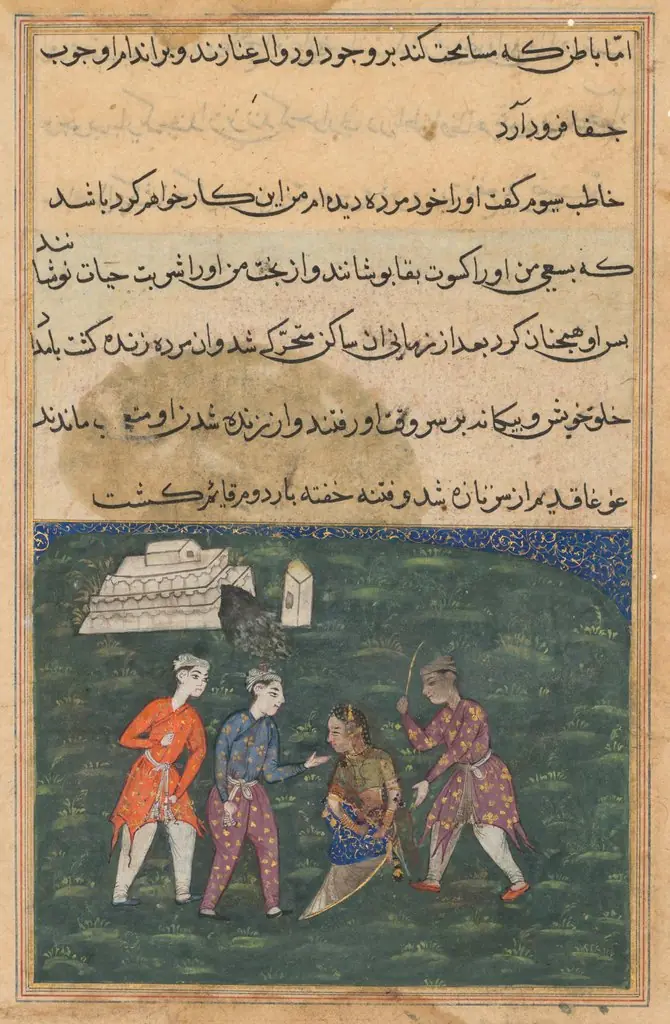 The third suitor strikes the devotee’s daughter and thus restores her to life, from a Tuti-nama (Tales of a Parrot): Twentieth Night
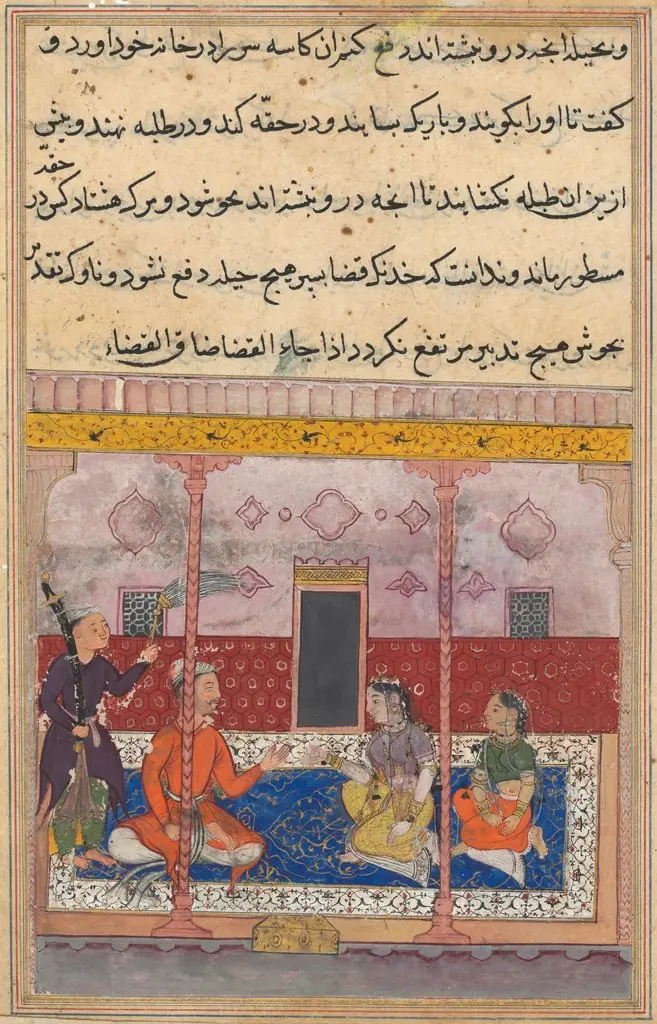 The merchant has the hateful skull ground and put into a box, from a Tuti-nama (Tales of a Parrot): Twenty-third Night
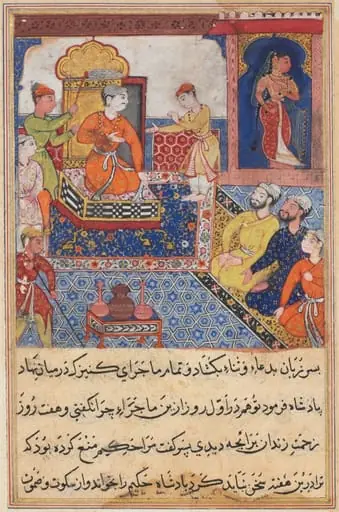 The young prince recounts his experiences to his father, the king, from a Tuti-nama (Tales of a Parrot): Eighth Night
- Page from Tales of a Parrot (Tuti-nama): text page