Artwork
Page from Tales of a Parrot (Tuti-nama): text page
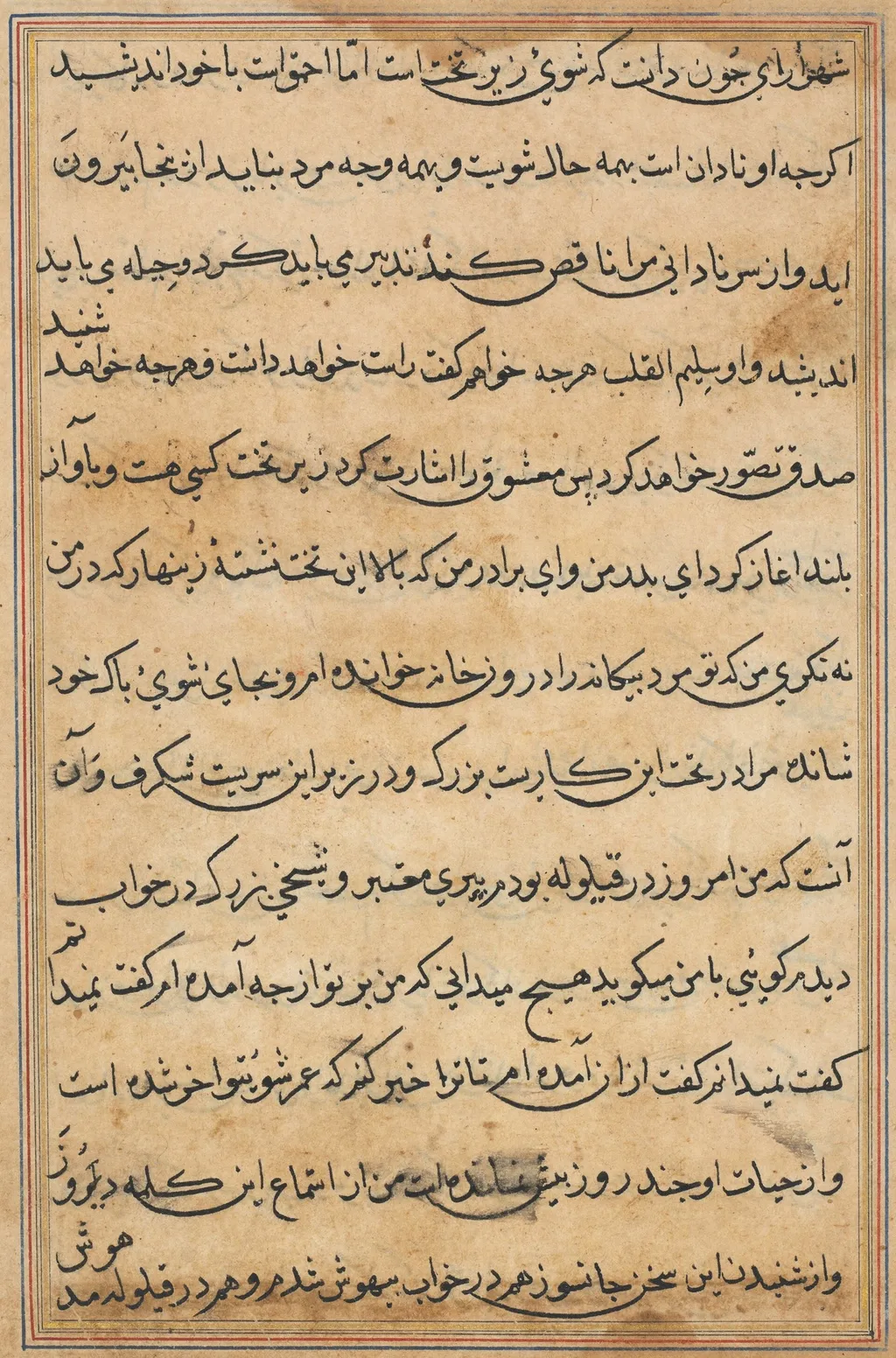
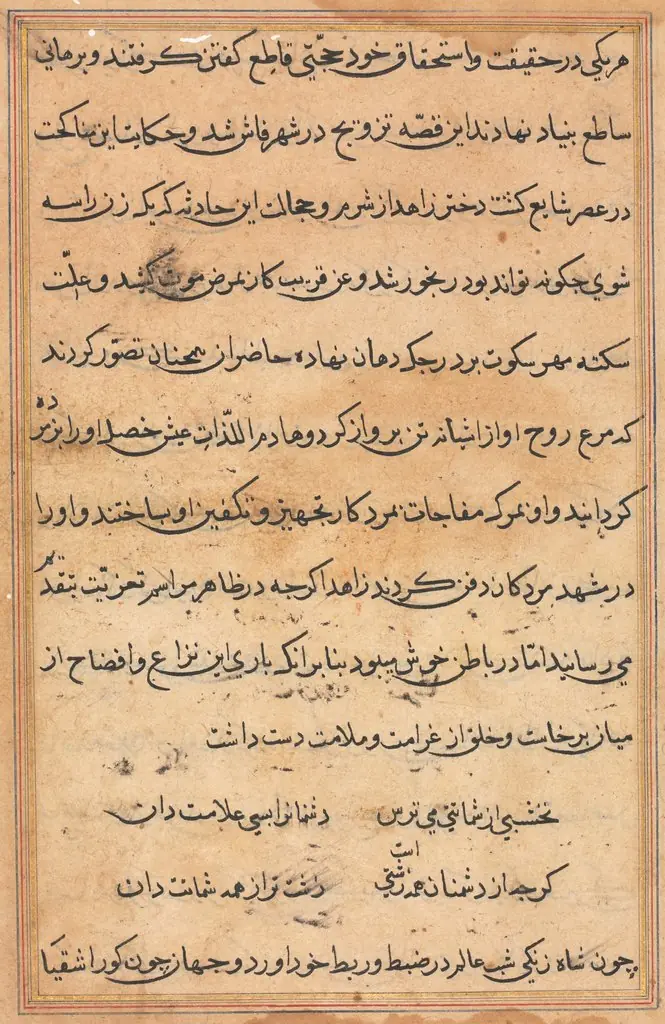
Page from Tales of a Parrot (Tuti-nama): text page is an unspecified painting. It dates from 1560 and is held in the collection of the Cleveland Museum of Art. This object is a single folio from the illustrated manuscript known as Tales of a Parrot (Tuti‑nama).
About this work
History & Provenance
The provided sources confirm its location and inventory details but do not list specific exhibitions where the piece has been displayed.
This text page from the Tales of a Parrot (Tuti-nama) was created around 1560 within the Mughal Empire. The work is attributed to an unknown artist and functions as an illuminated manuscript leaf. It was produced as part of the larger Tuti-nama cycle, a Persian text intended for the Mughal court.
The specific leaf currently held in the Cleveland Museum of Art, cataloged as accession number 1962.279.260.a, represents a fragment of this original production.
The text page is held in the collection of the Cleveland Museum of Art under the accession number 1962.279.260.a. Created around 1560 within the Mughal Empire, this work is attributed to an unknown artist. The provided sources confirm its location and inventory details but do not list specific exhibitions where the piece has been displayed.
Overview
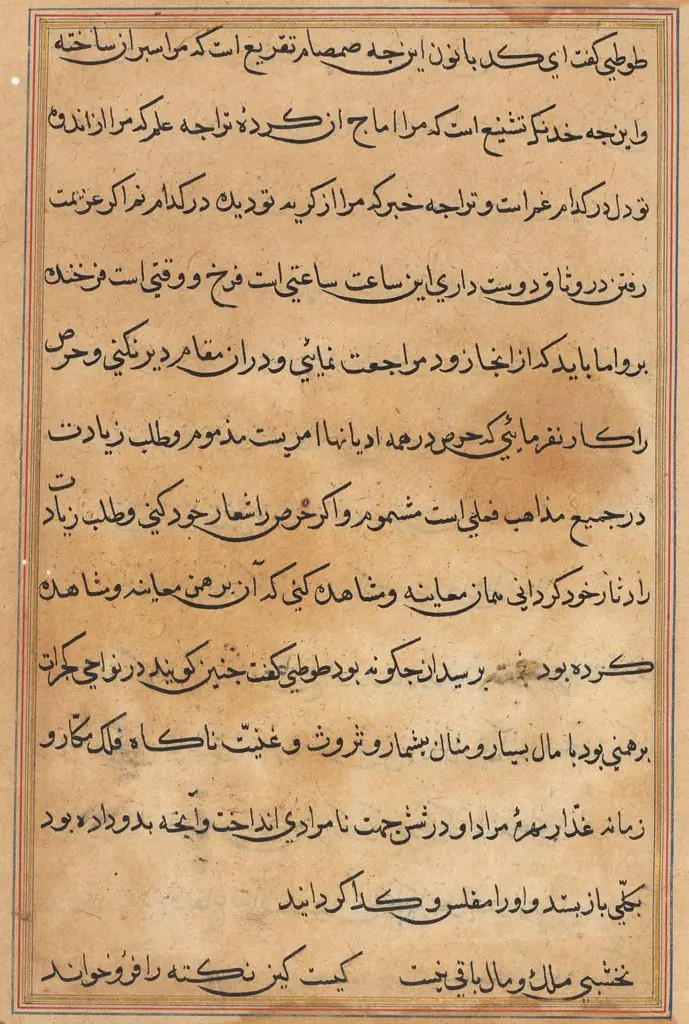
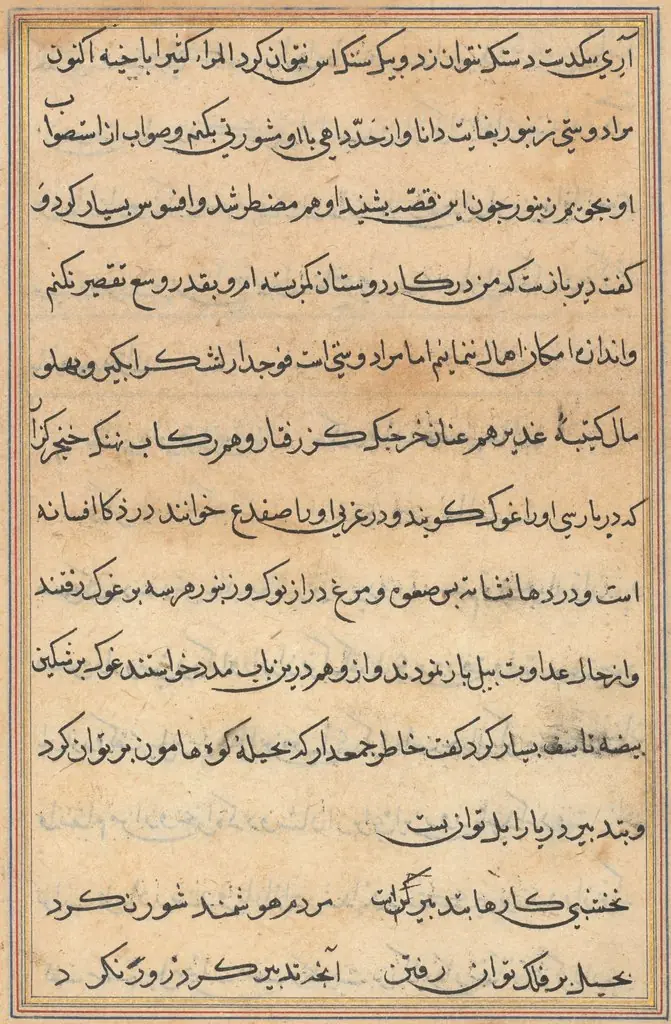
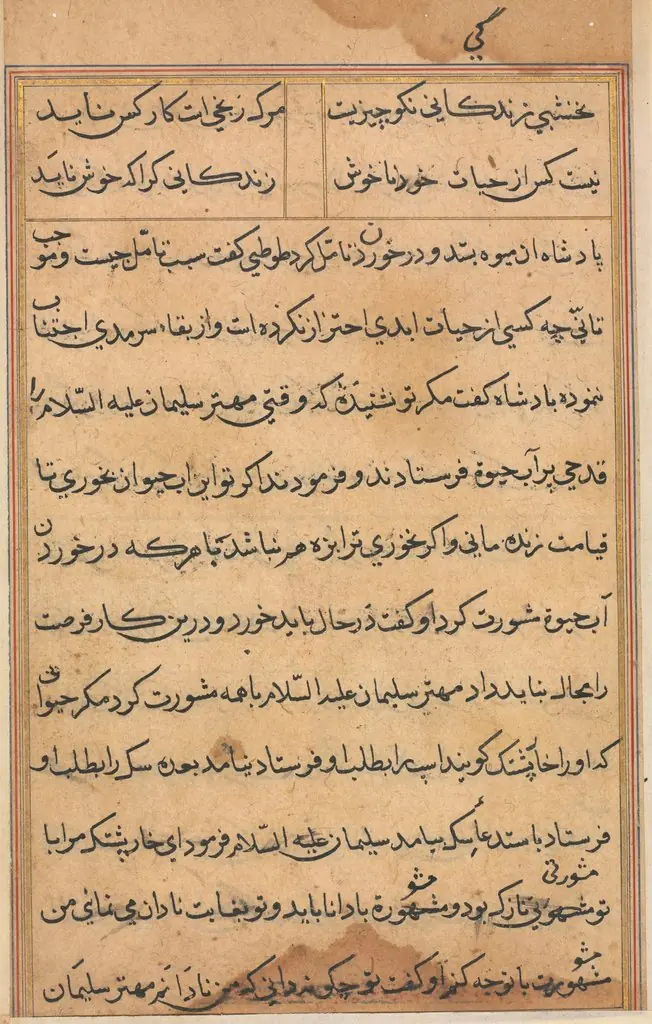
This object is a single folio from the illustrated manuscript known as Tales of a Parrot (Tuti‑nama). Executed as a painted page, it measures roughly the size of a standard sheet and is composed entirely of black calligraphic text set against a muted, yellow‑tinged ground. The page is framed by a narrow red line that outlines its perimeter.
Subject & Meaning
The page contains continuous prose in an unidentified language, suggesting it forms part of a larger narrative. The dense arrangement of characters, without accompanying illustrations, indicates a focus on literary content rather than visual storytelling, typical of certain Persian‑influenced manuscript traditions where the text itself conveys the tale.
Technique & Style
The script is rendered in a fine, black ink applied with a brush, producing crisp, tightly packed letters that maintain legibility despite their compactness. The background pigment, a pale ochre, has aged to a yellowish hue, and the ink shows slight feathering where moisture has migrated, creating faint blurred spots. A thin red pigment line, likely derived from vermilion, delineates the page edges.
Context
Tales of a Parrot belongs to a genre of didactic literature that uses animal protagonists to convey moral lessons. In manuscript culture, such texts were often copied by professional scribes for elite patrons, emphasizing the elegance of the script and the quality of the materials as markers of the work’s prestige.
Artist & collection

- Page from Tales of a Parrot (Tuti-nama): text page
 Page from Tales of a Parrot (Tuti-nama): text page
 Page from Tales of a Parrot (Tuti-nama): text page
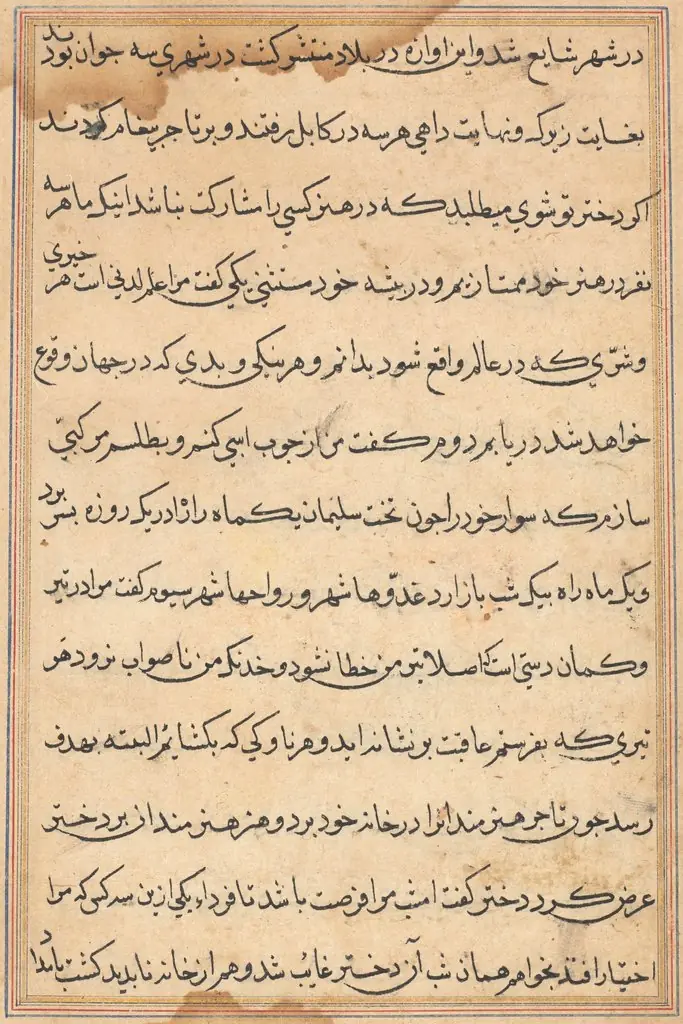 Page from Tales of a Parrot (Tuti-nama): text page
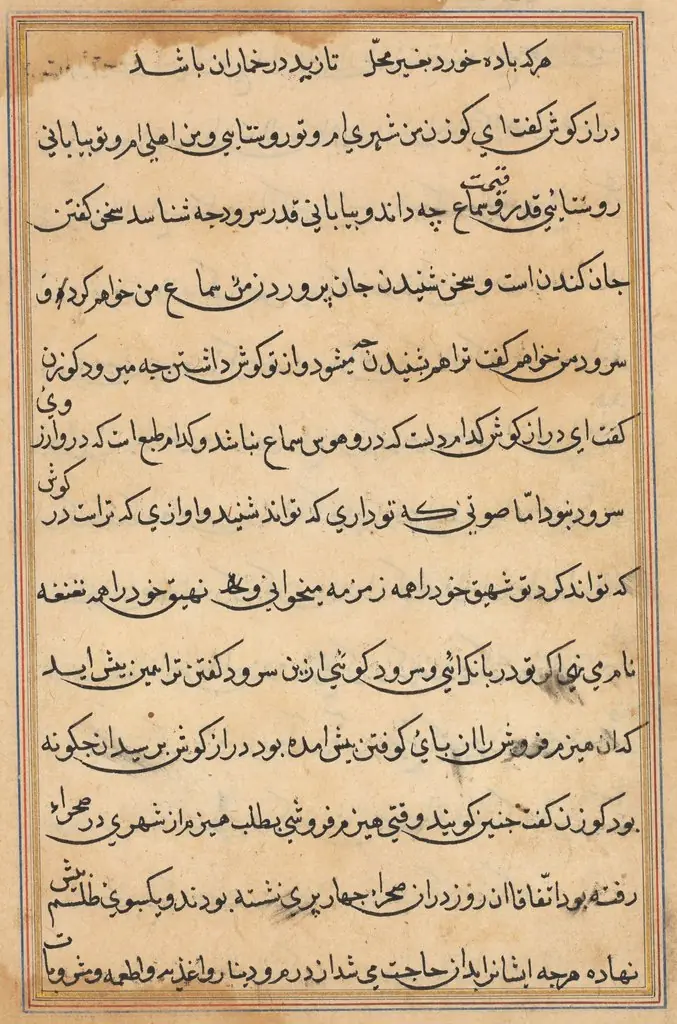 Page from Tales of a Parrot (Tuti-nama): text page
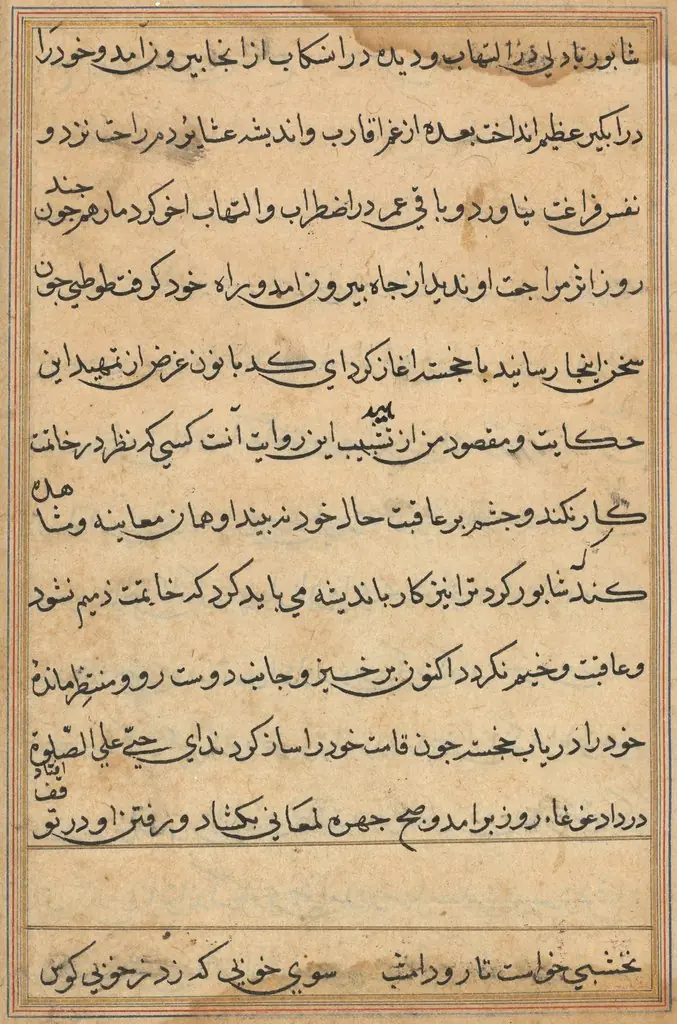 Page from Tales of a Parrot (Tuti-nama): text page
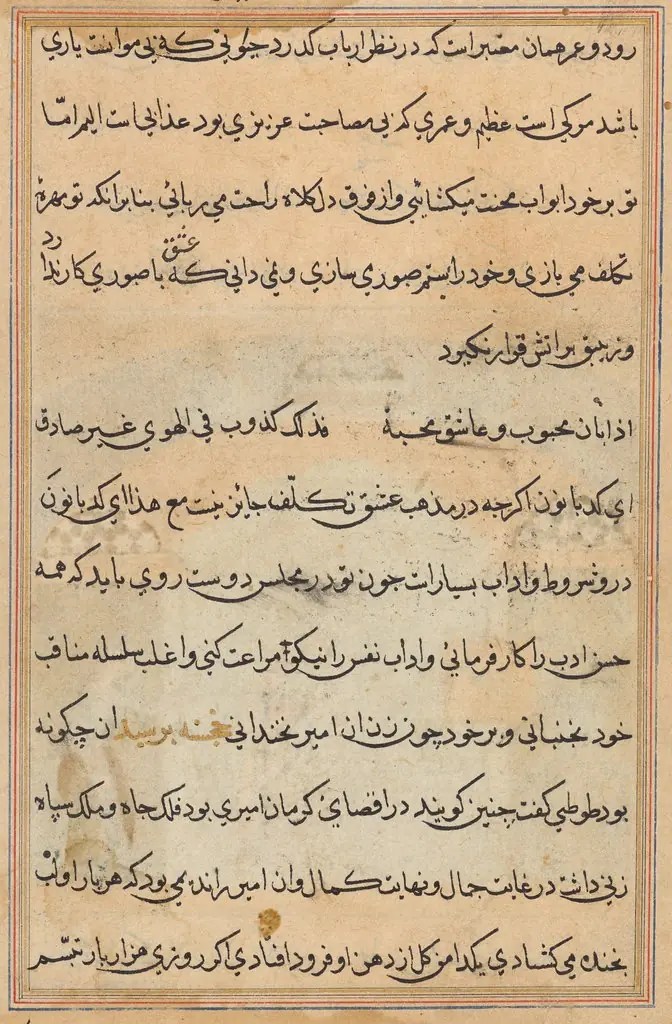 Page from Tales of a Parrot (Tuti-nama): text page
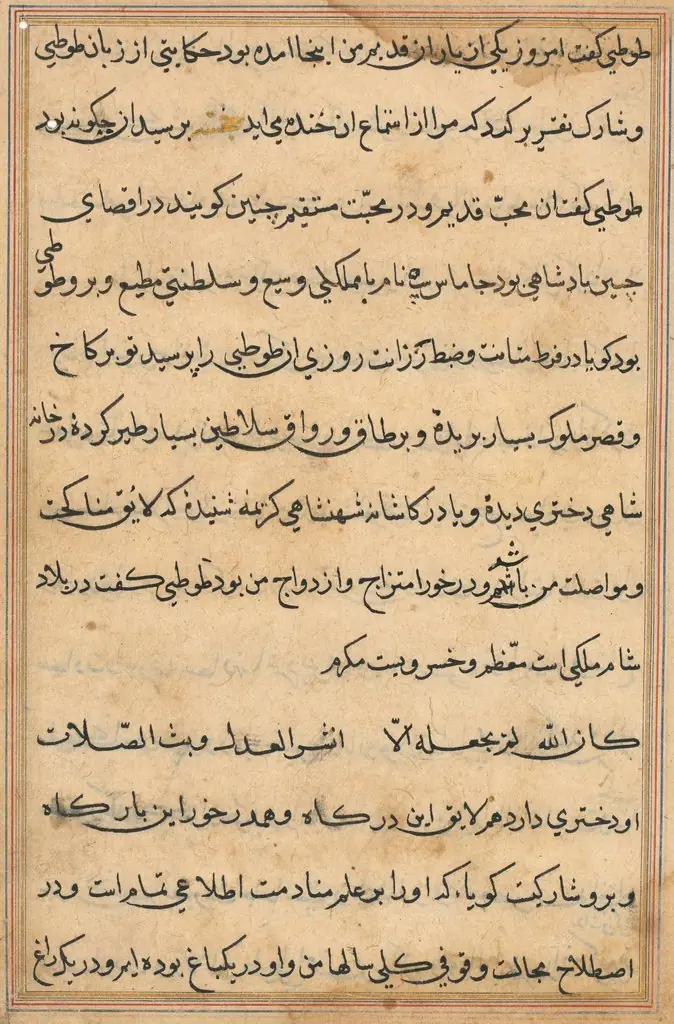 Page from Tales of a Parrot (Tuti-nama): text page
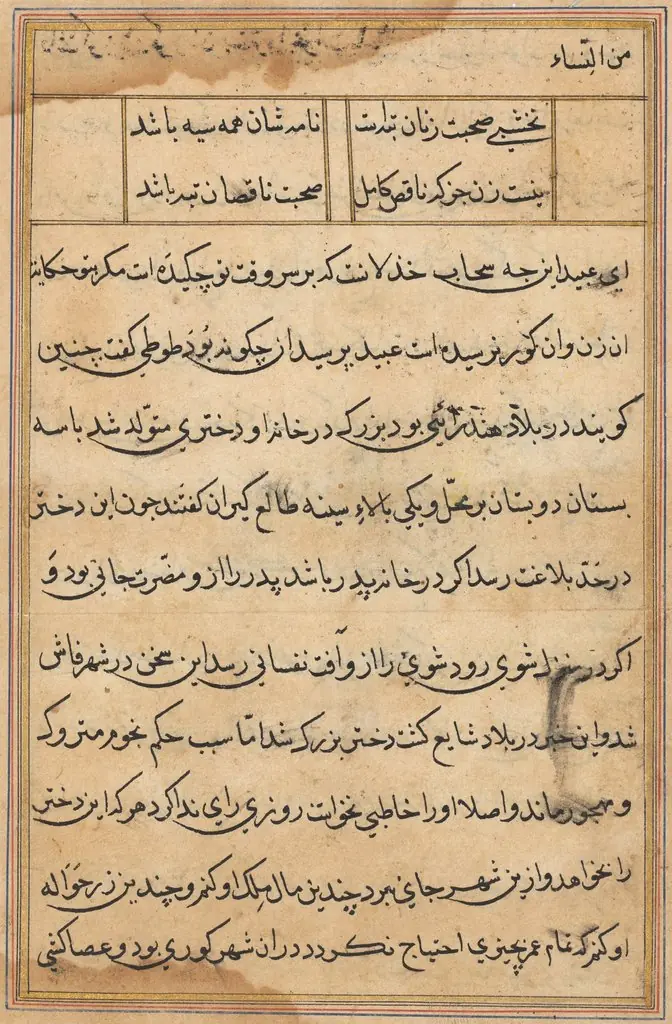 Page from Tales of a Parrot (Tuti-nama): text page
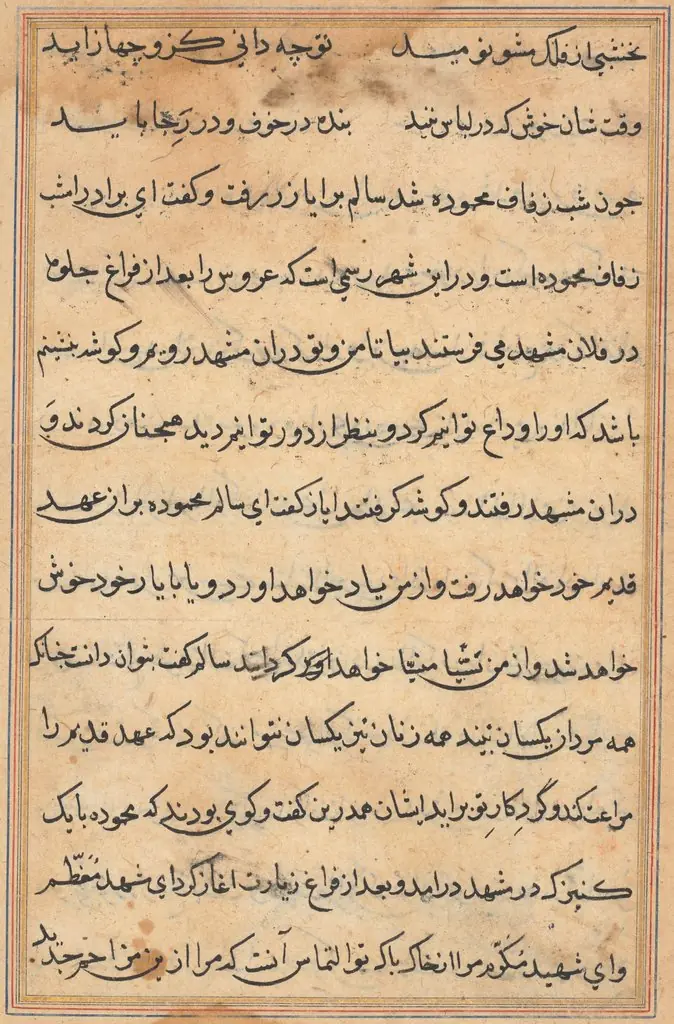 Page from Tales of a Parrot (Tuti-nama): text page
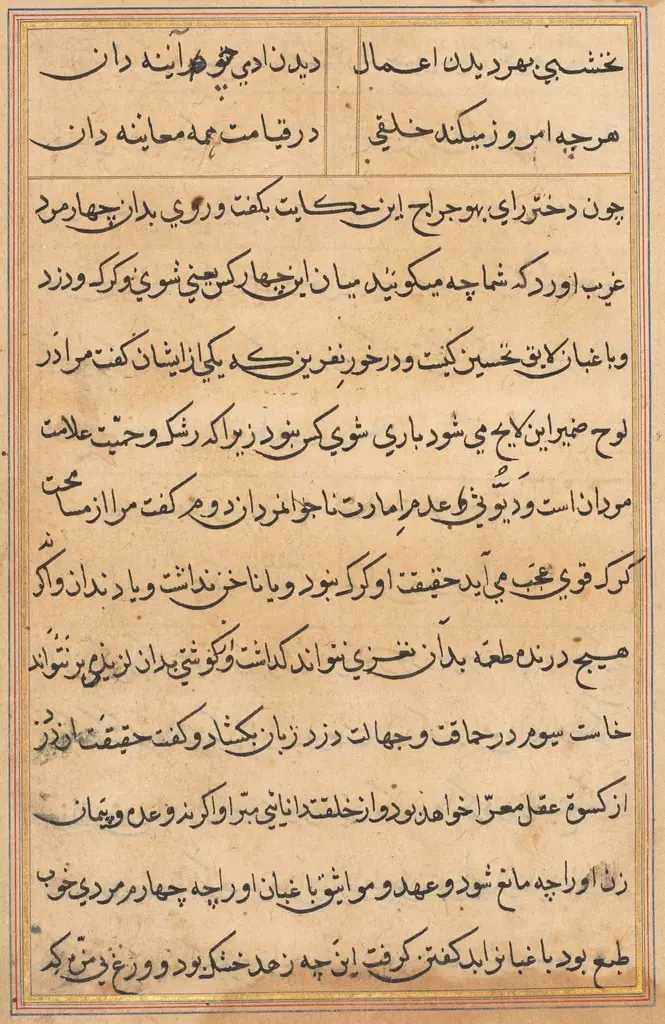 Page from Tales of a Parrot (Tuti-nama): text page
 Page from Tales of a Parrot (Tuti-nama): text page