Artwork
Page from Tales of a Parrot (Tuti-nama): text page
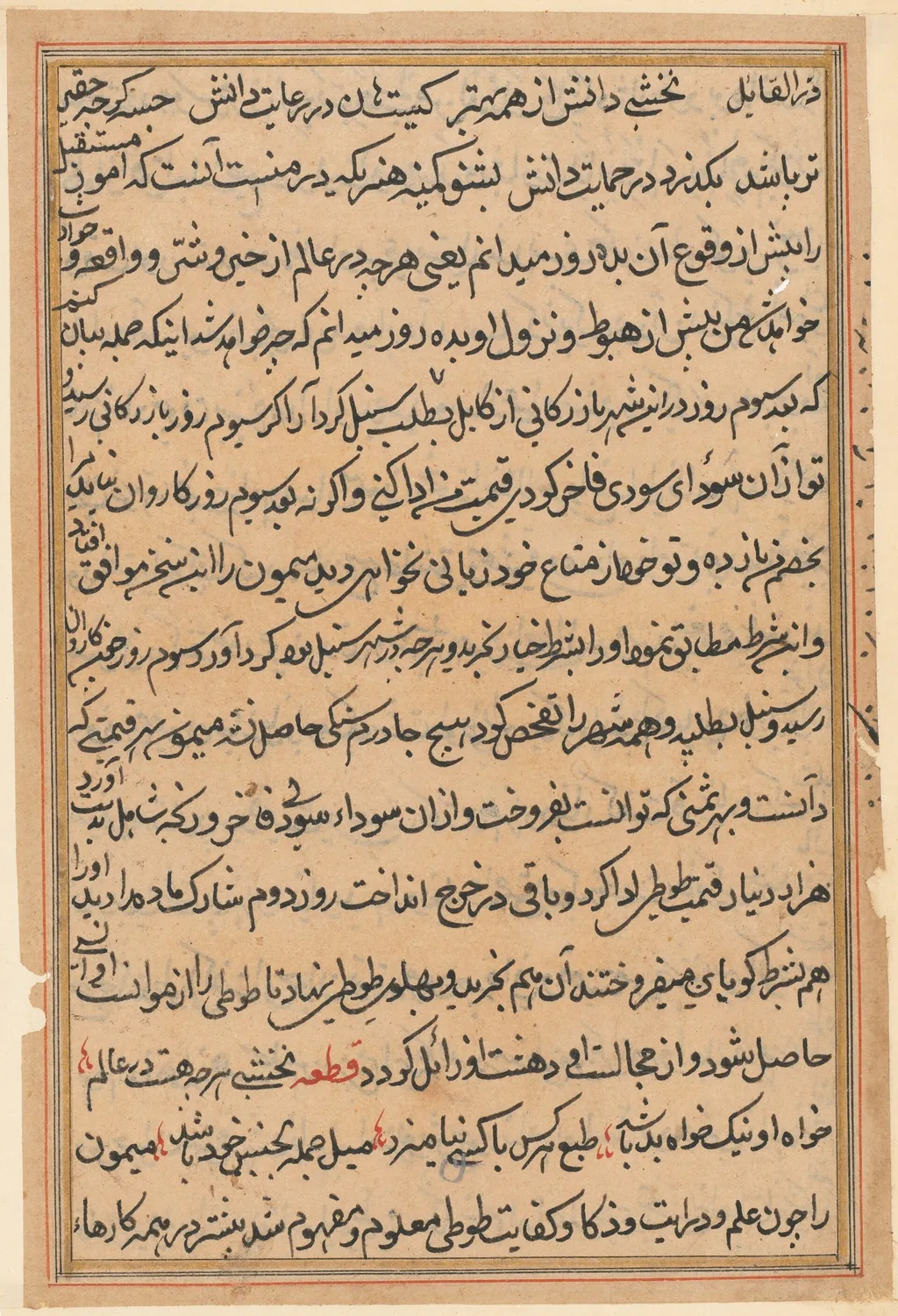
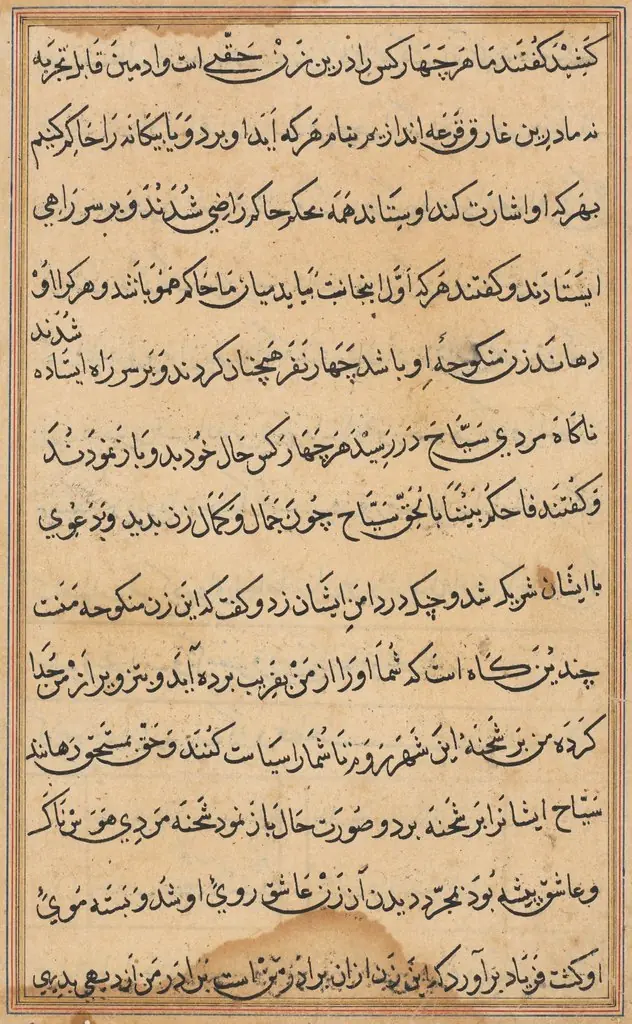
Page from Tales of a Parrot (Tuti-nama): text page is an unspecified painting. It dates from 1560 and is held in the collection of the Cleveland Museum of Art. The object is a single leaf from a manuscript titled Tales of a Parrot (Tuti‑nama).
About this work
History & Provenance
The text page from the Tales of a Parrot (Tuti-nama) was produced in the Mughal Empire around 1560, as indicated by its inception date.
The text page from the Tales of a Parrot (Tuti-nama) was produced in the Mughal Empire around 1560, as indicated by its inception date. It formed part of the illustrated manuscript of the Tuti-nama, though no record of a specific patron or workshop survives. The page entered the Cleveland Museum of Art in 1962, receiving the accession number 1962.279.5.b, and has remained in the museum’s collection since that time. Earlier ownership history is not documented in the available sources.
The text page from the Tales of a Parrot (Tuti-nama), created in 1560, is held by the Cleveland Museum of Art in Cleveland. The work is cataloged under the accession number 1962.279.5.b within the museum's collection. This follet originates from the Mughal Empire and is attributed to an unknown artist. No specific exhibition history is recorded in the available sources.
Overview
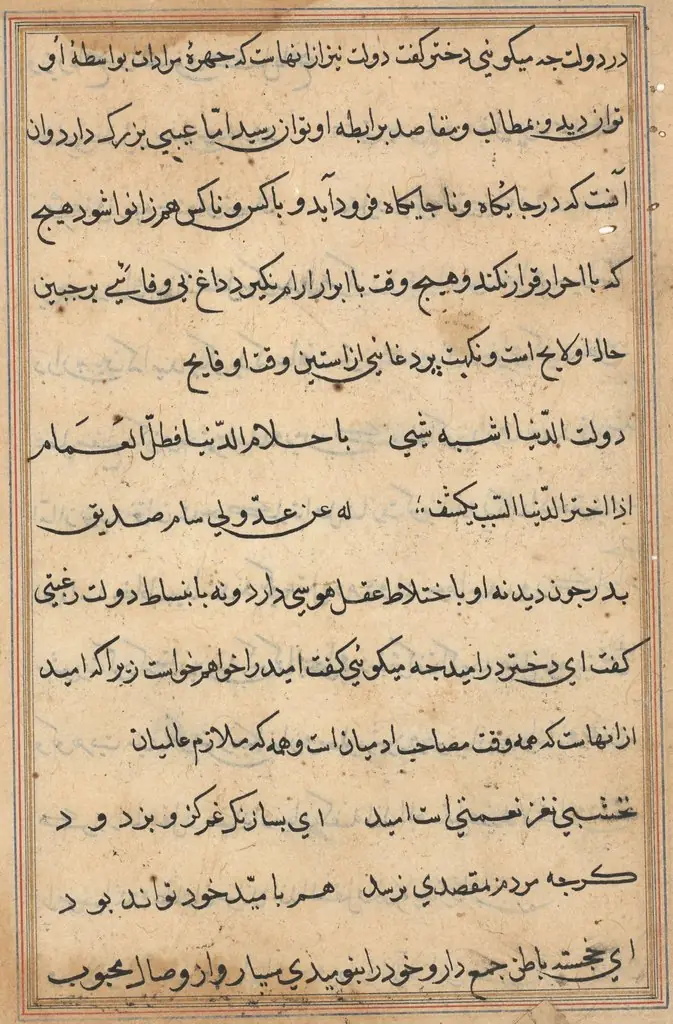
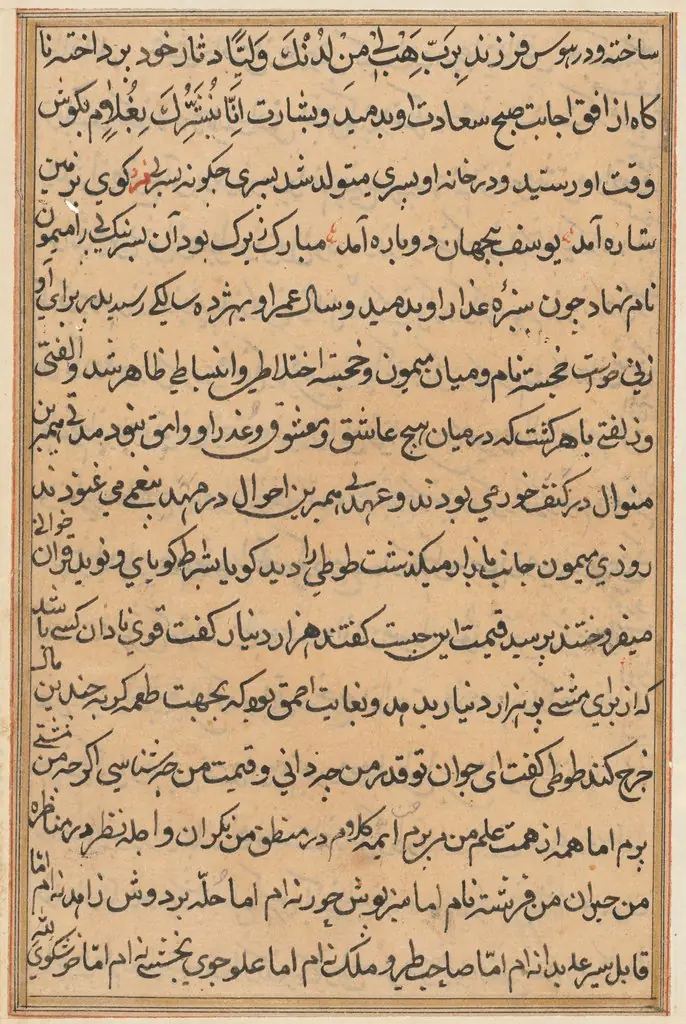
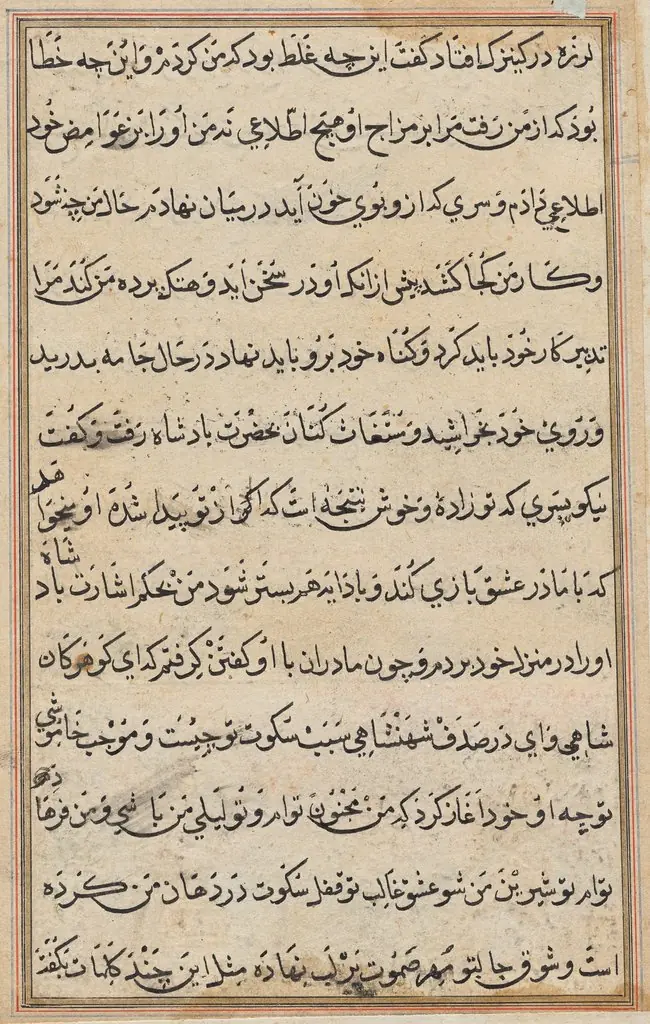
The object is a single leaf from a manuscript titled Tales of a Parrot (Tuti‑nama). It consists of a rectangular page with a beige ground, framed by a thin red border. The surface is covered entirely by black ink forming a dense block of text, without any accompanying illustrations.
Subject & Meaning
The page contains a continuous passage written in an unidentified script, suggesting it forms part of a narrative or didactic work. The title implies a collection of stories involving a parrot, a motif common in Persian and South Asian literary traditions, though the specific content of this leaf remains unreadable without decipherment.
Technique & Style
Ink was applied with a fine brush or pen, producing intricate, ornamental letterforms that include numerous flourishes and decorative terminals. The uniform black coloration and careful alignment indicate a disciplined hand, while the red marginal band provides a contrasting visual frame, a feature typical of luxury manuscripts.
Context
Manuscript pages such as this were traditionally produced for elite patrons, serving both literary and aesthetic functions. The emphasis on calligraphic elegance reflects the high status accorded to the written word in societies where literacy and artistic script were closely linked.
Artist & collection

- Page from Tales of a Parrot (Tuti-nama): text page
 Page from Tales of a Parrot (Tuti-nama): text page
 Page from Tales of a Parrot (Tuti-nama): text page
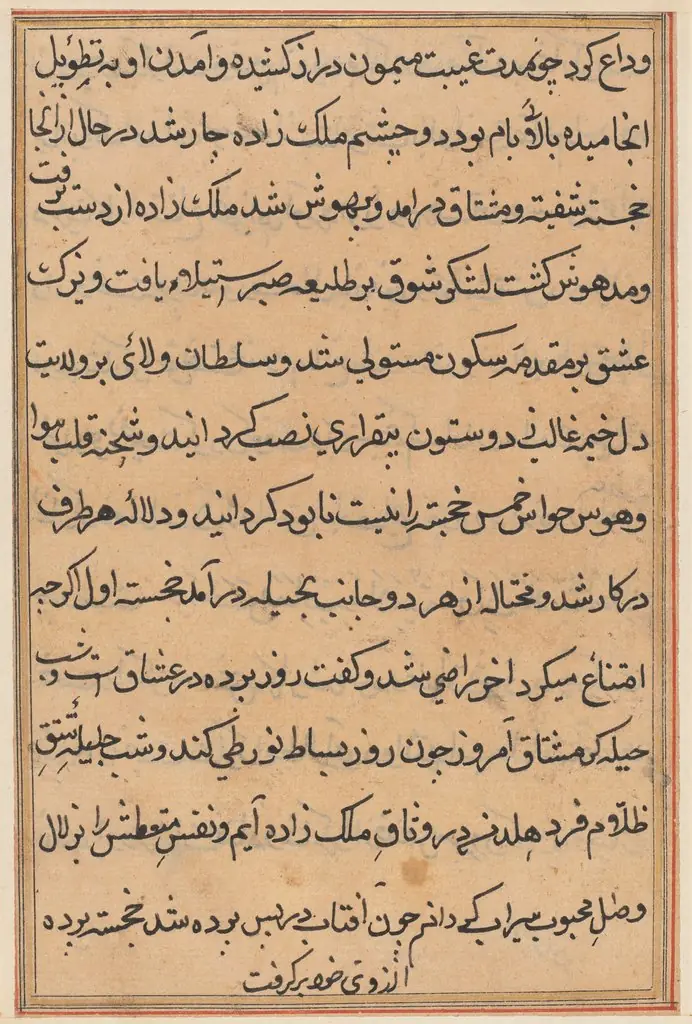 Page from Tales of a Parrot (Tuti-nama): text page
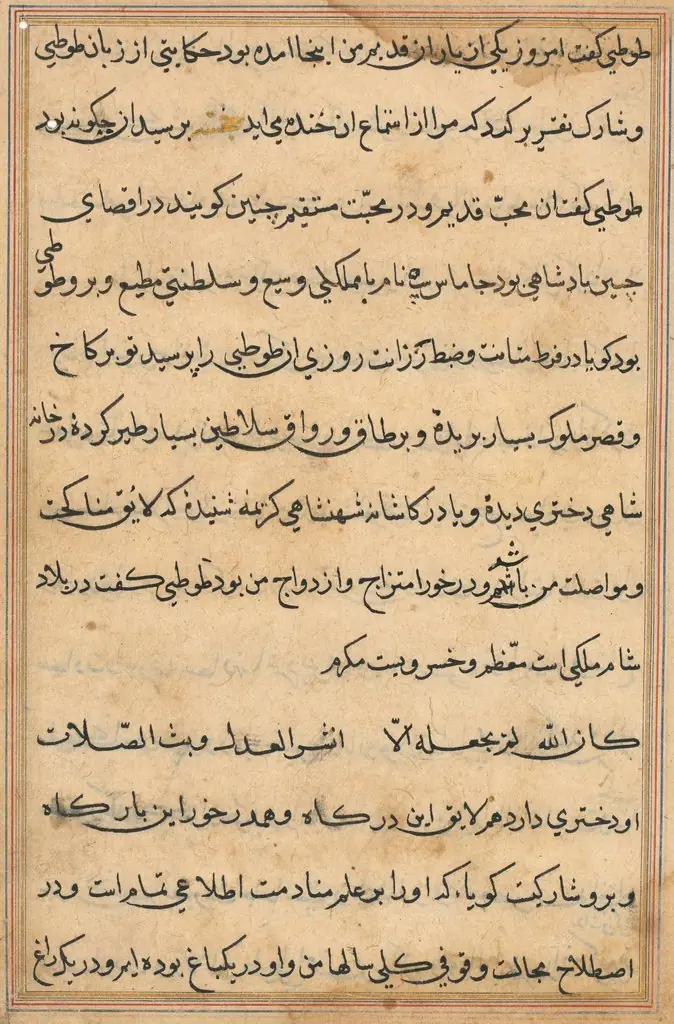 Page from Tales of a Parrot (Tuti-nama): text page
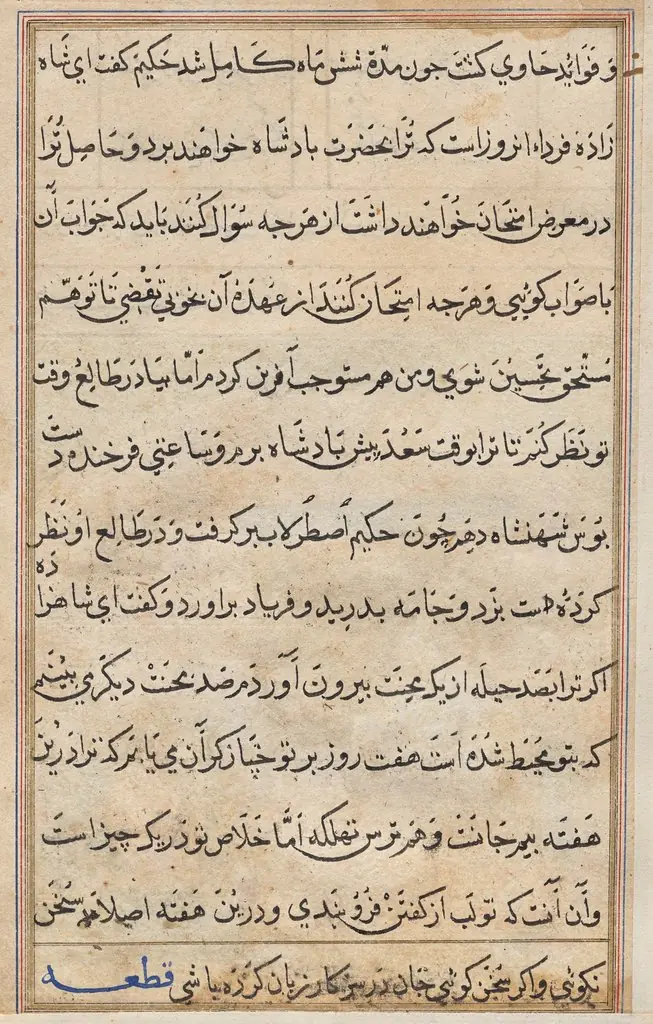 Page from Tales of a Parrot (Tuti-nama): text page
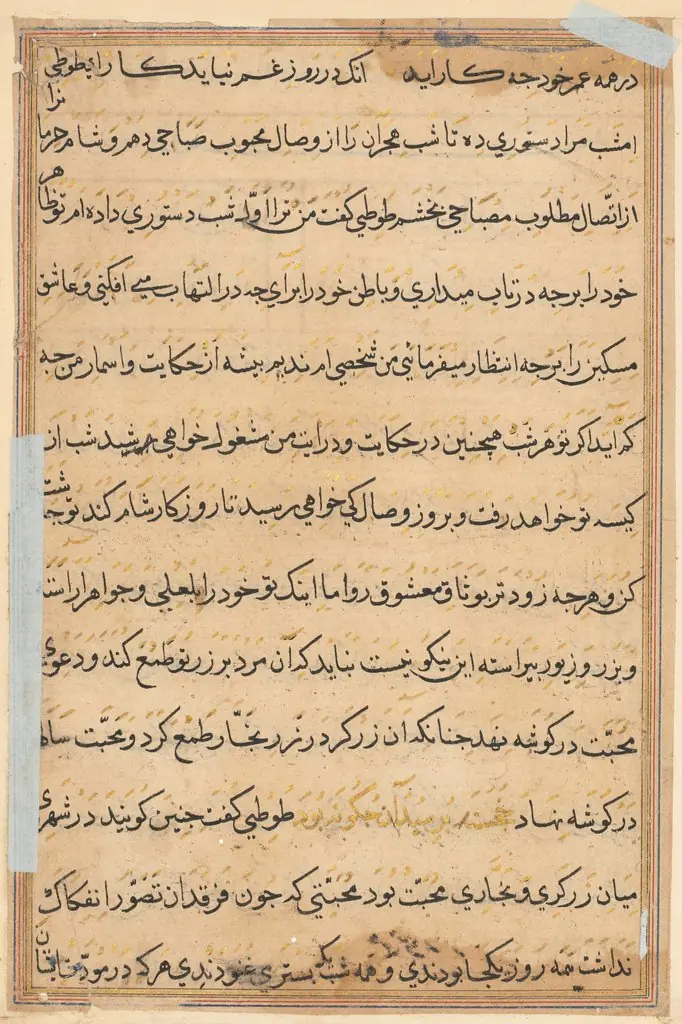 Page from Tales of a Parrot (Tuti-nama): text page
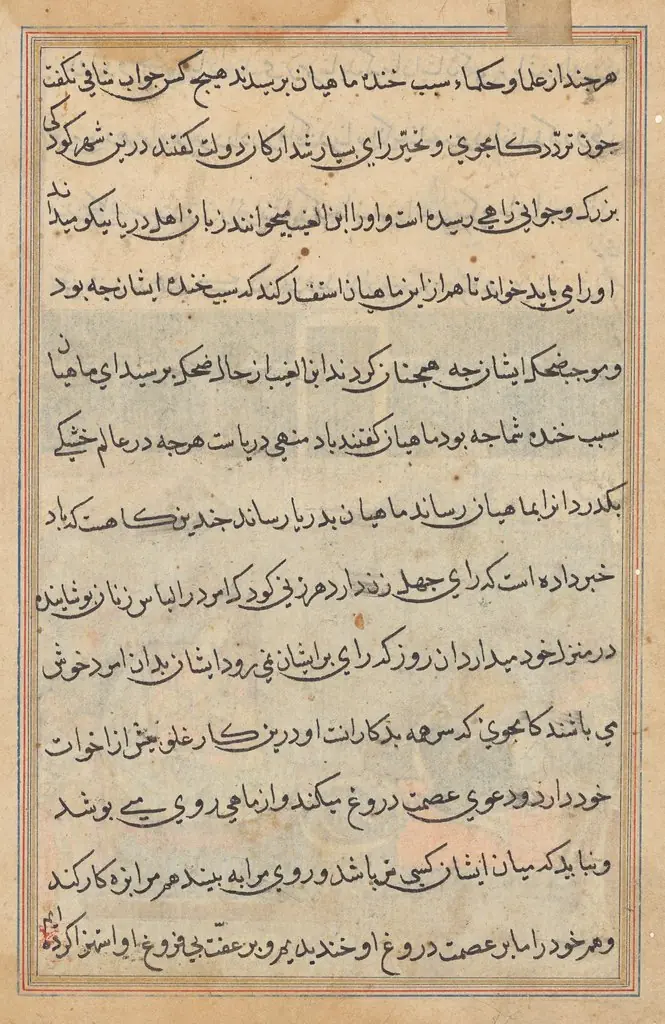 Page from Tales of a Parrot (Tuti-nama): text page
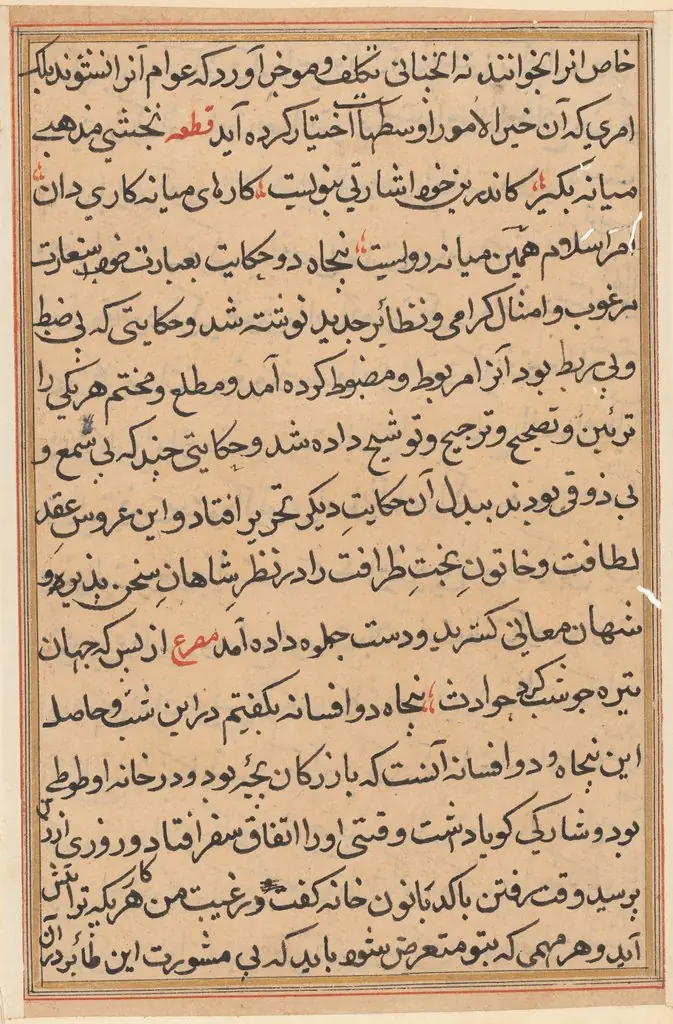 Page from Tales of a Parrot (Tuti-nama): text page
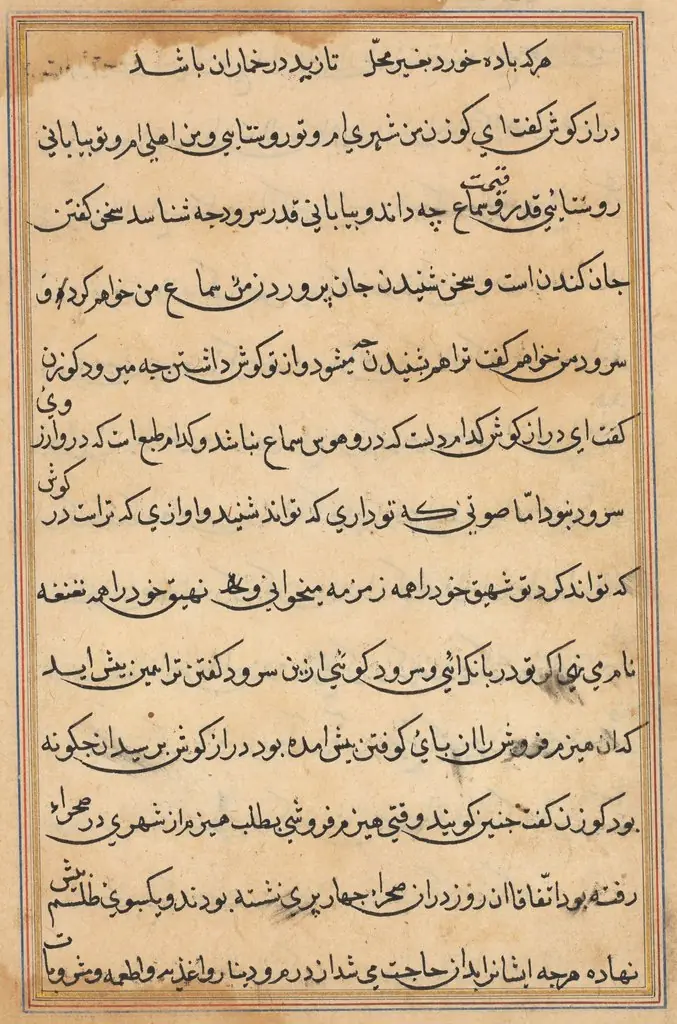 Page from Tales of a Parrot (Tuti-nama): text page
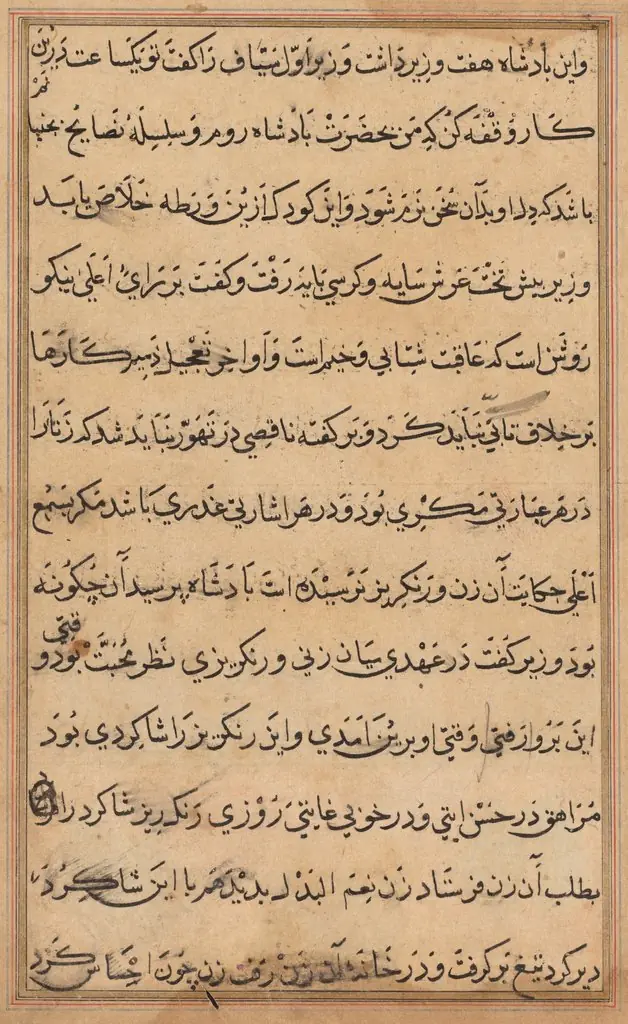 Page from Tales of a Parrot (Tuti-nama): text page
 Page from Tales of a Parrot (Tuti-nama): text page