Artwork
Page from Tales of a Parrot (Tuti-nama): text page
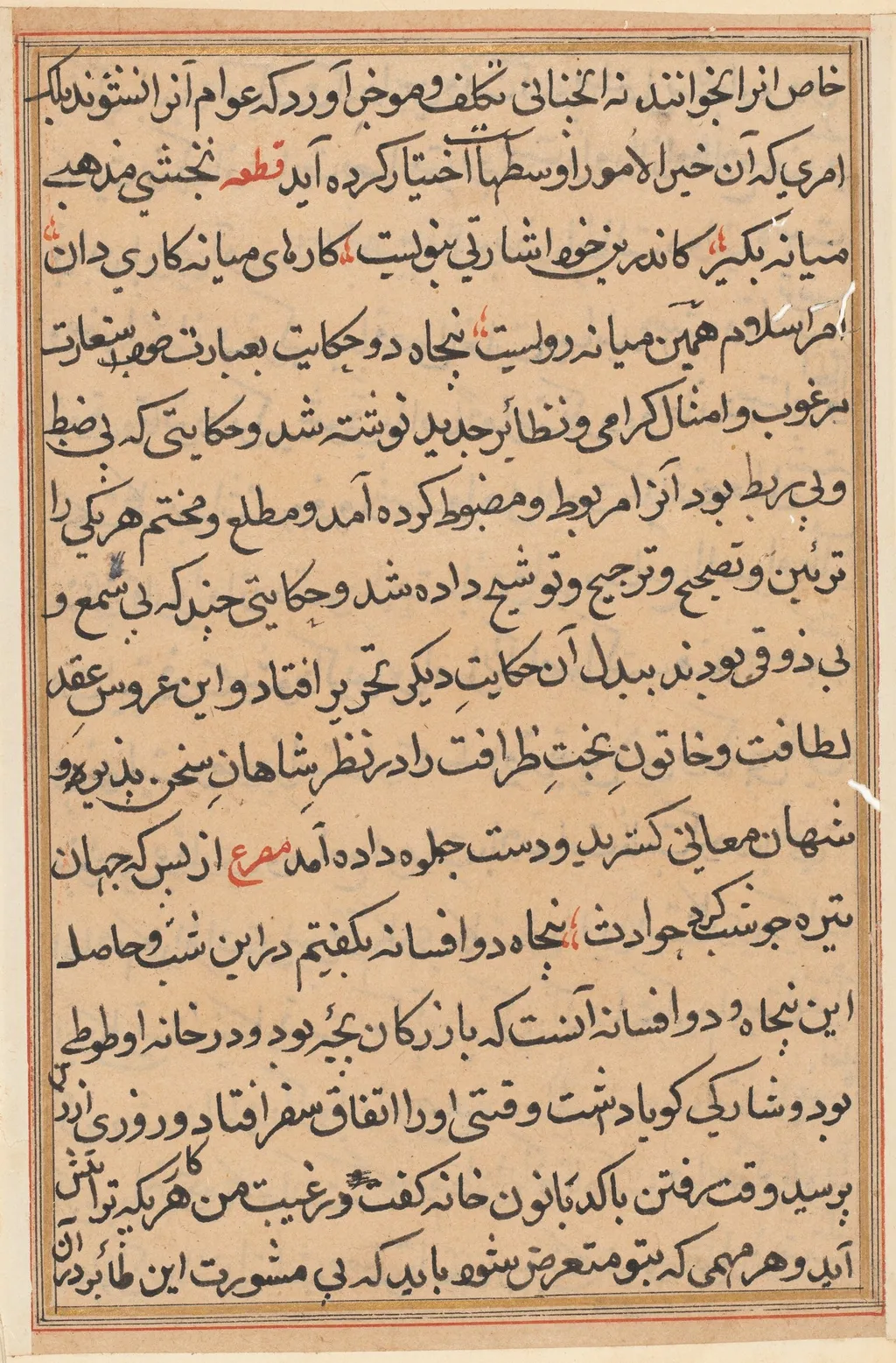
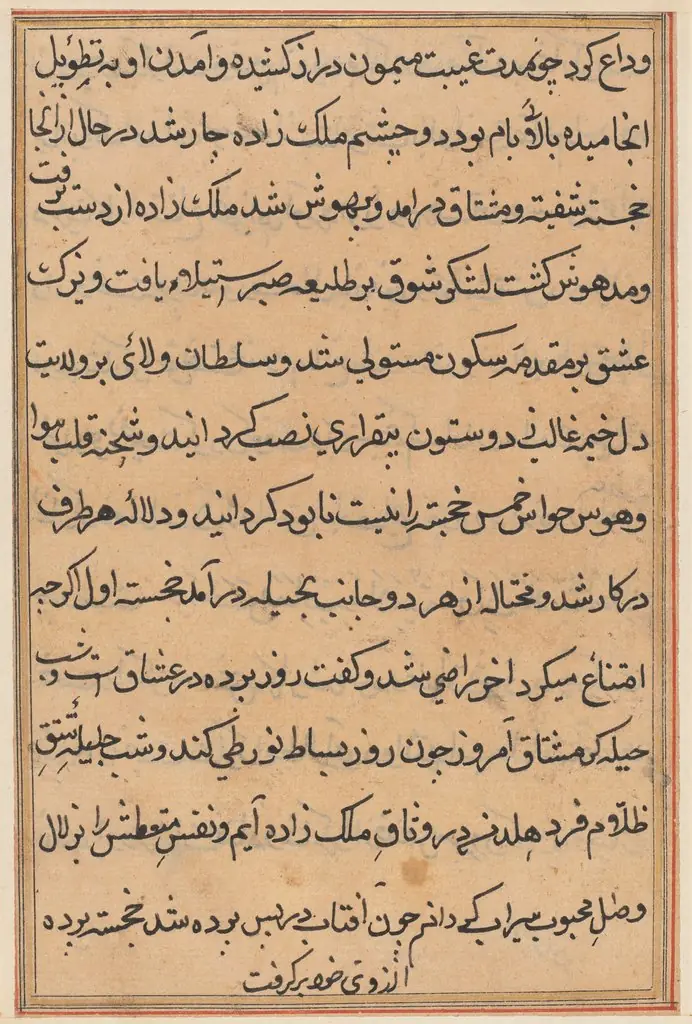
Page from Tales of a Parrot (Tuti-nama): text page is an unspecified painting. It dates from 1560 and is held in the collection of the Cleveland Museum of Art. The object is a single sheet from the illustrated manuscript known as Tuti‑nama (Tales of a Parrot).
About this work
History & Provenance
The text page from the Tales of a Parrot (Tuti-nama), created in 1560, is held in the collection of the Cleveland Museum of Art.
This text page from the Tales of a Parrot (Tuti-nama) was created in 1560 within the Mughal Empire. The specific artist responsible for the work remains unknown. Historical records indicate that the manuscript was commissioned during the reign of the Mughal emperor Akbar, though the provided sources do not detail the specific patron or the full chain of ownership prior to its arrival at the Cleveland Museum of Art.
The work is currently held in the museum's collection, where it is cataloged under the accession number 1962.279.3.b.
The text page from the Tales of a Parrot (Tuti-nama), created in 1560, is held in the collection of the Cleveland Museum of Art. The work is cataloged under the accession number 1962.279.3.b. This page, originating from the Mughal Empire, is part of the museum's holdings of Mughal painting.
The provided sources do not list any specific exhibition history for this particular folio.
Context
The miniature from a 1560 manuscript page exemplifies Mughal courtly narrative art, depicting a parrot story within the Tuti-nama tradition. Its creation in the Mughal Empire reflects cross-cultural artistic exchanges, particularly with Persianate storytelling forms adapted into Indian court aesthetics. The work is held at the Cleveland Museum of Art, which contextualizes it within its broader collection of South Asian miniature paintings, underscoring its significance in the study of 16th-century manuscript illumination and narrative art.
Scholarly attention to this folio has focused on its role in understanding the transmission of Persian literary motifs into Mughal visual culture, with recent research emphasizing its technical execution and narrative sequencing as markers of imperial artistic patronage.
Overview
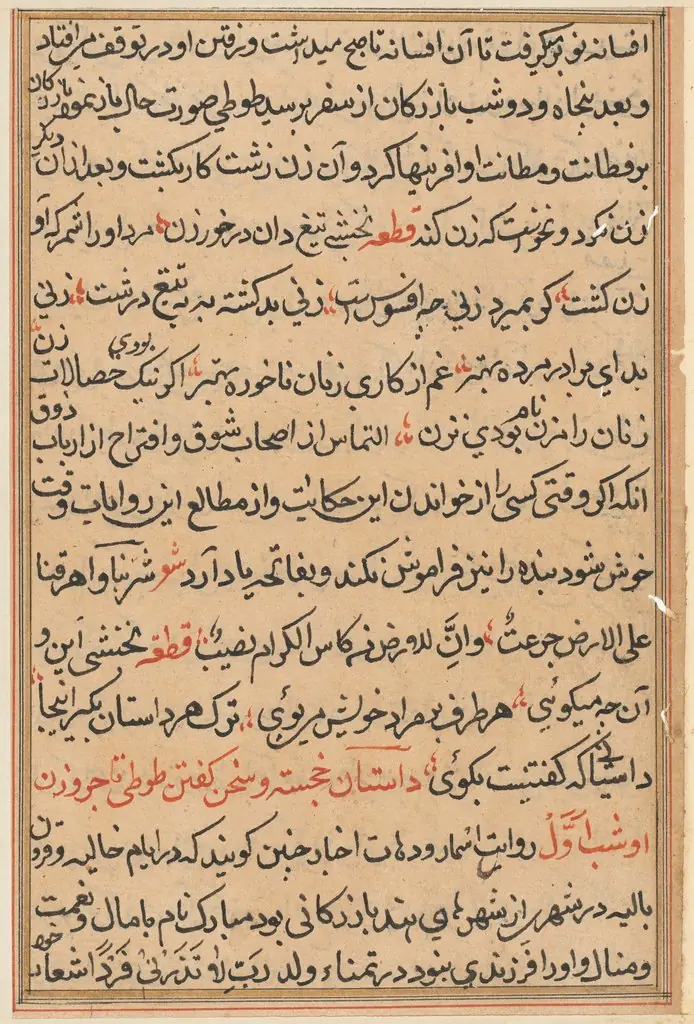
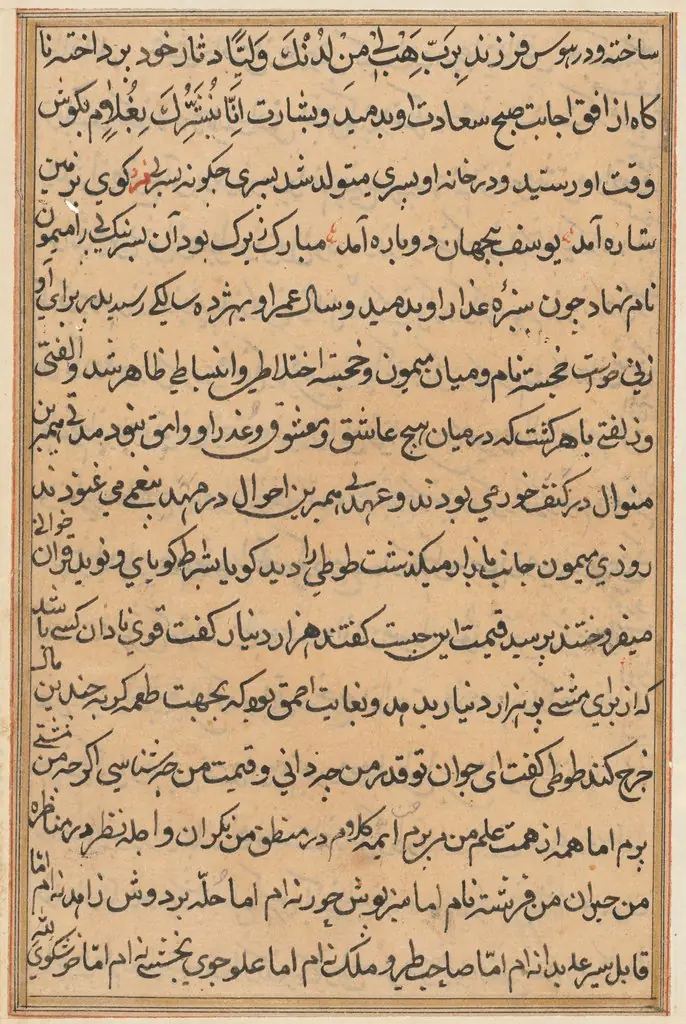
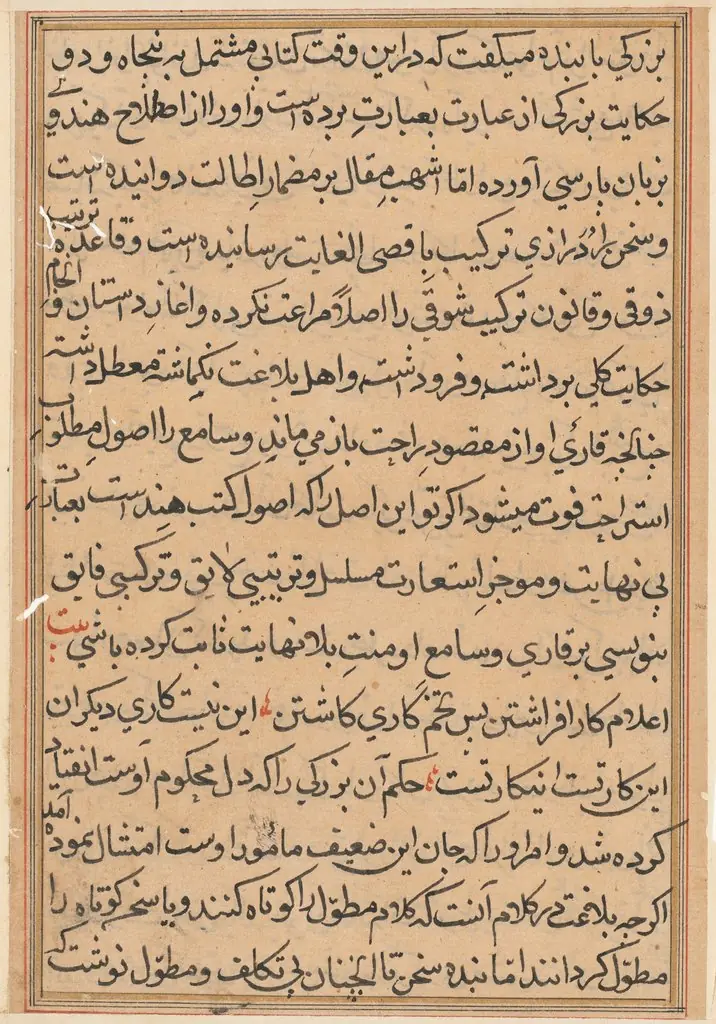
The object is a single sheet from the illustrated manuscript known as Tuti‑nama (Tales of a Parrot). It consists of a paper leaf whose surface has yellowed with age, bordered by a thin red strip along its margins. The entire front is occupied by dense black calligraphy arranged in tight, orderly rows.
Subject & Meaning
The black script records a narrative segment from the Tuti‑nama, a collection of moral anecdotes traditionally used for instruction and entertainment at court. The presence of small red marks within the text suggests editorial interventions, perhaps corrections, emphasis, or marginal notes, indicating the page was intended for a discerning reader, possibly a royal patron.
Technique & Style
The characters were rendered with a fine brush, each stroke deliberate and uniformly shaped, reflecting the high standards of courtly penmanship. The red border and occasional red annotations were applied with pigment that contrasts sharply against the dark ink, a common visual cue in Persian manuscript practice to delineate sections or draw attention.
Artist & collection

- Page from Tales of a Parrot (Tuti-nama): text page
 Page from Tales of a Parrot (Tuti-nama): text page
 Page from Tales of a Parrot (Tuti-nama): text page
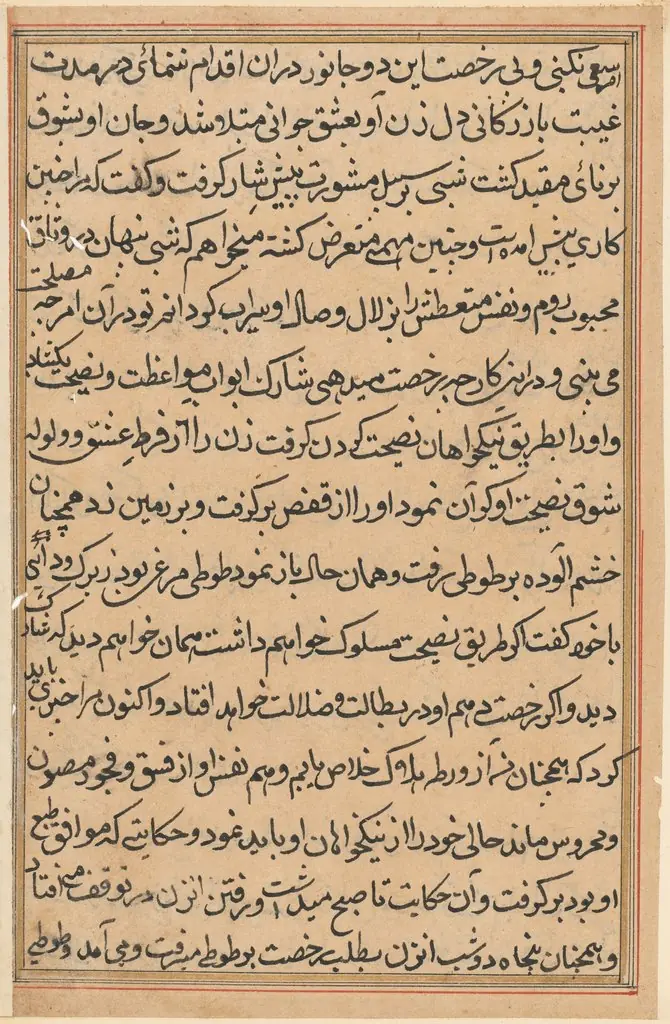 Page from Tales of a Parrot (Tuti-nama): text page
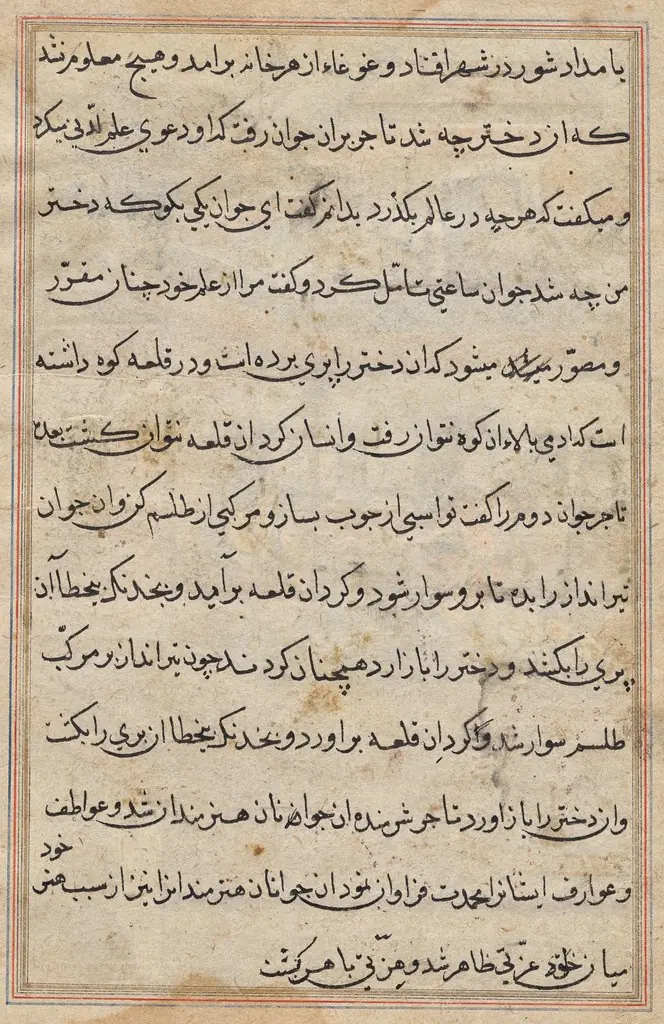 Page from Tales of a Parrot (Tuti-nama): text page
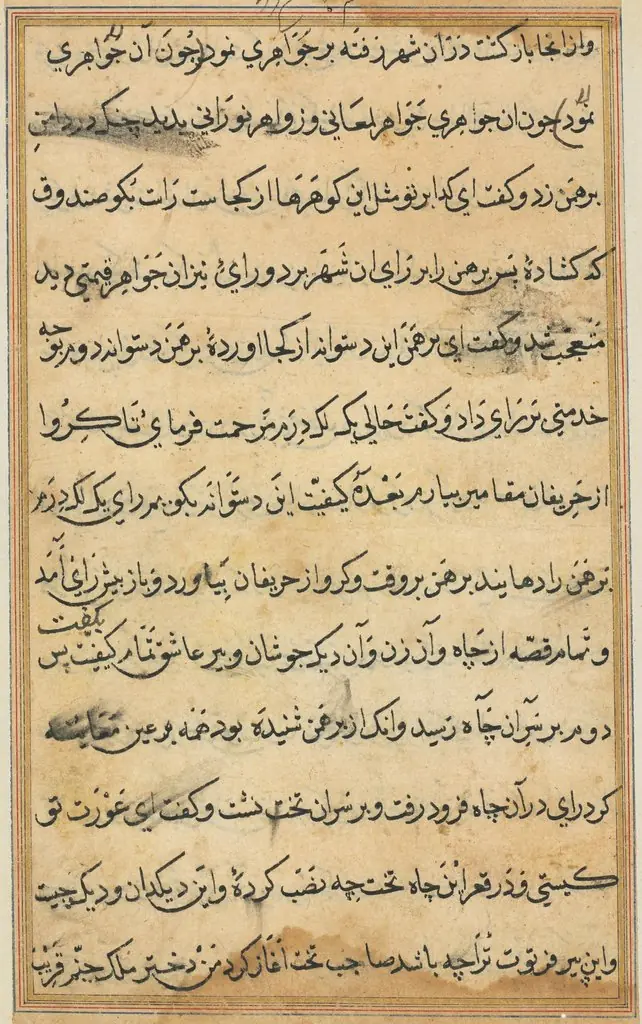 Page from Tales of a Parrot (Tuti-nama): text page
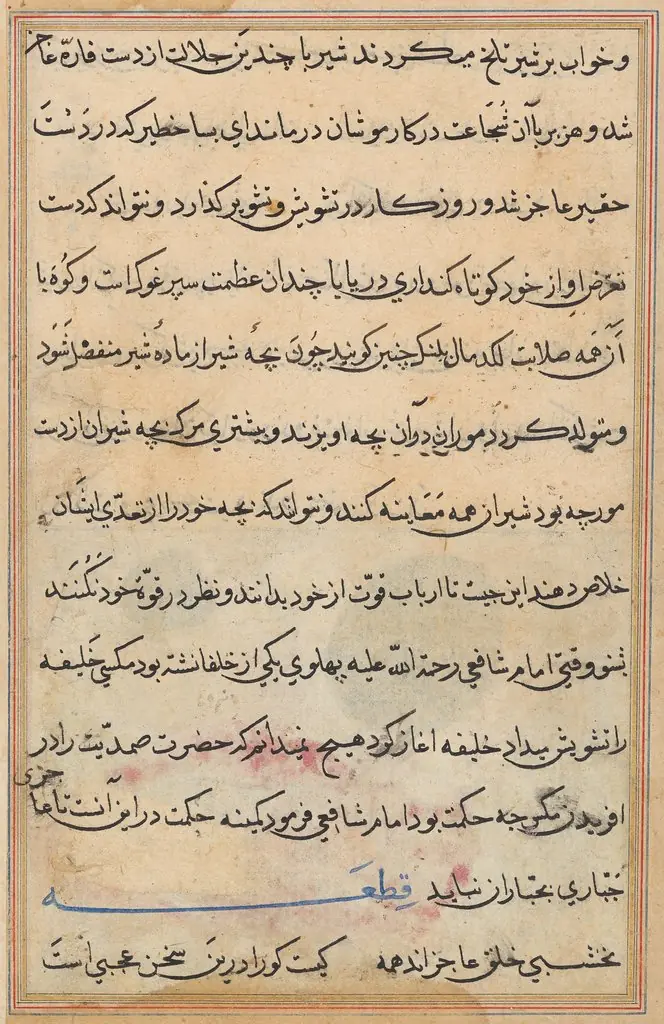 Page from Tales of a Parrot (Tuti-nama): text page
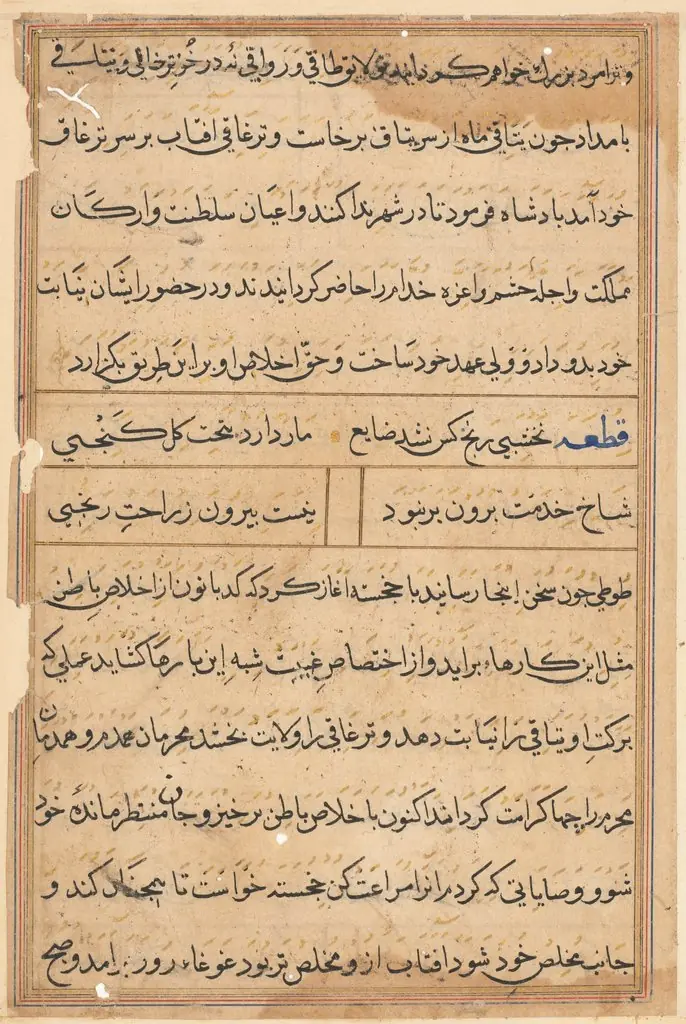 Page from Tales of a Parrot (Tuti-nama): text page
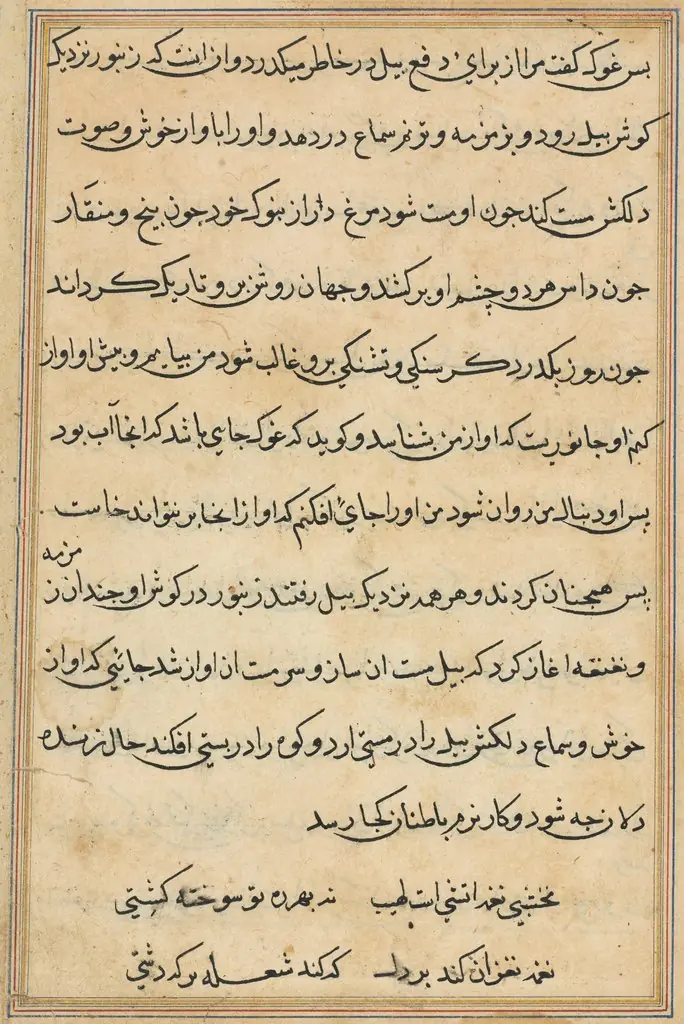 Page from Tales of a Parrot (Tuti-nama): text page
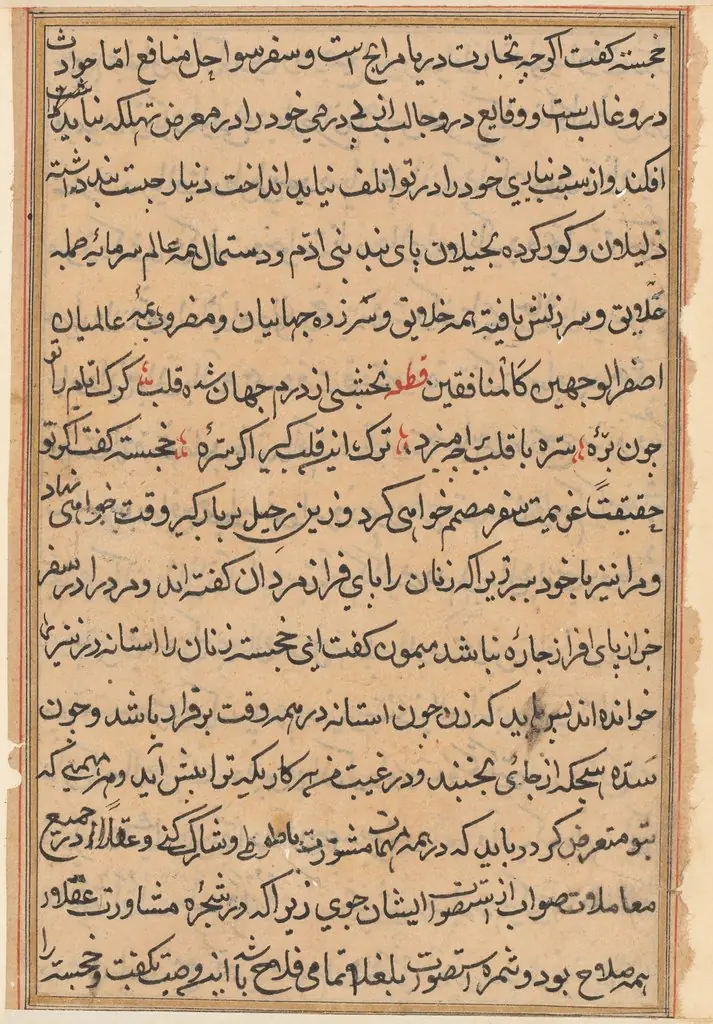 Page from Tales of a Parrot (Tuti-nama): text page
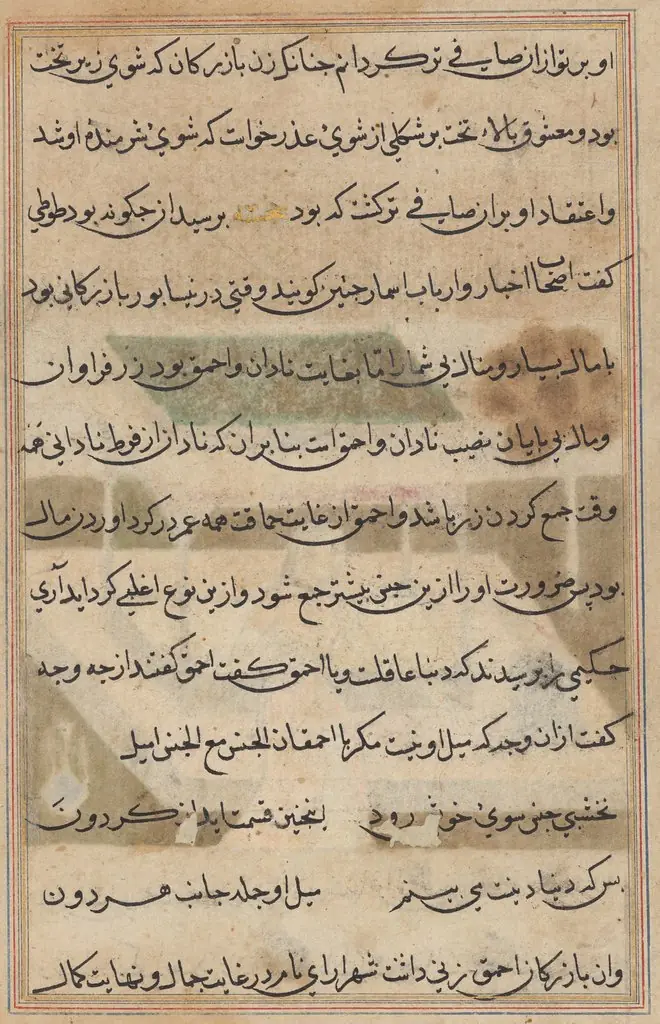 Page from Tales of a Parrot (Tuti-nama): text page
 Page from Tales of a Parrot (Tuti-nama): text page