Artwork
Page from Tales of a Parrot (Tuti-nama): text page
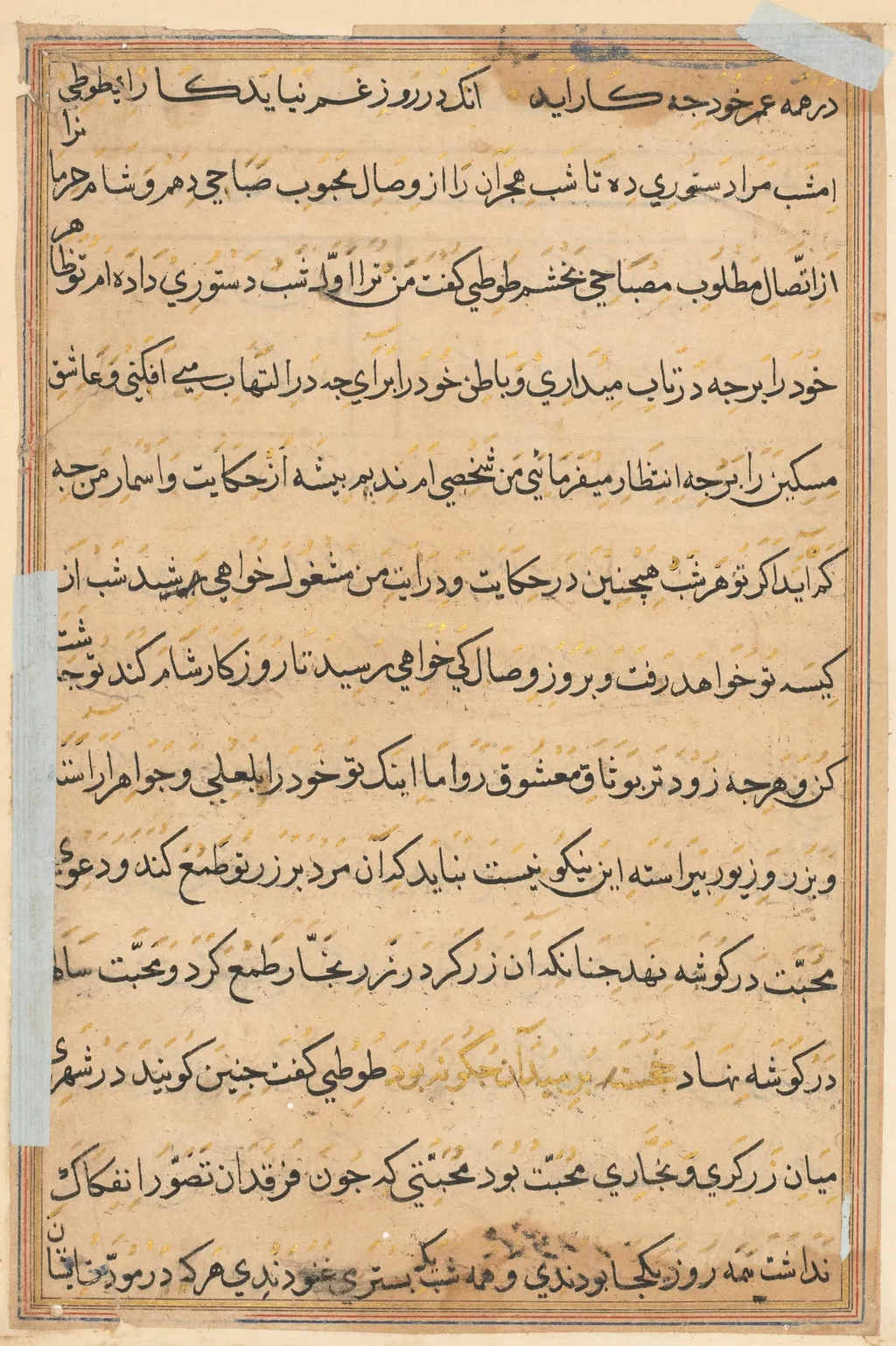
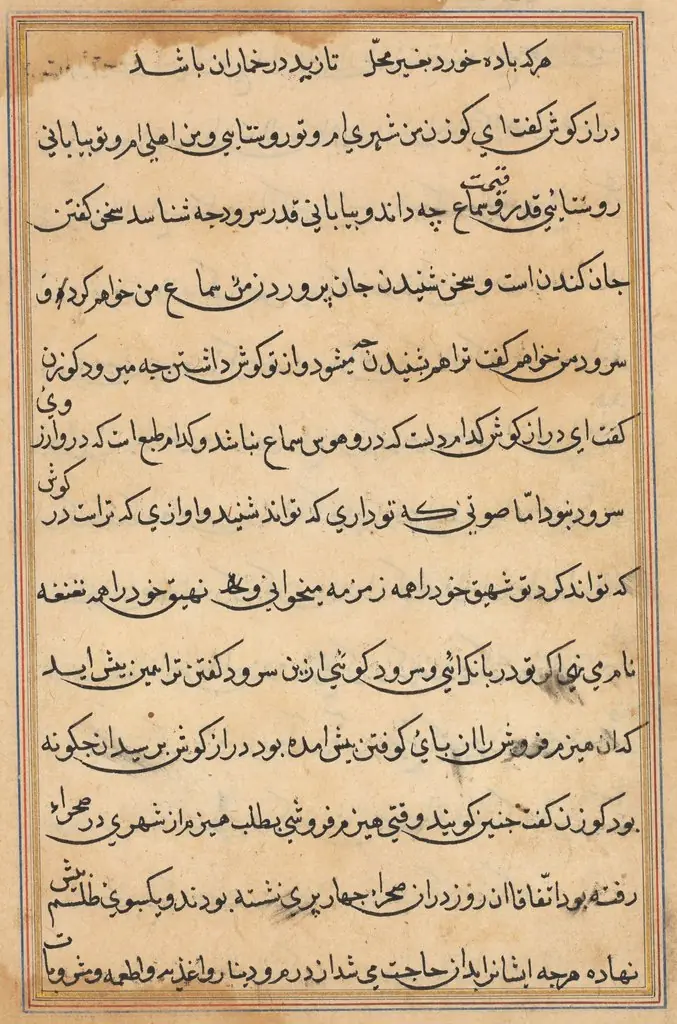
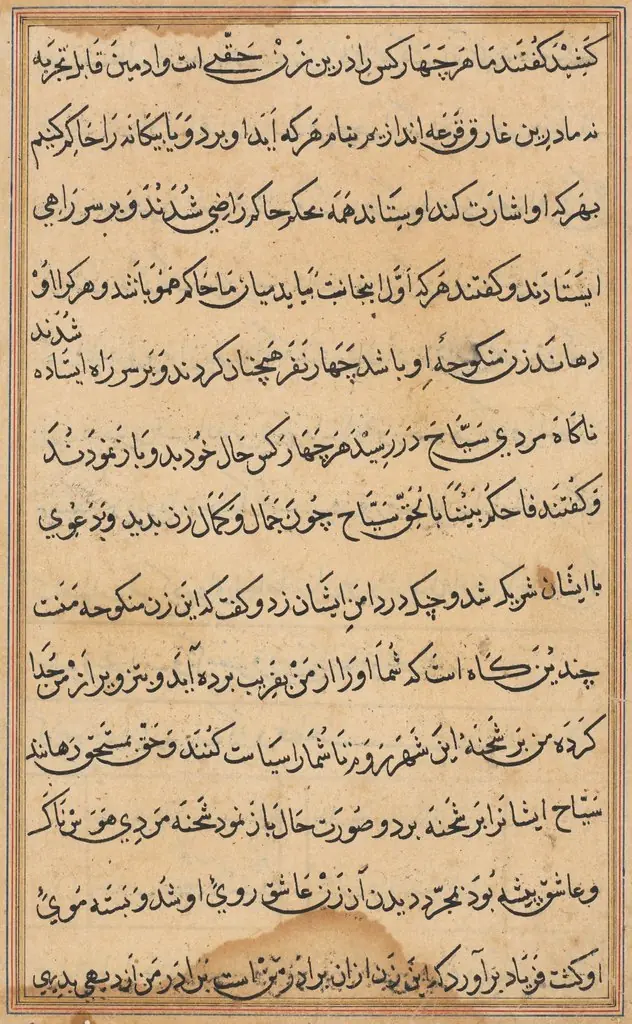
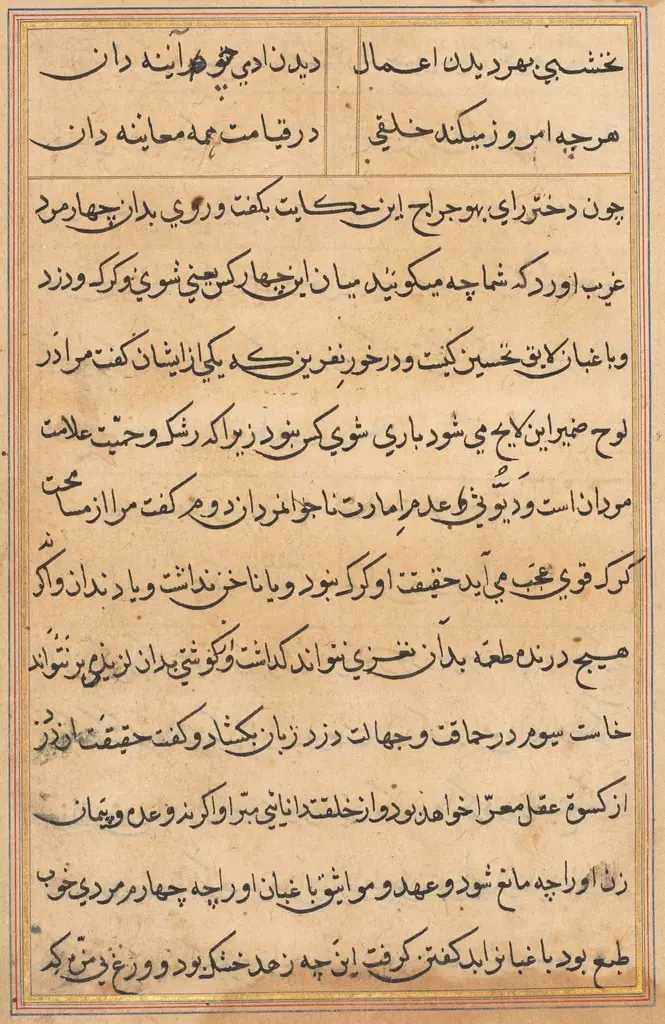
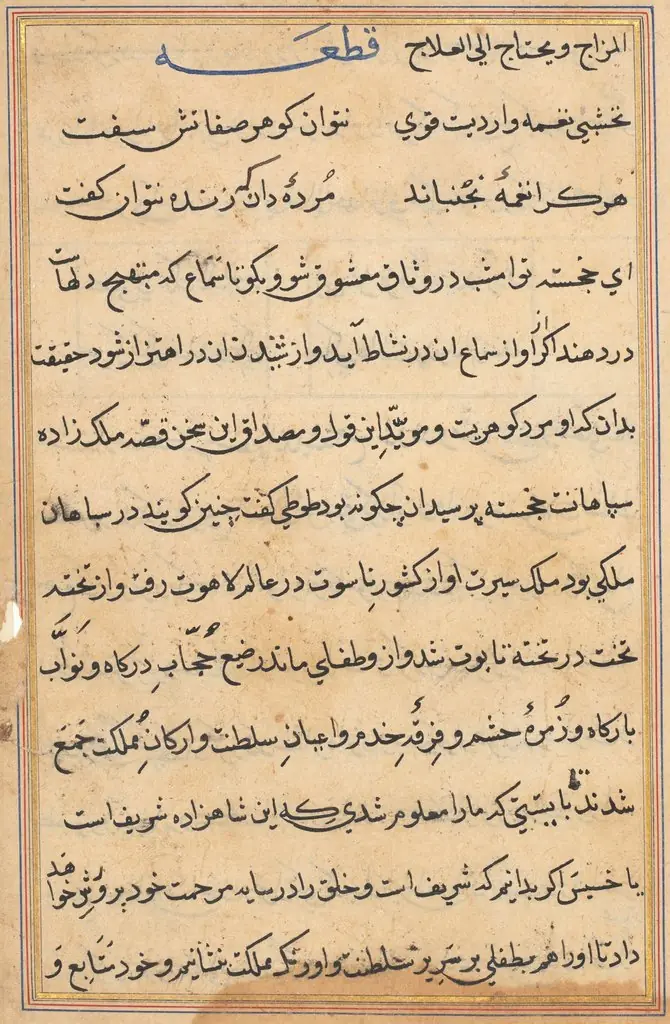
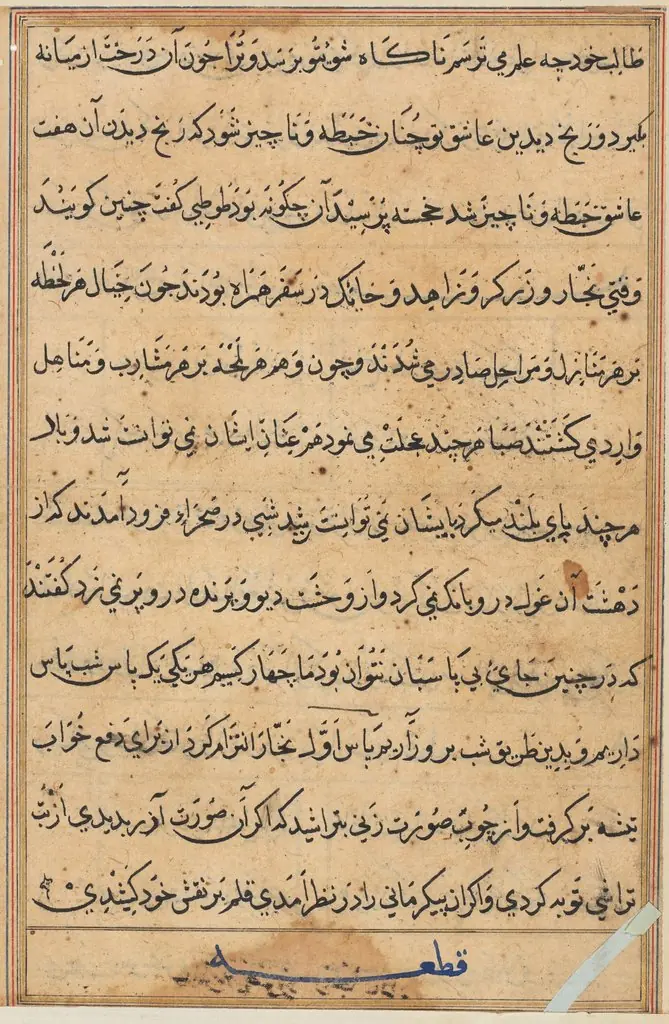
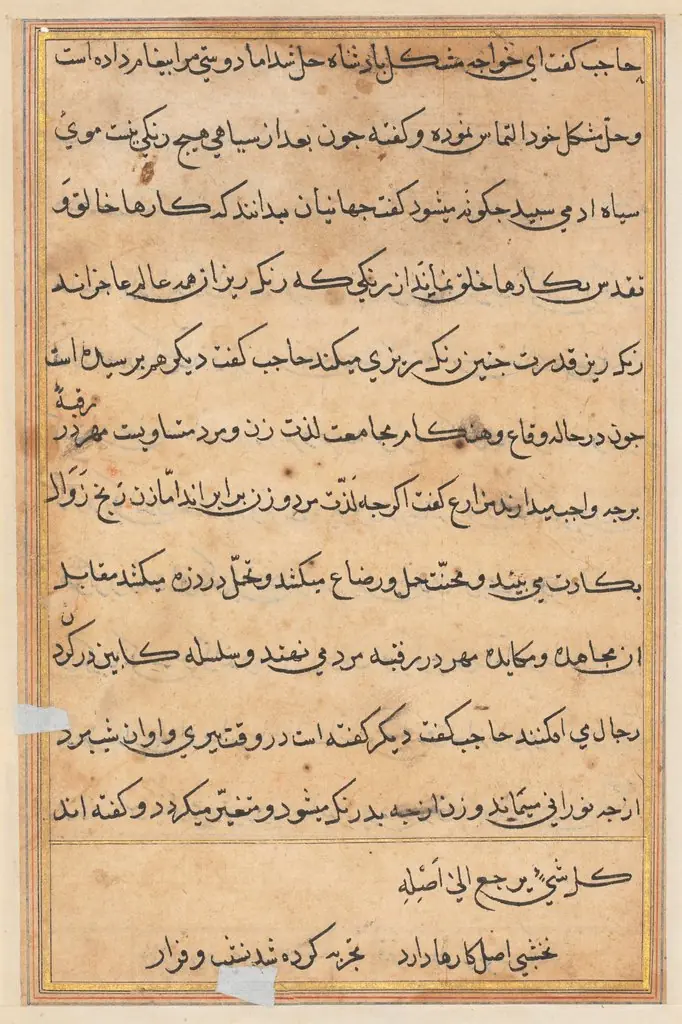
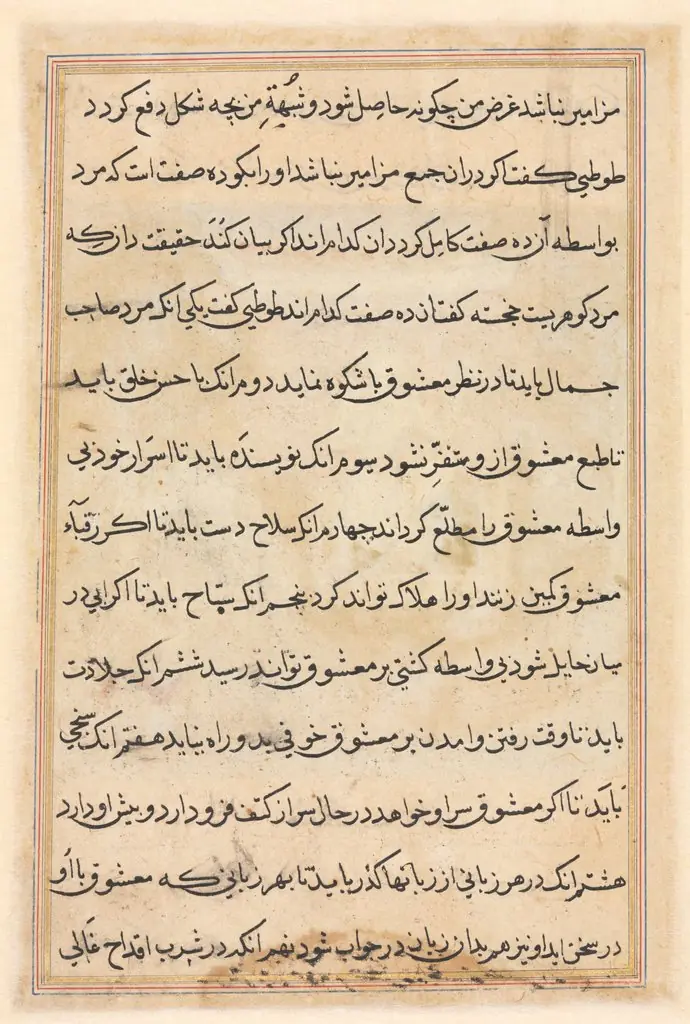
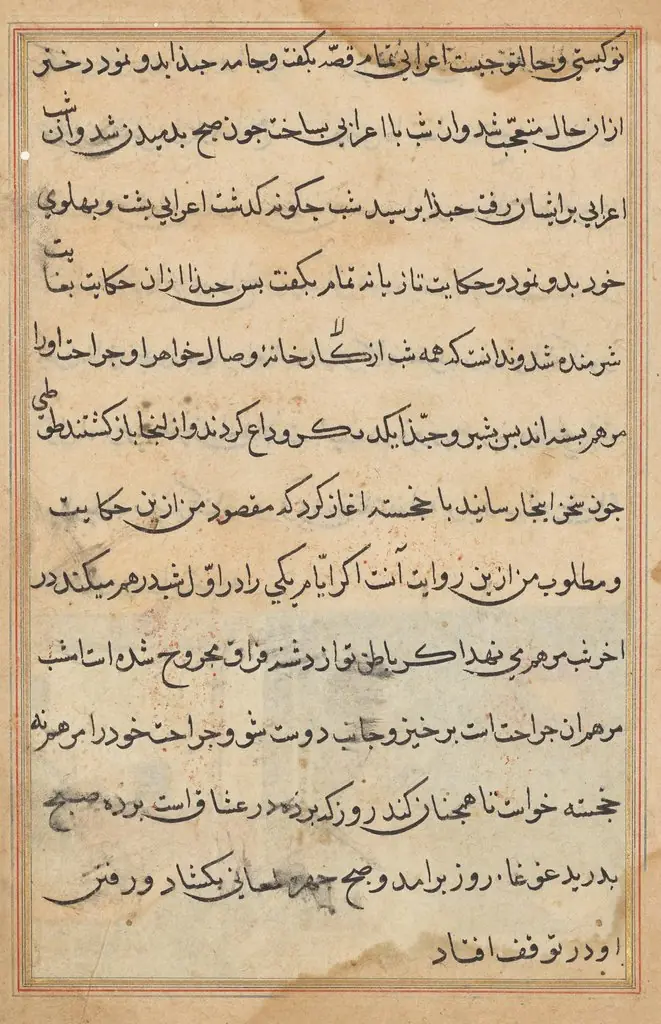
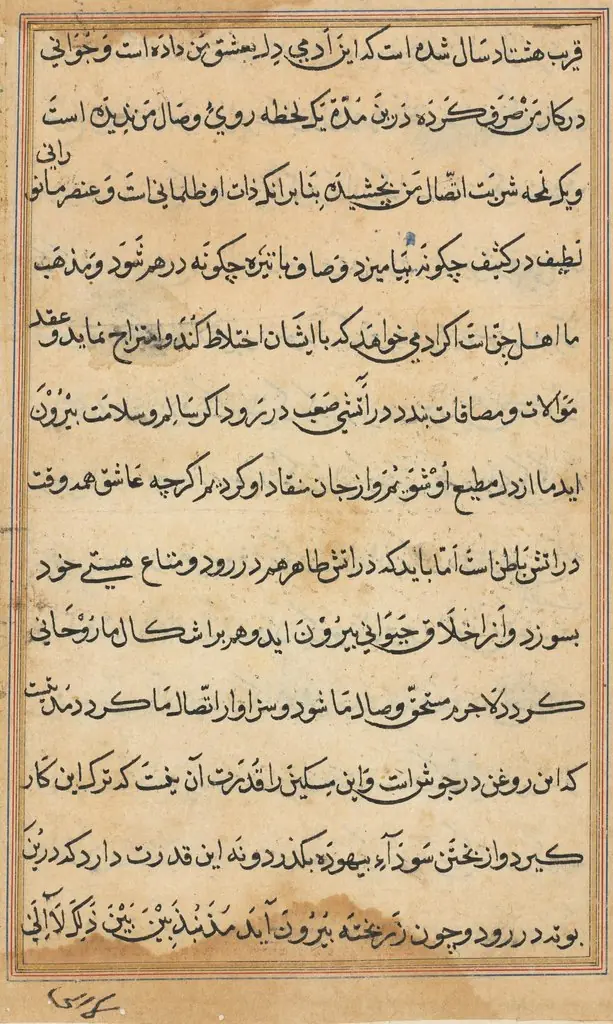
Page from Tales of a Parrot (Tuti-nama): text page is an unspecified painting. It dates from 1560 and is held in the collection of the Cleveland Museum of Art. The object is a painted page from the Persian narrative work Tales of a Parrot (Tuti‑nama).
About this work
Subject & Meaning
Symbolically, the parrot represents eloquence and the transmission of knowledge, while the surrounding text underscores the didactic purpose of the manuscript.
The page depicts a scene from the Tuti-nama, a 14th-century Persian collection of animal fables rendered in miniature paintings. The narrative centers on a clever parrot whose speech conveys moral lessons, reflecting themes of wisdom and caution. Symbolically, the parrot represents eloquence and the transmission of knowledge, while the surrounding text underscores the didactic purpose of the manuscript.
Executed circa 1560 in the Mughal Empire, the work belongs to the Persianate painting tradition that blended Persian literary themes with Indian artistic sensibilities.
The manuscript page combines intricate calligraphy with vivid pigments, illustrating how text and image collaborate to convey layered meanings. Its representation of a talking bird serves not merely as decoration but as a vehicle for philosophical instruction, embodying the moral didacticism characteristic of the genre.
History & Provenance
The text page is dated to circa 1560 and was produced in the Mughal Empire by an unknown artist, as indicated by its stylistic attribution and the work’s inception date. No record of a specific commission survives.
It has been part of the Cleveland Museum of Art’s holdings since 1962, entered under accession number 1962.279.18.a, and remains housed there; earlier ownership or exhibition history is not documented in the available sources.
The work is held in the Cleveland Museum of Art, where it forms part of the permanent collection. It is catalogued under the accession number 1962.279.18.a.
No specific exhibition history for this individual text page is documented in the available sources. Its presence in the museum’s holdings suggests it may have been included in broader presentations of the Tuti-nama manuscript, though details of such displays remain unsourced.
Overview
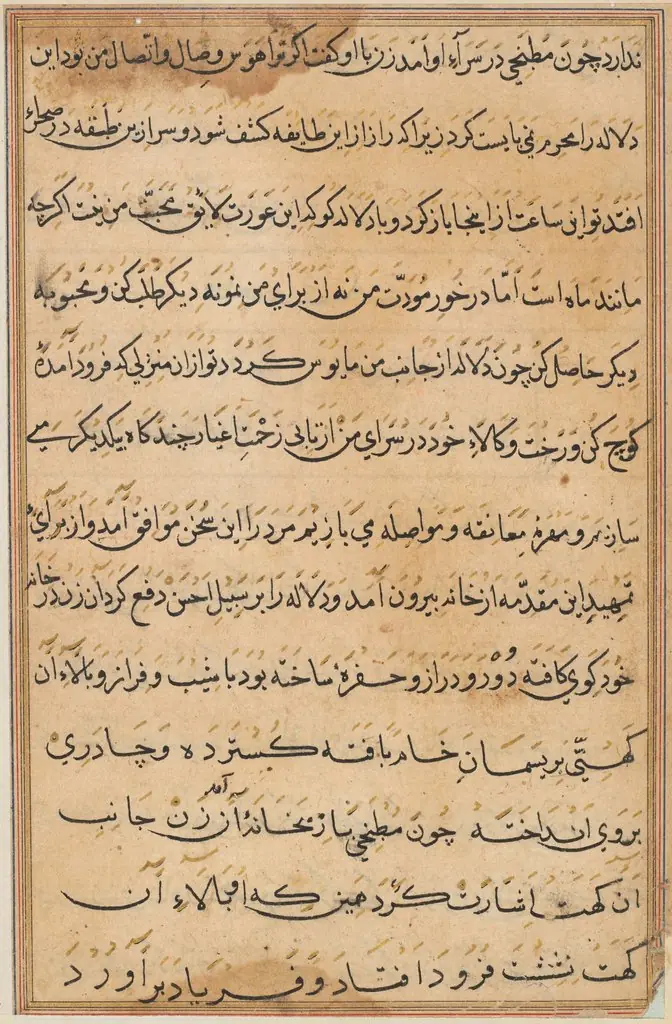
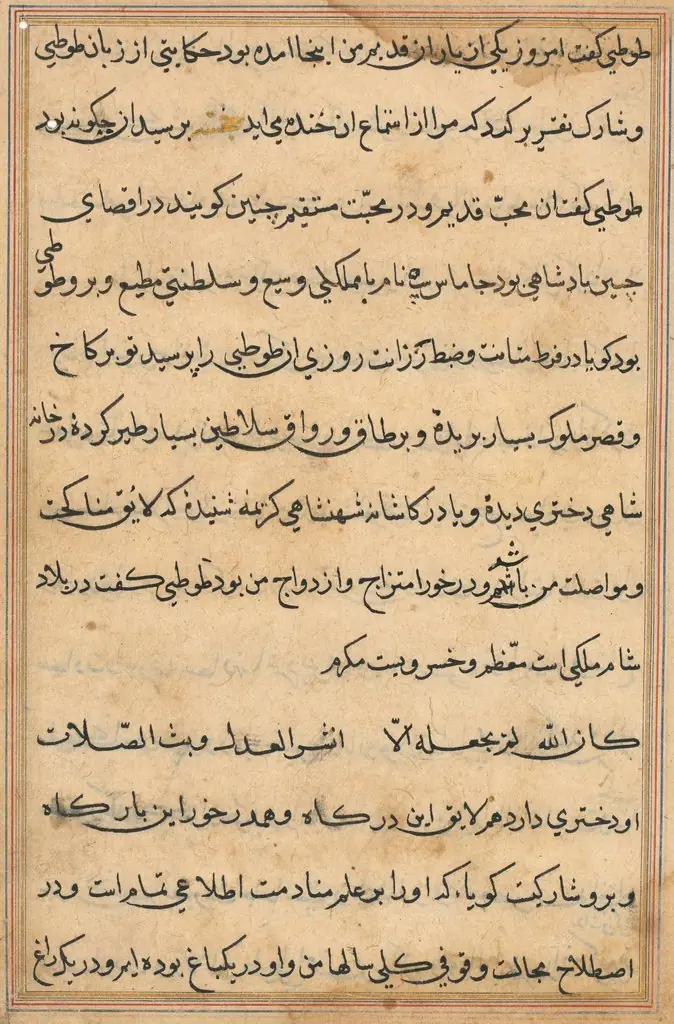
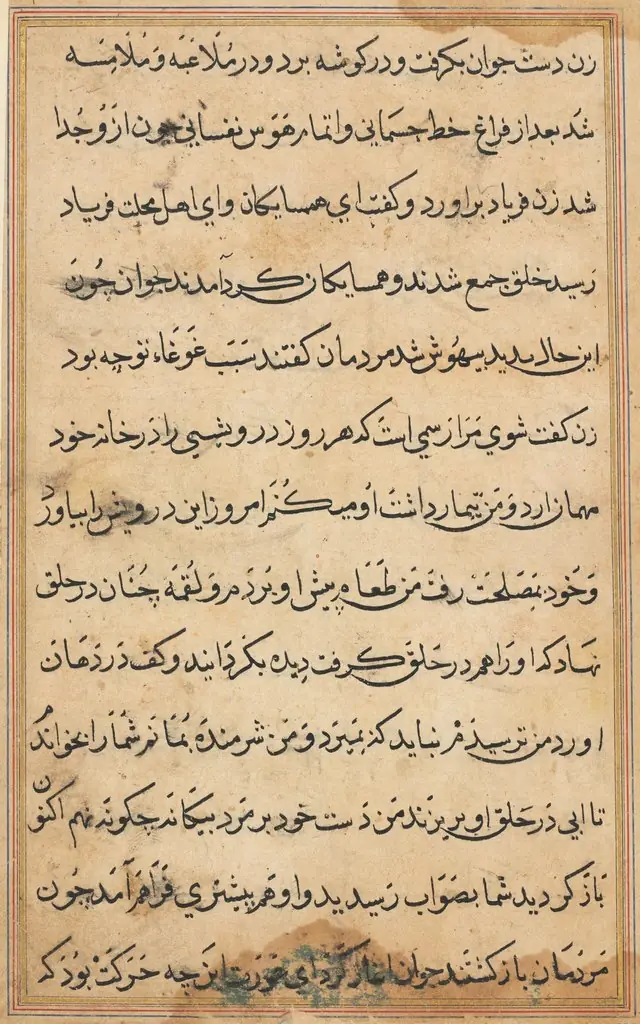
The object is a painted page from the Persian narrative work Tales of a Parrot (Tuti‑nama). Executed as a text page rather than an illustrated miniature, it consists of dense black calligraphy set against a lightly yellowed ground, bounded by a narrow dark frame. The script fills the surface completely, creating a continuous visual field of words without decorative imagery.
Technique & Style
The page was painted with ink or pigment applied in a fluid, deliberate hand, though the lettering shows slight irregularities where strokes intersect or touch. The background’s pale, slightly yellowed tone suggests an aged paper prepared with a light wash, while the thin dark border delineates the written area, emphasizing the textual content.
Artist & collection

- Page from Tales of a Parrot (Tuti-nama): text page
 Page from Tales of a Parrot (Tuti-nama): text page
 Page from Tales of a Parrot (Tuti-nama): text page
 Page from Tales of a Parrot (Tuti-nama): text page
 Page from Tales of a Parrot (Tuti-nama): text page
 Page from Tales of a Parrot (Tuti-nama): text page
 Page from Tales of a Parrot (Tuti-nama): text page
 Page from Tales of a Parrot (Tuti-nama): text page
 Page from Tales of a Parrot (Tuti-nama): text page
 Page from Tales of a Parrot (Tuti-nama): text page
 Page from Tales of a Parrot (Tuti-nama): text page
 Page from Tales of a Parrot (Tuti-nama): text page