Artwork
Paschal Candlestick
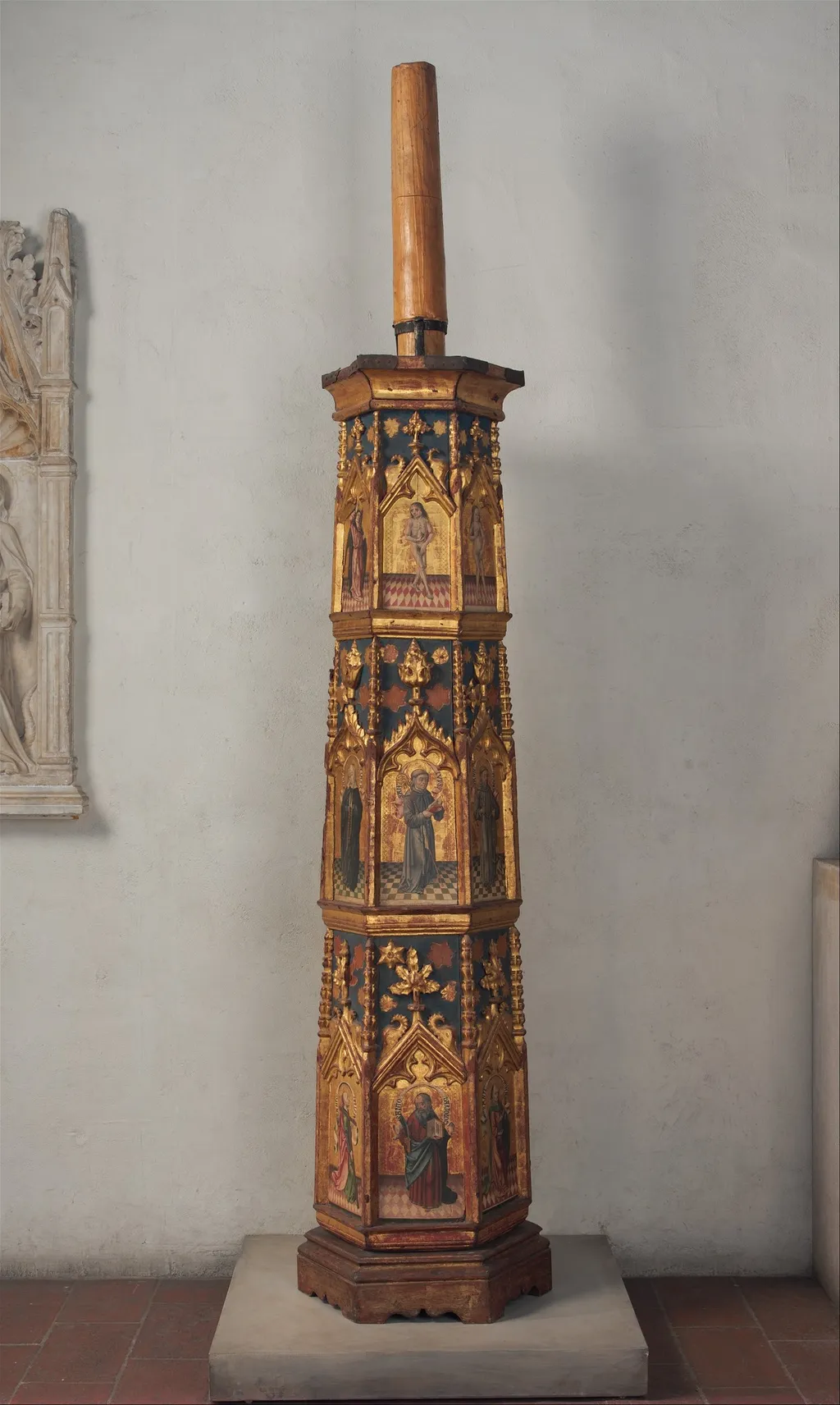
Paschal Candlestick is an unspecified painting. It dates from 1450 and is held in the collection of the Metropolitan Museum of Art.
About this work
A tall, narrow wooden stand shaped like a tower, carved with pointed arches and touched with gold leaf for a church-like look. Three small painted panels show robed figures against red-and-blue patterns, most likely religious characters. A long smooth spike rises from the top, and the gold and bright color stand out sharply against the dark wood. Made around 1450.
Subject & Meaning
The Paschal Candlestick is a religious painting from 1450 that depicts a complex assembly of biblical and ecclesiastical figures.
The Paschal Candlestick is a religious painting from 1450 that depicts a complex assembly of biblical and ecclesiastical figures. The iconography specifically includes Adam and Eve, representing the figures of the Old Testament, alongside an apostle and a saint, who embody the New Testament and the communion of saints. This grouping of characters serves to illustrate the theological narrative of salvation history, connecting the fall of humanity with its redemption through the church.
As a work of religious art, the composition likely functions to visualize the spiritual significance of the Paschal candle, which symbolizes the light of Christ rising from the darkness. The presence of these specific figures underscores the painting's role in conveying core Christian doctrines regarding creation, sin, and sanctity within a liturgical context.
History & Provenance
The Paschal Candlestick, a religious painting dated to 1450, was created by an anonymous artist. The work depicts biblical figures including Adam, Eve, several saints, and apostles. Measuring 195.6 centimeters in height and 43.8 centimeters in width, the piece has been part of the collection of the Metropolitan Museum of Art.
Specific details regarding the original commission, the identity of the patron, or the precise chain of ownership prior to its acquisition by the museum are not documented in the available records. The artwork remains attributed to an unknown creator from the mid-15th century.
The Paschal Candlestick is housed in the Metropolitan Museum of Art in New York, where it is part of the museum’s collection of medieval religious art. The work is listed as an anonymous painting dated to 1450, with dimensions of 195.6 cm in height and 43.8 cm in width. Its precise inventory or accession number is not recorded in the documentation examined.
No exhibition history specific to this object is documented in the sources consulted, though the museum frequently displays it within its European Paintings and Medieval Art galleries as part of rotating displays of early Netherlandish works.
Overview
This Paschal Candlestick is a tall, slender wooden structure, resembling a miniature architectural tower. It features intricate carvings, including pointed arches, and is embellished with gold leaf. Small painted panels depicting robed figures against vibrant backgrounds are integrated into its design, contributing to its overall ecclesiastical aesthetic. A smooth, tall wooden spike crowns the piece, intended to hold a large candle.
Technique & Style
The candlestick's construction showcases detailed woodworking, characterized by its tower-like form and the incorporation of pointed arch motifs, which evoke Gothic architectural styles. Gold leaf highlights the carved elements, contrasting with the dark wood. Within three distinct panels, figures are rendered with bright pigments and set against patterned red and blue grounds, creating a visual focal point that stands out from the sculptural base.
Context
This type of elaborate candlestick served a specific function within Christian churches, particularly during the Easter season. Its design, with its architectural elements and religious iconography, reflects the aesthetic and devotional practices prevalent in periods when such objects were central to liturgical ceremonies. The integration of both carving and painting highlights a common artistic approach in sacred art.
Artist & collection

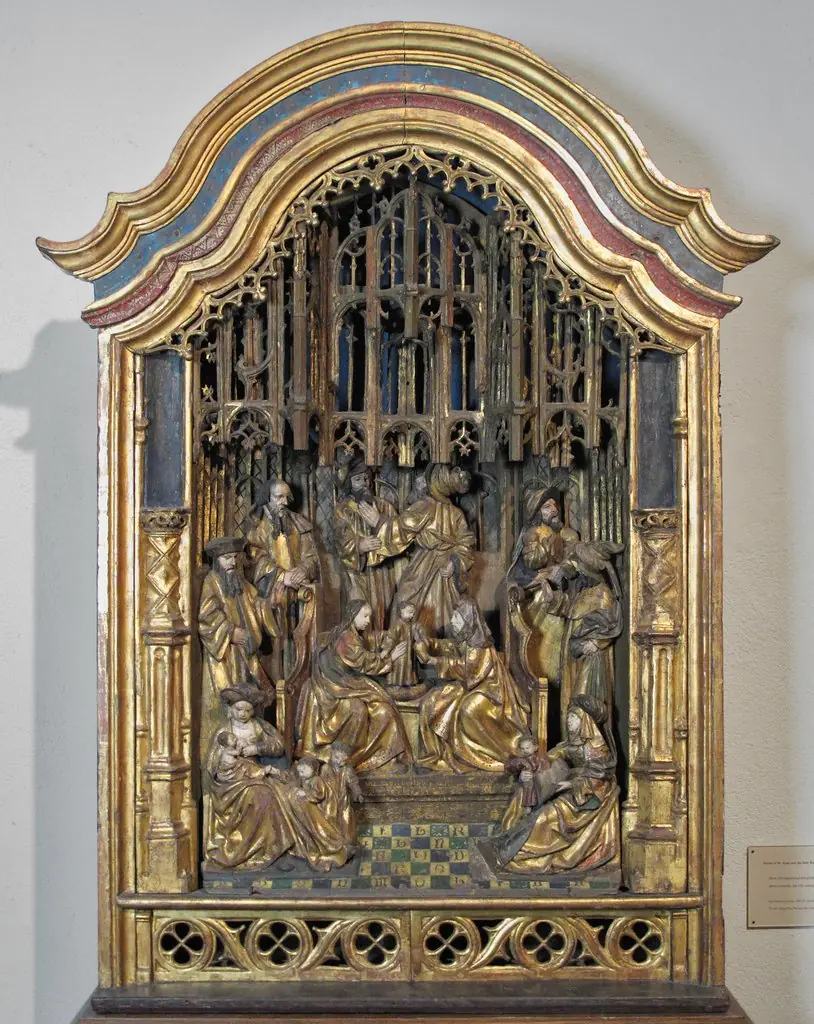
- Shrine of Saint Anne and the Holy Kinship
 Orgel uit de Nederlands Hervormde Kerk in Scheemda
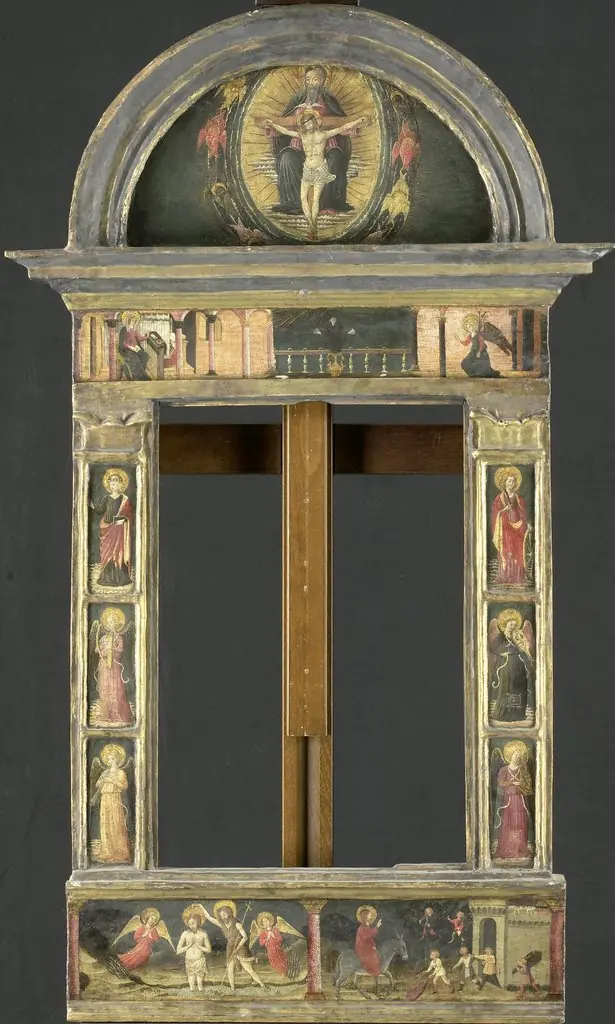 Frame painted with the annunciation, the baptism of Christ, the entry into Jerusalem, the Saints Cecilia and Catharina, and 4 angels making music
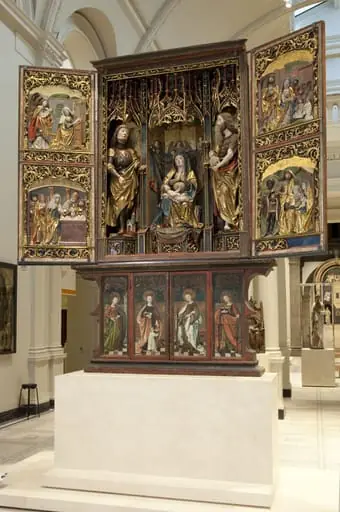 Winged Altarpiece
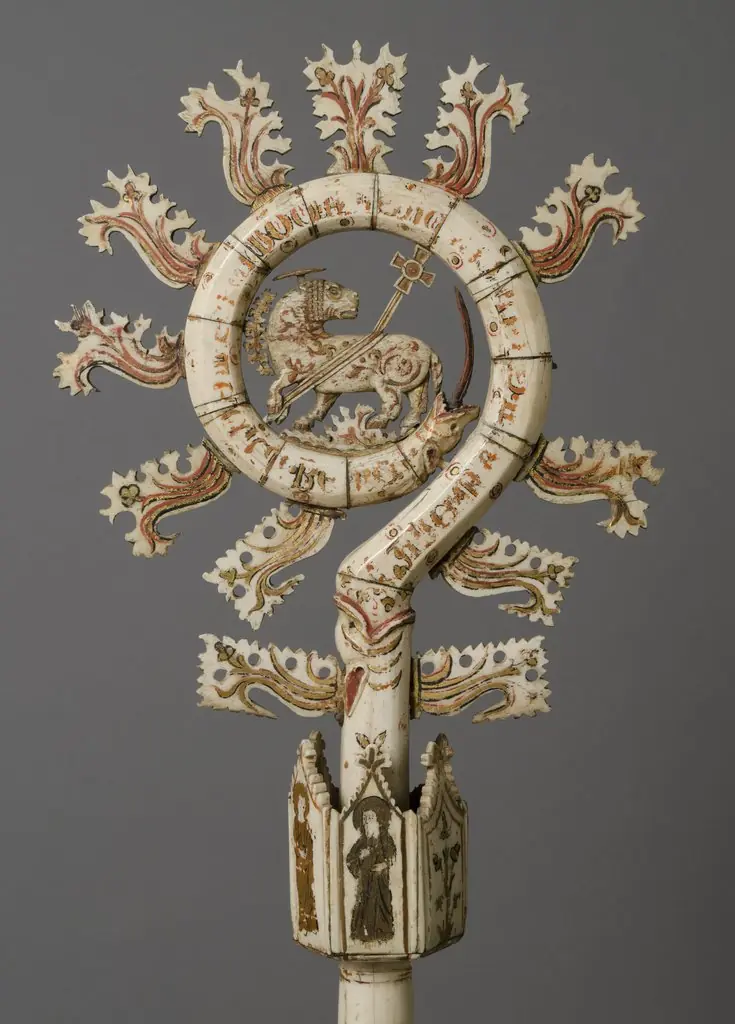 Crozier
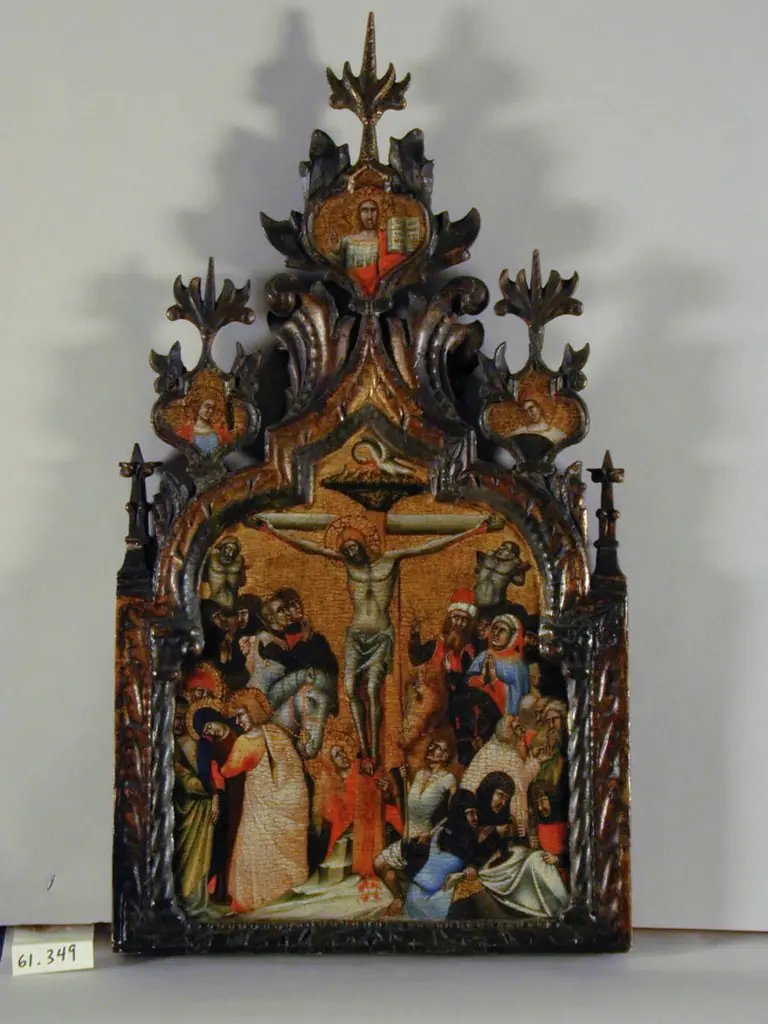 The Crucifixion
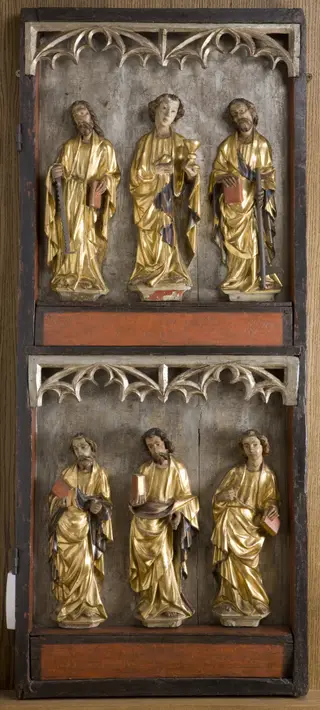 Saint Apostles (reverse: Our Lady of Sorrows). The right panel of the retable from Stary Żywiec
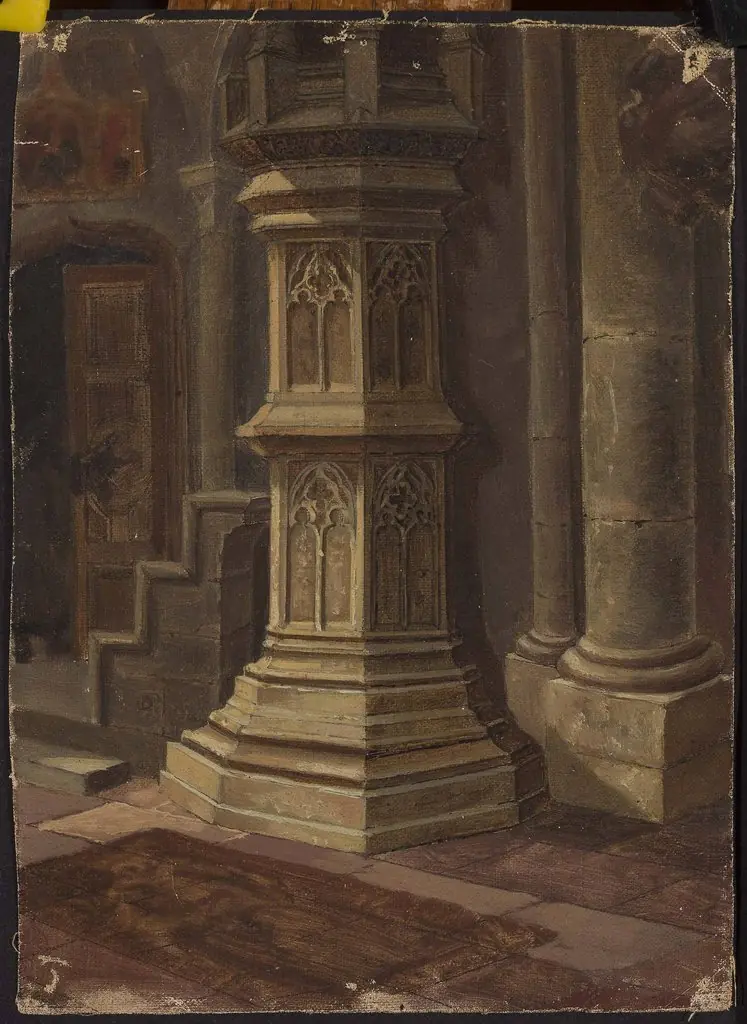 Gothic pillar indoors
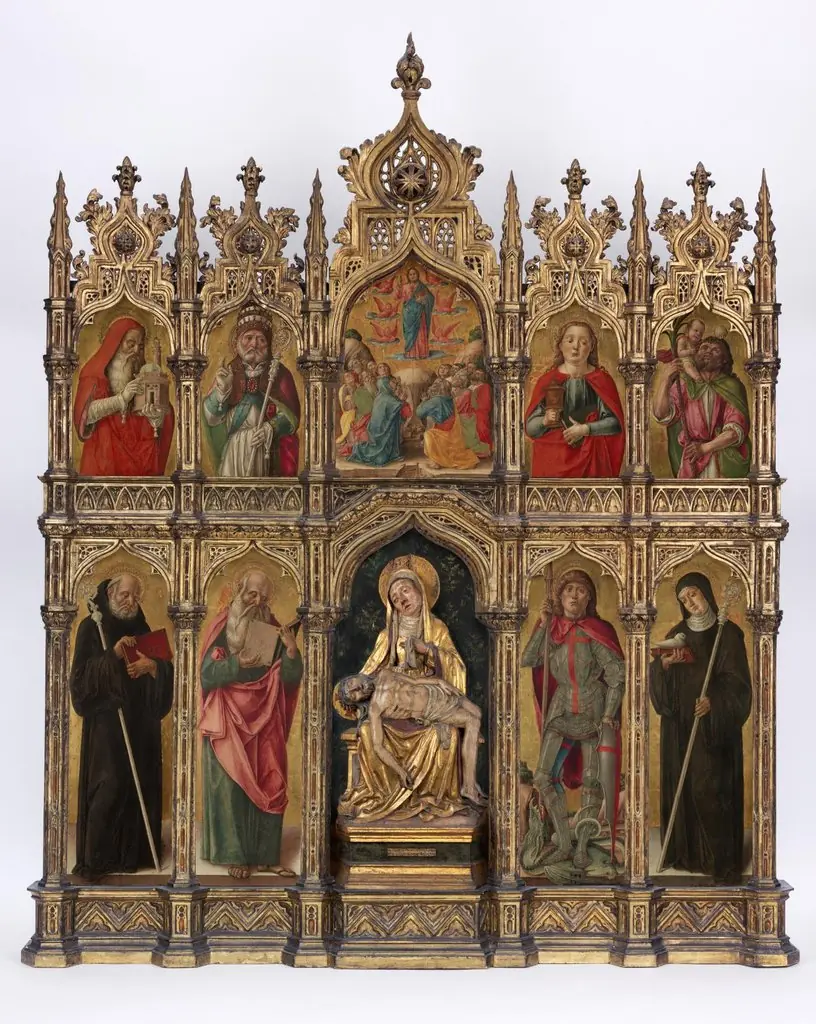 Arbe Polyptich
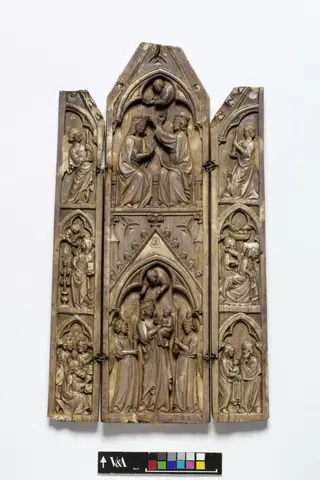 Virgin and Child, the Coronation of the Virgin and scenes from the Nativity
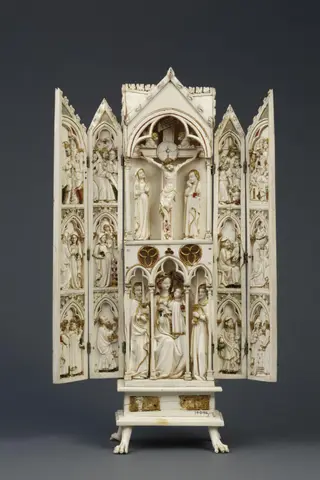 Virgin and Child, the Crucifixion and Scenes from the Life of Christ
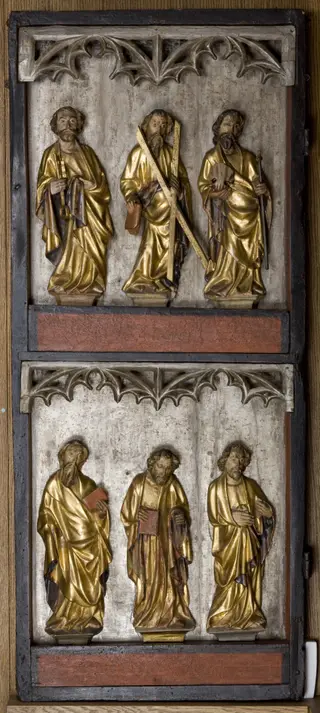 Saint Apostles (reverse: Christ – Man of Sorrows). The left panel of the retable from Stary Żywiec