Artwork
Orgel uit de Nederlands Hervormde Kerk in Scheemda
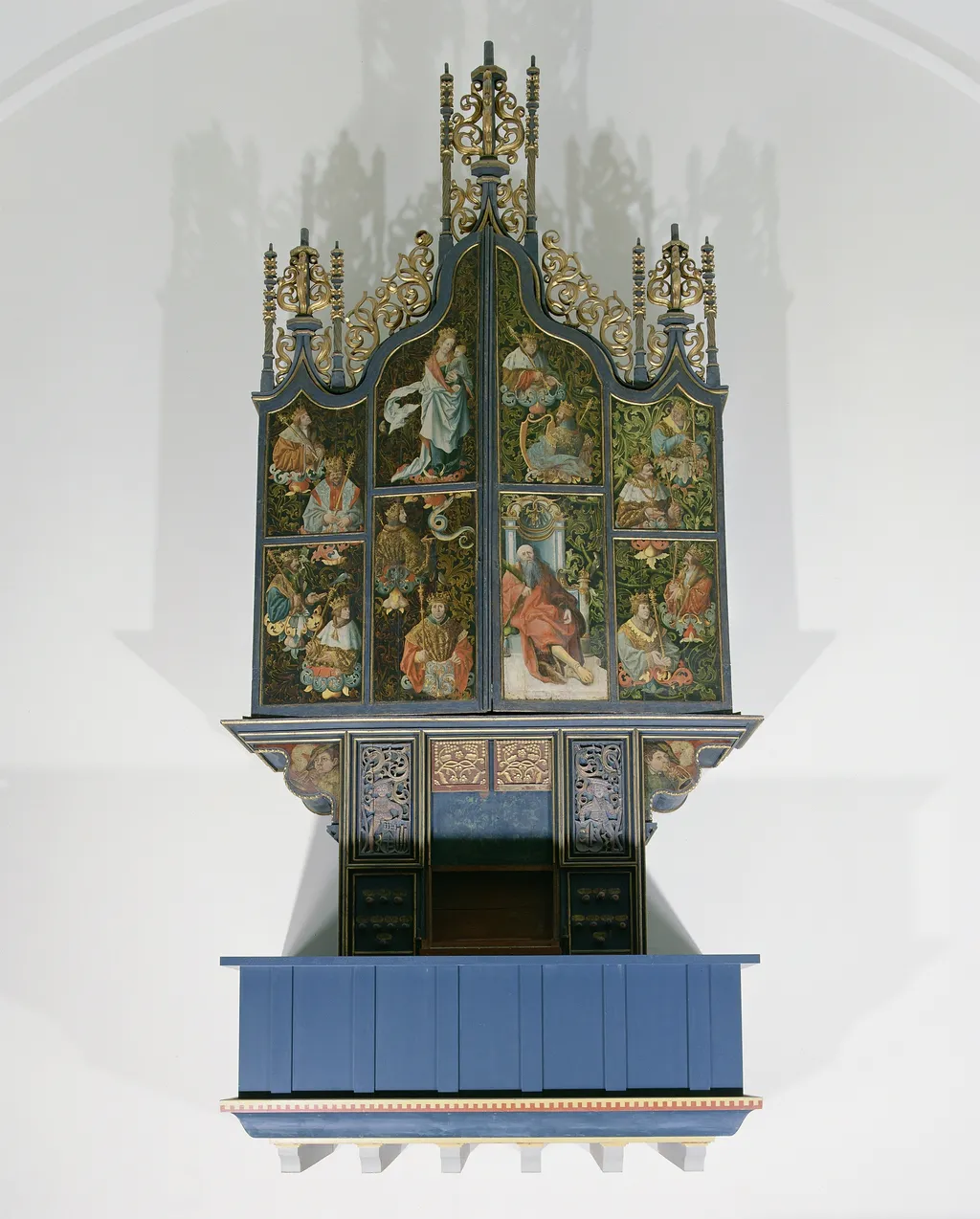
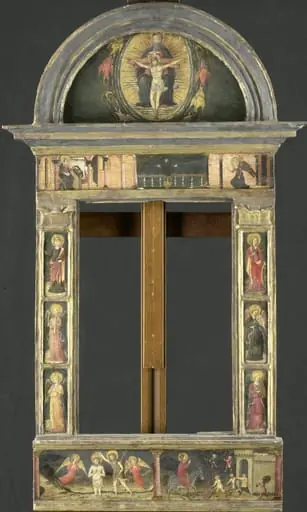
Orgel uit de Nederlands Hervormde Kerk in Scheemda is an oil painting by the Northern Renaissance artist Unknown. It dates from 1526 and is held in the collection of the Rijksmuseum. A multicolored shrine with numerous panels is depicted in this oil painting, currently held at the Rijksmuseum.
About this work
Subject & Meaning
The work depicts a religious scene from the life of Christ, showing the Adoration of the Shepherds on the left inner panel and the Adoration of the Magi on the right inner panel, both framed within a Jesse Tree motif on the exterior and accompanied by heraldic panels identifying the builder’s coat of arms and the Groningen carpenters’ guild, symbolizing the sacred narrative of divine incarnation and the earthly recognition of Christ’s birth, a theological emphasis reflected in its original placement within a Dutch Reformed church and its later preservation in the Rijksmuseum collection
The iconography underscores themes of divine humility and royal acknowledgment, linking the incarnation to Messianic prophecy through the Jesse Tree, while the heraldic elements connect the artwork to its creators and patrons, illustrating the intersection of religious devotion, artistic patronage, and local guild identity in early sixteenth‑century Dutch culture
Technique & Style
The painting is executed in oil paint on a wooden panel, classifying it as an oil painting on panel.
The painting is executed in oil paint on a wooden panel, classifying it as an oil painting on panel. The work belongs to the religious art genre and was created in 1526. The composition features a richly decorated organ case with two painted shutters; the inner left shutter depicts The Nativity and The Adoration of the Shepherds, while the inner right shutter shows The Adoration of the Kings.
The exterior is painted with a Tree of Jesse, beneath which various heraldic panels display the builder’s coat of arms bearing three organ pipes and the coat of arms of the Groningen cabinetmakers’ guild. The side volutes are later additions. The work measures 645 cm in height and 300 cm in width.
An inscription on a banderol identifies the painter as Magister Johannes Emedensis in the year 1526, likely referencing the builder Johan Molner, though the painter’s identity remains anonymous and has been variously attributed to a Dutch or German artist.
History & Provenance
The organ originated in the Dutch Reformed Church in Scheemda, where it was built and decorated in 1526. An inscription on the case names "Magister Iohannes Emedensis" for that year, likely referring to organ builder Johan Molner, who acquired citizenship of Emden in 1518/1519. The painter's identity was once sought in the circle of Jan Swart van Groningen, but the work is now considered anonymous, with the RKD identifying the painter as Dutch and the Rijksmuseum as German.
In 1874, the church council sold the organ to J. Verwer in Leeuwarden, replacing it with a current instrument by Roelf Meijer of Veendam. Verwer loaned it to the Rijksmuseum from 1886 to 1889, after which the museum purchased it in 1896 with support from the Vereniging Rembrandt. The original pipework was lost in the late nineteenth century.
The organ case from the Dutch Reformed Church in Scheemda is held in the collection of the Rijksmuseum in Amsterdam. Originally sold by the church board to J. Verwer in Leeuwarden in 1874, the object was loaned to the museum from 1886 to 1889. The Rijksmuseum subsequently purchased the work in 1896 with financial support from the Vereniging Rembrandt.
While the original pipework was lost in the late 19th century, the richly painted case remains preserved as part of the museum's holdings.
Context
The organ case from the Dutch Reformed Church in Scheemda is held by the Rijksmuseum in Amsterdam as a 1526 painted case with dummy interior, its original pipework lost in the late nineteenth century. Scholarly attention has centered on attribution and dating rather than stylistic reception. An inscription on a banderole names "Magister Iohannes Emedensis" for the year 1526, likely identifying the organ builder Johan Molner, who gained citizenship of Emden in 1518/1519.
Earlier scholarship sought the anonymous painter in the circle of Jan Swart van Groningen, but the paintings are now regarded as by an unknown hand; the RKD characterized the painter as Dutch, while the Rijksmuseum described the work as German. The case thus occupies a liminal place in early sixteenth-century Netherlandish organ-building and panel painting, linking the Groningen joiners' guild, whose coat of arms appears on the lower panels, to a broader North German organ-building tradition centered on Emden.
Overview
A multicolored shrine with numerous panels is depicted in this oil painting, currently held at the Rijksmuseum.
Artist & collection









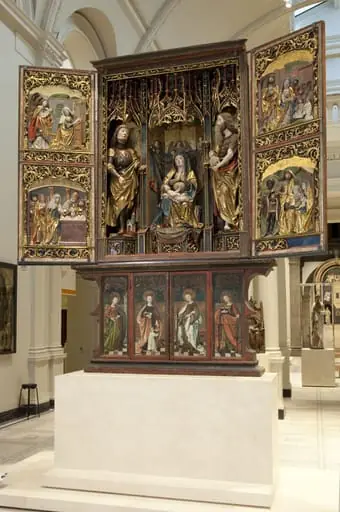
- Winged Altarpiece
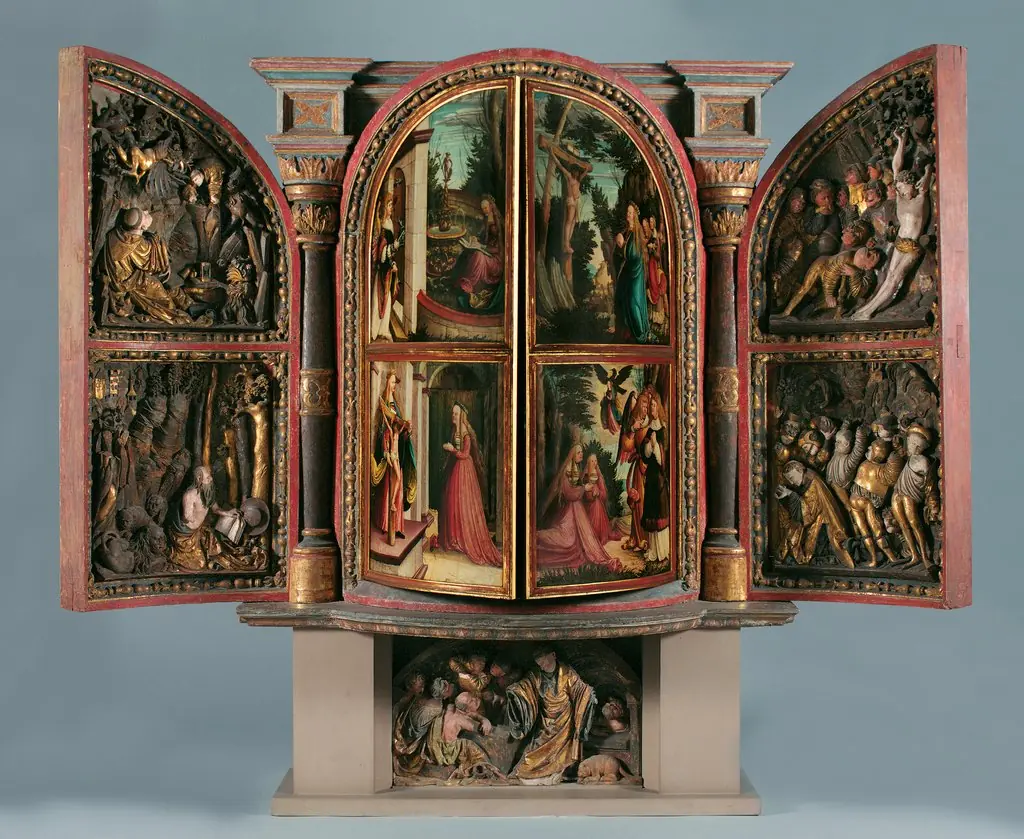 Flügelaltar der Donauschule
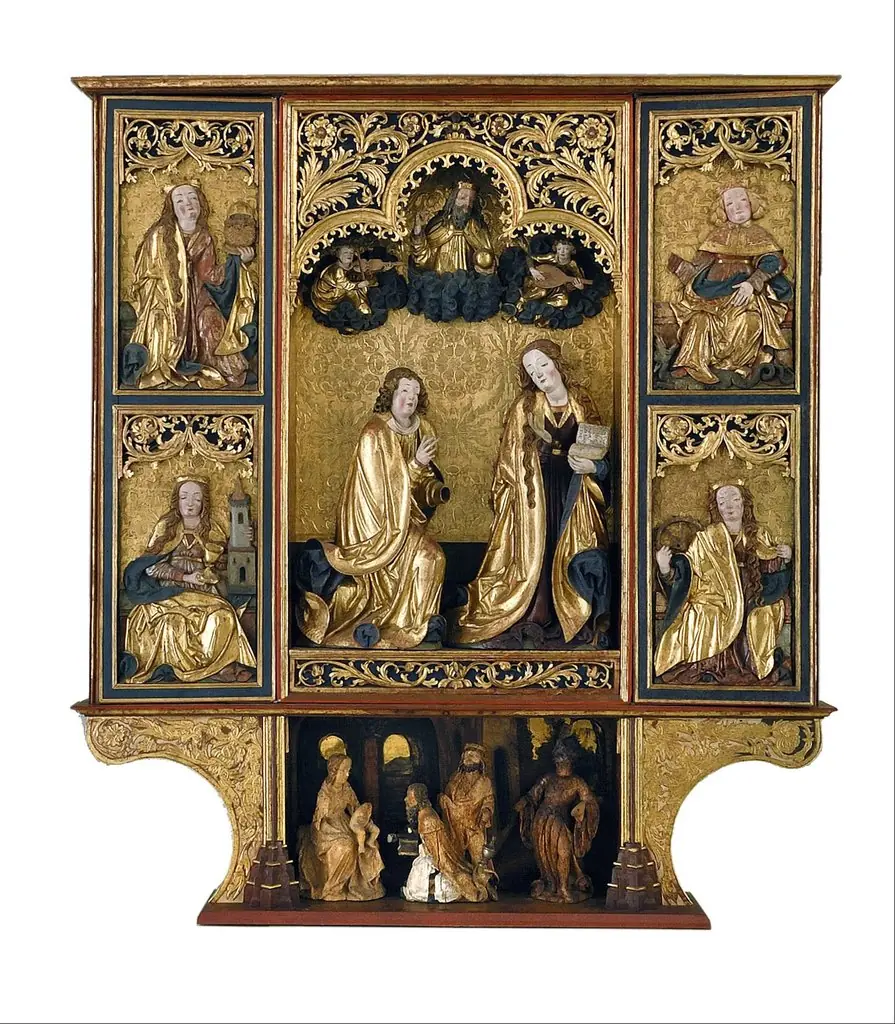 Altarpiece of the Annunciation from Kisszeben
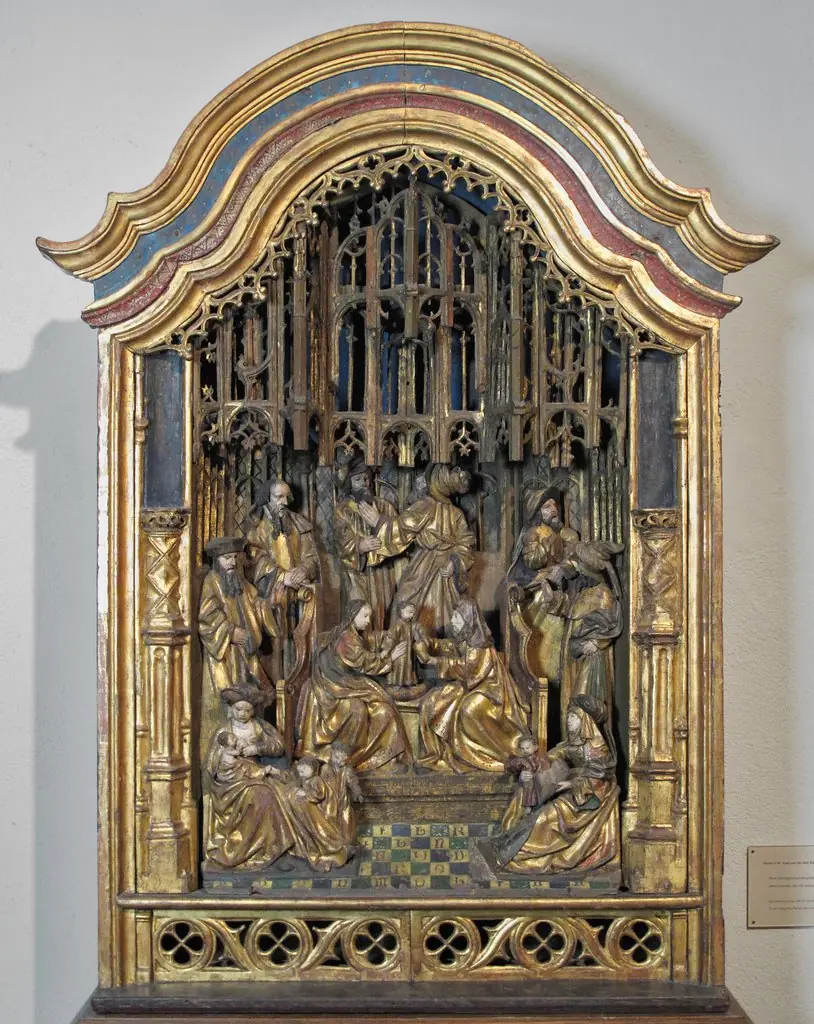 Shrine of Saint Anne and the Holy Kinship
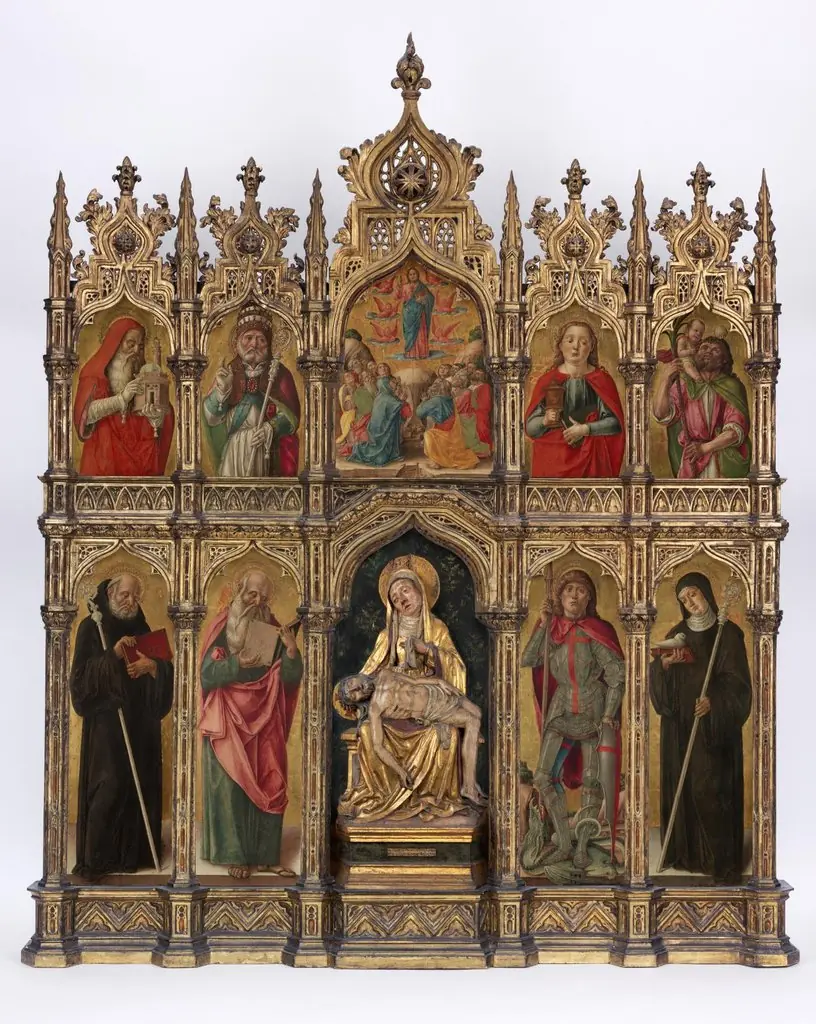 Arbe Polyptich
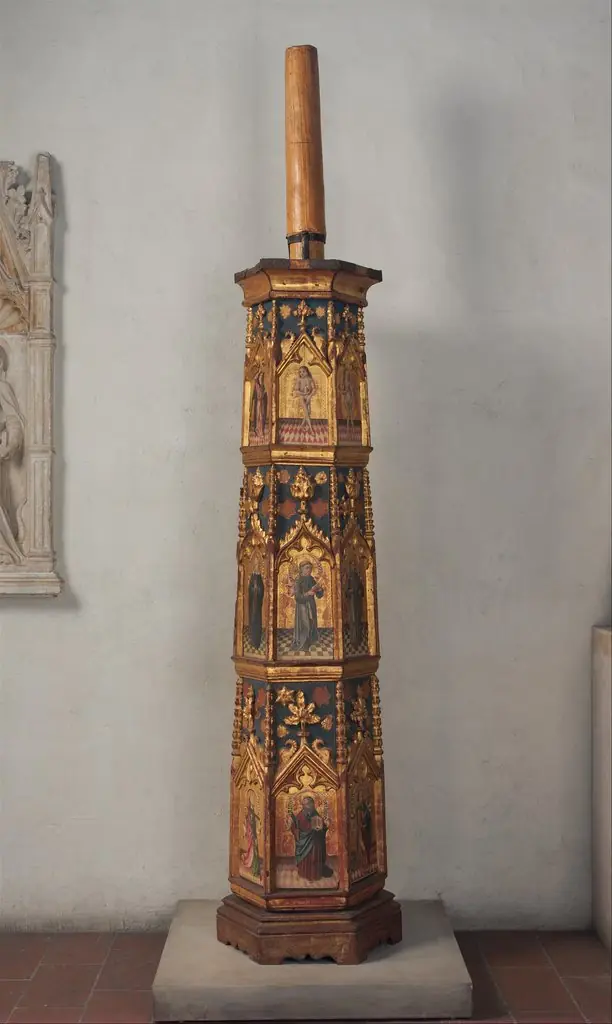 Paschal Candlestick
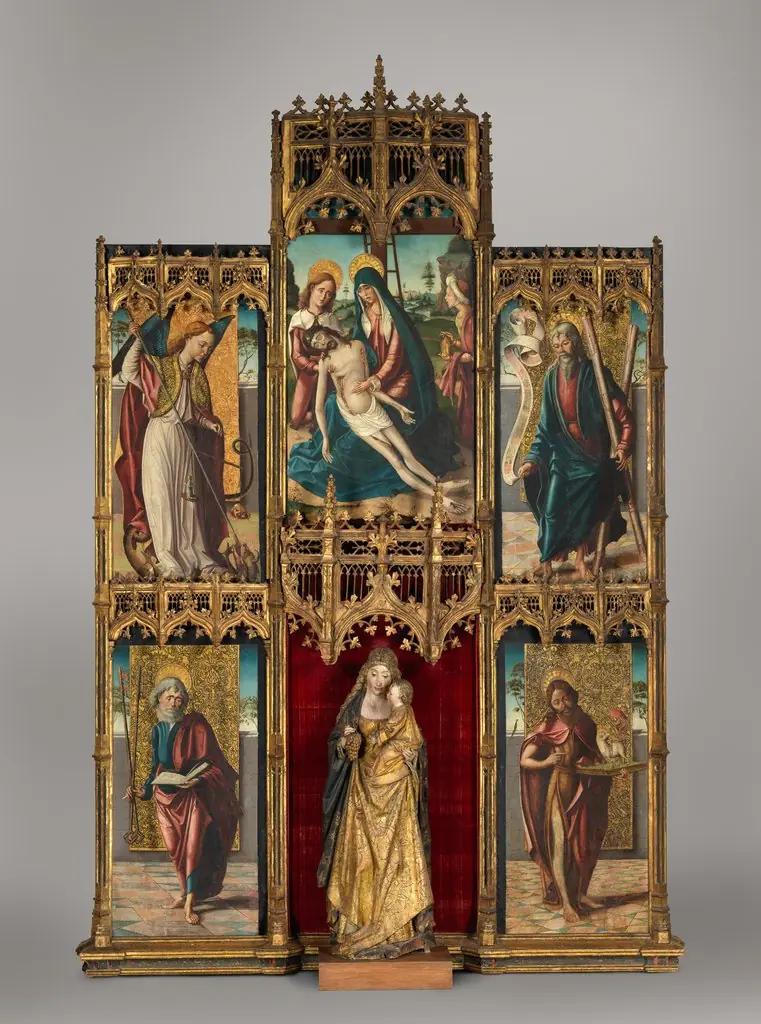 Virgin and Child with the Pietà and Saints
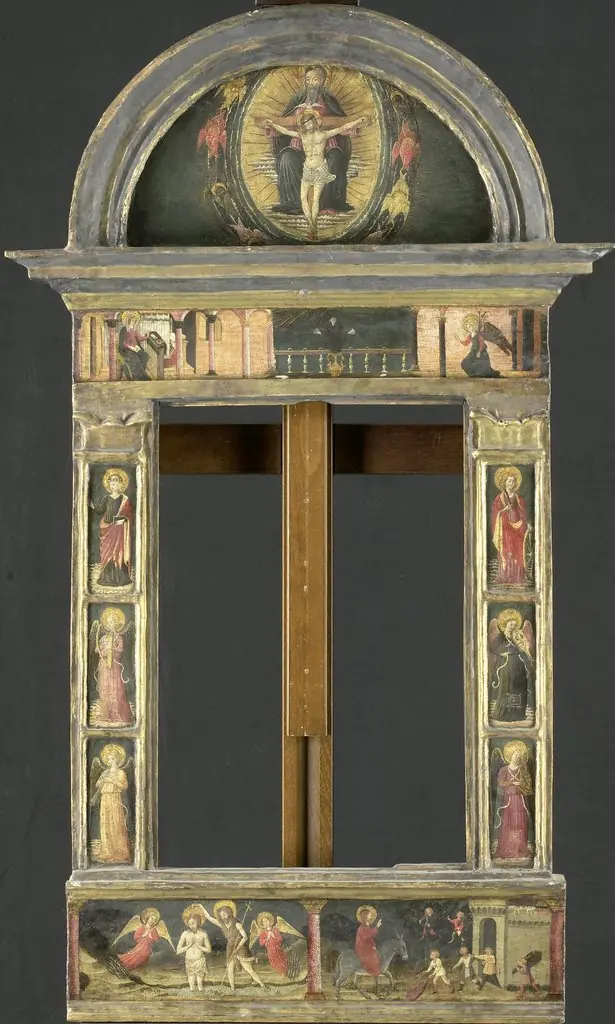 Frame painted with the annunciation, the baptism of Christ, the entry into Jerusalem, the Saints Cecilia and Catharina, and 4 angels making music
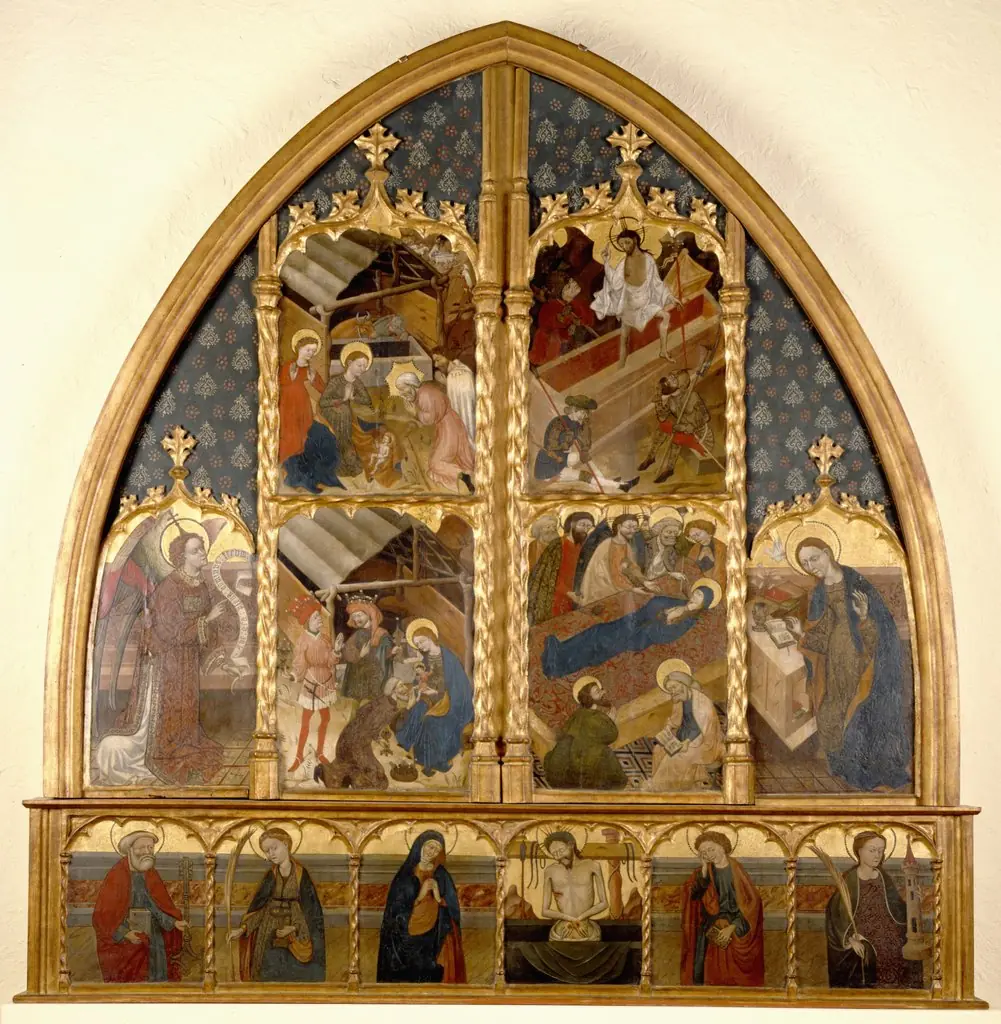 Nativity, Annunciatory Angel, Adoration of the Magi, Resurrection, Death of the Virgin, The Annunciate, Saints Peter and Lucy, Virgin Mary, Resurrected Christ, Saints John and Barbara
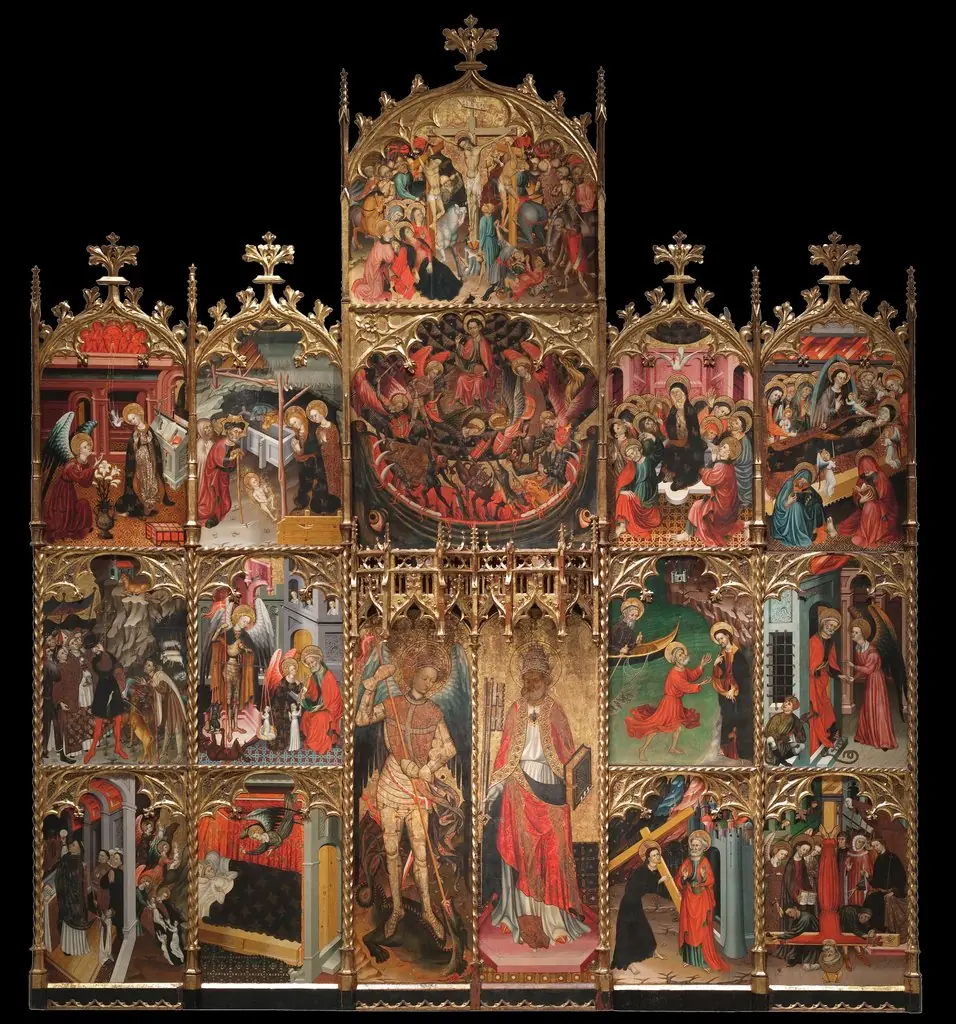 Altarpiece of Saint Michael and Saint Peter
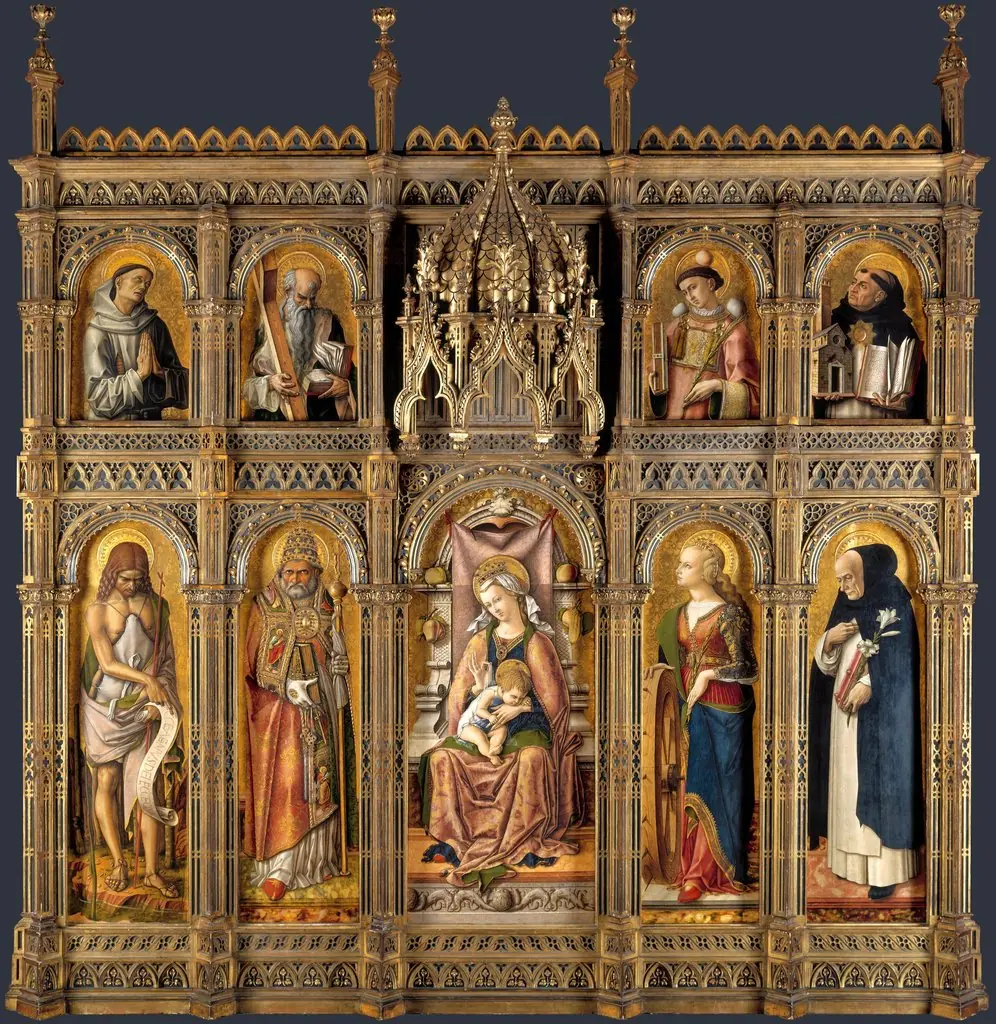 Demidoff Altarpiece
 Frame depicting the Annunciation, Baptism of Christ, Entry into Jerusalem, Saints Cecilia and Catherine of Alexandria, Trinity (Gnadenstuhl, Mercy Seat), and four Music-making Angels