Artwork
Portrait of a Monk in Prayer
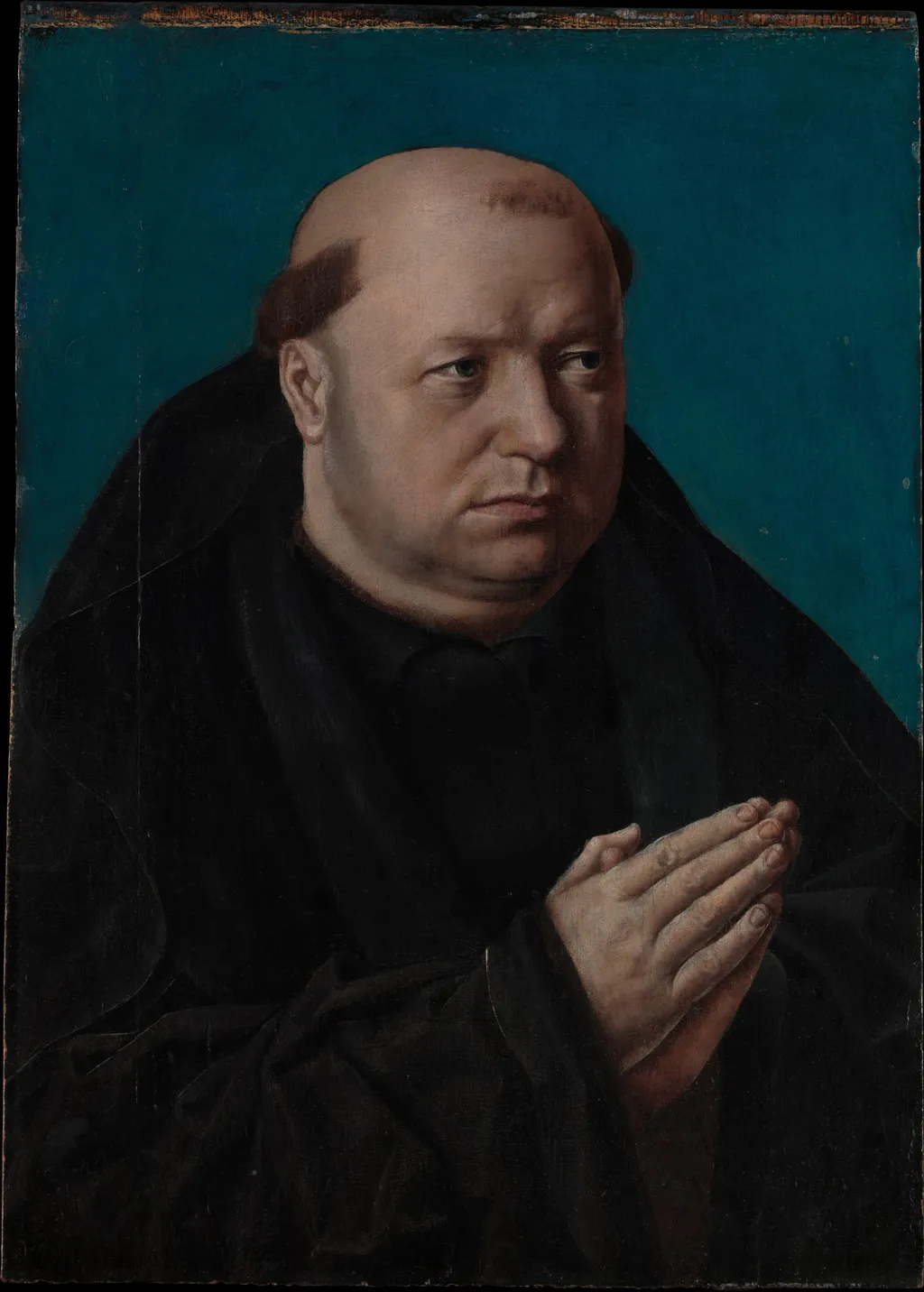
Portrait of a Monk in Prayer is an oil painting. It dates from 1500 and is held in the collection of the Metropolitan Museum of Art.
About this work
Subject & Meaning
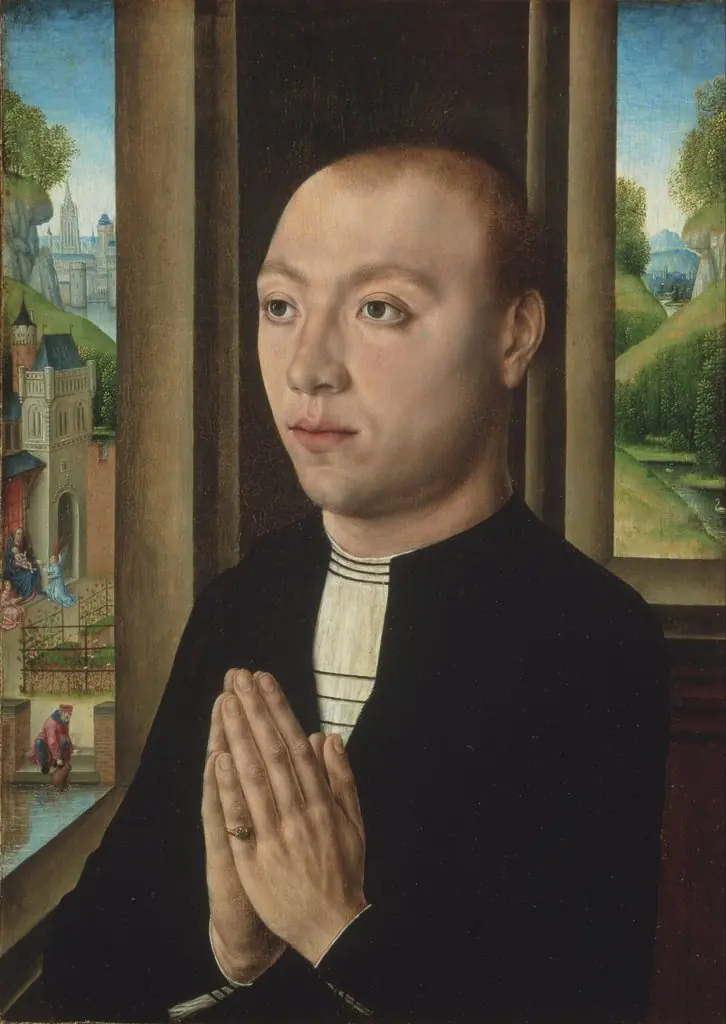
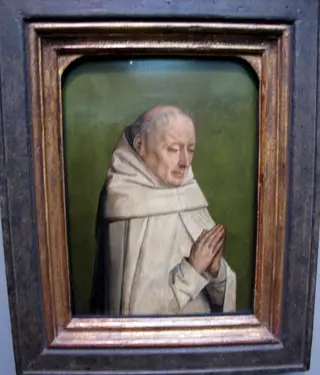
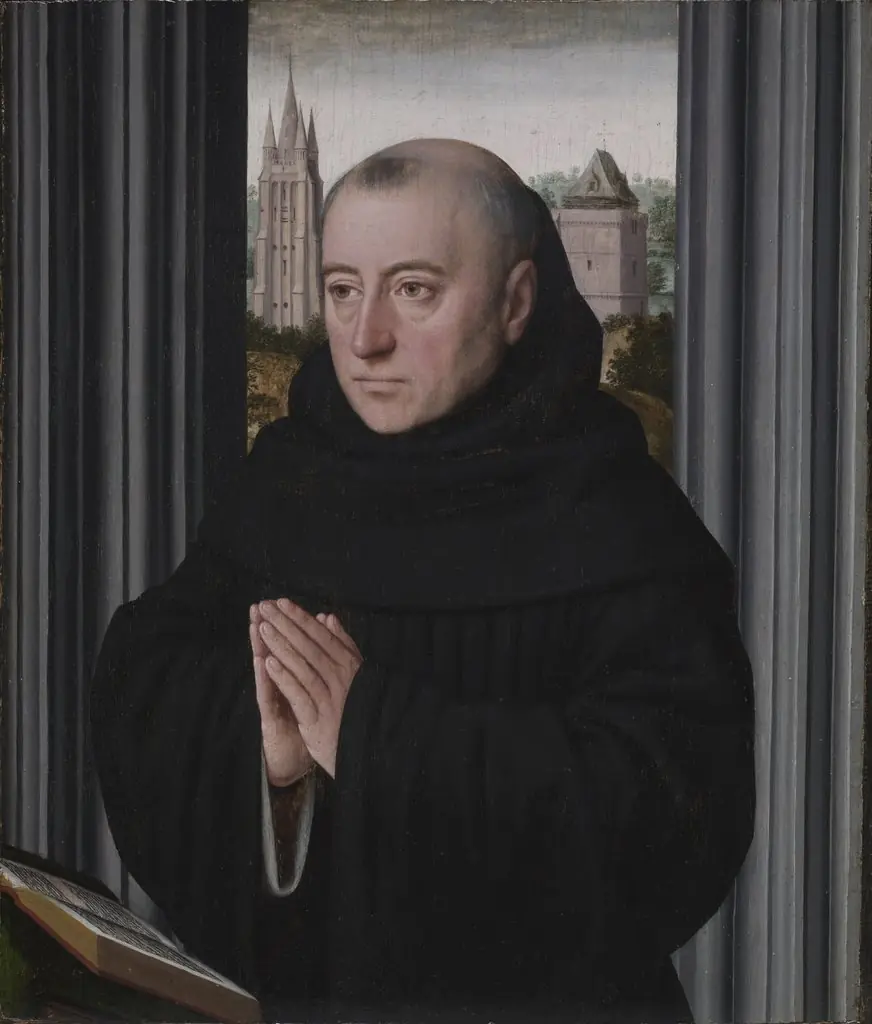
The Portrait of a Monk in Prayer depicts an unidentified Benedictine monk, shown in three-quarter view with hands clasped in devotion.
The Portrait of a Monk in Prayer depicts an unidentified Benedictine monk, shown in three-quarter view with hands clasped in devotion. The sitter’s austere black habit and tonsured head conform to the iconographic conventions of late medieval monastic portraiture, signaling both humility and clerical authority. The absence of extraneous attributes, such as a book, rosary, or landscape, focuses attention on the act of prayer itself, underscoring the work’s spiritual intent.
By isolating the monk against a neutral ground, the painting elevates private devotion as a model of Christian piety, likely intended for a patron within or closely associated with the Benedictine order.
Technique & Style
Portrait of a Monk in Prayer is executed in oil paint on a wood support, a medium and substrate combination characteristic of early 16th-century French panel painting. Created around 1500, the work measures 33.3 cm in height and 24.1 cm in width. The portrait depicts a Benedictine monk engaged in prayer, rendered with the formal clarity typical of fifteenth-century portraiture.
The painting is currently held in the collection of the Metropolitan Museum of Art, having been acquired through the Ernst and Florette R. Rosenfeld gift. Its stylistic approach aligns with the French artistic tradition of the period, focusing on the solemn depiction of a religious figure within a compact, intimate format suitable for private devotion or monastic contemplation.
History & Provenance
The Portrait of a Monk in Prayer is dated to approximately 1500, a period consistent with its stylistic and technical attributes [,]. Originally attributed to an anonymous French painter, the work was created using oil on wood, measuring 33.3 by 24.1 centimeters []. The painting entered the collection of Ernst Rosenfeld before passing to his daughter, Florette R. Rosenfeld, who subsequently donated it to the Metropolitan Museum of Art [].
No direct documentation of its commission or early ownership survives, though its subject matter suggests a possible ecclesiastical or monastic origin, potentially linked to the Benedictine order [].
The work titled Portrait of a Monk in Prayer is housed in the Metropolitan Museum of Art in New York. Its presence in the museum’s collection is linked to the bequest of Ernst Rosenfeld and Florette Rosenfeld, who donated the piece to the institution. The painting has been included in the museum’s exhibition "French Art: 1200–1900," which featured a selection of fifteenth‑century portraits, and it also appeared in the related show "Fifteenth Century Portraits." These exhibition records are documented in the museum’s exhibition history for the work.
Overview
The painting titled "Portrait of a Monk in Prayer" is rendered on wood, depicting a solitary figure immersed in devotion. The artwork presents a bald man, enveloped in a dark, substantial robe, with his hands brought together in a gesture of prayer. His intense gaze and the focused posture convey a moment of profound contemplation, drawing the viewer into the subject's spiritual state.
Artist & collection