Artwork
A Benedictine Monk
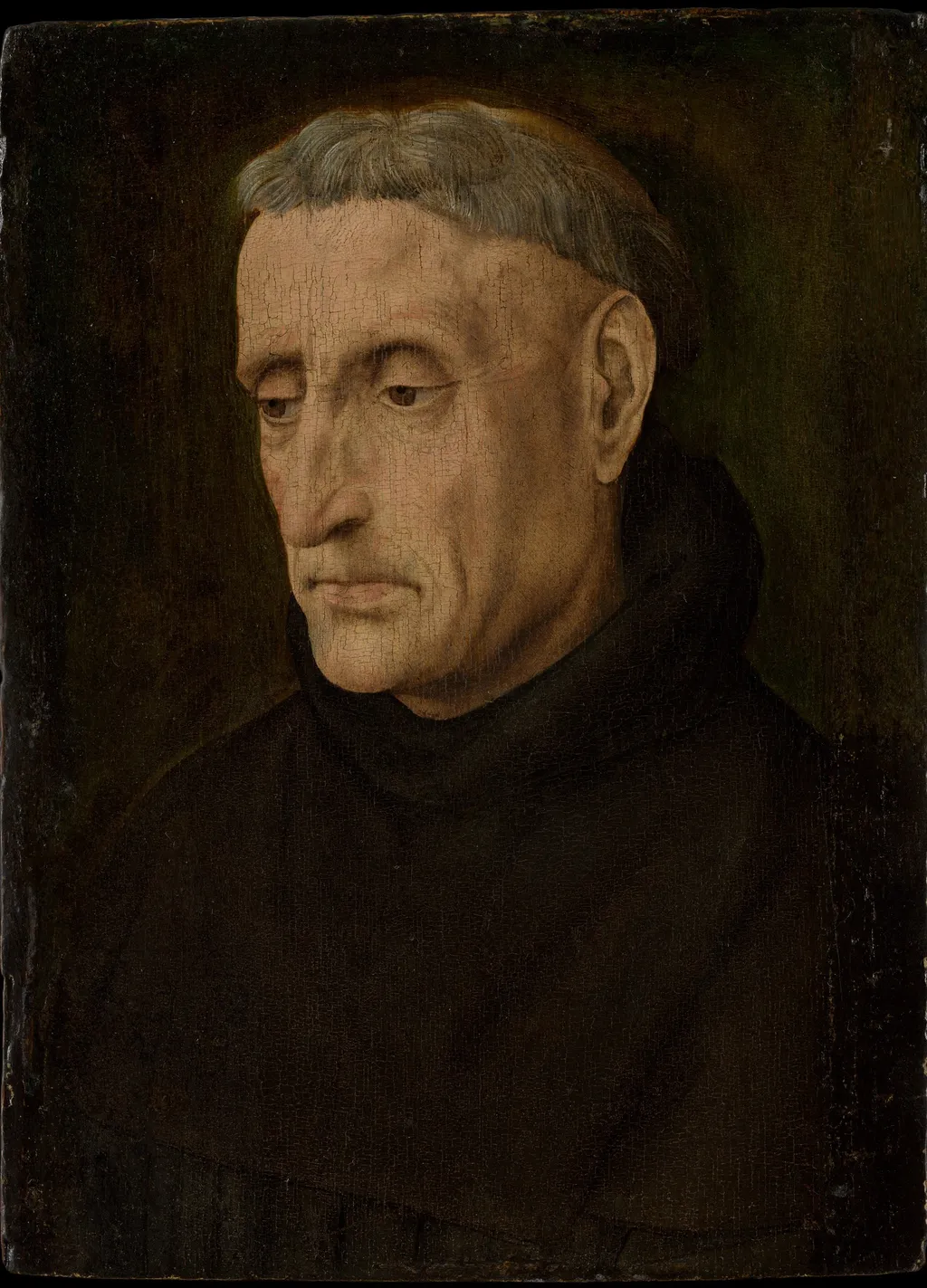
A Benedictine Monk is an oil painting. It dates from 1490 and is held in the collection of the Metropolitan Museum of Art.
About this work
A grave man with a shaved head and dark robe, his face mostly in shadow, just enough light to catch the wrinkles and a faint frown. The dark ground pushes his features forward. The robe marks him as a monk, and the sharp light-and-dark handling is typical of portraits from around 1490.
Subject & Meaning
The monk’s downward gaze, rather than directed at a sacred subject, implies introspection rather than veneration, complicating its devotional function.
The painting depicts a Benedictine monk, though the precise identity and context remain uncertain. Technical analysis indicates the panel was minimally trimmed only at the bottom, suggesting it is not a fragment of a larger devotional diptych. Some scholars propose it represents a fictional likeness of Saint Benedict or a monk posing as a Benedictine saint, while others interpret it as a preparatory study for an altarpiece.
The monk’s downward gaze, rather than directed at a sacred subject, implies introspection rather than veneration, complicating its devotional function. The work has also been linked to the circle of Hugo van der Goes, though modern scholarship, including revisions by the Metropolitan Museum of Art, attributes it to an exceptional follower of the artist.
Technique & Style
Executed circa 1478 to 1485, this Early Netherlandish portrait utilizes oil paint on a wooden panel support. The work measures 25.1 by 18.7 centimeters. Technical analysis indicates the panel was slightly truncated along its lower edge, refuting earlier hypotheses that the image was a fragment cut from a larger multi-figure composition.
Stylistically, the painting is attributed to an exceptional follower of Hugo van der Goes, though it has historically been linked to Rogier van der Weyden and Jan van Eyck. The figure is rendered with a contemplative, downward gaze, a formal quality that complicates interpretations of the work as half of a devotional diptych, as the subject does not engage in adoration of a companion image. The handling of the medium reflects the sophisticated techniques characteristic of the late 15th-century Flemish school.
History & Provenance
The work titled A Benedictine Monk was painted in 1478 using oil on panel. It belongs to the Early Netherlandish portrait genre and is attributed to a follower of Hugo van der Goes. Provenance traces the picture from the dealer Farr (until 26 February 1813), when it was sold at Christie's in London as a Jan van Eyck, to Bulver and John Linnell in London, then to a second Christie's sale in March 1918 described as a Rogier van der Weyden, after which Michael Dreicer acquired it for New York.
The panel, possibly a study for an altarpiece commissioned by a monastery, depicts a Benedictine monk whose exact function remains uncertain.
A Benedictine Monk is held by the Metropolitan Museum of Art in New York, where it has resided since 1921, when it was bequeathed by collector Michael Dreicer. Dreicer had acquired the panel in 1918 through Christie's and Leggatt in London, where it had previously been owned by John Linnell and, by 1914, by Bulver in London. Earlier still, the painting was in the possession of Farr in London until 26 February 1813, when it was auctioned at Christie's as a work attributed to Jan van Eyck.
The Metropolitan Museum of Art has exhibited the painting in its galleries, and it was discussed in the 1998 publication From Van Eyck to Bruegel: Early Netherlandish Painting in The Metropolitan Museum of Art, edited by Maryan W. Ainsworth and Keith Christiansen. It was also featured in Guy Bauman's 1986 Metropolitan Museum of Art Bulletin article on early Flemish portraits.
Context
Scholarly attribution of this Early Netherlandish portrait has shifted significantly since Max Friedländer first linked it to Hugo van der Goes in 1926. Erwin Panofsky later suggested an association with Rogier van der Weyden's circle. For decades, the Metropolitan Museum of Art, guided by conservator Maryan Ainsworth, maintained the attribution to van der Goes.
However, Ainsworth subsequently revised her stance; by 2022, the institution reclassified the work as the product of an exceptional follower of van der Goes, possibly the same hand behind a Phoebus Foundation painting. Art historians debate the image's original function, questioning whether it served as a devotional diptych wing, a study for an altarpiece, or a fictionalized depiction of Saint Benedict, given the subject's downward gaze which complicates the diptych theory.
Legacy
The painting, dated to 1478 and executed in oil on panel, depicts a Benedictine monk and belongs to the Early Netherlandish portrait tradition. Its long‑term reputation has been shaped by successive attributions: initially linked to Hugo van der Goes, later re‑identified as the work of an “exceptional” follower within his circle, a shift reflected in the Metropolitan Museum’s catalog and scholarly commentary. This evolving attribution has influenced research on monastic imagery and the identification of lesser‑known masters in the late‑15th‑century Netherlands, cementing the work’s role in the historiography of Early Netherlandish art.
Overview
This oil painting presents a solemn individual, identified by his attire as a Benedictine monk, against a dark, unadorned background. The artist focuses on the subject's face, which is partially obscured by shadow, yet reveals a thoughtful and somewhat somber expression. The work exemplifies a common approach to portraiture from its era, emphasizing the sitter's character through a focused composition and a restrained color palette.
Artist & collection

![Monk Saint [?] with a Model of a Church, by Bartolomeo degli Erri](https://artifactworldgallery.com/img/bartolomeo-degli-erri--monk-saint-with-a-model-of-a-church--737af76ce54f07ee-w320.webp) Monk Saint [?] with a Model of a Church
Monk Saint [?] with a Model of a Church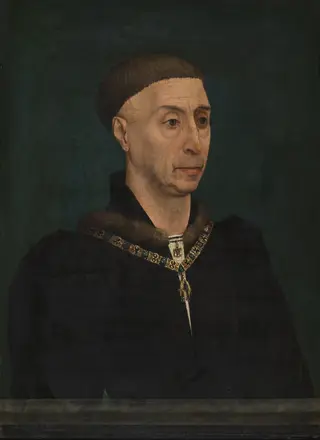 Philip the Good
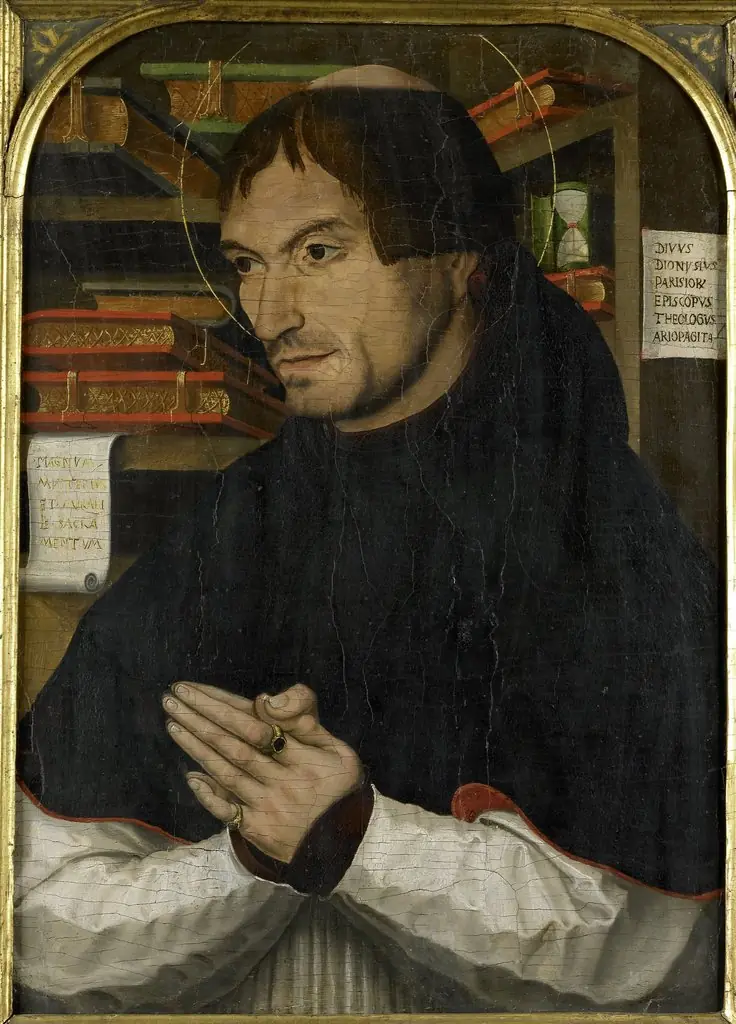 Saint Dionysius the Areopagite in Prayer
 Saint Dionysius the Areopagite in Prayer
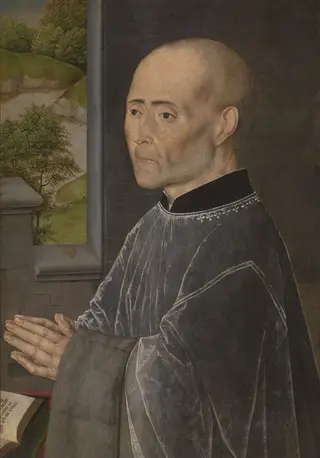 Portrait of a Canon
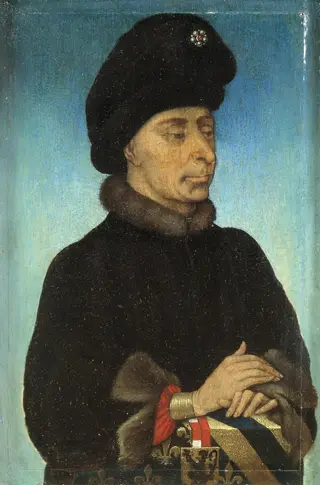 John the Fearless, Duke of Burgundy
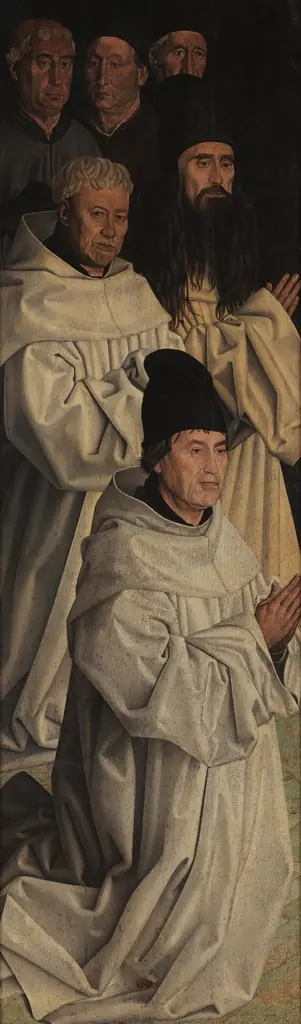 Saint Vincent Panels, first panel
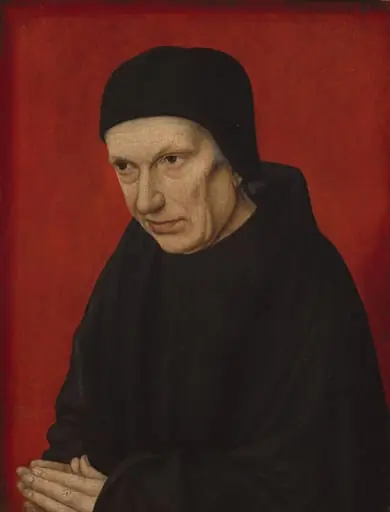 Portrait of an Ecclesiastic
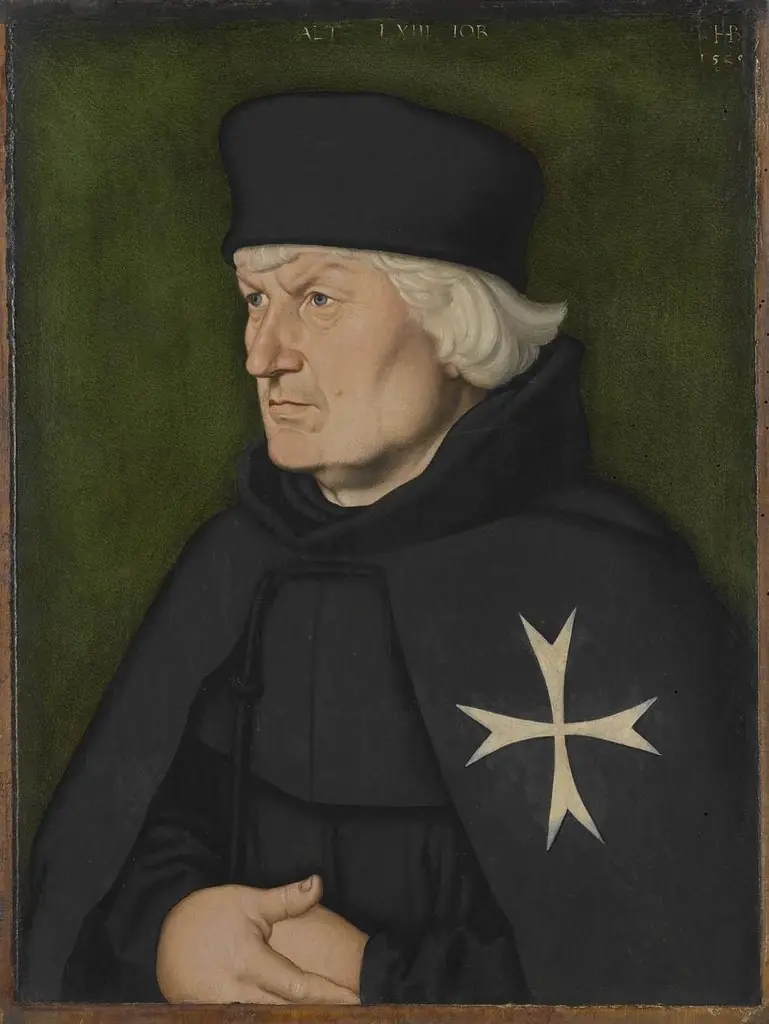 Bildnis des Straßburger Johanniterkomturs Balthasar Gerhardi