Artwork
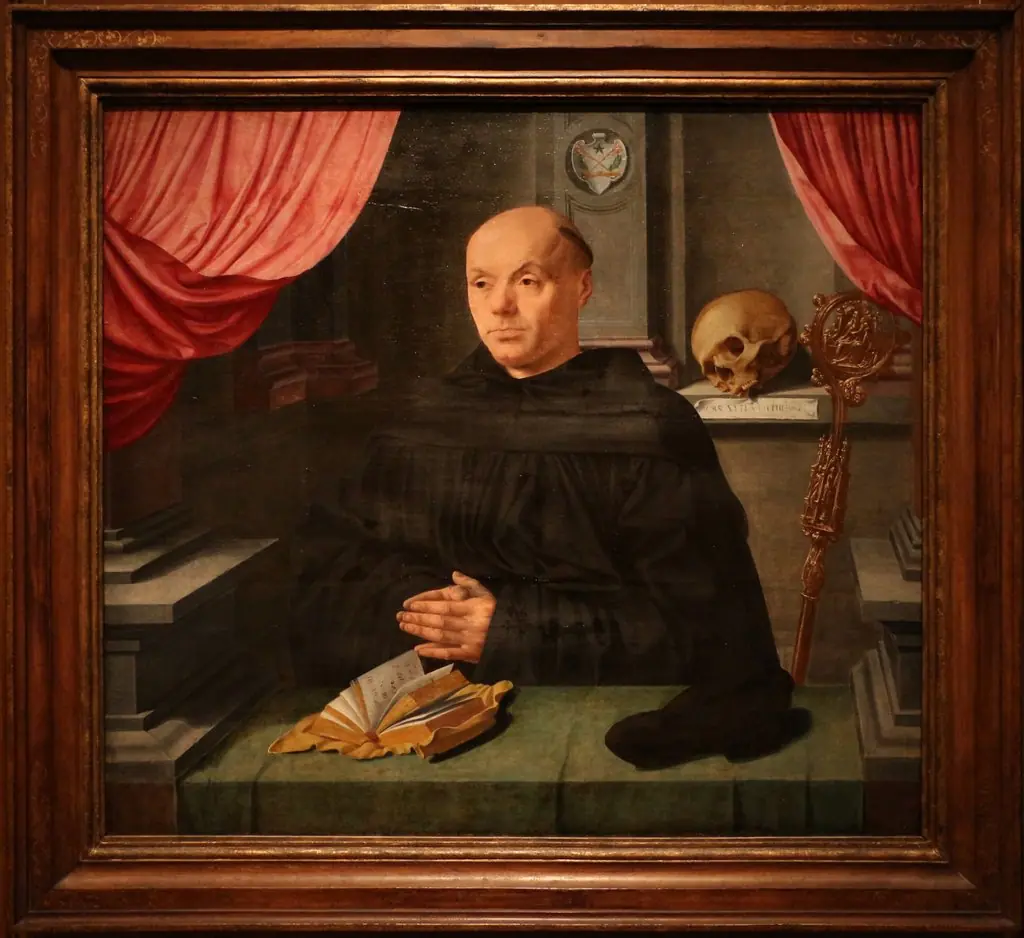
Portrait of a Monk
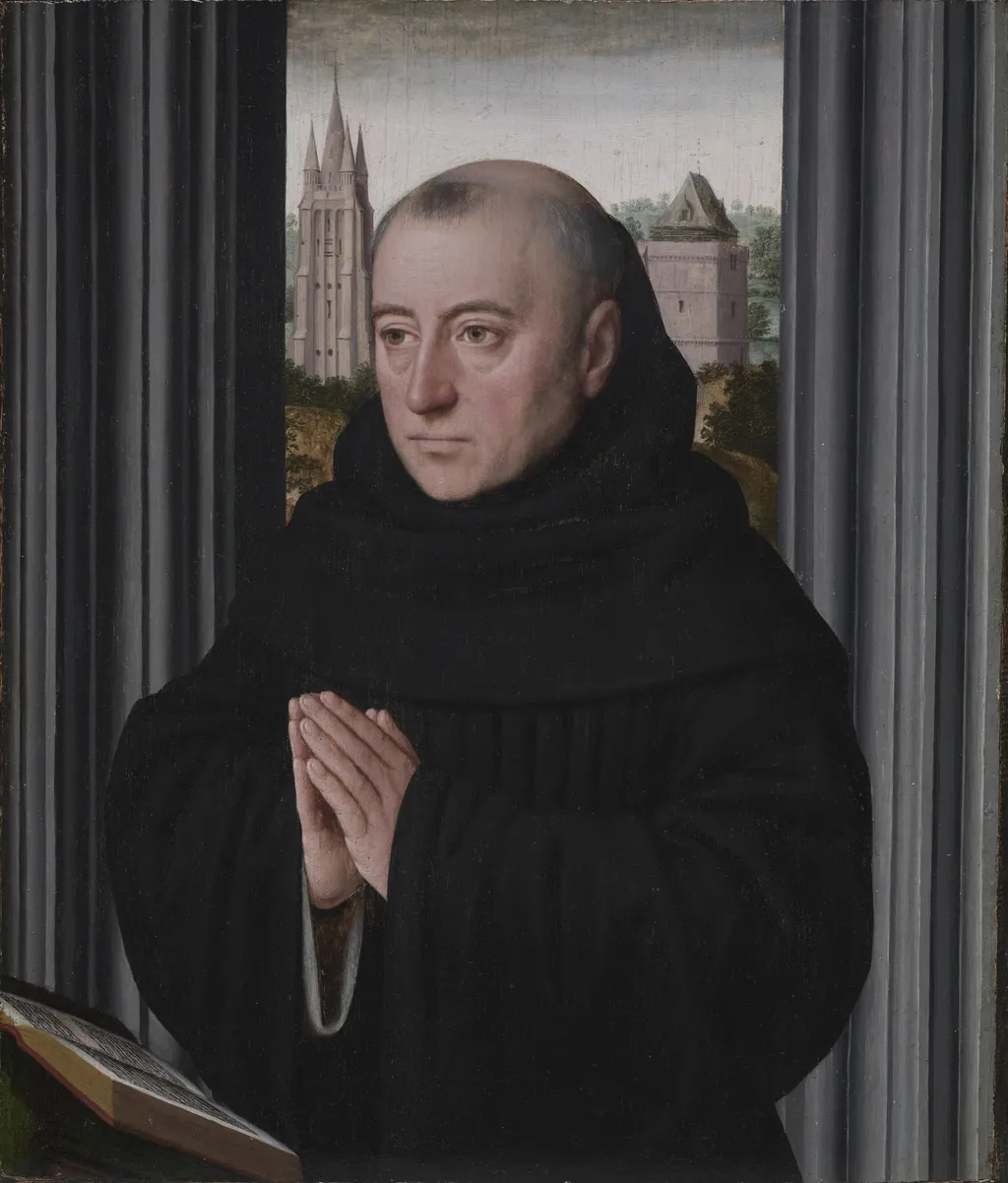
Portrait of a Monk is an oil painting. It dates from 1502 and is held in the collection of the Cleveland Museum of Art.
About this work
Technique & Style
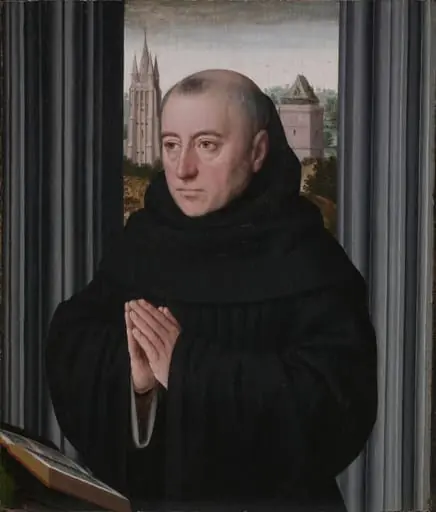
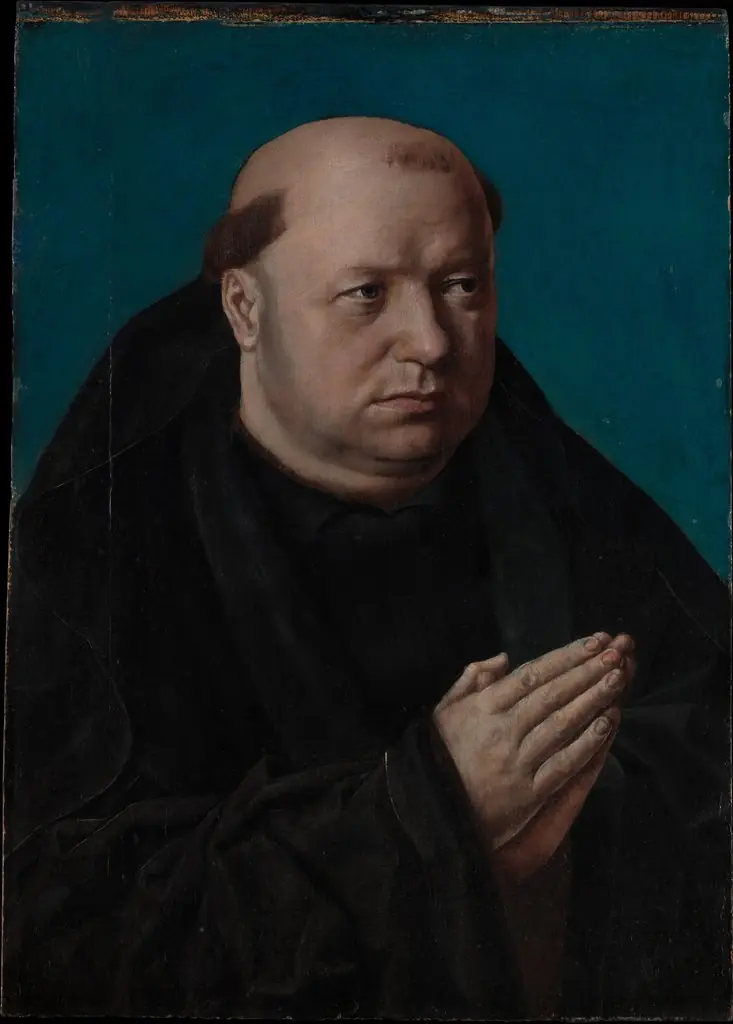
The figure’s calm expression and the careful depiction of folds in the habit reflect a restrained elegance typical of the period’s portraiture.
The painting employs oil on oak panel, a medium widely used in Netherlandish workshops of the early sixteenth century. Its small scale (36.0 cm × 30.4 cm) and the fine, layered application of oil paint indicate the hand of a trained painter accustomed to working on wooden supports. The handling is restrained yet precise, with smooth transitions in the monk’s face and crisp modeling of the hands, suggesting a sensitivity to naturalistic detail.
Stylistically, the composition aligns with the Bruges school of the early 1500s, particularly in its quiet realism and subdued palette. The figure’s calm expression and the careful depiction of folds in the habit reflect a restrained elegance typical of the period’s portraiture.
History & Provenance
Created in 1502 in Bruges, the Portrait of a Monk is an oil painting on panel attributed to the circle of Gerard David. The work was originally owned by Rodolphe Kann before entering the collection of the Cleveland Museum of Art, where it is currently held. While the artist remains identified as a follower of David, the piece dates specifically to the early sixteenth century, reflecting the artistic production of that period in the Low Countries.
The Portrait of a Monk, attributed to the circle of Gerard David, is held in the collection of the Cleveland Museum of Art in Cleveland. The work entered the museum's inventory after previously being owned by Rodolphe Kann. It was created in Bruges in 1502 using oil paint on a panel measuring 36.0 cm in height and 30.4 cm in width.
The provided sources do not contain information regarding a specific accession number or a history of exhibitions for this painting.
Context
Portrait of a Monk is an oil‑on‑panel portrait dated 1502, measuring 36.0 × 30.4 cm. It was created in Bruges and entered the collection of the Cleveland Museum of Art, where it has been held since its acquisition from the dealer Rodolphe Kann.
The work belongs to the circle of the Netherhernist painter Gerard David, exemplifying early‑16th‑century Bruges portraiture and reflecting the stylistic traits of that workshop.
Scholars regard it as a key example of devotional portraiture from this period, using it to illustrate the transmission of portrait conventions within David’s circle and its broader impact on early Netherhernist art.
Overview
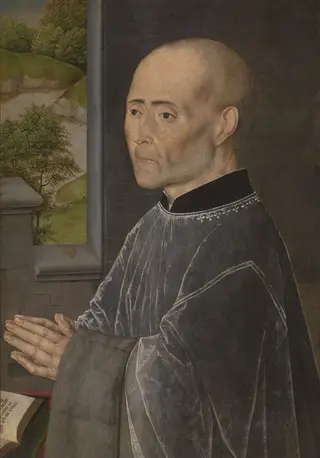
This oil painting, titled Portrait of a Monk, presents a balding man in a black robe. He is depicted seated, with his hands clasped in front of him, looking directly out at the viewer. A window in the background reveals architectural details, including a church spire and a structure resembling a castle. The composition utilizes dark edges, creating a subtle frame that draws focus to the central figure.
Subject & Meaning
The artwork centers on a monk, identifiable by his traditional attire, whose direct gaze establishes an immediate connection with the observer. The background elements, a church spire and a fortified building, may allude to a monastic setting or a broader spiritual and historical context, though their specific narrative is left open. The overall portrayal conveys a sense of quietude and introspection.
Artist & collection