Artwork
Portrait of Frederick V, Elector Palatine, King of Bohemia
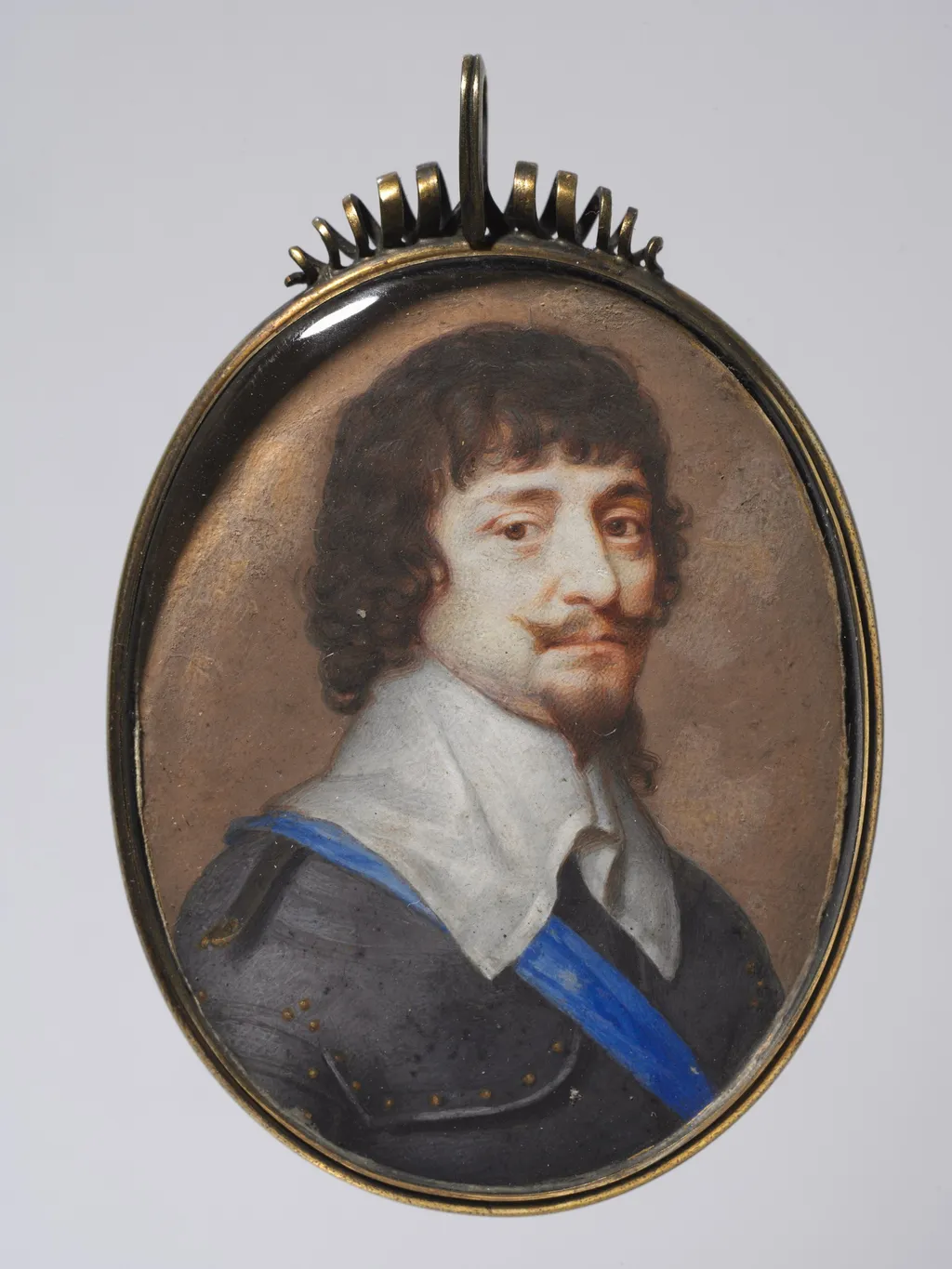
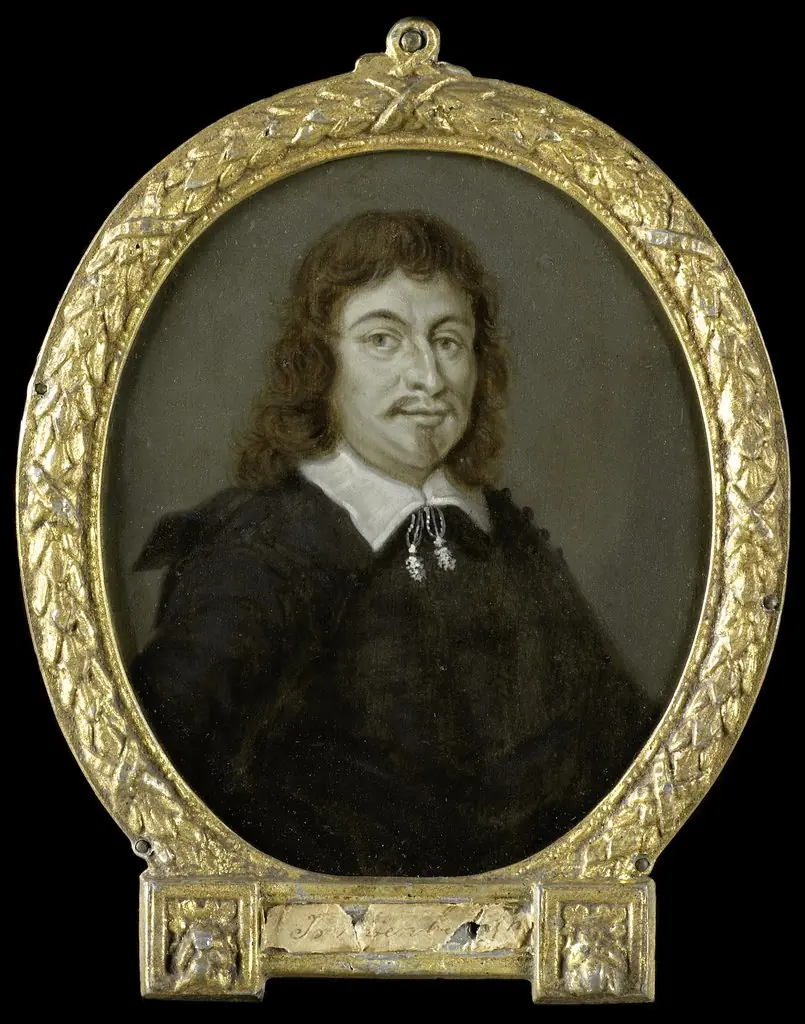
Portrait of Frederick V, Elector Palatine, King of Bohemia is an unspecified painting. It dates from 1630 and is held in the collection of the Cleveland Museum of Art. The work is an oval oil portrait depicting a male figure with curly brown hair, a short beard, and a white ruff collar.
About this work
Technique & Style
The work is a portrait miniature painted in oil on oak panel, depicting Frederick V, Elector Palatine, King of Bohemia. Executed circa 1630, it exemplifies early 17th-century court portraiture with fine brushwork and restrained detail. The painting is housed in the collection of the Cleveland Museum of Art, where it remains on view.
History & Provenance
Attribution differs: lists the artist as unknown, while identifies it as a portrait miniature by John Hoskins (British, c.
The work is dated to 1630 in both sources. Attribution differs: lists the artist as unknown, while identifies it as a portrait miniature by John Hoskins (British, c. 1590‑1665) held in the Cleveland Museum of Art under accession number 1942.1145. describes the piece as a painting, whereas characterizes it as a miniature. Beyond its 1942 acquisition by the Cleveland Museum of Art, the sources do not provide further details on the commission, earlier ownership, or creation history.
Overview
The work is an oval oil portrait depicting a male figure with curly brown hair, a short beard, and a white ruff collar. He wears a dark doublet fastened with gold buttons and a blue sash across his chest. The background is uniformly dark, emphasizing the sitter’s face, which appears serious yet not harsh.
Subject & Meaning
The portrait is identified as Frederick V, Elector Palatine and briefly King of Bohemia. The dignified pose, formal attire, and restrained expression convey his status and authority, while the direct gaze suggests a measured confidence appropriate to a ruler of his era.
Context
The canvas shows signs of age, including surface fading and occasional spots that have darkened over time. The original gold frame includes a top hook, indicating it was intended for wall suspension, though the hook could also have allowed for alternative display methods.
Artist & collection

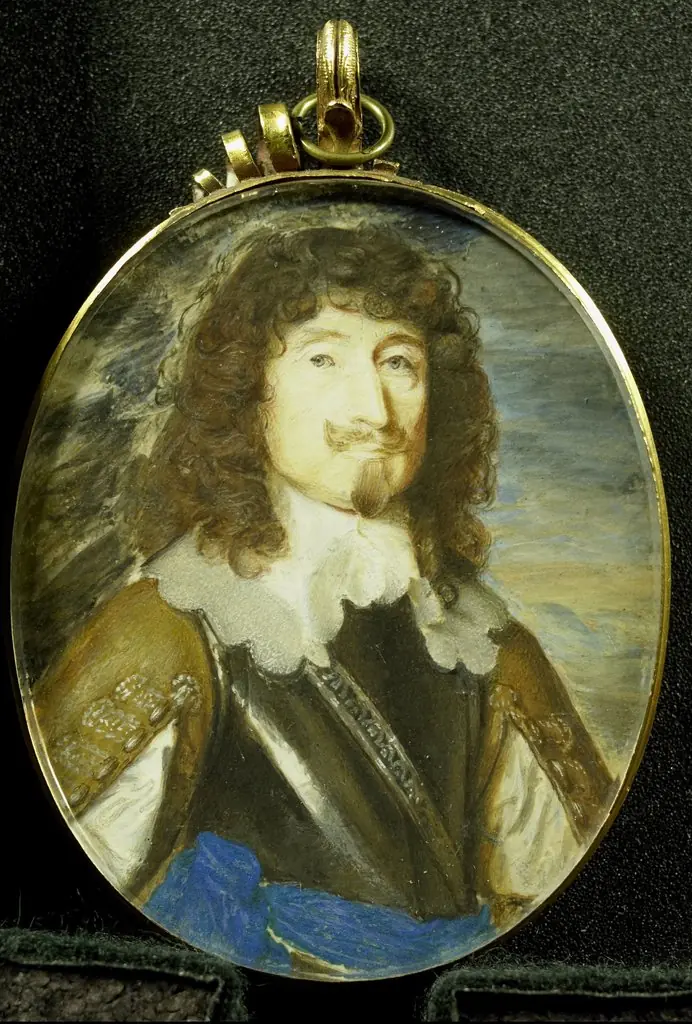 George Gordon (died 1649), 2nd marquess of Huntley
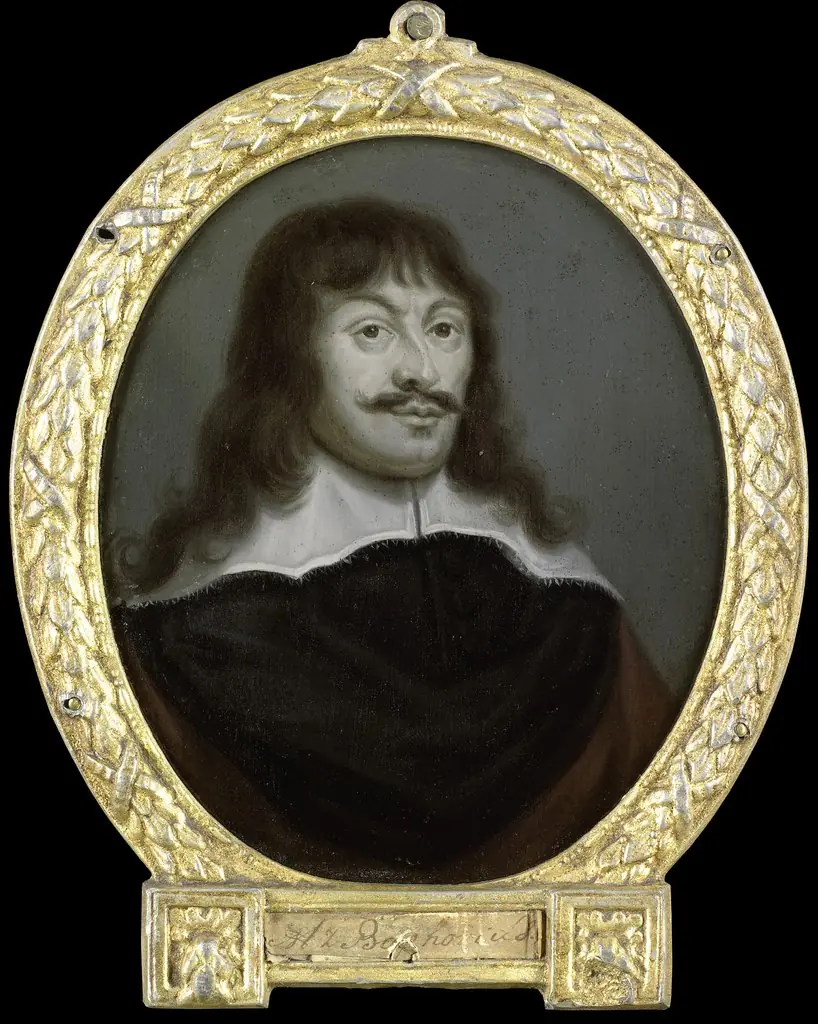 Portrait of Marcus Zuërius van Boxhorn, Historian and Professor at Leiden
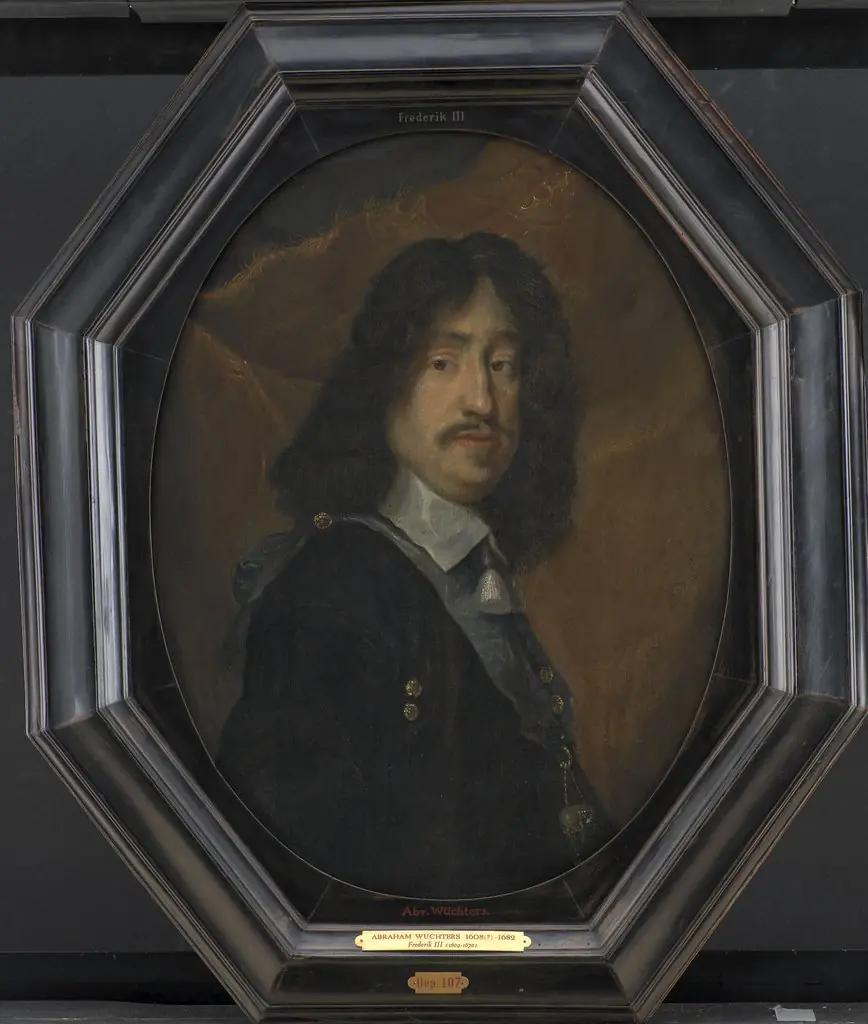 Frederik III
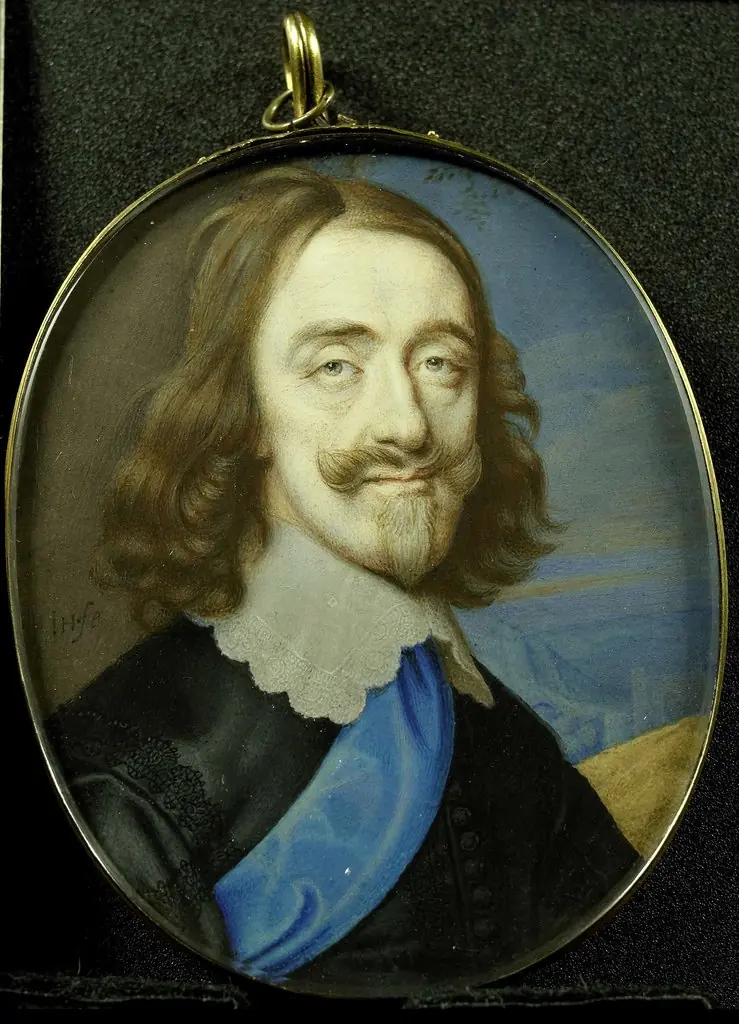 Portrait of Charles I, king of England
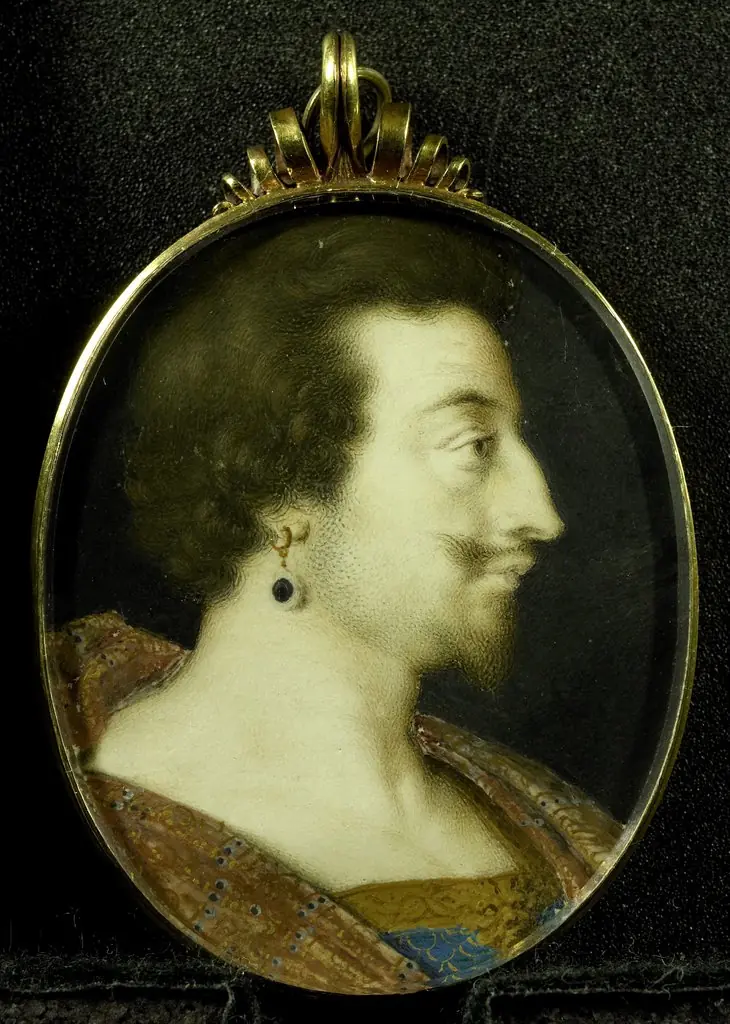 George Villiers (1592-1628), hertog van Buckingham
 Frederik III
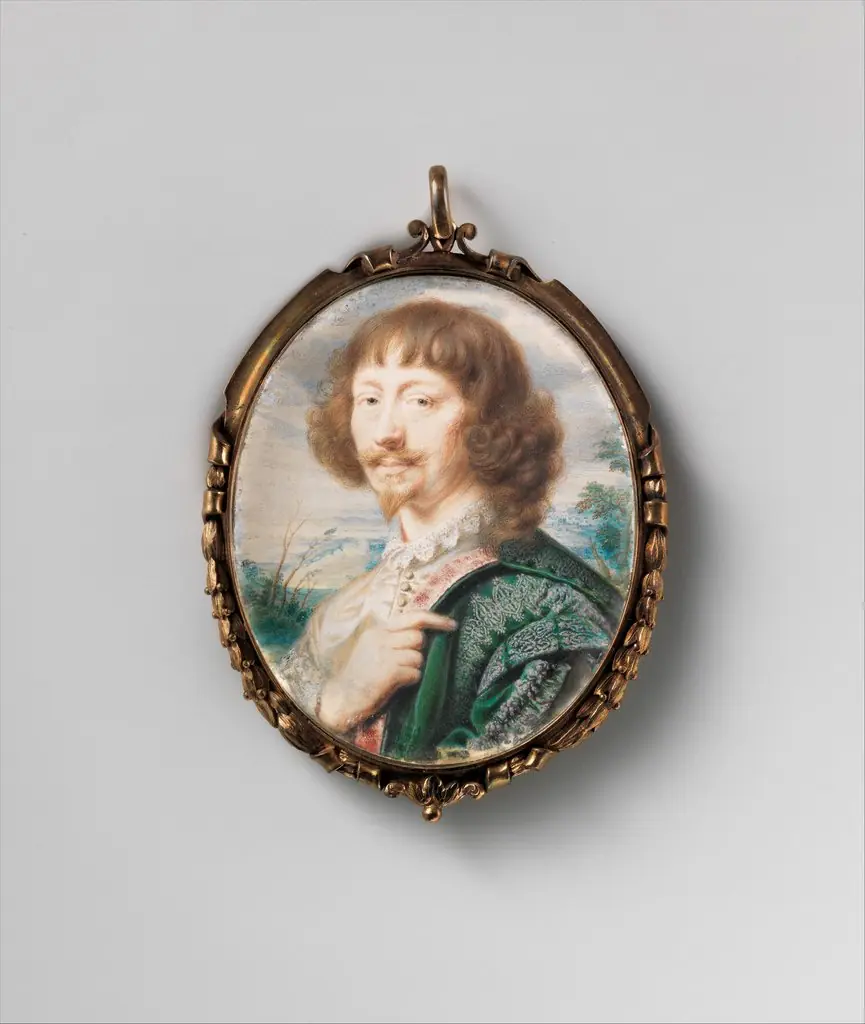 Endymion Porter (1587–1649)
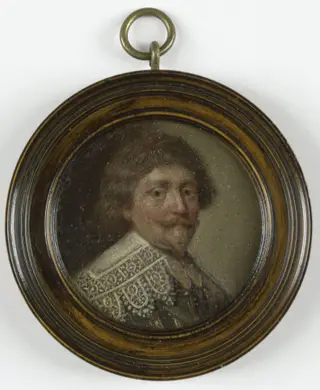 Portrait of Frederik Hendrik van Oranje-Nassau (1584-1647)
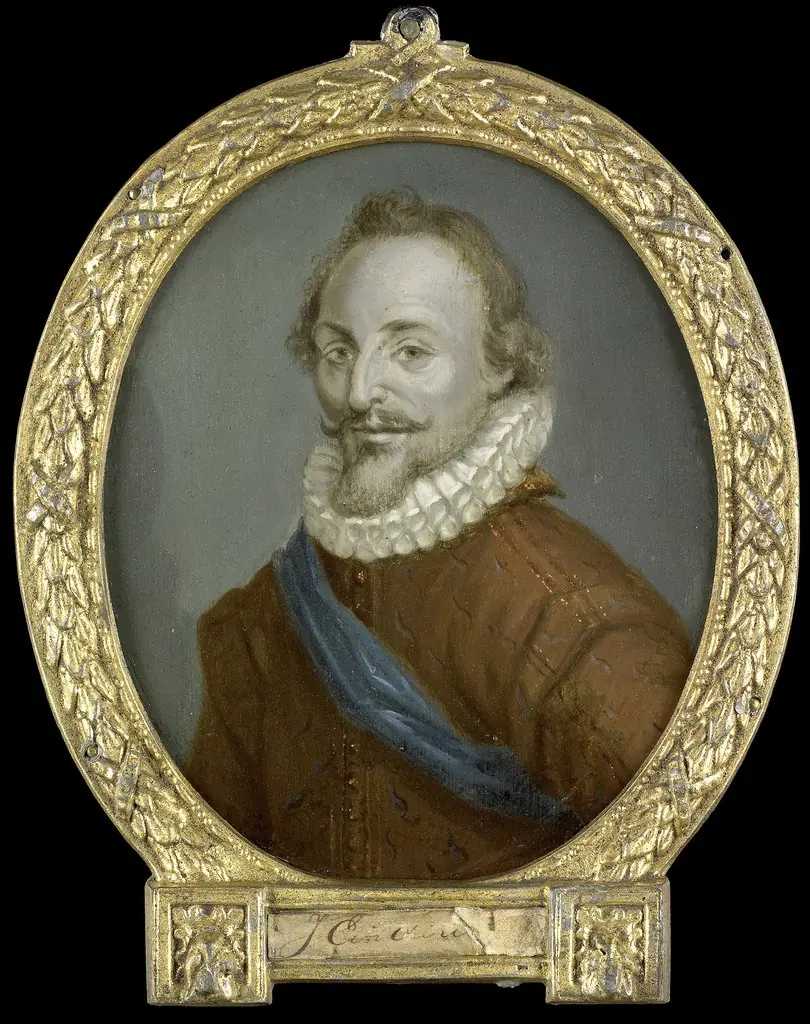 Portrait of Jacob van den Eynde, Governor of Woerden
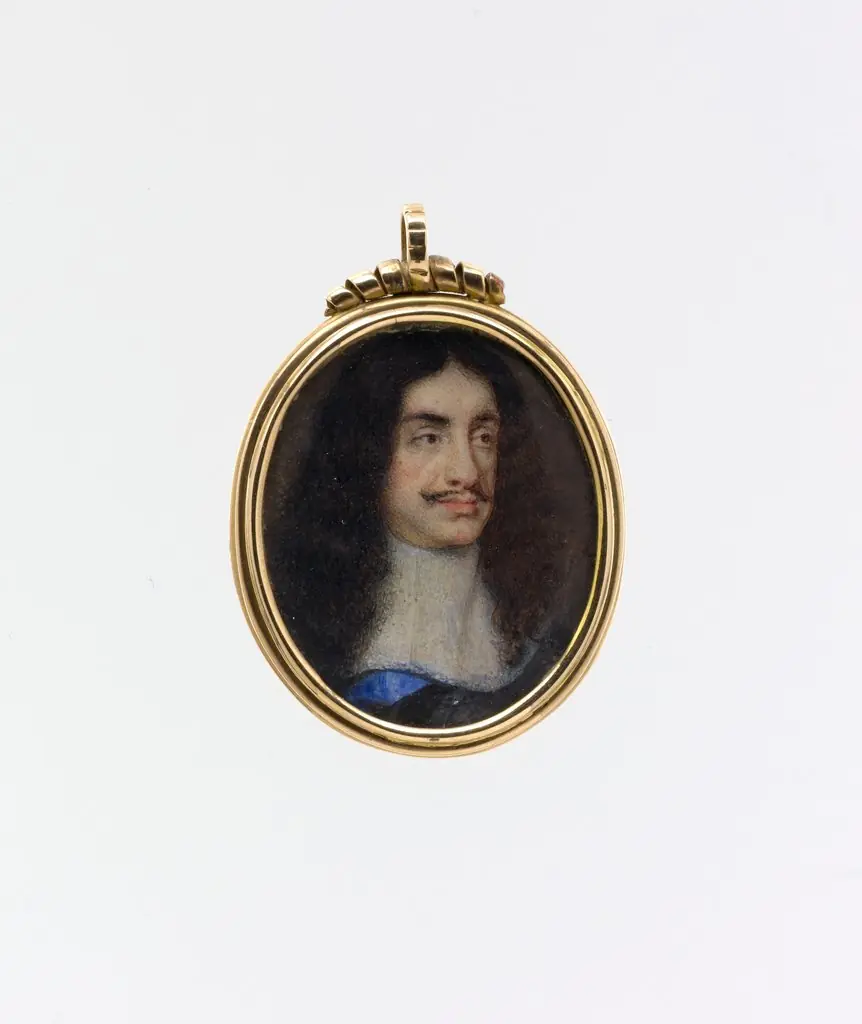 Charles II (1630–1685), King of England
 Portrait of Johan van Nijenborgh, Poet in Groningen
- Portrait of Frederick V, Elector Palatine, King of Bohemia