Artwork
Portrait of Raja Ram Singh of Amber (r. 1667-1688) with a Deccan Sword (recto); Calligraphy (verso)
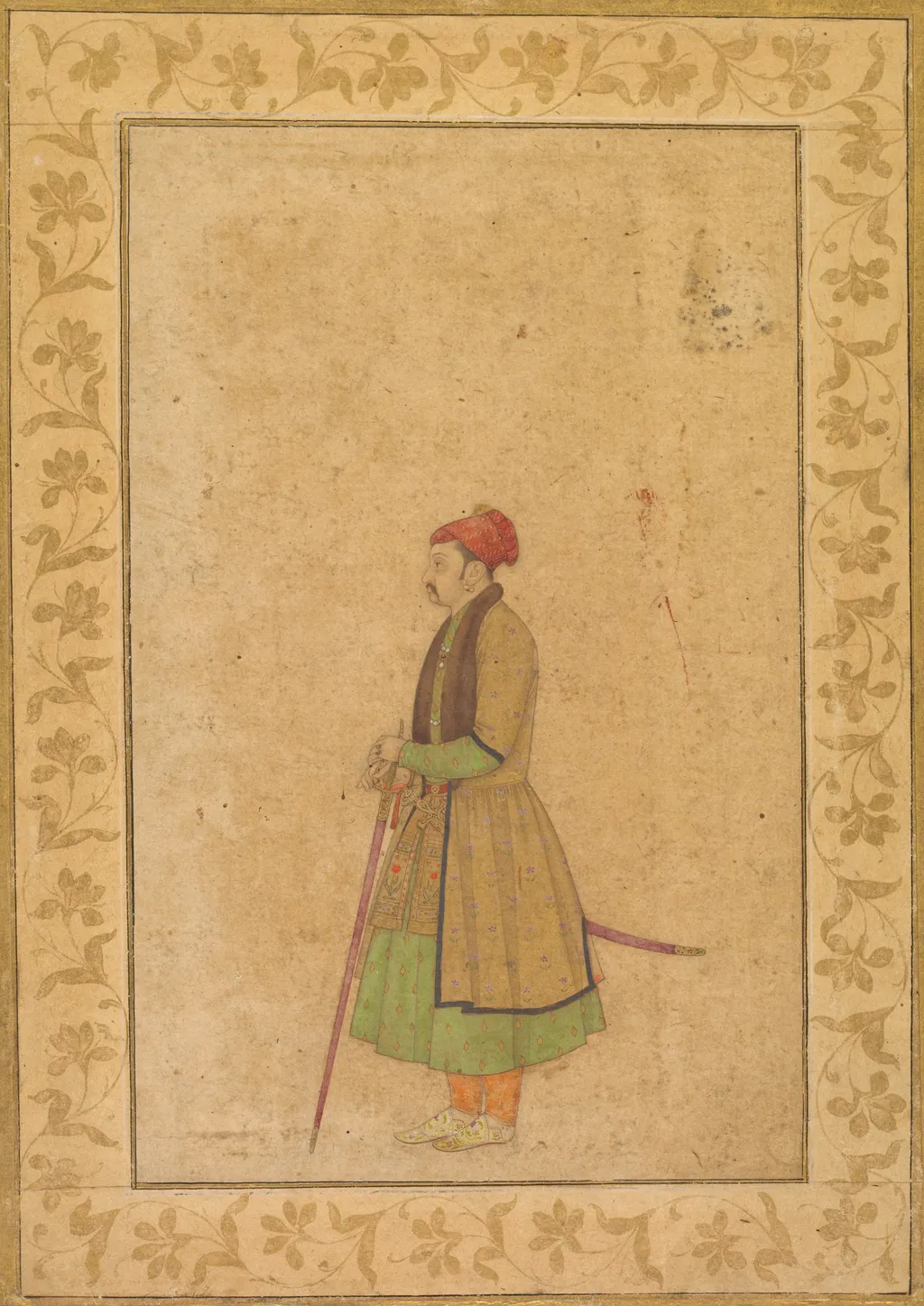
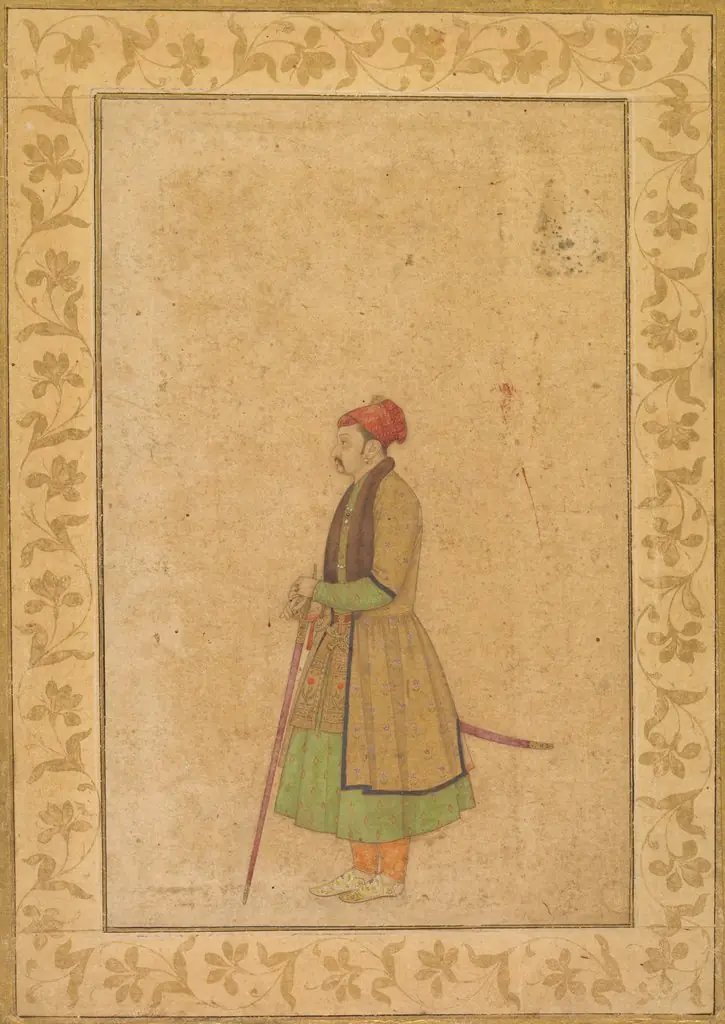
Portrait of Raja Ram Singh of Amber (r. 1667-1688) with a Deccan Sword (recto); Calligraphy (verso) is an unspecified painting. It dates from 1692 and is held in the collection of the Cleveland Museum of Art. This painting depicts Raja Ram Singh of Amber, who reigned from 1667 to 1688.
About this work
Overview
The artwork, a portrait, also features calligraphy on its reverse side, a common element in South Asian manuscript traditions.
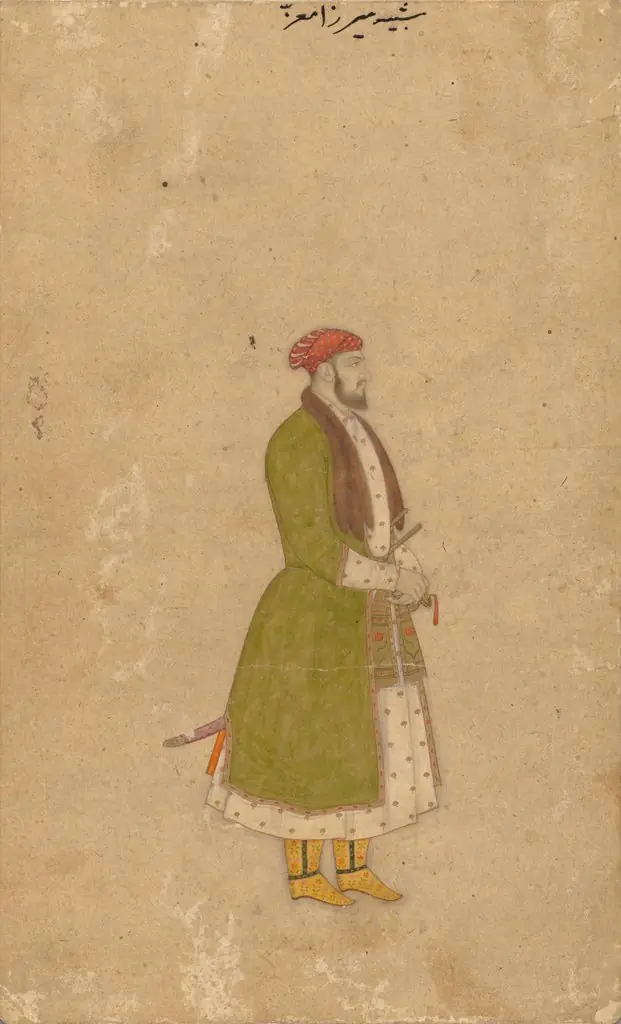
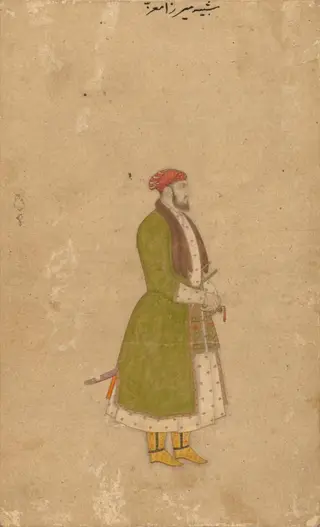
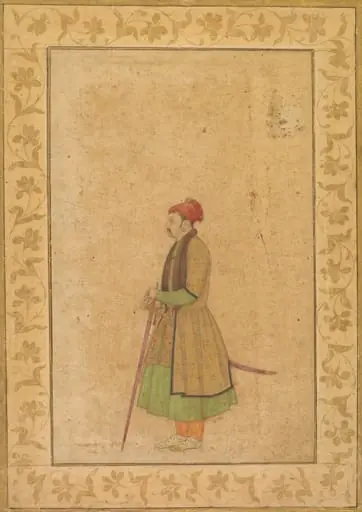
This painting depicts Raja Ram Singh of Amber, who reigned from 1667 to 1688. He is shown in a formal pose, holding a folded cloth and wearing an elaborate outfit that signifies his royal status. The artwork, a portrait, also features calligraphy on its reverse side, a common element in South Asian manuscript traditions. The inclusion of a Deccan sword further highlights his authority and potential military leadership during his rule.
Subject & Meaning
Raja Ram Singh appears in rich, patterned garments, including a distinctive red hat and a green-and-gold robe, complemented by orange footwear. A purple Deccan sword hangs from his belt, an attribute that underscores his position as a ruler and military figure. The overall presentation, from his opulent attire to the symbolic weapon, conveys the Raja's importance and power within his kingdom during the late 17th century.
Technique & Style
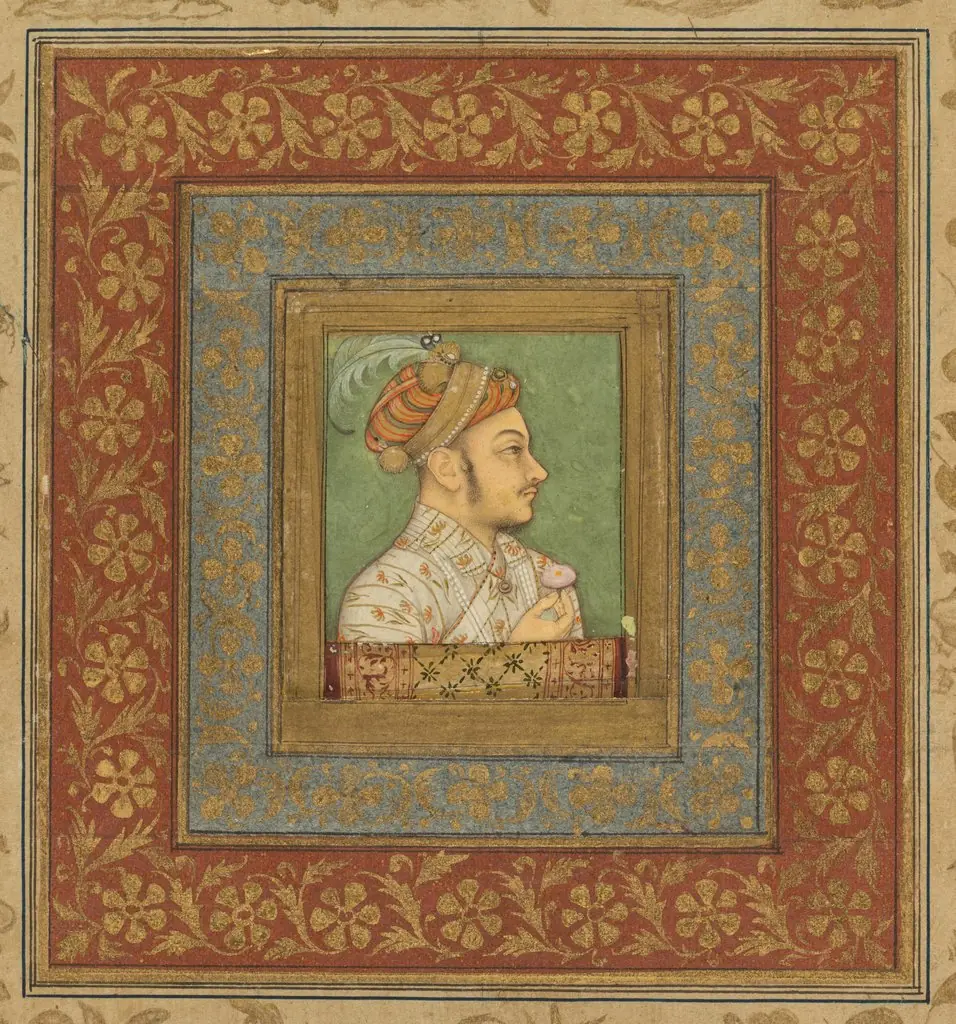
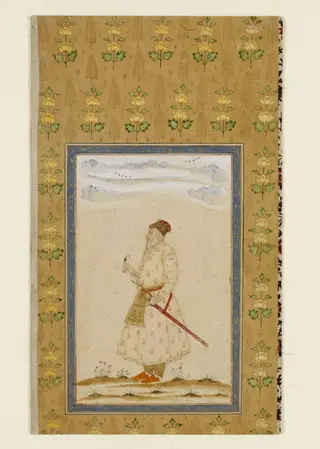
The portrait features Raja Ram Singh against an unadorned background, allowing the viewer's focus to remain entirely on the figure. His vibrant clothing, detailed with intricate patterns, contrasts with this simplicity. A delicate border adorned with leaf motifs frames the central image, adding an ornamental touch typical of period works. This stylistic choice emphasizes the subject's grandeur without distracting elements.
Artist & collection