Artwork
Portrait of Susan Coren Towers
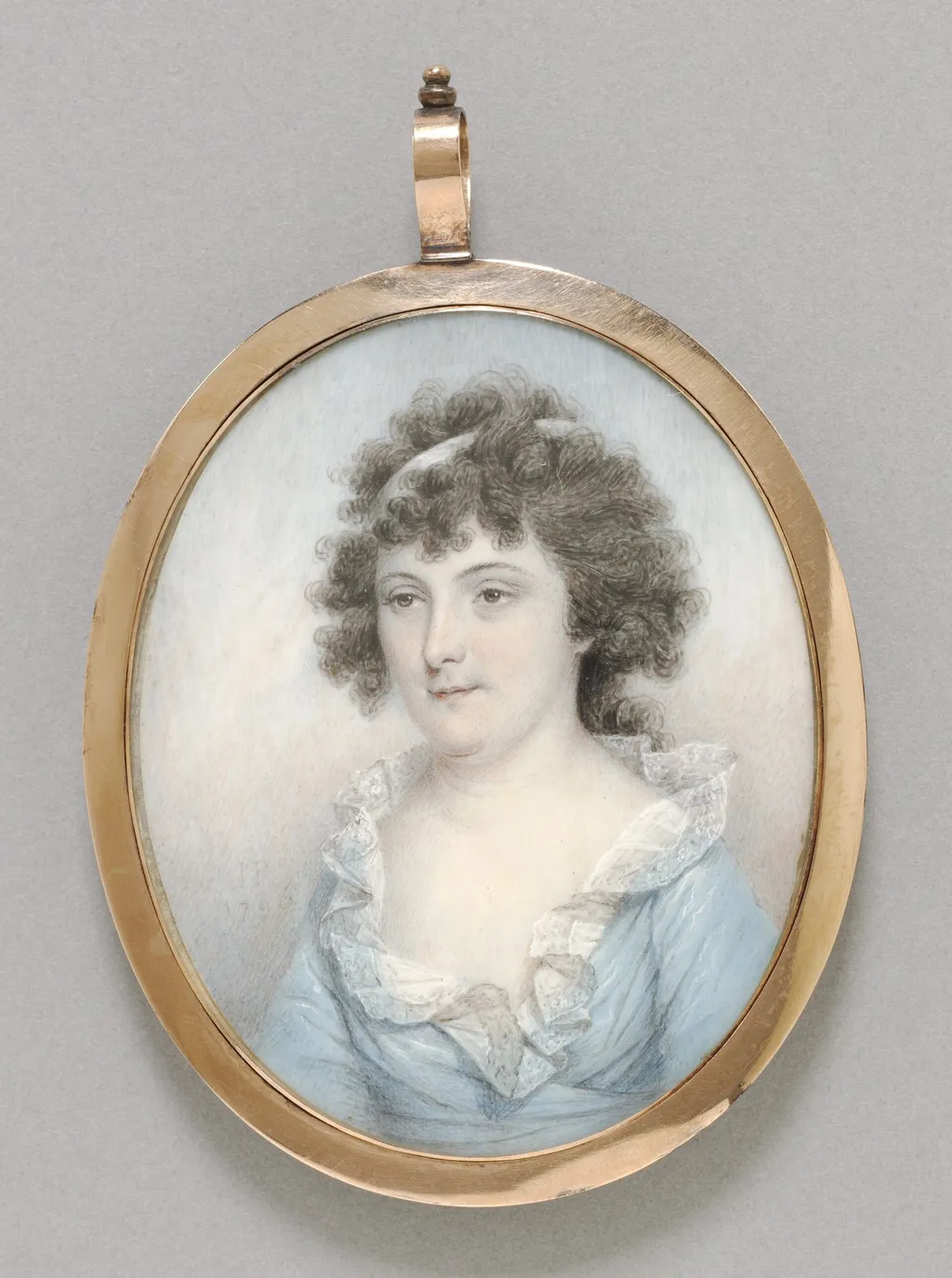
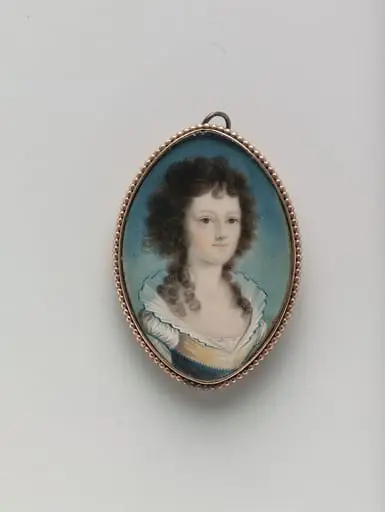
Portrait of Susan Coren Towers is an unspecified painting. It dates from 1798 and is held in the collection of the Cleveland Museum of Art. The work is a modestly sized oval portrait rendered in oil on canvas, featuring a young woman presented against an unadorned backdrop.
About this work
History & Provenance
The work was exhibited in a show titled "American Portrait Miniatures from the Collection" at the Cleveland Museum of Art in 1942.
Created in 1796, this portrait miniature is attributed to the American artist James Peale. The work entered the collection of the Cleveland Museum of Art, where it is cataloged under the accession number 1942.1151, indicating its acquisition by the institution in 1942. While internal records list the artist as unknown, external documentation identifies Peale, who lived from 1749 to 1831, as the creator of this specific piece held in Cleveland.
Portrait of Susan Coren Towers is a miniature portrait held in the collection of the Cleveland Museum of Art. Its inventory number is 1942.1151. The work was exhibited in a show titled "American Portrait Miniatures from the Collection" at the Cleveland Museum of Art in 1942.
Legacy
Portrait of Susan Coren Towers, painted in 1796, is recognized as a miniature portrait by James Peale housed in the Cleveland Museum of Art. Its classification as a portrait miniature contributed to discussions of early American portraiture techniques and influenced later artists exploring miniature formats in the 19th century.
Overview
The work is a modestly sized oval portrait rendered in oil on canvas, featuring a young woman presented against an unadorned backdrop. She is shown from the shoulders upward, her hair arranged in loose curls and her attire consisting of a light‑blue dress with an exposed neckline and a delicate lace collar. The composition is bordered by a thin gold frame that outlines the oval shape.
Subject & Meaning
The sitter, identified as Susan Coren Towers, is depicted with a calm, introspective expression. The simplicity of the setting and the focus on her face and upper torso suggest an intention to emphasize personal character rather than narrative context, inviting viewers to consider her individuality and the modest elegance of her attire.
Technique & Style
The artist employs soft gradations of tone to model the facial features and hair, creating a slightly muted, atmospheric effect. Brushwork is notably smooth, particularly in the rendering of skin and the folds of the dress, while the gold border provides a subtle contrast to the restrained palette. The handling of light reflects a restrained chiaroscuro, balancing illumination and shadow without dramatic contrast.
Context
Portraits of this scale and format were common in the early nineteenth century for private commissions, often intended for domestic display. The use of an oval shape and gold edging aligns with contemporary tastes for intimate, decorative works that could be integrated into personal interiors.
Artist & collection

 Portrait of a Woman
 Marcia Burns
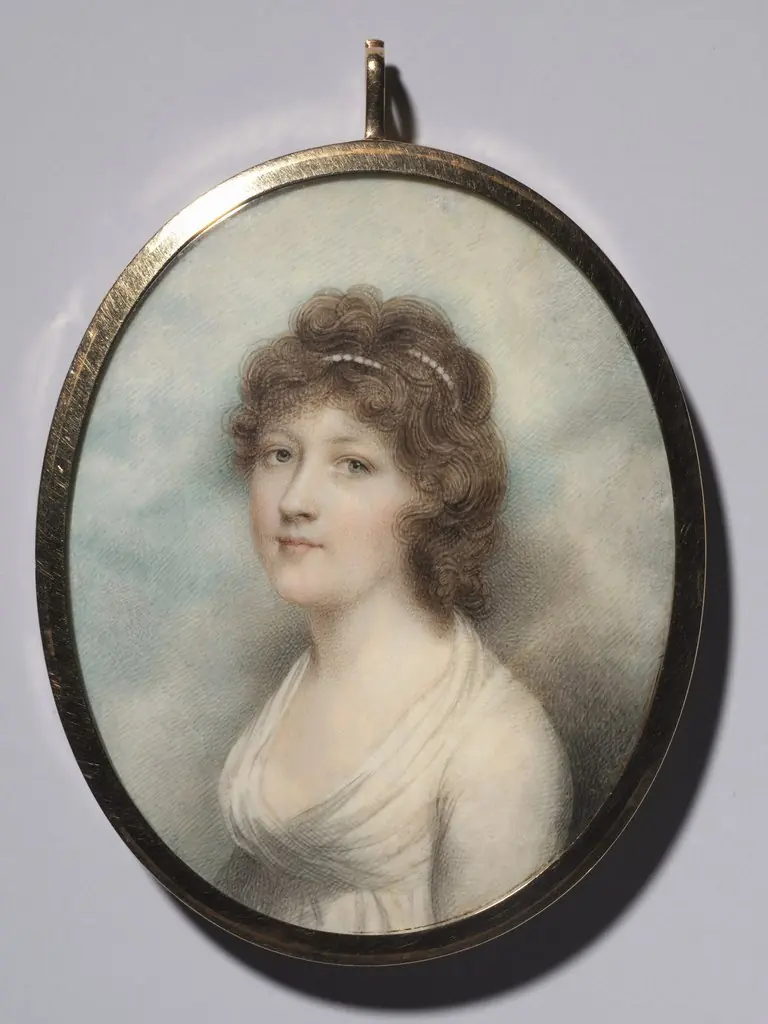 Portrait of a Woman
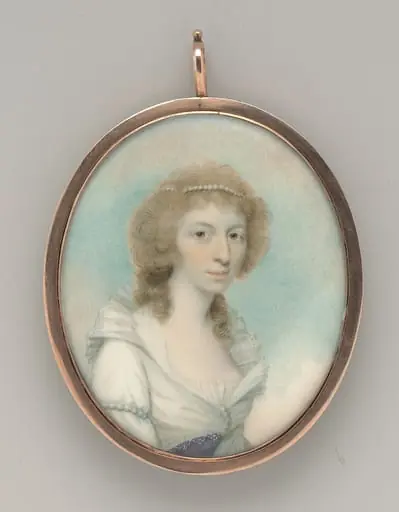 Mrs. Gabriel Manigault (Margaret Izard)
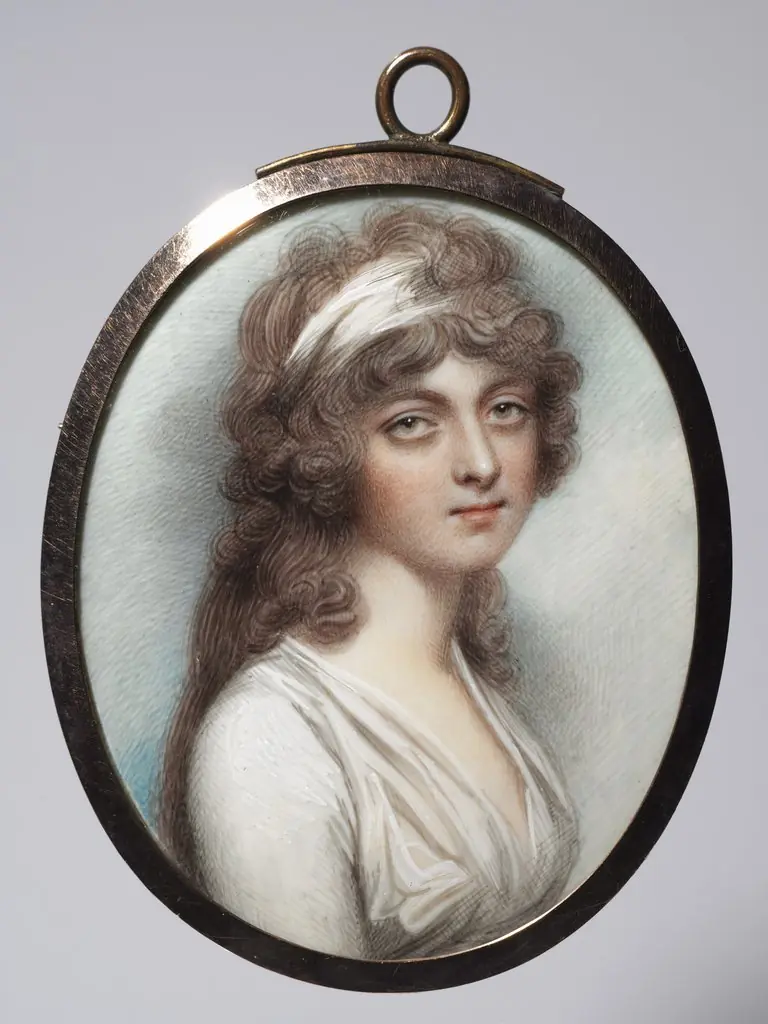 Portrait of Anna Walmesley
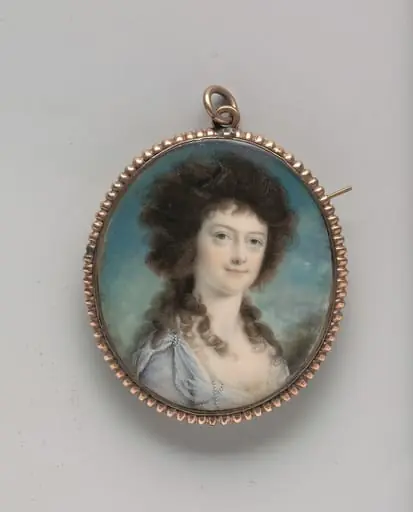 Mrs. James Bleecker (Elizabeth Garland Bache)
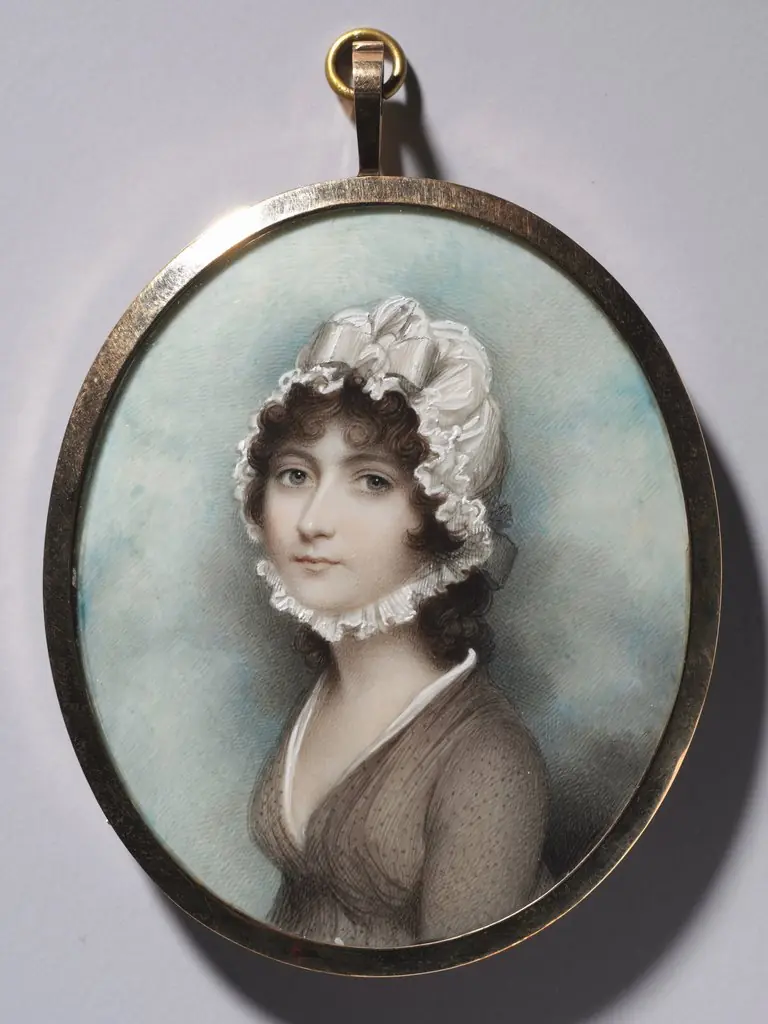 Portrait of a Woman
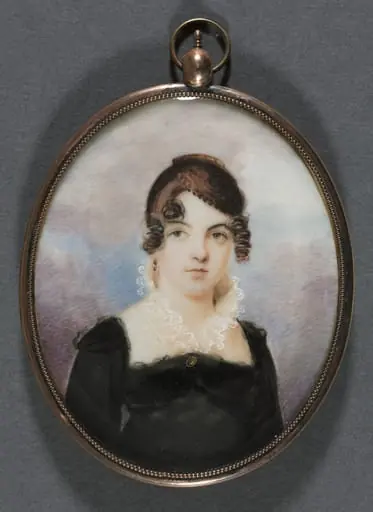 Portrait of a Woman
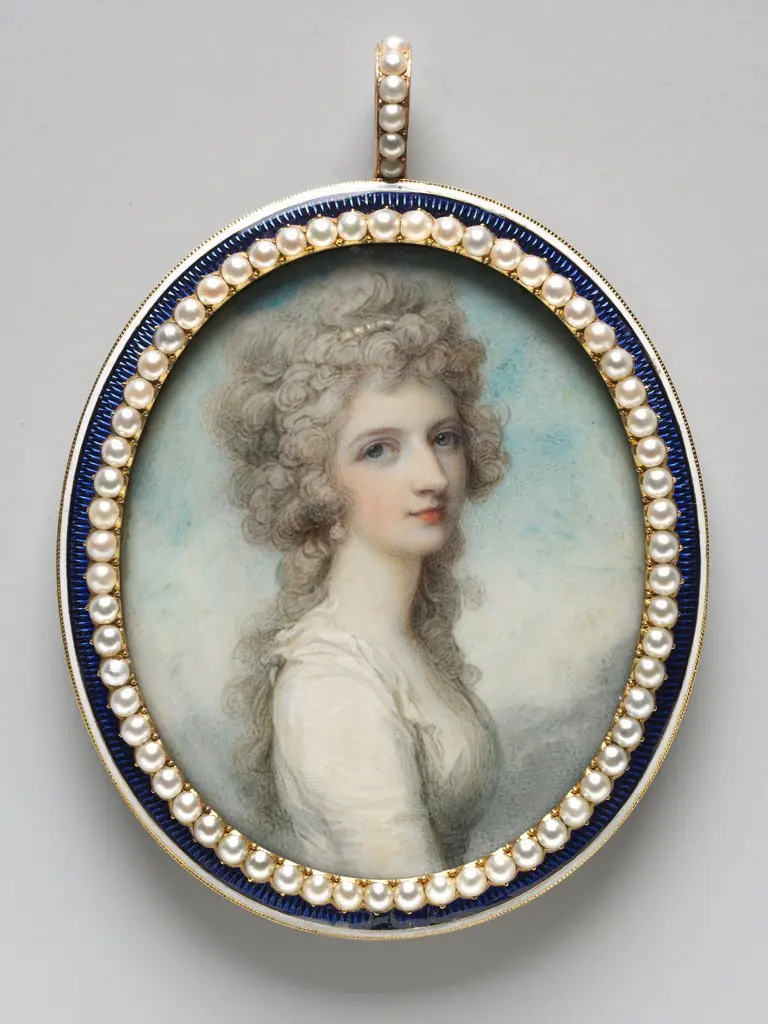 Portrait of Mary Frances (Fanny) Swinburne
 Clarissa Storrs
 Mrs. James Bleecker (Sarah Bache)
- Portrait of Susan Coren Towers