Artwork
Clarissa Storrs
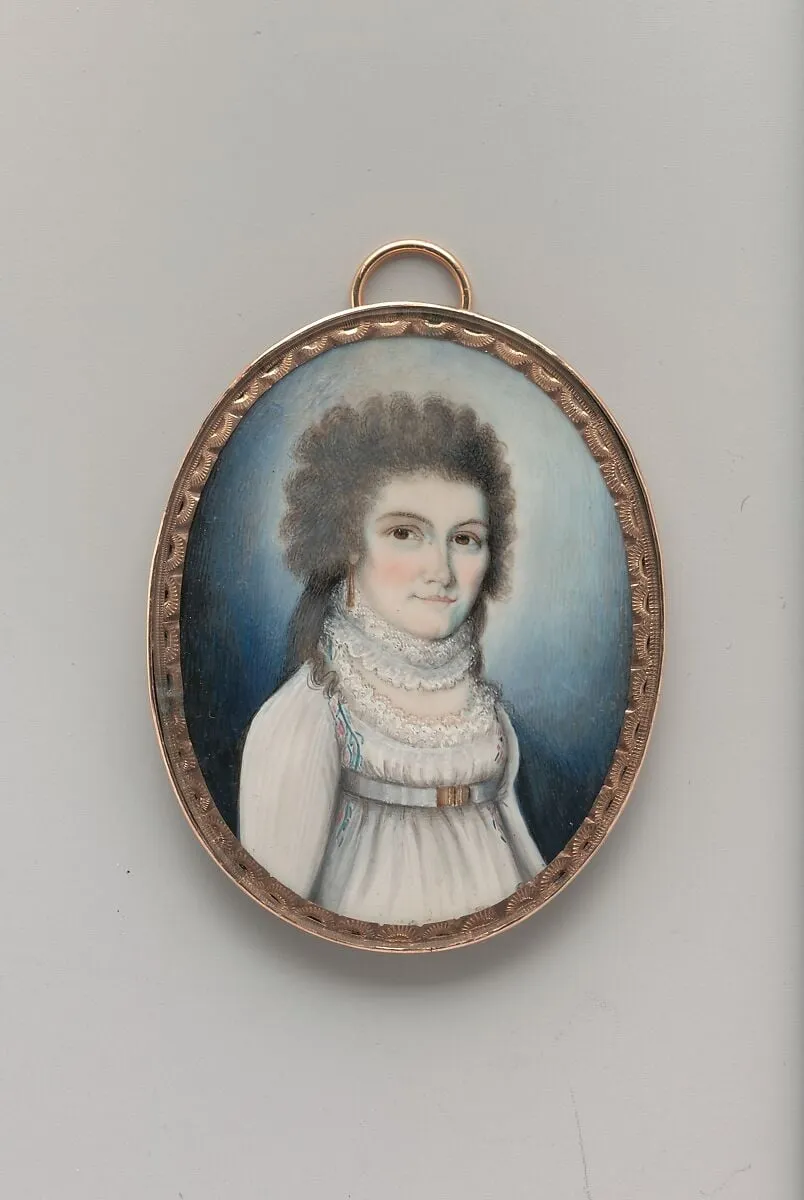
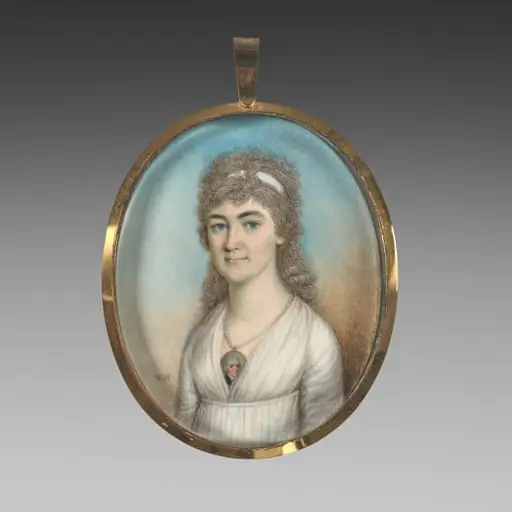
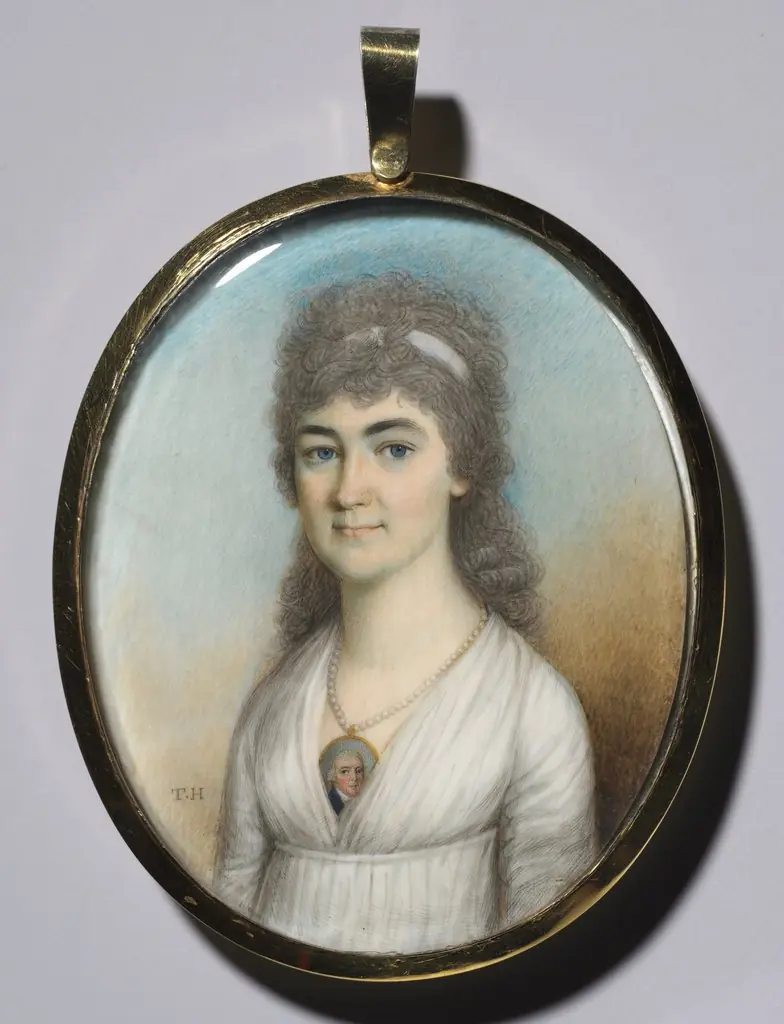
Clarissa Storrs is a watercolor painting by the American Folk Art artist William Verstille. It dates from 1795 and is held in the collection of the Metropolitan Museum of Art.
About this work
Subject & Meaning
The iconography is rooted in the conventions of late 18th-century American portraiture, where the focus remains on the dignified representation of the subject.
The artwork depicts a portrait of a woman, identified as Clarissa Storrs. Created in 1795 by William Verstille, the piece is executed in watercolor on ivory, a medium traditionally employed for intimate, miniature portraiture. As a genre portrait, the work's primary subject is the individual sitter herself, capturing her likeness without explicit narrative scenes or complex allegorical elements.
The iconography is rooted in the conventions of late 18th-century American portraiture, where the focus remains on the dignified representation of the subject. The painting serves as a visual record of Storrs, emphasizing her personal identity within the context of the era's artistic practices. It represents a specific instance of commemorative portraiture from the American Wing collection, highlighting the artist's skill in rendering the human form on a small scale.
Technique & Style
Executed in 1795, this portrait by William Verstille utilizes watercolor applied to an ivory support. The work is classified as a miniature, characterized by its small physical dimensions of approximately 5.7 by 4.3 units. As a watercolor on ivory, the piece relies on the translucency of the paint and the luminous quality of the underlying surface to render the depiction of a woman.
The medium and support combination was a standard technique for portable portraiture during this period, allowing for fine detail within a compact format. The artwork is currently held within the American Wing collection.
History & Provenance
The work titled Clarissa Storrs was painted in 1795 by William Verstille as a watercolor on ivory portrait. It portrays Clarissa Storrs and belongs to the portrait genre within the American Wing classification. The piece entered the collection of the Metropolitan Museum of Art, where it remains on view in New York.
Its creation is documented with an inception date of 1795, and physical measurements of 5.7 by 4.3 units correspond to the dimensions recorded for the work. The painting’s provenance traces from its original execution to its acquisition by the museum, establishing a clear ownership chain from the artist to the institution.
Clarissa Storrs, a 1795 watercolor on ivory by William Verstille, is held in the collection of the Metropolitan Museum of Art, where it is classified under The American Wing. The work is catalogued within the museum's holdings of portrait miniatures, consistent with its small dimensions of approximately 5.7 by 4.3 inches. No specific accession number, acquisition date, or prior provenance details are documented in the available sources.
Likewise, no exhibition history is recorded for the work beyond its current placement in the Metropolitan Museum of Art's American Wing collection.
Legacy
The 1795 watercolor portrait by William Verstille, originally catalogued as Clarissa Storrs, entered the Metropolitan Museum of Art’s collection and is now part of The American Wing, a placement that reflects its recognized significance within early American portraiture. Its modest dimensions of roughly 5.7 by 4.3 inches and depiction of a woman have been noted in museum documentation, underscoring its role as an example of late‑18th‑century American artistic practice. The work’s presence in a major institutional collection has contributed to ongoing scholarly discussion of Verstille’s output and the development of portraiture in the United States.
Overview
William Verstille's watercolor on ivory, Clarissa Storrs, from around 1795, exemplifies American portraiture of the late 18th century. This miniature work, depicting a woman with a direct gaze, reflects the era's appreciation for capturing individual likenesses. It stands as a characteristic example of Verstille's output, whose works are found in prominent institutional collections and contribute to the American folk art tradition.
Context
Created by William Verstille, a portrait artist active across major East Coast cities like Boston, Philadelphia, and New York, this piece fits within the broader tradition of American folk art. Its focus on a specific individual's likeness was a common characteristic of the period. The work is representative of Verstille's artistic practice, which is well-documented in significant institutional holdings.
Artist & collection
Artist
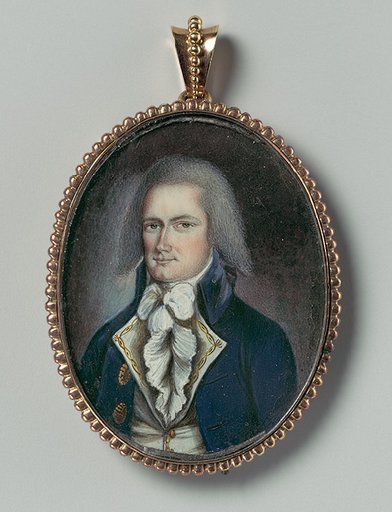
William Verstille (c. 1757 – 1803) was an American artist who worked in Boston, Philadelphia and New York. He specialized in portraits. Examples of his artwork reside in the collections of the Harvard Art Museum,…

- Mrs. James Bleecker (Sarah Bache)
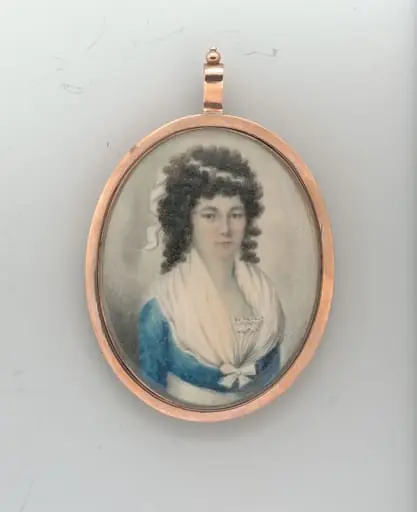 Portrait of a Lady
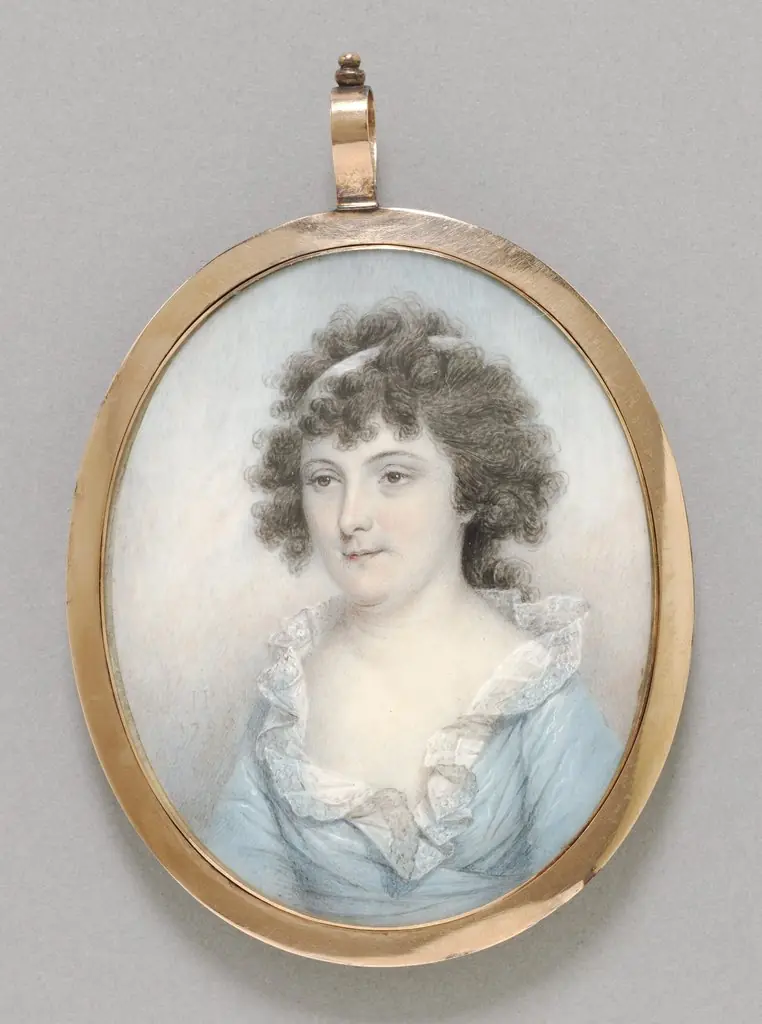 Portrait of Susan Coren Towers
 Mrs. James Bleecker (Elizabeth Garland Bache)
 Mrs. Gabriel Manigault (Margaret Izard)
 Portrait of a Lady
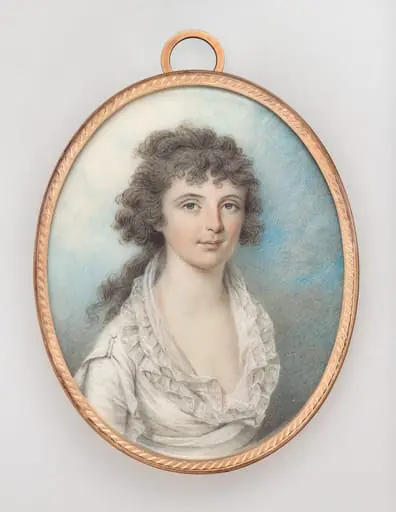 Marcia Burns
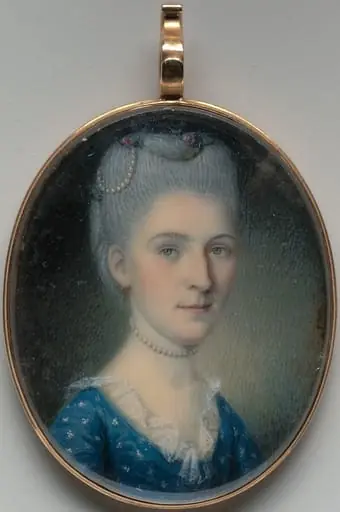 Mrs. Joseph Donaldson (Frances Johnston)
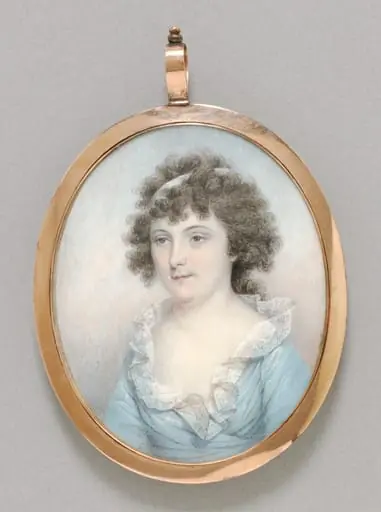 Portrait of Susan Coren Towers
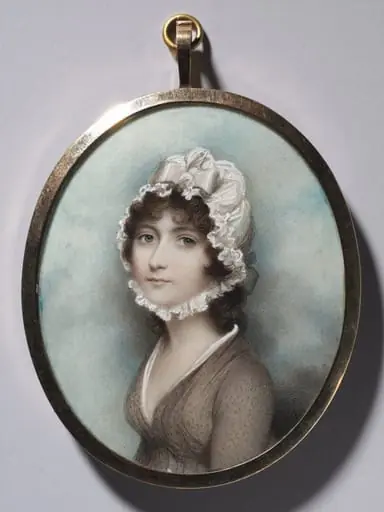 Portrait of a Woman
 Portrait of a Woman Wearing a Miniature
 Portrait of a Woman Wearing a Miniature