Artwork
住吉物語絵巻 詞書断簡|The Tale of Sumiyoshi
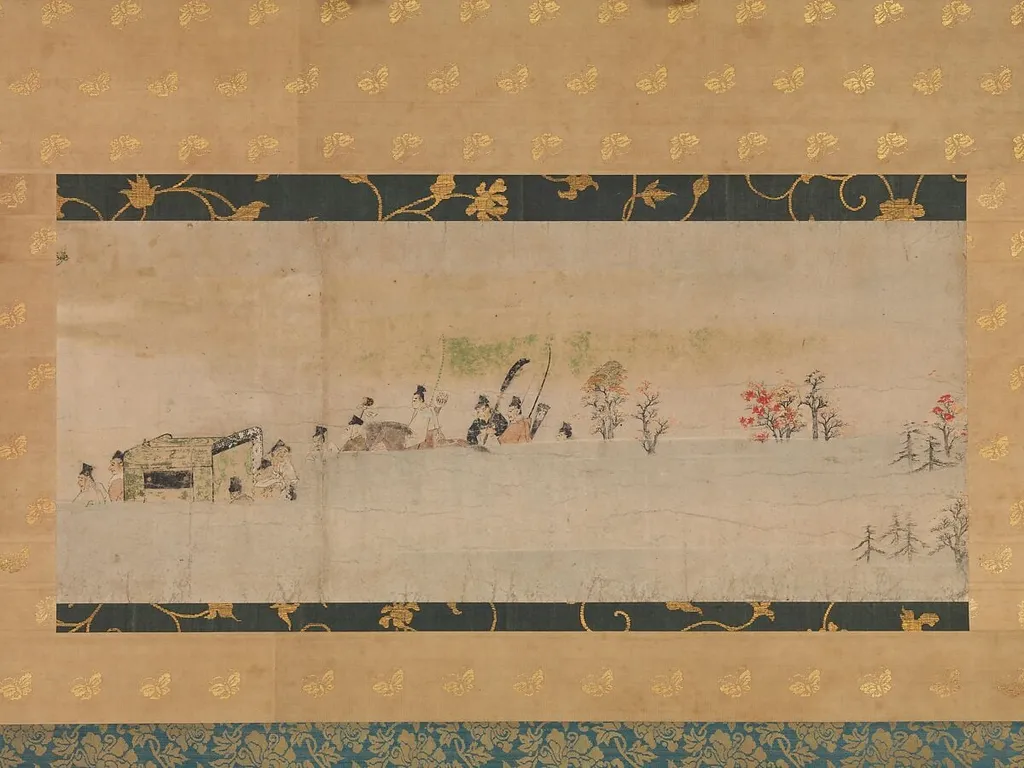
住吉物語絵巻 詞書断簡|The Tale of Sumiyoshi is an ink painting. It dates from 1283 and is held in the collection of the Metropolitan Museum of Art. The work consists of a fragment from a hand‑scroll originally part of The Tale of Sumiyoshi, a narrative dating to the 14th‑century.
About this work
Subject & Meaning
These elements derive from the narrative of The Tale of Sumiyoshi, a literary source that guided the selection of scenes for the handscroll.
The work portrays a horse alongside a standing man, the two figures forming the visual core of the composition. These elements derive from the narrative of The Tale of Sumiyoshi, a literary source that guided the selection of scenes for the handscroll. By rendering a mounted warrior and a companion, the painting evokes the martial and storytelling context of the tale, reflecting Heian‑period interests in heroic episodes and episodic storytelling.
The depiction functions both as illustration and as a symbolic representation of narrative progression within the larger story.
Technique & Style
The work consists of a painted narrative segment originally part of a handscroll, later affixed to a hanging‑scroll format. It is executed in ink with polychrome pigments on paper, and a accompanying calligraphic colophon is also rendered in ink on paper. The composition portrays a horse and a man, reflecting the storytelling focus of the Sumiyoshi legend.
Dating to 1283, the piece was produced in Japan and is classified as a painting within the broader category of Japanese narrative art. The anonymous hand is responsible for both the visual imagery and the accompanying text, and the work is presently held by the Metropolitan Museum of Art.
History & Provenance
Created in Japan in 1283, this work comprises a painting segment and a calligraphic excerpt originally part of a handscroll illustrating The Tale of Sumiyoshi. Both sections, executed in ink and color on paper, have since been remounted as individual hanging scrolls. The identity of the artist who produced the painting remains unknown. The pieces are currently held in the collection of the Metropolitan Museum of Art.
The Tale of Sumiyoshi: Calligraphy Fragment (住吉物語絵巻 詞書断簡) is held in the collection of the Metropolitan Museum of Art in New York. The work, dated to 1283, consists of calligraphy and a painting section from a handscroll that have been mounted as hanging scrolls. The museum's records list the piece under its classification of Paintings.
While the artifact is part of the permanent collection, the provided sources do not specify a unique accession number or detail a history of public exhibitions.
Overview
The work consists of a fragment from a hand‑scroll originally part of The Tale of Sumiyoshi, a narrative dating to the 14th‑century. The fragment has been remounted as a hanging scroll and presents a single scene in ink and color on paper, accompanied by a separate calligraphic section in ink.
Context
The Tale of Sumiyoshi belongs to a corpus of medieval Japanese illustrated narratives that combined literary text with visual accompaniment. Such scrolls served as both literary entertainment and visual art, reflecting the aesthetic conventions of the period.
Artist & collection

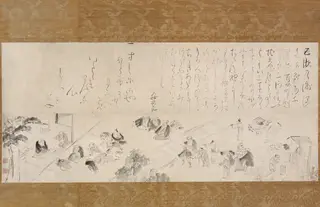 Group Pilgrimage to the Jizo Nun
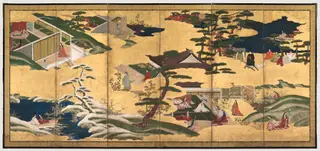 Scenes from the Tale of Genji
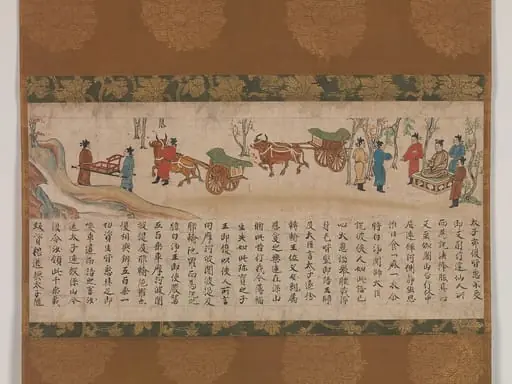 『過去現在絵因果経』 断簡 (松永本)|The Illustrated Sutra of Past and Present Karma (Kako genzai inga kyō emaki)
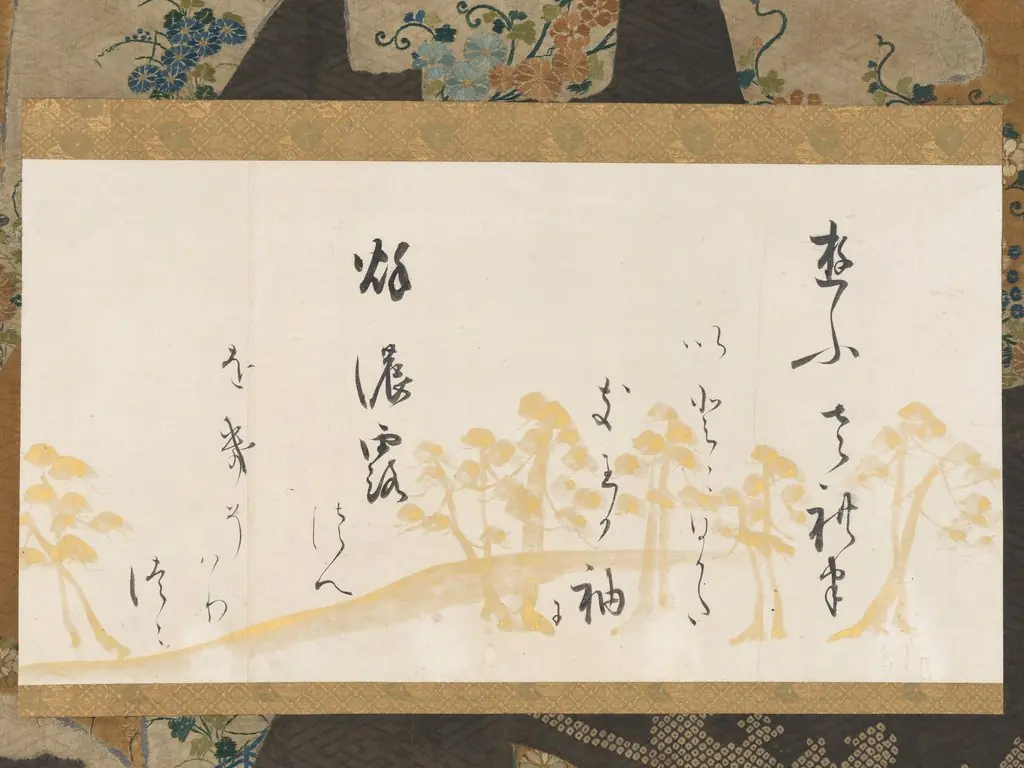 Section of a Handscroll with Waka and Underpainting of Pines
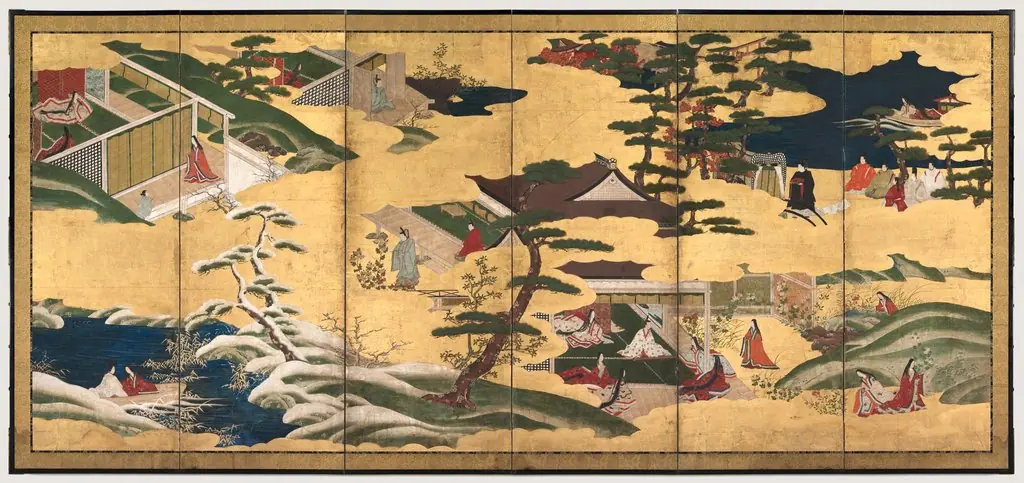 Scenes from the Tale of Genji
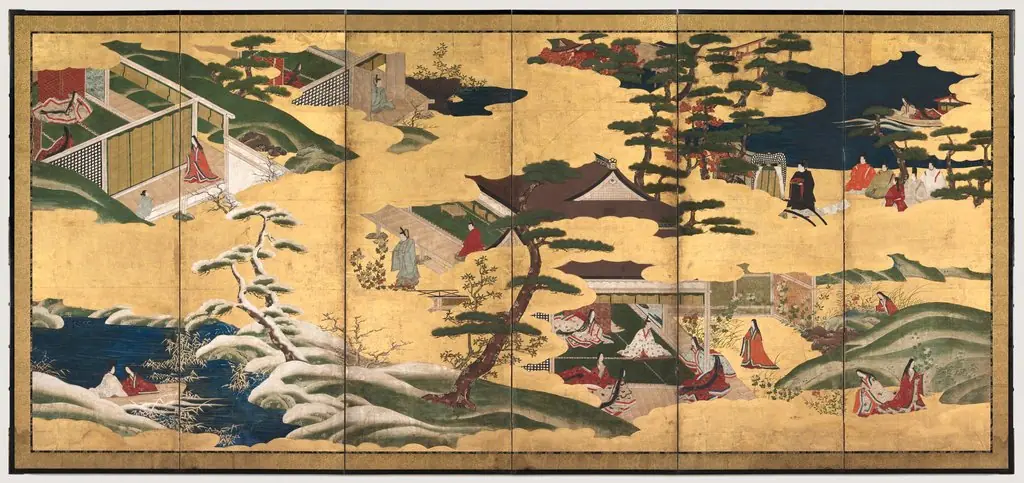 Scenes from the Tale of Genji
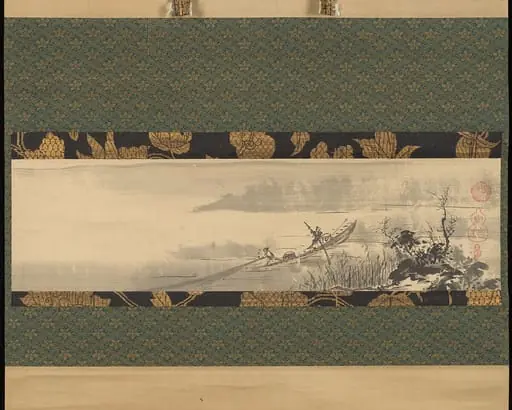 Untitled
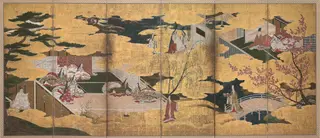 The Tale of Genji
- 「六波羅行幸」 平治物語絵巻 断簡|Scene from “Imperial Visit to Rokuhara,” from The Tale of the Heiji Rebellion (Heiji monogatari)
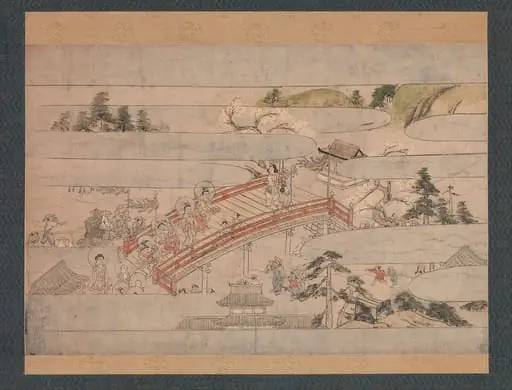 秋夜長物語絵巻断簡|The Final Scene from A Long Tale for an Autumn Night (Aki no yonaga monogatari)
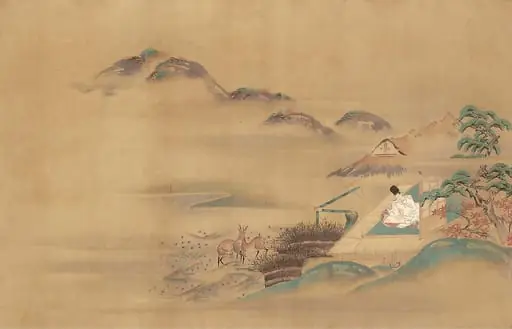 石山師香筆 源氏物語八景 絵巻|Eight Views from The Tale of Genji
 平家物語図屏風 「小督」 「大原御幸」|"Kogō" and "The Imperial Procession to Ōhara", from The Tale of the Heike (Heike monogatari)