Artwork
仏伝図|Scene from the Life of the Buddha
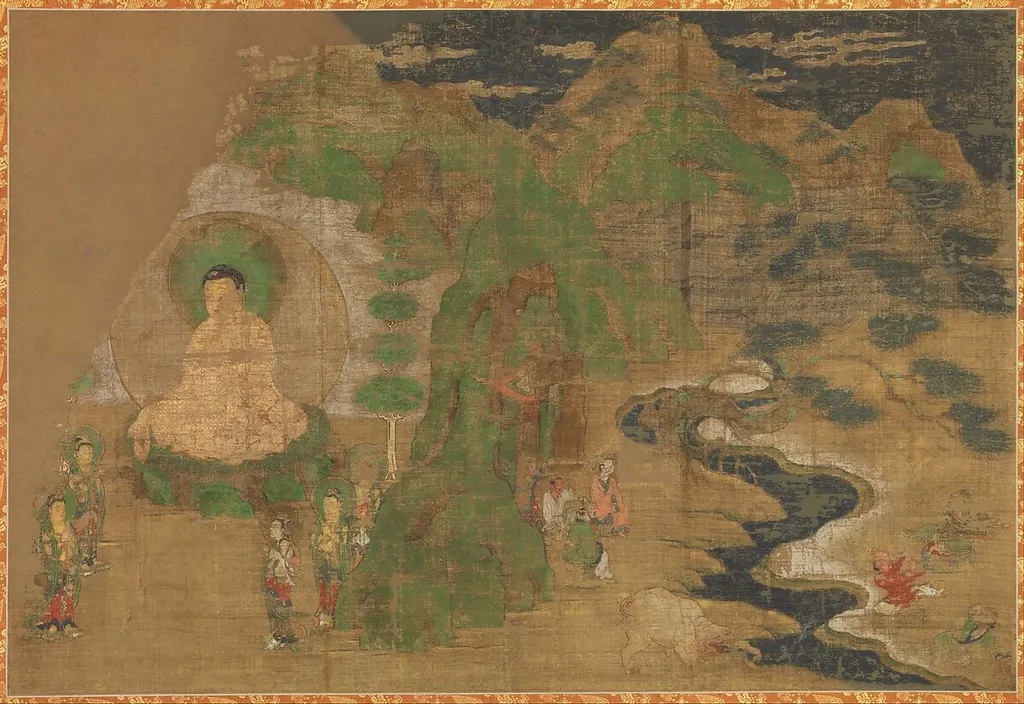
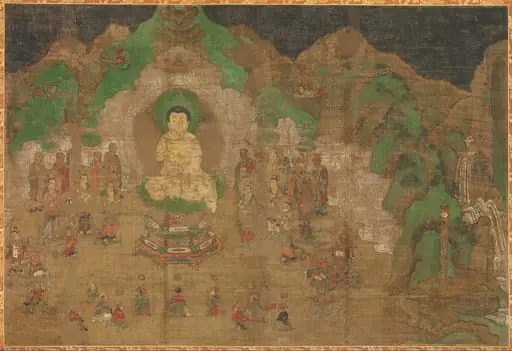
仏伝図|Scene from the Life of the Buddha is an ink painting. It dates from 1416 and is held in the collection of the Metropolitan Museum of Art. This artwork, titled Scene from the Life of the Buddha, is a segment of what was originally a larger wall panel.
About this work
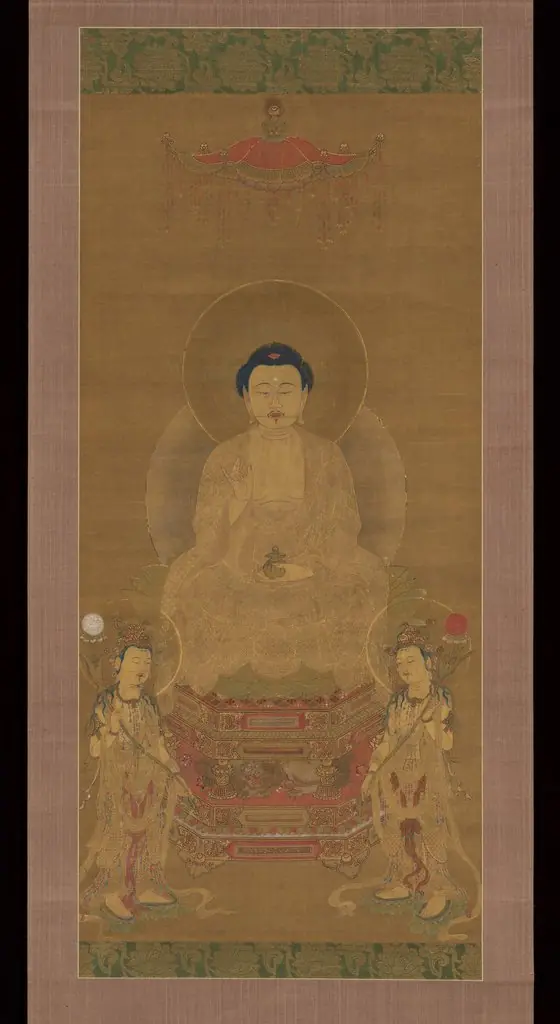
A golden silk scroll carries a procession of elephants, monks, and a prince on horseback, a scene from the life of the Buddha. Thin black ink and bright color pick out every fold of robe and wrinkle of elephant skin, with gold leaf glowing behind. The painter is unknown, but the care suggests a temple commission. Ink, color, and gold on silk, 1416.
Subject & Meaning
The composition thus communicates a spiritual narrative through its iconic figures, aligning with the devotional purpose of the artwork.
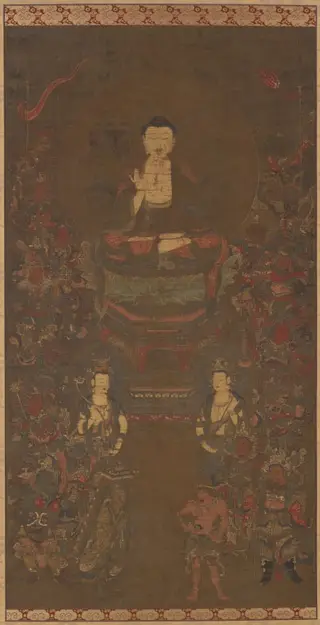
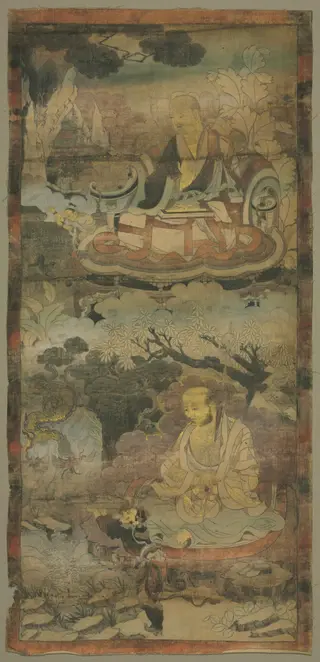
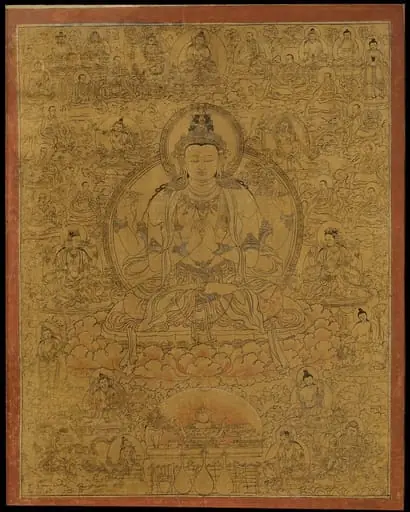
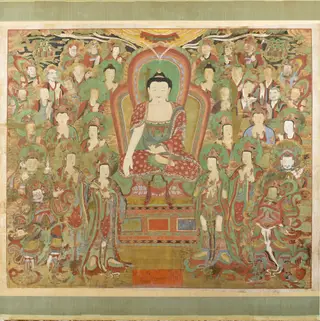
The work titled 仏伝図|Scene from the Life of the Buddha portrays a narrative episode from the Buddhist tradition, centered on the figure of the Buddha accompanied by an elephant. As a religious painting from 1416, it belongs to the genre of Japanese devotional art and reflects the symbolic language used to convey key moments in the Buddha’s biography. The inclusion of an elephant functions as an iconographic element linked to Buddhist storytelling, emphasizing themes of wisdom and strength associated with the Buddha’s teachings.
The composition thus communicates a spiritual narrative through its iconic figures, aligning with the devotional purpose of the artwork.
Technique & Style
Created in 1416, this religious painting originates from Japan and is currently held by the Metropolitan Museum of Art. The work measures 75 cm in height and 111.5 cm in width. Technically, it comprises a section of a wall panel that was later mounted as a hanging scroll.
The artist executed the imagery using ink, mineral colors, and gold applied on a silk support. Stylistically, the composition depicts scenes from the life of the Buddha, specifically featuring an elephant alongside the central figure. The combination of gold and color on silk reflects the materials typical of Japanese religious art from this period, while the adaptation from a fixed architectural element to a portable scroll format indicates a specific history of handling and preservation.
History & Provenance
Created in Japan in 1416, this religious painting depicts scenes from the life of the Buddha, specifically featuring an elephant. The work was originally executed as a section of a wall panel using ink, color, and gold on silk before being remounted as a hanging scroll. While the specific artist remains unknown, the piece eventually entered the collection of the Metropolitan Museum of Art, where it is currently housed.
The physical dimensions of the mounted scroll are recorded as 75 cm in height and 111.5 cm in width. No further details regarding its original commission or intermediate ownership history prior to its museum acquisition are provided in the available records.
The work known as Scene from the Life of the Buddha is currently held in the collection of the Metropolitan Museum of Art in New York. Created in Japan in 1416, this religious painting depicts the Buddha and an elephant. The piece is executed in ink, color, and gold on silk, originally functioning as a section of a wall panel that was later mounted as a hanging scroll.
While the specific accession number is not detailed in the provided records, the museum classifies the object within its paintings department. The artwork measures 75 centimeters in height and 111.5 centimeters in width. No specific exhibition history or prior provenance details are recorded in the available sources.
Overview
This artwork, titled Scene from the Life of the Buddha, is a segment of what was originally a larger wall panel. Now presented as a hanging scroll, it features ink, color, and gold applied to silk. The composition depicts a procession including elephants, monks, and a prince on horseback, illustrating a narrative moment from the Buddha's life.
Artist & collection