Artwork
Untitled
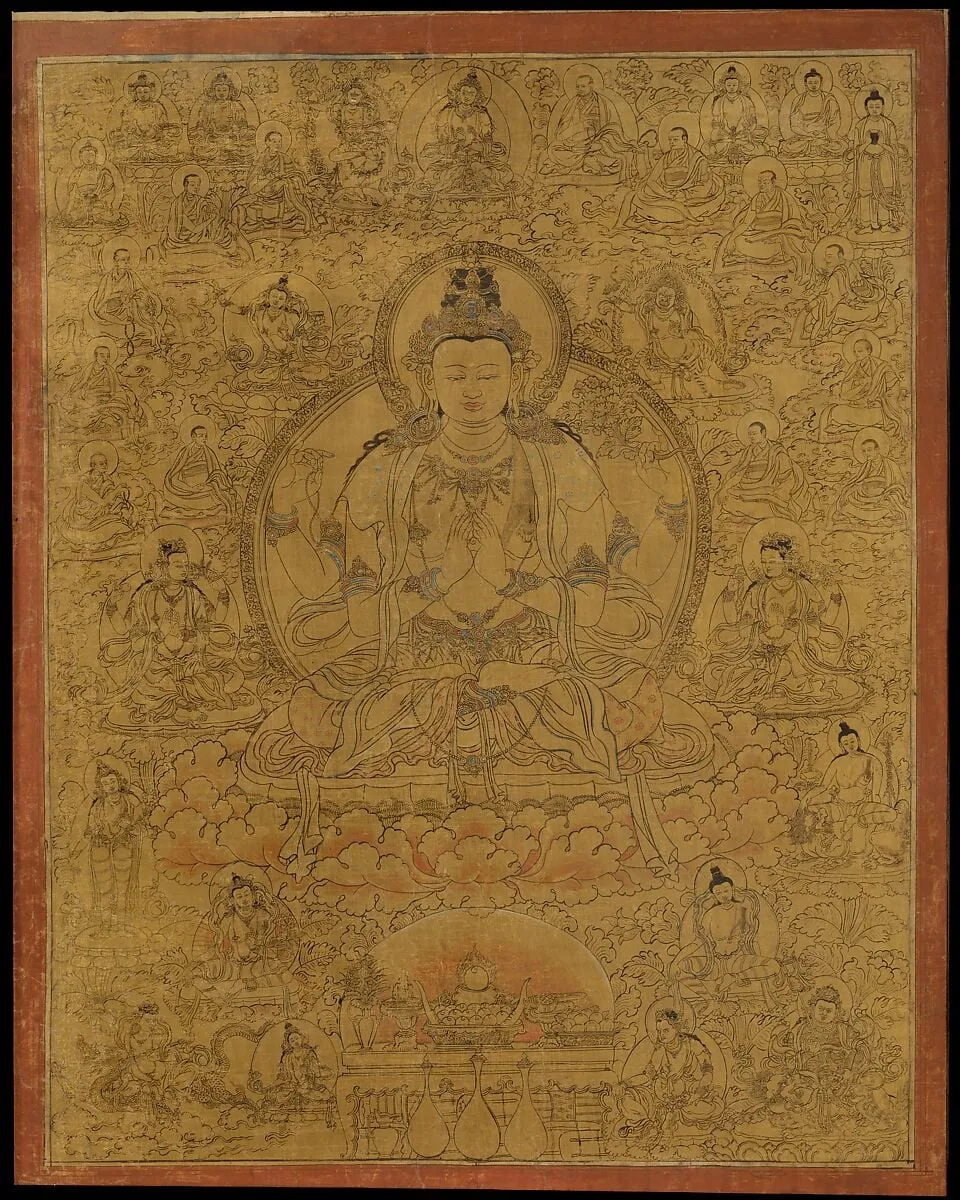
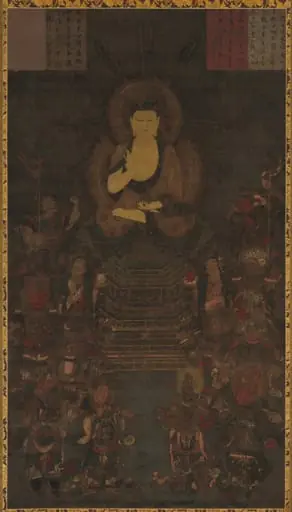
Untitled is a distemper painting. It dates from 1485 and is held in the collection of the Metropolitan Museum of Art.
- Accession no.
- 1985.390.3
- Credit line
- Gift of Margery and Harry Kahn, 1985
About this work
Four-armed Sadaksari-Lokeshvara sits at the center of this Tibetan thangka, his principal hands pressed together while a rosary and lotus rise from his upper palms. Painted in distemper, gold, and ink on cloth in the late fifteenth century, the work stands over forty inches high and surrounds the bodhisattva with manifestations and monks. It entered the Metropolitan Museum of Art in 1985.
Overview
Measuring over forty inches in height, this substantial work was created for monastic ritual or private meditation.
This untitled thangka, painted in distemper, gold, and ink on cloth during the late 15th century, presents a four-armed manifestation of the Bodhisattva Avalokiteshvara. Measuring over forty inches in height, this substantial work was created for monastic ritual or private meditation. It exemplifies the mature Tibetan thangka tradition, characterized by its rich iconography and vibrant execution, serving as a focal point for devotional practice and contemplation.
Subject & Meaning
The central figure is Sadaksari-Lokeshvara, a form of Avalokiteshvara embodying the six-syllable mantra Om Mani Padme Hum. Seated in meditation, his inner hands form the anjali mudra, a gesture of reverence, while his outer hands hold a rosary and a lotus. Surrounding the deity are additional manifestations of compassionate power and attendant monks, all arranged to reinforce the spiritual hierarchy and meaning of the central bodhisattva.
Technique & Style
Executed with distemper, gold, and ink on cloth, the thangka showcases the distinctive artistic practices of its period. The use of saturated mineral pigments creates a vibrant palette, complemented by burnished gold leaf that highlights key elements. Its hierarchical and symmetrical composition is characteristic of late medieval Tibetan devotional painting, reflecting established iconographic traditions and a refined aesthetic from the late 15th century.
History & Provenance
The early history of this thangka remains largely undocumented. In 1985, Margery and Harry Kahn generously donated the painting to the Metropolitan Museum of Art, where it was assigned accession number 1985.390.3. It is recognized as a significant piece within the museum's collection, featured among its Asian art highlights and included in the Heilbrunn Timeline of Art History for the Himalayan 1400–1600 period.
Context
Created in the late 15th century, this thangka emerged during a period of robust monastic patronage in Tibet. Such large-scale, densely iconographic paintings were integral to Buddhist practice, serving as visual aids for teaching and contemplative meditation. Their substantial format and detailed imagery supported both communal ritual and individual spiritual engagement, reflecting the era's vigorous religious and artistic output.
Artist & collection

- Manjushri
 Shakyamuni with the Sixteen Benevolent Deities
 Untitled
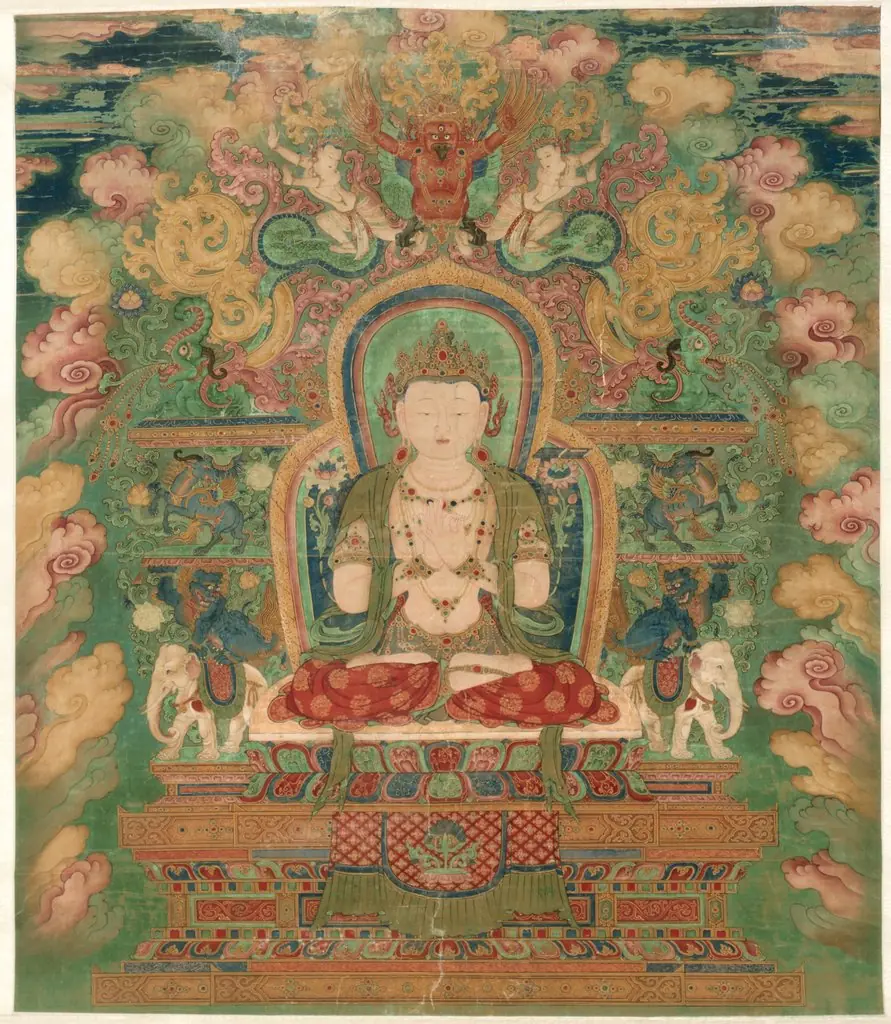 Manjushri
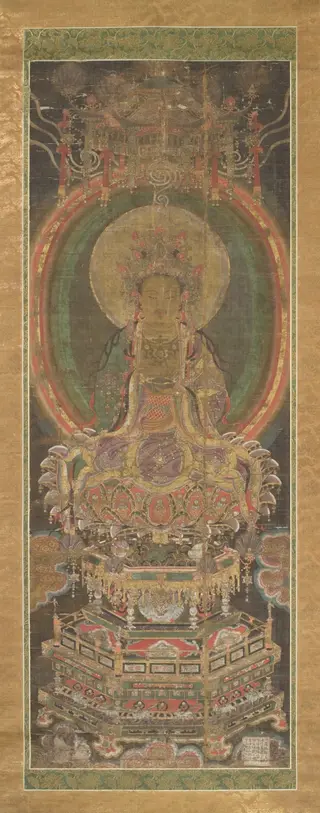 Avalokiteshvara (Guanyin), the Bodhisattva of Compassion
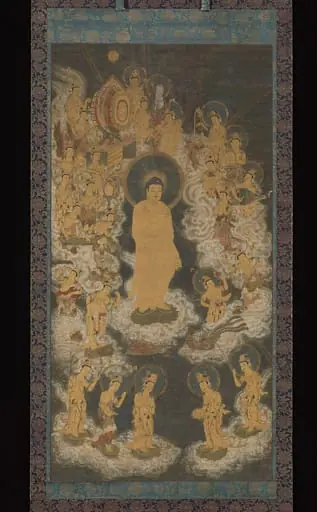 阿弥陀聖衆来迎図 |Welcoming Descent of Amida and Bodhisattvas
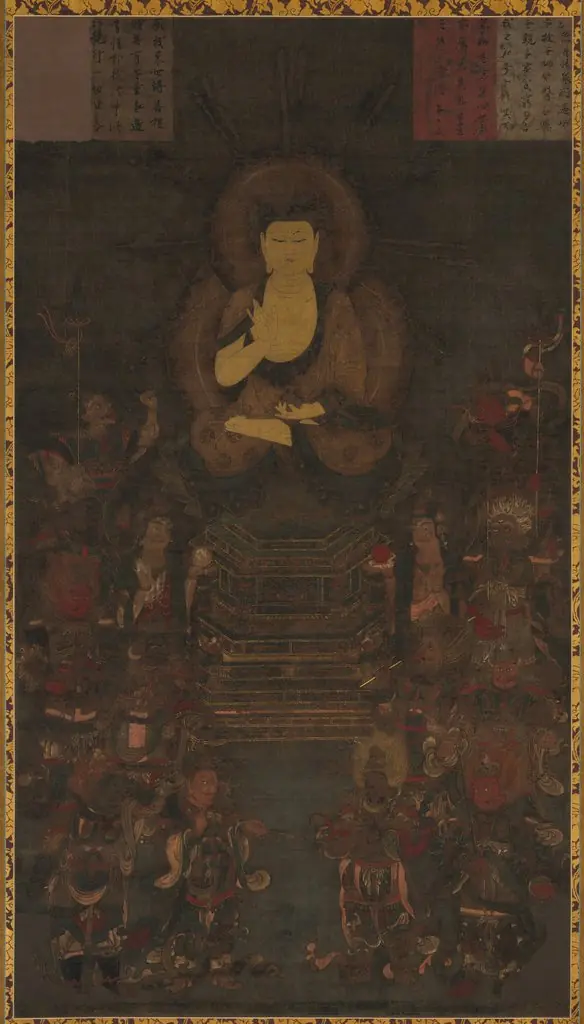 Medicine Master Buddha and the Twelve Divine Generals
 석가삼존도 조선|釋迦三尊圖 朝鮮|Shakyamuni triad
 五髻文殊菩薩像|The Bodhisattva Monju (Manjushri) with Five Topknots
 Untitled
 Shakyamuni with the Thirty-Five Buddhas of the Confession of Sins and the Eighteen Arhats
 Medicine Master Buddha and the Twelve Divine Generals