Artwork
仏伝図|Scene from the Life of the Buddha
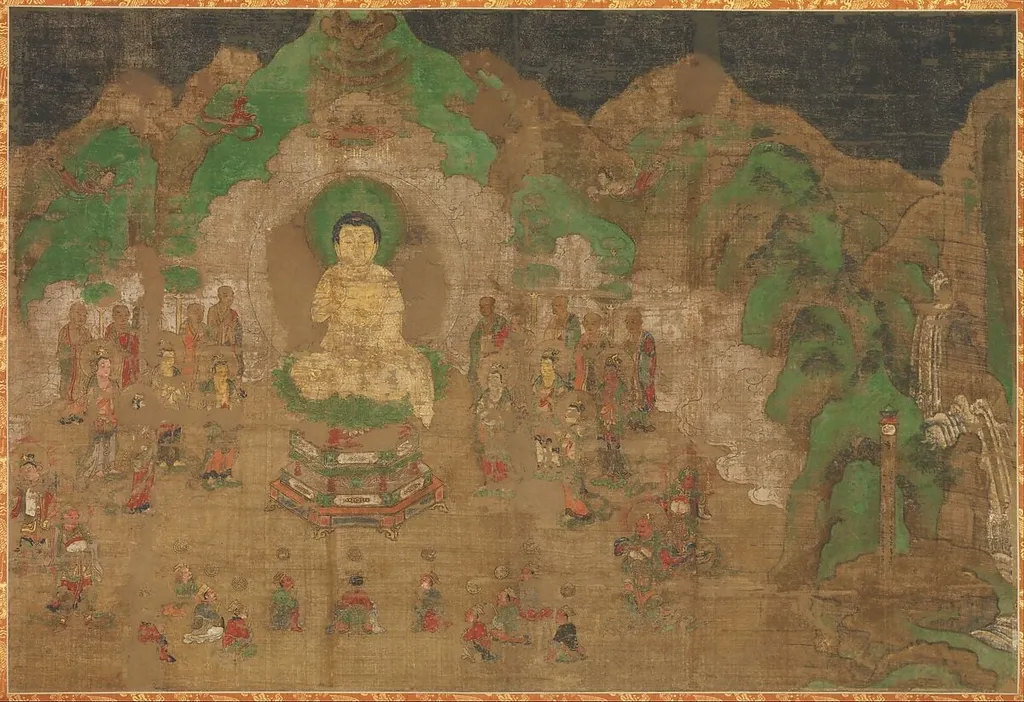
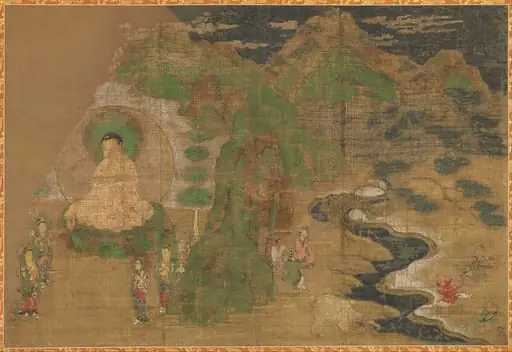
仏伝図|Scene from the Life of the Buddha is an ink painting. It dates from 1416 and is held in the collection of the Metropolitan Museum of Art.
- Accession no.
- 1993.478.4
- Credit line
- Gift of Alvin E. Friedman-Kien, 1993
About this work
Subject & Meaning
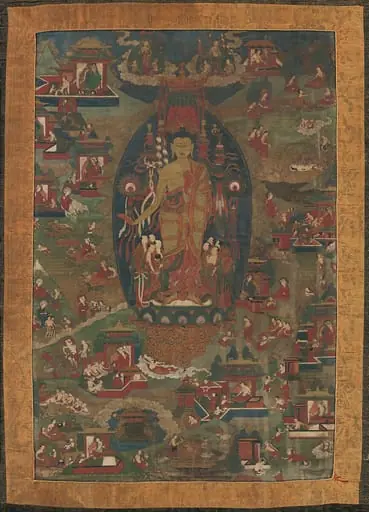
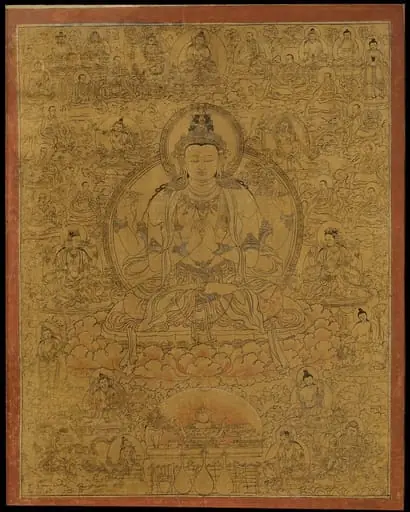
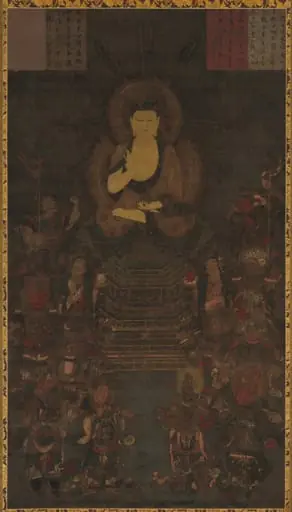
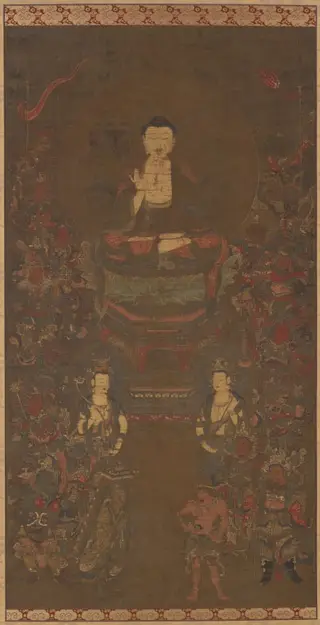
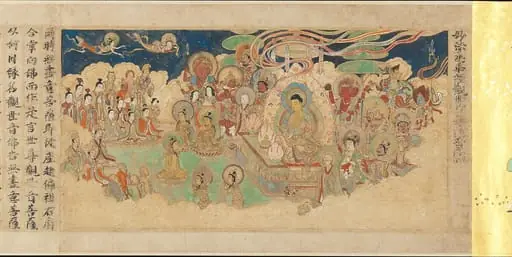
The composition centers on the figure of the Buddha, accompanied by a Bodhisattva and a man, illustrating a narrative moment from the Buddhist tradition.
This 1416 Japanese religious painting depicts a specific episode from the life of the Buddha, forming part of a larger cycle of eight scenes. The composition centers on the figure of the Buddha, accompanied by a Bodhisattva and a man, illustrating a narrative moment from the Buddhist tradition. Executed in ink, color, and gold on silk, the work functions as a visual representation of the Buddha's biography, serving a devotional purpose within its religious context.
The inclusion of gold and the specific grouping of holy figures alongside a human attendant emphasize the sacred nature of the event portrayed. As a segment of a narrative series, the image contributes to a comprehensive visual retelling of the Buddha's life, intended to educate and inspire viewers through its iconographic clarity and spiritual symbolism.
Technique & Style
Created in 1416 in Japan, this religious painting is executed in ink, mineral color, and gold on a silk support. The work functions as a single segment within a larger narrative cycle originally comprising eight scenes depicting the life of the Buddha. Stylistically, the composition features figures including the Buddha, a Bodhisattva, and laymen, rendered through the precise application of pigments and metallic leaf characteristic of Japanese devotional art of the period.
The surviving section measures 75 cm in height and 111.5 cm in width. The integration of gold with ink and color on the delicate silk ground highlights the luxurious materials employed to convey the sacred nature of the subject matter.
History & Provenance
Created in Japan in 1416, this silk painting depicting a scene from the life of the Buddha was executed by an unknown artist. The work, which utilizes ink, color, and gold, originally functioned as one segment within a larger cycle comprising eight distinct episodes from the Buddha's biography. While the specific circumstances of its commission and the identity of its original patrons remain unrecorded in the available documentation, the piece has entered the collection of the Metropolitan Museum of Art.
The museum currently houses the panel, which measures 75 by 111.5 centimeters, preserving it as an example of Japanese religious art from the early fifteenth century.
Overview
This painting, titled "Scene from the Life of the Buddha," is a segment from a larger series depicting key moments in the Buddha's narrative. Executed with ink, color, and gold on silk, it presents a vertical composition. The artwork features numerous small figures adorned in flowing garments and luminous golden halos.
A celestial palace, seemingly suspended on clouds, frames the central event: the Buddha's mother experiencing a prophetic dream of a white elephant prior to his birth.
Context
This particular scene is integral to a larger narrative cycle comprising eight distinct paintings. Each work within the series contributes to a chronological depiction of the Buddha's life, intended to educate and inspire viewers through his spiritual development and teachings. Such cycles were common in Buddhist art, serving as visual sermons that conveyed complex religious narratives to a wide audience.
Artist & collection